Tag: critical minerals

  • Uzbekistan to Boost Copper Processing Capacity to 240000 Tonnes

    Uzbekistan to Boost Copper Processing Capacity to 240000 Tonnes

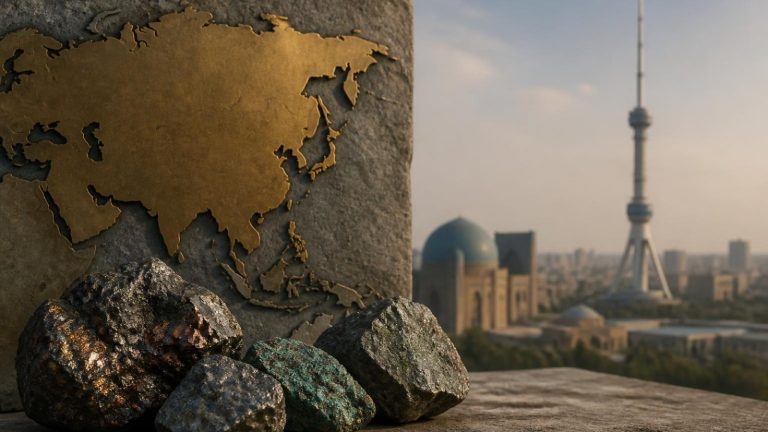
    Uzbekistan’s copper processing capacity is expected to reach 240000 tonnes this year, President Shavkat Mirziyoyev announced during the inauguration of Copper Processing Plant No. 3 at the Almalyk Mining and Metallurgical Complex (AGMK).

    According to the president, processing volumes are set to continue growing over the next two to three years as new investment projects in the mining and metallurgical sector are implemented.

    Mirziyoyev emphasised that global demand for copper is increasing rapidly as the metal becomes increasingly important for modern industry. Copper plays a critical role in sectors such as energy, electrical engineering, digital technologies, artificial intelligence and the development of green energy systems.

    “Those who create a high value-added chain in the copper industry will effectively create the industry of the future,” the president said.

    As an example of the country’s expanding mining potential, Mirziyoyev highlighted the Yoshlik-1 deposit. The project was previously considered technically complex and difficult to develop, but production is now rapidly ramping up.

    The president said the mine is expected to produce around 20 million tonnes of ore this year. Over the next two years, output from the deposit is planned to increase to approximately 60 million tonnes.

    The expansion of processing capacity at AGMK forms part of Uzbekistan’s broader strategy to strengthen its position as a major producer of copper and other strategic metals, while building higher value-added industrial supply chains.

    Earlier, Kursiv Uzbekistan reported that Mirziyoyev officially launched the new copper processing plant at AGMK as part of the country’s industrial development programme.

  • Uzbekistan Reports Major Copper and Gold Reserves at Yoshlik-1 and Qalmoqqir

    Uzbekistan Reports Major Copper and Gold Reserves at Yoshlik-1 and Qalmoqqir

    Uzbekistan has identified major mineral reserves at the Yoshlik-1 and Qalmoqqir deposits, including an estimated 45 million tonnes of copper and more than 5,000 tonnes of gold, President Shavkat Mirziyoyev announced during the launch ceremony of Copper Processing Plant No. 3 at the Almalyk Mining and Metallurgical Complex (AGMK).

    According to the president, the scale of these reserves is sufficient to supply Uzbekistan’s industrial sector with raw materials for at least the next 100 years.

    In addition to copper and gold, the deposits also contain rare metals such as molybdenum, selenium, tellurium and rhenium, which could support the development of new high-tech and innovative industrial projects.

    Mirziyoyev said the commissioning of the new processing facility significantly increases AGMK’s production capacity. Daily output of copper concentrate is expected to rise from 2,400 tonnes to approximately 5,000 tonnes.

    The plant incorporates modern technologies supplied by companies from the United States, Germany, Russia, China and Finland. Operations will be managed through an integrated digital control system using artificial intelligence.

    According to officials, the use of AI-driven monitoring and optimisation systems will reduce energy consumption by around 10%, lower production costs by 15% and increase labour productivity by roughly 10%.

    The expansion of AGMK’s processing capacity forms part of Uzbekistan’s broader strategy to strengthen its mining and metallurgical sector while increasing value-added production from its domestic mineral resources.

    Earlier, Kursiv Uzbekistan reported that the country’s gold and foreign exchange reserves recently exceeded $77 billion for the first time.

  • US, EU and Japan Prepare Critical Minerals Trade Pact to Counter China

    US, EU and Japan Prepare Critical Minerals Trade Pact to Counter China

    The United States, Japan and the European Union are preparing to announce plans for a new trade framework aimed at strengthening supply chains for critical minerals and reducing dependence on China, according to people familiar with the discussions.

    The initiative is expected to lay the groundwork for a broader plurilateral trade agreement covering key minerals used in electric vehicles, clean energy technologies and advanced manufacturing. Negotiations are being led by the Office of the US Trade Representative (USTR) in coordination with officials in Brussels and Tokyo.

    Officials involved in the talks say the framework may include coordinated trade policies such as price floors, tariffs and other market mechanisms designed to counter price distortions linked to Chinese supply. A price floor would establish a minimum market price for selected minerals, encouraging investment in mining and processing projects while preventing cheaper imports from undercutting producers participating in the agreement.

    The Defense Advanced Research Projects Agency (DARPA) is reportedly assisting US trade officials in developing pricing models for the mechanism.

    Global efforts to diversify critical mineral supply chains intensified after China introduced export controls on several rare earth elements and strategic minerals last year. The restrictions were widely seen as a response to sweeping tariffs imposed by the United States on imported goods.

    Although supply pressures have eased since their peak last year, manufacturers in Europe, the United States and Japan continue to report shortages and delays in receiving critical mineral shipments from Chinese suppliers.

    USTR is expected to begin formal negotiations with the European Union and Japan in April, shortly after the close of a public consultation period for industry stakeholders on March 19.

    The announcement may coincide with Japanese Prime Minister Sanae Takaichi’s visit to the White House scheduled for March 19. European officials are also coordinating closely with Washington and Tokyo on the initiative, although the timing of Brussels’ announcement has not yet been finalized.

    The concept is also expected to feature prominently at the upcoming Group of Seven summit.

    Earlier this year, the United States signed a similar action plan with Mexico aimed at coordinating policies on critical mineral supply chains. The agreement includes provisions to examine border-adjusted price floors for mineral imports and to explore joint trade policies supporting secure supply.

    Officials say the proposed framework between the US, EU and Japan will likely mirror many elements of the US–Mexico agreement. Potential areas of cooperation include investment screening, research and development in mineral processing technologies, coordinated stockpiling strategies and support for downstream supply chains.

    While the exact list of minerals covered has not yet been finalized, officials are considering starting with a limited group of strategic materials before expanding the agreement to include a broader range of critical minerals.

    The initiative reflects growing concern among Western economies about supply concentration in global mineral markets. China currently dominates the processing and refining of many critical materials, including rare earth elements, graphite and several battery metals.

  • Middle East Conflict Sends Shockwaves Through Global Commodity Markets

    Middle East Conflict Sends Shockwaves Through Global Commodity Markets

    The escalating conflict involving the United States, Israel and Iran is already disrupting global commodity markets, tightening supply across energy, fertilizers, chemicals and several metals while raising the risk of prolonged price volatility.

    Analysts at BMO Capital Markets say the region’s central role in global supply chains has triggered sharp price reactions in commodities tied to Middle Eastern production. The most immediate impacts have been seen in oil and fertilizer markets, where supply is highly concentrated.

    Oil markets have experienced the most significant disruption. According to BMO oil and gas analyst Randy Ollenberger, the conflict represents one of the largest shocks to oil markets in decades. Prices briefly surged toward $120 per barrel before stabilizing near $90, but analysts warn the market may still be underestimating potential supply risks.

    Shipping through the Strait of Hormuz has been severely disrupted, with tanker traffic dropping dramatically from the usual 80 vessels per day to only a small number. Storage constraints and refinery outages are adding further pressure to global petroleum supply chains.

    Analysts warn that prolonged hostilities could tighten global oil inventories even further and drive prices higher if regional disruptions expand.

    Chemical markets are also tightening as Middle Eastern production faces constraints. The region accounts for roughly 15% of global polyethylene production, meaning disruptions could push global industry utilization rates above 90%.

    Producers in the United States and Europe have already begun announcing price increases as supply conditions shift from surplus to tighter markets. Higher feedstock costs are also affecting related sectors, including titanium dioxide production.

    Fertilizer markets are experiencing similar pressures. Nitrogen fertilizer prices have risen about 30% since the conflict began, reflecting the Middle East’s major role in global exports. Countries in the region account for nearly half of global urea exports, while Russia and Middle Eastern producers dominate nitrogen supply.

    Higher natural gas prices in Europe are also widening the cost advantage for North American fertilizer producers. Companies such as CF Industries and Nutrien could benefit from the shifting market dynamics.

    Metals markets have responded unevenly depending on supply exposure and macroeconomic factors. Aluminum prices have strengthened due to the Middle East’s role in global production, which accounts for roughly 9% of supply. Analysts estimate up to 5 million tonnes of regional output may already face disruption.

    Iron ore and thermal coal have also seen price support due to higher energy costs and supply uncertainties. Meanwhile, metals such as copper and nickel have remained under pressure as broader market concerns about inflation and a stronger U.S. dollar dampen investor sentiment.

    Analysts suggest the conflict could reinforce long-term trends supporting electrification and strategic resource security. Rising energy security concerns may accelerate efforts to diversify supply chains and build strategic reserves of key industrial metals.

    Battery metals face a more complex outlook. Lithium production is less directly exposed to higher sulfur costs, but prolonged disruptions could affect refining capacity in China, the world’s largest lithium processor. Nickel production may face greater risk because sulfur-intensive extraction methods, particularly in Indonesia, depend heavily on sulfuric acid.

    Beyond battery metals, the conflict could also increase demand for minerals linked to defence manufacturing. Modern warfare relies heavily on metals used in drones, missiles and advanced weapon systems, including tungsten, rare earth elements and antimony.

    With the duration and potential escalation of the conflict still uncertain, commodity markets remain highly sensitive to developments in the region. Even if shipping routes normalize quickly, analysts say the disruption has already altered supply dynamics across several key sectors of the global resources industry.

  • Greenland’s Critical Minerals Potential Faces Decade-Long Development Timeline

    Greenland’s Critical Minerals Potential Faces Decade-Long Development Timeline

    Greenland holds vast reserves of rare earth elements and other critical minerals, but major infrastructure and logistical challenges mean large-scale production is likely at least a decade away.

    The Arctic island, an autonomous territory within the Kingdom of Denmark since 2009, covers a vast area but has a population of just about 56 000 people, making it the least densely populated country in the world. Around 80% of the island is covered by permanent ice, with most residents living along the southwestern coast.

    Greenland’s strategic importance extends beyond its resources. Located between North America, Europe and the Arctic Ocean, the island sits near the GIUK Gap — the Greenland-Iceland-United Kingdom maritime corridor — a key NATO chokepoint used to monitor naval movements between the Arctic and Atlantic. The United States also operates the Pituffik Space Base, formerly Thule Air Base, which supports missile warning systems and satellite surveillance.

    Beneath Greenland’s ice lies substantial mineral wealth. The U.S. Geological Survey estimates the island holds about 1.5 million tonnes of proven rare earth reserves, ranking it among the world’s top resource holders. Several deposits are considered globally significant.

    The Kvanefjeld deposit alone contains more than 11 million tonnes of rare earth resources, including around 370 000 tonnes of heavy rare earth elements. Another project, Tanbreez, may represent the world’s largest rare earth resource at approximately 28.2 million tonnes, with an unusually high proportion of heavy rare earths.

    These minerals — including dysprosium, neodymium, terbium and gadolinium — are critical for manufacturing permanent magnets used in electric vehicles, wind turbines, advanced electronics and defence technologies.

    Greenland also hosts 25 of the 34 critical minerals identified by the European Union and 43 of the 50 minerals classified as strategically important for U.S. national security. In addition to rare earths, the island has deposits of graphite, lithium, copper, zinc, gold and uranium, as well as an estimated 31 billion barrels of oil-equivalent hydrocarbon resources.

    Despite this geological potential, Greenland currently has no commercial rare earth production. The main obstacles include extreme Arctic conditions, widespread ice cover, limited infrastructure, absence of power grids and ports, and very high logistics costs.

    Projects have also faced regulatory and environmental challenges. The Kvanefjeld project, explored extensively since the late 2000s, was halted in 2021 after Greenland introduced a ban on uranium mining. Meanwhile, the Tanbreez project completed a preliminary economic assessment only in 2025 and remains years away from development.

    Even under favourable conditions, mining projects typically require seven to fifteen years from discovery to production. Greenland’s lack of existing infrastructure means development timelines could be even longer.

    Analysts note that while Greenland represents a significant long-term opportunity to diversify global supply chains for critical minerals, it cannot address immediate supply vulnerabilities. China currently dominates global processing capacity for many key materials, controlling roughly 95% of manganese processing, 65% of cobalt processing and about 35% of nickel processing.

    As a result, governments are increasingly focusing on accelerating domestic or allied mining projects that could reach production sooner, while simultaneously investing in long-term strategic opportunities such as Greenland.

    Experts say both approaches are necessary: developing Greenland’s resources will require sustained infrastructure investment and international cooperation, while near-term supply security will depend on faster development of projects in established mining jurisdictions.

  • Allied Critical Metals Highlights Strong Cash Flow and Rapid Payback at Borralha Tungsten Project

    Allied Critical Metals Highlights Strong Cash Flow and Rapid Payback at Borralha Tungsten Project

    Allied Critical Metals has released additional economic and technical details from the Preliminary Economic Assessment (PEA) of its Borralha tungsten project in northern Portugal, highlighting strong cash flow potential, rapid capital recovery and capital-efficient development.

    The company confirmed that the previously announced project economics remain unchanged, including an after-tax net present value (NPV) of $473.4 million and an internal rate of return (IRR) of 48.8% based on a tungsten price of $1,000 per metric tonne unit (mtu) of WO₃.

    Under this scenario, the project is expected to achieve payback in approximately 2.2 years from the start of commercial production, equivalent to about 4.2 years from the beginning of construction.

    The underground tungsten project requires initial capital investment of about $124.2 million (US$91 million). The development plan incorporates a compact infrastructure layout designed to support efficient underground mining and processing operations.

    According to the PEA, the project could generate average annual revenue of approximately $184.9 million and average annual EBITDA of about $104.1 million over the initial mine plan at the $1,000/mtu WO₃ price assumption. Average annual free cash flow is estimated at roughly $70.5 million.

    The economic outlook strengthens significantly at higher tungsten prices. At $1,500/mtu WO₃, the project’s after-tax IRR increases to 78.4% and NPV rises to $963.8 million.

    The current mine plan is based on an initial production period of 11 years with average annual output of about 1,708 tonnes of WO₃ concentrate. Processing capacity is expected to reach approximately 1.4 million tonnes of ore per year with an average grade of about 0.20% WO₃.

    Tungsten accounts for around 96% of the project’s economic value, with minor contributions from copper and tin.

    Infrastructure for the project includes a planned connection to Portugal’s national power grid through a 60 kV line, water supply and recycling systems, road access, and a paste backfill facility designed to support underground operations while minimizing environmental impact.

    The project will produce tungsten concentrate grading about 65% WO₃ using a gravity-dominant processing flowsheet, which reduces metallurgical complexity and operating costs.

    The current resource estimate for the Santa Helena Breccia deposit includes 13.0 million tonnes of measured and indicated resources at 0.21% WO₃, along with 7.7 million tonnes of inferred resources at 0.18% WO₃.

    Allied Critical Metals is currently conducting a fully funded 20,000-metre drilling program aimed at expanding the mineral resource, upgrading inferred resources to higher confidence categories and potentially extending the mine life beyond the initial 11-year production plan.

  • Brazil Seeks European Partnerships to Develop Critical Minerals Sector

    Brazil Seeks European Partnerships to Develop Critical Minerals Sector

    Brazil is seeking closer cooperation with European countries to develop exploration and processing of critical minerals and rare earth elements, according to Brazil’s Ambassador to Germany, Rodrigo Baena Soares.

    Speaking at a press conference in Hanover ahead of the Hannover Messe industrial technology fair, the ambassador said Europe could become a key partner in building supply chains for minerals essential to the global energy transition. However, he emphasised that Brazil aims to move beyond its traditional role as a raw materials exporter.

    “It is very important that we do not have a traditional scheme of only exporting raw minerals,” Baena said. “We must think about adding value in Brazil and being part of the supply chain with technology transfer.”

    Brazil is particularly interested in cooperation that includes advanced technologies and industrial expertise from European partners, especially Germany, to strengthen domestic capabilities in extraction, processing and manufacturing.

    Although Brazil holds significant mineral reserves, the country has yet to establish itself as a global leader in the extraction and refining of many critical resources.

    According to the Geological Survey of Brazil, the country possesses 94% of the world’s known niobium reserves, about 26% of global graphite reserves, and the third-largest nickel reserves worldwide with roughly 12%. Brazil also holds around 23% of global rare earth reserves.

    Critical minerals such as lithium, cobalt, nickel, graphite, copper, manganese and rare earth elements play a crucial role in technologies linked to the energy transition and advanced manufacturing. They are widely used in wind turbines, electric vehicle motors, electronics, and aerospace systems including satellites and defence technologies.

    Brazil’s potential in the sector will be highlighted during Hannover Messe, which will take place from April 20 to 24 and will feature Brazil as the partner country for this year’s edition. Around 140 Brazilian exhibitors are expected to participate, presenting industrial technologies and innovations to international audiences.

    As part of the event, Brazil plans to organise a dedicated session focused on critical minerals to showcase the country’s geological potential and attract investment.

    The ambassador also pointed to the proposed free trade agreement between the European Union and Mercosur as a framework that could strengthen cooperation in industrial development and resource supply chains.

    Organisers of Hannover Messe say the evolving geopolitical environment and trade tensions globally create an opportunity for deeper economic cooperation between Europe and Latin America.

  • Proposed ERG Ownership Restructuring Raises Geopolitical and Sanctions Concerns

    Proposed ERG Ownership Restructuring Raises Geopolitical and Sanctions Concerns

    A reported restructuring of ownership at Eurasian Resources Group (ERG) is drawing attention from analysts and policymakers due to potential geopolitical implications involving sanctions enforcement, Russian financial influence and the control of critical mineral assets.

    ERG is one of the largest mining groups operating across Eurasia and Africa, with major copper and cobalt operations in the Democratic Republic of Congo. These minerals are essential for battery production, defence technologies and advanced manufacturing, placing the company within supply chains considered strategically important by Western governments.

    According to media reports and industry sources, Kazakh businessman Shakhmurat Mutalip is expected to acquire a significant stake in ERG in a transaction estimated at around $1.4 billion. The move has been interpreted by some observers as part of a broader effort by Kazakhstan’s leadership to reshape ownership structures among major domestic industrial assets.

    However, questions have emerged regarding the potential sources of financing and the broader network of business relationships connected to the proposed transaction. Some reports have suggested possible links between Mutalip and Russian banking institutions including VTB and Sberbank, both of which are subject to Western sanctions. If confirmed, such connections could raise concerns among regulators about exposure to secondary sanctions risks.

    Additional scrutiny has focused on ERG’s chief executive, Shukhrat Ibragimov. Ukrainian authorities have imposed a travel ban on Ibragimov on national security grounds, citing alleged concerns about possible involvement in facilitating sanctions circumvention by individuals connected to Russia. He has not been publicly included in Ukraine’s formal sanctions list.

    Observers have also highlighted business ties between Ibragimov and Kazakh investor Kenes Rakishev, a prominent figure in Kazakhstan’s financial sector. Rakishev is known for longstanding relationships within Kazakhstan’s political and business circles and has previously been associated with networks linked to Chechen leader Ramzan Kadyrov.

    Some reports have further drawn attention to allegations involving Kazakhstan Paramount Engineering, a defence manufacturing company reportedly linked to Rakishev through leaked communications referenced by the Kazakhstani Initiative on Asset Recovery. According to those claims, vehicles produced by the company were later observed in areas of Ukraine during the conflict. These allegations remain a subject of debate and scrutiny.

    The broader concern for policymakers lies in the strategic significance of ERG’s mineral assets. Copper and cobalt resources controlled by the group are central to global supply chains for energy transition technologies, defence systems and advanced industrial production.

    Analysts note that any ownership restructuring that increases exposure to sanctioned financial networks could potentially attract attention from regulators in the United States and the European Union. Western authorities have previously taken enforcement actions where indirect ownership structures were used to bypass sanctions.

    The situation also reflects wider dynamics within Kazakhstan’s political and economic landscape. In recent years, President Kassym-Jomart Tokayev has pursued efforts to reshape elite ownership structures that emerged during the Nazarbayev era. However, analysts note that shifts in corporate control do not necessarily eliminate the influence of longstanding financial and political networks operating across the region.

  • Euromines Urges Stronger Raw Materials Integration in EU Industrial Accelerator Act

    Euromines Urges Stronger Raw Materials Integration in EU Industrial Accelerator Act

    The European Union’s proposed Industrial Accelerator Act (IAA) represents a significant step toward building a more proactive and coordinated industrial policy aimed at strengthening competitiveness, resilience and strategic autonomy across key manufacturing sectors. However, industry representatives warn that the legislation must more clearly integrate the upstream raw materials sector to ensure the effectiveness of Europe’s strategic supply chains.

    The IAA seeks to stimulate investment and accelerate the development of strategic industries by promoting the production of key technologies and introducing measures such as simplified permitting, “Made-in-EU” criteria and requirements related to low-carbon content. These provisions are intended to create stronger regulatory certainty and targeted incentives capable of mobilising private capital and supporting the EU’s green and digital transitions.

    According to industry association Euromines, these policy tools reflect a growing recognition within the EU that achieving climate and technological goals requires a comprehensive industrial strategy capable of aligning supply and demand across critical value chains.

    However, the organisation argues that the current framework does not sufficiently address the role of domestic raw materials production. Without stronger links between manufacturing policies and upstream resource extraction, increased demand for strategic goods could fail to translate into greater supply security within the European Union.

    Euromines also notes that the proposed reliance on non-preferential rules of origin primarily reinforces final manufacturing stages rather than recognising the strategic importance of raw materials produced within the EU. While cooperation with trusted international partners remains important, extending recognition of EU origin to certain Free Trade Agreement partners may do little to strengthen Europe’s internal resource base.

    The organisation has called for greater integration of raw materials policy into the Industrial Accelerator Act, arguing that minerals and metals form the foundation of all strategic industrial value chains.

    Euromines said it is prepared to work with EU lawmakers to address these gaps, emphasising that fully incorporating domestic raw materials production into the IAA will be essential for building resilient supply chains and achieving the bloc’s long-term industrial, strategic and climate objectives.

  • Czech Cinovec Lithium Project Faces Local Opposition Despite EU Strategic Backing

    Czech Cinovec Lithium Project Faces Local Opposition Despite EU Strategic Backing

    A major lithium mining project in the Czech Republic’s north-west is drawing increasing local opposition even as it gains strategic support from the European Union as part of its efforts to secure critical mineral supplies for the green transition.

    The Cinovec deposit, located near the German border in the Ore Mountains, is considered one of the largest lithium resources in Europe. Developed by Geomet, a company jointly owned by Czech state-controlled energy group CEZ (51%) and European Metals Holdings (49%), the project could become a cornerstone of the EU’s emerging domestic lithium supply chain.

    The deposit is estimated to contain up to three percent of global lithium reserves. Current development plans envisage mining roughly 3.2 million tonnes of ore annually, producing about 37,000 tonnes of battery-grade lithium carbonate each year, enough to supply materials for around 1.3 million electric vehicles.

    The project has been designated a strategic initiative under the EU’s Critical Raw Materials Act, enabling accelerated permitting procedures and financial support. The development has also received a €36 million grant from the EU’s Just Transition Fund and a €360 million subsidy from the Czech government. Total project investment is estimated at around CZK 42 billion (€1.75 billion), with mining potentially beginning by 2030.

    However, residents and local officials in the Usti nad Labem region have raised concerns that the project could reverse years of environmental recovery following the decline of heavy industry and coal mining. The area, which transitioned from large-scale industrial extraction to tourism and spa services, now faces the prospect of renewed mining activity.

    Local leaders warn that lithium extraction could bring environmental and social impacts, including noise and air pollution, groundwater contamination and disruption to landscapes and biodiversity. Critics also point out that parts of the proposed mining area lie within protected Natura 2000 zones and the Ore Mountains UNESCO World Heritage site.

    Activists and environmental researchers argue that large-scale lithium extraction cannot be considered environmentally neutral, even if linked to renewable technologies and electric vehicle production. Concerns have also been raised about transparency, community consultation and the long-term economic benefits for local residents.

    Economic uncertainties further complicate the project’s outlook. Lithium prices have fallen sharply since their peak in 2022, raising questions about the financial viability of large-scale hard-rock lithium mining at Cinovec. Analysts note that the project’s costs may be relatively high due to the ore’s lower lithium concentration, while reliance on public subsidies and volatile global markets adds additional risk.

    Despite these challenges, Czech authorities continue to view the project as strategically important for maintaining the country’s role in the European automotive supply chain and supporting the EU’s broader goal of reducing dependence on imported battery materials.