Tag: critical minerals

  • Kazakhstan’s Vice Minister Visits UK for Forum on Ore Processing and Circular Economy

    Kazakhstan’s Vice Minister Visits UK for Forum on Ore Processing and Circular Economy

    Iran Sharhan, Vice Minister of Industry and Infrastructure Development of the Republic of Kazakhstan, undertook a working visit to the United Kingdom to participate in the “Mineral Processing and Circular Economy” business forum from March 11 to 15, 2024. The primary purpose of the trip was to explore British opportunities in critical raw materials.

    During the forum, Kazakhstan and the UK signed a Roadmap for Strategic Partnership in Critical Minerals, marking a new chapter in their relationship in sustainable mineral resources.

    In a meeting with the UK’s Minister of Industry and Economic Security, Nusrat Ghani, Iran Sharhan emphasized Kazakhstan’s principles of exchanging raw materials for technology and integrating into the global value chain. He also invited British companies to participate in investment projects in Kazakhstan.

    Minister Nusrat Ghani praised the work of both countries in forming a long-term partnership and expressed confidence in the swift implementation of the signed Roadmap, considering it a significant event in the development of cooperation between London and Astana in the field of critical minerals.

    The event also included meetings between entrepreneurs from both countries to discuss the development of cooperation in the field of critical raw materials and to present specific projects.

    The visit also included familiarization trips to the production sites of British companies, where their production capacities and technologies were presented.

    All these activities were organized with the assistance of the Embassy of the Republic of Kazakhstan in the United Kingdom and Northern Ireland.

  • Kazakh Minister Explores Economic Opportunities and Investment Collaborations in U.S. Visit

    Kazakh Minister Explores Economic Opportunities and Investment Collaborations in U.S. Visit

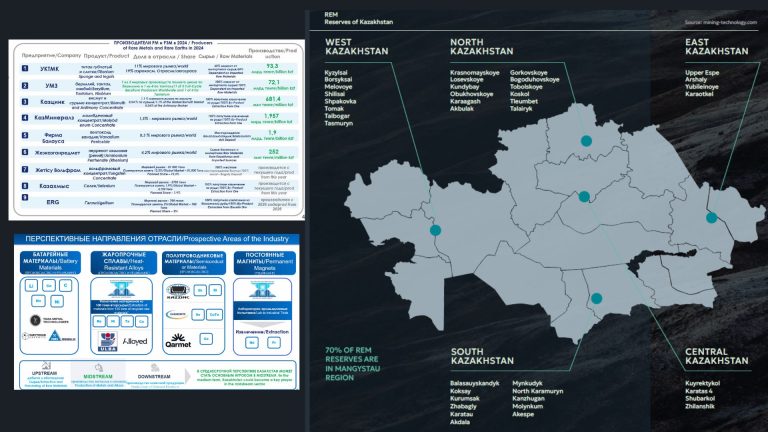
    Kazakhstan’s Minister of Industry and Construction, Kanat Sharlapayev, embarked on a productive visit to the United States, seeking to enhance collaboration with the U.S. International Development Finance Corporation (DFC) and key players in the energy, geology, and mining sectors. During discussions with DFC Deputy CEO Nisha Desai Biswal, economic development, and the notable 12% increase in U.S. companies operating in Kazakhstan over the past year were addressed. Minister Sharlapayev highlighted Kazakhstan’s potential in processing rare metals, emphasizing opportunities in titanium, beryllium, tantalum, and niobium.

    The meeting delved into various projects, including the construction of the KazAzot fertilizer plant, the production of electric vehicle charging stations, and the development of strategic hubs at the Aktau port and in the West Kazakhstan Region. Expressing interest, Biswal conveyed the DFC’s intention to explore large-scale projects in collaboration with Kazakhstan and expressed a desire to visit the country for further discussions.

    Beyond DFC engagements, Minister Sharlapayev is set to meet with members of the U.S.-Kazakhstan Business Council and the U.S. Geological Survey. The focus will be on exploring new avenues for investment collaboration, addressing aspects like volumes, long-term contracts, and investment incentives. Kazakhstan’s well-established regulatory environment adds to the appeal for potential collaborations.

    Highlighting Kazakhstan’s significance in the global supply chain, the ministry noted that the country produces and processes 17 of the 50 types of critical minerals identified by the United States. Notable examples include the successful cooperation in supplying beryllium and tantalum to major U.S. entities like Transport Technologies, International Business Corporation (IBC) U.S. Holdings, and Tosoh Specialty Metals Division (SMD).

    In a strategic move, Minister Sharlapayev also plans to discuss the country’s collaboration in critical minerals with the U.S., aligning with similar efforts made with European partners, as emphasized in his interview with CNBC in December last year.

  • Partnership at the intersection of sciences: Kanat Sharlapaev’s meeting with the Director of the U.S. Geological Survey

    Partnership at the intersection of sciences: Kanat Sharlapaev’s meeting with the Director of the U.S. Geological Survey

    In the continuing effort to bolster bilateral relations between Kazakhstan and the United States of America, Kanat Sharlapaev, the Kazakh Minister of industry and construction, conducted a meeting with David Applegate, the Director of the U.S. Geological Survey.

    This visit signifies a considerable advancement in the collaborative efforts between the two nations in geology, a field of strategic significance for Kazakhstan’s industrial progression, particularly in the extraction of critical minerals.

    The discussion during the meeting focused on the prospects for cooperation in research. A particular focus was placed on the potential use of the U.S. Geological Survey’s advanced technologies and methodologies to improve the efficiency of Kazakhstani geological research and development projects.

    «I also want to highlight that our countries have historically established close trade relationships, including in the realm of critical minerals. We have unique capabilities in producing a range of rare and rare-earth metals», noted the Minister.

    Moreover, Kanat Sharlapaev emphasized the importance and potential for expanding the existing cooperation, especially in the exploration and development of critical mineral deposits in Kazakhstan, 17 out of 50 types of which are identified by the U.S. Geological Survey as crucial.

    The key directions for future collaboration will involve attracting investment in geological exploration, mining, and processing of rare and rare-earth metals, as well as facilitating Kazakhstan’s integration into the global value chain through cutting-edge technologies and expertise.

    This meeting paves new avenues for further development and deepening of industrial and scientific ties between Kazakhstan and the USA, affirming a mutual interest in joint exploration and utilization of natural resources for the benefit of both countries.

  • Teako Minerals announces strategic pivot with Norway as key focus

    Teako Minerals announces strategic pivot with Norway as key focus

    TEAKO MINERALS CORP. (the “Company” or “Teako“) announces that following a recent Norwegian parliament meeting and the various developments in mineral exploration in Fennoscandia in recent years, the Company has decided to pause exploration efforts in British Columbia, to primarily concentrate on Norway, while also maintaining a minor focus on Finland. The majority of the Company’s projects in British Columbia are in good standing for 2-3 years, allowing the Company the strategic flexibility to explore various alternatives, including the potential of partnering with other parties or selling the projects, as part of its ongoing commitment to maximizing shareholder value. Investors will be regularly informed of developments, ensuring transparency and continuous engagement with our valued stakeholders.

    The primary targeted metals in Norway will be copper, cobalt, and base metals, as well as gold and rare earth minerals (or “REE”), while in Finland, the focus will be on gold.

    The Rationale Behind the Pivot

    Access to critical and battery metals is crucial to establishing a robust value chain in Europe and carrying out the green shift. Today, most of the battery metals, such as nickel, cobalt, and lithium, are produced outside Europe, often in countries with low ESG standards. The EU has introduced a goal that 10% of all critical minerals consumed in the EU in 2030 will need to be produced in the EU by 2030. This means that the production of battery metals within the EU must be dramatically increased to attain this goal.

    Oil and gas have been the primary contributors to Norway’s recent sovereign wealth. However, in alignment with the green shift and rising commodity prices, the mineral exploration industry and Government are keen on reviving the mining and exploration sector, which became dormant in the 1970s due to low commodity prices and the discovery of oil and gas.

    The bedrock in Norway is promising for discoveries of new occurrences of battery and critical metals with its rich history of mining copper, nickel, and cobalt. Only a handful of exploration companies have carried out systematic exploration since the late 1980s; however, multiple major mines are about to open/reopen very shortly, namely the REE mines of Engebø and Fensfelt, as well as the copper mine in Finnmark by Nussir.

    Norway is currently also a world leader in renewable energy production, with an estimated 92% of the country’s energy supply being derived from hydroelectric plants and a further 6% from wind energy and other renewable sources.

    More recently, the Company was invited to attend and contribute to an event at the Norwegian Parliament held on January 16, 2024. The event focussed on sustainable exploration and extraction of critical metals, bringing together a diverse group of experts and industry leaders to discuss establishing Norway’s pivotal role in the European battery and critical minerals supply chain.

    The event surrounded a cross-political specialist seminar with representatives and advisors in the energy and environment committee, the finance committee, the industry committee, mining companies, politicians, and various organizations. The event was followed by a networking gathering where Teako and another Service Alliance partner, Kuniko Limited, and Norsk Bergindustri, met.

    The Company would like to express its profound gratitude to the Norwegian Parliament for the opportunity to contribute to the discussions on the development of Norway’s critical mineral infrastructure. We also sincerely thank Norsk Bergindustri and our Service Alliance partner, Kuniko Limited, for hosting the networking gathering.

  • NewPeak sells Finland, NZ gold assets as it switches to battery metals

    NewPeak sells Finland, NZ gold assets as it switches to battery metals

    Australia-based NewPeak Metals has announced the sale of its Finland and New Zealand gold permits as part of the company’s strategic rejuvenation plan to focus on battery and critical metals.

    The ASX-listed company on Monday announced a binding term sheet to sell 100% of its interest in its Finnish subsidiary companies to Canco – a Canadian unlisted private company, run by resource entrepreneur Emma Fairhurst.

  • UK left vulnerable by government inaction on critical minerals, MPs warn

    UK left vulnerable by government inaction on critical minerals, MPs warn

    The UK has been left “vulnerable” over its dependency on China for critical minerals needed to make key everyday items such as smartphones, British lawmakers said in a report on Friday.

    The Foreign Affairs Committee, a cross-party panel of parliamentarians, highlighted the fallout from the UK’s dependence on the world’s second biggest economy for rare metals such as lithium and cobalt.

    “The UK’s critical minerals supply chains are vulnerable due to our continuing dependence on autocracies – in particular China – and the inaction of successive UK governments,” the report concluded.

    Entitled “A rock and a hard place: building critical mineral resilience”, the study described critical minerals as possessing “strategic significance to the UK”.

    It added they were “essential” to the nation’s “economic security and to meeting… climate change targets”.

    The report follows the government’s launch last year of the UK’s first critical minerals strategy aimed at improving security of the key commodities

    The committee criticised “the government’s decision not to assess the vulnerabilities and dependencies in the UK’s industrial supply chains before producing” the strategy.

    It called on the Conservative government, led by Prime Minister Rishi Sunak, “to publish specific targets for priority sectors and to provide a more detailed implementation plan”.

    Committee chair Alicia Kearns, a lawmaker within Sunak’s party, noted that “from F35 fighter jets to the batteries in our phones, critical minerals are the building blocks of many modern technologies.

    “They are integral to every-day living, the green transition and our nation’s defence.”

    But she added that the UK needed “to confront the weakness created by our dependency on a single state: China. These minerals power modern life and if China pulls the plug, we will all pay the price”.

    Outside the UK, the European Union last month agreed a plan to secure its own supply of critical raw materials, as Brussels seeks to reduce its dependence on other countries, notably China.

    Brussels is particularly concerned about falling behind during the transition to cleaner technologies that rely on the critical minerals.

    China is widely seen as having already made great strides because of its access to raw materials, while the United States has poured billions into subsidies for green tech.

    Critical raw materials, including rare metal tungsten, are needed to make the most of the electrical products consumers use today.

  • EU sets critical mineral goals, but faces struggle to hit them

    EU sets critical mineral goals, but faces struggle to hit them

    The European Union (EU) has set targets to dig up, recycle and refine lithium, cobalt and other metals it needs for its green transition, but a shortage of new money, crippling energy costs and local opposition could put them beyond reach.

    The bloc will likely need to find ways to trim demand, find substitute materials and forge partnerships that break China’s stranglehold on mineral supplies.

    The Critical Raw Materials Act (CRMA), due to enter force in early 2024, says the bloc should mine 10%, recycle 25% and process 40% of its annual needs of 17 key raw materials by 2030.

    The materials are essential for vehicle batteries, wind turbine magnets and other clean tech products the EU wants to manufacture. The CRMA aims to reduce the bloc’s reliance on China, which dominates global mineral processing and has already threatened EU supply with export curbs.

    Studies forecast recycling will be limited until 2035-2040, when metals re-enter the market as scrap.

    Researchers from Belgian university KU Leuven concluded in a 2022 report that the period to 2030 will be the most challenging for metal supply, highlighting risks for copper, lithium, nickel, cobalt and rare earth elements.

    The CRMA aims to speed up granting of project permits, which for a mine should be within 27 months, from a potential 10 to 15 years now, but other obstacles remain.

    Eurometaux, Europe’s association for non-ferrous metals, says Europe has potential, but needs cheaper energy and EU financing, pointing to funds on offer in the US, Canada or Japan.

    The EU has loosened state aid rules and plans to spend €3-billion ($3.3-billion) to boost battery production, but the sums are dwarfed by the $369-billion of green subsidies in the US Inflation Reduction Act. A European Sovereignty Fund has been mooted, but since dropped.

    Industry groups say prioritisation of US over EU projects by the likes of Nyrstar in gallium and germanium recovery and Jervois Cobalt in mining and refining highlights the gap.

    Meanwhile, higher EU higher energy costs have forced widespread idling of electricity-intensive metal smelters – EU aluminium production fell 35% in 2022 and has dropped further this year.

    EU has plans to reform its electricity market, but this will take time to guarantee affordable renewable energy.

    In mining, repurposing some existing sites might yield critical raw materials that were considered to be waste, according to Lawrence Dechambenoit, global head of external affairs at Rio Tinto, the world’s second-largest mining company.

    But for lithium, he said, Europe urgently needed new mines.

    Eurometaux says identified projects could meet almost 40% of EU supply by 2030, but a number are uncertain.

    These include Portugal, which has delayed auctioning of mining licences for battery-grade lithium and is now mired in a corruption scandal and Serbia, which revoked licences in 2022 for Rio Tinto’s $2.4-billion lithium project.

    Nicola Beer, the German liberal who steered the CRMA through the European Parliament, is more confident on the three targets.

    “I get calls from countries asking what they can do, which I take as a positive sign,” she said.

    However, she also points to what she calls the “fourth leg of the chair” – innovation to minimise material use or find substitutes. As an example, she passes round a black disc made from wood that can serve as graphite in batteries.

    One effective move would be a shift to more modest electric vehicles with smaller batteries. Julia Poliscanova, a senior director at campaign group Transport & Environment, says this could cut lithium and nickel demand by a quarter.

    Niclas Poitiers, research fellow at Bruegel think-tank in Brussels, says Europe’s ultimate aim of being a clean tech leader may be better served sourcing minerals from reliable allies and concentrating on higher-end products such as batteries, rather than ‘on-shoring’ mineral production.

    “The base of our wealth is that we focus in manufacturing the most value-added parts and we outsource the things that are not high value-added. And this is something that is very difficult to change,” he said.

    The CRMA does stress a need to diversify imports.

    The European Union has indeed signed multiple partnerships from Argentina to Zambia and hopes its 300 billion euro Global Gateway infrastructure investment scheme will entice resource-rich countries keen to diversify their economies and also reduce their own dependence on China.

    “It’s a win-win proposition,” Poitiers said.

  • The Critical Minerals to China, EU, and U.S. National Security

    The Critical Minerals to China, EU, and U.S. National Security

    The Critical Minerals to China, EU, and U.S. Security

    Over the last decade, minerals like nickel, copper, and lithium have been on these lists and deemed essential for clean technologies like EV batteries and solar and wind power.

    This graphic uses IRENA and the U.S. Department of Energy data to identify which minerals are essential to China, the United States, and the European Union.

    What are Critical Minerals?

    There is no universally accepted definition of critical minerals. Countries and regions maintain lists that mirror current technology requirements and supply and demand dynamics, among other factors.

    These lists are also constantly changing. For example, the EU’s first critical minerals list in 2011 featured only 14 raw materials. In contrast, the 2023 version identified 34 raw materials as critical.

    One thing countries share, however, is the concern that a lack of minerals could slow down the energy transition.

    With most countries committed to reducing greenhouse gas emissions, the total mineral demand from clean energy technologies is expected to double by 2040.

    U.S. and EU Seek to Reduce Import Reliance on Critical Minerals

    Ten materials feature on critical material lists of both the U.S., the EU, and China, including cobalt, lithium, graphite, and rare earths.

    Despite having most of the same materials found in the U.S. or China’s list, the European list is the only one to include phosphate rock. The region has limited phosphate resources (only produced in Finland) and largely depends on imports of the material essential for manufacturing fertilizers.

    Coking coal is also only on the EU list. The material is used in the manufacture of pig iron and steel. Production is currently dominated by China (58%), followed by Australia (17%), Russia (7%), and the U.S. (7%).

    The U.S. has also sought to reduce its reliance on imports. Today, the country is 100% import-dependent on manganese and graphite and 76% on cobalt.

    After decades of sourcing materials from other countries, the U.S. local production of raw materials has become extremely limited. For instance, there is only one operating nickel mine (primary) in the country, the Eagle Mine in Michigan. Likewise, the country only hosts one lithium source in Nevada, the Silver Peak Mine.

    China’s Dominance

    Despite being the world’s biggest carbon polluter, China is the largest producer of most of the world’s critical minerals for the green revolution.

    China produces 60% of all rare earth elements used as components in high-technology devices, including smartphones and computers. The country also has a 13% share of the lithium production market. In addition, it refines around 35% of the world’s nickel, 58% of lithium, and 70% of cobalt.

    Among some of the unique materials on China’s list is gold. Although gold is used on a smaller scale in technology, China has sought gold for economic and geopolitical factors, mainly to diversify its foreign exchange reserves, which rely heavily on the U.S. dollar.

    Analysts estimate China has bought a record 400 tonnes of gold in recent years.

    China has also slated uranium as a critical mineral. The Chinese government has stated it intends to become self-sufficient in nuclear power plant capacity and fuel production for those plants.

    According to the World Nuclear Association, China aims to produce one-third of its uranium domestically.

  • US, UK and partners working on 15 critical minerals projects

    US, UK and partners working on 15 critical minerals projects

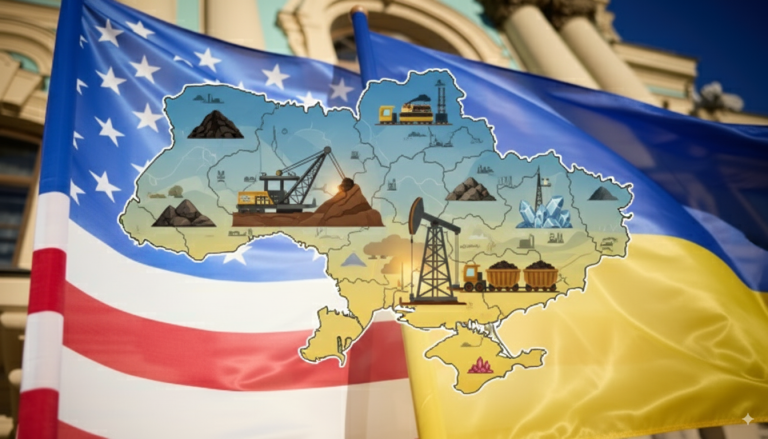
    The United States, along with its partners, is actively engaged in 15 projects aimed at securing critical mineral supplies necessary for electric vehicles and the energy transition, as revealed by a senior US official on Thursday.

    The Minerals Security Partnership (MSP), established last year by 14 governments, is committed to ensuring sufficient access to minerals such as lithium and rare earths in order to meet zero-carbon objectives.

    “We are currently exploring 15 projects across five continents, encompassing various stages from extraction to processing,” stated Jose Fernandez, the US State Department’s Under Secretary for Economic Growth, Energy, and the Environment, during a briefing in London. “Our intention is to finalize some deals within the coming months.”

    While he refrained from divulging specific company details, Fernandez did mention that at least one of the projects is located in Britain.

    The MSP, co-hosted by Britain, will convene next week during the London Metal Exchange (LME) Week, a prominent industry gathering.

    Fernandez emphasized that the MSP’s goal is to facilitate collaborations among private companies and provide assistance with financing, including support from trade banks such as the US government’s Export-Import Bank (EXIM).

    The remaining MSP members consist of the European Union, Canada, Australia, France, Germany, Italy, Sweden, Finland, Norway, Japan, India, and South Korea.

    Regarding critical minerals mined or processed in Britain, Fernandez expressed confidence that the United States would reach an agreement enabling them to qualify for US clean vehicle tax incentives.

    On Monday, Fernandez expressed optimism about reaching a similar agreement with the European Union, and Washington had already signed a minerals agreement with Japan in March.

    “These discussions are intense, and they are ongoing. We fully expect them to culminate in an agreement,” Fernandez affirmed.

    The US Inflation Reduction Act offers a $7,500 tax credit for electric vehicles purchased in the US, provided a percentage of critical battery minerals are sourced either domestically or from a free trade partner.

  • U.S. optimistic it will reach critical minerals deal with EU

    U.S. optimistic it will reach critical minerals deal with EU

    The United States expresses optimism regarding the possibility of reaching an agreement with the European Union (EU) that would enable critical minerals mined or processed in Europe to qualify for U.S. clean vehicle tax incentives. This encouraging statement was made by a senior U.S. official on Monday.

    Negotiations between the transatlantic partners are underway to determine the eligibility of EU critical minerals, such as lithium and nickel, for green subsidies under the U.S. Inflation Reduction Act. This act specifically promotes products manufactured in North America. Jose Fernandez, the Under Secretary for Economic Growth, Energy, and the Environment at the State Department, shared during a briefing in Brussels that intense negotiations are being conducted.

    Fernandez expressed hope and optimism, stating that negotiations are progressing well. Acknowledging the need for collaborative efforts, he expressed confidence in reaching an agreement between the United States and the European Union.

    He also clarified that there are no plans to link the critical minerals agreement to the resolution of the separate transatlantic negotiations addressing U.S. import tariffs on EU steel. It is important to note that the United States has already signed a minerals agreement with Japan in March. Currently, both the EU and the United Kingdom are seeking similar agreements.

    Additionally, Fernandez mentioned that he is engaging in discussions with EU officials to establish an agenda for the upcoming joint Trade and Technology Council, which the United States will host before the end of the year.

    He emphasized that both sides are committed to establishing safeguards for artificial intelligence and moving beyond general statements to concrete actions. While there is no specific timetable for reaching an agreement, there is a shared understanding that it should occur sooner rather than later. Furthermore, both parties agree that any technological advancements should uphold democratic values, human rights, and individual freedoms.

    The United States remains positive about the ongoing negotiations with the European Union, recognizing the importance of collaboration and the need to promote sustainable and innovative solutions.