Tag: critical minerals

  • European Lithium Announces Maiden 45M-Tonne Rare Earth Resource at Greenland’s Tanbreez, Positions as Critical Minerals Hub

    European Lithium Announces Maiden 45M-Tonne Rare Earth Resource at Greenland’s Tanbreez, Positions as Critical Minerals Hub

    ASX-listed European Lithium has unveiled a maiden mineral resource estimate (MRE) of 45-million tonnes grading 0.4% rare-earth oxide at its Tanbreez project in Greenland, marking a pivotal step in establishing the site as a major critical minerals supplier. The MRE, initially prepared in 2016 for Rimbal, was disclosed after European Lithium increased its stake in the project to 7.5% and deemed it a material asset following a partnership with Nasdaq-listed Critical Metals Corp (CMC).

    The Tanbreez project spans rare earth deposits at Tanbreez Fjord and Tanbreez Hill, hosted within a 270-meter-thick mineralized kakortokite unit covering 5 km by 2.5 km. While the broader host unit holds 4.7-billion tonnes, current drilling focuses on a fraction of the area. European Lithium and CMC now jointly own 49.5% of the project, with CMC completing extensive due diligence, including a recent drilling program to expand the resource.

    Executive Chairperson Tony Sage emphasized the project’s untapped potential: “Drilling has only covered 5% of the area—deeper and extension drilling will begin shortly to target a higher resource.” He highlighted Tanbreez’s role in delivering rare earth elements (REEs) to meet surging demand in North America and Europe, particularly for defense and next-generation technologies.

  • Condor Energies Secures Lithium Production License in Kazakhstan’s Kolkuduk Field

    Condor Energies Secures Lithium Production License in Kazakhstan’s Kolkuduk Field

    Condor Energies Inc., a Calgary-based energy company, has secured a license to produce solid minerals at the Kolkuduk field in Kazakhstan, spanning 6,800 hectares. The company believes the field holds significant lithium reserves, bolstering its position in the global critical minerals market.

    The Kolkuduk field is adjacent to the Sayakbay field, a 37,300-hectare site already managed by Condor. Both fields are located in a geologically active region characterized by faults that facilitate the accumulation of mineralized brines in underground reservoirs. Initial geological exploration at Kolkuduk has revealed approximately 130 milligrams of lithium per liter of brine water, with historical data indicating the presence of other valuable minerals such as rubidium, strontium, and cesium in brine reservoirs up to 1,000 meters deep.

    Don Streu, Condor’s President and CEO, emphasized the strategic importance of the project, stating, «Condor’s focus on developing critical minerals in Kazakhstan aligns with the global push to create diverse, secure, and sustainable supply chains.» Kazakhstan’s geographic location, situated between Europe and China—two of the largest consumers of critical minerals—further enhances the project’s potential.

    In addition to its mineral exploration, Condor announced in January 2024 that it had secured natural gas quotas to produce 350 tons of liquefied petroleum gas (LPG) daily starting in 2025. This volume could power 125 railway engines or 215 dump trucks with a capacity of 150 tons each, showcasing the company’s diversified energy portfolio.

  • Reducing Dependence on China: The Push for Domestic Critical Minerals Production

    Reducing Dependence on China: The Push for Domestic Critical Minerals Production

    In a recent Fox Business segment, Cove Capital Chairman and CEO Pini Althaus emphasized the growing urgency to reduce reliance on China for critical minerals—a dependence he described as “just not tenable anymore.” As geopolitical tensions escalate and supply chain vulnerabilities come into sharper focus, Althaus highlighted the importance of securing domestic sources of rare earth elements and other essential materials vital to modern industries, including technology, defense, and renewable energy.

    The discussion centered around two key developments: Ukraine’s mineral deal and Cove Capital’s joint venture in the Akbulak rare earth project. These initiatives underscore a broader global effort to diversify supply chains and reclaim control over resources that are indispensable to economic and national security.

    The Strategic Importance of Critical Minerals

    Critical minerals, such as neodymium, lithium, cobalt, and dysprosium, play an indispensable role in manufacturing everything from smartphones and electric vehicles to advanced military equipment like guided missiles and radar systems. However, China currently dominates the global market for these materials, controlling approximately 60% of mining operations and nearly 90% of processing capacity worldwide.

    This heavy reliance on China has raised alarms among U.S. policymakers and business leaders, particularly amid escalating trade disputes and concerns about Beijing’s influence over strategic industries. Althaus warned that depending on a single country for such crucial inputs poses significant risks, especially during times of geopolitical instability or conflict.

    “The world is waking up to the fact that we cannot continue outsourcing our critical mineral needs to China,” Althaus said during the interview. “It’s not just about economics—it’s about sovereignty and ensuring that we have access to the resources necessary to sustain our technological and industrial leadership.”

    Ukraine’s Mineral Deal: A Step Toward Diversification

    One promising development discussed in the segment was Ukraine’s recent agreement to explore and develop its vast mineral reserves. The Eastern European nation is believed to hold substantial deposits of titanium, uranium, and other critical minerals, which could help alleviate Europe’s—and by extension, the West’s—dependence on Chinese imports.

    Althaus praised the deal as a “game-changer” for regional supply chains, noting that it represents a proactive step toward building alternative sources of critical minerals outside of China’s orbit. By investing in Ukraine’s mining sector, Western nations can simultaneously support Kyiv’s economic recovery while advancing their own strategic interests.

    “This isn’t just about helping Ukraine rebuild—it’s about creating a more resilient and diversified global supply chain,” Althaus explained. “Every ton of critical minerals produced in Ukraine is one less ton we need to source from China.”

    Cove Capital’s Joint Venture in Akbulak

    Another focal point of the conversation was Cove Capital’s involvement in the Akbulak rare earth project, located in Kazakhstan. Through a joint venture with local partners, the company aims to extract and process rare earth elements from one of Central Asia’s most promising deposits. If successful, the project could provide a significant boost to non-Chinese supplies of these vital materials.

    Althaus described the Akbulak initiative as part of a larger mission to establish a reliable, ethical, and geopolitically stable source of critical minerals. He stressed the importance of adhering to high environmental and labor standards throughout the extraction process, contrasting this approach with some of the questionable practices associated with Chinese mining operations.

    “We’re not just focused on producing these minerals—we’re committed to doing so responsibly,” Althaus stated. “That means minimizing environmental impact, respecting workers’ rights, and fostering long-term partnerships with host countries.”

    Why Domestic Production Matters

    The push for greater self-sufficiency in critical minerals comes at a pivotal moment for the United States and its allies. With the Biden administration prioritizing clean energy technologies and Congress passing legislation like the Inflation Reduction Act—which includes incentives for domestic battery production—the demand for critical minerals is expected to surge in the coming years.

    However, without secure access to these resources, America’s transition to a green economy could face significant hurdles. Althaus pointed out that relying on foreign suppliers, particularly those tied to adversarial regimes, undermines efforts to achieve true energy independence.

    “If we want to lead the charge in renewable energy and advanced manufacturing, we need to take ownership of our supply chains,” he argued. “That starts with investing in domestic projects and forging alliances with trusted partners who share our values.”

  • Uzbekistan Aims to Boost Critical Mineral Production with $2.6 Billion Investment

    Uzbekistan Aims to Boost Critical Mineral Production with $2.6 Billion Investment

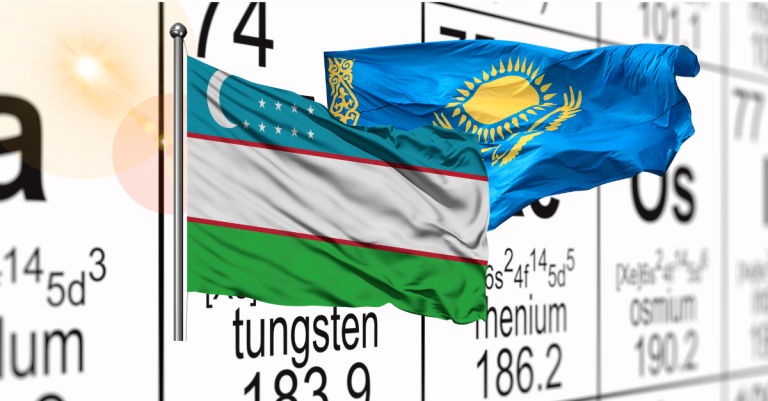
    President Shavkat Mirziyoyev of Uzbekistan has unveiled an ambitious plan to expand the country’s critical mineral resources and produce high-value-added products. During a presentation on March 7, the president emphasized the untapped potential of Uzbekistan’s mineral wealth, which includes deposits of over 30 metals such as tungsten, molybdenum, magnesium, lithium, germanium, graphite, vanadium, and titanium.

    Historically, this sector has been underdeveloped due to a lack of investment in mineral exploration, waste processing, and value-added production. However, recent organizational reforms have laid the groundwork for significant progress. Over the next three years, Uzbekistan plans to implement 76 projects focused on 28 rare minerals, with a total investment of $2.6 billion. These projects aim to enhance the country’s resource base through increased funding for geological exploration and scientific research.

    A key focus of the initiative is the application of modern technologies to extract valuable raw materials directly from ore, improve mineral purity, and produce high-value-added goods. For example, the enrichment of tungsten concentrate from the Ingichka deposit is expected to double its added value. Currently, 18 similar projects have been developed.

    To strengthen the resource-processing-science-production chain, the government has proposed establishing technoparks in the Tashkent and Samarkand regions, which are rich in molybdenumand tungsten. President Mirziyoyev also emphasized the importance of technology transfer, the establishment of modern laboratories, and the creation of training centers to build a robust foundation for Uzbekistan’s participation in the global critical minerals market.

    The president highlighted that, in the era of the Fourth Industrial Revolution, Uzbekistan must secure a strong position in this competitive market.

  • U.S. and Ukraine Reach Initial Deal on Critical Minerals Investment

    U.S. and Ukraine Reach Initial Deal on Critical Minerals Investment

    The United States and Ukraine have reached an initial agreement to jointly invest in Ukraine’s critical minerals sector. The framework, which still requires further negotiations, establishes a reconstruction investment fund with shared U.S.-Ukraine ownership. Under the terms, Ukraine will contribute 50% of future revenues from state-owned mineral, oil, and gas assets to the fund, excluding existing operations like Naftogaz and Ukrnafta.

    The goal of the agreement is to attract private sector investment to develop Ukraine’s vast mineral resources, but significant hurdles remain. Ukraine lacks modern geological mapping of its rare earth deposits, and key infrastructure, including energy grids, has been severely damaged by war. Additionally, security risks and political uncertainty may deter long-term investors.

    Unlike previous proposals, the deal does not require Ukraine to use its mineral wealth to repay U.S. military aid, nor does it provide security guarantees. Instead, it assumes that U.S. financial stakes in Ukraine’s resources will create an incentive for continued support. However, tensions between President Trump and President Zelensky over Ukraine’s wartime policies could complicate future negotiations.

    While the agreement signals the U.S. administration’s focus on securing critical minerals, its success will depend on overcoming economic and geopolitical challenges in the region.

  • Zelenskiy Freezes US Mineral Deal, Seeks Middle Eastern Investors

    Zelenskiy Freezes US Mineral Deal, Seeks Middle Eastern Investors

    Ukrainian President Volodymyr Zelenskiy has suspended a proposed deal to exploit Ukraine’s vast mineral resources, estimated to be worth trillions of dollars, after the US provided little in return. Zelenskiy is now seeking new investors in the Middle East.

    The agreement, reached with US Treasury Secretary Scott Bessent last week, remains unsigned as it “does not adequately protect the country’s interests,” according to Zelenskiy. US President Donald Trump demanded access to $500 billion worth of Ukrainian minerals as compensation for US support during the three-year war, but failed to offer the crucial security guarantees Zelenskiy seeks in any deal.

    Zelenskiy insists that any minerals agreement must include not only subsoil resources but also security guarantees and foreign investment in Ukraine, all legally formalized. However, it is increasingly apparent that none of Ukraine’s allies are willing to provide a genuine security deal.

    The relationship between Zelenskiy and Trump has deteriorated, particularly after the US announced Europe’s exclusion from Ukraine ceasefire talks that began in Riyadh on February 18. Retired Lieutenant General Keith Kellogg, special envoy to Ukraine, had stated Ukraine would be at the table, but no Ukrainian representatives were present when Russian Foreign Minister Sergei Lavrov started talks with US Secretary of State Marco Rubio.

    In light of these developments, Zelenskiy has turned to the Middle East for new partnerships. During a visit to the UAE, he announced the signing of a bilateral trade agreement, the first of its kind between Ukraine and a Gulf nation. The agreement opens the UAE market to almost all Ukrainian goods and is expected to boost Ukraine’s GDP growth.

    Zelenskiy was scheduled to visit Saudi Arabia but canceled his plans as President Trump began US-Russia bilateral negotiations in Riyadh aimed at stopping Russia’s war against Ukraine. Prior to this, a Ukrainian delegation had already started discussions with Saudi Arabian entrepreneurs, presenting investment opportunities worth $500 million in various sectors including energy, agriculture, and infrastructure.

    As negotiations continue, the value of Ukraine’s mineral deposits has been estimated at up to $11.5 trillion, including significant reserves of critical minerals such as lithium and titanium. The outcome of these discussions could have significant implications for Ukraine’s economic future and its relationships with global powers.

  • Putin Calls for Accelerated Lithium Mining as Russia Seeks Self-Sufficiency

    Putin Calls for Accelerated Lithium Mining as Russia Seeks Self-Sufficiency

    Russian President Vladimir Putin has urged the country to expedite the development of its domestic lithium and rare earth mineral deposits, citing the strategic importance of these resources for high-capacity battery production and advanced technologies.

    Speaking at a conference in Moscow, Putin criticized the country’s delay in mining lithium, stating, “We still do not mine lithium. And how can we develop without it? But we can do it. And we could have done it 10 or 15 years ago.”

    Russia possesses an estimated 1 million tons of lithium reserves, according to the United States Geological Survey (USGS), with Russian estimates placing lithium oxide reserves at 3.5 million tons. However, prior to the conflict in Ukraine, the country relied on lithium imports, which have been severely disrupted by Western sanctions. As a result, Moscow has intensified efforts to extract its own lithium and aims to eliminate imports of the metal and other rare earth elements by 2030.

    Additionally, Russian forces are advancing toward one of Ukraine’s largest lithium deposits, further underscoring the geopolitical significance of these critical minerals in the ongoing conflict.

  • Fincraft Group Pivots to Green Energy and Critical Minerals in Kazakhstan

    Fincraft Group Pivots to Green Energy and Critical Minerals in Kazakhstan

    As the world transitions to cleaner energy sources, Kazakhstan is emerging as a key player in the global energy market. Fincraft Group’s President, Kenges Rakishev, joins Proactive to discuss the country’s promising region for energy and resource investments.

    Kazakhstan, strategically located between China, Europe, and Russia, boasts a rich hydrocarbon industry, but is also emerging as a significant supplier of critical minerals essential for the energy transition. The country is investing in the renewable sector, particularly wind and solar power, to complement its oil and gas sector and strengthen long-term energy security.

    Diversified Investments Shape the Local Energy Sector

    Fincraft’s strategic approach and diversified investments have helped shape the local energy sector. The company balances traditional energy, oil, and gas with next-generation resources like nickel, cobalt, and renewable energy, ensuring long-term resilience. Fincraft’s investments in infrastructure and technology to reduce emissions and increase efficiency are also key to Kazakhstan’s success.

    Investments and Strategies

    Rakishev highlights the company’s investments in Equus Petroleum and Tethys Petroleum as part of its energy transition strategy. Focusing on cleaner extraction and refining technology is essential to meet the growing global demand for locally produced carbon-hydrocarbon. Gas is a significant component of Fincraft’s strategy, with a major project under way to construct and finish a gas plant.

    The company has divested from ARK Petroleum and Nomad Oil and redirected capital to projects that align with global trends in critical minerals, low-carbon energy, and sustainable extraction.

    Global Resources Portfolio and Energy Security

    Fincraft’s resource portfolio includes lithium, nickel, and cobalt, essential for the renewable energy sector. The company plans to create a holding for oil and gas as well as resources like lithium, nickel, and cobalt. The development of Beineu Petroleum contributes to boosting both economic growth and energy security in Kazakhstan by securing domestic oil and gas supply while integrating with new energy infrastructure.

    Positioning Kazakhstan for Success

    Kazakhstan’s partnership with major players like China and the US will enable it to remain competitive and secure in the energy market. The country’s unique position allows it to bridge east and west, while maintaining energy independence. By investing in critical minerals and renewables, Kazakhstan is positioning itself as a future leader in the green energy supply chain.

    Future Opportunities and Trends

    As Kazakhstan embarks on a new step in the energy transition, carbon capture and low emission oil production will become priorities. The country will also focus on strengthening its pipeline energy export network to Europe and China as demand for stable non-Russia energy sources increases. Growing investment in critical minerals, rare earth materials, and grid storage will drive Kazakhstan’s development as a key player in the global shift towards electrification.

  • Zelenskyy Rejects US Proposal to Control 50% of Ukraine’s Critical Minerals

    Zelenskyy Rejects US Proposal to Control 50% of Ukraine’s Critical Minerals

    Ukrainian President Volodymyr Zelenskyy has reportedly rejected an initial proposal by the United States to secure 50% ownership of Ukraine’s critical minerals as part of a deal for continued military and economic aid in its ongoing war with Russia. According to three sources cited by Reuters, the US made the offer, which Zelenskyy did not outright dismiss but stated lacked the necessary security provisions required by Kyiv.

    Critical minerals, which include metals like cobalt, copper, lithium, and nickel, are essential for producing hi-tech products, green energy technologies, consumer electronics, artificial intelligence infrastructure, and weapons. These materials are in high demand due to the global push for energy transition and climate change mitigation. The International Energy Agency (IEA)estimates that the market for these minerals reached £320 billion in 2022, with demand expected to more than double by 2030 if countries meet their clean energy pledges.

    The term critical minerals is politically defined, with different countries prioritizing materials based on their national security, economic, and geopolitical goals. In 2022, the US Geological Survey (USGS) identified 50 minerals, including aluminium, zirconium, arsenic, beryllium, cobalt, lithium, graphite, indium, and tellurium, as vital for renewable energy, defense, and infrastructure development.

    The US proposal highlights the growing geopolitical competition for access to these resources, which are crucial for technological advancement and military capabilities.

  • Harnessing Nature’s Elements: Magnesium’s Role in Planetary Restoration and Sustainable Investing

    Harnessing Nature’s Elements: Magnesium’s Role in Planetary Restoration and Sustainable Investing

    Amid the global climate crisis—marked by rising temperatures, ocean acidification, pollution, and land degradation—nature itself may hold solutions to address these challenges. Minerals like magnesium play a crucial role in planetary restoration efforts, offering potential benefits across ecosystems, agriculture, oceans, and human health.

    Magnesium, a cornerstone of photosynthesis, is vital for agriculture and forest health. It enhances plant nutrient uptake, bolsters soil fertility, and strengthens plant immunity. In oceans, magnesium hydroxide may help mitigate ocean acidification, preserving marine ecosystems like coral reefs. Magnesium is also essential for over 300 enzymatic processes in humans, supporting bone strength, nerve function, and cardiovascular health.

    Beyond magnesium, minerals such as olivine, lithium, cobalt, nickel, copper, and rare earth elements play pivotal roles in advancing sustainability. Olivine’s ability to sequester carbon when spread across beaches and exposed to ocean waves exemplifies nature’s potential to mitigate greenhouse gas emissions. Meanwhile, critical minerals fuel clean energy innovations like electric vehicles and renewable energy storage, which are essential for reducing carbon emissions.

    However, mineral extraction poses significant challenges, from environmental degradation to water contamination and CO2 emissions. Investors must consider not only a mineral’s quality and location but also environmental safeguards, geopolitical risks, regulatory frameworks, and local community relations. Collaboration across multiple sectors is key to responsible mining practices that prioritize both profits and planetary health.

    Strategic mineral investments represent an opportunity not only for financial returns but also for contributing to sustainable solutions for global challenges. With careful planning, investors can help shape a future where natural resources drive positive environmental change.