Tag: China

  • World’s Largest Gold Consumers Struggle to Meet Demand with Mined Production

    World’s Largest Gold Consumers Struggle to Meet Demand with Mined Production

    A recent study by The Gold Bullion Company reveals that the world’s biggest gold consumers are not meeting their domestic gold demand through mined production, with India leading the gap. The study utilized data from the World Gold Council to analyze the disparity between gold demand and mined production across various countries.

    India, with a population exceeding a billion, has a substantial gold demand, totaling over 747 tonnes in 2023, primarily driven by jewelry and gold bar consumption. This amounts to approximately 0.52 grams per person. However, the country’s mine production significantly lags behind, producing only 15.1 tonnes, making demand nearly 50 times higher than supply.

    China, the second largest consumer, also faces a significant gap despite having the highest mine production among the top ten countries. With a population of over 1.4 billion, China’s annual gold demand reached 909.7 tonnes, but mine production could only cover about half of that.

    In third place is Turkey, where gold demand has been rising, from 1.13 grams per person in 2021 to 2.34 grams in 2023. The country’s mine production in 2023 was 36.5 tonnes, six times less than its demand of 201.6 tonnes.

    The United States also experiences a shortfall, with 2023 mine production at 166.7 tonnes, falling short by about 80 tonnes compared to its demand.

    Rick Kanda, managing director at The Gold Bullion Company, emphasized the importance of sustainable metal production, noting its critical role in environmental conservation, economic stability, and societal benefits. He highlighted that sustainable practices help conserve finite resources, reduce energy consumption, and minimize pollution, thus supporting a balanced approach to resource utilization.

  • EU Urged to Establish Independent Pricing for Critical Minerals

    EU Urged to Establish Independent Pricing for Critical Minerals

    The head of an EU-funded group has called for a European system to set prices for critical minerals essential for the energy transition, independent of China’s influence. Bernd Schaefer, CEO of EIT RawMaterials, emphasized the need for a pricing mechanism that reflects the supply and demand within Europe, rather than being susceptible to China’s market decisions.

    Western start-ups are struggling with oversupply and weak prices of materials like lithium, cobalt, and rare earths, which are impacting their cash flows and ability to compete with China. “Europe should have a critical materials platform that has a price-building mechanism that reflects the supply and demand situation in Europe,” Schaefer told Reuters at the World Materials Forum in Paris.

    Schaefer also advocated for the creation of an exploration fund to enhance the mining of critical minerals in Europe, suggesting a substantial investment, “This should not be just a couple of million (euros), it should be a billion, it must be a big number.”

    EIT RawMaterials, an alliance of over 300 companies and academics, is instrumental in executing the EU plan to secure raw materials necessary to achieve net zero greenhouse gas emissions by 2050. The EU Critical Raw Materials Act, effective since May, sets ambitious targets for the mining, recycling, and processing of minerals like lithium and copper by 2030.

    Schaefer warned that political uncertainty could hinder progress towards these targets, citing recent elections in France, the European Parliament, and instability in Germany. “This discussion is in limbo. We are in a period of transition within the Commission and within Europe,” he noted. “We might be losing time, but we cannot afford to lose time.”

    As a neutral, non-political entity, EIT RawMaterials could play a pivotal role in driving the necessary changes, Schaefer added.

  • Сhinese Geologists Discover Two New Minerals at Bayan Obo Rare-Earth Mine

    Сhinese Geologists Discover Two New Minerals at Bayan Obo Rare-Earth Mine

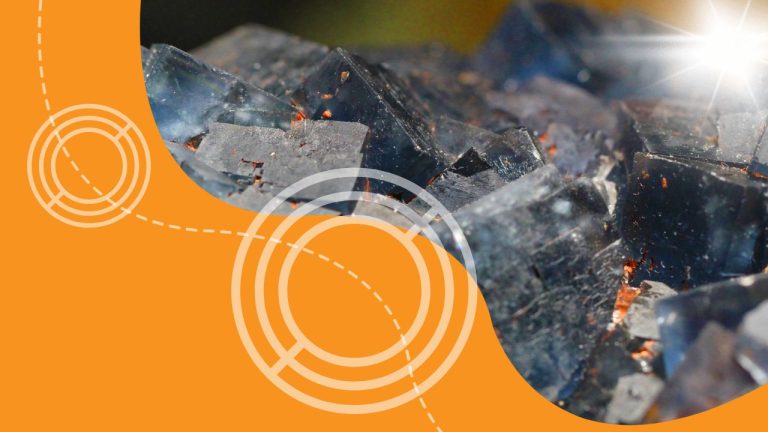
    Chinese geologists, in collaboration with several research institutions including the CAS Institute of Geology and Geophysics and Inner Mongolia Baotou Steel Union Co., Ltd., have made a significant breakthrough at Bayan Obo, the world’s largest rare-earth mine. They have identified two new minerals, Oboniobite and Scandio-fluoro-eckermannite, marking the 19th and 20th discoveries since research began in 1959. Oboniobite, characterized by its yellow-brown to brown hue and plate-like structure, measures between 20 to 100 micrometers. Meanwhile, Scandio-fluoro-eckermannite, the first mineral containing scandium found in China, appears in pale yellow or light blue with a columnar shape up to 350 micrometers. The discovery underscores the ongoing importance of Bayan Obo in mineral research and its contribution to scientific knowledge.

  • China Introduces New Regulations to Protect Rare Earth Supplies

    China Introduces New Regulations to Protect Rare Earth Supplies

    China has announced a series of new rare earth regulations aimed at securing its supplies for national security purposes. These regulations, issued by the State Council on Saturday, encompass rules on the mining, smelting, and trade of critical materials essential for products ranging from electric vehicle magnets to consumer electronics.

    According to the regulations, rare earth resources are state-owned, and the government will oversee the industry’s development. China, the world’s leading producer of rare earths, accounts for nearly 90% of global refined output. The new rules, effective from October 1, mandate the establishment of a rare earth product traceability information system. Enterprises involved in mining, smelting, separation, and export of rare earth products must maintain accurate records of product flow and enter this data into the traceability system.

    This move follows China’s introduction last year of export restrictions on germanium and gallium, crucial for the chip-making sector, citing national security concerns. Additionally, China banned the export of technology for making rare earth magnets and the extraction and separation of rare earths. These actions have raised concerns about potential supply restrictions escalating tensions with the West, particularly the United States, which accuses China of economic coercion—a claim Beijing denies.

    The regulations come at a time when the EU is set to impose provisional tariffs on Chinese electric vehicles on July 4, citing unfair state subsidies. Both sides have indicated plans for talks regarding the proposed tariffs. The EU has ambitious 2030 targets for domestic production of minerals vital for the green transition, especially rare earths, anticipating a sixfold increase in demand by 2030 and a sevenfold increase by 2050.

  • Solvay’s La Rochelle Plant Aims for Revival Amid Europe’s Green Energy Push

    Solvay’s La Rochelle Plant Aims for Revival Amid Europe’s Green Energy Push

    Four decades ago, a rare earth processing plant on France’s Atlantic coast was one of the largest in the world, producing materials essential for color televisions, arc lights, and camera lenses. Today, its owner Solvay is striving to rejuvenate the La Rochelle plant after years of reduced output, aligning with Europe’s efforts to enhance mineral production vital for the green energy transition.

    The factory’s 76-year history highlights the challenges faced by Europe and the United States as they attempt to reverse the significant shift of rare earth processing to China that began around 25 years ago. China emerged as a dominant force in rare earths, a group of 17 minerals, by offering lower prices than the West, bolstered by government support and often disregarding environmental concerns that accompany the sector’s toxic waste production. Recently, China has intensified sustainability efforts and closed polluting operations.

    In the 1980s and 1990s, the La Rochelle plant’s output set the global benchmark for rare earth prices. Today, it produces 4,000 metric tons annually of separated rare earth oxides, a small portion compared to China’s 298,000 tons last year. Solvay’s current focus is on processed rare earths for auto catalysts and electronics, not the permanent magnets essential for electric vehicles (EVs) and wind energy. However, Solvay plans to start producing these by next year.

    “We at Solvay want to put rare earths for permanent magnets back on the map in Europe,” said An Nuyttens, president of Solvay’s division that produces rare earth products. “It’s not an easy one; it’s going to be step by step, as the chain from mining up to magnets production needs to be built.”

    The 160-year-old chemicals group aims to eventually supply 20% to 30% of Europe’s separated rare earths demand for magnet production, but Nuyttens noted this target might not be achievable until after 2030, with no specific date given.

    Under a new EU law effective since May, the bloc has set ambitious 2030 targets for domestic production of critical minerals necessary for the green transition: 10% of annual needs mined, 25% recycled, and 40% processed domestically by the decade’s end. Rare earths, crucial for permanent magnets that power motors in EVs and wind energy, are among the most important critical minerals. EU demand is predicted to increase sixfold by 2030 and sevenfold by 2050.

    However, according to production forecasts and interviews with over a dozen industry executives, consultants, EU-funded officials, industry groups, and investors, the EU will struggle to meet most of its rare earth goals. Missing targets in the Critical Raw Material Act (CRMA) could hinder the bloc’s zero-carbon ambitions and increase dependence on China amid heightened geopolitical tensions with the West. China currently accounts for 98% of EU rare earth permanent magnet imports.

    EU Commission spokesperson Johanna Bernsel stated that while they couldn’t confirm the Reuters findings, the bloc would do its best to support projects that help meet CRMA goals. “Projects in Europe will benefit from a streamlined permitting process, as well as coordinated support for accessing de-risking financing tools and matchmaking with downstream users,” Bernsel said.

  • Central Asia’s Untapped Rare-Earth Reserves Spark Global Interest

    Central Asia’s Untapped Rare-Earth Reserves Spark Global Interest

    The seven countries of Central Asia—Kazakhstan, Kyrgyzstan, Tajikistan, Turkmenistan, Uzbekistan, plus Afghanistan and Mongolia—hold some of the world’s largest but largely untapped reserves of rare-earth minerals. Three major developments have significantly heightened the importance of these reserves. Firstly, the increasing role of rare earths in modern technology and their crucial part in the clean energy transition have brought these minerals to the forefront of international focus. Secondly, China’s decision to reduce or cut off rare earth supplies following Moscow’s expanded invasion of Ukraine and subsequent Western sanctions has forced the West to seek alternative sources, spotlighting Central Asia. Lastly, Central Asian countries view Western involvement in their rare-earth sectors as a means to further diminish Russian control and prevent Beijing from becoming the dominant power in the region.

    All Central Asian governments are keen to develop their rare-earth sectors to diversify their economies, traditionally reliant on oil and gas revenues. However, lacking the necessary resources, these countries have turned to external powers for investment, igniting a diplomatic contest involving China, Russia, and the West. This intense competition has been dubbed the “Great Game of the 21st century,” reflecting the historical rivalry between Russia and Great Britain for influence in the region.

    The involvement of external powers is crucial in this new “Great Game.” Over the past year, senior officials from these powers have frequently visited the region and invited Central Asian representatives to discuss rare-earth development. China’s proactive approach has seen it dominate rare-earth leases in Kyrgyzstan and Tajikistan, aligning with its strategy to control rare-earth markets. However, this has occasionally backfired, prompting opposition in Central Asia and compelling the West to respond.

    Increased Western interest has led the European Union, the United Kingdom, and Western allies like South Korea to ramp up their engagement and investment in the region’s rare-earth sectors. Diplomatic activities have intensified, with rare earths now featuring prominently in foreign policy documents. Conversely, Russia’s involvement is conflicted; it supports Chinese activities to limit Western influence but fears that new market participants could depress prices, impacting the Russian economy.

    The competition presents Central Asian governments with opportunities to leverage external rivalries to their advantage, though it also brings significant risks. Potential threats from outside, such as aggressive interventions by China or Russia, loom large. More pressing, however, are internal challenges. Uneven development of rare-earth sectors could create new elite classes and regional power imbalances, potentially leading to instability, particularly in Tajikistan.

  • Kazakhstan and China Sign Agreement for Major Copper Smelting Plant

    Kazakhstan and China Sign Agreement for Major Copper Smelting Plant

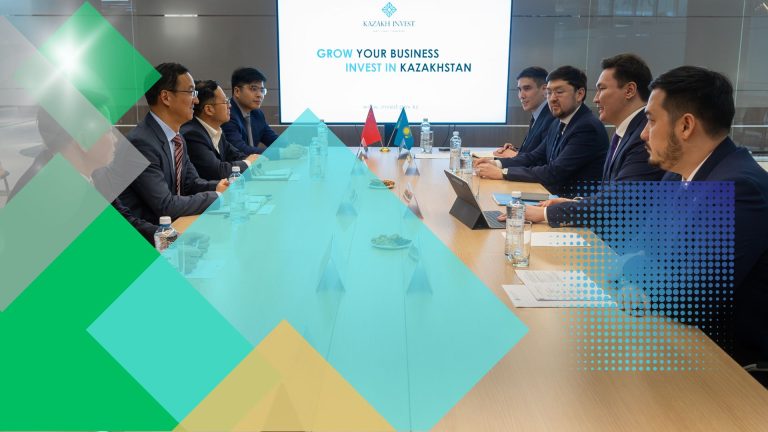
    Prime Minister of the Republic of Kazakhstan, Olzhas Bektenov, and Chairman of the Board of Directors of China Nonferrous Metal Mining Co. Ltd., Xi Zhengping, discussed cooperation in the copper industry, according to Kazinform news agency, citing the press service of the Cabinet.

    The meeting culminated in the signing of an agreement, in the presence of Prime Minister Bektenov, to construct a copper smelting plant with an annual capacity of 300,000 tons of copper. The agreement involves KAZ Minerals Smelting as the client, China Nonferrous Metal Industry’s Foreign Engineering and Construction Co., Ltd. (NFC) as the provider of design and equipment procurement services, and NFC Kazakhstan as the contractor for construction and commissioning.

    The plant will be built near the village of Aktogay in the Abay region. It will use copper concentrate from the Bozshakol and Aktogay mining and processing plants, operated by Vostoktsvetmet. Upon completion, the project will create a cluster combining one of the world’s largest copper mines with modern copper smelting facilities. The project, with an estimated cost of $1.5 billion, is expected to create over 1,000 new jobs and be operational by the end of 2028.

    This high-tech enterprise will be the largest in the republic, producing high value-added products. The technologies used in the copper smelting process will meet global environmental standards. The plant will satisfy domestic market needs for processing copper-containing raw materials and producing cathode copper, which is extensively used in electric power, mechanical engineering, and other industrial sectors. Additionally, the new plant plans to produce refined gold, silver, and sulfuric acid.

    “The Head of State has set a task for sustainable economic growth. The construction of a new copper smelting plant is a major industrial project that will increase the processing of copper raw materials mined in the country and make a significant contribution to our economy. The copper industry is one of the priority sectors of our industry, and its dynamic development is very important to us,” emphasized Olzhas Bektenov.

    China Nonferrous Metal Industry’s Foreign Engineering and Construction Company Ltd (“Non Ferrous China”) is a state-controlled company listed on the Shenzhen Stock Exchange. It participates in international project contracts and the development of non-ferrous metal resources. NFC was the first Chinese company to invest in mining assets for the extraction and processing of non-ferrous metals outside China and also owns mining projects within the country. It operates in over 20 countries worldwide and has been the leading contractor on KAZ Minerals projects – Bozshakol, Aktogay, and Bozymchak.

  • Kazakhstan to Welcome New Metallurgical Plant in Five Years

    Kazakhstan to Welcome New Metallurgical Plant in Five Years

    In a recent development, Kazakhstan is set to launch a new metallurgical plant in five years, with a capacity of 5 million tons, in Shymkent. The project will be carried out by the Chinese company Fujian Hengwang Investment Co., Ltd, with the necessary documents already signed in the city’s administration, as reported by kapital.kz.

  • Chinese Mining Company Plans to Elevate Copper and Gold Operations in Serbia

    Chinese Mining Company Plans to Elevate Copper and Gold Operations in Serbia

    Zijin Mining, a prominent Chinese mining company, announced its ambitious plans on Wednesday to enhance copper and gold operations in Serbia, aiming to position the Balkan nation as the primary copper producer in Europe. Chen Jinghe, the chairman of Zijin Mining, revealed the company’s strategy to achieve an annual production target of at least 250,000 tonnes of copper and 10 tonnes of gold from its Serbian operations, indicating a slight increase from the previous year. Emphasizing a shift towards underground mining development, Chen articulated the company’s future investment direction during a press briefing.

    Zijin Mining, renowned for its significant contributions to the gold and copper industry in China, solidified its partnership with Serbia’s RTB Bor mining operation in 2018. The move aligns with China’s broader economic engagement in Serbia and neighboring Balkan countries, reflecting Beijing’s concerted efforts to expand its economic influence across central and eastern Europe. The increasing significance of China to Serbia’s economy was underscored by the country’s Minister of Trade, who ranked China as Serbia’s second most vital economic partner after the EU. This sentiment anticipates a potential visit by Chinese President Xi Jinping later in the year.

    In terms of trade, Chinese-owned enterprises emerged as dominant exporters in Serbia, with Zijin Mining leading the pack, followed by Zijin Copper and the HBIS group. Together, these entities accounted for a notable share of Serbia’s total exports, contributing approximately 8.7 percent to the country’s export revenue in the previous year. Furthermore, Serbia witnessed a substantial influx of foreign investment in 2023, with China emerging as the foremost investor, injecting 1.37 billion euros into various sectors, consolidating its position as a key economic stakeholder in the nation.

    However, amidst governmental praise and economic advancements, communities residing near the expansive mining facilities in Bor have voiced persistent opposition to the projects, staging protests since January. Demonstrations frequently disrupt local transportation routes, reflecting ongoing tensions surrounding environmental concerns and community welfare.

  • China’s Strategic Dance: Unveiling the Depths of Sino-Kazakh Economic Cooperation

    China’s Strategic Dance: Unveiling the Depths of Sino-Kazakh Economic Cooperation

    In a narrative often oversimplified by the Belt and Road Initiative, China’s economic entwinement with Kazakhstan goes beyond a mere node in a transregional strategy. While Kazakhstan undeniably serves as a linchpin in China’s westward connectivity ambitions, reducing its role solely to that obscures the nuanced interplay between Chinese adaptability and Kazakhstani agency.

    A prime example is the symbiotic relationship forged in uranium extraction and nuclear fuel supply. Contrary to assumptions, Chinese entities find themselves navigating Kazakhstan’s terms, illustrating a power dynamic that challenges clichéd perceptions.

    Kazakhstan reigns as the globe’s leading natural uranium producer, commanding 43% of the market in 2022. Its prowess stems from abundant resources and cost-efficient extraction methods, notably in-situ leaching (ISL). Kazatomprom, the national nuclear company, wields formidable influence, leveraging its dominance to modernize the sector and attract foreign investment.

    Over two decades, Kazakhstan’s uranium output skyrocketed, facilitated by strategic alliances with China. Despite producing no nuclear energy domestically, Kazakhstan’s ambitions align with China’s voracious demand for uranium, driven by an ambitious nuclear energy expansion unmatched by the West.

    China, with its burgeoning civilian reactor fleet, employs a multifaceted strategy to secure uranium supply, encompassing domestic mining, overseas ventures, and strategic reserves. Recent investments in domestic exploration signal China’s intent to reduce reliance on foreign suppliers, with Kazakhstan playing a pivotal role in historical uranium imports.

    This intricate dance between China and Kazakhstan underscores a narrative far richer than the Belt and Road rhetoric suggests, revealing a strategic partnership shaped by mutual interests and strategic maneuvering.