Tag: China

  • China Imports Up to 70% of Critical Metals from Central Asia

    China Imports Up to 70% of Critical Metals from Central Asia

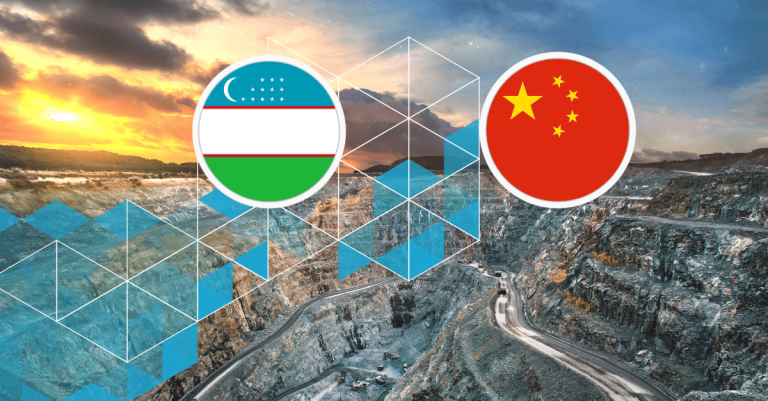
    Despite the lack of official data on the export of rare earth metals by Central Asian countries, an analysis of ore, slag, and ash exports reveals interesting trends. These exports often include critical resources highly sought after by leading global powers, particularly metals such as molybdenum, titanium, and vanadium.

    According to Trademap.org data from 2019 to 2023, Central Asian countries exported a wide range of ores and concentrates, including copper, iron, precious metals, zinc, lead, molybdenum, chromium, and niche metals such as niobium and tantalum.

    In recent years, the market has also seen the introduction of products such as tin, tungsten, and titanium ores. For example, copper ore exports showed stable growth—from approximately $1.17 million in 2019 to around $3.15 million in 2023. Iron ore peaked at $1.6 million in 2021 before experiencing a decline in export volumes in subsequent years.

    One notable trend is the significant increase in molybdenum ore exports, which surged from about $4 million in 2019 to approximately $144 million in 2023. This is a clear reflection of increased global demand and investment.

    An analysis of trade with the European Union under the category “26 Ores, Slags, and Ash” shows that molybdenum stands out: its exports increased from around $11 million in 2021 to nearly $60 million in 2023. In this segment, Kazakhstan holds a dominant position, providing nearly the entire cumulative export value, while contributions from other Central Asian countries remain significantly lower.

    Central Asian countries’ export portfolios reveal a trend towards transitioning from traditional raw materials such as copper and iron to more valuable niche ores, especially molybdenum. This trend is evident both in the global market and in trade with the European Union, where Kazakhstan acts as a key supplier.

    Will the European Union be able to position itself as a key importer of critical metals from Central Asia? The future will tell.

  • Mongolia Pushes for New China Railway Link to Boost Coal Trade

    Mongolia Pushes for New China Railway Link to Boost Coal Trade

    Mongolia is set to urge China next week to approve a new railway connection aimed at expanding their already growing coal trade. Prime Minister Oyun-Erdene Luvsannamsrai will visit China on February 13 to sign an agreement for the cross-border railway and the expansion of coal production at the Tavan Tolgoi mine, a government spokesperson told Bloomberg.

    While China’s Foreign Ministry declined to comment on the matter, spokesperson Guo Jiakun stated that both nations remain committed to strengthening bilateral cooperation. Mongolia was China’s fourth-largest foreign coal supplierin 2023, providing 60% of its coking coal imports. A trade boost would increase Mongolia’s revenue, while China seeks alternatives to U.S. and Russian coal due to tariffs and sanctions.

    Mongolia’s parliament has already approved the railway link and allocated 976 billion tugrik ($283 million) for Erdenes Tavan Tolgoi, a state-owned miner, to fund the project, according to Ikon News. The deal with China is also expected to cover coal sales and purchase agreements.

    Mongolia’s coal shipments to China soared to 83 million tons in 2024, up from 70 million in 2023 and 31 million in 2022, following the construction of a 240-km railway from the Tavan Tolgoi mine to the border. However, the gauge difference between Mongolian and Chinese railways remains a key logistical challenge.

  • What’s Behind Rosatom’s Sale of Stakes in Kazakhstan to China

    What’s Behind Rosatom’s Sale of Stakes in Kazakhstan to China

    What’s Behind Rosatom’s Sale of Stakes in Kazakhstan to China Russia’s state nuclear corporation Rosatom has sold its stakes in three uranium mining joint ventures in Kazakhstan to Chinese companies, amid sanctions risks and financial needs. The sale includes a 49.99% stake in Zarechnoye, a 30% stake in Khorasan-U, and a 30% indirect stake in Kyzylkum joint ventures with Kazakhstan’s national company Kazatomprom.

    The deal appears to be driven by Kazatomprom’s concerns about potential Western sanctions due to its partnership with Rosatom. As the world’s largest uranium producer, Kazatomprom sells 29% of its production to Europe and wants to avoid sanctions complications that could affect its business. For China, acquiring these stakes aligns with its energy security strategy. While the Zarechnoye deposit has limited reserves (3,500 tons of uranium with 3-5 years of operation left), the Khorasan-1 site contains about 33,000 tons. This acquisition supports China’s ambitious nuclear power expansion plans – the country aims to build over 150 new reactors by 2035, adding to its current 54 operating units.

    The deal benefits Kazakhstan by establishing direct producer-consumer cooperation with China, which has both modern mining technologies and investment capacity, unlike Rosatom’s older extraction methods. While some deposits may be nearing depletion, unexplored areas and potential new partnerships with Kazatomprom make this a strategic investment for China’s growing nuclear sector.

  • Kazakh-Chinese Nuclear Fuel Venture Hits Production Milestone

    Kazakh-Chinese Nuclear Fuel Venture Hits Production Milestone

    The Kazakh-Chinese joint venture, Ulba-TVS LLP, has successfully reached its target production capacity of 200 tons of low-enriched uranium fuel assemblies by the end of 2024. This achievement is enough to reload nuclear fuel for six reactors.

    The Ulba-TVS plant, operational since November 2021, has played a crucial role in meeting the increasing demand for nuclear power in China. The facility, located in Kazakhstan, is the only one in Central Asia dedicated to producing nuclear fuel for power plants. It has received certification from Framatome and recognition as a certified nuclear fuel supplier from the China General Nuclear Power Corporation (CGNPC-URC), the end user in China. This certification enhances the plant’s credibility and ensures the high quality of its nuclear fuel products.

    The joint venture is 51% owned by Ulba Metallurgical Plant (Kazatomprom) and 49% by CGNPC-URC. In December 2022, Ulba-TVS delivered its first consignment of fuel assemblies to a Chinese nuclear power plant. Kazatomprom is the world’s largest producer of uranium, with the company’s attributable production representing approximately 20% of global primary uranium production in 2023.

  • Europe’s EV Battery Dreams Dim as China Takes the Lead

    Europe’s EV Battery Dreams Dim as China Takes the Lead

    Europe’s ambition to develop a robust homegrown EV battery industry to reduce dependence on China is faltering, with Chinese and Asian manufacturers stepping in to fill the void.

    The most notable setback has been the collapse of Northvolt, a Swedish startup once celebrated as a cornerstone of Europe’s green energy vision. Despite securing the EU’s largest-ever green loan and support from Volkswagen and BMW, Northvolt filed for bankruptcy protection in the US, with its cofounder and CEO, a former Tesla executive, stepping down.

    Across Europe, 12 out of 16 planned European-led battery factories have been delayed or canceled. In contrast, 10 of 13 projects in Europe led by Asian manufacturers, such as China’s Contemporary Amperex Technology Co. (CATL) and South Korea’s Samsung SDI, are moving forward, underscoring a widening gap in the race for EV battery dominance.

    Europe’s original vision, driven by massive government subsidies, included factories in Sweden, Poland, Germany, and Canada, designed to produce greener batteries using 100% recycled materials like nickel, manganese, and cobalt. However, this ambition is now unraveling. Industry experts warn of severe repercussions. Andy Palmer, former CEO of Aston Martin, stated that the failure to establish domestic battery production jeopardizes Europe’s automotive industry, risking factory closures and job losses as automakers consider relocating to regions with stronger supply chains.

    Other projects are also faltering, with Mercedes-Benz and Stellantis delaying plants in Germany and Italy, while Volkswagen has pushed back capacity targets for its European facilities. The UK’s Britishvolt collapsed last year, further compounding the region’s struggles.

    China, supplying 80% of the world’s lithium-ion batteries, has outpaced Europe with massive investments in its domestic EV sector. Companies like CATL and BYD have become global leaders, while European automakers are now scaling back their electrification strategies and canceling battery orders, leaving the continent’s dreams dimming.

  • EU Faces Challenges in Critical Raw Material Strategy Amid Global Race for Supply Chain Resilience

    EU Faces Challenges in Critical Raw Material Strategy Amid Global Race for Supply Chain Resilience

    While the Brussels Effect has driven strict regulatory standards for Critical and Strategic Raw Materials (CSRM), Europe may risk falling behind other global players in building a resilient supply base. An analysis by the French Institute of International Relations (Ifri), a Paris-based think tank, evaluates European de-risking policies in the context of international concerns over reliance on a few key suppliers, particularly China.

    China’s export controls on materials like germanium, gallium, and rare earths underscore the risk of critical dependencies as a geopolitical tool. In response, OECD countries are emphasizing national security, strategic autonomy, and the governance of CRM supplies. The EU and the United States have taken steps to diversify their supply chains. The EU’s Critical Raw Materials Act (CRMA), part of the Green Deal, emphasizes sustainability and autonomy, while the US focuses on national security through investments like the Development Finance Corporation (DFC). Japan began addressing CRM dependencies as early as 2010.

    To counterbalance China’s Belt and Road Initiative, the EU and US have increased CRM partnerships since 2021. However, Ifri’s analysis stresses the need for these partnerships to yield immediate, tangible results. Countries in the Middle East are also integrating into CRM value chains, while resource-rich developing nations seek to retain more local value through processing and manufacturing.

    Despite progress, the EU faces financial constraints and public opposition, threatening its strategic CRM goals. According to Ifri, without external financing, Europe risks lagging behind global players such as the US, Japan, and the Middle East in developing a secure CRM base. The race for lithium, nickel, and rare earth elements (REEs), crucial for green energy goals, is reshaping geopolitics and intensifying international competition.

    To meet its target of extracting 10% of annual CRM demand by 2030, the EU must expand its mining and refiningcapabilities. The bloc requires at least ten new mines, 15 processing plants, and 15 recycling facilities by 2030, according to EIT RawMaterials. Public opposition, however, remains a significant obstacle. Sustainable mining expert Peter Tom Jones calls for public education to support modern, eco-friendly mining practices that prioritize environmental, social, and governance (ESG) standards. Nordic countries are seen as a model, with Jones stressing the importance of local CRM mining to reduce reliance on less sustainable sources abroad.

    Jones envisions a future where mining is safe, climate-neutral, and engages local communities as stakeholders. He describes a modern mine worker as one who operates high-tech machinery remotely, symbolizing the shift toward automated, climate-conscious mining that reduces traditional environmental impacts.

  • Turkey and China Sign MOU to Boost Cooperation in Mining and Critical Minerals

    Turkey and China Sign MOU to Boost Cooperation in Mining and Critical Minerals

    Turkey and China have signed a memorandum of understanding (MOU) to enhance their cooperation in the mining sector, with a strong focus on critical minerals like rare earth elements. China, which dominates the global supply of rare earths, producing 70% of the world’s output and 90% of refined materials, has reinforced its strategic role in this partnership.

    The announcement was made during an international mining conference held in Tianjin, China, where Alparslan Bayraktar, Turkey’s Minister of Energy and Natural Resources, and his Chinese counterpart, Wang Guanghua, formalized the agreement. Bayraktar highlighted the significance of critical minerals in high-tech production and emphasized Turkey’s goal to process 570,000 tonnes of rare earth elements annually. This will allow Turkey to capitalize on its Eskişehir reserve, the second-largest in the world.

    This latest agreement follows a prior MOU focused on energy transformation, signed during Bayraktar’s visit to China in May. Turkey aims to attract investments from major Chinese companies, such as BYD, to support its electric vehicleand battery production sectors. Additionally, Bayraktar held discussions with CNOS, a key player in China’s nuclear industry, and SPIC, one of China’s largest energy companies, to explore partnerships in renewable energy and modular reactors.

    In a statement on his official X account, Bayraktar emphasized the potential of joint mining projects, stating that such collaborations could significantly impact the future of the global mining industry.

  • Kazatomprom Signs Major Uranium Sale Agreement with China

    Kazatomprom Signs Major Uranium Sale Agreement with China

    Kazakhstan-based Kazatomprom, the world’s largest uranium miner, announced on Tuesday that it has finalized a significant agreement with CNNC Overseas and China National Uranium Corporation for the sale of natural uranium concentrates. The cumulative value of this transaction, combined with previous deals with these Chinese entities, represents over 50% of Kazatomprom’s total asset book value.

    While the company did not disclose the volume of the uranium involved, it stated that the deal will require approval from shareholders at a meeting scheduled for November 15.

  • Norway Discovers Europe’s Largest Rare Earth Metals Deposit, Boosting Efforts to Reduce China’s Dominance

    Norway Discovers Europe’s Largest Rare Earth Metals Deposit, Boosting Efforts to Reduce China’s Dominance

    Norway has recently announced the discovery of Europe’s largest proven deposit of rare earth metals, a significant development as these 17 elements are essential for a wide range of modern technologies. Despite being termed “rare earth,” these elements are not particularly scarce in the Earth’s crust but are often found in low concentrations, making them difficult to extract and purify.

    According to a CNBC report, this Norwegian deposit is among the few in the world not owned or controlled by China, which currently dominates the global rare earths market. The discovery is seen as a crucial step in Europe’s efforts to reduce its dependence on China for these critical minerals. The demand for rare earth metals is expected to surge in the coming years due to the increasing pace of the clean energy transition.

    Rare earth metals such as Lanthanum, used in batteries and catalytic converters, Cerium, used in polishing compounds and catalytic converters, and Neodymium, known for its powerful magnetic properties, are among those found in the deposit. Other metals include Dysprosium, used in strong magnets and lasers, and Europium, essential for fluorescent lights and color television screens.

    Rare Earths Norway revealed that its Fen Carbonatite Complex in southeastern Norway contains 8.8 million metric tons of total rare earth oxides (TREOs) with a strong potential for economic extraction. Within these TREOs, approximately 1.5 million metric tons are magnet-related rare earths, which are critical for technologies such as electric vehicles and wind turbines. This discovery surpasses a significant rare earths deposit found in Sweden last year.

    Alf Reistad, CEO of Rare Earths Norway, described the discovery at Fen as a “great milestone” for the company and emphasized that there is currently no extraction of rare earth elements in Europe. Meanwhile, China continues to dominate the rare earth metals market, controlling 70 percent of global rare earth ore extraction and 90 percent of ore processing. China’s dominance is attributed to decades of state investment, export controls, cheap labor, and low environmental standards.

    A report from the Oxford Institute for Energy Studies highlights that Western countries are now developing strategies to reduce supply chain risks. These strategies include opening new mines and processing plants, advancing recycling technologies, and fostering international collaboration. However, the report notes that it is unlikely that China’s dominance will be significantly reduced before 2030.


  • U.S. Economic Security Hinges on Strategic Minerals from Central Asia and Beyond

    U.S. Economic Security Hinges on Strategic Minerals from Central Asia and Beyond

    The future of America’s economic and political security heavily depends on securing a stable supply of strategic minerals. These minerals are crucial for modern technologies, including smartphones, jet engines, and wind turbines. According to the World Economic Forum, strategic minerals are poised to become the “new oil” of the 21st century. The International Energy Agency predicts that demand for these minerals in the energy sector alone could triple by 2030.

    Currently, the People’s Republic of China (PRC) dominates this critical sector, controlling 60% of global productionand 85% of processing capacity. This dominance poses a significant risk to future U.S. access to these essential resources. To mitigate this risk, the United States is exploring the potential of Central Asia, the Caucasus, and Ukraineas sources for strategic minerals. These regions are rich in largely unexploited natural resources that could be key to reducing reliance on China.

    An aggressive pursuit of these resources could provide the United States with a secure supply of strategic minerals. Additionally, it would offer the broader Caspian region and Ukraine an opportunity for greater global market integration and economic sovereignty. By participating more meaningfully in the global strategic mineral supply chain, these regions could reduce their own dependence on Russia and China, thereby enhancing regional stability and economic growth.