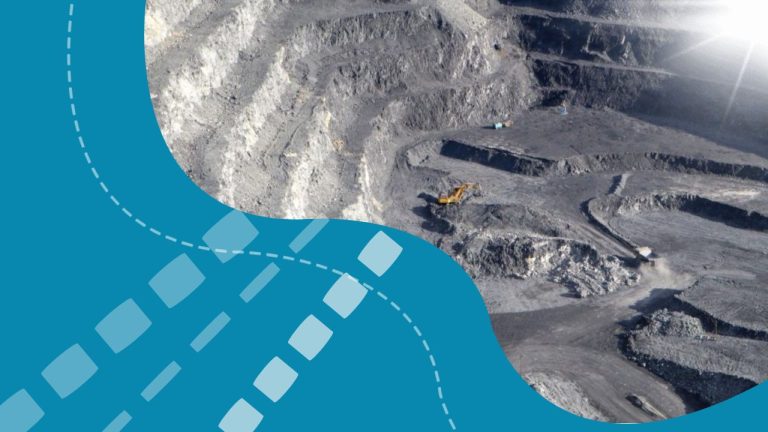
President Shavkat Mirziyoyev of Uzbekistan visited the site of a copper mining and processing project in cooperation with China, located in the Chust district of the Namangan region, on March 25. Geologic exploration is expected to commence as early as April. A representative of the company, Li Fang Yuan, stated that China Mining Energy Group, established in 2003 with assets totaling $32 billion and a workforce of 40,000 across 17 countries, engages in gold, copper, and aluminum mining.
Tag: China
-

Uzbekistan Explores Collaboration with China for Black Shale Uranium Mining
Uzbekistan is considering collaboration with China Nuclear Uranium Co., as reported by Navoiyuran’s press service, to develop black shale uranium mines. Rustam Ergashev, head of the investment projects department at Navoiyuran, underscores the increasing significance of atomic energy, which currently fulfills 11% of global electricity demand.
“This figure reaches 70% in France, 50% in Hungary, and 20% in the USA,” notes Ergashev. Nations like China, India, and countries across the Middle East, Africa, and South America are expanding their nuclear power programs in response to this trend.
For Navoiyuran, a company focused solely on exports, this presents new opportunities for collaboration in the nuclear raw materials market. The visit of a delegation from China Nuclear Uranium Co. (CNUC), a subsidiary of the China National Nuclear Corporation (CNNC), signals a significant step toward enhancing collaboration in this field.
“China Nuclear Uranium Co. is a prominent player in China’s nuclear energy sector, involved in uranium exploration, mining, and processing,” explains Ergashev. The company operates uranium mines domestically and engages in joint ventures in countries like Namibia and Kazakhstan.
During the visit led by Yang Runsheng, the company’s chief engineer, experts from China Nuclear Uranium Co. explored black shale uranium mining fields in Uzbekistan, visiting the “Ma’danli” and “Koscheka” fields to study mining operations and technological samples for uranium and rare element extraction from ore compositions.
The meeting between Chinese experts and Navoiyuran’s General Director, J. Fayzullaev, focused on developing technologies for black shale uranium mining and exploring prospects for future cooperation. Collaboration between Uzbekistan and China holds promise for advancing the nuclear energy sector in both countries.
In July 2023, President Shavkat Mirziyoyev endorsed initiatives to boost uranium mining and processing in Uzbekistan, aiming to double production by 2030. In November 2023, Navoiyuran entered a strategic cooperation memorandum with China National Nuclear Corporation (CNNC) in the uranium sector.
Since 2016, Uzbekistan has consistently held the position of the fifth-largest uranium producer worldwide, with uranium reserves exceeding 100,000 tons. The Navoi Mining and Metallurgical Combine (NMMC), Uzbekistan’s primary uranium mining company, predominantly exports uranium products, constituting 99.5% of its export portfolio.
French President Macron’s visit to Uzbekistan in November 2023 signals France’s strategic interest in Central Asia and Europe, aiming to diversify energy sources and reduce dependence on China for critical minerals.
-

Global Efforts to Reduce Dependence on China’s Rare Earth Elements Dominance
The article underscores the global reliance on China for rare earth elements (REEs), essential components in various high-tech applications, particularly amid the burgeoning shift towards green energy technologies. China’s stranglehold on REE production and its monopoly over the entire supply chain have sparked apprehensions regarding supply chain vulnerabilities and geopolitical ramifications for other nations.
China’s dominance in the REE market is fueled by factors such as its control over critical materials for electric vehicle (EV) batteries and its vertically integrated production chain. Nevertheless, concerns over the environmental repercussions of REE extraction and processing, coupled with geopolitical risks associated with overreliance on a single supplier, have prompted Western nations to explore alternatives and diminish their dependence on China.
The article delves into initiatives by the United States, Europe, and other regions to diversify their sources of REEs. Tesla’s strategy to incorporate rare earths-free magnets in next-gen motors and collaborative efforts between US and European rare earth companies exemplify these endeavors. Furthermore, the US Department of Defense’s agreement with Australia’s Lynas Rare Earths to establish a heavy rare earths separation facility in Texas is perceived as a stride towards bolstering domestic industrial capabilities and reducing dependency on China.
Japan’s strategic maneuver to lessen its rare earth dependency on China by increasing investments in Lynas underscores a broader trend of nations endeavoring to secure their rare earth supply chains.
The article accentuates the imperative for China to embrace more sustainable and environmentally responsible practices in REE mining and processing. It advocates for transparency in supply chains and a commitment to social and environmental responsibility to sustain China’s dominance in the carbon market and REEs sector.
In conclusion, Western concerns, driven by environmental and geopolitical apprehensions, are propelling nations to explore alternatives and diminish reliance on China for rare earth elements. Collaborative ventures, investments, and technological advancements are being pursued to diversify supply chains and ensure a more secure and sustainable future for the global REE market.
-

How much gold does the UK own compared to other countries?
Several countries around the world are stockpiling gold as a strategic reserve. Here’s a rundown of some of the key players and the amount of gold they hold:
1. USA: The United States leads the pack with a massive 8,133.46 tonnes of gold bullion, stored in various depositories across the country, including the famous Fort Knox.
2. Germany: Coming in second, Germany holds 3,352.65 tonnes of gold. Concerns during the Cold War led Germany to spread its gold reserves globally, with a significant portion repatriated in recent years.
3. Italy: Italy holds slightly more gold than France, with 2,451.84 tonnes stored in vaults in Rome and abroad, managed by the Banca d’Italia.
4. France: France has stockpiled 2,436.97 tonnes of gold, acquired largely during the 1950s and 1960s. Most of its reserves are held in vaults under the Banque de France in Paris.
5. Russia: Russia has been aggressively increasing its gold reserves, currently holding 2,332.74 tonnes. This move is seen as a strategic effort to reduce reliance on the US dollar.
6. China: China boasts 2,235.39 tonnes of gold, making it the world’s largest gold producer and a significant importer as well. The country’s reserves have been steadily increasing over the years.
7. Switzerland: Switzerland holds 1,040 tonnes of gold, with the majority stored at home. The country’s reputation for financial stability has made it a preferred location for storing gold.
These countries, among others, view gold as a valuable asset for diversifying their reserves and protecting against economic uncertainty.
-

France’s $1.6bn uranium deal with Mongolia faces delays
A $1.6-billion uranium mining deal between France and Mongolia, aimed at diversifying supplies for France’s nuclear reactors, faces political obstacles that may delay its finalization until after the upcoming elections in June, sources familiar with the matter revealed. The agreement, concerning the development and operation of the Zuuvch-Ovoo mine, was initially outlined during a visit to Paris by Mongolia’s President, Khurelsukh Ukhnaa, in October, with expectations for a final investment agreement by the end of last year and production commencement in 2028.
However, setbacks including the resignation of Mongolia’s chief negotiator and concerns over safeguarding strategic resources have led to delays and necessitated the redrafting of the deal. The potential postponement or cancellation of the project poses challenges for Orano, the French uranium producer, which views the plan as vital for expanding its supply sources amidst increasing global demand.
While Mongolian government representatives were unavailable for immediate comment on the contract delays, Orano affirmed ongoing negotiations and expressed optimism regarding finalizing the agreement promptly. The context of the deal underscores France’s efforts to bolster Mongolia’s strategic sovereignty amid its positioning between influential neighbors Russia and China, with the aim of reducing dependency on external energy sources.
However, geopolitical tensions and Russia’s assertive stance in the region, coupled with Mongolia’s energy vulnerabilities, have added complexities to the negotiation process. The situation underscores the broader geopolitical dynamics at play, including heightened competition for access to critical resources and influence in strategic regions.
-

Germany invests $1.1bn to counter China on raw materials
The German government earmarked about €1 billion ($1.1 billion) for raw materials investments as it seeks to reduce dependency on producers such as China for critical minerals, according to people familiar with the plan.
A selection process will be established to determine which projects — including in extraction, processing and recycling materials — are eligible, the people said, speaking on condition of anonymity. Financing, via Germany’s state-owned KfW development bank, will consist of equity capital to make acquisitions of minority stakes.
Projects in Germany and abroad will “contribute to the security of supply of critical raw materials,” an Economy Ministry spokeswoman said. The ministry didn’t give details on how the state fund would be structured.
Pandemic-triggered supply-chain disruptions across the globe and Russia’s invasion of Ukraine exposed the vulnerability of Europe’s reliance on energy and raw materials for high-tech and green projects. Chancellor Olaf Scholz’s government pledged to ratchet up efforts to access to critical materials over the longer term.

Raw materials including cobalt, copper, lithium, silicon and rare earth metals are needed to make microchips, wind turbines and batteries for electric vehicles.
As Germany’s parliament approves Scholz’s 2024 budget on Friday, the billion-euro fund is to be set up for four years. Investments will be coordinated with Italian and French initiatives in the raw materials sector, the people said. Policymakers will focus on mineral projects defined as critical in the European Union’s Critical Raw Materials Act.
Veronika Grimm, a member of Scholz’s panel of independent economic advisers, said the aim of diversifying raw-material supplies must be a “top priority” for the EU as a whole.
“The raw-material fund can be an element, but it won’t be a enough,” Grimm told Bloomberg.
KfW declined to comment on the plans. The lender is expected to make a statement about its role managing the project at its annual news conference next week on Feb 7. The EU agreed on measures in November under the Critical Raw Materials Act to boost domestic mining and reduce dependency on any one country.
While Germany still has to set up a structure to organize its investments into raw materials, Japan could provide a model. Since 2004, the state-owned Japan Organization for Metals and Energy Security has invested in the storage of raw materials, explored reserves, provided loans or guarantees for commodity companies and bought their shares directly.
-

Arrests and attacks: tracking China’s illegal mining in African countries
China’s massive metals industry can only maintain its size using imported minerals, frequently from limited suppliers. As part of its Belt and Road Initiative, the country has actively invested in mining assets in Africa and Latin America, and is beginning to engage in overseas refining and downstream facilities.
Many countries have welcomed this with open arms. Africa’s mining and mineral extraction industries, especially in countries like Nigeria, Namibia and Ghana, have attracted billions of dollars from China, one of the continent’s biggest participants. The vast reserves of cobalt, lithium, copper, and other minerals essential to modern technology production have attracted investment and operations in several African countries.
But recently, some African countries and China have reportedly experienced tensions in the mining industry. China has been accused of operating illegal mining activities and funding militant groups, disrupting the otherwise stable bond built on mining investment.
Is China funding Nigerian militant groups?
British newspaper The Times reported in April that some Chinese mining firms had funded Nigerian militant groups to get access to the country’s mineral reserves. This raises the prospect of China indirectly funding terror in Nigeria, causing societal disruption for its own gain.
According to The Times, Chinese firms working in certain regions of Nigeria where crime incidents are common have been “striking security deals with insurgents”. Attacks against Chinese citizens, estimated to number between 100,000 and 200,000 in Nigeria, have been widespread as a result of this.
Researchers discovered that interactions with militants are so strong in regions of Zamfara that some miners operate as spies for Chinese businesses that control gold-mining sites across Nigeria, it said.
The Chinese Embassy in Nigeria objected to The Times’ report at the time, calling it “unverified, unclear and unproven information”. The statement also noted the bilateral cooperation between China and Nigeria, which has brought “tangible” benefits to both countries. Nigeria has banned the export of raw materials, aiming to keep processing industries within the country, and on the surface, China seems happy to comply.
“The Chinese government was not, and would never be, involved in any form of funding terrorism. The allegations in the report were irresponsible and unethical, and the intention of the report is seriously questioned,” the Chinese government said in a statement.
Arrests for illegal mining activities in Nigeria
In September, ahead of Nigerian President Bola Tinubu’s visit to India for the G20 summit, Nigeria’s Foreign Affairs Ministry told the Chinese Embassy in Abuja that it would take action against companies if they did not obey the law.
People familiar with the matter said illegal Chinese companies were operating in some Nigerian states, including Niger, Zamfara and Edo, India’s Economic Times (ET) reported.
In July, Nigeria’s Economic and Financial Crimes Commission (EFCC) arrested 13 Chinese workers. Authorities alleged that the miners from W Mining Global Service were involved in illegal mining activities in the Kwara state, in the western part of the country. The suspects were arrested for illegal mining and non-payment of royalties to the Federal Government as required by law, according to the EFCC.
The EFCC discovered that the firm had utilised illegally mined granite to manufacture marble for local sale in Nigeria. The findings also showed that several suspects in the company did not have a work permit and entered Nigeria on a visitor’s visa.
In the span of eight months, the EFCC’s Ilorin Zonal Command arrested 80 unlicensed operators and impounded 24 truckloads of assorted minerals.
Chinese licenses revoked in Namibia
Another Chinese company, Sinuo Xiyan Nigeria, has been pursued by the EFCC and political powers. On 10 September 2022, the EFCC’s Ilorin Zonal Command arrested a Chinese national, Dang Deng, managing director of lithium miner Sinuo Xinyang Nigeria. He was charged with possessing 25 tonnes of assorted crude minerals and convicted on 19 October.
Namibia’s Minister of Mines, Tom Alweendo, revoked the company’s mining licence in April this year and ordered it to cease operations by the end of May. The minister alleged that the company used an improper application process to get the permit.
However, Xinfeng appealed the minister’s claims in the Namibian High Court, claiming Alweendo lacked the authority to reverse his prior decision to grant the mining licence. On 27 July, a judge ruled that this was the case.
In June, Namibia prohibited the export of raw lithium and other vital minerals to boost domestic processing and capitalise on the rising demand for metals used in clean energy technology worldwide. Four months later, the government ordered police to ban Xinfeng Investments from shipping or exporting lithium ore, accusing the Chinese miner of ignoring this restriction.

Nigerian Executive trade official Sikongo Haihambo at an event hosted by the Chinese Embassy earlier this year. Credit: Chinese Embassy in Namibia. In a letter seen by Reuters, Namibia’s Mining Commissioner asked the country’s police chief to stop any trucks bringing raw lithium ore from Xinfeng’s Kohero mine, roughly 250km northwest of Windhoek, Namibia.
However, Namibian officials remain happy to promote the role of China in diplomatic relations. In a China-Namibia business networking event hosted by the Chinese Embassy, the country’s Executive Director of the Ministry of Industrialization and Trade spoke highly of China and its role in creating jobs for people in Namibia, according to the Embassy’s statement.
Pushing against exploitation
In addition to mining issues in Nigeria and Namibia, the Democratic Republic of Congo has banned six Chinese businesses operating in South Kivu for illegally extracting gold and other minerals. Before this, according to the ET, 33 Chinese nationals were detained in Ghana in 2019 for engaging in illegal gold mining activities.
Tom Sheehy, a distinguished fellow at the US Institute of Peace’s Africa Center, described the situation: “This isn’t just an issue of economic development, not just an issue of geopolitical competition. Sadly, the history of Africa has all too many cases of natural resources being exploited and fueling conflict,” he said.
In July this year, the Nigerian Ministry of Mines and Steel Development pushed for the cooperation of the federal and state governments to eliminate illegal mining activities.
Nigerian Minister of Solid Minerals Development Dele Alake claimed that the tenacity of President Tinubu’s administration will end the risk of illegal mining, which damages the country and costs it significant income.
“Africa has historically suffered exploitation by different global powers. China is only the newest comer to this ‘party’. What should bother us is the role African leaders play in the exploitation of Africans. If African leaders lead in the interest of their people rather than the selfish interest of the leaders, then Africa stands a chance to redefine its engagement with the rest of the world.”
“So long as the focus remains on who is the present or next exploiter, we perpetuate the narrative of victimhood, which serves the interest of bad leaders in Africa,” Leonard Otuonye Ugbajah, executive director at the Centre for Trade and Business Environment Advocacy, told the ET.
Ultimately, many African countries have taken measures to tackle illegal mining and exploitation, but China’s response remains uncertain.
-

The Critical Minerals to China, EU, and U.S. National Security
The Critical Minerals to China, EU, and U.S. Security
Over the last decade, minerals like nickel, copper, and lithium have been on these lists and deemed essential for clean technologies like EV batteries and solar and wind power.
This graphic uses IRENA and the U.S. Department of Energy data to identify which minerals are essential to China, the United States, and the European Union.
What are Critical Minerals?
There is no universally accepted definition of critical minerals. Countries and regions maintain lists that mirror current technology requirements and supply and demand dynamics, among other factors.
These lists are also constantly changing. For example, the EU’s first critical minerals list in 2011 featured only 14 raw materials. In contrast, the 2023 version identified 34 raw materials as critical.
One thing countries share, however, is the concern that a lack of minerals could slow down the energy transition.
With most countries committed to reducing greenhouse gas emissions, the total mineral demand from clean energy technologies is expected to double by 2040.
U.S. and EU Seek to Reduce Import Reliance on Critical Minerals
Ten materials feature on critical material lists of both the U.S., the EU, and China, including cobalt, lithium, graphite, and rare earths.
Despite having most of the same materials found in the U.S. or China’s list, the European list is the only one to include phosphate rock. The region has limited phosphate resources (only produced in Finland) and largely depends on imports of the material essential for manufacturing fertilizers.
Coking coal is also only on the EU list. The material is used in the manufacture of pig iron and steel. Production is currently dominated by China (58%), followed by Australia (17%), Russia (7%), and the U.S. (7%).
The U.S. has also sought to reduce its reliance on imports. Today, the country is 100% import-dependent on manganese and graphite and 76% on cobalt.
After decades of sourcing materials from other countries, the U.S. local production of raw materials has become extremely limited. For instance, there is only one operating nickel mine (primary) in the country, the Eagle Mine in Michigan. Likewise, the country only hosts one lithium source in Nevada, the Silver Peak Mine.
China’s Dominance
Despite being the world’s biggest carbon polluter, China is the largest producer of most of the world’s critical minerals for the green revolution.
China produces 60% of all rare earth elements used as components in high-technology devices, including smartphones and computers. The country also has a 13% share of the lithium production market. In addition, it refines around 35% of the world’s nickel, 58% of lithium, and 70% of cobalt.
Among some of the unique materials on China’s list is gold. Although gold is used on a smaller scale in technology, China has sought gold for economic and geopolitical factors, mainly to diversify its foreign exchange reserves, which rely heavily on the U.S. dollar.
Analysts estimate China has bought a record 400 tonnes of gold in recent years.
China has also slated uranium as a critical mineral. The Chinese government has stated it intends to become self-sufficient in nuclear power plant capacity and fuel production for those plants.
According to the World Nuclear Association, China aims to produce one-third of its uranium domestically.
-

EU agrees mineral supply targets to cut reliance on China
The European Commission proposed the Critical Raw Materials Act in March, a centrepiece of EU strategy to allow it to compete with the United States and China in making clean tech products.
The proposal said the European Union should extract 10%, recycle 15% and process 40% of its annual needs by 2030 for 16 “strategic raw materials”.
The European Parliament and the Council, the grouping of EU governments, needed to agree on a common text. They did this on Monday, parties from both sides said, paving the way for the law to enter force in early 2024.
Negotiators upgraded the recycling target to at least 25%. Parliament negotiators also said the European Commission would pass a related act in 2027 that set a recycling target related to annual waste collected, rather than consumption.
The negotiators also agreed to add aluminium to the list of strategic raw materials as well as synthetic graphite. Natural graphite was already in the list.
The latter inclusion reflects China’s plan to tighten export controls for graphite. China refines over 90% of the world’s graphite into material that is used in almost all electric vehicle anodes, the negatively charged portion of the battery.
The EU is also heavily reliant on China for rare earths and lithium, other vital materials for its green transition.
The act’s aim is that no third country should provide more than 65% of any strategic raw material, which also includes cobalt, copper, magnesium and titanium.
The act sets time limits on granting permits for strategic mining, recycling and processing projects, and requires large companies needing strategic materials in key technologies to do regular risk assessments of their supply chains.
It also has provisions designed to moderate consumption.
EU industry chief Thierry Breton said in a statement that, without action, Europe risked shortages and unwanted dependencies, and that the law would ensure high environmental and social standards.
The bloc will work with EU members to identify strategic projects that will benefit from shorter and more efficient permitting procedures and easier access to finance, he added.
-

A delegation from China visited AGMK
Almalyk Mining and Metallurgical Combine, being a large industrial enterprise, is establishing mutually beneficial cooperation with many leading companies in the world.
In particular, many companies in the People’s Republic of China are showing interest in cooperation with the plant.
On October 29 of this year, AGMK was visited by a delegation of the Chinese company TBEA Company Limited, led by Chairman of the Board Zhang Xin.
Note that TBEA Company Limited (short for Tebian Electric Apparatus) is a Chinese electrical and photovoltaic company that specializes in the production of equipment and components for solar energy, as well as transformers, inverters, junction boxes, wires, cables and other electrical equipment
As company representatives said, TBEA Company currently produces transformers, distribution network automation terminals, wires, cables, chargers, switches, power control systems, inverters and other equipment for solar power plants, silicon chips, polysilicon, electrode and aluminum foil, aluminum profiles and rods; develops and implements projects for the transmission of electricity (high-voltage power lines), construction of solar and wind power plants; mines coal and gold, produces thermal electricity. The company has 18 factories in China and 3 overseas.
During the meeting, the guests got acquainted with the technological production processes at the Kalmakyr mine, the central repair and mechanical plant, the management of electrical networks and substations, and the copper smelter. In addition, we got acquainted with the construction process of a new copper concentration plant-3.
During the dialogue between company representatives and the management of Almalyk MMC JSC, issues of further cooperation were discussed.