Tag: mining strategy

  • Sweden Declares Critical Minerals Mining a National Security Interest

    Sweden Declares Critical Minerals Mining a National Security Interest

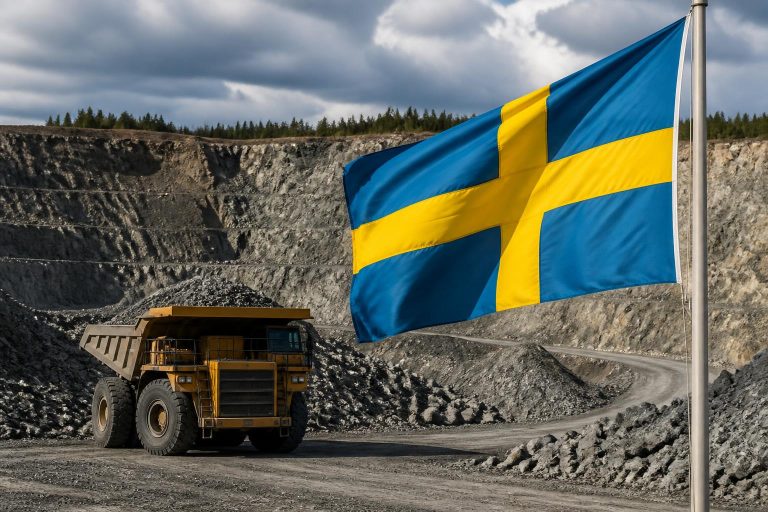
    In a significant move to bolster its mining sector and reduce reliance on foreign sources, particularly China, Sweden has officially designated the mining of critical metals and rare earth minerals as a national security interest. This announcement was made by Ebba Busch, Sweden’s Enterprise Minister and Deputy Prime Minister, on 23 July 2026. The strategy aims to enhance Sweden’s position in the global mining landscape, especially as China currently dominates the rare earth market, accounting for approximately 69% of global production. This dependency has raised concerns among Western nations, prompting Sweden to take decisive action to secure its mineral supply chains.

    Central to Sweden’s strategy is the Per Geijer deposit located at LKAB’s Kiruna mine, which is one of the European Union’s flagship projects aimed at reducing reliance on Chinese imports. The deposit boasts an impressive 1.2 billion tonnes of total mineral resources, including 2.2 million tonnes of rare earth oxides. Johan Menckel, the newly appointed President and CEO of LKAB, emphasised the company’s potential role in shaping Europe’s industrial value chains. The Swedish government plans to expedite the environmental permitting process for mining projects by establishing a dedicated authority, addressing current delays that hinder project approvals.

    Additionally, the government is exploring the establishment of a state-owned investment company to further support the mining sector. Deputy Prime Minister Busch highlighted the necessity for Sweden to leverage its rich natural resources and world-class mining companies. The strategy also includes a review of the mineral fee structure to ensure that local communities benefit more directly from mining activities. However, the expansion of mining rights has raised concerns among Sweden’s indigenous Sami population, who fear that increased mining activities could threaten their traditional way of life. As Sweden moves forward with its ambitious mining strategy, it must balance economic interests with the rights and concerns of local communities.


  • Kazakhmys Approves Strategy to Sustain Production and Expand Resource Base

    Kazakhmys Approves Strategy to Sustain Production and Expand Resource Base

    Kazakhmys Group has approved a new strategic plan aimed at maintaining current production levels while significantly expanding its mineral resource base, the company announced.

    The group’s total ore reserves currently stand at 551.8 million tonnes, providing an estimated 16 years of operational stability across its assets. Over the next three years, Kazakhmys plans to increase ore reserves by a further 365 million tonnes, with copper reserves expected to grow by 2328 thousand tonnes.

    Exploration activities are ongoing across the Zhezkazgan, Karaganda and Balkhash regions, as well as in prospective areas located within 100–200 km of existing mining operations. This approach is designed to maximise the use of existing infrastructure while reducing capital expenditure and project risks.

    For the current year, the company plans to mine 31.7 million tonnes of ore, process 33.1 million tonnes, and produce 254.6 thousand tonnes of copper concentrate. Alongside production targets, Kazakhmys continues to invest in the modernisation and expansion of its mining operations.

    In the Zhezkazgan region, the company is expanding the Zhylandy and Zhomart mines, while maintaining stable output at the Zhezkazgan deposit through infrastructure adjustments and additional exploration work.

    Kazakhmys is also assessing the potential restart of operations at the Kusmurun mine, which could secure feedstock for the Karagaily processing plant for the next decade. At the same time, development continues at the Nurkazgan mine, and deeper horizons are being opened within the Shatyrkul-Zhaysan cluster.

    In the Balkhash region, plans are underway to resume operations at the Konyrat mine. Meanwhile, geological exploration at the Sayak deposit over the past four years has confirmed reserves of 10 million tonnes of ore, extending the mine’s projected life by 11 years through to 2042.

    The strategy reflects Kazakhmys’ focus on long-term resource sustainability and operational efficiency amid evolving market conditions.

  • ACG Metals Targets Up to 10 Copper Mine Acquisitions to Scale Production

    ACG Metals Targets Up to 10 Copper Mine Acquisitions to Scale Production

    London-listed ACG Metals is pursuing an ambitious expansion strategy, targeting up to 10 copper mine acquisitions as it seeks to rapidly scale production and position itself as a Western supplier of the strategic metal.

    The company confirmed it is in active discussions over several assets, many of which are located along the Tethyan Copper Belt — a vast mineral-rich corridor stretching from southeastern Europe through Türkiye and into South Asia.

    ACG is focusing on producing or near-production assets, allowing it to accelerate output rather than wait years for greenfield development. The strategy reflects a broader shift across the mining sector toward faster, acquisition-led growth.

    🚀 From gold to copper growth engine
    ACG completed its first major deal in 2024 with the $300 million acquisition of the Gediktepe gold and silver mine in western Türkiye. The company plans to begin copper production at the site this year and is using it as a launchpad for broader expansion.

    Its long-term ambition is bold: scale annual copper output to 300000 tonnes through a series of global acquisitions.

    Founder and CEO Artem Volynets said market volatility could actually support dealmaking.

    “Volatility always presents opportunities,” he noted, adding that while higher spot prices can complicate negotiations, they also create windows for strategic acquisitions.

    📈 Copper’s magnetic pull
    Rising demand for copper — driven by electrification, renewable energy, and the explosive growth of AI data centres — is reshaping the mining landscape and fuelling consolidation.

    Recent industry developments highlight the trend:

    • Ongoing discussions around mega-mergers between major mining players

    • Intensifying competition for high-quality copper assets globally

    Copper prices have already climbed above 13000 per tonne, with long-term expectations pointing toward further increases despite short-term fluctuations.

    Volynets described the outlook as a “stepwise climb,” with prices likely moving in waves toward the 13000–15000 range over time.

    🌍 Geopolitics meets geology
    ACG is positioning itself as a Western-aligned supplier, with copper from its Turkish operations expected to feed European smelters.

    For now, the company is prioritising assets close to its operational base in Türkiye and Eastern Europe — regions offering relatively lower costs and less competition compared to more saturated markets.

    Africa and Latin America remain on the radar for future expansion, though Volynets acknowledged that Africa in particular is becoming a geopolitical battleground for control over critical minerals.

    ⚙️ Cost discipline as survival tool
    Despite bullish long-term fundamentals, ACG is keeping a sharp focus on cost control — the quiet survival skill of mining.

    “Regardless of what prices are doing, miners should focus on cost of production,” Volynets said, noting that ACG’s operations currently sit in the lowest quartile of the global cost curve for gold.

    While copper is the main growth driver, the company continues to produce gold, silver and zinc. Gold, in particular, may remain supported by geopolitical uncertainty, acting as a financial anchor while copper builds momentum.

  • Kazakhstan to study lithium potential near Caspian and Aral seas from 2027

    Kazakhstan to study lithium potential near Caspian and Aral seas from 2027

    Kazakhstan plans to launch large-scale geological studies between 2027 and 2029 to assess the potential for industrial lithium extraction in several regions of the country, the Ministry of Industry and Construction of Kazakhstan said in response to an inquiry from LS.

    The programme will focus on mineralized brines, saline lake waters and salt flats located near the Caspian Sea and the Aral Sea, as well as subsurface resources in the Bayankol ore district. The aim is to determine whether these areas are suitable for commercial lithium production. The work will be carried out under the state geological exploration programme, with 600 million tenge allocated from the national budget.

    In parallel, geological assessment continues in Central Kalba. By 2027, specialists are expected to complete studies of areas prospective for lithium, as well as rare and rare earth metals within the Kalba–Narym zone.

    According to the ministry, there is a high probability of discovering new rare metal deposits in several regions, including northern Kazakhstan’s Kokshetau rare-metal province, western Kazakhstan’s Mugodzhar province with lithium-fluorine type granites, and the southeastern part of the Chingiz–Tarbagatai rare earth metallogenic zone in eastern Kazakhstan.

    The ministry also noted that lithium occurrences have already been confirmed in salt flats in the Aral Sea region and in Betpak-Dala, indicating tangible exploration potential in southern parts of the country.

  • UK Unveils 10-Year Critical Minerals Strategy to Boost Domestic Supply and Cut Reliance on China

    UK Unveils 10-Year Critical Minerals Strategy to Boost Domestic Supply and Cut Reliance on China

    The United Kingdom has released a new 10-year Critical Minerals Strategy aimed at lifting the share of critical minerals sourced from domestic mining and recycling to 30% by 2035, up from roughly 6% today. The plan introduces legally binding targets requiring 10% of demand to be met through UK production, 20% through recycling and limiting reliance on any single foreign supplier to no more than 60% per mineral. The initiative aligns Britain with U.S., Canadian and EU efforts to reduce dependence on China-dominated supply chains.

    Prime Minister Keir Starmer said critical minerals underpin modern life and national security, arguing that cutting exposure to a small number of overseas suppliers would help shield the economy from future disruptions. Backed by up to £50 million in new funding, the strategy also aims to secure at least 50,000 tonnes of domestic lithium production by 2035 amid forecasts that demand for copper will nearly double and lithium demand will surge more than 1,100% as EVs, wind energy projects and AI data centres expand.

    The strategy draws on the British Geological Survey’s 2024 assessment, which expanded the UK’s list of critical minerals from 18 to 34, adding nickel, iron, aluminium, germanium and chromium while removing palladium. The update brings the UK’s list in line with Canada and the EU, though still shorter than the U.S. roster of 50 minerals.

    Several domestic hubs are central to delivering the plan: Cornwall’s major lithium resources, tungsten deposits in Devon, the Clydach nickel refinery in Wales and Less Common Metals’ alloy facility at Ellesmere Port, one of the West’s few producers of rare earth alloys used in wind turbines and F-35 fighter jets. Industry groups say these projects will create high-quality jobs and strengthen supply chain resilience. Cornish Lithium, which recently raised £31 million for its Trelavour and Cross Lanes projects, called government support “essential” for producing battery-grade lithium at scale.

    Tin and tungsten projects are also set to benefit. Cornish Metals welcomed the critical mineral designation for tin, supported by a £28.6-million National Wealth Fund investment in the South Crofty mine, expected to create over 300 direct jobs. Tungsten West’s Hemerdon project in Devon, one of the world’s largest tungsten deposits, is shaping up as an early test of the strategy, with plans to enter production in late 2026.

    Beyond mining, the UK is leaning heavily on midstream processing and recycling. Ionic Technologies in Belfast and Hypromag in Birmingham are developing rare earth magnet recycling solutions with significantly lower environmental impact than primary extraction.

    Internationally, the strategy is more targeted but smaller in scale compared with U.S. and Canadian approaches. While the UK’s funding remains limited—£50 million in new support on top of earlier commitments—the government aims to de-risk strategic projects and strengthen midstream capacity. Industry leaders say clarity of vision is as important as financial backing.

    The plan also responds to China’s dominance of global critical mineral supply chains, especially in rare earths, where Beijing controls about 70% of mining and 90% of refining. The UK is considering stockpiling key materials and coordinating with NATO partners. It also promises faster permitting via priority processing lanes and lower power costs for industry under the upcoming British Industrial Competitiveness Scheme.

    While the UK’s critical minerals sector currently contributes £1.8 billion to the economy and supports more than 50,000 jobs, experts warn that domestic mining, processing and recycling must scale rapidly to prevent supply bottlenecks. Questions also remain over minerals excluded from the UK’s critical list, such as copper, despite its central role in electrification.

    Communities in mining regions will weigh the economic benefits against environmental and cultural concerns, but industry leaders argue that Britain’s renewed focus on critical minerals marks a shift from its traditional role as a global financing hub to an active player across the value chain.

  • Putin Orders Roadmap for Russia’s Rare-Earth Extraction as Global Competition Intensifies

    Putin Orders Roadmap for Russia’s Rare-Earth Extraction as Global Competition Intensifies

    Russian President Vladimir Putin has instructed his cabinet to develop a national roadmap for rare-earth mineral extraction by December 1, as global competition for critical raw materials intensifies and countries seek to reduce dependence on China’s near-monopoly in the sector.

    The directive, published Tuesday on the Kremlin’s website, also calls for the expansion of transport and logistics infrastructure at Russia’s borders with China and North Korea, including multimodal hubs and new railway links.

    Rare-earth elements—vital for smartphones, electric vehicles, wind turbines, and advanced weapons systems—have become a major point of strategic rivalry between the world’s largest economies.

    In April, U.S. President Donald Trump and Ukrainian President Volodymyr Zelenskyy signed an agreement granting the United States preferential access to Ukraine’s mineral resources and supporting U.S. investment in reconstruction projects. Moscow has since said it is also open to cooperation with the U.S. on rare-earth projects, though political and diplomatic tensions stemming from Russia’s ongoing war in Ukraine have stalled progress.

    Earlier this year, Kirill Dmitriev, Putin’s investment envoy, said U.S. firms had shown interest in Russian rare-earth ventures, but talks remain at an exploratory stage.

    Meanwhile, China, which dominates the global rare-earth supply chain, has tightened export controls in retaliation against Western tariffs, pushing Washington and its allies to accelerate domestic and alternative sources of supply.

    Putin’s order stems from discussions at the Far Eastern Economic Forum in Vladivostok in September, where he emphasized the strategic importance of developing Russia’s Far East as a resource and transport hub connecting Asia and Europe.

    According to the U.S. Geological Survey (USGS), Russia’s known rare-earth reserves total about 3.8 million tonnes, though Moscow claims much higher figures. The Russian Natural Resources Ministry estimates 28.7 million tonnes of reserves across 15 different rare-earth metals as of January 2023. Even by Moscow’s count, however, Russia’s share remains relatively small compared to China’s dominant position.

    Putin also ordered the construction of new multimodal transport and logistics centers along the country’s borders with China and North Korea, including upgrades to two existing railway bridges and the completion of a new bridge to North Korea by 2026.

    Both China and North Korea have deepened economic cooperation with Russia amid Western sanctions, making regional integration and resource development key components of Moscow’s broader pivot to Asia strategy.

  • Armenia Reaffirms Commitment to Mining Strategy Despite Challenges

    Armenia Reaffirms Commitment to Mining Strategy Despite Challenges

    Armenia’s mining development strategy is moving forward despite certain challenges, with the government determined to ensure its full implementation, Deputy Minister of Territorial Administration and Infrastructure Asatur Vardanyan said at the Mining Armenia Forum 2025 on October 3.

    Vardanyan highlighted that the strategy is supported by a strong platform involving both private sector representatives and scientific institutions. Key elements include the launch of a comprehensive digitalization process — not merely procedural but based on in-depth analysis and fieldwork to guide policymaking. By 2027, full digitalization of the permitting system is expected, with improvements aimed at increasing transparency and reducing approval times.

    The deputy minister also announced plans to establish a national geological service. Armenia is working closely with the EU and the United States, building on agreements signed in August 2025, to create a new platform that will strengthen governance and enable the development of a unified mining policy.

    He stressed the importance of companies adopting international mineral reporting standards to enhance investor confidence and predictability. The ultimate goal, he said, is to create a mining industry that operates more efficiently and on a stronger economic footing, drawing on Armenia’s accumulated expertise and international practices.

    Vardanyan underlined the need for more extensive and higher-quality geological exploration to secure future reserves, particularly of critical minerals. With rising global demand and metal prices, Armenia has been receiving growing interest from international organizations and foreign investors. The new geological service will also commission state-funded regional exploration to open new deposits.

  • Coal Energy Plans Expansion into Poland and Romania with New Mining Strategy

    Coal Energy Plans Expansion into Poland and Romania with New Mining Strategy

    Coal Energy S.A. (Luxembourg), a company with its core coal assets in Ukraine, has announced plans to expand operations into Poland and Romania as part of its 2025–2027 development strategy. According to the updated plan, published on the Warsaw Stock Exchange, the company aims to diversify its portfolio and increase resilience amid ongoing challenges in Ukraine.

    In Poland, Coal Energy intends to develop the Bobrek-Miechowice deposit, focusing on its western section, with a multi-stage licensing procedure already underway. Romania is also a key target, where the company sees significant potential for anthracite extraction. A draft framework proposal for cooperation in the mining sector has already been submitted to Romanian authorities, and the company expects to take part in official tenders for mining or exploration concessions.

    Despite difficulties in Ukraine, Coal Energy highlighted ongoing potential for mining projects in its licensed territories. The company is also exploring joint ventures with local and international partners.

    Additionally, Coal Energy is launching a subsidiary to provide global consulting services in the field of mineral resources. These services will cover asset valuation, due diligence, partner engagement, and asset transactions. Its first project in this area involves cooperation with the owner of a polymetallic ore deposit in the United States.

    Financially, Coal Energy reported a net loss of $2.13 million in 2024, marking a six-fold improvement compared to the previous year. Revenue nearly tripled to $2.47 million, while gross profit reached $0.79 million, reversing a gross loss of $0.14 million in 2023.