Tag: innovation

  • Erdenet Mining Corp Embraces Digital Transformation for Sustainable Operations

    Erdenet Mining Corp Embraces Digital Transformation for Sustainable Operations

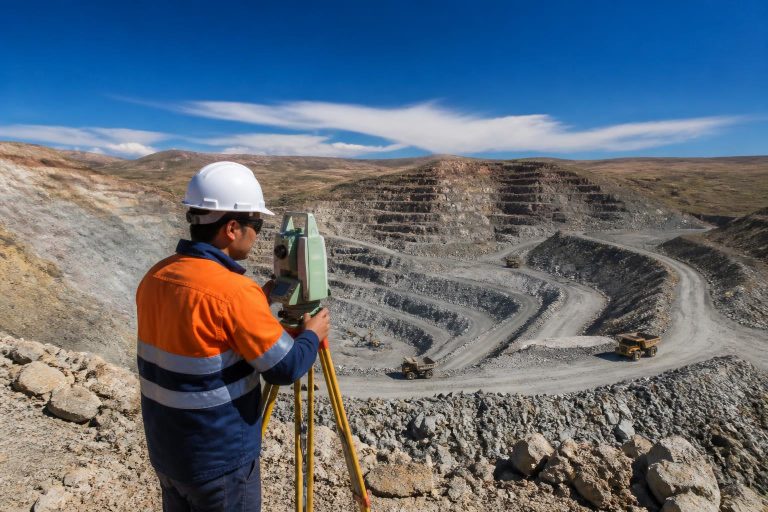
    Erdenet Mining Corp, located on the outskirts of Mongolia’s second-largest city, Erdenet, is undertaking a significant digital transformation to enhance its operations at one of the country’s largest porphyry-copper deposits. With an annual processing capacity of 32 million tons of ore, producing 130,000 tons of copper concentrate and over 10,000 tons of molybdenum concentrate, the company is focused on optimising its operations through innovative technology. The chief operations officer, Batmunkh, emphasises the necessity for innovation within the mining sector, stating that the company has established an Innovation Center aimed at modernising its practices to match global standards.

    Historically reliant on paper-based data, Erdenet faced challenges in resource estimation and decision-making due to the cumbersome nature of managing vast amounts of information. The introduction of Seequent software in 2018 marked a turning point, enabling the exploration department to model geology using Leapfrog Geo and process geophysical data with Oasis montaj. This transition to digital has significantly improved efficiency, allowing for near real-time access to insights and models via Seequent Central, a cloud-based data management solution.

    The digitisation of historical data has streamlined operations, reducing the time required for 3D design and resource estimation from months to mere hours. This advancement has fostered collaboration among the 32 departments within Erdenet, breaking down silos and ensuring that all teams can work together effectively. Senior geologist Amarzaya notes that the quality of work has improved, with manual errors reduced and tasks completed in a fraction of the time previously required.

    As a government-run entity, Erdenet is committed to providing accurate information to stakeholders, including investors and regulatory authorities. The integration of advanced mining software has enhanced the company’s ability to deliver precise data, facilitating better decision-making processes. Looking ahead, Erdenet is not only focused on operational efficiency but is also preparing for future challenges, including mine closure and environmental remediation. The Innovation Center is exploring advanced solutions for tailings and dam modelling, ensuring that Erdenet is well-equipped for sustainable mining practices in the years to come. With a projected operational lifespan of another 60 years, the future of Erdenet Mining Corp appears promising, driven by its commitment to innovation and sustainability.


  • Aramin Launches Aramak: A New Era in Underground Mining Equipment

    Aramin Launches Aramak: A New Era in Underground Mining Equipment

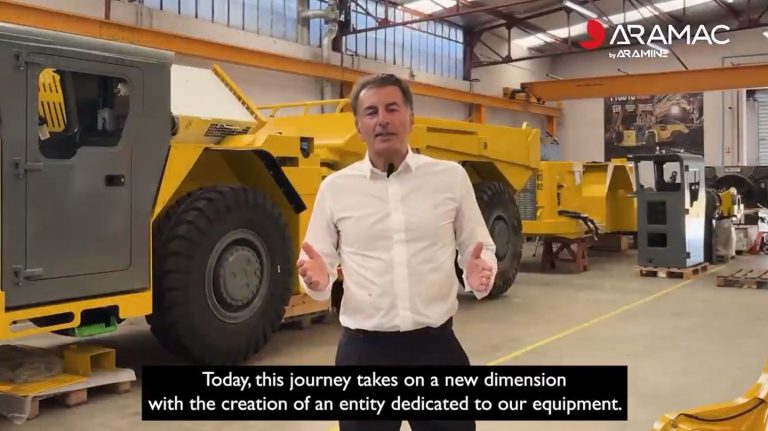
    Aramin, a company with over 50 years of experience in supporting underground mines globally, has announced the launch of a new entity, Aramak, dedicated to the development of innovative mining equipment. This venture builds on Aramin’s extensive expertise in spare parts and after-sales service, providing a unique understanding of the needs of underground mining operations worldwide.

    Initially focused on narrow vein mining, Aramin’s journey began with the introduction of the L130A machine in 2008, which aimed to revolutionise the industry with its innovative cable electric technology. Since then, the company has successfully manufactured and delivered over 500 machines across five continents, continuously expanding its product range to meet the evolving demands of its customers. Today, Aramin offers a comprehensive selection of equipment for underground mines, capable of operating in spaces as narrow as 16 metres.

    Innovation remains at the core of Aramin’s operations. In 2016, the company launched its first battery-powered machine, the L140B, which marked a significant milestone in the electrification of underground mining equipment. The current battery-powered range includes three loaders with capacities ranging from 1.3 to 6.2 tons, and the company is set to introduce a new 16-ton capacity battery-powered truck soon. Furthermore, Aramin has already deployed autonomous machines for several clients, showcasing its commitment to leading the future of mining technology.

    The company’s vision extends beyond just equipment manufacturing; it aims to redefine the underground mining landscape with reliable, competitive, and innovative solutions. To support this ambition, Aramin has begun constructing a new headquarters that will integrate offices, a warehouse, and a production facility, significantly increasing its manufacturing capacity. This facility is strategically located on a former mine shaft in Gardan, symbolising a deep-rooted connection to the mining industry.

    As Aramak positions itself as a leader in the narrow vein mining sector, it aspires to become an essential partner for the mines of the future, driving advancements in technology and operational efficiency. With a clear focus on innovation and customer support, Aramin is poised to shape the next generation of underground mining.


  • Europe’s Battery Future: Closing the Gap on Raw Materials, Manufacturing and Innovation

    Europe’s Battery Future: Closing the Gap on Raw Materials, Manufacturing and Innovation

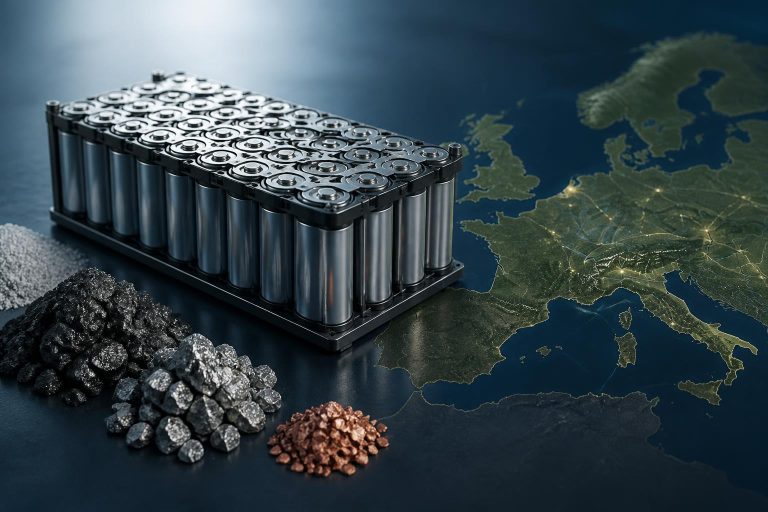
    Europe’s battery sector stands at a decisive juncture, caught between real opportunity and mounting exposure to external dependencies. The Battery R&I Blueprint sets out a roadmap for the continent to build genuine leadership in battery technology — a capability now central not just to automotive, but to energy systems, defence, and electronics alike. With demand accelerating on the back of transport electrification and renewable energy integration, Europe faces a hard truth: it remains heavily reliant on non-European supply chains and continues to lag Asian producers on cost, nowhere more acutely than at the raw materials stage.

    Michael Lippert, Chairman of the Batteries European Partnership Association (BEPA), frames unity — across research, industry and policymakers — as the precondition for progress, warning that fragmented effort will only deepen Europe’s disadvantage. The Blueprint organises the challenge around four interlinked pillars: scope, scale, speed and sustainability, each demanding a coordinated R&I response that spans the full value chain, from mining and refining through to end-use deployment.

    Raw materials and critical minerals sit at the sharpest edge of this challenge. China currently controls more than 90% of global refining capacity for many battery-critical materials, and the IEA estimates that a single month’s disruption to Chinese battery supply exports could wipe out roughly USD 17 billion in EV production globally — with European factories bearing the brunt. Yet this same segment is also where Europe’s opportunity is greatest: raw and advanced materials account for around half of the projected EUR 450 billion global battery value pool by 2030, and upstream margins (20–40% EBITDA) dwarf the thin 5–10% margins typical of cell manufacturing. Europe’s established chemicals and materials base gives it a genuine foundation to compete here, provided R&I investment follows.

    The report calls for deliberate diversification — of both chemistries and applications — to reduce Europe’s overreliance on automotive as its sole commercial anchor. Sodium-ion chemistry, for instance, is highlighted as a route to cobalt-free, lower-cost batteries that eases pressure on critical mineral demand. On the materials side, the Blueprint pushes for low-footprint lithium extraction, refining processes for next-generation raw materials, and flexible recycling capable of handling mixed and low-value feedstocks — alongside design-for-recycling principles that improve recovery rates at end of life. It also flags a specific policy obstacle: the current regulatory classification of black mass restricts its cross-border movement within Europe, hampering the recycling economy the sector needs.

    To carry this forward, the Blueprint proposes a dedicated Batteries Partnership under the next Multiannual Financial Framework (MFF), building on BATT4EU, to close gaps in both production capacity and technological readiness. It also identifies industrial-scale recycling and refining facilities — particularly for black mass processing and critical material recovery — as priority targets for the European Competitiveness Fund and Innovation Fund, given the scale of capital required and the strategic supply-chain sovereignty at stake. National consultations across 13 countries reinforce this: refining and battery-waste processing rank as “High” to “Very High” priorities in most surveyed markets, with Sweden, Denmark, Portugal and Finland placing particular emphasis on this segment.

    Beyond materials, the Blueprint underscores the need for Europe to build domestic manufacturing capacity to meet demand without deepening import reliance — while pursuing next-generation technologies in parallel with scaling today’s production. This dual sprint-and-marathon approach, the report argues, is what will let Europe close the competitiveness gap while building lasting technological independence.


  • Rosatom Proposes Establishment of 3D Printing Centre in Uzbekistan

    Rosatom Proposes Establishment of 3D Printing Centre in Uzbekistan

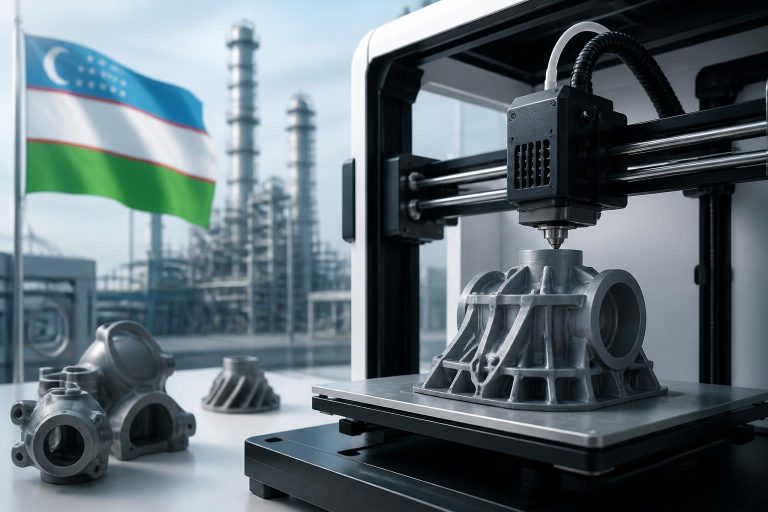
    In a move towards modernising industrial capabilities in Uzbekistan, Rosatom, the Russian state atomic energy corporation, has proposed the establishment of a dedicated 3D printing centre in the country. This initiative was discussed during a specialised seminar held in Tashkent, which focused on the implementation of additive technologies in various sectors, including mining, automotive, and chemicals. The seminar was organised by the Additive Technologies division of Rosatom’s Fuel Division and saw participation from around 30 representatives from key industries, including the Navoi Mining and Metallurgical Combinat and UzAuto Motors.

    Russian experts showcased innovative solutions in additive manufacturing aimed at enhancing production efficiency and enabling the creation of complex products. Technologies discussed included wire arc additive manufacturing, direct laser deposition, and reverse engineering methods. The proposed Centre for Additive Technologies (CAT) aims to form working groups, conduct audits of production capabilities, identify prospective product lines, and develop state support measures to foster the centre’s growth.

    Ilya Kavelashvili, General Director of the Additive Technologies division, emphasised that the advancement of additive manufacturing in Uzbekistan could expedite the repair and modernisation of industrial equipment, reduce reliance on imports, and broaden the technological capabilities of local enterprises. According to Rosatom, global trends indicate a shift in additive technologies from prototyping to serial production, suggesting a promising future for this sector in Uzbekistan.

    The introduction of 3D printing is expected to lower production costs for Uzbek companies, replace a portion of imported products, and enhance the competitiveness of the local industry. This initiative aligns with Uzbekistan’s broader goals of industrial development and technological advancement, positioning the country as a potential hub for innovative manufacturing solutions in the region.


  • Europe Advances in Circular Advanced Materials with New Funding Initiatives

    Europe Advances in Circular Advanced Materials with New Funding Initiatives

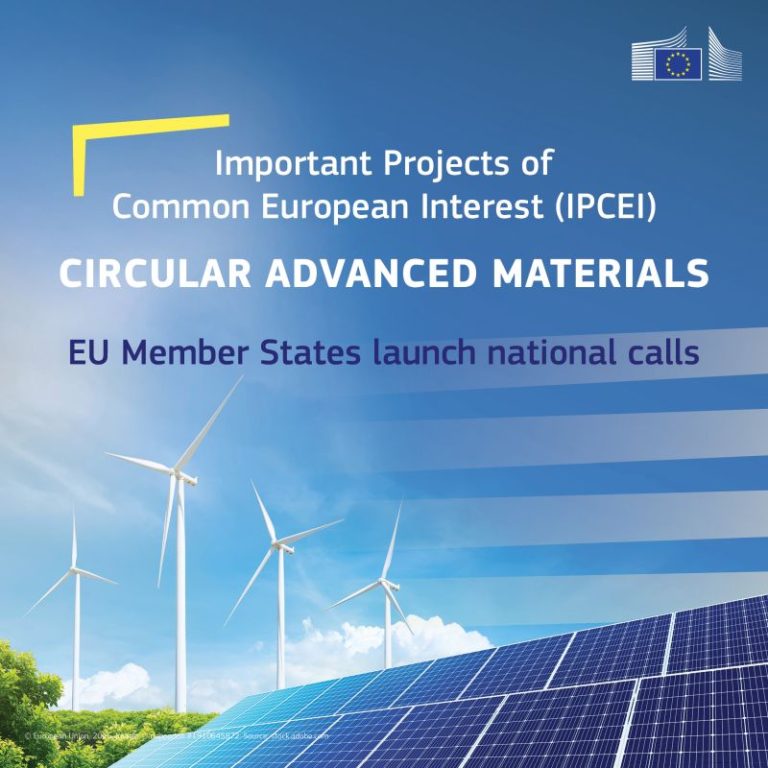
    In a move to enhance its leadership in advanced materials, Europe has initiated several national calls for expressions of interest as part of the Important Projects of Common European Interest (IPCEI) on Circular Advanced Materials. This initiative, launched by multiple EU Member States, aims to foster innovation, sustainability, and circularity across strategic industrial value chains, thereby strengthening European industrial ecosystems. The announcement follows the 2024 EU Strategy on Advanced Materials for Industrial Leadership, which seeks to bolster the continent’s competitiveness and strategic autonomy in the global market.

    The calls for expressions of interest are designed to prepare for the future IPCEI, which will be submitted for notification to the European Commission. Currently, national calls are open in several countries, including Italy, Austria, Spain, and Poland Additionally, Belgium and Slovenia have also launched calls, signalling a broad commitment across the region to enhance capabilities in advanced materials.

    This initiative is expected to play a crucial role in the development of advanced materials that are not only innovative but also sustainable, aligning with the EU’s broader goals of environmental responsibility and economic resilience. By encouraging collaboration among nations and industries, the IPCEI aims to create a robust framework for advancing technology and materials that can meet the demands of a rapidly changing industrial landscape.

    As Europe continues to position itself at the forefront of advanced materials technology, these funding opportunities represent a pivotal step towards achieving a more sustainable and circular economy. Stakeholders in the mining and materials sectors are encouraged to engage with these initiatives to leverage potential funding and collaboration opportunities that can drive innovation and growth in their respective fields.


  • The Antwerp Declaration for a European Industrial Deal

    The Antwerp Declaration for a European Industrial Deal

    The Antwerp Declaration for a European Industrial Deal was recently presented on 20th February 2024 to the Belgian Presidency of the Council of the EU and Commission.

    Endorsed by 447 signatures across 20 sectors, emphasises the urgent need for clarity, predictability, and confidence in Europe’s industrial policy. The declaration asserts that a European Industrial Deal is essential to complement the Green Deal and ensure the retention of high-quality jobs for European workers.

    Outlined in the declaration are ten key calls to action directed towards Member State Governments, the European Commission, and Parliament:

    1. Put the Industrial Deal at the core of the new European Strategic Agenda for 2024-2029.
    2. Include a strong public funding chapter with a Clean Tech Deployment Fund for Energy Intensive Industries.
    3. Make Europe a globally competitive provider of energy by prioritizing new projects for abundant and affordable low-carbon renewable and nuclear energy.
    4. Focus on the infrastructure Europe needs by targeting recovery funds to build world-class EU Energy, digital, CCUS, and recycling infrastructures.
    5. Increase the EU’s raw materials security through scaling up domestic mining, sustainable processing, and recycling capacity for crucial raw materials.
    6. Boost demand for net-zero, low-carbon, and circular products through consumer empowerment and public procurement initiatives.
    7. Leverage, enforce, revive, and improve the Single Market to transition integrated value chains and address fragmentation.
    8. Make the innovation framework smarter by fostering high-quality science, technological innovation, and collaborative policies.
    9. Promote a new spirit of law-making that fosters entrepreneurship, avoids over-regulation, and ensures coherence.
    10. Ensure the structure allows to achieve results by installing a First Vice-President responsible for the delivery of the European Industrial Deal.

    The declaration underscores the importance of keeping industry in Europe to deliver the climate solutions needed, emphasizing that only with a strong industrial fabric and strengthened social dialogue can the green transition be achieved in a just manner. It emphasizes the need for a European approach to support industry throughout the transition, maintaining the integrity of the internal market while considering global competition.

    The declaration concludes by inviting companies, organisations, and associations to support the Antwerp Declaration and join the efforts to strengthen Europe’s industrial landscape.

    For more details and updates on the Antwerp Declaration, visit the official website: https://antwerp-declaration.eu/

  • Rio Tinto commits $150 million to Centre for Future Materials led by Imperial College London

    Rio Tinto commits $150 million to Centre for Future Materials led by Imperial College London

    LONDON, July 31, 2023–(BUSINESS WIRE)–Rio Tinto has committed $150 million to create a Centre for Future Materials led by Imperial College London to find innovative ways to provide the materials the world needs for the energy transition.

    The ‘Rio Tinto Centre for Future Materials’ will fund research programmes to transform the way vital materials are produced, used and recycled, and make them more environmentally, economically and socially sustainable.

    Under the partnership, Rio Tinto and Imperial will together define a set of major global challenges that need to be addressed. These will form the basis of the first research programmes the Centre pursues, in partnership with a selection of international academic institutions.

    The Centre will be established in the second half of 2023, with the first research programmes funded in 2024. Rio Tinto will contribute $150 million over 10 years to fund the Centre.

    Rio Tinto Chief Executive Jakob Stausholm said “For the world to reach net zero, we must find better ways to provide the materials it needs. No single player can do this alone, and research and development plays a vital role. Imperial College London is one of the world’s leading institutions focused on science and engineering – I cannot wait to see the progress we make, as we bring together the best of industry and academia, with shared ambition.”

    Professor Mary Ryan, Vice Provost (Research and Enterprise) at Imperial, said “All aspects of human society rely on materials – from housing to transport, energy, communications and health. We need to create sustainable ways to extract, process, and reuse these resources.

    “Moving to a truly sustainable society requires a holistic approach to these complex industrial processes. This is inherent to Imperial’s approach. We will tackle these challenges and design future innovations that are resource and energy efficient, nature positive, humancentric and just. By working hand-in-hand with other leading international institutions, we will create a truly multidisciplinary, global effort to drive the next industrial revolution in harmony with nature.”

    The $150 million commitment has been made in Rio Tinto’s 150th anniversary year. It will be delivered in 10 annual instalments and will fund research that empowers diverse, inter-disciplinary teams to deliver innovative, and transformative solutions with environment, society, and governance at their core.

    The Centre builds on Rio Tinto’s long-standing support of research and innovation. It will complement an Innovation Advisory Committee of global experts in their fields that Rio Tinto recently established to accelerate its innovation portfolio and provide external insights and guidance on emerging and disruptive technologies.

    The Innovation Advisory Committee includes members with experience in academia, industry and government. More information on the Committee can be found at riotinto.com.