Tag: Rosatom

  • Kazatomprom Announces Extraordinary Shareholders Meeting to Discuss Major Uranium Supply Contract

    Kazatomprom Announces Extraordinary Shareholders Meeting to Discuss Major Uranium Supply Contract

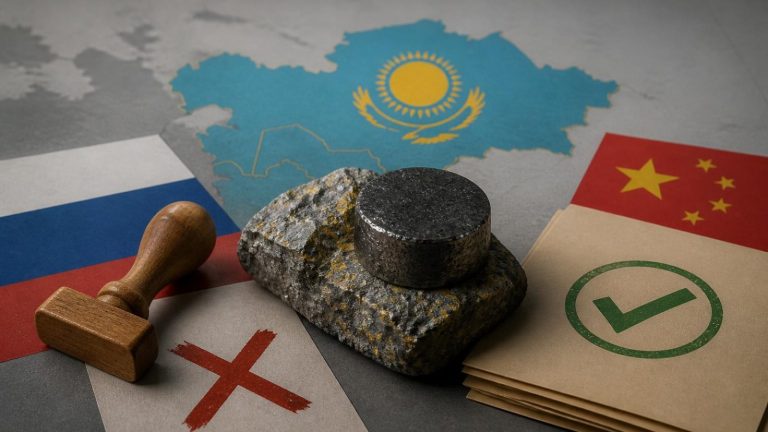
    Kazakhstan’s national atomic company, Kazatomprom, has announced an extraordinary general meeting of shareholders, with a significant agenda item concerning a major contract for the supply of natural uranium in the form of U3O8. While specific details of the agreement remain undisclosed, it has been confirmed that the deliveries are intended for the international group of companies, Uranium One, which is part of the Russian state corporation Rosatom. This move underscores Kazatomprom’s ongoing strategic partnerships in the uranium market, particularly with Russian entities.

    In addition to the contract with Uranium One, Kazatomprom has also disclosed the signing of a spot purchase agreement for natural uranium concentrates with the Chinese company, State Nuclear Uranium Resource Development Company Ltd. This dual engagement highlights Kazatomprom’s proactive approach in securing contracts with both Russian and Chinese firms, reflecting the growing demand for uranium in the global energy sector.

    Kazatomprom’s initiatives are crucial as the world increasingly turns to nuclear energy as a cleaner alternative to fossil fuels. The company’s ability to navigate and establish these international contracts positions it as a key player in the uranium supply chain, which is vital for the nuclear power industry. The upcoming shareholders meeting is expected to provide further insights into Kazatomprom’s strategic direction and its role in the global uranium market.


  • Kazakhstan’s Strategic Balancing Act in the Global Uranium Market

    Kazakhstan’s Strategic Balancing Act in the Global Uranium Market

    Kazakhstan is navigating a complex geopolitical landscape in the global uranium market, which has seen significant shifts due to rising demand for green energy and geopolitical tensions. As the country accounts for nearly 40% of the world’s uranium supply, its strategic decisions are under scrutiny. Political analyst Komron Rahimov discusses the delicate balance Kazakhstan is attempting to maintain between asserting control over its resources and engaging with Russian state corporation Rosatom.

    In recent developments, Kazakhstan has unilaterally reclaimed control over the Akdala uranium deposit from Rosatom while simultaneously awarding the construction of its first nuclear power plant, the Balkhash Nuclear Power Plant, to the Russian corporation. This dual approach raises questions about whether Kazakhstan is losing control over its resources or if it is executing a calculated strategy to enhance its sovereignty. Rahimov argues that the current dynamics reflect a nuanced compromise rather than a straightforward expansion by Rosatom.

    Kazakhstan’s recent amendments to its subsoil code require that up to 90% of uranium contract renewals be allocated to the state-owned Kazatomprom, reinforcing the country’s commitment to reclaiming its natural resources. This shift has already resulted in the loss of Rosatom’s control over the Akdala deposit, which transitioned entirely to Kazakh ownership in March 2026.

    Despite these gains, Kazakhstan’s relationship with Russia remains significant, particularly in high-tech sectors. The agreement for the Balkhash Nuclear Power Plant, valued at over $14 billion, sees Russia financing 85% of the project, ensuring its technological influence in the region. This dependency on Russian expertise and nuclear fuel could pose long-term challenges for Kazakhstan’s energy independence.

    Rahimov highlights that while Kazakhstan is enhancing its economic sovereignty by reclaiming resources, it is also entering a strategic alliance with Russia that could bind it to Russian technology and services for decades. The construction of the Balkhash plant is expected to take around ten years, further solidifying Russia’s presence in Kazakhstan’s energy sector.

    The geopolitical landscape is further complicated by sanctions against Rosatom from the United States, which could impact Kazakhstan’s access to Western financial markets. However, Kazakhstan is actively diversifying its uranium export routes, with China emerging as a significant buyer, accounting for 44% of its revenue. The development of the Trans-Caspian route aims to mitigate risks associated with reliance on Russian supply chains, although its capacity limitations present challenges.

    In conclusion, Kazakhstan’s multi-faceted strategy reflects a sophisticated balancing act between asserting its resource sovereignty and maintaining essential partnerships. The country is poised to navigate a complex geopolitical environment while striving to secure its long-term interests in the uranium market.


  • Rosatom Proposes Establishment of 3D Printing Centre in Uzbekistan

    Rosatom Proposes Establishment of 3D Printing Centre in Uzbekistan

    In a move towards modernising industrial capabilities in Uzbekistan, Rosatom, the Russian state atomic energy corporation, has proposed the establishment of a dedicated 3D printing centre in the country. This initiative was discussed during a specialised seminar held in Tashkent, which focused on the implementation of additive technologies in various sectors, including mining, automotive, and chemicals. The seminar was organised by the Additive Technologies division of Rosatom’s Fuel Division and saw participation from around 30 representatives from key industries, including the Navoi Mining and Metallurgical Combinat and UzAuto Motors.

    Russian experts showcased innovative solutions in additive manufacturing aimed at enhancing production efficiency and enabling the creation of complex products. Technologies discussed included wire arc additive manufacturing, direct laser deposition, and reverse engineering methods. The proposed Centre for Additive Technologies (CAT) aims to form working groups, conduct audits of production capabilities, identify prospective product lines, and develop state support measures to foster the centre’s growth.

    Ilya Kavelashvili, General Director of the Additive Technologies division, emphasised that the advancement of additive manufacturing in Uzbekistan could expedite the repair and modernisation of industrial equipment, reduce reliance on imports, and broaden the technological capabilities of local enterprises. According to Rosatom, global trends indicate a shift in additive technologies from prototyping to serial production, suggesting a promising future for this sector in Uzbekistan.

    The introduction of 3D printing is expected to lower production costs for Uzbek companies, replace a portion of imported products, and enhance the competitiveness of the local industry. This initiative aligns with Uzbekistan’s broader goals of industrial development and technological advancement, positioning the country as a potential hub for innovative manufacturing solutions in the region.


  • Uzbekistan’s Asaka Motors and Rosatom Sign Agreement on Lithium-Ion Battery Production

    Uzbekistan’s Asaka Motors and Rosatom Sign Agreement on Lithium-Ion Battery Production

    Asaka Motors International (Uzbekistan) and Rosatom’s Fuel Division (Russia) have signed a cooperation agreement to develop lithium-ion battery and energy storage system production, Rosatom announced. The deal was concluded on September 25 during World Nuclear Week in Moscow.

    The partnership will focus on launching localized production of traction batteries for electric vehicles and stationary energy storage systems in Uzbekistan. The companies plan to define assembly line capacities, design a localization program for components, identify potential customers, and explore export opportunities to Central Asia and other international markets.

    Founded in 2019, Asaka Motors International specializes in wholesale vehicle imports from the UAE, South Korea, and China, while also developing industrial and high-tech projects in Uzbekistan.

    Rosatom’s Fuel Division, managed by TVEL JSC, supplies nuclear fuel for over 70 power reactors in 15 countries, research reactors in nine states, and Russia’s nuclear fleet. Beyond nuclear fuel, the division is also expanding into new businesses in chemistry, metallurgy, energy storage technologies, 3D printing, digital solutions, and nuclear decommissioning.

  • Kazakhstan’s Nuclear Two-Step: Rosatom to Build First Plant, China Likely for Second

    Kazakhstan’s Nuclear Two-Step: Rosatom to Build First Plant, China Likely for Second

    Kazakhstan has officially selected Russia’s Rosatom to build its first nuclear power plant, deepening energy ties with Moscow — but within hours, the country signaled a balancing act by revealing plans for a second plant likely to be built by China.

    In an unusual Saturday announcement on June 14, Kazakh authorities confirmed Rosatom as the winner of the long-running bid to construct the first plant in Ulken, near Lake Balkhash. The same day, the head of Kazakhstan’s nuclear energy agency, Almassadam Satkaliyev, said a second nuclear power station would likely be built by China’s state-owned China National Nuclear Corporation — the runner-up in the initial bid.

    This dual-track approach reflects Kazakhstan’s broader geopolitical strategy of maintaining equilibrium between its powerful neighbors: Russia and China. While Rosatom brings deep integration advantages — from uranium processing and cultural ties to favorable financing and waste disposal — the inclusion of a Chinese-built second plant helps offset dependence on Moscow.

    “Rosatom’s proposal does look strong in technical and financial terms,” said energy researcher Shaimerden Chikanayev. Yet, he added, the political cost of excluding China likely triggered Astana’s swift pivot.

    The Rosatom-led project is slated for completion by 2036, with a price tag of at least $15 billion. The financing details remain murky, though Kazakhstan insists it will retain ownership, distancing itself from Turkey’s Akkuyu model, where Rosatom owns the facility outright.

    The announcement landed just days before Chinese President Xi Jinping’s visit to Kazakhstan for the second China–Central Asia summit — potentially souring Beijing’s expectations of regional energy investment leadership. Political analyst Dosym Satpayev noted the timing could have left “an unpleasant aftertaste for Beijing.”

    Officials now appear eager to proceed with both reactors in parallel. Deputy Prime Minister Roman Sklyar even suggested the Chinese-built plant could be completed first, depending on the technology used.

    However, financial questions loom large. “Kazakhstan will be paying back the Russian loans for a very, very long time,” warned energy analyst Olzhas Baidildinov, with electricity tariffs likely to bear the burden.

    As Astana juggles energy security with foreign policy nuance, the outcome of its nuclear ambitions may shape the region’s balance of power for decades to come.

  • Rosatom Sues Finnish Firms for $2.8 Billion Over Cancelled Nuclear Plant Contract

    Rosatom Sues Finnish Firms for $2.8 Billion Over Cancelled Nuclear Plant Contract

    Russia’s state nuclear corporation Rosatom has launched a high-stakes lawsuit in Moscow against Finnish companies Fortum and Outokumpu, seeking 227.8 billion roubles (approximately $2.8 billion) in damages related to the cancelled Hanhikivi-1 nuclear power plant project in Finland.

    The lawsuit alleges unlawful termination of the EPC (engineering, procurement, and construction) contract and further violations of a shareholder agreement, a nuclear fuel supply deal, and an outstanding loan that Rosatom claims has not been repaid. The contract to construct the 1.2-gigawatt power plant was originally signed in 2013, with planned investments estimated at €6.5–7 billion. However, the Finnish government terminated the agreement in May 2022, citing geopolitical risks following Russia’s invasion of Ukraine, project delays, and overall uncertainty surrounding the project’s feasibility.

    Fennovoima, the Finnish-led consortium behind the Hanhikivi-1 project—of which Outokumpu, Fortum, and SSAB are key stakeholders—responded by initiating international arbitration proceedings to reclaim €1.7 billion in advance payments. Rosatom, in turn, filed counterclaims totaling €3 billion. Both cases are currently being heard in international courts.

    Fortum, once a major foreign investor in Russia’s energy sector, has faced growing losses in the country. In 2023, it effectively lost control of its Russian operations when the Kremlin, under a presidential decree by Vladimir Putin, temporarily seized control of Fortum’s power plants and renewable energy assets.

  • Kazakhstan Eyes Russian Participation in First Nuclear Power Plant Project

    Kazakhstan Eyes Russian Participation in First Nuclear Power Plant Project

    Kazakhstan’s Foreign Minister Murat Nurtleu has expressed hope that Russia will participate in building the country’s first nuclear power plant (NPP). The statement was made during his meeting with Russian Foreign Minister Sergey Lavrov, according to TASS.

    “We already have over 170 joint projects with Russian businesses, and the NPP construction is among the most strategic. I hope our respective ministries will move forward with the necessary work,” Nurtleu noted.

    The project has strong public support — a referendum held on October 6, 2024, showed 71.12% of Kazakhstani voters are in favor of building a nuclear power plant. Four international companies are currently under consideration to supply technology and lead construction:

    • Rosatom (Russia)

    • CNNC (China)

    • KHNP (South Korea)

    • EDF (France)

    According to Deputy Minister of Energy Sungat Yessimkhanov, the contractor selection will be completed by June 2025. President Kassym-Jomart Tokayev has previously confirmed that the NPP will be developed through an international consortium, should the public support it.

    The first NPP will be located in the village of Ulken, Almaty region. Preparatory work has already begun, with plans to create an industrial zone, social infrastructure, and to modernize local roads and water supply systems to support NPP operations.

    Speaking at the recent National Kurultai, a major national forum, President Tokayev revealed even more ambitious plans:

    “Kazakhstan will not stop at one NPP. We are preparing to establish three nuclear power plants, alongside the formation of a dedicated Nuclear Energy Agency.”

    The push for nuclear energy comes amid Kazakhstan’s broader strategy to diversify its energy mix, reduce emissions, and strengthen energy security in the region.

  • Kazakhstan Proposes Uranium Mining Contract to Turkey to Fuel Its Growing Nuclear Energy Program

    Kazakhstan Proposes Uranium Mining Contract to Turkey to Fuel Its Growing Nuclear Energy Program

    Kazakhstan has proposed a long-term partnership with Turkey in the nuclear fuel cycle, offering a contract for uranium mining within Kazakhstan to help meet Turkey’s rapidly growing demand for nuclear energy. The announcement was made by Bauyrzhan Duisebayev, Director General of the Chemical Engineering Design Bureau, during the MINEX Kazakhstan forum.

    Duisebayev highlighted that Turkey is emerging as a major nuclear player with four reactors under construction and four more planned. He emphasized that Kazakhstan, given its vast uranium reserves and experience, is a natural partner. He estimated that Turkey’s two existing nuclear plants alone will require 1,800 tonnes of uranium annually, and that future demand could reach 5,000 to 8,000 tonnes per year.

    A presentation prepared for Turkish officials outlined Kazakhstan’s proposed role in the entire nuclear fuel cycle — from uranium mining to fuel fabrication. Currently, Kazakhstan mines uranium in collaboration with Russia, where it is converted, enriched, and fabricated into nuclear fuel. Duisebayev suggested Kazakhstan could independently provide conversion services, potentially at facilities like the Ulba Metallurgical Plant or the Stepnogorsk Mining and Chemical Plant.

    He noted that Turkish officials had expressed interest in nuclear cooperation during President Erdoğan’s visit to Astana for the SCO summit in July 2024, but no uranium contracts have yet been signed. Duisebayev emphasized that Turkey could become involved in three stages of the nuclear cycle — mining, conversion, and fuel fabrication — and eventually, more, except for enrichment, which still requires time and development.

    He also outlined Kazakhstan’s long-term strategy to shift from selling natural uranium to offering higher-value products like uranium tetrafluoride and hexafluoride, enriched uranium, and eventually, only nuclear technologies and energy. This transition is driven by expectations that global uranium demand may decline by 2040 due to the rise of alternative reactors, such as thorium or fast reactors that do not rely on natural uranium.

    Duisebayev mentioned that conversion operations could be hosted not only in Stepnogorsk, now part of Rosatom’s structure, but also in Ust-Kamenogorsk or Uralsk. He expressed hope for progress with or without Turkish participation, including potential cooperation with Rosatom.

    Turkey’s first nuclear power plant, Akkuyu, is being built by Rosatom under a build-operate-transfer model. It will consist of four VVER-1200 reactors with a total capacity of 4,800 MW. The construction cost is estimated at $24–25 billion, with Russia providing both the fuel and the handling of spent nuclear material.

  • Kyrgyzstan and Russia Partner to Complete Min-Kush Uranium Site Cleanup by August

    Kyrgyzstan and Russia Partner to Complete Min-Kush Uranium Site Cleanup by August

    The reclamation efforts at the former uranium mining site in Min-Kush, located in Kyrgyzstan’s Naryn region, are on track for completion by August 2025. This updated timeline was announced during a meeting between Kyrgyzstan’s Minister of Emergency Situations, Boobek Azhikeev, and the Deputy Director General of Russia’s Rosatom State Corporation, Nikolai Spassky.

    According to a press release from the Ministry of Emergency Situations, the primary focus of the discussion was the finalization of the project aimed at rehabilitating the Min-Kush uranium site.

    Rosatom representatives informed Minister Azhikeev that all planned work at the location is scheduled to be finished in August. As a symbol of the region’s mining history and the strategic partnership between Kyrgyzstan and Russia, a memorial stele will be erected in Min-Kush.

    This significant environmental remediation project is being carried out under the framework of an interstate program dedicated to reclaiming territories impacted by uranium mining. It also aligns with an agreement established between the Cabinet of Ministers of Kyrgyzstan and the Government of Russia, which was signed in March 2024.

    During the meeting, the parties also discussed future steps concerning the rehabilitation of other sites in five additional settlements across Kyrgyzstan: Kadzhi-Sai, Kyzyl-Zhar No. 12, Kara-Tash (Too-Moyun), Sumsar, and Kan.

  • Rosatom to Aid Kyrgyzstan with Industrial Site Clean-up

    Rosatom to Aid Kyrgyzstan with Industrial Site Clean-up

    Russia’s state nuclear corporation Rosatom is set to assist Kyrgyzstan in addressing environmental contamination at a former industrial facility, officials announced today.

    The Federal Environmental Operator, a division of Rosatom, recently took part in high-level discussions in Bishkek where authorities approved immediate remediation work at the Crystal plant complex.

    Stanislav Zhabrikov, Director for Environmental Projects Implementation at the Federal Environmental Operator, highlighted the organisation’s credentials, noting: “Having amassed considerable expertise in managing environmental legacy issues within Russia, we are now expanding our role as a trusted partner to colleagues abroad.”

    The Crystal facility, established in 1989 in Tash-Kumyr, was formerly involved in polycrystalline silicon manufacture. The site currently harbours hazardous chemical residues requiring specialist treatment.

    The collaboration marks a significant step in addressing historical industrial pollution in the region, though specific details regarding the scope and timeline of the clean-up operation have yet to be disclosed.