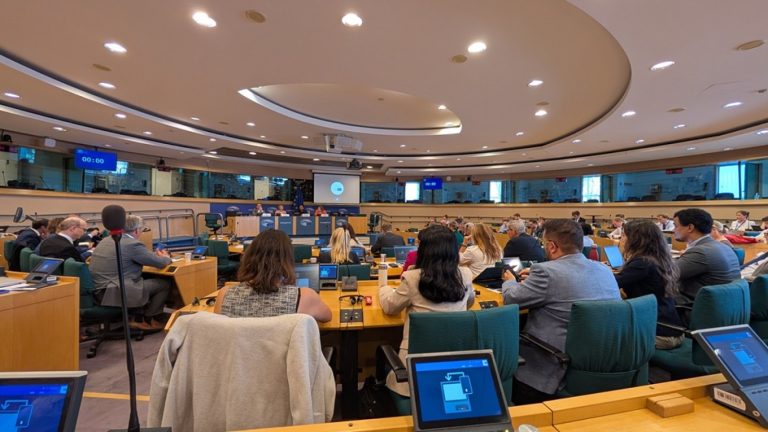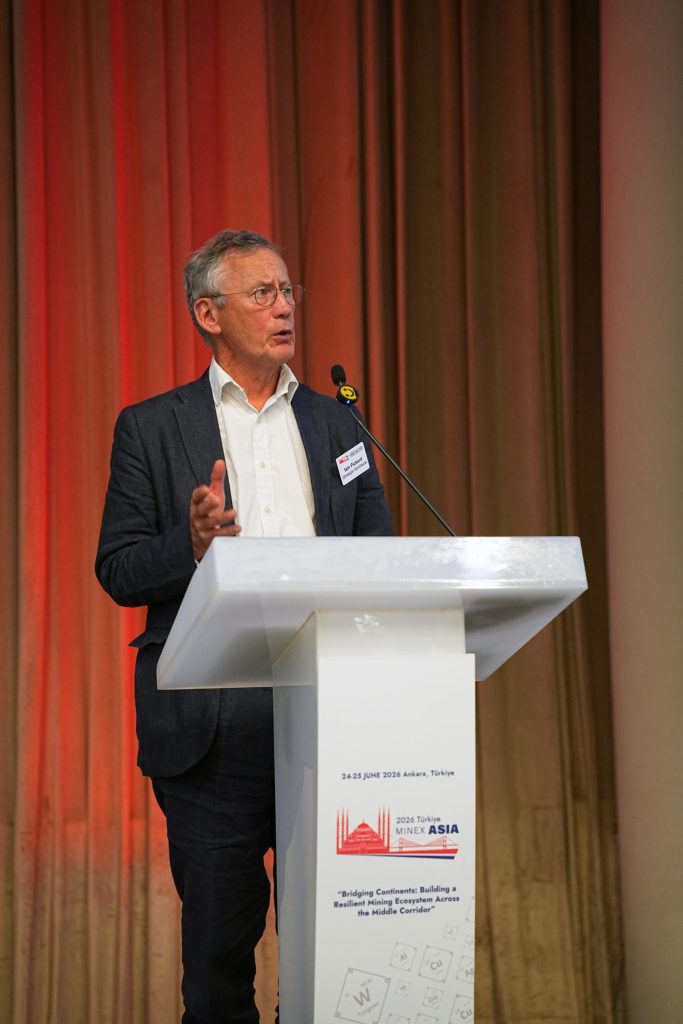
Iain Pickard framed his talk around three themes: validating, monitoring, and ensuring. He opened by noting that tailings failures continue globally — citing recent incidents in Zambia, Canada, and a leach pad failure in Turkey — and that the financial consequences are becoming severe. He reported that insurance underwriters are increasingly declining to fully cover mines with unmanaged tailings facilities, creating real threats to balance sheets alongside GISTM compliance pressures.
He explained that before monitoring can be meaningful, facilities need validation against GISTM, which he described as both a technical and an ESG review — the latter being an underappreciated distinction, since community expansion into hazard zones, for example, requires ongoing awareness that pure engineering reviews might miss.
His core pitch centered on 24/7 cloud-based monitoring technology that creates what he called “a digital assurance layer” — harmonizing and contextualizing tailings data across a facility, tying it to GISTM and other recognized standards, and making it shareable with communities, regulators, or insurers. He emphasized that this isn’t about the monitoring instruments themselves, but about integrating disparate data sources (piezometers, stability indicators, satellite surveillance) into a single, actionable “version of the truth” accessible to engineers of record, contractors, and oversight boards alike.
He described the platform’s practical features: color-coded instrument status, drillable data layers, and a journaling function that captures both readings and the actions taken in response — valuable evidence for regulators, insurers, or communities seeking assurance of active management. He cited a South African testing facility his firm monitors, which local regulators have called “best-in-class.”
A significant portion of his talk addressed the often-overlooked intersection of tailings management and insurance. He explained that mining risks are typically underwritten through the London insurance market, but underwriters traditionally receive only an annual, hard-to-interpret data dump — often manually recorded and error-prone. His platform instead generates an “insurance-ready” report, developed in partnership with a broker, that presents facility profiles, governance history, and demonstrable evidence of corrective action in a format underwriters find useful — potentially unlocking greater capital commitment and better terms.
He noted a persistent organizational gap: technical and financial teams within mining companies often don’t communicate, meaning finance teams may be unaware such monitoring technology exists, while technical teams may not understand what information insurers need. He closed by summarizing the platform’s benefits as predictive and proactive risk management — enabling better risk pricing, aligned stakeholder incentives, and ultimately a shift from reactive, post-incident compliance toward continuous, trusted, decision-led tailings governance.