Tag: mining sector

  • Zangezur Copper-Molybdenum Combine Regains Top Taxpayer Status in Armenia

    Zangezur Copper-Molybdenum Combine Regains Top Taxpayer Status in Armenia

    The Zangezur Copper-Molybdenum Combine (ZCMC) has reclaimed its position as the leading taxpayer in Armenia, according to the latest data from the Armenian State Revenue Committee. In the first half of 2026, the top five taxpayers in Armenia contributed a total of 173.8 billion drams (approximately $472.5 million) to the state budget, marking a year-on-year increase of 23.4%. This amount includes 3.8 billion drams from customs duties, 62.1 billion drams from direct taxes, and 70.3 billion drams from value-added tax (VAT), reflecting significant growth across all categories.

    The share of the top five taxpayers in the overall list of 1,000 major taxpayers has risen to 16%, up from 14% the previous year. A significant factor in this increase is the return of ZCMC to the forefront of the taxpayer rankings, having previously dropped out in early 2025. After a strong performance in the second and third quarters of 2025, ZCMC has now firmly established itself at the top, contributing 41.6 billion drams to the state treasury in the first half of 2026, which is double the amount from the previous year.

    ZCMC’s contributions include 582.5 million drams in customs duties, 20.2 billion drams in direct taxes, and 960.1 million drams in VAT. Following ZCMC, the second position is held by Mobile Center Art, which contributed 38.2 billion drams, a 16.1% increase from the previous year. Ardshinbank has moved up to third place, contributing 33.6 billion drams, while Gazprom Armenia has slipped to fourth with a contribution of 31.5 billion drams, reflecting a 12.5% decline.

    The fifth position is occupied by a joint venture that contributed 28.9 billion drams, down 4.9% from the previous year. Overall, the top 1,000 taxpayers in Armenia paid a total of 1.1 trillion drams (over $3 billion) to the state budget in the first half of 2026, representing a 12.5% increase compared to the same period last year. This data highlights the vital role of the mining sector, particularly ZCMC, in Armenia’s economy and its contributions to the national budget amidst fluctuating performances from other sectors.

    In comparison, the top five taxpayers in the first half of 2025 included Mobile Center Art, Grand Tobacco, Gazprom Armenia, Ardshinbank, and Ameriabank, which collectively contributed 140.8 billion drams, showing a decline of 15% year-on-year. The ongoing recovery and growth of ZCMC are crucial for the stability and growth of Armenia’s fiscal landscape, especially as the country navigates economic challenges and seeks to enhance its mining sector’s contributions to the economy.


  • Uzbekistan Accelerates Geological Sector Transformation Through Digitalisation

    Uzbekistan Accelerates Geological Sector Transformation Through Digitalisation

    Uzbekistan is embarking on a significant transformation of its geological sector, aiming to attract up to $30 billion in investments by 2030 through the implementation of digital solutions and artificial intelligence. President Shavkat Mirziyoyev recently presented an ambitious plan to modernise the mining and geological industries, highlighting the need for a comprehensive national geological database to enhance global investor interest in new projects. Currently, Uzbekistan lacks a unified geological data platform, unlike Kazakhstan, which has had its Unified Subsoil Use Platform operational since 2025. The establishment of a digital geological map is deemed essential, as it will integrate historical data with current information, thereby improving the attractiveness of Uzbekistan’s geological resources to international investors.

    To facilitate this transformation, Uzbekistan plans to digitise over 36,000 reports and other information sources stored in various formats. This process is expected to take several years, drawing on the experiences of Russia and Kazakhstan, which have already undertaken similar initiatives. The new Centre for Technological Transformation will oversee the digitisation efforts, which will include compiling geological maps, drilling data, laboratory results, and production indicators into a single electronic database. Such a consolidation is anticipated to enhance the efficiency of discovering new mineral deposits.

    The government’s strategy includes leveraging artificial intelligence to expedite the analysis of geological data, improve resource estimation, and enhance drilling operations. Specific targets have been set, including a 10% reduction in the cost of geological exploration and a doubling of the speed at which new deposits are identified. Additionally, the number of investment proposals is expected to quadruple as a result of these digital advancements.

    Currently, only 40% of Uzbekistan’s mineral resources have been explored, but the government is keen to increase this figure significantly. By 2030, the country aims to boost its reserves of gold, silver, and copper substantially. Uzbekistan is home to over 30 types of critical minerals and is actively pursuing 76 investment projects worth approximately €2.4 billion. However, further exploration is necessary for some deposits, particularly for rare earth metals and uranium.

    The government has outlined plans for 44 projects between 2026 and 2030 that will incorporate artificial intelligence and machine learning in geological activities, focusing on six key mining enterprises. These projects aim not only to automate production processes but also to enhance geological exploration through digital transformation. The use of advanced technologies, including digital geological modelling, is already being implemented by major companies like the Navoi Mining & Metallurgy Combinat.

    Furthermore, Uzbekistan is working on a geospatial monitoring system to ensure transparency and accountability in the mining sector. This system will require all mining operators to submit their reports in a machine-readable format, facilitating quicker and more accurate verification of compliance with regulations. The geospatial monitoring initiative aims to prevent illegal activities and ensure adherence to environmental standards, using aerial and satellite technology to monitor mining operations effectively. As of June 2026, information on over 2,000 mineral deposits has already been integrated into this new system, marking a significant step towards a more modern and efficient geological sector in Uzbekistan.


  • IMC Montan at Minex Kazakhstan 2026: An Expert Perspective on Industry Challenges

    IMC Montan at Minex Kazakhstan 2026: An Expert Perspective on Industry Challenges

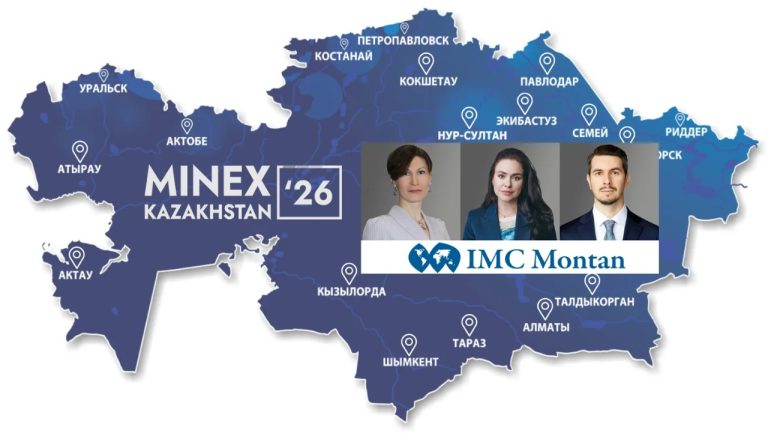
    This year, IMC Montan is co-organizing the session “ESG Transformation and the ‘Social License’ in Kazakhstan’s Mining Sector” at the Minex Kazakhstan forum. The company’s experts explain why the ESG agenda is becoming not just a trend, but an economic necessity.

    IMC Montan’s decision to co-organize a session dedicated to sustainable development is driven by the times. Kazakhstan has reached the point of regulatory implementation of ESG principles for business. Previously, this agenda was the prerogative of companies traditionally following international trends and seeking to meet investor or partner requirements. Now, ESG in Kazakhstan is actively developing not only due to external conditions. The mining sector is one of the most sensitive to ESG factors, so sharing experience on this topic will be valuable for all forum participants.

    What issues in this area do you consider most relevant for subsoil users today?

    When it comes to broad issues that go beyond national legislation and form part of sustainable development principles and the application of best available technologies, key topics include mining waste management, energy efficiency, rational water use, and biodiversity conservation. Closure and reclamation aspects deserve special mention. We are confident that forum participants will be interested in unconventional case studies addressing these issues. For example, relatively few experts have real hands-on experience with closure and reclamation works — yet these activities have a significant impact on the overall project economics, and underestimating these costs can become a critical factor. Environmental responsibility is playing an increasingly important role for business, and companies want to see financial benefits or preferences from implementing their environmental policies. The current agenda for subsoil users is therefore focused on asset lifecycle management: from waste handling during operations to post-investment assessment of closure and reclamation obligations.

    You mentioned the topic of mining and processing waste management. Could you share some interesting case studies?

    Mining companies must think carefully about where and how their large-tonnage mineral waste (overburden, processing tailings) will be handled. The main challenge is the sheer volume generated — conventional surface disposal requires significant land areas. The situation is further complicated by the conditions at mine sites: difficult terrain, proximity to populated areas, or the presence of environmentally or socially significant features. Naturally, subsoil users are interested in finding alternative approaches. There is also growing interest in recovering valuable components from mining waste and using waste as construction material or as a component thereof.

    However, waste disposal remains one of the most painful issues, as it is not only an environmental concern but equally an economic and land-property one. The most interesting case studies sit at the intersection of technological and legal solutions. Successful examples show that waste can be not just a financial burden, but a resource — if the rationale and documentation can be structured in line with circular economy principles.

    In our practice, we have encountered a number of innovative solutions. For example, placing tailings in exhausted open-pit voids (with or without prior waterproofing), or producing a specialized material from tailings (a recultivant) for backfilling mined-out areas — treating it not as waste disposal but as product manufacturing. Such unconventional approaches naturally require robust environmental safety justifications, but they open new opportunities. Both tailings management approaches yielded a tangible economic effect (in the range of $27–50 million USD), while requiring careful review of the legal framework and regulatory outlook to eliminate critical administrative risks — not just fines, but potential production shutdowns.

    An important regulatory stimulus emerged in Kazakhstan at the beginning of 2026 with the adoption of the “Concept for Managing All Types of Waste in the Republic of Kazakhstan for 2026–2030.” Waste management in the mining and metallurgical industries is identified as one of its strategic priorities. The planned development of the country’s regulatory framework regarding the utilization of mining waste (including as technogenic mineral formations) provides an additional incentive for subsoil users to seek optimal solutions.

    You separately mentioned closure and reclamation. In your view, what practical challenges do subsoil users face when fulfilling their closure and reclamation obligations?

    In our view, the main problem is a lack of understanding of the goals and principles of successful reclamation, which ultimately leads to ineffective solutions. In our practice, we frequently encounter “template” approaches to reclamation planning, and consequently, an underestimation of the associated costs. International practice has long established the core criteria for successful reclamation — environmental (such as site safety in terms of physical, geochemical and ecological parameters, protection of public health and safety, absence of water pollution post-closure, and ecological system integrity) and social (minimizing socioeconomic impacts of closure and generating socioeconomic benefits). Closure and reclamation plans should be developed as early as possible in the project design phase. Each of the mentioned criteria requires consideration during planning. Issues such as the adequacy of mine water management measures, forecasting the geochemical stability of waste dumps post-closure, and stakeholder engagement must be studied and solutions justified.

    In Kazakhstan, subsoil users are required to prepare reclamation plans at the design stage — however, in our observation, such plans tend to be formal documents rather than strategic ones. This can ultimately lead to insufficient financial provision for the required scope of reclamation and closure works when the time comes. That said, effective measures do not always mean costly ones. Some decisions made during overall production planning can reduce closure costs — such as the previously mentioned option of placing tailings in open pits, or accounting for the potential formation of acid drainage and managing it during waste rock stockpiling.

    Turning to the topic of international standards — in your personal view, can their implementation bring real benefits to business?

    Absolutely. Drawing on our practical experience working with industry enterprises across the CIS, we can confidently speak not just of benefits, but of the strategic necessity of implementing international standards. Integrating ESG principles enables a meaningful restructuring of risk management systems. We observe how chaotic responses to environmental and social incidents at many enterprises are being replaced by a systematic approach to predictive analysis and prevention. Standards also act as a catalyst for corporate culture: there is a marked increase in business accountability at all levels, which directly affects companies’ reputational assets.

    It is telling that the initiative most often comes from environmental protection departments — as those most attuned to regulatory changes. However, we have recently noted growing engagement from senior management as well. It is no secret that the cost of using natural resources is steadily rising — and the cost of environmental mistakes is rising even faster.

    Kazakhstan is now at a unique juncture: accumulated experience and current demand from both the state and the market are creating the conditions for a qualitative leap in eco-social responsibility.

    We have discussed challenges, unconventional solutions, economic effects and regulatory changes in the ESG space. What other areas of work — in this or other fields important to subsoil users — can IMC Montan’s experts shed light on?

    IMC Montan has been supporting mining projects for many years, including in the areas of environmental management, sustainable development and risk management. Our accumulated experience — spanning more than 1,000 completed projects worldwide — has allowed us to develop a comprehensive understanding of existing challenges and an expert approach to risk mitigation and overall project management. At the session, we will share illustrative case studies, present quantitative and qualitative characteristics of the approaches being implemented in natural resource management, and do our best to make the meeting both engaging and useful. Information about session participants and discussion topics is available at: https://2026.minexkazakhstan.com/ru/forum-agenda/tehnicheskaya-sessiya-2/

  • Kazakhstan Lawmaker Proposes Unified Disclosure Rules for Subsoil Users

    Kazakhstan Lawmaker Proposes Unified Disclosure Rules for Subsoil Users

    A member of Kazakhstan’s Mazhilis has proposed introducing unified transparency standards for subsoil users, calling for mandatory disclosure of income and production data across the mining and oil and gas sectors.

    Deputy Yerlan Barlybayev, representing the Ak Zhol faction, submitted the proposal to Prime Minister Olzhas Bektenov, arguing that greater transparency is essential to uphold the constitutional principle that subsoil resources belong to the people.

    The инициативa highlights inconsistencies in disclosure practices among companies operating in the extractive industries. While joint-stock companies are required by law to publish financial statements, many major players in Kazakhstan’s mining and oil and gas sectors operate as limited liability partnerships, whose financial reporting is accessible only to their founders. These include companies such as Tengizchevroil, Kazakhmys Corporation and Kazzinc, as well as entities registered in foreign jurisdictions or within the Astana International Financial Centre.

    According to Barlybayev, this lack of transparency prevents the public from objectively assessing how effectively the country’s natural resources are being utilised. He emphasised that the issue lies not in corporate structure itself, but in the absence of consistent disclosure standards for large subsoil users.

    To address this, the proposal calls for all major extractive companies to provide public reporting aligned with the requirements applied to listed companies under securities market legislation. This would ensure a comparable level of transparency across the sector.

    As a longer-term measure, the deputy also suggested that new entities seeking licences for strategic deposits should be established exclusively as joint-stock companies. While this requirement would not affect existing investors, it is expected to improve transparency and governance standards over time.

    The proposal reflects growing attention to accountability and resource governance in Kazakhstan’s extractive industries.

  • Kazakhstan Considers Mandatory Disclosure Rules for Subsoil Users

    Kazakhstan Considers Mandatory Disclosure Rules for Subsoil Users

    Kazakhstan may introduce new transparency requirements for subsoil users, as lawmakers call for stricter disclosure of financial and production data across the mining and oil and gas sectors.

    Mazhilis deputy Yerlan Barlybayev has proposed legislative changes requiring all major subsoil users to publicly report their revenues and extraction volumes. Citing the constitutional principle that subsoil resources belong to the people, he argued that the state must ensure full transparency in how these resources are utilised and how related revenues are managed.

    Currently, disclosure requirements vary depending on corporate structure. While joint-stock companies are legally required to publish financial statements, many of Kazakhstan’s largest subsoil users, including Tengizchevroil, Kazakhmys Corporation and Kazzinc, operate as limited liability partnerships. As a result, they report only to their founders rather than the public. In addition, some major operators are registered in foreign jurisdictions or within the Astana International Financial Centre, further limiting public access to information.

    Barlybayev noted that this lack of uniform transparency prevents society from objectively assessing how national resources are being exploited. He proposed introducing mandatory public reporting standards for all large subsoil users, aligned with disclosure requirements applied to publicly listed companies under securities market legislation.

    As a longer-term measure, the deputy suggested that new legal entities seeking rights to develop strategic deposits should be required to register exclusively as joint-stock companies. According to him, this approach would not affect existing investors but would gradually improve transparency across the sector.

    At the same time, Barlybayev emphasised that the core issue lies not in corporate structure itself, but in the absence of unified transparency standards for major resource operators.

    The proposal follows the signing of Kazakhstan’s new Constitution on 18 March, which reinforces state ownership of subsoil resources and has prompted renewed debate over governance and accountability in the extractive industries.

  • European Mining and Utilities Stocks Hit Record Highs, Surpassing 2008 Peaks

    European Mining and Utilities Stocks Hit Record Highs, Surpassing 2008 Peaks

    European mining and utilities stocks reached fresh all-time highs on Wednesday, surpassing their previous peaks set in 2008, in the latest indication that last year’s rally in regional equities is broadening across sectors.

    The  basic resources sector has climbed 25 percent since the start of the year, driven by steadily rising prices for precious and industrial metals. The strong performance nearly matches the sector’s total gain recorded in 2025, reflecting renewed investor appetite for commodity-linked equities.

    At the same time, the  has advanced around 15 percent year to date. Utilities stocks have attracted increased interest as beneficiaries of artificial intelligence-driven demand growth, particularly due to the rising power requirements of data centres. The sector is also seen as part of a broader investor rotation into hard assets.

    Mining and utilities are the second and third European industry groups to break longstanding records this week. Earlier, the regional oil and gas index exceeded its previous high from 2007, underscoring the strength of the current sectoral momentum.

  • British Chamber Urges Immediate Action to Restore Stability in Kosovo’s Mining Sector

    British Chamber Urges Immediate Action to Restore Stability in Kosovo’s Mining Sector

    The British Chamber of Commerce in Kosovo has called for urgent institutional intervention in the country’s mining sector, warning that recent developments have created legal uncertainty and posed serious challenges for industry stakeholders.

    In a public statement shared on Facebook, the Chamber stressed that restoring legal certainty, reinforcing investor confidence, and safeguarding regulatory credibility are critical priorities for Kosovo’s mining industry. The organisation noted that recent issues surrounding the functioning of the Independent Commission for Mines and Minerals have disrupted licensing procedures, delayed compliance with statutory deadlines, and undermined the overall stability of the investment environment.

    According to the Chamber, predictable and timely decision-making, equal treatment of private and public enterprises, and strict adherence to the existing legal framework are essential to maintaining Kosovo’s competitiveness in mineral exploration and development.

    The statement concludes that resolving these institutional and regulatory concerns is vital to preserving the long-term stability and strategic development of Kosovo’s mining sector.

  • Kazakhstan to Launch 200 Industrial Projects in 2026 Targeting KZT 1.5 Trillion in Import Substitution

    Kazakhstan to Launch 200 Industrial Projects in 2026 Targeting KZT 1.5 Trillion in Import Substitution

    Kazakhstan plans to implement a pool of 200 investment projects this year aimed at generating import substitution worth 1.5 trillion tenge, according to statements made at a board meeting of the Ministry of Industry and Construction.

    The flagship projects include new production facilities for mineral fertilizers, specialised machinery and ferrosilicon in the Zhambyl, Pavlodar and Karaganda regions.

    Once all projects reach full capacity, total output is expected to amount to approximately 2.3 trillion tenge. Of this, around 0.5 trillion tenge is projected for export markets, while 1.5 trillion tenge will contribute directly to import substitution.

    First Deputy Prime Minister Roman Sklyar instructed the ministry to accelerate the launch of the National Industrial Information System and to present a new model for the development of special economic zones within one month. He also tasked officials with expanding geological exploration to 2.2 million square kilometres and updating plans related to rare metals development.

    Earlier, citing a forecast by MINEX Kazakhstan, analysts noted that the country’s mining and metallurgical complex in 2026 will operate under the simultaneous influence of rising global metals demand and tightening domestic regulatory and fiscal conditions. According to the review, the sector is entering a phase of deep structural transformation.

  • A Strategic Assessment of Promise vs. Reality in Central Asia’s Mineral Development

    A Strategic Assessment of Promise vs. Reality in Central Asia’s Mineral Development

    Central Asia’s role in global critical minerals took a decisive turn at the 4 February 2026 Critical Minerals Ministerial in Washington, where officials from more than 50 countries acknowledged the region as a strategic hub rather than a geopolitical buffer.

    While Washington presented an ambitious framework to advance mineral sovereignty, analysts caution that the region—not the U.S.—must drive implementation to avoid becoming a passive arena for major‑power competition.

    U.S. Strategy: A Vertical Integration “New Order”

    The U.S. vision, centred on the FORGE initiative and the concept of “Pax Silica,” positions minerals and energy as shared strategic assets among trusted partners and offers an alternative to dependency on China.
    Washington differentiates its value proposition in three areas:

    1. Market Stability Through Price Floors
      Proposed tariff‑backed price floors aim to counter predatory market dumping and protect investments in assets such as Kazakhstan’s rare earth reserves.
    2. Vertical Value Integration
      The U.S. framework prioritises domestic processing and refining over raw‑ore exports, enabling Central Asian states to capture more value across the supply chain.
    3. Connectivity Autonomy
      By incorporating the Middle Corridor into initiatives like TRIPP, the West presents routes that bypass Russia and China, reducing geopolitical transit pressures.

    Kazakhstan and Uzbekistan have responded quickly—Kazakhstan has declared critical minerals the “new oil” and joined the Abraham Accords to strengthen supply‑chain integration, while Uzbekistan has pursued strategic MOUs to modernise mining and secure battery‑metal supply chains.

    Reality Check: Gaps Between Intent and Implementation

    Despite strong rhetoric, Western engagement has largely taken the form of frameworks and MoUs—not operational projects.

    Three challenges persist:

    • Operational Disparity – China continues to deliver turnkey, financed projects backed by contractors and long‑term offtake agreements, while Western partners emphasise declarations.
    • U.S. Inward Focus – Washington’s drive for techno‑economic sovereignty favours selective, de‑risked engagements rather than proactive industrial development in the region.
    • Execution Gaps – Uzbekistan’s $2.6bn program covering 76 projects illustrates regional ambition, but real progress requires partners capable of building at scale.

    Strategic Imperative: Central Asian Agency

    Experts argue that relying on future U.S. demand is a strategic mistake.
    To convert high‑level dialogue into economic gains, Central Asia must prioritise:

    1. Midstream Capabilities

    Refining and producing intermediary products offer higher margins and reduce reliance on long‑distance transport of low‑value raw ore.

    2. Direct Private‑Sector Engagement

    Regional firms should proactively present project‑ready opportunities to U.S. companies rather than depending on government‑to‑government frameworks.

    Conclusion

    The U.S. “New Order” provides Central Asia with a potential pathway to diversify away from Beijing and Moscow while improving price stability and long‑term sovereignty.
    But success hinges on regional execution. Astana and Tashkent must convert diplomatic signals into tangible midstream capacity—and do so quickly—to secure their strategic autonomy before the current window closes.

  • Kazakhstan’s Industry Minister Holds Talks with Kazakhmys Leadership on Modernisation and Safety

    Kazakhstan’s Industry Minister Holds Talks with Kazakhmys Leadership on Modernisation and Safety

    Kazakhstan’s Minister of Industry and Construction, Yersayin Nagaspayev, held a working meeting with Ruslan Oskinali, Chairman of the Management Board of Kazakhmys Corporation, to discuss the current state and future priorities of the country’s metallurgical sector.

    During the meeting, Nagaspayev highlighted the central role of mining and metallurgy in Kazakhstan’s economy. According to the minister, the sector accounts for around 40% of total manufacturing output, while cathode copper production represents 23% of the metallurgical industry. Kazakhmys alone contributes about 78% of national cathode copper output, underscoring its systemic importance.

    The discussions focused on ensuring the stable operation of production facilities, strengthening occupational safety, and advancing modernization and technological upgrades. Nagaspayev stressed that mining and metallurgy are high-risk industries, requiring strict compliance with industrial safety standards and enhanced oversight at hazardous sites.

    He also pointed to the growing importance of digital transformation, calling for greater use of artificial intelligence and digital technologies to improve production efficiency and operational control.

    In addition, the minister reiterated that expanding domestic processing remains a strategic priority for Kazakhstan’s non-ferrous metallurgy sector. From the government’s perspective, it is essential that large industrial players continue to invest in equipment renewal, improve the efficiency of processing stages, and reduce costs and environmental impacts through the adoption of modern technologies.