In a significant development for the European mining and recycling industry, a new facility dedicated to recovering strategic metals from used electric vehicle batteries was inaugurated in Moselle, France. This pioneering initiative marks a turning point for Europe, which is striving to enhance its self-sufficiency in critical raw materials such as nickel, cobalt, copper, and lithium. As electric vehicles require approximately six times more critical raw materials than conventional cars, the demand for these metals is surging, yet Europe remains heavily reliant on imports from other regions.
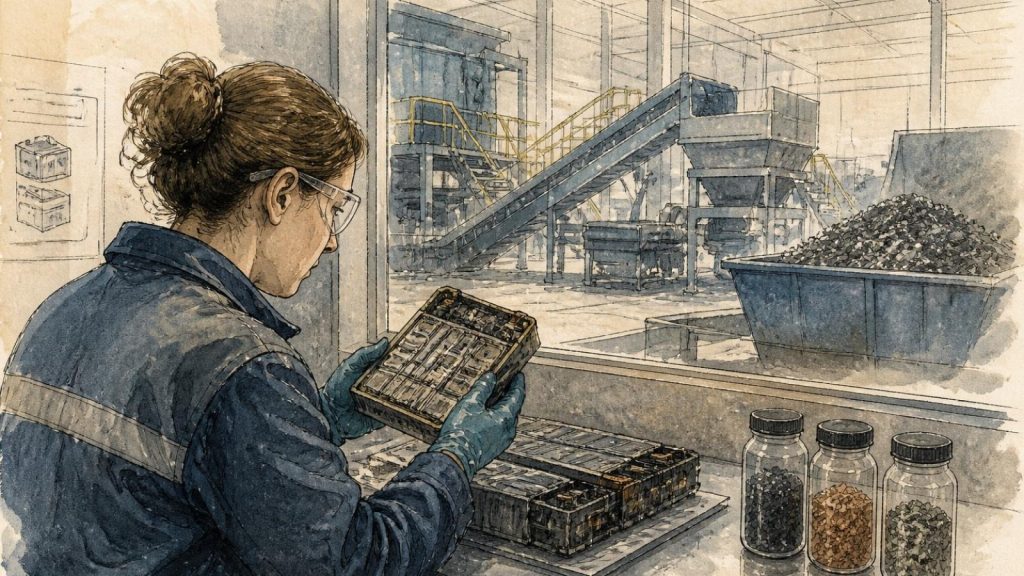
The facility, located in Dieuze, processes batteries collected from across Europe into a substance known as ‘black mass,’ which is rich in valuable metals. Using a cutting-edge, patent-protected hydrometallurgical process, the plant aims to separate and restore these metals to a quality suitable for reuse in various industries. With the capacity to recycle nearly 7,000 tonnes of black mass annually, equivalent to 20,000 tonnes of batteries, this facility is set to play a crucial role in reducing Europe’s dependence on external suppliers.
The challenge of recovering metals from batteries is likened to separating scrambled eggs, highlighting the complexity of the recycling process. The initiative not only focuses on environmental sustainability but also aims to bolster Europe’s economic resilience by keeping valuable resources within the continent. The facility’s operations are a testament to the need for effective resource management, traceability, and consistent regulations to ensure that materials from end-of-life electric vehicles contribute to a robust European recycling and processing industry.
The project has garnered support from various stakeholders, including Bpifrance, ADEME, and local government entities, showcasing a collaborative effort to advance Europe’s industrial ambitions. As Europe seeks to transform its environmental goals into industrial advantages, the successful implementation of such projects will be crucial in creating jobs and fostering innovation within the region. This facility stands as a tangible proof of Europe’s commitment to building a sustainable future through local resource recovery and processing.