Tag: battery recycling

  • US Government Invests $500 Million to Boost Domestic Lithium and Cobalt Processing. Views from Ukraine.

    US Government Invests $500 Million to Boost Domestic Lithium and Cobalt Processing. Views from Ukraine.

    In a significant move to bolster its domestic supply chain for strategic materials, the United States government has announced a $500 million investment aimed at enhancing the processing capabilities for lithium and cobalt, essential components in battery production. This initiative comes in the wake of recent export restrictions on ‘black mass’—a waste product from lithium-ion batteries that contains valuable metals such as lithium, nickel, and cobalt. The rationale behind these restrictions is to prevent the U.S. from becoming reliant on foreign processing facilities for materials critical to its technological and energy sectors.

    The U.S. Department of Energy has allocated funds to seven private companies that are engaged in various aspects of lithium extraction, cobalt processing, and battery recycling. Notably, $100 million has been awarded to Lilac Solutions for direct lithium extraction in Utah, while Jervois has received a similar amount to develop an integrated cobalt mining and processing complex. Another $100 million is going to Nth Cycle, a company focused on processing black mass into high-purity metals and battery-grade materials, directly addressing the materials that the U.S. has sought to keep within its borders.

    This strategic funding is not merely a financial boost for these companies; it reflects a broader shift in U.S. industrial policy towards a more interventionist approach. The government is actively identifying vulnerabilities in its supply chain and taking steps to mitigate them through direct investment and support. This includes an additional $150 million earmarked for projects that focus on recovering cathode materials, developing battery electrolytes, and creating silicon anodes to reduce dependence on imported graphite.

    The overarching theme of this initiative is clear: the U.S. is committed to maintaining control over its strategic resources and ensuring that the necessary infrastructure is in place to process these materials domestically. This shift in policy indicates that the government is no longer relying solely on market mechanisms to address supply chain issues, but is willing to intervene directly to safeguard national interests.

    As the U.S. takes these steps, it raises questions about how other nations, particularly those like Ukraine, might respond to similar challenges in their own industrial sectors. The implications of this investment could resonate beyond American borders, influencing global supply chains and the dynamics of the mining and battery industries.


  • Europe’s Energy Metals Crisis: Between Policy Ambition and Market Reality

    Europe’s Energy Metals Crisis: Between Policy Ambition and Market Reality

    Europe faces an unprecedented raw materials crisis that policy targets systematically underestimate. By 2030, demand for energy metals will explode. Lithium demand will increase five-fold. Cobalt will rise nine-fold. Nickel, manganese, and graphite will need twelve to fifteen times current supply levels. Yet Europe produces zero rare earth elements, controls less than one per cent of global lithium output and depends on a single country (China) for all rare earth processing and 90 per cent of permanent magnets. In February 2026, the European Court of Auditors warned directly: under current plans, Europe’s 2030 critical raw materials targets “appear out of reach.” Many strategically designated projects, the Court found, will struggle to secure supply by 2030.

    The crisis is not geological. Europe possesses abundant ore deposits. The crisis is not financial. The EU has committed 3 billion euros in 2026 alone. The crisis is political, regulatory, and social. It is a crisis of will, not of resources.

    Europe’s Energy Metals Demand: The Trajectory (2025-2035)


    Current Demand (2025) and Forecast Growth:

    Lithium: Current global mining supply is dominated by Australia (approximately 50 per cent), Chile (25 per cent), and China (10 per cent), with additional production from Argentina, Indonesia, and other countries. Europe’s domestic mining share is less than 1 per cent. For EU imports, Chile is the dominant source, accounting for roughly 78 per cent of European lithium needs (2020-2025). European companies with significant lithium projects include Imerys (France-headquartered, EMILI project in France targeting 34,000 tonnes annually), Savannah Resources (UK-listed, operating the strategically designated Barroso Project in Portugal), and Vulcan Energy (developing Direct Lithium Extraction in Germany’s Upper Rhine Valley using geothermal brines, targeting 24,000 tonnes annually).

    Rare Earth Elements: Europe’s domestic production is zero. Global supply shows China at 100 per cent of processing; 98 per cent of magnet demand is met by Chinese imports (as of 2024). Secondary suppliers include Malaysia and Russia. European producers include LKAB (Sweden, largest known European deposit), Rare Earths Norway (Fen Carbonatite Complex), and REMHub project (24-partner Horizon Europe initiative) still in early stage. Geopolitical exposure: China imposed rare earth export controls in 2009, 2012, and expanded controls 2023-2025.

    Cobalt: Current global supply comes from Democratic Republic of Congo (largest, approximately 50 per cent global), Russia, Australia, and China. Europe’s share is less than 1 per cent production. EU import dependency focuses on DRC (major source); refining is concentrated in China. European producers include Boliden’s Harjavalta smelter (Finland, largest nickel/cobalt refinery in Western Europe, 60,000+ tonnes annual output) and Eurobattery Minerals (Hautalampi mine, Scandinavia, development stage).

    Nickel: Current global supply comes from Indonesia and Philippines (laterite ore) and Russia and Australia (sulfide ore). Europe’s share is less than 1 per cent. Refining concentration shows significant Chinese capacity; some European refining at Boliden and Norway’s Glencore Nikkelverk. Chemical shift risk: Low-nickel and cobalt-free battery chemistries (LFP) are gaining share to reduce supply risk, but absolute nickel demand is still rising.

    Copper: Current global supply comes from Chile (23 per cent of EU imports), Democratic Republic of Congo (17 per cent), and Brazil (15 per cent). Europe’s share is approximately 1 per cent production (Boliden’s Aitik mine in Sweden, 90,000+ tonnes annually). Global supply risk shows IEA projects 30 per cent supply deficit by 2035; mined supply from announced projects falls short of 2035 demand, and structural deficit is emerging. Forecast shortfall is 19 million tonnes by 2050 if new mines and recycling capacity are not developed.

    Graphite: Current supply shows China dominates natural graphite (60 per cent) and synthetic graphite (90 per cent). Europe’s share is trace (less than 1 per cent). Future concentration risk: China is expanding synthetic graphite capacity, locking in control. Geopolitical exposure: China has export-restricted graphite since 2023.

    Manganese: Current supply comes from South Africa, Australia, and China. Europe’s share is less than 1 per cent. Dependency is high, concentrated in South Africa with geopolitical instability risk.

    Battery consumption in EU: 2025 shows 400 GWh; 2040 forecasts 4 times more (1,600 GWh). E-mobility share is 60 per cent (2025), rising to 80 per cent (2040).

    Global Demand Growth Rates (2024): Lithium shows 30 per cent annual increase. Nickel, cobalt, graphite, and rare earths show 6-8 per cent annual increase.

    Bottom line: Demand will outstrip supply for all raw materials beyond 2029-2030 unless new capacity is urgently built. Europe’s current domestic production covers less than one per cent of this demand. For copper and lithium specifically, structural deficits are already projected for the early 2030s.

    Europe’s Mineral Dependency: The Uncomfortable Map


    Europe possesses one of the world’s richest geological endowments of energy metals. Yet across the continent, projects representing years of exploration, millions in investment, and genuine transformational potential sit stalled at the threshold of development. The continent has become dangerously dependent on a handful of countries for critical minerals.

    Lithium: Current global supply comes from Australia (53 per cent), Chile (21.5 per cent), and China (10 per cent). Europe’s share is less than 1 per cent. EU import source shows Chile dominates at 78 per cent of 2020 EU lithium needs. Non-European producers with European investment include Imerys (France-headquartered, operates globally), Savannah Resources (UK-listed, Portugal projects), and Vulcan Energy (Germany, Turkish geothermal partnerships).

    Rare Earth Elements: Europe’s domestic production is zero. Global supply shows China at 100 per cent of processing; 98 per cent of magnet demand is met by Chinese imports (as of 2024). Secondary suppliers include Malaysia and Russia. European producers include LKAB (Sweden, largest known European deposit), Rare Earths Norway (Fen Carbonatite Complex), and REMHub project (24-partner Horizon Europe initiative) still in early stage. Geopolitical exposure: China imposed rare earth export controls in 2009, 2012, and expanded controls 2023-2025.

    Cobalt: Current global supply comes from Democratic Republic of Congo (largest, approximately 50 per cent global), Russia, Australia, and China. Europe’s share is less than 1 per cent production. EU import dependency focuses on DRC (major source); refining is concentrated in China. European producers include Boliden’s Harjavalta smelter (Finland, largest nickel/cobalt refinery in Western Europe, 60,000+ tonnes annual output) and Eurobattery Minerals (Hautalampi mine, Scandinavia, development stage).

    Nickel: Current global supply comes from Indonesia and Philippines (laterite ore) and Russia and Australia (sulfide ore). Europe’s share is less than 1 per cent. Refining concentration shows significant Chinese capacity; some European refining at Boliden and Norway’s Glencore Nikkelverk. Chemical shift risk: Low-nickel and cobalt-free battery chemistries (LFP) are gaining share to reduce supply risk, but absolute nickel demand is still rising.

    Copper: Current global supply comes from Chile (23 per cent of EU imports), Democratic Republic of Congo (17 per cent), and Brazil (15 per cent). Europe’s share is approximately 1 per cent production (Boliden’s Aitik mine in Sweden, 90,000+ tonnes annually). Global supply risk shows IEA projects 30 per cent supply deficit by 2035; mined supply from announced projects falls short of 2035 demand, and structural deficit is emerging. Forecast shortfall is 19 million tonnes by 2050 if new mines and recycling capacity are not developed.

    Graphite: Current supply shows China dominates natural graphite (60 per cent) and synthetic graphite (90 per cent). Europe’s share is trace (less than 1 per cent). Future concentration risk: China is expanding synthetic graphite capacity, locking in control. Geopolitical exposure: China has export-restricted graphite since 2023.

    Manganese: Current supply comes from South Africa, Australia, and China. Europe’s share is less than 1 per cent. Dependency is high, concentrated in South Africa with geopolitical instability risk.

    The Geopolitical Chokepoint: How One Country Controls the Transition


    China’s dominance is not a detail in Europe’s minerals story; it is the story. Consider the architecture: Rare earths show 100 per cent of global processing with China holding over 98 per cent of magnet production. Graphite shows 60 per cent of natural graphite and 90 per cent of synthetic graphite capacity. Lithium processing shows substantial refining capacity with Chinese battery makers building supply chains inside the EU (gigafactories in Hungary, Germany, Spain; cell-to-cathode chains in Morocco targeting European carmakers under free-trade terms). Export controls have been weaponised: 2009 rare earth restrictions, 2012 repeat, 2023-2025 minerals and magnets. China’s expanded export controls continue to draw scrutiny from trading partners and may face re-examination. Pricing power is decisive: when the market is concentrated this severely, producers set terms. When one country controls 90+ per cent of processing, it controls supply security, not scarcity.

    Europe’s minerals strategy is not a strategy for independence. It is a strategy for managed interdependence. Yet that interdependence is not being managed. It is being weaponised by others.

    Portugal holds 60,000 tonnes of lithium reserves and hosts Savannah Resources’ strategically designated Barroso Project, poised for final investment decision by end of 2026. France’s EMILI project (Imerys) is positioned to deliver 34,000 tonnes of lithium hydroxide annually. The Cínovec project in the Czech Republic represents Europe’s largest hard-rock lithium resource (7.45 million tonnes) with an annual target of 29,380 tonnes of battery-grade lithium hydroxide. Slovakia has announced a commercial lithium refinery (Volt Resources) for 2026. Norway’s Fen Carbonatite Complex hosts a March 2026 resource upgrade of 15.9 million rare earth oxide tonnes. Sweden is home to Europe’s largest known rare earth deposit (over one million tonnes of oxides) sitting with LKAB. Finland, Norway, and Sweden hold 104 cobalt deposits under exploration, with the Hautalampi mine representing one of Scandinavia’s largest undeveloped cobalt and copper assets. The Balkans, particularly Serbia, contain substantial copper and nickel resources, while Austria and Ukrainian partners are examining titanium and graphite joint ventures.

    This is not a geological problem. It is a political, financial, and social one.

    The Uncomfortable Truth


    The European Commission’s Critical Raw Materials Act (which entered force May 2024) designated 47 strategic projects in its first round. The second wave, closing recently, received over 160 applications, doubling the portfolio. Strategic status promises much: expedited permitting, priority access to RESourceEU financing, single contact points, UNFC classification for bankability. Yet ask developers privately: does the label move money or permitting timelines?

    Germany’s Rock Tech Lithium secured all regulatory approvals and strategic designation. Yet it failed to secure the decisive subsidies from the German government. The pattern repeats across Europe. Policy creates narratives. Reality creates friction.

    Here is what will determine whether Europe builds a minerals industry or assembles a filing cabinet of strategic designations:

    The China Dilemma Will Not Wait. Europe now depends on a single country for all of its rare-earth processing and 90 per cent of its permanent magnets. As of 2026, Europe produces zero rare earth elements domestically; 98 per cent of rare earth magnet demand is met by Chinese imports. RESourceEU projections suggest that even if every strategic project delivers, Europe will sit near 80 per cent dependent on China for magnets in 2030. The bottleneck is not the mine. It is the mill. European ore is shipped to China for refining, for want of domestic capacity, then reimported as finished material. The Rare Earth Industry Association (REIA) and the REMHub Horizon Europe project are building digital platforms and exploring new extraction technologies, but these initiatives are in their infancy. Parallel to this, Chinese battery manufacturers are building the supply chain inside the EU (gigafactories in Hungary, Germany, Spain, and a full cell-to-cathode chain in Morocco aimed at European carmakers under free-trade terms). The timer is running.  China’s expanded export controls on magnets, precursors, and rare-earth materials face re-examination. Easing restrictions invites dependence; narrowing them invites retaliation. This is not a technical problem. It is a strategic choice that Europe has not yet made honestly.

    Social Licence Remains the Real Constraint. It is standard practice in European discourse to blame permitting delays and regulatory ambiguity. The real answer is more uncomfortable. Domestic projects continue to encounter resistance even when policymakers agree that critical raw materials are essential for climate, defence, and industry. Zinnwald, Jadar (Rio Tinto’s Serbian lithium project), and Cínovec have each faced or continue to face organised opposition, environmental scepticism, and community resistance. No permit timeline, no strategic label, no subsidy will materially shift that opposition unless mining regains public legitimacy on the ground. This requires radical rethinking: not communications management, but genuine commitment to shared value, transparency that admits unknowns rather than asserting certainty, and local participation that shapes projects from the earliest stages, not merely absorbs complaints at the end. Some European jurisdictions (Ireland among them) have moved further down this path than others. The question is whether the model can scale.

    Financing Remains the Decisive Test. European mining and processing projects are being evaluated by investors on a fundamentally different calculus than their Australian, Canadian, or Chinese equivalents. Permitting uncertainty, cost inflation, timeline risk, commodity price exposure, power costs, technical complexity, and political durability are all on the table. Does strategic designation reduce that risk enough to attract institutional capital at scale? Evidence suggests it does not, at least not yet. Yet without that capital, without clear offtake agreements or government co-investment, projects advance to pilot stage and stall. The gap between a resource and a mine is not measured in metres of rock. It is measured in billions of euros and the willingness to risk them on European soil.

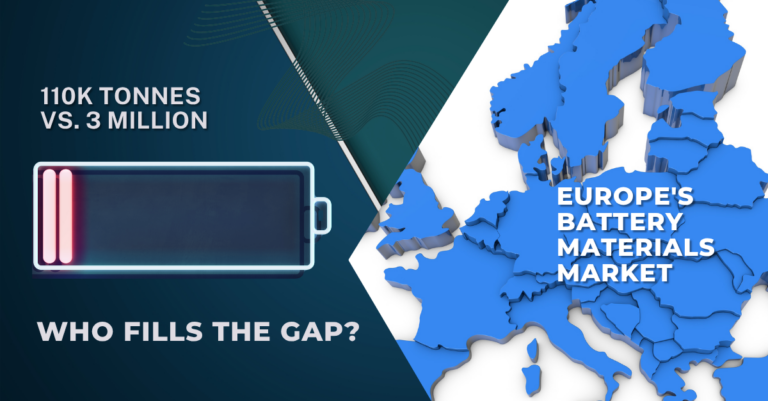
    The Mid-Stream Is the Actual Constraint. Few commentators acknowledge this directly. Europe can develop lithium, cobalt, nickel, copper, and rare earths. It can build the mines. What it has not built, and what the Critical Raw Materials Act, for all its ambition, has not adequately addressed, is the refining, beneficiation, and mid-stream infrastructure. The European Court of Auditors confirmed this gap explicitly: planned European refining capacity will fall dramatically short of demand. Current plans show only 110,000 tonnes of lithium compounds annually on the drawing board, against demand of 3 million tonnes by 2030.

    This gap is the market opportunity. The companies that move fastest on three fronts will dominate European battery material supply through the 2030s: securing permits in 36 months rather than 8 years, reaching cost parity with China through renewable energy or Direct Lithium Extraction, and locking in multi-year ore supplies from Australia and Chile. Green Lithium in the UK has announced UK refinery commissioning for 2026 (50,000 tonnes per year). Volt Resources refinery in Slovakia is timed for 2026. Vulcan Energy’s geothermal DLE project targets first production in 2026-2027. These are beginnings. The developers moving fastest in 2026 and 2027 will capture long-term offtake agreements with European gigafactory planners and build competitive moats that second and third movers cannot replicate. The battery gigafactories ramping across Europe will demand reliable, adjacent processing capacity to hit cost targets. The first wave of refiners that succeed will supply the continent’s entire gigafactory ecosystem for the next decade.

    The Regulatory Trap Europe Is Walking Into

    Europe is simultaneously accelerating mining projects whilst tightening environmental constraints and now proposing chemical hazard classifications that will make those same projects difficult to permit and uncompetitive. This paradox will define the next 18 months.

    The Lithium Toxic Classification Crisis. In April 2026, the European Chemicals Agency (ECHA) released a scientific assessment proposing to classify lithium carbonate, hydroxide, and chloride as Toxic for Reproduction, Category 1A. The International Lithium Association responded publicly that it is “gravely concerned,” having lobbied privately against the proposal for two years. The concern is not scientific pedantry. An overly stringent classification would make EU member states substantially less attractive for lithium mining and refining projects compared with non-EU competitors. Australia, Canada, Chile, Argentina, and the UK have all submitted assessments disagreeing with ECHA’s classification, demonstrating there is no global scientific consensus on the hazard. Yet the public consultation period runs April to June 2026, with ATP 22 implementation post-2026.

    The timing is devastating. European projects have not yet begun production. Capital markets are already sceptical of timelines and costs. A chemical classification that elevates occupational exposure limits or triggers new regulatory requirements for handling and transport could easily tip investment decisions toward non-European sources, especially when competitors offer lower-cost jurisdictions without such restrictions. This is not environmental regulation. This is competitive disadvantage encoded in hazard classification.

    The Battery Regulation Timeline. By February 2027, every battery in the EU market must carry a digital product passport (QR code) containing supply chain information, carbon footprint data, and conflict minerals disclosures. By end of 2027, recycling recovery rates must hit 50 per cent. By 2031, recycled lithium content in new batteries must reach 6 per cent; by 2036, 12 per cent. These targets are mechanically demanding and require supply-chain transparency that many mining projects have not yet built.

    The Self-Sufficiency Illusion. A peer-reviewed study in Nature npj Materials Sustainability (Nykvist, June 2026) assesses Europe’s lithium self-sufficiency targets with rigour. The findings are sobering: recycled batteries will contribute only modestly to self-sufficiency targets, falling far short of policymaker expectations. Even assuming all designated strategic projects commence as planned, by 2036 European self-sufficiency ranges from 31 per cent to 78 per cent, a wide range reflecting sensitivity to battery lifetime assumptions. The implication is uncomfortable: Europe will remain heavily import-dependent, and policy targets on recycling content will not substantially close that gap.

    The Environmental Standards Conflict. The European Commission’s push to accelerate permitting for strategic projects directly conflicts with the strict environmental protections Europe also prizes. The Commission is, in effect, lowering the same environmental standards it built its reputation on. The European Court of Auditors identified “lengthy and complex permitting” as a decisive bottleneck constraining Europe’s minerals strategy. As of 2026, 11 of the EU’s strategic mining projects overlap land within one kilometre of Natura 2000 biodiversity-protected areas, with three projects directly overlapping protected land. Eighty-five per cent of known European mineral deposits lie within or near environmentally protected areas. Strategic designation does not grant permits, weaken environmental standards, or override rights protections. What it does is create expectations that permitting will accelerate, expectations that collide directly with the legal obligations under the Habitats Directive, Birds Directive, and national environmental law.

    Community Opposition as Regulatory Reality. Community opposition has emerged as the decisive constraint on new mining projects, not legislation, not finance, not geology. The Portuguese Barroso lithium project is strategically designated, was granted a mining concession in 2020, and has become the subject of a European Court challenge on environmental grounds. Serbia’s Jadar project, backed by Rio Tinto’s capital and strategic designation, has encountered such sustained resistance that its feasibility is genuinely in question. These are not failures of regulation or finance. They are failures of legitimacy.

    Supply Chain Due Diligence Requirements. By August 2025 (now passed), companies were required to disclose their corporate strategy on social and environmental risks in lithium, graphite, cobalt, and nickel supply chains, aligned with UN Guiding Principles and OECD Due Diligence frameworks. Miners will come under increasing scrutiny regarding operations, water use, tailings management, and community engagement. This is correct policy. It is also the kind of regulatory rigour that makes capital conservative and timelines uncertain.

    The bitter irony: Europe has the geology, the strategic projects, the finance mechanisms, and the regulatory framework to build a domestic minerals industry. What it does not have is a coherent strategy for resolving the collision between the speed required to meet 2030 targets and the environmental rigour that European voters and courts demand.

    Where Technology Might Break the Deadlock


    Direct Lithium Extraction (DLE) offers a potential pathway through this regulatory trap. Unlike evaporation ponds, which consume roughly 500,000 gallons of water per tonne of lithium, DLE technologies aim to reduce water usage by up to 90 per cent, operating in closed-loop systems with zero liquid discharge. Vulcan Energy’s 250 million euro EIB-funded project in Germany’s Upper Rhine Valley exemplifies the model: extracting lithium from geothermal brines whilst co-producing renewable heat and power, lowering both carbon footprint and surface impact.

    Yet DLE carries a critical caveat: the technology remains largely unproven at commercial scale. Fresh water consumption requirements, which some DLE methods may demand in larger volumes than evaporative alternatives, have not been adequately quantified. In water-scarce regions, this could replicate the environmental problems DLE was designed to solve. Projects in Alsace, France, and the Upper Rhine Valley offer early evidence of viability, but evidence alone will not satisfy permitting authorities or community concerns.

    The point for developers is clear: technology can matter. But it matters only when the case for it is made transparently, when uncertainty is acknowledged rather than asserted away, and when communities see benefit in participating in its development. The International Lithium Association (lithium.org), established in 2021 as the industry’s voice on ESG and sustainability, has rightly prioritised uniform standards and sustainable practice across the global supply chain. The question is whether that commitment will translate into the kind of radical transparency and local engagement that European permitting now demands.

    More importantly: the developers who move fastest on three fronts will dominate European battery material supply through the 2030s. These are the companies that simultaneously compress permitting timelines, reach cost parity with China through renewable energy or Direct Lithium Extraction, and secure long-term feedstock from Australia and Chile. The first wave of refiners that succeed in these three domains will capture long-term offtake agreements with European gigafactory planners and build competitive moats that second and third movers cannot replicate.

    These are not comfortable questions. They require intellectual honesty from policymakers, capital providers, and developers alike.

  • Europe Could Meet More Than Half Its Critical Minerals Demand Through Recycling by 2050, Major EU Study Finds

    Europe Could Meet More Than Half Its Critical Minerals Demand Through Recycling by 2050, Major EU Study Finds

    Recovering critical minerals from used batteries, end-of-life vehicles and electronic waste could supply more than half of Europe’s critical minerals demand by 2050, according to a major new report — offering the continent a substantial route to reducing its dependence on Chinese-dominated supply chains without relying solely on new mining.

    The findings come from the FutuRaM project, a European Union-funded research initiative that analysed Europe’s recycling potential across three scenarios. In 2022, approximately 2 million metric tonnes of critical minerals were contained in waste generated across the 27 EU member states plus Switzerland, Norway, the UK and Iceland. That figure is projected to grow to up to 6 million tonnes by 2050 as the stock of clean energy technologies — from EV batteries to wind turbines — reaches end of life. If the secondary raw materials already being collected were fully and functionally recycled, they could supply up to 56% of Europe’s critical minerals demand by 2050.

    The study identifies end-of-life electric vehicles as the single largest contributor to this recycling potential, containing a variety of rare earth elements with high recoverability. However, despite relatively high vehicle collection rates in the EU, most of the minerals contained in them are not currently being processed. Lithium, cobalt and rare earth elements are among the materials most commonly lost during collection or waste processing today.

    Kees Baldé, a senior researcher at the UN Institute for Training and Research and one of the report’s authors, described harnessing Europe’s waste streams as essential for strengthening supply security and supporting the clean energy transition. The report calls for a structural shift in European waste management, noting that countries currently track these materials differently and lack a unified regional market. It also recommends increased investment in recycling infrastructure, skills development and awareness.

    The urgency is amplified by China’s position. China holds a firm grip on the production and refining of 19 out of 20 critical minerals identified by the IEA and accounts for approximately 80% of the world’s mineral recovery capacity. In the past year, Beijing has enacted export controls on rare earths, rare earth magnet components and lithium battery components, raising costs and supply security concerns across European industry. The IEA estimates that scaling up recycling globally could reduce the need for new mining by 25 to 40% by 2050 under climate-aligned scenarios.

    Pascal Leroy of the WEEE Forum said the findings demanded a fundamental mindset shift: “Our mindset needs to shift to think of secondary sources of CRMs as the new primary source.”

  • EU Research Project Maps Europe’s “Urban Mine” as 6 Million Tonnes of Critical Minerals Could Be Recovered Annually by 2050

    EU Research Project Maps Europe’s “Urban Mine” as 6 Million Tonnes of Critical Minerals Could Be Recovered Annually by 2050

    A major EU-funded research initiative has produced the first comprehensive map of Europe’s secondary critical raw materials potential, revealing that advanced recycling systems could recover between 4.5 and 6.2 million tonnes of critical raw materials annually by 2050 — enough, under a full circular economy scenario, to substitute up to 56% of Europe’s primary resource needs.

    The FutuRaM project mapped 42 critical raw materials across 31 European countries, tracking materials buried in discarded electronics, end-of-life vehicle batteries, demolished buildings and decommissioned wind turbines. Results are now accessible through a publicly available digital tool called the Urban Mine Platform.

    The findings expose a severe structural gap in Europe’s current industrial strategy. In 2022 alone, 5.2 million tonnes of critical raw materials were embedded in products entering the European market, yet only 1.4 million tonnes were recovered. The remainder was lost to illegal waste flows, misaligned recycling systems or exported abroad as second-hand goods — a leakage that researchers describe as a significant economic vulnerability at a time when Europe is almost entirely dependent on foreign suppliers for the building blocks of its clean energy and digital economies.

    The recovery potential by 2050 is substantial across specific materials. Annual lithium recovery could grow from less than 1,000 tonnes today to over 50,000 tonnes. Cobalt recycling could expand forty-fold. Nickel recovery could exceed 171,000 tonnes annually. The climate dividend is equally striking: replacing mining with recycling at scale could prevent up to 273 million tonnes of CO2 emissions per year by mid-century — roughly equivalent to eliminating Spain’s entire annual carbon footprint.

    Realising this potential requires addressing structural weaknesses in collection infrastructure, tracking systems and domestic refining capacity. Europe currently exports partially processed materials such as battery black mass, losing both the resource value and the processing jobs that come with it. The FutuRaM project has also developed a decision-making tool called SARA4UNFC, adapted from the UN Framework Classification for mining, to provide standardised evaluation of waste streams across technical, economic, social and environmental criteria — bringing the rigour of mining project assessment to recycling.

  • Kazakhstan Launches Lithium Recovery Facility Through Battery Recycling

    Kazakhstan Launches Lithium Recovery Facility Through Battery Recycling

    In Kazakhstan, while the industrial-scale extraction of lithium is not yet fully developed, the country has started obtaining this rare metal by recycling batteries. The first facility dedicated to extracting valuable components from lithium-ion batteries has been launched at the Industrial Place business park. This new production line has a capacity of processing at least 20 tons of raw material per month, according to a report from the Almaty Social Entrepreneurship Corporation (SPK). The facility was built by the company Technic Destroy.

    The facility employs a recycling technology designed to recover lithium-containing powder, aluminum, copper, and other metals from spent batteries. The SPK estimates that 1 ton of used batteries can yield up to 250 kg of lithium, reducing the need for raw material extraction. Battery recycling is said to produce 70-80% fewer emissions compared to primary lithium mining operations.

    At present, local companies in Kazakhstan are not directly engaged in lithium extraction. The country is actively inviting foreign investors into the rare metals and rare earth industries. Earlier this year, three German companies formed a consortium to develop lithium production in Kazakhstan.

  • Rio Tinto–backed firm InoBat selects location for battery gigafactory in Serbia

    Rio Tinto–backed firm InoBat selects location for battery gigafactory in Serbia

    A Slovakian startup has made the decisive choice of a suitable location for its gigafactory, which will be dedicated to the manufacturing and recycling of batteries. This strategic move follows earlier preliminary agreements that were signed with the Government of Serbia.

    InoBat, the esteemed startup, has recently entered into a memorandum of understanding with Serbia’s Ministry of Finance and the Municipality of Ćuprija, a town situated in the central part of the country. This memorandum solidifies their commitment to construct their second gigafactory in this region.

    The startup proudly announced, “We are delighted to reveal Ćuprija as the chosen location for our Serbia Giga Factory and recycling project, codenamed Lion. This project has been in development for the past two years in collaboration with the International Financing Corporation (IFC).”

    InoBat further elaborated that Lion will mark their second gigafactory in the region of Central and Eastern Europe. The company is already in the process of developing the Voderady research and development pilot line, as well as a mini-giga factory in Slovakia.

    It is worth noting that one of the esteemed shareholders of InoBat is Rio Tinto, a prominent entity in the industry. Furthermore, the Government of Serbia has expressed its readiness to offer an enticing incentives package totaling EUR 419 million for the Lion project. This state-of-the-art facility will focus on assembling energy storage solutions, electric vehicle batteries, and recycling batteries. InoBat has committed to aligning its activities with the comC2C circular value chain development platform.

    Back in November 2022, InoBat had already entered into preliminary agreements with the Government of Serbia regarding the construction of a gigafactory. Notably, one of the investors in InoBat, Rio Tinto, has been actively involved in the development of a lithium mining and processing project in Serbia. Although the project faced significant public opposition and protests, there are hints that it might be revived, making the collaboration with InoBat even more likely.

    InoBat has also forged a partnership with China-based Minth Group in Serbia. The CEO of InoBat, Marian Bocek, expressed the reason behind selecting Ćuprija as the location, highlighting the welcoming and enthusiastic local community, as well as a proactive municipal government. He added that the potential for co-developing a distributed power smart grid and utilizing renewable sources of electricity for their own consumption was an additional advantage.

    Tara Lindstedt, a board member and Chief Development Officer (CDO) of InoBat, commended the progress of the Lion project. She mentioned that earlier this year, InoBat had signed a memorandum of understanding with Minth Group, a collaboration that spans the battery value chain in Europe, starting with Serbia.

    Jimmy Wong, the Managing Director for Europe at Minth Group, proudly asserted that his company, based in China, has eight sites in the Balkan country. This strong presence further influenced InoBat’s decision to establish their second facility in Serbia.

    The Prime Minister of Serbia, Ana Brnabić, expressed her satisfaction with InoBat’s investment in Serbia, as it will contribute to job creation in the new decarbonized circular economy. Maria Paulina Mogollon, the InoBat Manager of Upstream and Advisory for Manufacturing, Agribusiness, and Services (MAS) in Europe and Latin America, expressed her belief that the Lion project will firmly establish Serbia as a prominent player in European low-carbon and circular renewable energy storage solutions, as well as electric vehicle battery value chains.

  • Li-Cycle starts battery recycling operations at German plant

    Li-Cycle starts battery recycling operations at German plant

    By Ernest Scheyder

    (Reuters) – Li-Cycle said on Tuesday it has started operations at its German plant to break down electric-vehicle batteries for recycling, part of the company’s rapid expansion into the European market and plan to become one of the continent’s largest lithium producers.

    The facility in Magdeburg, roughly 112 miles (180 km)southwest of Berlin, has the capacity to process 10,000 metric tons of battery parts annually, an amount that will eventually grow to 30,000 tonnes.

    The plant is Li-Cycle’s first in Europe and will anchor the company’s plans to replicate its North American hub-and-spoke network, in which multiple collection and processing facilities turn batteries into black mass, which is essentially shredded battery parts, and then supply a central recycling plant that will separate the material into lithium, nickel and other metals.

    “We see the European market as one of our key growth areas for the coming years,” Tim Johnston, Li-Cycle’s executive chairman, told Reuters.

    Toronto-based Li-Cycle is also building battery collection and processing facilities in Norway and France. Collectively, the three will feed black mass to an Italian recycling plant that is expected to open by late 2026 or early 2027.

    “Being able to close the loop within the European ecosystem is a key strategic advantage moving forward,” Johnston said.

    The German plant is roughly 20,000 square feet in size and employs about 50 people.

    Li-Cycle declined to disclose how much it spent on the German operation, though the company has a budget of $35 million to $45 million to build battery processing facilities this year.

    Until the Italian facility opens, Li-Cycle will send black mass produced in Europe to its North American processing facility in New York.

    Amid strong opposition in Europe to lithium mining, Li-Cycle believes its operations on the continent could grow to become one of the region’s largest lithium producers, Johnston said.

    (Reporting by Ernest Scheyder in Houston; Editing by Matthew Lewis)