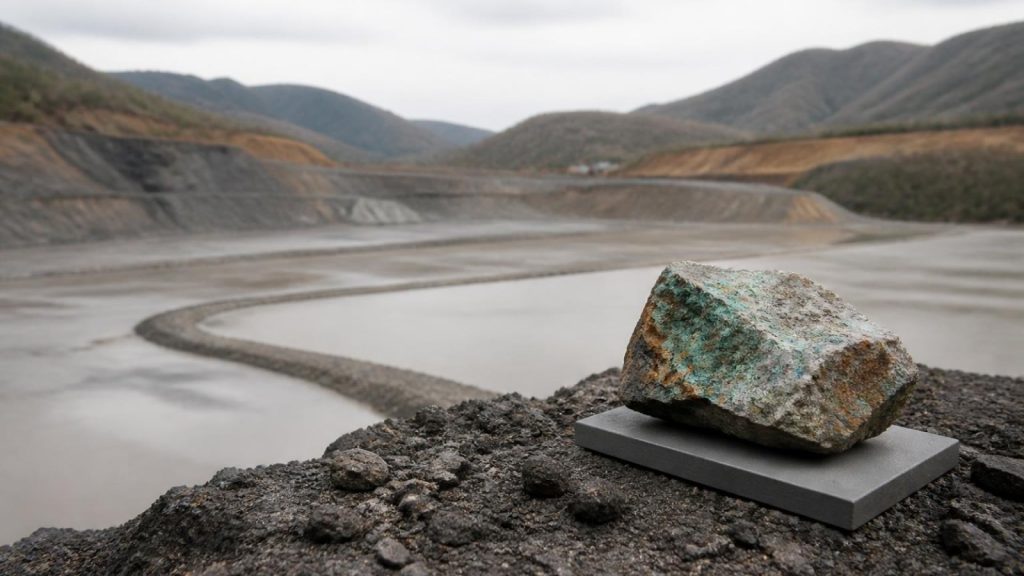
A recent study conducted by the FutuRaM project has successfully tested the UN Framework Classification for Resources (UNFC) on the Old Bor flotation tailings located in Eastern Serbia. These tailings, remnants of historical copper mining, represent significant human-made deposits that could potentially supply secondary raw materials. Prior to this research, the UNFC had not been fully applied to such projects, marking a notable advancement in resource classification methodologies.
The research team combined new geochemical and mineralogical data obtained from two newly drilled holes with existing historical records to classify the deposit under both the UNFC and Serbia’s national classification system. The findings revealed that the tailings consist of two distinct layers: an upper layer approximately 10 metres thick, which is lower in grade, and a richer lower layer that can reach up to 50 metres in thickness. Notably, the richer layer is estimated to contain around 54.7 kilotonnes of copper, 8.6 tonnes of gold, and 33.3 tonnes of silver.
The study indicates that copper recovery rates from these tailings could range between 60% and 90%, with gold and copper primarily occurring in sulphide and sulphate forms. Furthermore, the historical data and new laboratory results correlate well, allowing for a comprehensive analysis of the two datasets.
In terms of classification, the project has been identified as potentially viable under the UNFC (E2, F3, G1). The study also outlines strategies to de-risk the project to achieve a higher classification level (F2), which includes pilot-scale processing, techno-economic analysis, environmental due diligence, and stakeholder engagement. These efforts align with the European Union’s circular economy policy and the UNFC’s practices for anthropogenic resources.
For those interested in a deeper dive into the findings, the complete study is available for download at the provided link.