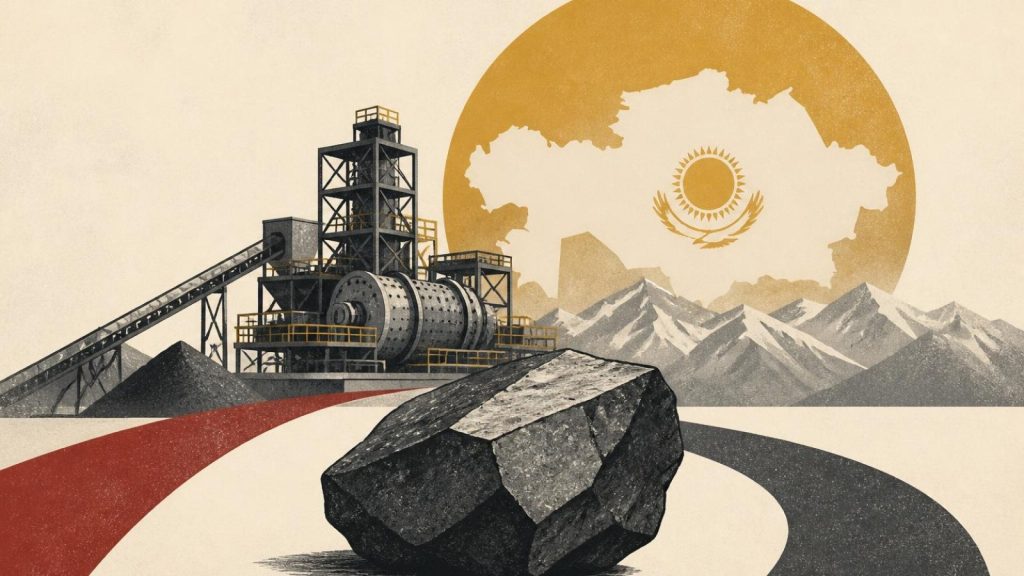
The tungsten market is undergoing significant changes as geopolitical tensions and the need for secure supply chains reshape the landscape. According to Pini Althaus and Dominic Heaton from Cove Kaz Capital Group, the focus is shifting from traditional mine development to enhancing refining, processing, and downstream capabilities in order to reduce reliance on China. Kazakhstan is emerging as a pivotal player in this transition, with the Severniy Katpar projects potentially holding around 20% of global tungsten reserves, attracting considerable interest and financial backing from the US government.
Cove Kaz Capital, a US-backed critical minerals development company, recently acquired a 70% controlling stake in the Severniy Katpar joint venture with Kazakhstan’s national mining company, Tau-Ken Samruk. This project, located in Central Kazakhstan, is seen as a strategic asset in the US’s efforts to diversify its tungsten supply sources. The US government has expressed strong support, including potential financing of up to $1.6 billion from various agencies, highlighting the importance of securing a stable tungsten supply chain.
As the market evolves, the conversation is shifting towards ensuring resilience throughout the entire supply chain. Heaton emphasised the need to address potential bottlenecks in refining capacity, particularly as new projects come online. The focus has primarily been on upstream supply, but the refining stage is becoming increasingly critical. Companies like Cove Kaz are preparing to establish their own refinery capacity to manage risks associated with processing concentrates from their mines.
The geopolitical landscape has led to a bifurcation in tungsten markets, with distinct pricing trends emerging between China and the West. While prices for ammonium paratungstate (APT) in the seaborne market remain high, domestic prices in China have seen significant declines. This divergence underscores the need for Western markets to build resilience and reduce dependence on Chinese sources.
Investment in tungsten supply chains is being bolstered by various government initiatives, including the US’s Project Vault and the EU’s RESourceEU, aimed at reducing reliance on external suppliers. Cove Kaz’s plans to develop the Severniy Katpar project align with these broader efforts, as the company aims to produce approximately 12,000 tonnes of tungsten annually, with a mine life exceeding 50 years.
Cove Kaz’s strategy includes not only mining but also the production of APT and potential downstream processing. The company is focused on maintaining a low-cost production model to withstand market fluctuations and ensure economic viability. As they prepare for production, the emphasis remains on building a resilient supply chain that can adapt to changing market conditions and geopolitical dynamics.