Tag: US investment

  • US Extends Critical Minerals Lead With $46B Push

    US Extends Critical Minerals Lead With $46B Push

    The United States is significantly outpacing Europe in securing critical minerals outside China, raising concerns about potential European dependence on Chinese supplies for years to come. According to analysis by the French Institute of International Relations cited by The Wall Street Journal, Washington has committed approximately $46 billion to critical raw materials projects over the past five years through a combination of grants, loans, and tax incentives – roughly eight times the amount allocated by the European Union during the same period. This substantial funding disparity underscores the strategic importance both superpowers place on securing reliable supplies of essential minerals needed for clean energy transition, defence applications, and advanced manufacturing.

    The aggressive US strategy extends beyond domestic investment, with Washington actively negotiating preferential access to mineral resources in key countries including the Democratic Republic of Congo and Ukraine, whilst simultaneously backing overseas projects through comprehensive financing programmes. This multi-faceted approach has already begun to disrupt European efforts to establish independent supply chains. London-based rare earth developer Pensana, which is developing the Longonjo project in Angola, has shifted its plans for a processing plant from Britain to the United States to pursue Export-Import Bank financing. Similarly, Brazilian rare earth producer Serra Verde, which operates a mine in Goiás state, secured US government-backed financing and subsequently agreed to sell its magnetic rare earth production under a long-term arrangement supported by Washington. These high-profile shifts demonstrate the competitive advantage the US financing ecosystem provides to critical minerals projects globally.

    European industry leaders have expressed significant concerns about the implications of this trend, with some warning that the US could come to dominate emerging non-Chinese supply chains. Pensana founder Paul Atherley characterised the situation as “friendly fire” to other Western countries, highlighting the tension between allied nations competing for the same resources. In response, the European Union is mobilising its own resources and diplomatic efforts. The bloc has announced plans for a €3-billion ($3.4 billion) financing hub, strategic stockpiles, and strategic partnerships with countries including Canada, Argentina, Norway, and South Africa. By 2030, the EU aims to ensure that no single country supplies more than 65 per cent of its strategic raw material needs, representing a comprehensive approach to reducing supply chain vulnerability and building resilience in critical minerals sourcing.


  • Kyrgyz Prime Minister Calls for Greater US Investment During Washington Visit

    Kyrgyz Prime Minister Calls for Greater US Investment During Washington Visit

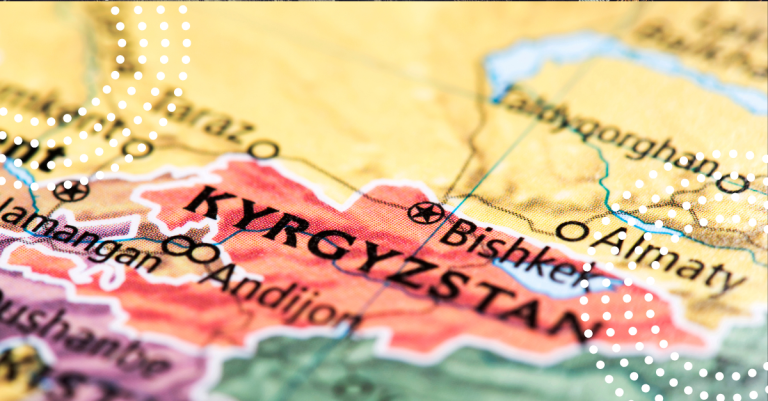
    During his working visit to Washington, Prime Minister Adylbek Kasymaliev participated in a roundtable with members of the Kyrgyz-American Business Council, where he urged American companies to increase their investments in Kyrgyzstan’s economy, the Kyrgyz government reported.

    Kasymaliev emphasized that direct foreign investments from the United States serve as a significant driver of economic growth for the country. He assured that Kyrgyzstan is ready to offer favorable conditions for investors, including liberal tax policies, access to free economic zones, and markets with a combined population of over 500 million people.

    “Kyrgyzstan today is a country of new opportunities and prospects, with a dynamically developing economy and open policies. We are prepared to provide comprehensive support for investment projects at all stages of implementation and offer the necessary state assistance,” Kasymaliev stated.

    He highlighted priority sectors for investment, including:

    • The launch of Kambar-Ata Hydroelectric Power Plant-1;

    • Tourism development, supported by a visa-free regime and the country’s unique natural landscapes.

    “Mining and mineral processing are also priority sectors. Kyrgyzstan is ready to offer reliable and environmentally responsible partnerships in the exploration and processing of critical resources,” Kasymaliev added.

    The Prime Minister expressed confidence in expanding Kyrgyz-American economic cooperation and invited US entrepreneurs to visit Kyrgyzstan to assess investment opportunities firsthand.

  • Uzbekistan Signs Deals with US Firms for Critical Minerals Investment

    Uzbekistan Signs Deals with US Firms for Critical Minerals Investment

    Uzbekistan announced on Wednesday (April 9, 2025) that it has secured investment agreementswith U.S. companies to develop its minerals sector, as global demand for critical minerals continues to surge. These minerals—including copper, lithium, and cobalt—are vital for manufacturing high-tech products such as electric vehicles and solar panels.

    The move comes as both the U.S. and the European Union aim to reduce reliance on China, the world’s leading producer of critical minerals. A delegation from Uzbekistan’s government signed the agreements during meetings in Washington, according to the country’s trade ministry. The deals cover exploration, extraction, the production of grinding machinery, and training programs for Uzbek specialists.

    Central Asia, including former Soviet republics like Uzbekistan, has become a focal point for Western nations looking to diversify supply chains away from Russia and China. Uzbek President Shavkat Mirziyoyev has been pushing for economic liberalization after decades of isolation under his predecessor. In March 2025, he unveiled a $2.6 billion investment plan to boost the country’s mining and processing capabilities.