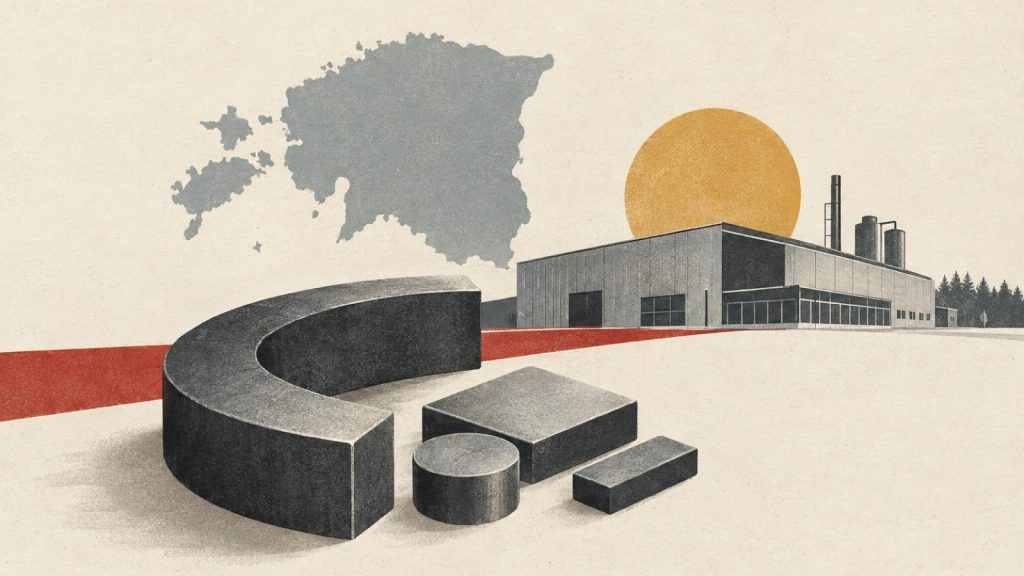
Neo Performance Materials, a company listed on the Australian Securities Exchange, has officially commenced commercial production at its new permanent magnet manufacturing facility located in Estonia. This significant milestone includes the shipment of the first volumes of rare earth sintered magnets to a customer involved in electric vehicle traction motors. The launch of this facility marks a pivotal transition for Neo, moving from the development and sampling phase through to full automotive qualification and now into commercial production for its initial magnet programmes.
The company has secured multiple magnet programmes from three Tier 1 motor manufacturers, focusing on traction motor applications, which are recognised as the most technically demanding category of permanent magnets. This achievement not only highlights Neo’s capabilities in advanced manufacturing but also positions the company to benefit from the growing demand for electric vehicles, which rely heavily on high-performance magnets.
Looking ahead, Neo anticipates that two to three additional magnet programmes will enter commercial production before the end of the current year. Automotive magnet programmes are typically awarded for the lifespan of the vehicle platform they support, providing Neo with multi-year volume visibility once a programme is secured.
The Estonian facility’s Phase 1A has a nameplate capacity of 2,000 tonnes per year (t/y), with plans for Phase 1B to expand this capacity to approximately 5,000 t/y. Currently, the expansion is in the design phase, involving detailed engineering, advanced equipment procurement, supply chain planning, and facility layout.
In the long term, Neo’s roadmap for magnet production aims for an annual output of 20,000 t, which the company estimates could account for between 10% and 15% of the projected global rare earth permanent magnet market outside of China. This ambitious target underscores Neo’s commitment to expanding its footprint in the critical minerals sector, particularly as the demand for rare earth elements continues to rise in the context of the global transition to renewable energy and electric mobility.