Tag: Estonia

  • EU Sets Up “Special Channel” with China to Secure Rare Earth Supply

    EU Sets Up “Special Channel” with China to Secure Rare Earth Supply

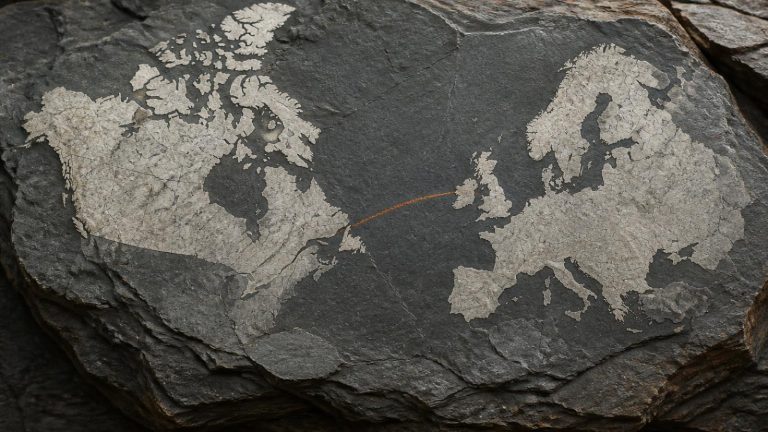
    The European Union has established a special communication channel with Chinese authorities to ensure the continuous flow of rare earth materials essential for European industries, EU Trade Commissioner Maros Sefcovic said on Wednesday.

    The move comes after China imposed export controls on rare earths earlier this year, triggering alarm in Europe over possible disruptions to the supply of critical materials used in electric vehicles, wind turbines, and permanent magnets — key components for clean energy and high-tech manufacturing.

    Speaking at the 2025 GCC–EU Business Forum in Kuwait, Sefcovic told Reuters that he had held multiple discussions with Chinese Commerce Minister Wang Wentao, emphasizing that bureaucratic delays in export procedures could have a “very negative impact on production and manufacturing in the EU.”


    Fast-Track Cooperation Mechanism

    Brussels and Beijing have agreed to prioritize export permit applications from European companies. Through the newly established channel, EU and Chinese officials are jointly reviewing and fast-tracking export approvals for rare earth shipments.

    According to Sefcovic, European companies have submitted about 2,000 applications since the controls were introduced, with just over half already approved. He said the EU was urging China to accelerate the remaining cases while pursuing broader supply chain diversification.

    “We continue to press for faster processing,” Sefcovic said, adding that Europe is simultaneously developing alternative rare earth sources, including new mining and magnet production projects in Estonia.


    Wider Context

    The announcement follows months of tension between Europe and Beijing after China’s export restrictions on rare earths and related technologies. Although subsequent deals with the EU and the United States helped ease the immediate supply squeeze, both regions have intensified efforts to reduce dependence on Chinese critical materials.

    On Tuesday, the European Commission confirmed that EU and Chinese officials discussed introducing general export licenses to simplify rare earth shipments — similar to arrangements reportedly secured by the United States.

  • Estonia Opens First Rare Earth Magnet Plan

    Estonia Opens First Rare Earth Magnet Plan

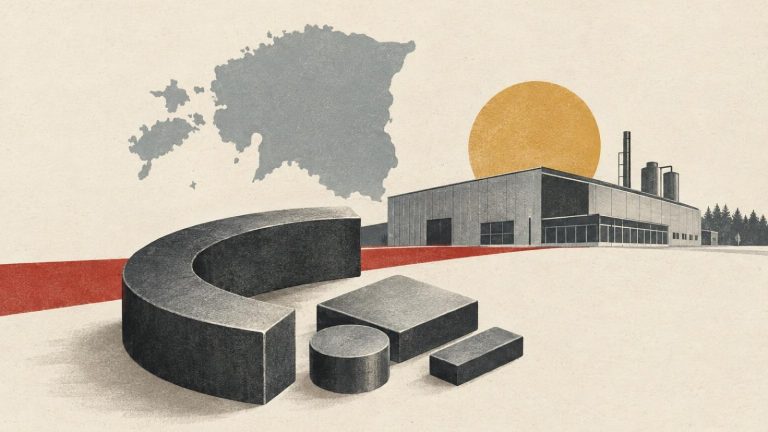
    Europe’s first large-scale rare earth magnet production plant has opened in Estonia, marking a watershed moment in the EU’s efforts to secure supply chains for critical raw materials. The facility, developed by Canadian group Neo Performance Materials at an investment of $75 million, is more than just a factory—it represents Europe’s growing determination to reduce its reliance on China in the race toward renewable energy and electric mobility.

    Why Rare Earth Magnets Matter

    Rare earth magnets are a cornerstone of the energy transition. They power electric motors in vehicles, enable the operation of wind turbines, and play a role in advanced electronics. Without them, scaling up clean technology becomes almost impossible. The challenge is that China has long dominated both the processing and production chains, supplying over 90 percent of the world’s rare earth magnets and an estimated 98 percent of Europe’s demand. This dominance has left industries on the continent vulnerable.

    When Beijing tightened export controls on certain rare earth materials earlier this year, European manufacturers reported severe delays in securing supplies. Such disruptions risk derailing the EU’s aggressive targets for decarbonisation and the expansion of electric vehicle production. As Neo’s chief executive Rahim Suleman put it, “Customer motivations are incredibly high to diversify their supply base and to have localized supply chains.”

    A Strategic Investment for Europe

    The new Estonian plant will initially produce 2,000 tonnes of rare earth magnets annually, with plans to scale up to 5,000 tonnes. While this is still only a fraction of projected European demand—forecast to rise from roughly 22,000 tonnes today to 60,000 tonnes within the next decade—it represents a critical first step toward supply diversification.The facility’s operations are closely linked with Neo’s nearby separation plant, creating an integrated processing hub inside the EU. Raw materials will be sourced from Australia and Malaysia, regions that Europe considers more geopolitically reliable than China.

    Beyond private investment, the project has enjoyed notable public support: a €18.7 million grant from the EU’s Just Transition Fund and a $50 million line of credit from Export Development Canada.European Commission president Ursula von der Leyen underscored the significance, stating that the magnets produced in Estonia are “indispensable to growth and innovation.” Her comments align with the EU’s strategic goal of processing at least 40 percent of its critical raw materials domestically, part of a broader strategy to insulate the bloc from geopolitical shocks.

    Industrial Demand and Auto Sector Stakes

    The automotive sector stands at the heart of the rare earth magnet debate. German auto suppliers Bosch and Schaeffler have already signed contracts with Neo, highlighting the desperation among manufacturers to lock in alternative supply lines. Electric vehicles rely heavily on permanent magnets for motors, making uninterrupted access critical to Europe’s industrial competitiveness.At the same time, Europe faces a delicate balancing act. Producing magnets outside China comes at a cost premium, driven by higher environmental standards, energy costs, and raw material logistics. But as Suleman pointed out, the magnet within an electric vehicle motor represents only a small fraction of the total cost. For carmakers increasingly judged by their ability to produce cleaner vehicles, paying a premium for secure, non-Chinese inputs may soon be seen as a necessary trade-off.

    Europe vs. U.S.: Diverging Paths

    The EU is not the only region scrambling to insulate itself from China’s grip on rare earths. The United States has moved aggressively, fueled by larger federal subsidies and sharper geopolitical confrontation with Beijing.

    Washington has poured billions into rare earth mining and processing projects, while Europe has leaned more heavily on public–private partnerships and industry demand.

    Suleman contrasted the two approaches bluntly: “In the U.S., they’re chasing government money, and in Europe we’re chasing customers—or customers are chasing us.” Europe’s model may take longer to scale, but some argue it will prove more resilient, given that it is anchored in long-term demand rather than temporary government incentives.

    The Limits of Diversification

    Despite bold moves like the Estonian plant, Europe cannot entirely sever ties with China in the near future. Analysts suggest that at best, 30 percent of global rare earth magnet production could shift outside Chinese borders in the next decade, leaving Beijing with enduring dominance. France has spearheaded several projects to challenge this control, but insufficient mining and processing capacity across the continent means Europe will remain dependent on imports.

    Furthermore, the global raw material supply chain itself has bottlenecks. While Australia is emerging as a reliable supplier, and southeast Asia provides alternatives, scaling these sources to cover growing demand will take time, investment, and political stability.

    A Turning Point for Europe’s Green Transition

    The Estonian facility is ultimately a symbol of Europe’s intent to claim greater agency in a strategically vital industry. As electric vehicle adoption accelerates and renewable power scales, the demand for rare earth magnets will only intensify. Neo Performance Materials’ new plant will not solve Europe’s dependency overnight. But by anchoring at least part of the value chain closer to home, it signals to both industry and policymakers that strategic autonomy in essential raw materials is not only desirable but possible.

    For Europe, Estonia is just the beginning. The continent will need more facilities, stronger alliances with trusted suppliers, and coordinated industrial policies to reduce its rare earths vulnerability. The magnet plant may be a modest contribution in terms of tonnage, but geopolitically, it is a giant leap forward.

  • Europe Opens First Rare-Earth Magnet Plant in Estonia to Curb Dependence on China

    Europe Opens First Rare-Earth Magnet Plant in Estonia to Curb Dependence on China

    Europe has launched its first rare-earth magnet production facility in Narva, Estonia, marking a critical step toward reducing reliance on China for components vital to clean energy and electric mobility. The Canadian-built plant, supported by the European Union, is expected to supply magnets for over one million electric vehicles and 1,000 offshore wind turbines annually.

    Permanent magnets, primarily made with rare earths, are considered essential for high-efficiency motors used in electric cars and renewable energy technologies. At present, China provides around 90% of the EU’s magnet demand.

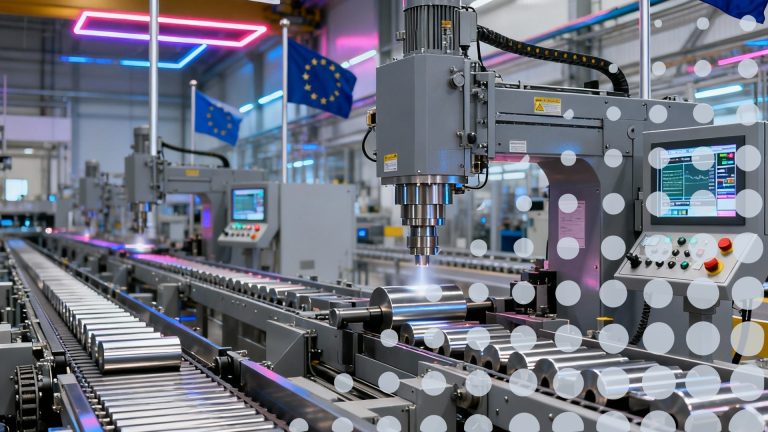
    With an annual capacity of 2,000 metric tonnes, the Narva plant tailors magnet production to the specifications of European automotive manufacturers and wind turbine producers. The facility draws on rare-earth powders imported from Australia, processed alongside other metals to create the permanent magnets.

    The €75 million investment includes €14 million from the EU’s Just Transition Fund, designed to help regions most affected by the shift to climate neutrality. Currently employing around 80 people, the plant could eventually support up to 1,000 jobs.

    For Narva, long dependent on carbon-intensive oil shale extraction, the factory represents a turning point. “This kind of factory will bring new industrial companies. Of course, it forces us to develop our workforce,” said Narva’s mayor, Katri Raik, who described the investment as a vote of confidence in the city’s future despite its location on the EU’s border with Russia.

    Neo Performance Materials, the Canadian company behind the project, also operates a rare-earth separation plant and research facilities in nearby Sillamäe. For engineers such as Zorjana Mural, who once left academia for the oil and gas industry, the project has been transformative: “When I joined the project there was no building, no walls, nothing. Now it’s filled with machines. It’s really exciting to imagine the future.”

  • Estonia Taps AFRY for Phosphate Mining Assessment to Boost Critical Raw Material Supply

    Estonia Taps AFRY for Phosphate Mining Assessment to Boost Critical Raw Material Supply

    The Geological Survey of Estonia has commissioned Swedish-Finnish engineering firm AFRY to conduct a preliminary economic assessment (PEA) and pre-feasibility study (PFS) for a major phosphate ore project in Toolse, Estonia.

    Estonia hosts some of Europe’s largest phosphorite reserves, which are rich in phosphorus—an essential component in fertiliser production. These deposits also contain rare earth elements critical for electronics, renewable energy, and battery technologies. The project aims to strengthen Estonia’s role in supplying key raw materials while reducing dependency on imports.

    AFRY’s assessment will cover economic viability, environmental impacts, and the socio-economic outcomes of phosphate extraction, with a focus on phosphoric acid production. Both surface and underground mining methods will be evaluated, along with the feasibility of a beneficiation plant and full production chain.

    According to Sirli Sipp Kulli, Director of the Geological Survey of Estonia, the project’s success depends on strict sustainability standards and responsible resource use. “Our focus is on long-term benefits to local communities, including job creation and regional development,” she said.

    AFRY’s Janne Tikka added that their holistic approach integrates process technologies with environmental performance to ensure responsible development. The project could significantly support Estonia’s agricultural sector, attract investment, and reinforce its position in the global critical materials supply chain.

  • Estonia Joins Minerals Security Partnership to Enhance Supply Chain Resilience

    Estonia Joins Minerals Security Partnership to Enhance Supply Chain Resilience

    Estonia has recently announced its participation in the Minerals Security Partnership (MSP), an initiative led by the United States aimed at bolstering the security of critical raw materials. This move is part of Estonia’s strategy to expand its network and attract new industries to the country in the coming years.

    The Ministry of Foreign Affairs underscored the significance of joining the MSP, emphasizing the importance of international cooperation in securing the supply of critical raw materials. With the presence of Europe’s largest rare earth elements processing plant in Estonia, membership in the MSP is seen as pivotal for the development of this sector.

    Jüri Seilenthal, the Director General of the Department for External Economic Policy and International Economic Organisations at the Ministry of Foreign Affairs, stressed the need for Estonia to reduce reliance on external sources, especially in the face of global conflicts. He stated that participation in the MSP is aligned with Estonia’s goal of ensuring access to critical raw materials.

    Ene Jürjens, the Director General of the Natural Resources Department at the Climate Ministry, highlighted Estonia’s expertise in processing rare earth elements, positioning the country uniquely in the global supply chain.