Central Asia and Mongolia will remain resilient to geopolitical shocks and record the highest growth rates of the EBRD countries of operation in 2026 and 2027, according to the latest Regional Economic Prospects report published on 3 June 2026, by the European Bank for Reconstruction and Development (EBRD). The combined economies of Kazakhstan, the Kyrgyz Republic, Mongolia, Tajikistan, Turkmenistan, and Uzbekistan are projected to grow by 5.6% in 2026 and 5.3% in 2027.
These are compelling headline figures. Yet beneath them lies a more consequential story—one that the OECD’s March 2026 report, Advancing Security and Transparency for the Governance of Critical Raw Materials in Central Asia, articulates with rare precision: the region is not merely growing; it is repositioning itself at the very heart of the global critical raw materials race.
The mining sector is no longer a background variable in Central Asia’s development story. It is the plot itself.
MINEX Asia 2026 is where it gets real. Join EBRD and OECD peers presenting on Kazakhstan’s scale, Tajikistan’s green pivot, Uzbekistan’s processing ambitions—and the governance gaps that determine success.
The Regional Narrative: Resilience With Structural Depth
Growth prospects remain robust but are increasingly dependent on the pace of domestic reforms and efforts to strengthen resilience to external shocks. Strong domestic consumption, rising real wages, and robust capital investment are real. But so are the fault lines: downside risks include energy price volatility, supply-chain disruptions, economic sanctions, and slower growth in the region’s largest trading and economic partners, Russia and China.
The OECD note adds a structural dimension that the growth forecasts alone cannot convey. Central Asia’s substantial yet untapped resource base, combined with its location between major markets in Europe and Asia, raises the region’s relevance in CRM geopolitics and efforts to diversify global supply chains. This is a geostrategic statement. The region holds extraordinary assets: Kazakhstan, already the world’s largest producer of uranium, produces and processes around twenty of the 34 CRMs included on the European Union’s official list. The Kyrgyz Republic and Tajikistan both host some of the world’s largest antimony reserves. Uzbekistan possesses some of the largest copper reserves globally and is advancing lithium and molybdenum production.
Taken together, these endowments amount to a critical minerals portfolio of exceptional strategic depth. Whether the region can translate that portfolio into durable prosperity is the central question of the coming decade.
Country by Country: Where the Headlines Don’t Tell the Full Story
Tajikistan: Gold and Strategic Minerals
Tajikistan: Gold and Strategic Minerals
Tajikistan’s economic performance continues to confound those who underestimate it. In March 2026, Moody’s upgraded Tajikistan’s sovereign credit rating to B2 with a stable outlook, citing the country’s continued economic resilience. The EBRD projects growth easing to 7.9 per cent in 2026 — still remarkable for a landlocked, remittance-dependent economy navigating elevated regional volatility.
The mining dimension is crucial. Gold remains the cornerstone of export revenue and fiscal stability, and Tajikistan’s antimony sector is poised for a structural step-change. Tajikistan possesses the world’s second largest antimony reserves, and China’s effective ban on antimony exports to the US and EU provides a significant window of opportunity. Together, France and Belgium accounted for 77% of Tajikistan’s antimony exports in 2024. With TALCO nearing completion of a new antimony metallurgical plant, Dushanbe is finally beginning to capture processing value rather than simply shipping raw material.
But what I find most intriguing about Tajikistan’s trajectory is the emerging convergence of green energy and artificial intelligence with its mining ambitions. The Rogun Hydropower Project — set to have an annual capacity of over 3,600 megawatts once fully operational — would cover most of Tajikistan’s domestic consumption and create the conditions for green aluminium production, with approximately 70 per cent of output earmarked for export to Kazakhstan and Uzbekistan. Cheap, clean electricity is not merely an industrial asset — it is the foundation for competitive mining, smelting, and increasingly, data infrastructure.
Tajikistan has initiated groundbreaking infrastructure projects, including the launch of “Area AI” — the world’s first dedicated AI Zone — a technopark and cluster designed to serve as a hub for research, development, and application of AI technologies. The country has forged partnerships with international tech firms including Perplexity AI, Google DeepMind, Yotta and Presight to accelerate technology transfer and innovation. The government has declared 2025–2030 the “Years of Digital Economy and Innovation Development.” Taken alongside the Rogun-powered industrial ambitions, this is Tajikistan’s bid to become not just a minerals supplier but a genuinely integrated green industrial economy — using AI and clean energy together to escape the extractive trap.
The key vulnerability remains Tajikistan’s dependence on Russia, where a slowdown would depress the remittance inflows that underpin household incomes. That risk is real and should not be minimised. But the strategic direction of travel is clear — and it is more ambitious than most Western observers appreciate.
Kyrgyzstan: The Kumtor Imperative and Exploration Needs
Kyrgyzstan remains the region’s most dramatic case study in resource-dependent growth. Kumtor Gold Company — nationalised in 2022 after nearly three decades of Canadian stewardship — generated net profit exceeding USD 706 million in 2025, contributes 10–15 per cent of GDP, and represents nearly two-thirds of the country’s mineral exports. The March 2025 discovery of an additional 147 tonnes of gold reserves extended the mine’s productive life to at least another 17 years.
Underground mining operations, launched in August 2025, are transformative. At current gold prices hovering above USD 4,500 per ounce, Kumtor’s economics are exceptional — and the government’s plan to process tailings estimated to contain over 100 tonnes of gold adds further upside. Fixed capital investment rose by 25.5 per cent year on year thanks to strong investment in infrastructure, energy and housing.
Yet the near-term outlook has darkened. The European Union’s 20th sanctions package, announced in late April, restricts exports of dual-use goods to Kyrgyzstan and tightens controls on its financial and logistics sectors. The EBRD has revised its 2026 growth forecast down to 8.7 per cent as a result. This is a significant geopolitical constraint on what would otherwise be an exceptionally strong growth story — and it underscores the OECD’s broader finding that regulatory unpredictability and governance gaps impose real costs on the region’s investment attractiveness.
The OECD note also flags a structural vulnerability that sits beneath the Kumtor euphoria: limited exploration since independence means that the Kumtor mine, accounting for 90% of the Kyrgyz gold exports, is set to close in 2031 due to reserves depletion — and the lack of exploration since independence will make it harder to offset this decline quickly. The reserve discovery of 2025 has bought time but not resolved the underlying fragility.
Kazakhstan: Scale, Strategy, and Industrial Output
Kazakhstan’s mining profile is defined by scale and global strategic significance. The country holds the world’s largest chromium reserves, accounts for roughly 40 per cent of global uranium output, and produces massive quantities of refined copper, largely exported to major industrial buyers like China and Türkiye.
Graphite is a high-potential sector for Kazakhstan. With the exploitation of its Sarytogan deposit — added to the EU’s list of strategic raw material projects and reported to contain 30% of the world’s graphite reserves — Kazakhstan is expecting to become a crucial player on the world graphite market.
The tungsten story is equally striking. Kazakhstan holds roughly 2 million tonnes of tungsten resources out of approximately 3.6 million tonnes of global reserves. A joint venture between Kazakhstan’s Tau-Ken Samruk and US-based Cove Kaz Capital Group has been formed to develop the Severniy Katpar tungsten project, with the US International Development Finance Corporation issuing Letters of Interest for up to USD 700 million in potential financing — marking Washington’s most significant entry yet into the region’s critical minerals sector.
Yet the near-term picture carries a real cautionary note. In Kazakhstan, the extractive industry contracted by 11.4 per cent year on year in Q1 2026 following disruptions to the Caspian Pipeline Consortium pipeline and an incident at the Tengiz oil field. The EBRD projects Kazakhstan’s GDP growth moderating to 4.7 per cent in 2026 and 4.5 per cent in 2027 — the lowest in the region, reflecting the inherent vulnerability of commodity-led economies to infrastructure and logistics shocks.
Uzbekistan: The Ambitious Reformer
Uzbekistan’s ambitions deserve particular attention. The country is the world’s fifth-largest uranium supplier, a top-ten gold producer, and is rapidly positioning itself as a critical minerals investment destination. Uzbekistan has actively signed Memorandums of Understanding with Western partners, including the United States, for securing supply chains in the mining and processing of Critical Minerals and Rare Earths. The government has also launched massive industrial initiatives to bolster its critical minerals sector.
The Almalyk Mining and Metallurgical Complex (AMMC) and its specialised subsidiaries targeting tungsten, molybdenum, rhenium, lithium, and graphite signal a genuine strategic shift from raw extraction towards value-added processing. Whether governance and transparency standards keep pace with ambition will be the decisive variable.
The Structural Challenge: From Resource Extraction to Value Creation
Both the EBRD and the OECD converge on a single, uncomfortable truth: Central Asia’s growth is impressive, but its mining sectors remain structurally exposed. The OECD note identifies several systemic vulnerabilities that macro-growth figures obscure.
On reserves reporting: Most countries still operate on Soviet-era GKZ classification systems that differ fundamentally from international CRIRSCO standards — creating information asymmetries that deter sophisticated investors and complicate due diligence. Kazakhstan has made progress through its KAZRC system; other regional peers have barely started.
On foreign investment dynamics: Foreign actors, predominantly Chinese, actively invest in Central Asia’s mining industry. China has been a primary investor in the mining sectors of the Kyrgyz Republic and Tajikistan, and is increasing its presence in Kazakhstan and Uzbekistan, not only by investing in extraction facilities but also by supporting the development of initial processing capabilities. This creates a strong strategic dependency that the region’s governments are increasingly aware of — and that Western partners, including the EU, UK, and US, are now actively looking to balance through alternative commercial partnerships.
On the Trans-Caspian International Transport Route (TITR): Traffic along the corridor (the Middle Corridor) has increased dramatically as exporters seek reliable East–West trade alternatives. Kazakhstan in particular has long relied on the corridor for its mineral, chemical, and agricultural exports, with a substantial portion of its uranium exports to Western markets utilising this bypass route. This corridor is central to the region’s ability to diversify export markets.
On ESG and governance: The OECD is frank: mining in the region is still heavily influenced by large state-owned enterprises with overlapping regulatory and commercial roles, needing stronger occupational health and safety oversight and remediation of legacy environmental risks. These are not peripheral concerns — they are the conditions on which Western investment and international supply chain partnerships will ultimately be conditioned.
The Strategic Opportunity
The OECD projects global demand for many critical raw materials to increase multifold over the coming decades to meet the needs of the green and digital transitions. Central Asia sits atop a significant share of the reserves that will need to come online to meet that demand. The region holds massive global shares of manganese ore, chromium, lead, zinc, titanium, aluminium, copper, cobalt, and molybdenum.
That is an extraordinary endowment. Translating it into durable prosperity requires three things that remain in genuinely short supply across the region: transparent governance, world-class ESG practice, and the institutional capacity to negotiate from strength with both regional and global partners.
This is precisely why platforms like the MINEX Forum matter. The conversation between producers, investors, policymakers, and development finance institutions that happens at these gatherings is not peripheral to the critical minerals agenda. It is where the terms of engagement are shaped.
Conclusion: Cautious Optimism, Clear Conditions
The EBRD’s projection of robust regional growth is credible. The OECD’s assessment of the region’s critical minerals potential is genuinely exciting. But both institutions are equally clear-eyed about the conditions that must be met for that potential to be realised responsibly.
Central Asia’s mining sectors are not simply economic contributors. They are strategic assets in the most consequential industrial transformation of our era. Their management — balancing extraction with environmental stewardship, concentrating revenue into productive capital formation, building institutional capacity, and securing diversified partnerships — will determine whether current growth translates into sustainable prosperity or rehearses the resource curse that has constrained other commodity-rich regions.
The next chapter will be written in mining offices, government ministries, and international forums across Dushanbe, Bishkek, Astana, Tashkent, and Ulaanbaatar. We should be not merely watching — we should be in the room.
References:
Central Asia and Mongolia to see highest economic growth in the EBRD regions
Arthur Poliakov is the Managing Director of the United Kingdom-based company Advantix Ltd and the Executive Chairman and founder of the MINEX Forum. He has over 30 years of experience in international business communications, event management, and natural resource markets.
He is currently organising the upcoming 12th MINEX Asia Forum (24–25 June 2026, Ankara, Turkey), the 10th MINEX Europe Forum (28–30 October 2026, Trim, Ireland), and the 14th MINEX Eurasia Conference (30 November 2026, London, United Kingdom).
Mongolia has failed to identify a suitable investor for the development of the Borteeg section of the Tavantolgoi coal deposit group after none of the bids submitted in an international tender met government requirements.
The Mongolian government has now decided that the project will be managed by state-owned coal producer Erdenes Tavantolgoi. According to Minister of Economy and Development Jadamyn Enkhbayar, coal production and exports at the site will proceed with the participation of domestic companies, local media outlet Montsame reported.
The open tender, announced in February, invited both Mongolian and foreign companies to invest in the development of the Borteeg deposit and participate in exploiting its reserves.
Under the tender conditions, the winning bidder was expected to finance and construct all required infrastructure for coal extraction, processing, sales and transportation. A key condition imposed by the government required Mongolia to receive at least 51% of total sales revenue throughout the life of the project.
According to the Ministry of Economy and Development, seven companies from Mongolia and abroad submitted proposals. A working group evaluated the bids based on financial and economic returns, experience in implementing similar projects and the existence of a comprehensive development plan.
However, none of the proposals scored highly enough to proceed to the negotiation stage, ministry officials stated.
The Borteeg section is estimated to contain 424.2 million tonnes of coal reserves. Annual production capacity could reach up to 15 million tonnes.
Chinese uranium company CGN Mining is closely studying amendments to Kazakhstan’s Subsoil and Subsoil Use Code adopted in December 2025, which could significantly alter the ownership structure of its joint ventures with Kazatomprom when existing licences come up for renewal — potentially stripping the company of a substantial portion of its uranium resource base within four to five years.
Under the updated Code, Kazatomprom can claim up to a 90% stake in uranium projects at the point of contract renewal, unless the foreign joint venture partner applies an option to transfer uranium conversion and enrichment technology. The Chinese side possesses such technology, which provides a theoretical negotiating lever. The legislation also increased Kazatomprom’s mandatory participation in new uranium ventures transitioning from exploration to production from 50% to 75%.
CGN Mining holds 49% stakes in two joint ventures with Kazatomprom. In Semizbay-U — acquired for $133 million in 2014 — the company holds subsoil rights to the Semizbay deposit in Akmola Region, with a licence valid until 2031, and the Irkol mine in Kyzylorda Region, valid until 2030. JORC-compliant reserves and resources at year-end 2025 stood at 4,600 tonnes at Semizbay and 1,800 tonnes at Irkol. In 2025, the joint venture produced 862 tonnes of uranium against a plan of 861 tonnes — 397 tonnes from Semizbay at a production cost of $37 per pound U3O8 and 465 tonnes from Irkol at $31 per pound. CGN received nearly $33 million in after-tax dividends from Semizbay-U in 2025.
At current extraction rates, the Semizbay deposit’s reserves would take more than ten years to exhaust — well beyond the contract’s expiry. This creates a clear risk: upon renewal, Kazatomprom could claim 90% of the project, leaving CGN with a dramatically reduced position. Irkol’s reserves may be depletable before contract expiry, but additional resources estimated under Kazakhstan’s State Reserve Commission standard leave uncertainty.
The second asset, Ortalyk — acquired for $435 million in 2021 — operates two mines in Turkestan Region: the Central Mynkuduk block with a licence until 2033 and Zhalpak until 2042. Combined reserves and resources stood at approximately 30,000 tonnes of uranium at end-2025. Ortalyk produced 1,834 tonnes of uranium in 2025 after processing losses, generating $64.7 million in after-tax dividends for CGN. At current rates, the Central Mynkuduk block cannot be fully depleted before its 2033 contract expiry — requiring approximately ten years at current output — meaning a portion of its resources could transition to Kazatomprom upon renewal. Zhalpak, with its 2042 deadline, offers a realistic chance of full utilisation if annual output increases to around 1,000 tonnes.
The broader context involves significant mutual dependence. China typically accounts for approximately half of all Kazatomprom’s uranium sales, making Kazakhstan an indispensable supplier for China’s expanding nuclear power programme. In May, Kazakhstan’s Senate ratified a bilateral investment protection agreement with China, and Chinese officials pointed to extensive international arbitration opportunities in Hong Kong for Kazakhstani companies — signals that both sides are laying legal groundwork ahead of what may be complex renegotiations.
This research is dedicated to a fundamental technological, economic, and workforce shift in the global mining industry over the horizon of 2026–2031. The sector’s transition from isolated digital experiments to end-to-end deployment of agentic artificial intelligence (AI), multimodal neural networks, and edge computing is driven by severe macroeconomic pressures: depletion of high-grade deposits, increasingly complex geological conditions, and stringent ESG regulatory frameworks.
Drawing on case study examples, this paper analyses the impact of AI across the entire value chain — from processing exploration data to open-pit automation and mineral processing plant optimisation. Based on mathematical models of labour productivity change, a financial and workforce forecast is presented: the economic mechanisms of production cost reduction are described, alongside a transformation of the cost structure (OPEX/CAPEX), the top 10 professions of the future, and the radically altered role of HR departments. The research draws on leading practice from macro-regions (Central Asia, Europe, the USA, and China) and data from authoritative academic and analytical sources.
Discover how agentic AI, edge computing, and neural networks are tackling the industry’s biggest macroeconomic pressures and transforming the workforce (2026–2031).
Join the discussion across Europe, the Middle East, and Central Asia🌍
In 2026, the global mining industry is operating under unprecedented pressure. The global transition to a low-carbon economy demands a significant increase in the extraction of critical metals (lithium, cobalt, copper, and nickel). At the same time, the average grade of ore in active mines has fallen by 25–30% over the past two decades, and newly discovered ore bodies are found at ever greater depths. According to industry analysis, the probability of commercial success in exploration projects without the use of advanced predictive analysis methods has fallen to a critical 5% (for brownfield projects in previously developed areas; for greenfield exploration in untouched areas — just 0.3–0.5%).
Historically associated with heavy physical labour, significant health risks, and substantial environmental impact, the industry is undergoing tectonic shifts. Artificial intelligence has evolved from a category of advanced IT add-ons into the core of operational and managerial activity at enterprises. As experts note at the international Resourcing Tomorrow forum in London, the key competitive advantage for companies is no longer simply the physical volume of ore extracted, but the depth and speed of data processing. Investors directly factor in an asset’s digital maturity index and its ability to verify environmental indicators using transparent AI algorithms when assessing the value of assets.
The volume of the global AI market in mining is estimated differently by various analytical agencies: Grand View Research valued the market at $29.94 billion in 2024, with growth to approximately $41.77 billion in 2025 and a forecast of $685.61 billion by 2033 (CAGR 41.87%); SNS Insider valued it at $28.91 billion in 2024 with a forecast of $478.29 billion by 2032 (CAGR 42.15%). The variation in forecasts is explained by differences in methodology and market coverage. The figure of $1,384 billion by 2035, which appeared in a previous version, has not been confirmed by any verified source and has been removed from the text. The primary drivers of this phenomenal growth are deep machine learning technologies and the rapidly growing computer vision segment.
2. Global Technological Trends of AI in Mining
The technological architecture of a modern enterprise is based on a transition from centralised cloud computing to hybrid edge systems. The remoteness of most mines from major cities and the instability of communication channels have led to critical data processing being moved directly onto the onboard computers of heavy machinery and local enterprise servers. Data transmission latency in cloud AI systems ranges from 50 to 500 milliseconds, which is unacceptable for industrial safety systems, whereas edge computing performs transactions in fractions of a millisecond.
Core cross-cutting technologies:
• Multimodal Agentic Systems: Autonomous software agents capable of simultaneously analysing unstructured text reports, geophysical logs, satellite imagery, and financial documents for comprehensive decision-making support.
• AI-Powered Digital Twins: Dynamic three-dimensional models of processing plants and open pits that not only display the current state of objects but also simulate scenarios of how the situation develops when external physical or economic parameters change.
• Intelligent Optical Ore Sorting: Integration of hyperspectral cameras and neural networks on conveyor belts for the instant rejection of waste rock prior to the energy-intensive crushing stage.
3. The Impact of AI on the Value Chain
3.1. Exploration and Surveying
The traditional process of collecting and interpreting geological data took months of manual labour. Generative models transform terabytes of historical unstructured reports, old maps, and field journals into standardised digital datasets within a few hours.
Next-generation platforms use algorithms to identify hidden patterns and weak signals in large arrays of geophysical and geochemical data. Neural networks construct probabilistic 3D block models of metal grade distribution, optimising the planning of exploration drilling. In doing so, the concept of the ‘geologist in the control loop’ (Human-in-the-Loop) is realised: AI does not replace the human, but removes up to 80% of the routine data-cleansing work, allowing the specialist to test many times more hypotheses.
3.2. Mining Operations
In open-pit mining, automated flow management systems have become the industry standard. Software-defined autonomy platforms allow dump trucks to travel without drivers, optimising fuel consumption by 10–15% and reducing wear on large-diameter tyres.
The scale of global deployment is impressive: according to GlobalData, by July 2025, 3,832 autonomous dump trucks were in operation at open-pit mines worldwide. China leads with 2,090 vehicles (53% of the global fleet), followed by Australia, Canada, and Chile. In April 2026, Komatsu commissioned its 1,000th ultra-class autonomous haul truck fitted with the FrontRunner system, becoming the first original equipment manufacturer (OEM) to reach this milestone. Caterpillar, for its part, has set a target of bringing over 2,000 autonomous vehicles into its fleet by 2030, including actively expanding the use of the technology at smaller-scale quarries and open pits.
In underground conditions, where there is no GPS signal, AI solves navigation tasks using simultaneous localisation and mapping (SLAM) technology based on LiDAR. Autonomous drilling rigs and load-haul-dump (LHD) machines operate in high-hazard zones, while operators are located in comfortable remote operations centres hundreds of kilometres from the face.
3.3. Mineral Processing and Beneficiation
A processing plant is an extraordinarily complex system with hundreds of variables. Machine learning algorithms continuously analyse the particle size distribution of ore on the conveyor using computer vision. If material that is too coarse or too hard arrives at the mill, the AI pre-emptively adjusts the feed rate and water pressure.
In flotation processes, neural networks analyse the colour, size, and movement speed of froth bubbles on the surface of flotation cells, automatically regulating reagent consumption. This makes it possible to increase recovery of the valuable component by even 0.5%, which at the scale of a large processing facility generates millions of dollars of additional profit per year whilst minimising the environmental footprint.
4. Regional Analysis
4.1. Central Asia: Kazakhstan as a Regional AI Hub
The Republic of Kazakhstan officially declared 2026 the Year of Digitalisation and Artificial Intelligence. As part of the national strategy, the country has established a Ministry of Artificial Intelligence and Digital Development, created the national AI centre Alem.AI (located on the EXPO site in Astana; opened in October 2025), and commissioned the Alem.Cloud supercomputing cluster — the largest supercomputing cluster in Central Asia, which has entered the global TOP500 ranking. Presight AI (a subsidiary of G42, UAE) is participating in the situational centre project at Alem.AI and in the implementation of the Astana Smart City initiative, but is not a partner in the supercomputing infrastructure.
The flagship of industrial AI deployment in the region is the international mining and metallurgical group Eurasian Resources Group (ERG). The economic effect from deploying proprietary digital tools and AI solutions at ERG’s enterprises in Kazakhstan for the full year 2025 exceeded $111 million USD. Systems development is carried out by the group’s dedicated IT arm — BTS (Business & Technology Services) — which has deployed technologies across three areas:
• Computer Vision: A real-time video analytics system monitors conveyor loading levels, assesses the quality of finished products, and tracks personnel health and safety compliance. At the Aksu Ferroalloy Plant, an upgraded operations control centre uses a full-scale digital twin of Smelting Shop No. 4, allowing engineers to conduct virtual walkthroughs and instantly identify deviations.
• Robotic and Autonomous Equipment: AI is used for precise calculation of the cost of individual production stages, energy consumption optimisation, and end-to-end mine planning.
• Corporate Integration Platforms: All maintenance and operational processes are digitised within a unified qollab ecosystem, where AI assigns work orders, creates loading schedules for maintenance crews, and forecasts equipment failures based on predictive analysis.
The flagship project in the autonomous haulage segment has been the Vostochny coal open pit: ERG’s driverless dump trucks had transported over 2 million tonnes of rock by the beginning of 2026, completing 17,000 trips and covering over 68,000 km, operated via a private 5G network provided by Kazakhstani operator Kcell. ERG became the first company in Kazakhstan to deploy driverless trucks in commercial operation; by 2027, the group plans to scale up the volume of material moved by autonomous vehicles to 115 million tonnes.
4.2. Western and Northern Europe: Sustainable Development and Monitoring
In the European Union, the focus has shifted towards maximum environmental sustainability, safety, and deep geosphere data analytics. A prime example is the deployment of comprehensive wireless monitoring ecosystems (developed by companies such as Senceive and the European SensAI Mining initiative).
These systems use distributed sensor networks with edge computing elements:
• Open-Pit Slope Stability Monitoring: InfraGuard-class instruments record micro-movements in the ground, filter out false environmental noise, and send early warnings of landslide risks.
• Tailings Facility Monitoring: AI analyses pore water pressure and the structural integrity of dams, preventing breaches and minimising the risks of environmental disasters.
• Intelligent Underground Monitoring: Deformation and convergence sensors in mine workings allow roof collapses to be predicted well before any visual signs appear.
In parallel, the market for specialist software is developing rapidly in Europe. Approximately 90% of mergers and acquisitions (M&A) in the mining technology sector involve companies specialising in sensors and software with embedded machine learning.
5. AI Government Regulation and Its Impact on the Workforce (EU, USA, China)
The period 2026–2031 marks a transition to an era of strict sovereign AI regulation, which is directly transforming the map of scarce professions.
5.1. European Union: A Stringent Compliance Model
The EU Artificial Intelligence Act (EU AI Act), being phased in from August 2024, has created the world’s most stringent regulatory environment. An important clarification: in May 2026, the EU reached a preliminary political agreement to postpone the full compliance deadline for high-risk AI systems (Annex III, including HR applications) from 2 August 2026 to 2 December 2027, as part of the ‘Digital Omnibus’ package. Requirements relating to prohibited practices (emotional recognition in the workplace, etc.) came into force in February 2025.
• Regulatory Context: Any AI systems used for personnel management (CV screening, KPI assessment), as well as systems for monitoring worker behaviour at hazardous sites, are classified as ‘High-Risk’.
• Workforce Impact: Explosive demand has emerged for AI Model Auditors and Compliance Engineers. Traditional HR directors are now required to have a level of AI Literacy and an understanding of the principles of explainable AI (XAI) in order to legitimately defend algorithm-driven decisions before trade unions.
5.2. USA: Critical Infrastructure Cybersecurity and Critical Supply Chains
The US strategy is built around protecting critical information infrastructure (CII) and accelerating the extraction of critical minerals.
• Regulatory Context: Under White House executive orders and NIST directives, AI solutions in the extractive sector are viewed through the lens of national security. Particular attention is paid to protecting against cyberattacks on geographic information systems and autonomous transport.
• Workforce Impact: Mine Cyber-Physical Security Architects and Edge Computing Security Engineers have become critically sought after. Chief Information Officers (CIOs) are required to have a deep knowledge of cyber-resilience standards such as the NIST AI Risk Management Framework.
5.3. China: Sovereign Algorithm Control and End-to-End Robotisation
China is demonstrating a model of total state control combined with rigorous directive planning for industrial modernisation.
• Regulatory Context: The Cyberspace Administration of China (CAC) requires mandatory state registration of all industrial algorithms. A five-year plan is in place for the full automation of coal and iron ore mines. The use of foreign ML libraries within the perimeter of strategic enterprises is prohibited.
• Workforce Impact: A vast domestic market has been created for Geoinformation Agent Developers and Digital Twin Engineers working exclusively on the Chinese technology stack (Baidu Ernie, Huawei Pangu). The training of engineering personnel is strictly standardised under the concept of ‘Smart Mines’.
6. The Economics of Transformation: Reducing Labour and Production Costs
The deployment of artificial intelligence is changing the traditional structure of human resource costs through three key economic mechanisms:
1. Skill Compression
The integration of multimodal AI assistants reduces the time required for complex engineering tasks by 15–50%. AI narrows the gap between junior specialists and experts. Less experienced employees, supported by AI agents, begin to perform senior-level tasks without any loss of quality. This sharply reduces the ‘talent premium for scarce experience’ that companies are forced to pay in an overheated labour market.
1. Geographical Arbitrage and the Elimination of Rotational Costs
Relocating management functions to remote operations centres (DCOs/ROCs) allows personnel to be hired on standard urban terms. Companies fully eliminate or reduce by 35–40% the associated costs: maintaining rotational camps, helicopter logistics, enhanced medical insurance, and statutory allowances for working in extreme climatic conditions.
1. Elimination of Operational Micro-Downtime
The human factor causes cyclical losses (shift changes, meal breaks, reduced concentration). Autonomous complexes under AI control operate 24/7, which increases equipment utilisation by 10–15%. The per-unit cost of human labour embedded in each tonne of rock moved falls in proportion to the rise in continuous equipment productivity.
Transformation of OPEX to CAPEX and Reduction in AISC
The payroll (labour costs), which at traditional mines accounts for up to 30–40% of operating expenditure (OPEX), will fall to 18–22% by 2031. These costs will partially shift into the category of technological OPEX (licence payments) and CAPEX (procurement of edge servers and robotic complexes). Digital infrastructure, unlike people, is not subject to wage inflation and social risks.
Through the end-to-end application of AI agents, the All-In Sustaining Costs (AISC) per ounce or tonne of finished metal will fall by an average of 15–22% by 2031, allowing high margins to be maintained even when processing low-grade ores.
7. Forecast of Workforce Structure and Requirements (2026–2031)
7.1. Mathematical Basis for the Employment Transformation
To assess changes in the structure of working hours for engineering and technical personnel (T_total), a model is applied that separates time spent on routine operations (T_routine) and expert activity (T_expert):
T_total = T_routine + T_expert
The deployment of multimodal AI agents leads to an exponential reduction in the time spent on routine operations, described by the automation coefficient α, which depends on the digital maturity of the enterprise:
T_routine(t) = T_routine(0) × e^(−αt)
The freed-up time is redirected towards expert analysis. To decide whether to replace human labour with AI systems, financial departments evaluate the economic efficiency coefficient of automation (E_auto):
E_auto = (C_human × P_human) / (C_AI + C_verify)
Where:
• C_human — the total cost of employing a person per unit of time (payroll, logistics, health and safety).
• P_human — the index of baseline human productivity, accounting for downtime.
• C_AI — the cost of operating AI infrastructure (hardware depreciation, licences).
• C_verify — the cost of the expert auditor’s labour in exercising oversight of AI decisions (Human-in-the-Loop).
By 2031, due to falling computing costs, C_AI will decrease by an average of 12–15% per year, making automation economically advantageous (E_auto > 1) even in regions with historically cheap labour.
7.2. Top 10 Professions of the Future (2026–2031)
2. Data Geologist: A specialist at the intersection of classical geology and Big Data. Responsible for preparing and structuring geological information for ML models.
3. Geoenvironment Digital Twin Engineer: An operator of dynamic AI models of ore deposits, linking sensor data from open pits with a 3D mine model.
4. Autonomous Transport Systems Controller: An operations centre specialist coordinating the operation of driverless dump trucks, drilling rigs, and drones.
5. Edge AI Engineer: An IT engineer who maintains models directly on the onboard computers of heavy machinery.
6. Intelligent Ore Sorting Systems Operator: A processing engineer who manages the parameters of neural networks that recognise ore on conveyor belts using spectral characteristics.
7. AI Model and Algorithm Auditor: An expert who verifies decisions for ‘hallucinations’ and compliance with physical and geological reality.
8. Environmental AI Monitoring Engineer: A specialist who manages systems for monitoring carbon footprint, emissions, and the condition of tailings facilities using machine learning.
9. Geoinformation Agent Developer: An IT specialist who configures LLM and multimodal models to the specifics of particular deposit types.
10. Remote Underground Machine Operator: A new type of skilled worker who operates underground loaders and continuous miners from a remote urban office.
11. Mine Cyber-Physical Security Architect: A specialist in protecting automated control systems and the enterprise’s edge networks from external attacks.
7.3. Disappearing and Transforming Professions by 2031
• Cartographic Technicians and Draughtspeople: Fully replaced by generative AI.
• Dump Truck Drivers and Drillers at Open Pits: Numbers will fall by 70–80% due to the transition to driverless fleets.
• Mine Surveyors (Ground-Based): Will transition to the role of unmanned aerial vehicle (UAV) and laser scanner operators.
• Manual Sample Control Laboratory Technicians: Will give way to in-stream express analysis embedded in the processing plant’s production flow.
8. Impact on HR Departments
The transformation of HR departments is radical in character. The main changes include:
• Use of Specialist AI Platforms: To find rare interdisciplinary specialists, HR is transitioning to specialist platforms. Algorithms automatically match an applicant’s specific skill set to the vacancy profile, carrying out automatic data import and predictive scoring.
• Managing the Lifelong Learning Concept: The primary task is no longer dismissing old employees, but reskilling them (retraining). HR departments are creating internal digital academies to improve the digital literacy of workers and engineers.
• Transition to T-Shaped Competency Matrices: Assessment is shifting towards identifying skills where the horizontal bar represents broad interdisciplinary knowledge and soft skills, and the vertical bar represents deep expertise in a core discipline.
9. Practical Recommendations for Stakeholders
9.1. T-Shaped Competency Matrix for Professionals
To remain in demand, mining professionals must build a balanced skills portfolio:
Core Engineering Skills (Hard Skills)
Digital Competencies (AI Skills)
Soft Skills
Geology, processing, mine surveying
Understanding the principles of ML and Edge AI
Systems and critical thinking (verifying AI conclusions)
Knowledge of the physical and mechanical properties of rock
Working with digital twins and GIS
Cross-functional communication
Understanding industrial safety requirements
AI Literacy and basic data analysis
Adaptability and capacity for rapid retraining
9.2. Strategy for Mining Companies
• Data Standardisation: Before beginning AI deployment, a comprehensive data audit must be carried out, eliminating information silos.
• Economically Justified Pilots: Launch AI projects with a clearly measurable economic effect (ROI).
• Reskilling Budget: When procuring new digital software, budget no less than 30% of funds directly for personnel training and adaptation. If internal training lags behind the rate of automation, a technology gap emerges, leading to inefficient use of expensive IT infrastructure alongside falling production metrics.
9.3. Transformation of the Academic Sector
Mining universities and colleges must urgently revise their curricula, embedding compulsory modules in machine learning, big data analysis, unmanned systems management, and the fundamentals of cybersecurity for cyber-physical systems within traditional degree programmes.
10. Conclusion
Artificial intelligence will definitively transform the mining industry between 2026 and 2031 from a manual, heavy industry into a high-technology cyber-physical sector. The total headcount at large holding companies will fall by an average of 20–25% by 2031; however, expenditure on the remaining highly qualified personnel will rise. AI will also lower the barrier to market entry for junior and service companies: small teams of 10–15 specialists, armed with AI agents, will be able to carry out volumes of work that previously required entire institutes. The winners in this technological race will be those companies that are able to build a synergy between advanced AI algorithms and the unique expert experience of their human capital.
11. Sources and Primary References
12. Recent Advances and Future Perspectives of AI-Based Mineral Exploration — MDPI Minerals
13. Machine Learning Approaches for Real-Time Mineral Classification and Educational Applications — MDPI Applied Sciences
14. Digital Twins and Enabling Technology Applications in Mining — IEEE Xplore
15. Time-Space-Quantity-Energy Coupling in Intelligent Caving Mines — MDPI Minerals
16. The Evolution of Machine Learning in Large-Scale Mineral Prospectivity Prediction — MDPI Minerals
17. Integration of machine learning with complex industrial mining systems for reduced energy consumption — PMC/Nature
18. Mine Management Optimisation in the Era of AI and Advanced Analytics — MDPI Mining Special Issue
19. Computer Vision and Machine Learning in Mining Technology — MDPI Applied Sciences Special Issue
20. New machine learning tools uncover hidden mineral resources in complex terrains — European Commission CORDIS (MultiMiner Project)
21. Digital Twins for Mine Safety and Infrastructure Monitoring — PMC open access research
22. Artificial Intelligence (AI) in Mining Market Report: Trends and Forecasts — SNS Insider Market Research
23. Copper in the Age of AI: Strategic Implications for Global Supply Chains — S&P Global Special Report (January 2026)
24. Machine learning applications in minerals processing: A review — GlobalData — Development of Autonomous Trucks in Mining (2025)
25. AI in Mining Market Report 2024-2032 — SNS Insider
26. Stanford AI Index Report 2026 — Stanford Institute for Human-Centered AI (hai.stanford.edu)
27. Tracking the Trends: The top 10 issues shaping the future of mining and metals — Deloitte Insights
28. Rock Solid AI: How Digital Tools Are Unearthing a New Era of Mining Exploration — Cleantech Group (2025)
29. Development of Autonomous Trucks in the Global Mining Sector (2025) — GlobalData Mining Intelligence (2025)
30. Artificial Intelligence in Mining Market Size, Share & Industry Analysis — Grand View Research (grandviewresearch.com)
31. Mining’s top ten ESG trends for 2026: Verification and Transparency — Mining.com (2026)
32. ERG heralds ‘Year of Digitalisation and AI’ as new programmes start paying off — International Mining (February 2026)
33. Komatsu becomes first OEM to commission 1,000 ultra-class autonomous haul trucks — IVT International (April 2026)
34. EU AI Act Update: Timeline Relief, Targeted Simplification, and New Prohibitions (Digital Omnibus, May 2026) — Inside Privacy / Gibson Dunn (2026)
The Future of Green Steelmaking in Europe (Part I)
Steel might not always make the list of “critical raw materials,” but it’s absolutely critical to Europe’s future – supporting everything from wind turbines to transport infrastructure. Without steel, no civilisation! In this Special Raw Matters Episode on “The future of green steelmaking in Europe”, the speakers unpack why decarbonising steel matters so much, and what it will take to get there.
The conversation features Adolfo Aiello, Deputy Director General at The European Steel Association (EUROFER), alongside Raw Matters regular co-host Peter Tom Jones and guest co-host Prof. Bart Blanpain (SIM² KU Leuven & expert in steelmaking).
The episode explores the different routes towards climate-neutral steelmaking, while also discussing the business case for green steel in today’s world of Fortresses, where state subsidies and export dumping are common place. Will CBAM and ETS save Europe?
“Minerals, Missiles and Megawatts: Europe’s Strategic Vulnerability”. A new Raw Matters podcast with Alberic Mongrenier, Julia Poliscanova and Peter Tom Jones, on the Mineral Security Trap and why Europe can’t afford naivety.
SUMMARY
In Episode #6 of RAW MATTERS, hosts Julia Poliscanova and Peter Tom Jones speak with Albéric Mongrenier, Executive Director of the European Initiative for Energy Security (EIES). Together, they explore how critical raw materials, energy security, cybersecurity, and military demand are becoming tightly interlinked in today’s unstable geopolitical landscape.
The conversation examines how CRMs underpin both the clean‑energy transition – from wind turbines and batteries to electrolysers – and the defence sector, including F‑35 fighter jets, drones and missile systems. Albéric also highlights a growing blind spot in Europe: the cybersecurity risks created by widespread dependence on Chinese inverters and digital components in solar panels, wind turbines, EVs and grid infrastructure. This reliance gives external actors potential leverage over Europe’s electricity systems, from data harvesting to the theoretical ability to trigger grid‑level disruptions. As Albéric notes, Europe remains surprisingly naïve about these vulnerabilities.
The episode further contrasts the strategic responses of the US and EU, from the Trump-led (aggressive) top-down mineral partnerships and state capitalist measures to Europe’s (timid) efforts to strengthen its energy, digital and military resilience.
Albéric Mongrenier
Albéric serves as Executive Director of EIES, the European Initiative for Energy Security, where he develops and builds support for national and supra-national policies that drive energy and national security across the European continent. Albéric is an energy policy expert with over a dozen years of experience at the intersection of energy and security.
RAW MATTERS is your podcast about the critical minerals that determine our common future. Hosted by Peter Tom Jones (Director SIM2 KU Leuven) and Julia Poliscanova (she/her) (Senior Director at T&E) and directed by Stijn van Baarle, the podcast brings together leading voices from around the world.
Uzbekistan is overhauling its coal sector with a package of market-oriented reforms, including the abolition of state price controls from 1 June 2026, a $494 million investment in the Nishbosh coal deposit and plans for a 1.4 gigawatt power station — all presented to President Shavkat Mirziyoyev in a sector briefing.
The administrative price regulation that has governed Uzbekistan’s coal market will be eliminated, with coal also removed from the list of strategically significant social goods subject to state pricing. From June, coal prices will be determined by supply and demand and traded through exchange-based auctions. Power stations and large consumers will purchase coal through a request-for-proposals mechanism at average exchange prices for the relevant reporting period. The government expects this to create an open competitive environment, attract new investment and incentivise producers to increase volumes and improve quality.
To protect households and public institutions during the transition, a separate distribution mechanism will be introduced. Suppliers will be selected through an electronic system based on criteria including warehouse capacity, equipment availability and tax rating. Railway freight tariffs will be unified to eliminate regional price disparities. Vulnerable families registered in the Social Registry who purchase coal through the mycoal.uz platform will receive one-off financial assistance of up to 600,000 soum between June and December 2026.
New quality and environmental standards will also be introduced for imported coal, covering sulphur content, calorific value and other parameters. Coal imports failing to meet the standards will be banned from sale or use on Uzbek territory, and all future coal imports will be conducted exclusively by rail.
On new production, the Nishbosh deposit holds total reserves of 233 million tonnes with a projected annual extraction capacity of 10 million tonnes. The $494 million investment will create 880 permanent jobs. Adjacent to the deposit, a new 1.4 GW power station is proposed — four 350 MW ultra-supercritical units requiring $1.3 billion in investment, generating an estimated 9.8 billion kilowatt-hours of electricity annually and saving 2 billion cubic metres of natural gas per year. Construction will create 1,500 temporary jobs and 310 permanent positions.
Uzbekistan’s coal output has grown from an average of 3.1 to 4 million tonnes in the first 25 years of independence to 10 million tonnes over the past nine years. The target for the coming autumn-winter season is 11 million tonnes. The number of private coal producers has reached 18, having invested $117.2 million and produced 2.4 million tonnes between 2023 and 2025. Mirziyoyev approved the proposals and issued instructions to responsible officials.
Serbia has secured €953 million ($1.1 billion) in new investment commitments from Chinese companies during President Aleksandar Vučić’s state visit to China, with projects spanning automotive manufacturing, advanced technology and artificial intelligence set to create 1,650 jobs across multiple Serbian cities.
Vučić announced the agreements following meetings with local firms and a visit to the innovation centre of Hong Kong-listed car parts manufacturer Minth Group in Jiaxing. The investments will be spread across Niš, Novi Sad, Zrenjanin, Šabac, Ćuprija and Inđija.
Among the most notable announcements is a phased technology investment that will see humanoid robot production begin as early as July, followed by the construction of data factories and AI training centres for the robots, and ultimately the application of artificial intelligence across production systems. Vučić did not identify the investor or provide further financial details.
The largest single contract was signed with tyre maker Linglong for €566 million, which will create 400 new jobs at its existing factory in Zrenjanin. Minth Group signed two agreements: a €135 million deal creating 600 jobs at its Loznica plant and a €91 million investment adding 220 jobs in Šabac. Xingyu Automotive committed €77 million and 100 new jobs in Niš, while automotive chassis manufacturer SHAK will invest €33.5 million in Novi Sad, creating 50 jobs. Car parts maker Yusei announced a €27 million investment for its second Niš factory bringing 280 new jobs, and BMTS Technology signed a €13.3 million automation-focused agreement.
The deals add to an already substantial Chinese economic footprint in Serbia. According to Serbian Chamber of Commerce president Marko Cadez, approximately 2,000 firms with Chinese capital currently operate in the country, with the 37 largest having invested around €7.7 billion and employed more than 40,000 people. Zijin Mining and steelmaker HBIS Group are among the largest investors.
Vučić’s visit to China also included a meeting with President Xi Jinping in Beijing, where more than 20 cooperation documents were signed, marking the tenth anniversary of the China-Serbia comprehensive strategic partnership.
Recovering critical minerals from used batteries, end-of-life vehicles and electronic waste could supply more than half of Europe’s critical minerals demand by 2050, according to a major new report — offering the continent a substantial route to reducing its dependence on Chinese-dominated supply chains without relying solely on new mining.
The findings come from the FutuRaM project, a European Union-funded research initiative that analysed Europe’s recycling potential across three scenarios. In 2022, approximately 2 million metric tonnes of critical minerals were contained in waste generated across the 27 EU member states plus Switzerland, Norway, the UK and Iceland. That figure is projected to grow to up to 6 million tonnes by 2050 as the stock of clean energy technologies — from EV batteries to wind turbines — reaches end of life. If the secondary raw materials already being collected were fully and functionally recycled, they could supply up to 56% of Europe’s critical minerals demand by 2050.
The study identifies end-of-life electric vehicles as the single largest contributor to this recycling potential, containing a variety of rare earth elements with high recoverability. However, despite relatively high vehicle collection rates in the EU, most of the minerals contained in them are not currently being processed. Lithium, cobalt and rare earth elements are among the materials most commonly lost during collection or waste processing today.
Kees Baldé, a senior researcher at the UN Institute for Training and Research and one of the report’s authors, described harnessing Europe’s waste streams as essential for strengthening supply security and supporting the clean energy transition. The report calls for a structural shift in European waste management, noting that countries currently track these materials differently and lack a unified regional market. It also recommends increased investment in recycling infrastructure, skills development and awareness.
The urgency is amplified by China’s position. China holds a firm grip on the production and refining of 19 out of 20 critical minerals identified by the IEA and accounts for approximately 80% of the world’s mineral recovery capacity. In the past year, Beijing has enacted export controls on rare earths, rare earth magnet components and lithium battery components, raising costs and supply security concerns across European industry. The IEA estimates that scaling up recycling globally could reduce the need for new mining by 25 to 40% by 2050 under climate-aligned scenarios.
Pascal Leroy of the WEEE Forum said the findings demanded a fundamental mindset shift: “Our mindset needs to shift to think of secondary sources of CRMs as the new primary source.”
Современная глобальная экономика переживает беспрецедентный структурный сдвиг, обусловленный переходом к низкоуглеродным источникам энергии, тотальной цифровизацией и масштабным внедрением технологий искусственного интеллекта. В основе этой трансформации лежит экспоненциальный рост спроса на критически важные сырьевые материалы (Critical Raw Materials, CRM) — литий, кобальт, медь, графит, сурьму, вольфрам и редкоземельные элементы (РЗЭ). По расчетам Международного энергетического агентства (МЭА), для достижения глобальных климатических целей к 2040 году мировой спрос на литий должен увеличиться в сорок раз, а на редкоземельные элементы — в три-семь раз. (1) Медь, вольфрам и графит становятся центральными элементами в производстве аккумуляторных батарей, модернизации энергосистем, выпуске микрочипов и создании передовых систем вооружений. (3)
Однако существующая архитектура глобальных цепочек поставок характеризуется крайней степенью монополизации, что формирует критические риски для экономической и национальной безопасности стран Запада и их азиатских союзников. На сегодняшний день Китай контролирует около 60% мировой добычи критических минералов и более 85% глобальных мощностей по их переработке и рафинированию. (4) Высокая концентрация перерабатывающих мощностей в одной юрисдикции превратила рынок стратегического сырья в инструмент геополитического влияния. В 2023 году Пекин ввел экспортные ограничения на галлий, германий и графит, а в 2024 году внедрил новые правила управления редкоземельными элементами. 6 Кульминацией этой тенденции стало введение с 15 сентября 2024 года жесткого экспортного контроля на сурьму и технологии золото-сурьмяной плавки, что привело к двукратному росту цен на этот металл, критически важный для оборонной и полупроводниковой промышленности. (4)
В условиях обострения системного соперничества Европейский Союз, США, Канада, Япония, Южная Корея и Турция инициировали форсированный поиск альтернативных ресурсных баз. В этом контексте регион Центральной Азии (Казахстан, Узбекистан, Таджикистан, Кыргызстан, Туркменистан) и Южный Кавказ (Армения, Азербайджан) приобрели статус ключевого геоэкономического фронтира. Центральная Азия обладает колоссальным ресурсным потенциалом: на нее приходится 38,6% мировых запасов марганцевой руды, 30% хрома, 20% свинца, 13% цинка, а также значительные доли глобальных запасов алюминия, меди, кобальта и молибдена. (3)
Тем не менее, исторически сложившаяся модель недропользования в регионе страдает от глубокого структурного дисбаланса. Около 70% всего критического минерального сырья Центральной Азии в настоящее время экспортируется в Китай в виде необработанной руды или первичного концентрата. (10) Присутствие китайского капитала доминирует: в регионе реализуется 25 активных китайских горнодобывающих проектов, что в пять раз превышает совокупное количество проектов европейских компаний. (10) Такая экспортно-сырьевая модель лишает страны региона львиной доли добавленной стоимости, оставляя за ними лишь экологические издержки экстракции.
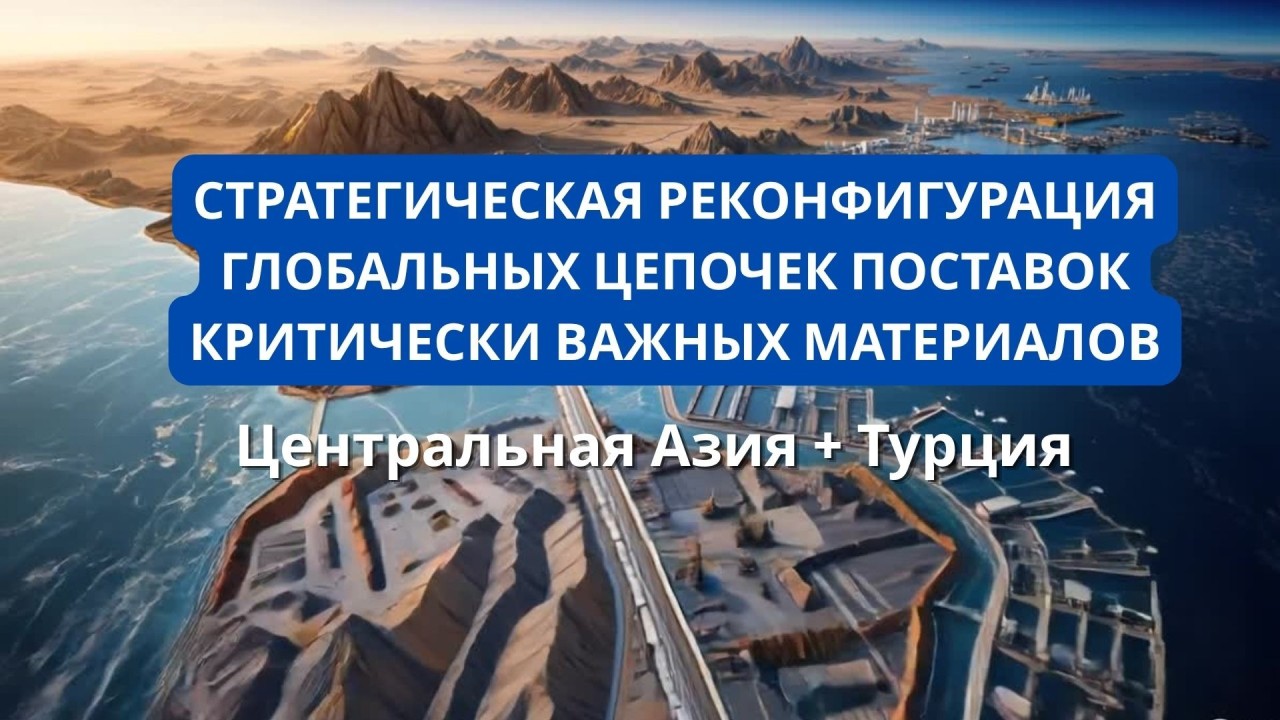
Данное исследование посвящено комплексному анализу процессов расширения партнерских отношений государств Центральной Азии и Южного Кавказа с Турцией, Европой, Северной Америкой и технологическими лидерами Азии (Японией и Кореей). Основной фокус направлен на изучение механизмов перехода от простой добычи сырья к созданию интегрированных цепочек добавленной стоимости — от геологоразведки с применением ИИ до глубокой переработки и производства высокотехнологичных прекурсоров, а также на оценку роли новых логистических коридоров в обеспечении устойчивости глобальных поставок.
Ресурсный потенциал и трансформация национальных стратегий недропользования
Государства макрорегиона осознают уязвимость положения сырьевого придатка и активно реформируют национальные стратегии, стремясь капитализировать растущий геополитический спрос на свои ресурсы. Каждая из стран формирует уникальную нормативную и инвестиционную среду для привлечения технологических партнеров.
Казахстан: Системообразующий игрок и переход к высоким переделам
Республика Казахстан обладает наиболее масштабным и диверсифицированным горно-металлургическим комплексом в регионе, генерирующим около 17% ВВП страны. (12) По официальным оценкам Сената, совокупный потенциал казахстанских недр достигает беспрецедентной суммы в 46 триллионов долларов.10 Геологическая база страны позволяет экспортировать 21 из 34 материалов, официально признанных Европейским Союзом критически важными, и уже сегодня производит 19 из них, включая медь, кобальт, вольфрам и литий. (3) Из 384 разведанных в Центральной Азии месторождений редкоземельных металлов 160 находятся на территории Казахстана.9 Страна также удерживает абсолютное лидерство на рынке урана, обеспечивая 39% мировых поставок в 2024 году. (3)
Стратегический вектор развития отрасли, артикулированный президентом Касым-Жомартом Токаевым, заключается в форсированном переходе к производству продукции с высокой добавленной стоимостью. (3) Власти Казахстана выделили четыре приоритетных кластера для развития глубокой переработки: аккумуляторные материалы, компоненты для полупроводниковой промышленности, жаропрочные сплавы для авиации и технологии переработки постоянных магнитов. (13) Для стимулирования инвестиций в эти сектора введен в действие новый Налоговый кодекс, который прямо поощряет инвесторов, внедряющих технологии глубокой переработки сырья, через установление благоприятного режима роялти. (10)
Катализатором новой волны инвестиционного интереса стали недавние открытия в сфере добычи аккумуляторных металлов. В 2024 году Корейский институт геонаук и минеральных ресурсов (KIGAM) в рамках межправительственного сотрудничества обнаружил в Восточном Казахстане (на месторождении Бакенное) залежи лития, стоимость которых оценивается в 15,7 миллиарда долларов.11 Эти участки ранее разрабатывались в советский период для добычи тантала, однако современные корейские технологии позволили выявить колоссальный литиевый потенциал. (14) В ответ на это открытие правительство Казахстана утвердило Комплексный план развития отрасли редких и редкоземельных металлов до 2028 года и выделило около 500 миллионов долларов США на проведение масштабных геологоразведочных работ, включающих сейсморазведку и создание современного геологического кластера в Астане, с целью расширения изученности территории до 2,2 миллиона квадратных километров. (3)
Узбекистан: Форсированная индустриализация и технологические кластеры
Узбекистан, традиционно опиравшийся на добычу золота и углеводородов, совершает стремительный разворот в сторону критических минералов, позиционируя себя как будущий индустриальный хаб региона. Страна обладает 11-ми по величине в мире запасами меди, а горнодобывающий сектор формирует 8% ВВП. (3) В недрах республики выявлено 87 месторождений редкоземельных элементов (9), а также значительные запасы лития, рения, теллура, германия и вольфрама. (9) По заявлениям руководства страны на Ташкентском международном инвестиционном форуме 2025 года, общая стоимость резервов критических минералов Узбекистана оценивается в 3 триллиона долларов. (16)
Для монетизации этого богатства в марте 2025 года президент Шавкат Мирзиёев анонсировал запуск амбициозной программы стоимостью 2,6 миллиарда долларов. (9) Инициатива охватывает 76 проектов, направленных на добычу и переработку 28 видов стратегических металлов, включая титан, ванадий (ключевой элемент для ядерных реакторов) и литий.9 Узбекская стратегия классифицирует минералы на три функциональные группы: бюджетообразующие (золото, серебро, медь, уран), промышленные металлы и стратегические минералы будущего. (18)
Конкурентным преимуществом Узбекистана становится агрессивная фискальная политика. Иностранным инвесторам, готовым реализовать проекты полного цикла — от разведки до глубокой переработки и выпуска конечной высокотехнологичной продукции, — предоставляются 10-летние налоговые каникулы по рентным платежам. (16) Для локализации этих производств формируются специализированные технопарки в Ташкенте и Самарканде (16), а государственная компания “Узбекистанский технологический металлургический комплекс” (ТМК) планирует открытие уникального научно-технического центра инновационных технологий переработки. (11)
Таджикистан и Кыргызстан: Монополия на сурьму и инфраструктурные барьеры
Геоэкономическое значение Таджикистана и Кыргызстана резко возросло на фоне введенных Китаем экспортных ограничений. Обе страны обладают уникальными запасами сурьмы. Кыргызстан концентрирует 13% мировых резервов этого металла. (4) Таджикистан, в свою очередь, является вторым по величине производителем сурьмы в мире после Китая, обеспечивая в разные годы от 15% до 25% мировой добычи. (4) Кроме того, горный ландшафт Таджикистана скрывает более 600 задокументированных месторождений примерно 50 видов минералов, включая свинец, цинк, медь и марганец (11% мировых доказанных запасов) (18), а недавние геологоразведочные работы 2024 года выявили 15 новых месторождений редких металлов, германия и лития. (9)
Однако развитие этих стран сдерживается острой нехваткой перерабатывающих мощностей, что приводит к формированию “ловушки добавленной стоимости”. Так, Таджикистан экспортирует 78% добываемой сурьмы в Китай для рафинирования. (4) Разрыв в ценах между необработанным рудным концентратом и рафинированным металлом (или изделиями из него) достигает пятикратного размера, что лишает национальную экономику значительных доходов. (16) Схожая ситуация наблюдается в Кыргызстане, где значительная часть лицензий исторически контролировалась китайскими компаниями. (5)
Для преодоления этой зависимости Кыргызстан официально утвердил Национальную стратегию по критическим минералам, сформировав реестр из 22 стратегических элементов, включая классические цветные металлы (медь, алюминий) и нишевые материалы (бериллий, торий, цирконий, РЗЭ). (18) Правительство также инициировало снятие многолетнего моратория на разведку и добычу урановых и ториевых месторождений для стимулирования притока капитала. (11) Особое внимание уделяется разработке гигантского титанового месторождения Кызыл-Омпол (запасы руды оцениваются в 260 млн тонн), переработка сырья с которого может осуществляться в кооперации с казахстанским Усть-Каменогорским титано-магниевым комбинатом, что создает прецедент внутрирегиональной цепочки добавленной стоимости. (4)
Туркменистан, экономика которого традиционно ориентирована на экспорт природного газа, обладает колоссальным, но слабо изученным потенциалом в сфере критических минералов. На территории страны зафиксировано более 200 месторождений, однако в активной разработке находятся лишь единицы. (18) Особый стратегический интерес для мировых рынков представляют ресурсы залива Гарабогазкёл. Концентрация лития в местных рассолах достигает 15–20 мг/л, что существенно превышает среднемировые показатели и открывает уникальные перспективы для развертывания технологий низкозатратной прямой экстракции лития (DLE). (18) Помимо лития, Туркменистан обладает шестыми по величине в мире запасами йода и брома, а также значительными ресурсами калийных солей, стронция и боратов, критически важных для агрохимической промышленности и производства высокотехнологичного стекла. (18)
Армения и Азербайджан: Горнорудные активы и транзитная геополитика
Страны Южного Кавказа играют двойную роль в новой ресурсной архитектуре: как самостоятельные поставщики сырья и как критически важные логистические узлы. Горнодобывающий сектор является стержнем экономики Армении, формируя около 6,8% государственных доходов и обеспечивая порядка 30% всего экспортного объема страны. (21) Армения стабильно входит в десятку крупнейших мировых производителей молибдена, обеспечивая до 4% глобальных поставок, и располагает крупными запасами меди и золота. (22) Индустрия базируется на восьми крупных действующих рудниках, среди которых выделяются Зангезурский медно-молибденовый комбинат (ZCMC) и месторождение Сотк, а в 2026 году ожидается запуск крупного золоторудного проекта Амулсар. (22)
Азербайджан, помимо своей доминирующей роли в энергетическом секторе, развивает добычу меди и кобальта, запасы которых сосредоточены в том числе на территории Нахичеванской Автономной Республики. (25) Однако главная стратегическая ценность Азербайджана и Армении в контексте критических минералов заключается в их географическом положении. Эти государства формируют безальтернативный сухопутный мост, связывающий богатую ресурсами Центральную Азию с промышленными рынками Европы в обход санкционных режимов России и Ирана. (26)
Архитектура партнерств: Интеграция с глобальными технологическими центрами
Понимание того, что самостоятельный переход к глубокой переработке невозможен без масштабного трансфера технологий и привлечения длинных денег, подталкивает страны региона к активной диверсификации внешних связей. На смену монопольному влиянию Китая приходит сложная многовекторная дипломатия, вовлекающая капитал и компетенции Турции, Европейского Союза, Северной Америки, Японии и Южной Кореи.
Турция: Индустриальный симбиоз и технологический хаб
Взаимодействие тюркских государств Центральной Азии с Турцией претерпевает качественную трансформацию, переходя от культурно-исторической риторики к прагматичной экономической интеграции. (10) Турция целенаправленно формирует архитектуру, в которой она выступает не просто логистическим звеном Срединного коридора, а мощным промышленным хабом, связывающим добычу сырья в Азии с рынками сбыта в Европе. (10)
Собственный минеральный потенциал Турции оценивается в 3,5 триллиона долларов, а проект Бейликова является одним из крупнейших в мире месторождений редкоземельных элементов. (10) В рамках перехода к модели промышленной автономии Турция готовит запуск национальной горнорудной биржи в 2026 году и реализует масштабную программу глубокой переработки: от экспорта сырого бора к производству батарейных прекурсоров и редкоземельных магнитов. (10) Турецкие промышленные объединения, такие как Высший Горный Совет (TOBB) и Ассоциация горнопромышленников Турции (контролирующая 75% добычи в стране), выступают локомотивами этой экспансии. (10)
Масштабы инвестиционного присутствия Турции впечатляют. Общий объем инвестиционного сотрудничества с Казахстаном достиг 8 миллиардов долларов: реализовано около 100 проектов на 4 млрд долларов, и еще 50 проектов находятся в стадии реализации. (10) В мае 2026 года в ходе визита президента Р. Т. Эрдогана в Астану было подписано 13 новых соглашений на сумму свыше 920 миллионов долларов, что позволит создать более 3100 рабочих мест. (10) Примером практической интеграции служит деятельность турецких компаний: Miryıldız строит современный горно-обогатительный комбинат в Абайской области, Çelikler Holding развивает технологии углехимии, а компания Esan внедряет энергоэффективные решения. (10) Для ускорения этого процесса президент Казахстана инициировал создание специализированного совместного инвестиционного фонда для финансирования горнодобывающих проектов. (10) Аналогичная динамика наблюдается в Узбекистане (цель по товарообороту — 5 млрд долларов) и Кыргызстане, где турецкие инвестиции уже превысили 1,5 млрд долларов. (10)
Европейский Союз: Нормативное регулирование и финансовые интервенции
Для Европейского Союза диверсификация поставок критических минералов является экзистенциальным условием реализации “Зеленой сделки” (Green Deal) и сохранения конкурентоспособности автомобилестроения и технологического сектора. Принятый в 2024 году Акт о критически важном сырье (CRMA) устанавливает жесткий императив: к 2030 году ЕС не должен зависеть от одной третьей страны более чем на 65% в поставках любого стратегического материала на любом этапе его обработки. (1) Центральная Азия рассматривается Брюсселем как макрорегион, способный в перспективе удовлетворить до 40% европейских потребностей в стратегическом сырье. (1)
Стратегия ЕС строится на комбинации институционального финансирования, двусторонних меморандумов и стимулировании частного капитала:
1. Инфраструктурные фонды: В рамках глобальной инициативы Global Gateway Европейский Союз обязался инвестировать 12 миллиардов евро в проекты развития инфраструктуры, энергетики и торговли в Центральной Азии. (13) Для реализации положений CRMA Европейская комиссия идентифицировала глобальные стратегические проекты, требующие 5,5 млрд евро капиталовложений. (28)
2. Институциональное присутствие: Европейский инвестиционный банк (EIB) и Европейский банк реконструкции и развития (ЕБРР) агрессивно наращивают портфели. ЕБРР не только финансирует энергоэффективность, но и входит в акционерный капитал, как это произошло в августе 2024 года с приобретением 17,36% доли в казахстанском графитовом проекте Sarytogan Graphite. (5) Для упрощения финансирования банки открывают новые представительства в Ташкенте и других столицах. (13)
3. Дипломатия сырья: ЕС заключил Меморандумы о взаимопонимании (MoU) с Казахстаном и Узбекистаном, утвердив детальные “Дорожные карты на 2025–2026 годы”, направленные на развитие устойчивых цепочек поставок аккумуляторов и зеленого водорода. (1) Дополнительно реализуется план RESourceEU, предполагающий создание Европейского центра критического сырья в 2026 году и фокусирующийся на редкоземельных магнитах и оборонных материалах. (30)
4. Европейский корпоративный капитал: Индустриальные гиганты Европы переходят от намерений к конкретным контрактам. Немецкая компания HMS Bergbau AG утвердила инвестиции в размере 500 миллионов долларов в добычу и переработку лития в Восточном Казахстане.15 Во время визита канцлера Олафа Шольца в Узбекистан в сентябре 2024 года обсуждались проекты на сумму 9 млрд евро, а Алмалыкский ГМК заключил соглашение на 146 млн евро с немецким KfW Ipex-Bank на строительство медеплавильного завода. (33) Французская Orano расширяет добычу урана в партнерстве с Навоийураном (5), а британские компании активно исследуют золоторудный сектор Кыргызстана (проекты Chaarat Gold). (11)
Северная Америка (США и Канада): Инвестиционная мощь и институциональные диалоги
США и Канада рассматривают партнерство с Центральной Азией и Кавказом через призму национальной безопасности и технологического суверенитета. Соединенные Штаты формируют многоуровневую архитектуру вовлечения региона в западные цепочки поставок, вытесняя китайское влияние.
Институциональным ядром американской стратегии стал формат C5+1. В феврале 2024 года Вашингтон инициировал Диалог по критическим минералам C5+1 (C5+1 CMD), направленный на развитие геологоразведки и привлечение инвестиций в перерабатывающие мощности. (12) Кульминацией этого процесса стал саммит глав государств C5+1 в Белом доме в ноябре 2025 года. (12) В ходе саммита были анонсированы колоссальные договоренности: Узбекистан обязался инвестировать и закупить американских товаров на сумму свыше 100 миллиардов долларов в течение десятилетия (включая авиацию и критические минералы), а Казахстан подписал коммерческие соглашения на 17 миллиардов долларов. (37) Для финансового обеспечения этих процессов США задействуют Партнерство по безопасности минералов (MSP Finance Network), объединяющее ресурсы Корпорации по финансированию международного развития США (DFC) и Экспортно-импортного банка (EXIM). (38) DFC, в частности, прорабатывает выделение до 700 миллионов долларов на развитие крупнейшего вольфрамового месторождения в Казахстане. (39)
Особое внимание США уделяют устранению зависимости от китайской сурьмы. Столкнувшись с перспективой дефицита, американская компания Comsup Commodities Inc. уже инвестировала более 300 миллионов долларов в глубокую модернизацию Анзобского горно-обогатительного комбината в Таджикистане, стремясь замкнуть переработку сурьмы на локальном уровне и перенаправить потоки на Запад. (8) Внедряются и передовые технологии: таджикские ведомства заключили соглашения со Starlink для цифровой связи и используют правительственные ИИ-решения от Perplexity AI для оптимизации управления ресурсами. (43)
Канада, обладающая одной из самых развитых в мире экосистем горнодобывающей промышленности (расходы на геологоразведку внутри страны выросли до 2,1 млрд долларов в 2024 году 44), активно транслирует свой опыт в Центральную Азию. Биржи Торонто (TSX/TSXV) обеспечивают 36% мирового акционерного капитала в горнодобыче (11), выступая ключевой площадкой для привлечения средств в регион. Канадские компании непосредственно входят в проекты: Condor Energies в марте 2025 года получила лицензию на разведку твердых полезных ископаемых на 6800 гектаров в Казахстане (7), а Hayasa Metals совместно с Teck Resources реализует опционное соглашение на 15 млн долларов по разработке медно-молибденового проекта Варденис в Армении. (23)
Япония и Южная Корея: Геологоразведка и технологический суверенитет
Для технологических гигантов Восточной Азии, критически зависящих от импорта полупроводниковых и аккумуляторных материалов, диверсификация поставок является вопросом выживания промышленности. Обе страны делают ставку на экспорт передовых геологических технологий и заключение долгосрочных офтейк-контрактов.
Южная Корея, импортировавшая редкоземельных магнитов на 640 млн долларов в 2022 году (45), приняла комплексную стратегию по снижению зависимости от Китая с 70% до 50% к 2030 году. (45) Выделив 33 “жизненно важных” минерала 45, Сеул активизировал работу государственных корпораций KOMIR (Корейская корпорация по реабилитации шахт и минеральным ресурсам) и KIGAM. Именно применение корейских геологических ноу-хау позволило KIGAM обнаружить литиевое месторождение Бакенное в Казахстане стоимостью 15,7 млрд долларов (12), разработка которого теперь ведется в партнерстве с немецкой HMS Bergbau. (46) В 2024 году Южная Корея и Узбекистан запустили совместные механизмы финансирования проектов глубокой переработки стратегического сырья, а корейские корпорации (POSCO, LX International) формируют консорциумы для строительства заводов аккумуляторных компонентов непосредственно в Центральной Азии. (14)
Япония действует через Японскую организацию по металлам и энергетической безопасности (JOGMEC). JOGMEC предоставляет беспрецедентные финансовые условия, включая гранты, покрывающие до 50% стоимости проектов геологоразведки и разработки технико-экономических обоснований, а также кредитные гарантии. (47) Стратегическое партнерство Японии и Казахстана привело к росту товарооборота до 2 млрд долларов в 2024 году, а накопленные японские инвестиции превысили 8,5 млрд долларов.48 JOGMEC открывает представительство в Астане для координации проектов не только по разведке критических минералов, но и по совместной разработке малых модульных реакторов (SMR) и технологиям улавливания углерода. (49) Японская ITOCHU Corporation уже вошла в узбекско-французско-японское урановое предприятие в Навои. (12)
Структурированный анализ: Минеральный потенциал и инвестиционные механизмы
Для систематизации приведенных данных целесообразно использовать табличное представление, отражающее ресурсные профили стран макрорегиона и инструментарий глобальных партнеров.
Таблица 1. Стратегический профиль запасов и проектов в сфере критических минералов
Таблица 2. Архитектура партнерских инвестиционных и нормативных механизмов
Трансформация логистической архитектуры: Срединный коридор и коридор TRIPP
Даже при успешном развертывании мощностей по глубокой переработке важнейшим барьером для Центральной Азии исторически оставалась внутриконтинентальная изоляция, обуславливавшая логистическую зависимость от инфраструктуры Китая и России. Сегодня происходит радикальная перекройка транспортной карты Евразии, опирающаяся на развитие двух взаимодополняющих маршрутов.
Транскаспийский маршрут (Срединный коридор)
Срединный коридор (Транскаспийский международный транспортный маршрут, ТМТМ), пролегающий через Казахстан, акваторию Каспийского моря, Азербайджан, Грузию и Турцию в Европу, трансформируется из узкого транзитного горлышка в “интегрированный промышленный пояс”. (10) Портовая инфраструктура Актау и Курык 1 активно модернизируется при участии японского капитала для обеспечения перевалки тяжелых рудных концентратов и готовых металлических катодов. Европейский Союз в 2024 году мобилизовал 10 миллиардов евро от международного сообщества на поддержку устойчивой транспортной связности в Центральной Азии. (29) Для поставщиков критических минералов этот маршрут означает сокращение транзитного времени в Европу до 14–20 дней, что делает его экономически сопоставимым с традиционными северными маршрутами, но свободным от санкционных рисков. (12)
Маршрут TRIPP: Геополитический прорыв на Южном Кавказе
Революционным событием, кардинально меняющим логистику региона, стало подписание 8 августа 2025 года при прямом посредничестве президента США мирного соглашения между Арменией и Азербайджаном. (27) В рамках этого соглашения дан старт проекту TRIPP (Трамповский маршрут международного мира и процветания — Trump Route for International Peace and Prosperity).
Маршрут TRIPP представляет собой 43-километровый транспортный коридор (включающий железнодорожную магистраль, автомобильную дорогу, волоконно-оптические линии связи и трубопроводы), проходящий через армянский город Мегри вдоль реки Аракс. (27) Он напрямую соединяет основную часть Азербайджана с Нахичеванской Автономной Республикой и далее с Турцией. Для обеспечения надежности транзита и защиты инвестиций США получили эксклюзивные права на развитие этой инфраструктурной зоны сроком на 99 лет. (25) При этом суверенитет над территорией сохраняется за Арменией, а управление осуществляется по модели «front office – back office», где непосредственное обслуживание клиентов поручено западным частным операторам. (27)
К концу 2025 года правительство США уже обеспечило первоначальный транш финансирования в размере около 400 миллионов долларов, а завершение строительства железнодорожного сегмента ожидается к 2028 году. (27) Интеграция TRIPP позволяет сократить время транспортировки грузов из Азии в Турцию на 25% по сравнению с существующей железнодорожной линией Баку-Тбилиси-Карс (БТК). (27) Более того, реализация этого проекта открывает возможность для интеграции армянских и азербайджанских производителей меди и молибдена непосредственно в глобальные транзитные потоки, удешевляя логистику критических материалов из Центральной Азии.(40)
Таблица 3. Сравнительный анализ логистических коридоров для экспорта CRM
Экологические, технологические и нормативные вызовы (ESG-императив)
Переход Центральной Азии и Южного Кавказа от экстенсивной добычи к высокотехнологичной переработке сопряжен с серьезными экологическими и нормативными барьерами, преодоление которых невозможно без западных технологий.
Водно-энергетическая проблема (FWE Nexus): Горнодобывающая промышленность и гидрометаллургия — отрасли с экстремально высоким водо- и энергопотреблением. В Центральной Азии эта проблемMINEX Asia 2026а усугубляется климатическим кризисом: темпы потепления здесь в два раза превышают среднемировые показатели, что ведет к катастрофическому истощению ледников и речных систем. (52) Расширение добычи лития, меди и РЗЭ без внедрения технологий водооборота может спровоцировать региональный водный кризис. Эксперты настаивают на необходимости реализации концепции “водного дивиденда”, при которой государства обязуются реинвестировать часть сверхдоходов от продажи критических минералов во внедрение водосберегающих технологий, опреснение и модернизацию ирригационных систем. (52) Институты развития, такие как ЕБРР, и технологические компании (например, финская Metso с ее экологическими инициативами Planet Positive 11) уже активно работают в этом направлении, предоставляя финансирование под жесткие экологические ковенанты.
Регуляторное соответствие и ESG-стандарты: Западные рынки устанавливают жесткие барьеры для “грязного” сырья. Внедряемый Европейским Союзом механизм пограничного углеродного корректирования (CBAM) и будущие требования к цифровым паспортам продукции 10 означают, что аккумуляторы или металлы, произведенные с использованием угольной генерации или с нарушениями трудовых прав, потеряют ценовую конкурентоспособность или будут не допущены на рынок ЕС. В связи с этим страны региона вынуждены адаптировать свои системы управления качеством. Успешным примером служит Армения, которая с 2017 года является полноправным участником Инициативы прозрачности добывающих отраслей (EITI), обеспечивая публичную отчетность и направляя экологические налоги непосредственно на развитие пострадавших общин. (21) Партнеры в рамках платформы C5+1 также настаивают на соблюдении экологических и социальных стандартов при разведке месторождений. (35)
Технологический дефицит в геологоразведке: Существенная часть геологической информации в регионе базируется на устаревших архивах советской эпохи. (5) Модернизация недропользования требует внедрения передовых систем. Инвестиции западных и азиатских партнеров сегодня направлены на цифровизацию: использование искусственного интеллекта для обработки архивных данных, применение беспилотной геофизики (10) и дистанционного зондирования Земли. Ярким примером является соглашение Таджикистана с компанией Transparent Earth на сумму 32,5 млн долларов для внедрения спутникового мониторинга в горнодобывающем секторе. (43) Без этих технологий точная оценка глубинных залежей и рентабельности их отработки по западным стандартам отчетности (таким как KAZRC/CRIRSCO, внедряемым в Казахстане (11) невозможна.
Интеграция ресурсов и капитала: Роль форума МАЙНЕКС Азия 2026
Несмотря на колоссальный потенциал, когда, например, Казахстан способен производить 19 из 34 материалов, официально признанных ЕС критически важными, а стоимость его недр оценивается в 46 триллионов долларов, структурный дисбаланс сохраняется. 70% критического минерального сырья Центральной Азии уходит в Китай, где реализуется 25 активных проектов (что в пять раз больше совокупного присутствия европейских компаний). (10) Главным вызовом для макрорегиона остается поиск партнеров, способных обеспечить не только финансовый капитал, но и промышленные компетенции, рынки сбыта и технологии для создания полной цепочки от геологоразведки до готовой продукции. (10)
https://2026.minexasia.com/
Ответом на этот вызов и ключевой площадкой для практической реализации описанной выше многовекторной дипломатии выступает 12-й Международный горно-геологический форум МАЙНЕКС Азия, запланированный на 24–25 июня 2026 года в Анкаре (Турция). (10) Выбор Турции для проведения мероприятия в «номад-формате» (повторяющем маршруты Великого Шелкового пути) не случаен: он символизирует качественный переход стран Центральной Азии к прагматичному экономическому объединению своих ресурсов с промышленной мощью Турции и капиталом стран Запада и Ближнего Востока. (10)
Повестка форума структурирована таким образом, чтобы охватить все ключевые аспекты новой геоэкономической архитектуры:
https://2026.minexasia.com/
● Стратегия и капитал (День 1): Обсуждение перехода Турции к модели промышленной автономии и создания национальной горнорудной биржи. Отдельный фокус направлен на концептуализацию Срединного коридора не просто как логистического маршрута, а как «интегрированного промышленного пояса», который свяжет добычу на востоке с переработкой и рынками сбыта на западе. (10)
https://2026.minexasia.com/
● Технологии и устойчивое развитие (День 2): Прямой ответ на нормативные вызовы ЕС. Запланированы дискуссии о том, как странам региона интегрироваться в европейские цепочки с учетом механизма углеродной корректировки (CBAM) и цифровых паспортов продукции, а также о применении искусственного интеллекта в геологоразведке и управлении хвостохранилищами по международным ESG-стандартам. (10)
МАЙНЕКС Азия 2026 предоставляет беспрецедентную возможность для прямого нетворкинга без посредников. Горнодобытчики из Кыргызстана и Таджикистана, обладающие огромными неразведанными запасами сурьмы и РЗЭ, компании из Узбекистана с программами на 2,5 миллиарда долларов, а также поставщики медно-молибденовых ресурсов из Армении и логисты из Азербайджана (включая транзитные хабы Срединного коридора и проекта TRIPP) смогут встретиться за одним столом с инвесторами и технологическими партнерами из Европы, Японии, Южной Кореи и Турции. (10) Таким образом, форум выступает не просто конференцией, а практическим механизмом трансформации сырьевого потенциала региона в высокотехнологичные международные проекты.
https://2026.minexasia.com/
Заключение
Глобальный рынок критически важных минералов проходит стадию фундаментальной перестройки. Стремление стран Запада и индустриальных лидеров Азии обеспечить экономическую безопасность и преодолеть монопольную зависимость от Китая превратило Центральную Азию и Южный Кавказ в арену интенсивной геоэкономической конкуренции и беспрецедентного притока капитала.
Анализ показывает, что региональные лидеры — Казахстан, Узбекистан, Таджикистан и Кыргызстан — больше не удовлетворяются ролью сырьевых придатков. Путем радикального реформирования налоговых режимов, снятия мораториев и предоставления налоговых каникул они выстраивают архитектуру, поощряющую создание полного производственного цикла на своей территории. Стратегическое вовлечение в этот процесс таких мощных игроков, как Турция (с ее готовностью стать промышленным хабом Срединного коридора), Европейский Союз (через инициативу Global Gateway и Акт CRMA), США и Канада (в рамках формата C5+1 и платформы MSP), а также Япония и Южная Корея (через трансфер геологических технологий), создает уникальную синергию.
В формирующейся экосистеме Южная Корея и Япония обеспечивают высокотехнологичную геологоразведку и гарантированный спрос; США, Канада и европейские финансовые институты поставляют инвестиционный капитал и оборудование; а страны региона предоставляют ресурсную базу и льготные налоговые режимы. Скрепляющим элементом этой конструкции выступает новая логистическая реальность: модернизированный Срединный коридор и прорывной проект TRIPP на Южном Кавказе, которые в связке с портовой инфраструктурой Азербайджана и транзитными возможностями Армении гарантируют надежную доставку стратегических грузов на мировые рынки.
Успех этой беспрецедентной трансформации будет зависеть от способности государств региона выдержать баланс между форсированной индустриализацией и сохранением хрупкого экологического равновесия, а также от их умения успешно маневрировать в условиях жесткого геополитического давления. В случае реализации заявленных программ Центральная Азия и Южный Кавказ имеют все шансы интегрироваться в глобальную экономику XXI века не просто как поставщики руды, а как ключевые узлы мировой индустрии чистой энергии и высоких технологий.
16. The Geoeconomics of Critical Minerals: Implications of a Trump–Central Asia Framework Agreement – Project MUSE, accessed on May 24, 2026, https://muse.jhu.edu/article/984723
49. Joint Statement between Japan and the Republic of Kazakhstan on Further Synergy of the Future-Oriented Expanded Strategic Partne, accessed on May 24, 2026, https://www.mofa.go.jp/mofaj/files/100953279.pdf
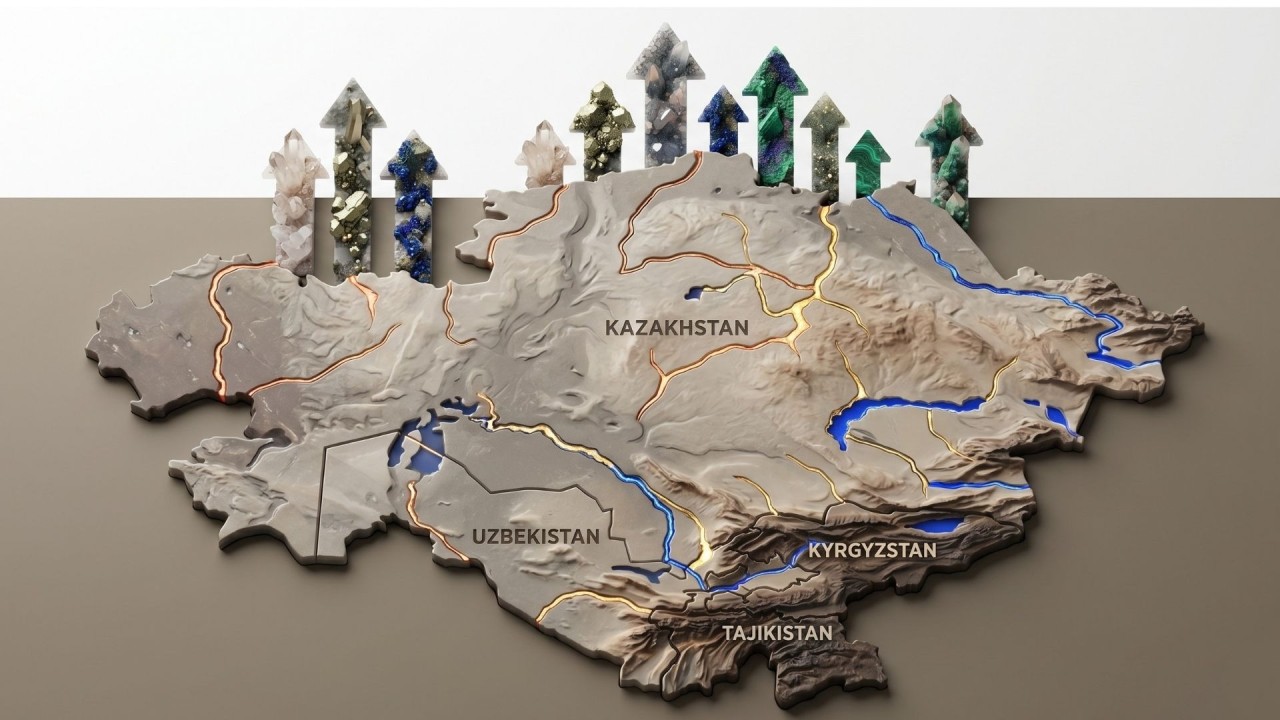



![Is there still a future for green steel in Europe? [Jones, Blanpain, Aiello, RM #2]](https://minexforum.com/wp-content/uploads/2026/06/podcast1.jpg)