Tag: zinc

  • Avrupa Minerals Regains Full Control of Sesmarias Project in Portugal

    Avrupa Minerals Regains Full Control of Sesmarias Project in Portugal

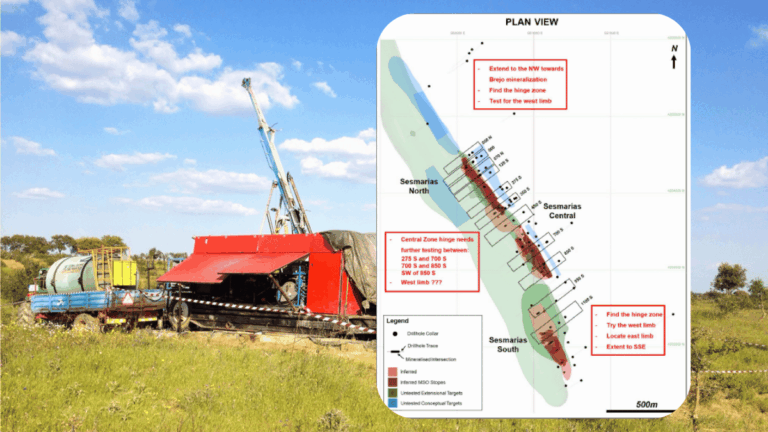
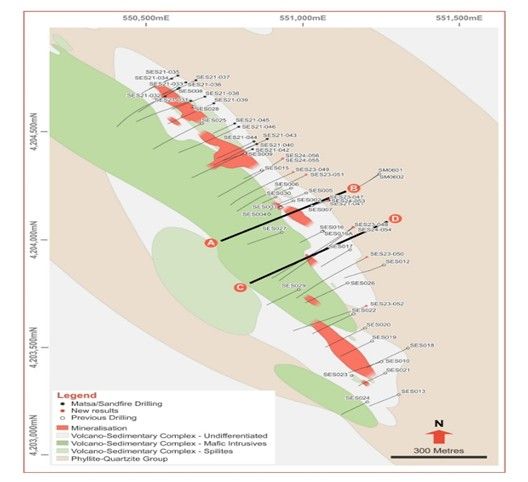
    Avrupa Minerals is reaffirming its commitment to the Sesmarias project in Portugal, even as it continues to expand its Finnish exploration portfolio. Sesmarias, the company’s flagship discovery since 2014, has seen significant progress through multiple joint ventures and self-funded efforts. Most recently, Sandfire MATSA supported exploration from 2020 to 2025, yielding impressive high-grade intercepts and expanding the project’s geological understanding.

    Despite these advancements, the project did not meet Sandfire MATSA’s internal criteria, leading to Avrupa regaining 100% ownership. With complex geology and promising mineralization—including intercepts like 26.95 meters @ 2.18% Cu and 28.60 meters @ 1.68% Cu—the company is now focused on securing a new strategic partner to advance towards a potential mining decision.

  • District Metals’ Viken Project Now Second Largest Uranium Deposit Globally Following Major Resource Update

    District Metals’ Viken Project Now Second Largest Uranium Deposit Globally Following Major Resource Update

    District Metals (TSXV: DMX) has unveiled a significant upgrade to its Viken uranium project in central Sweden, announcing a new resource estimate that positions the project as the second largest uranium deposit in the world. The update has driven a substantial increase in the company’s share price, reflecting investor enthusiasm.

    The updated resource now totals 456 million indicated tonnes with a grade of 175 parts per million (ppm) uranium oxide (U3O8), equating to 176 million contained pounds of U3O8. This marks an almost ninefold increase compared to the previous 2010 resource estimate. Inferred resources also saw a significant boost, growing by 44% to 4.33 billion tonnes at a grade of 161 ppm U3O8, yielding 1.53 billion contained pounds.

    District CEO Garrett Ainsworth expressed that the impressive growth in the resource estimate highlights the strong continuity in grade and thickness of the mineralized Alum Shale formation across the Viken deposit. He also mentioned the potential for further expansion of the inferred resource, further underscoring the project’s promising future.

    Following the announcement, District Metals’ shares surged by 23%, reaching C$0.35 per share in afternoon trading on Tuesday, giving the company a market capitalization of C$45.9 million.

    Sweden’s Uranium Revival
    The new resource estimate for Viken is bolstered by the growing momentum for uranium in Sweden. The country is on the cusp of lifting its 2018 ban on uranium exploration and mining. The Swedish government, led by Prime Minister Ulf Kristersson, has been pushing to overturn the ban since 2023, with legislative changes expected to come into effect by January 2024.

    While Sweden’s uranium output is small on the global stage, its resources represent 27% of Europe’s total, according to the Swedish Geological Survey. The global demand for uranium, driven by the need for zero-emission energy sources, is also creating a favorable environment for Sweden’s uranium projects.

    Global Ranking of Viken
    Viken’s resource estimate places it among the largest uranium projects in the world. District Metals’ analysis, compared to other global uranium projects, positions Viken just below BHP’s Olympic Dam polymetallic project in South Australia, based on the total contained uranium.

    Additional Critical Minerals
    In addition to uranium, the Viken deposit hosts significant amounts of other critical minerals. The indicated vanadium resource has increased more than 16 times, with 2.85 billion pounds of vanadium oxide (V2O5) at a grade of 2,836 ppm. The inferred vanadium resource has grown by 45% to 24.29 billion pounds at a grade of 2,543 ppm V2O5.

    The indicated zinc resource totals 413 million pounds, grading 411 ppm zinc, and the inferred resource adds 3.9 billion pounds at a grade of 417 ppm. The nickel resources are also notable, with 332 million pounds of nickel in the indicated category at a grade of 330 ppm, and 3 billion pounds in the inferred category at a grade of 321 ppm.

    Next Steps
    The Swedish government’s plans to lift the uranium mining ban will influence District’s decision on whether to proceed with a preliminary economic assessment for Viken in the fourth quarter of 2023. The new resource estimate is based on 122 holes, including drilling data from previous operators between 2006 and 2012.

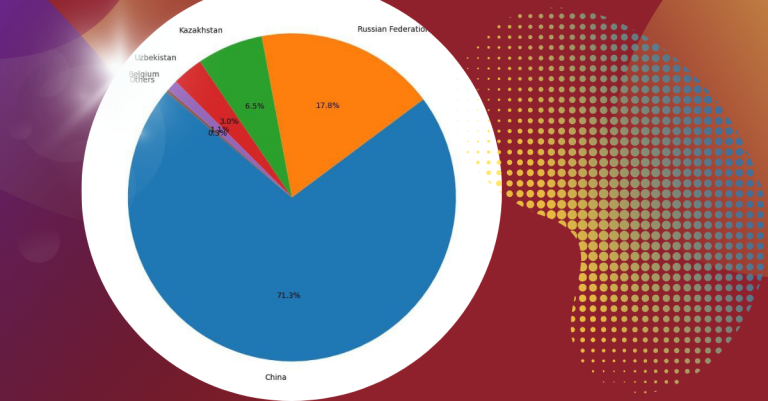
  • China Imports Up to 70% of Critical Metals from Central Asia

    China Imports Up to 70% of Critical Metals from Central Asia

    Despite the lack of official data on the export of rare earth metals by Central Asian countries, an analysis of ore, slag, and ash exports reveals interesting trends. These exports often include critical resources highly sought after by leading global powers, particularly metals such as molybdenum, titanium, and vanadium.

    According to Trademap.org data from 2019 to 2023, Central Asian countries exported a wide range of ores and concentrates, including copper, iron, precious metals, zinc, lead, molybdenum, chromium, and niche metals such as niobium and tantalum.

    In recent years, the market has also seen the introduction of products such as tin, tungsten, and titanium ores. For example, copper ore exports showed stable growth—from approximately $1.17 million in 2019 to around $3.15 million in 2023. Iron ore peaked at $1.6 million in 2021 before experiencing a decline in export volumes in subsequent years.

    One notable trend is the significant increase in molybdenum ore exports, which surged from about $4 million in 2019 to approximately $144 million in 2023. This is a clear reflection of increased global demand and investment.

    An analysis of trade with the European Union under the category “26 Ores, Slags, and Ash” shows that molybdenum stands out: its exports increased from around $11 million in 2021 to nearly $60 million in 2023. In this segment, Kazakhstan holds a dominant position, providing nearly the entire cumulative export value, while contributions from other Central Asian countries remain significantly lower.

    Central Asian countries’ export portfolios reveal a trend towards transitioning from traditional raw materials such as copper and iron to more valuable niche ores, especially molybdenum. This trend is evident both in the global market and in trade with the European Union, where Kazakhstan acts as a key supplier.

    Will the European Union be able to position itself as a key importer of critical metals from Central Asia? The future will tell.

  • Boliden Faces Delays and Increased Costs in Odda Zinc Smelter Expansion

    Boliden Faces Delays and Increased Costs in Odda Zinc Smelter Expansion

    Swedish mining company Boliden announced on Thursday that the expansion of its Odda zinc smelter in Norway will take longer than initially expected due to delays in construction work. The cost of the project is now expected to rise by an additional 100 million euros ($110.16 million). Originally, Boliden had planned to expand the plant’s annual production capacity from 200,000 tonnes to 350,000 tonnes.

    The company confirmed that the ramp-up towards the new production level will begin at the end of the first quarter of 2025, a delay of around three months compared to earlier projections. Full output is expected to be reached later in 2025. Despite the delay, Boliden has maintained its capital expenditure forecast for 2024 at 15.5 billion Swedish crowns($1.49 billion) and set its estimated capex for 2025 at 13.5 billion crowns.

  • Shalkiya Polymetallic Deposit to Launch by Late 2026

    Shalkiya Polymetallic Deposit to Launch by Late 2026

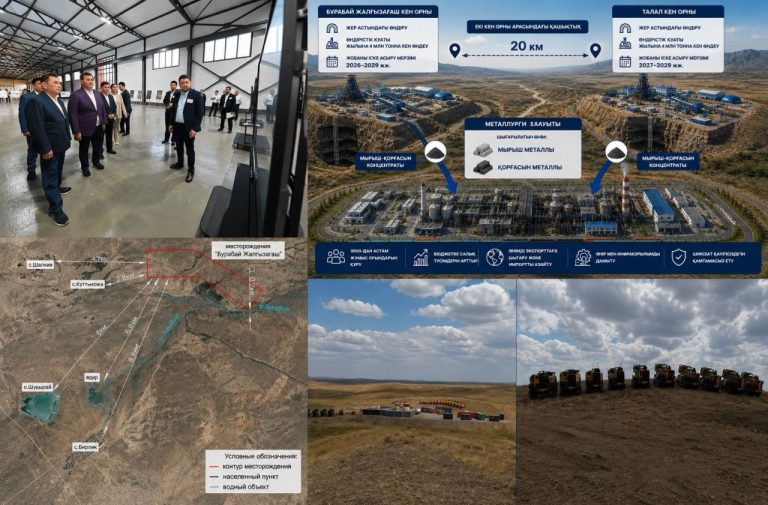
    The Shalkiya polymetallic deposit, located in the Kyzylorda region, is set to commence operations by the end of 2026. The site will feature a beneficiation plant capable of processing 4 million tons of ore annually. According to LS, the investor will inject 323 billion tenge into the project. The mining plan is already in place, with extraction scheduled to begin in 2025. Contracts for equipment supply for the beneficiation plant have been signed, and tenders are underway to select a contractor for the construction phase. The deposit is owned by ShalkiyaZinc, a subsidiary of Tau-Ken Samruk. The initial timeline for launching the deposit was set for 2023, but the plans have since been postponed. The Shalkiya deposit is rich in zinc and lead, with the ore containing 4.27% zinc and 1.28% lead. The reserves, categorized as B+C1+C2, are estimated at 127.5 million tons. The extraction of metals from the ore will utilize selective flotation, with zinc undergoing a fine grinding process for flotation concentrate.

  • Glencore Abandons Sale of Kazzinc Stake After Unmet Valuation

    Glencore Abandons Sale of Kazzinc Stake After Unmet Valuation

    Glencore Plc has abandoned plans to sell its stake in the Kazakh mining company Kazzinc after potential buyers failed to meet its valuation, sources familiar with the situation reported. Glencore, holding a 70% stake in Kazzinc, had been contemplating an exit from the business amid interest from Chinese buyers. The company has now issued a termination letter to the bidders, the sources said, requesting anonymity due to the private nature of the discussions. A Glencore spokesperson declined to comment on the matter.

    Kazzinc, established in 1997 through the merger of eastern Kazakhstan’s three main non-ferrous metals companies, comprises a sprawling network of mines, concentrators, and metal finishing plants. This setup allows the company to transition from digging ore to producing finished zinc metal and products.

    Glencore’s Chief Executive Officer, Gary Nagle, has continued the strategy of his predecessor, focusing on simplifying the business by selling off smaller or more challenging assets. The company has previously sold zinc assets in Peru and some of its smaller copper operations.

    While zinc prices have surged this year due to supply constraints, the long-term outlook remains uncertain. The metal’s future is clouded by its heavy reliance on the struggling construction sector and its limited applications in rapidly growing industries like renewable energy and electric vehicles.

  • Mining Company Plans Zinc and Lead Extraction at Shalkiya Deposit

    Mining Company Plans Zinc and Lead Extraction at Shalkiya Deposit

    In a recent announcement, “Tau-Ken Samruk,” a mining company affiliated with “Samruk-Kazyna,” revealed its intentions to commence zinc and lead extraction operations at the Shalkiya deposit in the Kyzylorda region by October of this year. The company aims to reach a production volume of 2.2 million tons of ore by 2025, as stated by the chairman of the company’s board, Bakyt Chirchikbayev, during the MINEX-2024 forum. Chirchikbayev further disclosed plans for potential tolling arrangements for ore processing while the company’s own factory is under construction. Negotiations with potential partners for the purchase of a controlling stake are underway, with details expected to be finalized post-discussions.

    Additionally, Chirchikbayev mentioned the positive outcome of the state expertise regarding the technical and economic feasibility of the North Katpar and Upper Kayrakty tungsten projects. The company received favorable feedback on the project’s feasibility study, which has been circulated among interested partners. Currently, the project is under review by several potential collaborators, with further steps aligned with project privatization regulations.

    The financing of the Shalkiya project involves the European Bank for Reconstruction and Development (EBRD), with agreements dating back to June 2017. Updates to the credit agreement were made in September 2021, extending credit lines up to $175 million. Recent disbursements from the EBRD, including a second tranche of $40.5 million in October 2022, demonstrate ongoing financial support for the project. “Samruk-Kazyna” has provided full guarantees for “Shalkiya Zinc’s” obligations to the EBRD, ensuring financial security for the venture.

  • Adriatic Metals hails precious metals finds at Rupice

    Adriatic Metals hails precious metals finds at Rupice

    (Alliance News) – Adriatic Metals PLC on Wednesday gave an update on its Rupice northwest exploration which is part of the company’s Vares silver project.

    Adriatic Metals is a precious and base metals explorer and developer that owns the Vares silver project in Bosnia & Herzegovina and the Raska zinc deposit in Serbia.

    The company said it found 2.6 grams of gold per tonne, 409 grams of silver per tonne, about 12% zinc, 8.9% lead, 1.2% copper, 9% barium sulfate and 0.2% antimony in hole BR-30-23.

    Managing Director Paul Cronin said: “Additional exploration drilling, new geology, more tonnes at higher grades to the west of the current Rupice Northwest resource are adding significantly to the growth of Rupice. Faulting and folding have thickened and bent mineralization to vertical, with silver-gold-copper grades increasing in proximity to the deformation. Drilling will continue to define the western extent of RNW for a further resource update at the end of 2023.”

    Adriatic Metals rose 2.9% to 192.00 pence each on Wednesday morning in London.