Tag: zinc

  • Chinese Company to Extract 20 Tonnes of Silver Annually in Kazakhstan

    Chinese Company to Extract 20 Tonnes of Silver Annually in Kazakhstan

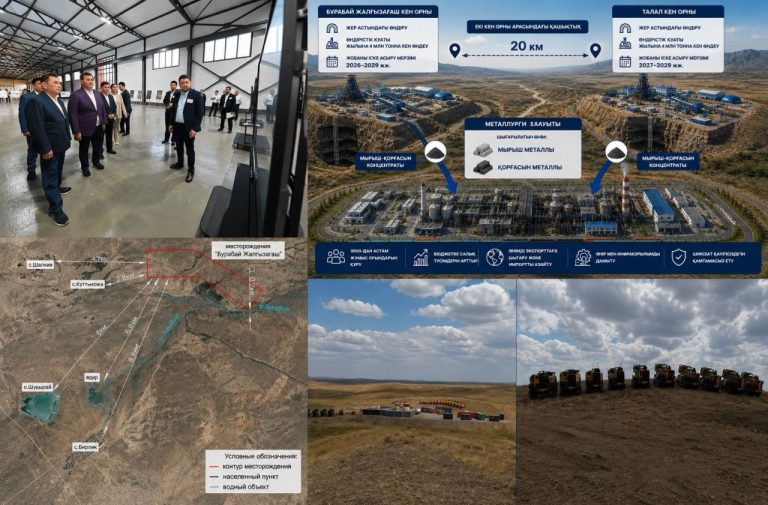
    The Liaoning Hongda Group, a Chinese mining company, has commenced the construction of the Burabay-Zhalgyzagas mining and processing plant in the Janakorgan district of Kazakhstan’s Kyzylorda region. The facility is set to produce 20 tonnes of silver and 210,000 tonnes of lead-zinc concentrate annually upon its completion in 2028. The project represents a significant investment in the region, with a total cost of 138 billion tenge, and is expected to create over 550 new jobs.

    During the groundbreaking ceremony, regional akim Murat Yergeshbayev highlighted the project’s potential to stimulate economic growth and diversify the local economy. He expressed gratitude to Liaoning Hongda Group for their commitment to such a large-scale and modern initiative. The project aligns with President Kassym-Jomart Tokayev’s directive to transition Kazakhstan to a new investment cycle, focusing on modern production and optimising regional economic potential.

    Currently, drilling works are underway to expand the mineral resource base of the site, alongside the construction of access roads and the establishment of construction sites. The project also includes plans for connecting the plant to electrical grids to ensure a reliable power supply.

    Liaoning Hongda Group has previously announced plans to invest $1.3 billion in the development of two lead and zinc deposits in the Janakorgan district, which will include two underground mines and two processing plants with a combined capacity of 8 million tonnes of ore per year, as well as a full-cycle metallurgical plant.

    Exploration activities at the deposits date back to the 1980s, with detailed surveys conducted between 2010 and 2012. The reserves are classified as C2 category, with forecast resources rated as P1. The average content of the deposits is reported at 2.01% zinc and 1.62% lead, with geologists noting the potential for resource growth at greater depths.

    Once operational, the new complex is projected to produce 420,000 tonnes of zinc and 220,000 tonnes of lead annually, which would significantly surpass the output of Kaz Zinc, making it potentially the largest producer of lead and zinc in Central Asia. The Chinese company has already invested approximately 9 billion tenge in geological exploration, utilising 15 drilling rigs during the process.


  • Teako Minerals Launches Field Program at Tynset Copper-Zinc-Silver Project in Norway

    Teako Minerals Launches Field Program at Tynset Copper-Zinc-Silver Project in Norway

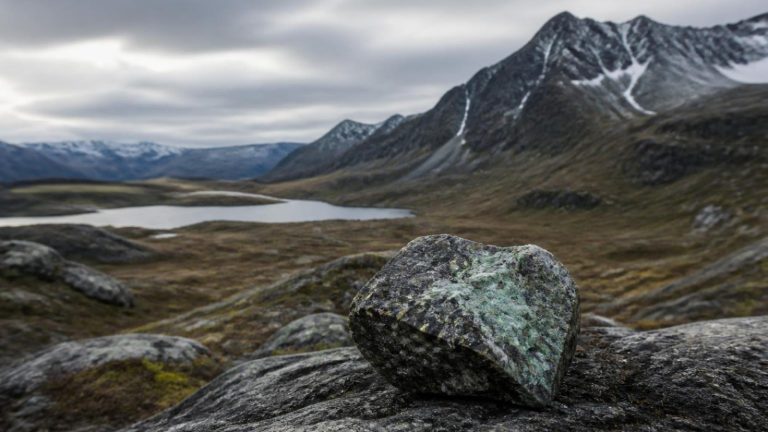
    Teako Minerals Corp. has officially commenced its 2026 field program at the Tynset copper-zinc-silver (Cu-Zn-Ag) volcanogenic massive sulphide (VMS) project located in central Norway. This initiative aims to enhance the company’s existing geological datasets and establish high-priority drill targets in the Storbekken Priority 1 target area. The field program will encompass detailed geological mapping, systematic sampling, and an Induced Polarization (IP) geophysical survey, with the first diamond drilling expected to begin between Q4 2026 and Q1 2027.

    In addition to the fieldwork, Teako has expanded the Tynset Project by securing four new exploration licenses that cover the high-priority Nonsvola and Vingelen target areas, thereby increasing the strike length of the prospective volcanic belt. The company has engaged Geovisor Oy to conduct approximately 10 line kilometres of IP surveying, set to commence in mid-October 2026, which will play a crucial role in refining drill targets.

    The 2026 field program is designed to improve the understanding of the geological and structural characteristics of the area, focusing on the identification of key lithological contacts and the characterization of mineralized outcrops. The integration of geochemical and spectral data will enhance the interpretation of geophysical results, ultimately guiding the drilling efforts towards the most promising areas.

    The Tynset Project, which is 100% owned by Teako, spans 121 square kilometres and includes 14 granted exploration claims. It is strategically located near established infrastructure, including a railway and national road, facilitating access to deep-sea ports. Historical data from previous exploration efforts indicate a favourable geological setting for Cu-Zn-Ag VMS mineralization, with significant soil and stream sediment anomalies suggesting the potential for new discoveries.

    Teako’s commitment to leveraging advanced exploration technologies and strategic partnerships underscores its goal of addressing the increasing demand for critical minerals while delivering value to shareholders. The company’s focus on the Tynset Project, alongside its broader portfolio of over 60 projects in Norway, positions it well within the competitive landscape of mineral exploration and development.

  • Kazakhstan’s Kazcink Reports Decline in Profit Despite Increased Revenue

    Kazakhstan’s Kazcink Reports Decline in Profit Despite Increased Revenue

    Kazakhstan’s mining giant, Kazcink, has reported a decline in profitability for the first half of 2026, despite an increase in revenue. According to the financial report from Glencore, the Anglo-Swiss commodity group that controls nearly 70% of Kazcink’s shares, the company’s adjusted EBIT fell to $301 million, down from $387 million during the same period last year. Revenue for the first half of 2026 reached $2.458 billion, a slight increase from $2.393 billion in the first half of 2025.

    The increase in revenue can be attributed to higher prices for key metals produced by Kazcink, including zinc and gold, although gold prices have seen a slight decline since early spring. However, the company experienced a reduction in production volumes for both its own and third-party zinc, with a more significant drop in precious metal output. Additionally, a new progressive mineral extraction tax (NDT) on gold, based on price levels, is expected to further impact Kazcink’s profitability this year.

    Kazcink’s adjusted EBITDA for the reporting period was $588 million, significantly lower than the $708 million reported in the same timeframe last year. The company’s depreciation costs also decreased to $287 million from $321 million in the previous year. Furthermore, capital expenditures saw a dramatic reduction of over 50%, falling to $145 million compared to $340 million in the first half of 2025.

    Glencore’s report highlighted a recovery from a $99 million impairment on the Zhairem project, reflecting improved operational performance and more optimistic price forecasts for zinc. In contrast, the Zhairem mining and processing plant reported a loss of $25 million last year, despite generating $307 million in sales.

    Overall, Glencore’s financial performance for the first half of 2026 was robust, with a net profit of $4.4 billion and a nearly twofold increase in adjusted EBITDA to $10.12 billion. The adjusted EBIT surged 3.7 times to $6.65 billion. In 2025, Kazcink reported a net profit of $771 million on revenues of $5.069 billion, indicating a challenging year ahead for the company amidst fluctuating metal prices and production challenges.


  • Hongda Group Plans Major Lead and Zinc Project in Kazakhstan

    Hongda Group Plans Major Lead and Zinc Project in Kazakhstan

    Hongda Group is set to embark on a significant investment project in Kazakhstan, which could potentially surpass Kazcink and emerge as the largest producer of lead and zinc in Central Asia. Following a working visit by the First Deputy Prime Minister of Kazakhstan, Nurlan Naliyev, to the Kyzylorda region, attention has been drawn to this ambitious yet relatively low-profile project in the country’s mining and metallurgy sector. The project, valued at $1.3 billion, aims to establish two underground mines and two processing plants with a combined capacity of 8 million tonnes of ore per year, alongside a full-cycle metallurgical plant, creating over 3,000 jobs in the process.

    The project will focus on the Talap and Burabay-Zhalgyzagash deposits, located just 20 kilometres apart. The Burabay-Zhalgyzagash site will be developed through underground mining to a depth of 500 metres. Both deposits are part of the Akuyuk-Maidantal lead-zinc ore district in the Karatau region, which also houses the largest deposit in the area, Shalkiya. Initial exploration activities took place between 1980 and 1985, with detailed surveys conducted from 2010 to 2012. The reserves are classified under category C2, with forecasted resources rated as P1, showing an average content of 2.01% zinc and 1.62% lead, with geologists noting the potential for resource growth at greater depths.

    Investors have indicated that the metallurgical plant will have the capacity to produce 420,000 tonnes of zinc and 220,000 tonnes of lead annually, totalling 640,000 tonnes of metals. In comparison, Kazcink is projected to produce 251,800 tonnes of zinc and 76,700 tonnes of lead by 2025. Upon reaching its designed capacity, the new complex could produce 66.8% more zinc and 2.87 times more lead than Kazcink. If the project proceeds as planned, it stands to become the largest lead and zinc producer in Central Asia. Notably, the Chinese investors have already invested approximately 9 billion tenge in geological exploration, operating 15 drilling rigs simultaneously. While official reserves have yet to be disclosed, the scale of drilling and the proposed processing capacity suggest a substantial resource base. An official groundbreaking ceremony is expected later this year, reflecting a commendable approach where significant funds are first allocated for geological exploration to confirm resource viability before committing to the construction of a large-scale mining and metallurgical complex.


  • LME Introduces Streamlined Listing Process for New Metal Brands

    LME Introduces Streamlined Listing Process for New Metal Brands

    The London Metal Exchange (LME), the world’s oldest and largest industrial metals exchange, has announced a proposal to expedite the listing process for new metal brands. This initiative aims to enhance the efficiency of the exchange and strengthen its physical market infrastructure, as outlined in a recent consultation paper. The LME is currently seeking feedback from its members regarding several key proposals, including the introduction of indelible markings for aluminum, zinc, and lead, as well as the possibility of allowing the outdoor storage of primary aluminum in Hong Kong.

    One of the most significant changes proposed is the reduction of the minimum production period required before a brand listing application can be considered. Currently set at 12 months, this period would be cut to six months for most metals, including aluminum, lead, zinc, nickel, and tin. For copper, producers would still need to demonstrate six months of production before applying, but the timeline for Stage Two testing would remain at 12 months. This adjustment is expected to facilitate quicker entry for new producers into the market, thereby increasing competition and potentially benefiting consumers.

    Additionally, the LME is considering allowing primary aluminum to be stored outdoors in Hong Kong, a move that could alleviate storage constraints that have previously hampered aluminum arbitrage between mainland China and the LME warehouse network. The exchange is also proposing that new brands and shapes of primary aluminum, lead, and zinc carry permanent production cast markings to prevent issues arising from damaged or detached labels. These proposals are part of the LME’s ongoing efforts to modernise its operations and maintain its position as a leading player in the global metals market.


  • Hongda Group Plans Major Lead and Zinc Project in Kazakhstan

    Hongda Group Plans Major Lead and Zinc Project in Kazakhstan

    Hongda Group is set to embark on a significant investment project in Kazakhstan that could surpass Kazcink, positioning itself as the largest producer of lead and zinc in Central Asia. The initiative, valued at $1.3 billion, was highlighted during a recent visit by Kazakhstan’s First Deputy Prime Minister, Nurlan Naliyev, to the Kyzylorda region. The project entails the construction of two underground mines and two processing plants in the Zhanakorgan district, with a combined capacity of 8 million tonnes of ore per year, alongside a full-cycle metallurgical plant. This development is expected to create over 3,000 jobs, contributing significantly to the local economy.

    The project will focus on the Talap and Burabay-Zhalgyzaghash deposits, located approximately 20 km apart. The Burabay-Zhalgyzaghash site will be developed using underground mining techniques to a depth of 500 meters. Both deposits are part of the Akuyuk-Maidantal lead-zinc ore district in the Karatau region, which is also home to the largest deposit in the area, Shalkiya. Initial exploration activities in this region took place between 1980 and 1985, with detailed surveys conducted from 2010 to 2012. The estimated reserves are classified as C2, with forecasted resources rated as P1. Geologists have noted an average zinc content of 2.01% and lead content of 1.62%, with potential for resource growth at depth.

    Investors have indicated that the metallurgical plant will have an annual output of 420,000 tonnes of zinc and 220,000 tonnes of lead, totalling 640,000 tonnes of metals. In comparison, Kazcink is projected to produce 251,800 tonnes of zinc and 76,700 tonnes of lead by 2025. Upon reaching full operational capacity, the new complex could produce 66.8% more zinc and nearly three times the amount of lead than Kazcink. If the project meets its outlined parameters, it stands to become the largest lead and zinc producer in Central Asia. Notably, the Chinese investors have already committed around 9 billion tenge to geological exploration, operating 15 drilling rigs simultaneously. Although official reserves have yet to be disclosed, the scale of drilling and the proposed processing capacity suggest a substantial resource base. An official groundbreaking ceremony is anticipated later this year, marking a significant step in the development of this ambitious project.


  • Kazakh Scientists Develop Near Zero-Waste Technology for Processing Complex Polymetallic Ores

    Kazakh Scientists Develop Near Zero-Waste Technology for Processing Complex Polymetallic Ores

    Specialists from Kazakhstan’s National Center for Integrated Processing of Mineral Raw Materials have developed and successfully tested an advanced technology for processing complex polymetallic ores from the Shalkiya and Zhairem deposits.

    According to Kazakhstan’s Ministry of Industry and Construction, traditional mineral processing methods remain highly inefficient, with up to 90–95% of processed material ending up as waste while valuable components are lost. The newly developed technology is designed to maximize raw material utilization and significantly reduce tailings volumes.

    The key innovation lies in the carbothermic processing of lead-zinc ores with high silicon content using ore-thermal furnaces. Under conventional processing schemes, silica is discarded into tailings storage facilities. The new method instead converts silica into marketable ferroalloys, while lead and zinc transition into the gas phase for subsequent concentration and extraction.

    Pilot-industrial testing was conducted using furnaces with capacities ranging from 80 to 630 kVA. The process produced:

    • Ferrosilicon grades FS45, FS65 and FS75

    • Ferrosilicoaluminum

    • Aluminosilicomanganese

    • New calcium- and magnesium-containing ferroalloys

    Researchers also focused on processing lead-zinc sublimates. As a result, they obtained:

    • High-purity zinc (grade TsV0)

    • Magnesium compounds

    • Tribasic lead sulfate

    • Advanced composite electrochemical coatings with high corrosion resistance

    The developers describe the project’s main achievement as the creation of an almost waste-free processing scheme. Unlike conventional methods, where silicon is entirely lost in enrichment tailings, the new technology converts it into commercial products. More than 99% of lead and zinc are transferred into concentrated form.

    The research team has secured more than 10 patents covering the new solutions for difficult-to-process ores. Technical specifications have also been prepared for designing ferroalloy production facilities and complexes for processing sublimates. Preliminary calculations indicate that product value generated per unit of cost could more than double compared with existing processing technologies.

  • Avrupa Minerals Confirms 6.5 Million Tonne Copper-Zinc Resource at Portugal’s Sesmarias Project

    Avrupa Minerals Confirms 6.5 Million Tonne Copper-Zinc Resource at Portugal’s Sesmarias Project

    Initial mineral resource estimate for the Iberian Pyrite Belt deposit grades 2.9% zinc and 0.6% copper, with exploration upside targeting a doubling of the resource through further drilling.

    4 June 2026TSX-V: AVUSource: Avrupa Minerals Ltd. press release, 3 June 2026

    Avrupa Minerals Ltd. has published its first NI 43-101-compliant mineral resource estimate (MRE) for the Sesmarias copper-zinc project in northern Portugal, reporting a total inferred resource of 6.5 million tonnes grading 2.9% zinc, 1.2% lead, 0.6% copper, and 35 grams per tonne silver — equivalent to a copper equivalent (CuEq) grade of 2.2%, or a zinc equivalent (ZnEq) of 6.2%. The estimate was compiled by SLR Consulting’s Frank Browning and carries an effective date of 1 May 2026.

    The project sits within the Iberian Pyrite Belt (IPB), one of the world’s most productive volcanic-hosted massive sulphide (VMS) districts, stretching across southern Spain and Portugal. Sesmarias lies in the northern portion of the belt and hosts polymetallic mineralisation within a synformal fold structure with a known strike length of at least 1,700 metres.

    “The study supports the vitality of the mineralisation and provides clear encouragement for prioritised drilling in all zones at Sesmarias to potentially increase the size of the deposit.” — Paul W. Kuhn, President & CEO, Avrupa Minerals

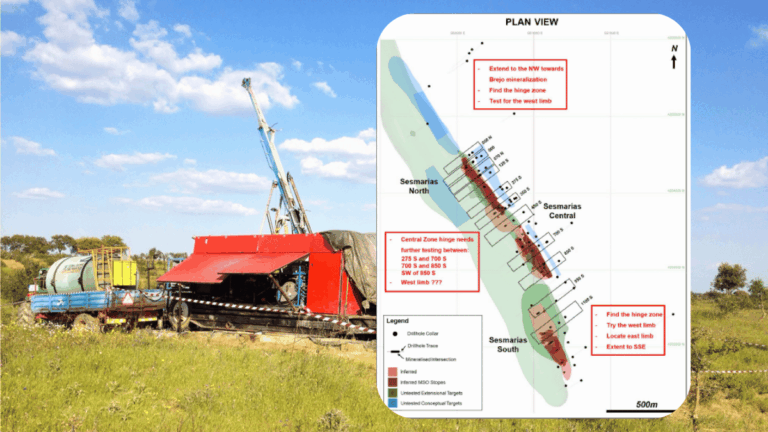
    The resource is classified entirely as inferred and is broken into four zones. The Central Zone, at 2.2 million tonnes grading 3.4% zinc and 0.9% copper, carries the highest average grades in the deposit and accounts for 76,000 tonnes of contained zinc metal. The North and South zones each contribute approximately 1.9–2.1 million tonnes at lower but still material grades.

    The resource is classified entirely as inferred and is broken into four zones. The Central Zone, at 2.2 million tonnes grading 3.4% zinc and 0.9% copper, carries the highest average grades in the deposit and accounts for 76,000 tonnes of contained zinc metal. The North and South zones each contribute approximately 1.9–2.1 million tonnes at lower but still material grades.

    Table: Sesmarias initial mineral resource estimate by zone (4.0% ZnEq cut-off grade)

    Zone Tonnage (Mt) Zn (%) Pb (%) Cu (%) Ag (g/t) ZnEq (%) CuEq (%)
    Central 2.2 3.4 1.6 0.9 48 8.1 3.0
    Upper Central 0.3 2.3 1.2 1.3 37 7.4 2.7
    North 1.9 2.5 1.0 0.4 33 5.0 1.8
    South 2.1 2.9 0.9 0.3 23 4.9 1.8
    Total 6.5 2.9 1.2 0.6 35 6.2 2.2

    Alongside the MRE, SLR completed an independent assessment of exploration potential identifying seven drill targets beyond the current resource footprint — two extensional (E1, E2) and five conceptual (C1–C5). The extensional targets pursue down-plunge continuations of the Central and South zones, while the conceptual targets test largely undrilled portions of the synform’s hinge and west limb, where structural models suggest additional massive sulphide lenses may exist. SLR’s sensitivity analysis shows that at a 3% ZnEq cut-off, the deposit could contain up to 10.6 million tonnes grading 5.1% ZnEq — though that figure is not a declared mineral resource.

    The company has initiated a mining licence application for the Sesmarias deposit and is seeking a joint-venture partner to fund the next drilling campaign and advance the project through pre-feasibility studies. First-priority drilling will target the Central Zone hinge and west limb between sections 275 S and 700 S, where moderate existing drill density has left the synform’s geometry incompletely characterised. Near-term exploration success in the Central and North zones is expected to inform the sequencing of work in the more geologically complex Southern Zone.

    Avrupa Minerals trades on the TSX Venture Exchange (AVU), the US OTC market (AVPMF), and the Frankfurt Stock Exchange (8AM). The company also holds the 100%-owned Alvalade VMS project in Portugal and a 49% stake in the Slivova gold project in Kosovo.

  • TETHYS and Hartree Announce Life‑of‑Mine Offtake Agreement for the Cataltepe Polymetallic Project in Türkiye

    TETHYS and Hartree Announce Life‑of‑Mine Offtake Agreement for the Cataltepe Polymetallic Project in Türkiye

    TETHYS, a Turkish-incorporated critical minerals and strategic infrastructure platform with projects across Eurasia, and Hartree Metals LLC, a subsidiary of the global commodities firm Hartree Partners LP — a leading independent commodities trading and asset management company — have entered into a life-of-mine offtake and commercial prepayment arrangement to support concentrate exports from the Cataltepe polymetallic mining project in north-western Türkiye.

    The agreement establishes a long-term commercial partnership between the two companies, anchored on the Cataltepe operation. Production from the mine is expected to be processed at the Kalkım flotation facility, generating zinc, lead, and copper concentrates for export to international smelting markets.

    Under the arrangement, Hartree Metals has provided a commercial advance payment to support the restart of operations and ongoing production activities, and will purchase and export 100% of the zinc, lead, and copper concentrates produced for the life of the operation. Production at Cataltepe is expected to commence shortly, with monthly shipments increasing progressively as operations ramp up.

    The transaction demonstrates a shared commercial understanding of the project and a mutual commitment to establishing reliable concentrate supply chains in Türkiye. For TETHYS, the agreement represents the commercial activation of its flagship Turkish operation and a significant milestone in its broader strategy to develop a multi-country portfolio of critical mineral assets across Eurasia. For Hartree Metals, it signifies a deepening of its commercial engagement with Türkiye’s expanding mining sector.

    Prof. Dr Leyla Keser, Chairperson of TETHYS Gateway Trading LLC, said: “The Cataltepe offtake agreement is a landmark transaction for TETHYS and a strong endorsement of the project’s commercial potential. We are delighted to be partnering with Hartree Metals as our long-term trading partner and look forward to building on this relationship as TETHYS continues to develop its portfolio of mineral assets across the region.”

  • Kyrgyzstan Unveils Critical Minerals Strategy at MINEX Eurasia Conference in London

    Kyrgyzstan Unveils Critical Minerals Strategy at MINEX Eurasia Conference in London

    London, 1 December 2025 – The MINEX Eurasia conference in London hosted a keynote address by H.E. Meder Mashiev, Minister of Natural Resources, Ecology, and Technical Supervision of Kyrgyzstan, outlining the country’s strategic vision for its critical minerals sector.

    Kyrgyzstan’s Strategic Minerals Vision

    The Minister outlined Kyrgyzstan’s methodical approach to prioritising and developing its critical minerals sector, identifying 21 key minerals based on global demand, local deposits, and resource concentrations. Kyrgyzstan’s analysis resulted in the selection of 4 priority projects, 5 promising deposits, and 16 prospective areas for further study and development. These assets, spread across antimony, beryllium, rare earths, molybdenum, bismuth, zinc, silver, and others, offer significant commercial and strategic potential for investors and end-users in energy, electronics, and high-value manufacturing.

    Investment and Development Framework

    State companies, notably Kyrgyzgeology, are driving exploration and project development, supported by government incentives and openness to international partnership. Strategic sites are being actively promoted for joint ventures or direct investment. Major domestic and international firms manage several large sites, while more than 100 mining enterprises operate in the country—spanning gold, copper, and polymetallic ores.

    Tax and Licensing Regime

    The session detailed Kyrgyzstan’s tax policy, which includes a mix of one-time bonuses for mining rights, royalties, profit tax, and VAT. The overall effective tax burden stands between 25–30%, complemented by social and environmental levies such as waste disposal, emissions, and water usage fees. Procedures for subsoil use licensing are harmonized with those in neighbouring countries, with initiatives being considered to simplify the processes and make it more transparent.

    ESG, Transparency, and Sustainable Mining

    Kyrgyzstan’s evolving strategy strongly emphasizes environmental, social, and governance (ESG) standards, aiming to foster responsible mineral development, minimize ecological impact, ensure transparency, and maximize benefits for local communities. The new strategy promotes the deployment of advanced technologies, environmental sustainability, and transparent investment processes, aligning with best practices to attract reliable, long-term partners.

    Opportunities for International Partnership

    Kyrgyzstan welcomes active collaboration with global investors and mining enterprises, seeking to leverage modern mining technologies, improve environmental outcomes, and maximize economic benefits. The country’s critical mineral strategy is closely linked to green growth targets and broader Eurasian supply chain integration.