Tag: Ukraine

  • Ukraine: A Potential Key Player in the Global Critical Raw Materials Race?

    Ukraine: A Potential Key Player in the Global Critical Raw Materials Race?

    In a recent statement, U.S. Secretary of State Marco Rubio provided a clear outlook on the future of American policy regarding critical raw materials. As global supply chains for these materials continue to shift, Ukraine’s vast reserves of key minerals could play a pivotal role in reshaping the global balance of power, particularly in the ongoing confrontation between the U.S. and China.

    Rubio highlighted several critical materials essential for advanced technology, renewable energy, and national security, including neodymium, dysprosium, lithium, cobalt, nickel, and titanium. Remarkably, Ukraine is home to abundant reserves of these very materials—and more. With its substantial deposits of germanium and gallium, Ukraine is positioned to be a critical player in the global supply of strategic resources.

    A Treasure Trove of Critical Materials

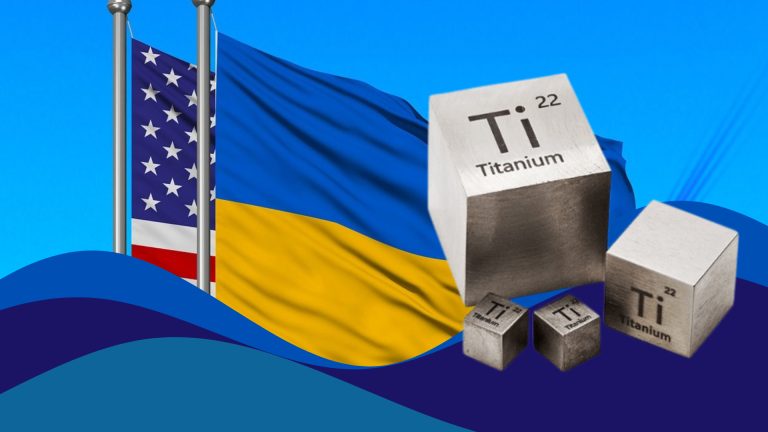
    • Titanium Ore (Ilmenite): Ukraine ranks 11th in the world for ilmenite reserves, found in the Irshanske, Byrzulivske, and Malyshevske deposits across the Zhytomyr, Kirovohrad, and Dnipropetrovsk regions. Titanium is vital for aerospace, defense, and high-tech manufacturing.
    • Lithium: As a key component in batteries, particularly for electric vehicles and renewable energy storage, Ukraine holds 1% of the world’s lithium reserves—equivalent to 30% of Europe’s supply. Major deposits can be found in Polokhivske (Kirovohrad region) and Balka Kruta (Zaporizhzhia region). The strategic importance of lithium was recently highlighted by China’s attempts to use the resource as leverage in international relations.
    • Germanium and Gallium: Crucial for electronics and telecommunications, these materials are abundant in Ukraine’s coal and lignite deposits in the Donetsk and Lviv-Volyn basins. Before the full-scale war, Ukraine was the world’s third-largest exporter of germanium, although exports have been halted due to the ongoing conflict. Ukraine’s reserves of these rare metals remain a critical asset for global tech industries.
    • Rare Earth Elements (Neodymium and Dysprosium): Located in the Zhytomyr region, these elements are indispensable in the production of magnets for electric vehicles, wind turbines, and high-tech equipment.
    • Nickel and Cobalt: Essential for battery production, Ukraine’s nickel and cobalt reserves are also noteworthy, found in deposits like Devladivske (Dnipropetrovsk region), Lypovenkivske (Kirovohrad region), and Dereniukhivske (Mykolaiv region). While the reserves are smaller compared to other countries, they still contribute to Ukraine’s strategic importance.
    • Manganese and Iron: Ukraine is a major global player in manganese and iron ore production, with significant deposits in the Nikopol Manganese Basin and the Kryvyi Rih Iron Ore Deposit. These resources are fundamental to the global steel and metallurgy industries.

    Ukraine’s Growing Role in Global Supply Chains

    As the global supply chain for critical raw materials becomes increasingly volatile, especially with rising tensions between the U.S. and China, Ukraine has the potential to become a key partner for the U.S. in securing access to these vital resources. With its diverse array of minerals and metals, the country offers not only essential raw materials but also strategic geopolitical leverage in a rapidly changing world order.

    The country’s natural resources, coupled with its strategic location in Europe, make it a valuable partner for countries looking to diversify their supply chains and reduce reliance on China.

    By prioritising partnerships with the U.S. and other nations, Ukraine can play a pivotal role in shaping the future of critical materials and ensure its place as a key player in the global economy.

    The Road Ahead

    The ongoing geopolitical shifts present an opportunity for Ukraine to position itself as a leading supplier of critical materials. With strategic investments in its mining and extraction sectors, Ukraine can not only boost its economy but also secure its place in the new global order. Now more than ever, the world needs Ukraine’s resources, and Ukraine is ready to take center stage.

  • Ukraine’s President Extends Moratorium on State Mine Bankruptcies Through 2026

    Ukraine’s President Extends Moratorium on State Mine Bankruptcies Through 2026

    President Volodymyr Zelenskyi has signed legislation extending protections for state-owned mines in Ukraine, preventing their bankruptcy through January 1, 2026. The measure aims to preserve critical energy infrastructure during challenging times.

    The legislation, formally known as Bill No. 12220 “On some amendments to laws of Ukraine on restoration of solvency of certain state enterprises in critical condition in the sphere of energy,” received presidential approval on 29 January 2025, following its passage by the Verkhovna Rada on 14 January 20205.

    This protective measure specifically targets state enterprises in the energy sector that are experiencing financial difficulties, implementing a moratorium on bankruptcy proceedings. The law represents a strategic move to maintain stability in Ukraine’s energy sector by preventing the liquidation of state-owned mining operations.

    The extension of the moratorium underscores the government’s commitment to preserving its domestic energy production capabilities and protecting strategic state assets during a period of significant challenges for the country’s industrial sector.

  • Critical Raw Materials: A Catalyst for Ukraine’s Economic Transformation

    Critical Raw Materials: A Catalyst for Ukraine’s Economic Transformation

    Ukraine’s abundant deposits of critical raw materials could serve as a key driver for its economic growth and global market integration, according to We Build Ukraine co-founder Oleksandr Kubrakov.

    Kubrakov points out that the current closed nature of Ukraine’s mining sector poses a major challenge for investors. He recommends several reforms: aligning Ukraine’s mineral reporting standards with international frameworks, streamlining land acquisition for mining operations, and introducing industry incentives. He also emphasizes the need to digitize geological data, particularly through AI technology, to make it more accessible.

    Beyond just extraction, Kubrakov envisions developing comprehensive value chains – from building infrastructure to establishing local processing facilities and manufacturing finished products, such as electric vehicle components and medical-grade titanium items.

    The country holds impressive positions globally in terms of mineral reserves, ranking eighth in coal, fifth in iron ore, and fourth in manganese ore (a crucial element in glass, ceramic, and steel production).

  • Metinvest Suspends Pokrovsk Coal Operations Amid Security and Supply Challenges

    Metinvest Suspends Pokrovsk Coal Operations Amid Security and Supply Challenges

    Metinvest Mining and Metallurgical Group has officially announced the suspension of operations at its Pokrovsk Coal Group due to the worsening situation on the frontline and ongoing electricity shortages. The company is implementing a contingency plan to secure the necessary raw materials for steel production. This includes sourcing coking coal from the U.S.-based United Coal Company and increasing coal reserves, along with securing additional supplies from third-party vendors.

    Metinvest is also focused on safeguarding its employees, providing evacuation support for Pokrovsk Coal Group workers and their families. Those not directly involved in the shutdown process are being offered retraining and opportunities for employment at other Metinvest assets across Ukraine. Financial assistance, housing support, and enrollment for children in schools and kindergartens are also being provided to the affected families. The company remains committed to resuming operations once the security situation stabilizes and Ukraine’s territorial integrity is restored.

  • Ukraine Needs Security Guarantees to Attract Investment in Industry and Mining

    Ukraine Needs Security Guarantees to Attract Investment in Industry and Mining

    To attract investments in industrial production and the lithium and uranium deposits, Ukraine requires security guarantees, says the CEO of Metinvest.

    2025 must become the year of economic recovery, stated Metinvest’s General Director, Yuriy Ryzhenkov.

    For investments in industrial production and mineral resources, security guarantees are needed to attract international investments in key industries. This will provide the country with new jobs and technological opportunities, according to Yuriy Ryzhenkov, the CEO of Metinvest.

    He emphasised that building a people-centric business, where employee and community well-being take precedence over financial success, is crucial for Ukraine’s recovery.

    “We already have over 1,000 veterans and are ready to train anyone interested in jointly building an economically stable and peaceful Ukraine. Victory efforts are being made by workers maintaining production, mobilized soldiers in the armed forces, and even women, some as young as 19, working in mines,” said Ryzhenkov.

    Since the start of the full-scale invasion, Metinvest has directed 8 billion UAH to aid Ukraine and its citizens, according to the company’s website. Of this, 4.4 billion UAH has been allocated for military needs under the “Steel Front” initiative.

  • Canadian Mining Company Black Iron Advances Iron Ore Project in Ukraine

    Canadian Mining Company Black Iron Advances Iron Ore Project in Ukraine

    Canadian mining company Black Iron Inc. has initiated the process of obtaining permits for iron ore extraction under its Shimanovskoye Iron Ore Project in Kryvyi Rih, Ukraine. According to documents obtained by Interfax-Ukraine, the company’s subsidiary, Shimanovskoye Steel LLC, has applied for authorization to mine iron ore from the northern section of the Shimanovskoye open pit.

    The proposed open-pit mine will span 660 by 390 meters and reach a depth of 80 meters, with plans to extract 4.5 million tons of ore annually. The total overburden volume is estimated at 5.13 million cubic meters, including 1.31 million cubic meters of ore. The project will operate year-round, leveraging nearby infrastructure, including rail, power, and port facilities.

    Black Iron has prioritized this venture through an investment agreement with the Ukrainian government. A critical hurdle remains obtaining a land plot managed by Ukraine’s Ministry of Defense, though discussions have progressed, and a preliminary compensation amount has been agreed upon.

    The company is also exploring additional potential projects and has a history of partnerships, including a 2013 agreement with Ukraine’s Metinvest group. While Metinvest later withdrew from the project, Black Iron continued development, citing the region’s rich resources and existing mining operations, such as ArcelorMittal’s iron ore complex, as key advantages.

    The Shimanovskoye Iron Ore Project is designed to produce premium iron ore with an iron content above 68%. Initial capital investment is estimated at $452 million for the first phase and $364 million for the second, with plans to build a plant capable of producing up to 8 million tons annually.

  • Ferrexpo Shares Surge as Trump’s Victory Fuels Speculation on Ukraine Peace Prospects

    Ferrexpo Shares Surge as Trump’s Victory Fuels Speculation on Ukraine Peace Prospects

    Ferrexpo PLC (LSE), a Ukraine-based iron ore miner, experienced a sharp rise in its stock price, soaring by 22% to 76p following Donald Trump’s unexpected win in the U.S. presidential race. Analysts suggest the rally reflects investor optimism that Trump’s promise to end the Russia-Ukraine war could soon bring stability to Ukraine. Despite ongoing conflict, Ferrexpo has managed to sustain its mining operations. Ukrainian President Volodymyr Zelenskyy also congratulated Trump, expressing hopes for continued bipartisan support from the U.S. under his leadership.

  • Western Nations Urged to Sever Ties with Russia’s Nuclear Giant Rosatom

    Western Nations Urged to Sever Ties with Russia’s Nuclear Giant Rosatom

    Despite Rosatom’s involvement in Russia’s occupation of Ukraine and its significant role in expanding the Kremlin’s global influence, some Western countries continue to engage in business with the state nuclear corporation. Rosatom has been instrumental in the capture and management of Ukrainian nuclear facilities, including the Chornobyl Exclusion Zone and the Zaporizhzhia Nuclear Power Plant (ZNPP), which was seized by the Russian military in March 2022. With Rosatom staff actively involved in the plant’s operations under Russian supervision, there have been credible reports of the company playing a complicit role in detention and torture of Ukrainian workers at the ZNPP.

    Rosatom’s influence extends beyond Ukraine. It remains a key supplier of nuclear material and technology to countries worldwide, including EU and NATO members. Despite recent US sanctions and European efforts to diversify, Rosatomcontinues to supply 38% of enrichment services to European utilities, while countries like Hungary and Francemaintain contracts with the company.

    The ongoing reliance on Rosatom by Western countries raises concerns over both moral dissonance and energy security. Cutting ties with Rosatom is not only necessary to align support for Ukraine with action but is also crucial to curb Moscow’s long-term political influence via the nuclear sector. With Rosatom’s growing presence in key projects such as the Akkuyu Nuclear Power Plant in Turkey and the Hungarian reactors, experts argue that the time has come for Western nations to step up their efforts to replace Russian nuclear technology and fuel with viable alternatives.

  • BGV Group Management Promotes British-Ukrainian Mining Partnership in London

    BGV Group Management Promotes British-Ukrainian Mining Partnership in London

    On March 26, BGV Group Management, one of Ukraine’s largest investment companies, showcased cooperation opportunities with Ukraine in the mining sector at a prestigious event in London. Founder Gennadii Butkevych and the management team were invited to join British parliamentarians, members of the House of Lords, and state ministers at the Houses of Parliament to discuss investment prospects in Ukraine. The focus was on fostering British-Ukrainian collaboration in critical minerals mining to facilitate the UK’s advancement in technology and its transition to clean energy.

    The event witnessed the participation of Lord Martin Callanan, Under Secretary for Energy Efficiency and Green Investment at the Department for Energy Security and Net Zero, and Bob Seely MP, alongside representatives from Ukrainian business entities.

    During their address, the BGV team outlined three key areas for bilateral development:

    1. Exploration of Ukraine’s Mining Potential: Highlighting Ukraine’s abundance of critical minerals essential for advanced technologies and clean energy transition. With over 117 mineral types discovered, including 22 out of 30 critical resources identified by the EU, Ukraine possesses substantial reserves of minerals like beryllium, zirconium, titanium, rare earths, and graphite, strategically located with favorable logistics.
    2. Risk Mitigation: Emphasizing the necessity of war risk insurance to safeguard foreign investments in Ukraine. The Multilateral Investment Guarantee Agency (MIGA) and other international entities offer insurance mechanisms to support investments in Ukrainian projects.
    3. Investment Opportunities: Encouraging increased British investment in Ukrainian mining. BGV Group, with over $100 million invested in Ukrainian mining projects, expressed readiness to collaborate with British investors. Projects such as the Balakhiv graphite production complex and the Perzhansk beryllium deposit were presented as potential areas for investment.

    The BGV team stressed that collaboration in critical minerals could provide Britain with a robust resource base for various industries, including medicine, automotive, technology, aerospace, while reducing European dependence on Chinese minerals.

  • Ukrainian Iron Ore Industry Shifts Towards High-Quality Concentrate Production

    Ukrainian Iron Ore Industry Shifts Towards High-Quality Concentrate Production

    Amidst the global push for green steel production, Ukrainian mining and processing plants are urged to enhance the quality of iron ore concentrate, transitioning to higher iron content levels, reports UAprom. This call to action was underscored during the “Iron Ore Deposits of Ukraine: Current Problems and Development Prospects” international conference held at the Taras Shevchenko National University of Kyiv on March 21-22, where leading scientists and industry representatives convened.

    Yelena Belan, an expert on iron ore production at Metinvest Group, emphasized the importance of meeting market quality requirements to avoid losing opportunities for product sales and enterprise capacity.

    Ensuring consistent high-quality products with elevated iron content positions Ukrainian enterprises to lead the green modernization of Europe and integrate into the global green metallurgy system.

    Despite the use of low-grade ores with approximately 30% total iron content, Ukrainian iron ore industry relies on extensive processing methods such as crushing, grinding, magnetic separation, flotation, and dewatering to upgrade these ores. The resultant magnetite concentrate with 64-68% iron content undergoes fundamental qualitative changes, making it significantly different from the original ore, noted experts from the Institute of Geology at Taras Shevchenko National University of Kyiv.

    Concerns regarding the tax treatment of deep processing were also addressed, with experts asserting that magnetite concentrate represents a distinct product compared to the original ore. This sentiment was echoed by scientists from the Semenenko Institute of Geochemistry, Mineralogy, and Ore Formation of the National Academy of Sciences of Ukraine, emphasizing the need to reconsider rent taxation policies.

    Ukraine witnessed a substantial reduction in iron ore exports in 2023, down by 26% compared to 2022, with raw material exports plummeting by 60% compared to pre-war 2021 levels. Revenues from iron ore exports for Ukrainian companies also experienced a significant decline.

    Major iron ore producers in Ukraine include Ingulets GOK, Kryvyi Rih Iron Ore Plant, Poltava Mining, Northern GOK, Central GOK, Southern GOK, ArcelorMittal Kryvyi Rih, and Sukha Balka.