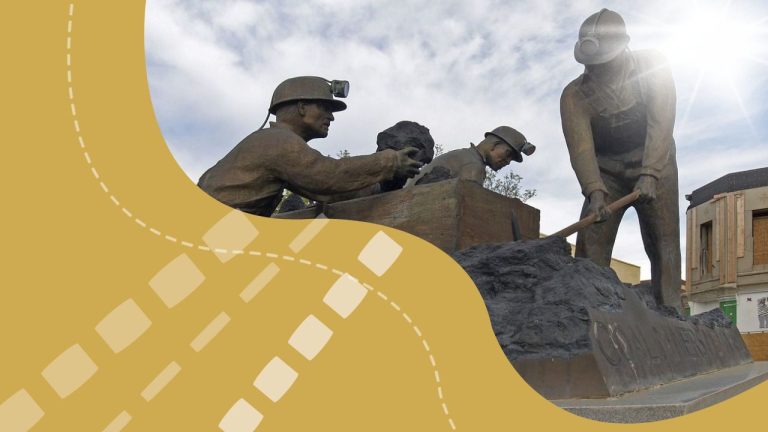
Tag: Turów coal mine

  • EU Court Advisor Says Commission Wrongly Deducted €68M from Poland Over Turów Mine Dispute

    EU Court Advisor Says Commission Wrongly Deducted €68M from Poland Over Turów Mine Dispute

    The European Commission improperly withheld over €68 million from Poland’s EU funding in connection with the Turów coal mine dispute, according to a preliminary opinion issued Thursday by Advocate General Juliane Kokott of the EU Court of Justice.

    The legal dispute began in 2021 when Czechia filed a case against Poland, citing environmental and public health risks stemming from operations at the Turów coal mine, located near the Czech border. In response, the EU court ordered an immediate halt to mining. When Poland continued operations, the court imposed a daily fine of €500,000, which accumulated between 20 September 2021 and 3 February 2022.

    However, Thursday’s advisory opinion argues that a 2022 bilateral agreement between Poland and Czechia retroactively nullified the interim court measures and, by extension, the financial penalties. Under the agreement, Poland paid €45 million in compensation and agreed to implement environmental safeguards aimed at mitigating the mine’s cross-border impact.

    “The amicable agreement between the Czech Republic and Poland meant that the interim measures were cancelled retroactively,” Kokott wrote. “Therefore, the Commission wrongly offset the penalty payment against Poland’s claims against the EU budget.”

    While Kokott’s findings are non-binding, they are often followed by the Court of Justice in its final ruling.

  • Poland Ordered to Pay €68 Million in Fines Over Turow Coal Mine

    Poland Ordered to Pay €68 Million in Fines Over Turow Coal Mine

    Poland will have to pay €68 million in EU fines for the continued operation of the Turow coal mine despite court orders to cease operations, according to a ruling by the EU’s lower court on Wednesday, May 29.

    In 2021, the European Commission mandated the closure of the controversial Turow open-cast coal mine, located in the German-Czech-Polish border region, due to concerns that it was endangering Czech groundwater levels. When the Polish government failed to comply, the EU executive began imposing fines of €500,000 per day, deducting the amount from EU funds designated for Poland.

    Although Warsaw and Prague settled the case in February 2022, Poland attempted to retroactively cancel the fines, which had accumulated to €68.5 million, by seeking annulment in the EU’s lower chamber court. However, the court emphasized in a press release that “the removal of the case from the register does not relieve Poland of the obligation to settle the amount payable.”

    Despite the Czechs withdrawing their lawsuit, the court found that fines accrued prior to this could not be annulled to maintain their deterrent effect. The judgement was welcomed in Prague, with Czech news agency CTK quoting Petra Pinter, a lawyer involved in the case, who stated the court “has shown that European law applies equally to all states, and Poland must meet its obligation to pay the sanctions.”

    Germany’s Anna Cavazzini, a Green EU lawmaker from the region, also supported the decision, highlighting Turow’s lack of an environmental impact assessment for continued coal mining, which is planned to run until 2024, as she told public broadcaster mdr.

    Poland may appeal the judgement, potentially escalating the matter to the EU’s highest court of justice. Online platform Money.pl reports that Warsaw has already taken that step.

  • Poland’s Turów Coal Mine Closure Sparks Debate on Environmental Policy and Economic Stability

    Poland’s Turów Coal Mine Closure Sparks Debate on Environmental Policy and Economic Stability

    Poland finds itself at a critical juncture as it grapples with the impending closure of the Turów coal mine, a decision fraught with implications for both environmental sustainability and economic prosperity. Prominent Members of the European Parliament from Poland’s Law and Justice party, Anna Zalewska and Dominik Tarczyński, have vehemently opposed a recent court ruling mandating the mine’s closure, attributing it to the stringent environmental regulations of the European Green Deal. This development has ignited a heated debate, highlighting the intricate balance between judicial decisions, environmental policy, and economic interests.

    Unveiling the Controversy: Turów Mine’s Closure The closure order stems from a court decision that invalidated the environmental permit for the Turów coal mine in Poland’s Dolnośląskie region. Central to the ruling was the absence of a Polish-Czech agreement within the permit, raising concerns over the potential influence of political agendas on judicial proceedings. This decision not only raises doubts about Poland’s energy security but also triggers discussions on the judiciary’s role in shaping environmental policy amidst the backdrop of the European Green Deal’s demands.

    Political Rhetoric vs. Action: A Closer Look at the Opposition The Law and Justice party’s opposition extends beyond the mine’s closure, accusing opposition parties of hypocrisy regarding environmental concerns. They criticize what they perceive as a gap between public statements advocating for Polish farmers and energy security and actions taken in the European Parliament, particularly concerning trade policies with Ukraine. This exposes the complexities of domestic politics conflicting with international obligations, further complicating discussions surrounding the European Green Deal’s implications for Poland.

    Energy Security and Economic Interests at Stake Amidst these challenges, Zalewska and Tarczyński call for urgent measures to safeguard Poland’s energy security and economic stability. Their demands resonate with a considerable portion of the population and industry stakeholders who fear the economic fallout of stringent environmental regulations. The ongoing debate underscores the uncertainty surrounding Poland’s energy policy and its alignment with environmental sustainability objectives, posing critical questions about balancing economic growth with environmental protection.

  • Court suspends case against Poland’s Turów coal mine

    Court suspends case against Poland’s Turów coal mine

    The decision, which allows the mine to continue operating for the time being, was welcomed by the Polish government. However, the environmental groups that brought the case have expressed disappointment that the proceedings will drag on further.

    It marks the latest twist in a long-running legal battle over the mine, which has also drawn in Poland’s neighbours, the Czech Republic and Germany, whose borders are close to Turów.

    The provincial administrative court in Warsaw had yesterday been due to rule on the environmental decision that granted Turów, an open pit brown coal mine that feeds a nearby power station, a concession to operate until 2044.

    Instead, the court suspended the case because parallel proceedings before the General Directorate for Environmental Protection (GDOŚ) regarding an application from the mine’s owner – state-owned energy firm PGE – to amend the environmental decision have not been concluded.

    The judge noted that PGE recently withdrew its bid to amend the environmental decision, which led GDOŚ to discontinue proceedings. However, she stressed that, until the discontinuation becomes final and binding, the administrative court cannot rule on the legality of the permit.

    This development was welcomed by government figures, who argue that the mine and power plant in Turów are essential for Poland’s energy security.

    “The fight for Turow continues,” wrote climate minister Anna Moskwa. State assets minister Jacek Sasin called it “a key decision for Poland’s energy security”, adding that “the functioning of the mine is not threatened and the mining concession is valid until 2044”.

    Even before the ruling was issued, Moskwa had insisted that the mine would remain open whatever happened. “Obviously, regardless of this ruling and decision – because we have different experiences – Turow will not be closed. We will defend energy security,” she told Polskie Radio.

    A lawyer from one of the environmental groups that has challenged the legality of the environmental decision, Agnieszka Stupkiewicz of Frank Bold, admitted that the court had no choice but to suspend proceedings.

    However, she criticised the “scandalous” behaviour GDOŚ, saying that the agency had not kept parties in the case nor the administrative court informed of PGE’s decision to withdraw its bid to amend the environmental decision.

    Her group and other climate organisations from Poland, the Czech Republic and Germany brought their case against the environmental decision last year, arguing that there were a number of shortcomings in how it was reached, including a failure to take account of the mine’s impact on the climate.

    In July, the provincial administrative court in Warsaw ordered the environmental permit to be provisionally suspended ahead of a final ruling, finding that there is a risk of significant environmental damage.

    That decision was, however, later overturned by the Supreme Administrative Court. It meant that the mine was allowed to continue functioning until a final ruling on the environmental decision is issued by the Warsaw court.

    Meanwhile, yesterday’s decision by the court to suspend proceedings was welcomed PGE’s CEO, Wojciech Dąbrowski, who said that “Turów mine and power plant will remain one of Poland’s most important sources of energy for at least 20 years”.

    “From the very beginning, we have not recognised the legitimacy of any allegations made against the environmental decision on the Turów mine,” he added.

    His comments come just a day after PGE presented a new strategy to become carbon neutral by 2040, including abandoning the use of coal by 2030. That will be achieved in part by a government plan to transfer energy firm’s coal assets to a single, separate entity.


  • Moratorium on the open-pit mine in the Polish-German-Czech border region of Turow reapealed

    Moratorium on the open-pit mine in the Polish-German-Czech border region of Turow reapealed

    A decision by Poland’s Supreme Administrative Court to repeal a moratorium on the open-pit mine in the Polish-German-Czech border region of Turow has irked policymakers from the neighbouring eastern German state Saxony. Anna Cavazzini, member of the EU Parliament for the Green Party in Saxony, criticised the court for overturning an interim junction by a local Polish court, which in late May had ordered to stop mining at the site due to negative impacts on building stability in nearby regions in Germany and Czechia. Cavazzini said the decision was “not a good sign” for cross-border relations after the German town of Zittau and a Czech NGO had sued the mine’s operators. In contrast, Polish prime minister Mateusz Morawiecki expressed joy at the supreme court’s decision, saying that Poland has “not allowed themselves to be blackmailed by eco-terrorists from the West, particularly those from Germany”, reports the newspaper taz. The court had made the decision on the grounds that the Polish population has a right to a steady supply of energy.

    Greenpeace subsidiaries in Germany and Czechia, as well as Zittau authorities, litigated against the mine, arguing the consequences on Germany and the Czech Republic have not been properly considered. Concerns include noise pollution and a reduction of the groundwater level could result in damaging buildings. In 2021, the European Court of Justice temporarily ordered the mine to cease digging, which Poland ignored, reported German public broadcaster ARD. Morawiecki said Poland will not allow the mine to be closed and his government will do everything to ensure it can function as planned until 2044. Cavazzini, on the other hand, said the area could be a leader for Europe as a cross-border example of phasing out coal. Germany aims to phase-out the fossil fuel by 2038, though the coalition government hopes to bring that forward to 2030.

  • Polish top court overturns decision to suspend environmental approval for Turów coal mine

    Polish top court overturns decision to suspend environmental approval for Turów coal mine

    [vc_section][vc_row][vc_column width=”1/6″][/vc_column][vc_column width=”1/2″][vc_row_inner][vc_column_inner][vc_empty_space][vc_column_text]

    In a ruling welcomed by Poland’s government, the Supreme Administrative Court (NSA) has overturned the recent decision by a lower court to suspend environmental approval for a coal mine that helps produce 7% of the country’s electricity.

    [/vc_column_text][/vc_column_inner][/vc_row_inner][vc_empty_space][vc_separator][vc_empty_space height=”10px”][vc_row_inner][vc_column_inner width=”2/3″][widget-SocialWidget][/vc_column_inner][vc_column_inner width=”1/3″][link url=”https://notesfrompoland.com/2023/07/18/polish-top-court-overturns-decision-to-suspend-environmental-approval-for-turow-coal-mine/” content_text=”News source”][/vc_column_inner][/vc_row_inner][vc_empty_space][vc_column_text]Last month, the provincial administrative court in Warsaw – ruling on a legal challenge filed, among others, by a German city located near the mine and the Czech and German branches of Greenpeace – found that Turów open-cast lignite mine causes a risk of significant damage to the environment.

    That ruling was condemned by the government, which said it threatened Poland’s energy security. “A court ruling that doesn’t take into account the interest of Poles but does take into account foreign interests is unlawful,” said Prime Minister Mateusz Morawiecki.


    An appeal was filed against the lower court’s decision by the General Director for Environmental Protection, a government appointee who reports to the environment ministry; by PGE, the state-owned energy firm that runs the mine; and by the national prosecutor’s office.

    A ruling on that appeal was issued today by the NSA, which is the highest court on administrative issues. It agreed with the government’s argument, finding that the lower court had not properly taken account of the consequences of its ruling for the public interest.

    “The [NSA] emphasised that there is no doubt that energy security is a constitutional value, because it is one of the guarantees of state independence and security of citizens,” said the top court’s spokesman, Sylwester Marciniak, quoted by broadcaster TVN.

    “The Supreme Administrative Court has accepted our complaint,” celebrated climate and environment minister Anna Moskwa, outlining a list of deficiencies they had identified in the lower-court ruling.


    However, one of the organisations involved in the original legal complaint against Turów notes that the NSA ruling does not bring the case to an end.

    “Today’s ruling means only that the interim measure of suspending the enforceability of the environmental decision for the Turów mine was refused,” said Agnieszka Stupkiewicz of the Frank Bold Foundation.

    “The [lower] court will [still] decide at the end of August whether the environmental decision was issued in accordance with the law,” she added. Her group and the other complainants argue that the environmental decision, which allowed the mine to continue operating beyond 2026, was issued illegally.


    Main image credit: Anna Uciechowska/Wikimedia Commons (under CC BY-SA 3.0)[/vc_column_text][vc_empty_space][epic_post_tag compatible_column_notice=”” font_size=”17px”][/vc_column][vc_column width=”1/6″][vc_text_separator title=”LATEST NEWS” color=”juicy_pink”][vc_empty_space height=”10px”][widget-LatestPosts post_number=”4″][vc_empty_space height=”10px”][vc_text_separator title=”MOST POPULAR” color=”juicy_pink”][vc_empty_space height=”10px”][widget-popular-posts post_count=”4″][vc_empty_space][vc_wp_search title=”Search”][vc_empty_space][lvs display_like=””][/vc_column][vc_column width=”1/6″][/vc_column][/vc_row][/vc_section][vc_section][vc_row][vc_column][distance desktop_type=”50″][/vc_column][/vc_row][vc_row][vc_column width=”1/2″][epic_block_28 compatible_column_notice=”” number_post=”6″ post_offset=”0″ first_title=”You may also like”][/epic_block_28][vc_empty_space][/vc_column][vc_column width=”1/2″][epic_hero_5 compatible_column_notice=”” hero_margin=”0″ content_filter_number_alert=”” post_offset=”0″][/vc_column][/vc_row][/vc_section]