Tag: tungsten

  • Allied Critical Metals Reports Significant Resource Increase at Borralha Tungsten Project in Portugal

    Allied Critical Metals Reports Significant Resource Increase at Borralha Tungsten Project in Portugal

    Shares of Allied Critical Metals (CSE: ACM) surged on Thursday following the announcement of a major resource upgrade for its Borralha tungsten project in Portugal. The company revealed that the total resource at Borralha now stands at 13 million tonnes grading 0.21% WO₃ (tungsten trioxide) in the measured and indicated category, alongside 7.7 million tonnes grading 0.18% WO₃ in the inferred category. The update includes data from Phase 1 drilling conducted this year, focusing on the Santa Helena Breccia zone with 4,210 metres of drilling.

    This new estimate marks a significant improvement over the 2024 resource update, especially in the higher-confidence measured and indicated (M+I) category, which grew from just under 5 million tonnes to the current 13 million tonnes at the same grade. The inferred resource also saw an increase of 600,000 tonnes, though at a slightly lower grade.

    CEO Roy Bonnell described the updated resource as a “major milestone” for the Borralha project, calling it one of “Europe’s most compelling tungsten assets.” He highlighted the project’s continued success in producing record tungsten intercepts and expressed confidence in its future expansion. “With our next core drilling campaign set for early 2026, we are optimistic about further developments,” Bonnell stated.

    The Borralha project covers a 3.8-square-kilometre land package with a rich production history on its northern side. Between 1904 and 1985, the site produced over 10,280 tonnes of wolframite concentrate with an average grade of 66% WO₃.

    Looking ahead, Allied Critical Metals plans to complete a Preliminary Economic Assessment (PEA) for Borralha in the first quarter of 2026, coinciding with the expected completion of environmental and permitting processes. The company also holds the Vila Verde tungsten-tin project, located 45 km south of Borralha, which boasts a historical inferred resource of 7.3 million tonnes.

    Following the announcement, shares of Allied Critical Metals climbed 6.8%, bringing the company’s market capitalization to C$80.8 million ($57.3 million).

  • Uzbekistan Eyes Kazakh Tungsten as Global Powers Compete for Strategic Metal

    Uzbekistan Eyes Kazakh Tungsten as Global Powers Compete for Strategic Metal

    Uzbekistan is plotting a tighter grip on critical minerals by seeking to purchase tungsten concentrate from Kazakhstan, as Uzbekistan’s government-led Uzbek Metal Processing Plant (TMK) prepares to ramp up production. Metin Alemder, TMK’s technical adviser, told inbusiness.kz at the China Mining summit in Tianjin that TMK is in talks with Kazakh colleagues to secure tungsten concentrate, signaling a strategic push to source raw materials locally for its expanding operations.

    Kazakhstan has been developing tungsten at the Boguty mine in the Almaty region near the Charyn Canyon. The project is led by Zhetyсу Wolfram LLC, in which Chinese-backed Jiaxin International Resources Investment Limited is a major shareholder. Boguty is regarded as one of the world’s larger tungsten deposits, with a mining licence valid through 2040. Early projections estimated an annual processing capacity of 3.3 million tonnes of ore to produce about 10,000 tonnes of 65% tungsten oxide concentrate, primarily destined for China. The site also contains molybdenum, bismuth, and beryllium, with plans to raise tungsten extraction to nearly 5 million tonnes of ore by 2027.

    Other Kazakh tungsten prospects include Aksoran at the SCO-Akmola border, as well as Northern Katpar and Verkhnee Kairakty in Karaganda. Notably, the last two are set to be developed via a joint venture in which Cove Capital (70%) partners with state mining firm Tau-Ken Samruk (30%) in a project budget of about $1.1 billion, with production expected to start in roughly 3.5 years. Cove Capital also has interests in Uzbekistan.

    Alemder notes that China already controls more than 80% of global tungsten production and leads fundamental research in this strategic metal, which Czech-like knowledge in Uzbekistan could help leverage. Tungsten is not a rare earth metal, but it remains a critical material due to its unique properties and supply concentration.

    TMK currently relies largely on local tungsten concentrates, with Uzbekistan able to produce tungsten using both hydrometallurgical and pyrometallurgical methods. The company’s plant in Chirchik is expanding capabilities, and a new hydrometallurgical workshop in Samarkand is slated to begin in 2027, targeting 5,000 tonnes of tungsten oxide annually. By 2030, production is expected to reach 15,000 tonnes per year, requiring growing external ore supplies. In the interim, the plant utilises residual tailings from an older deposit.

    In addition to tungsten, TMK is expanding molybdenum production from tailings from the Almalyk Mining and Metallurgical Complex and is developing tellurium and osmium. A sulfuric acid plant with a capacity of 500,000 tonnes annually is under construction, feeding consumables for the chemical sector, fertiliser production, and uranium mining via in-situ leaching, using sulfur supplied by Uzbekneftegaz and local gas-processing facilities.

  • Kazakhstan’s Mining Sector Enters New Era as Dual AIX–Hong Kong IPO Signals Rising Global Integration

    Kazakhstan’s Mining Sector Enters New Era as Dual AIX–Hong Kong IPO Signals Rising Global Integration

    Kazakhstan’s mining industry took a major step toward global capital market integration in the summer of 2025 with the dual listing of Jiaxin International Resources Investment Limited on the Astana International Exchange (AIX) and the Hong Kong Stock Exchange. The company, which is developing the Boguty tungsten deposit under the “Zhetysu Tungsten” brand, conducted the first yuan-denominated IPO in Central Asia and the first cross-listing between AIX and Hong Kong.

    The offering drew massive investor interest, with demand exceeding supply by hundreds of times and share prices more than doubling on the first trading day. Analysts say the strong performance reflects growing confidence in Kazakhstan’s mining sector and its shift toward public market financing.

    The event aligns with global trends in resource development, where companies increasingly rely on stock exchanges in addition to bank lending and private investment. Countries such as Canada and Australia have long used public markets—particularly TSX and ASX—to fund early-stage exploration and junior mining companies, allowing them to evolve into major global producers.

    Kazakhstan is now moving along a similar path, supported by its substantial mineral base, established technical expertise, and a developing financial infrastructure. AIX’s simplified regime for junior listings enables exploration-stage companies to access public capital, creating opportunities for broader participation in the national resource sector.

    Jiaxin’s cross-listing illustrates how Kazakh projects can attract both regional and Asian investors. Experts expect more mining companies to follow, as investors seek exposure to real assets and mining firms pursue transparent, institutional financing channels.

    With international partnerships, expanding exchange infrastructure, and mounting interest from global markets, Kazakhstan is positioned to become part of the global network of exchanges that facilitate resource-sector investment. Industry observers say the sector is entering a new phase—one defined by openness, market-based financing, and deeper global integration.

  • Pipelines and Rare Elements: How Central Asia Became America’s New Geo-economic Frontier

    Pipelines and Rare Elements: How Central Asia Became America’s New Geo-economic Frontier

    The C5+1 summit held in Washington on November 6, 2025, marks a new chapter in U.S.–Central Asia relations, shifting the focus from energy pipelines to strategic mineral resources. Rare earth elements are now central to Washington’s strategy against China, which dominates mining and processing globally.

    Recent agreements—highlighted by substantial investments in Kazakhstan’s tungsten mines and commitments to Uzbekistan—illustrate a strategy that blends economic aims with national security, defense modernization, and leadership in green technologies. By partnering with Kazakhstan, Uzbekistan, and Turkmenistan, the U.S. seeks to counter China’s and Russia’s longstanding influence, establishing a “new resource-centered” framework for engagement. Rare earths are becoming tools of strategic power, supplanting traditional energy diplomacy and strengthening supply chains for renewable energy.

    This shift extends beyond resource access; mining investments are shaping political, economic, and diplomatic orientations across Central Asia, challenging China’s Belt and Road Initiative through economic means. The U.S. approach converts energy diplomacy into “mining diplomacy,” turning Central Asia into a global geo-economic crossroads.

    America’s renewed focus reflects a broader repositioning—building “strategic balancing” structures rather than pursuing mere economic or military dominance. The C5+1 format has become the central mechanism for promoting a model of regional integration that excludes Russia and China, offering a “third way” rooted in soft power, sustainable development, and technological partnerships.

    Strengthening transport routes like the Trans-Caspian corridor aims to liberate Central Asia from Russia’s logistical grip and curtail China’s influence over the Middle Corridor. Moscow and Beijing view these moves as containment strategies, intensifying geopolitical competition while granting Central Asian states greater autonomy through multilateral diplomacy.

    Ultimately, America’s strategy is about establishing a new Eurasian power architecture. Its success will depend on delivering sustainable investments and on Central Asian states maintaining independent balancing acts amid great-power competition.

  • Tungsten West Produces First Tungsten Concentrate in Hemerdon Restart Trial

    Tungsten West Produces First Tungsten Concentrate in Hemerdon Restart Trial

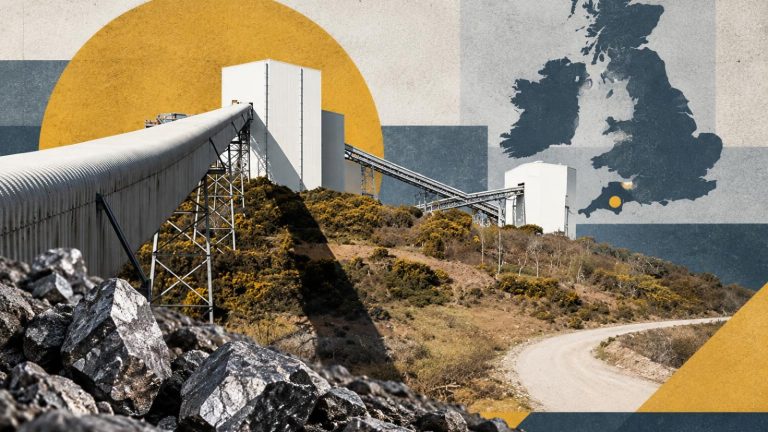
    Tungsten West (LON: TUN) has achieved a major milestone in its plans to restart production at the Hemerdon mine in Devon, England, after successfully producing its first tungsten concentrate during an ongoing mineral processing trial.

    The trial is part of a broader plant optimization and technical validation program, designed to test and enhance the performance of key sections of the mine’s processing facility. The company said the data collected will support the planned restart of full-scale operations, expected by late 2026.

    “This progress marks an important milestone in restarting operations at Hemerdon,” said CEO Jeff Court. “It provides confidence to our neighbours, the environment agency, investors and off-takers that we are moving towards production.”

    Court added that the company is maintaining high environmental and operational standards throughout the trial, noting Hemerdon’s growing importance as demand for diversified tungsten supply intensifies globally.


    Strategic Importance

    Hemerdon — historically known as Drakelands mine — is one of the largest tungsten deposits in the world. Located about 7 miles northeast of Plymouth, the site has a long mining history, with operations dating back to 1918 and production during both World Wars.

    After feasibility work in the 1980s, the mine was redeveloped into a modern tungsten and tin operation that ran from 2015 to 2018 under previous ownership. The project’s restart is considered strategically significant for both the UK and Europe, offering a potential secure tungsten supply outside China, which dominates global production.

    Tungsten is a relatively small market — valued at around $5 billion in 2023 — but it plays a critical role in defense and high-tech industries. Its density and hardness make it the material of choice for armour-piercing ammunition, aerospace components, and heavy-duty tools.


    Market Reaction

    Shares in Tungsten West rose 12% following the announcement, closing with a market capitalization of £21.28 million ($28 million).

    The company’s management emphasized that the successful trial demonstrates technical readiness and operational credibility, key steps toward securing financing and offtake agreements for the mine’s full-scale restart.

  • Tau-Ken Samruk and U.S. Cove Capital to Jointly Develop Major Tungsten Deposits in Kazakhstan

    Tau-Ken Samruk and U.S. Cove Capital to Jointly Develop Major Tungsten Deposits in Kazakhstan

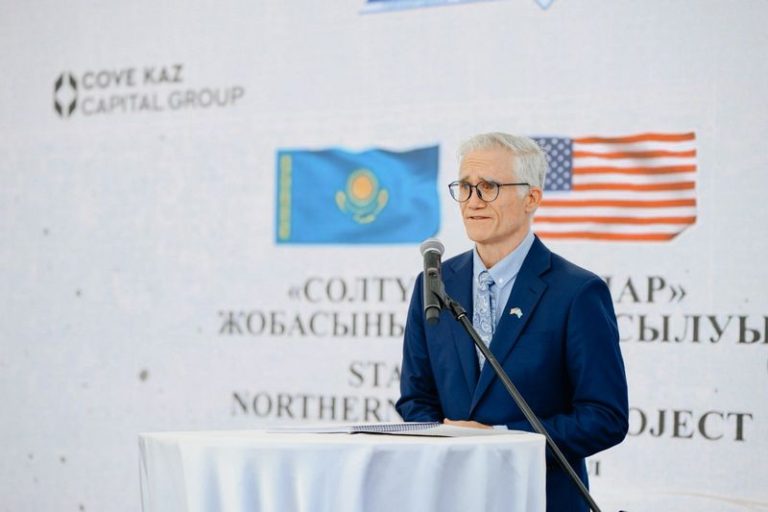
    Kazakhstan’s state mining holding Tau-Ken Samruk and U.S.-based Cove Capital have signed an agreement to jointly develop the Northern Katpar and Upper Kairakty tungsten deposits in the Karaganda region. The document was signed on the sidelines of the C5+1 Summit in Washington, D.C.

    According to Reuters, the joint venture will be 70% controlled by Cove Capital, with total investments estimated at $1.1 billion, including up to $900 million in financing from the U.S. Export-Import Bank (Exim Bank)kursiv.media reported.

    Specialists are already conducting preparatory work for the feasibility study (FS) for the Northern Katpar project. The investment initiative foresees the use of existing primary processing capacities in Kazakhstan to produce ammonium paratungstate (APT) — a key intermediate product for high-demand materials such as tungsten powders and wear-resistant components used in tools, machinery, and defense applications.

    The Northern Katpar and Upper Kairakty deposits are considered among the largest tungsten reserves in the world, with combined resources of up to 410,000 tonnes of tungsten, according to the JORC classification.

    Tau-Ken Samruk acquired LLP Northern Katpar and the deposit itself in 2015 for 7.7 billion tenge, while the Upper Kairakty exploration license was obtained in 2016.

    Founded in 2015Cove Capital invests in renewable energy and mining projects. In Kazakhstan, the U.S. company is already engaged in rare and rare-earth metal exploration at the Gremyachinsky site in East Kazakhstan and Akbulak in the Kostanay region.

  • U.S. and Kazakhstan Forge Joint Venture to Secure Global Tungsten Supply

    U.S. and Kazakhstan Forge Joint Venture to Secure Global Tungsten Supply

    Following the announcement of the joint venture between US-based Cove Capital LLC and Kazakhstan’s National Mining Company, JSC Tau-Ken Samruk, further details have emerged regarding the development timeline and scale of the Northern Katpar and Upper Kairakty tungsten projects.

    Cove Kaz Capital Group LLC (“Cove Kaz”), a portfolio company of U.S.-based Cove Capital LLC, will hold a 70 per cent interest, with Tau-Ken Samruk retaining 30 per cent ownership of Severniy Katpar LLP, which owns the Northern Katpar and Upper Kairakty tungsten projects.

    Cove Kaz will oversee marketing of 100 per cent of project output and has entered into a Letter of Intent with the International Trade Administration at the U.S. Department of Commerce to prioritise supply for U.S. government and commercial needs.

    The announcement was made in Washington, D.C., during the C5+1 Leaders’ Summit by U.S. President Donald J. Trump and Kazakhstan President Kassym-Jomart Tokayev.

    Total development costs for the Northern Katpar and Upper Kairakty projects are estimated at USD $1.1 billion. The Export-Import Bank of the United States has issued a Letter of Interest for USD $900 million in financing, complemented by a similar commitment from the U.S. International Development Finance Corporation.

    Cove Kaz’s project team will be led by Dominic Heaton, who previously oversaw development of the Nui Phao integrated tungsten mine and refinery in Vietnam – the world’s largest tungsten operation outside China. Preparatory work has already commenced to support a Definitive Feasibility Study for Northern Katpar, including the establishment of downstream refining capacity in Kazakhstan to produce ammonium paratungstate (APT) and other tungsten compounds.

    Pini Althaus, Chief Executive Officer of Cove Capital and Cove Kaz Capital, expressed gratitude for U.S. and Kazakh government support:

    “On behalf of Cove Capital and Cove Kaz, I wish to thank President Donald J. Trump, Secretary of Commerce Howard Lutnick, and the U.S. Trade Advocacy Center for their exceptional engagement. Their efforts have aligned financing, offtake pathways, and policy support to deliver a secure, allied tungsten supply for America’s industrial and defence needs.

    “I also wish to thank President Kassym-Jomart Tokayev for his leadership and partnership. This collaboration is a win for both nations—strengthening U.S. supply chains while fostering investment and long-term prosperity in Kazakhstan.”

    Tungsten – A Critical Industrial and Defence Mineral

    Tungsten is ranked by the U.S. Defense Logistics Agency as a “material of interest” and by the European Union as the raw material of highest economic importance due to its unique physical properties: the highest tensile strength at high temperatures, the highest melting point of any metal, and exceptional corrosion resistance.

    Its density and durability make tungsten indispensable in high-performance cutting and drilling tools, aerospace alloys, semiconductor contacts, and radiation shielding. In defence applications, tungsten is used in armour-piercing munitions, missile components, aircraft ballast, and other high-stress environments.

    Currently, China controls over 80 per cent of global tungsten production and processing. In February 2025, China imposed new export restrictions on tungsten and tungsten-containing products to the United States.

    Severniy Katpar LLP

    Severniy Katpar LLP holds licences for two projects—Northern Katpar and Upper Kairakty—located approximately 30 kilometres apart in the established Karaganda mining district of central Kazakhstan, less than 160 kilometres south of the city of Karaganda.

    Feasibility studies completed in April 2023 report total JORC-compliant mineral resources of 1.4 million tonnes of tungsten trioxide (WO₃), accounting for around 70 per cent of Kazakhstan’s total tungsten resources. For comparison, the U.S. Geological Survey estimates China’s reserves at 2.4 million tonnes.

    Combined production from both projects is expected to reach 12,000 metric tonnes per annum (mtpa) of tungsten trioxide—approximately 15 per cent of current global output.

    Cove Capital’s Broader Commitment in Kazakhstan

    Cove Capital’s portfolio company, Kaz Resources LLC, became in 2023 the first U.S. entity to receive critical minerals and rare earth concessions in Kazakhstan. These include licences for 13 minerals such as lithium, tantalum, beryllium, niobium, and rare earth elements.

    In 2024, Cove Capital and Tau-Ken Samruk formalised a joint venture for exploration of rare earths at the Akbulak project in the Kostanay region, with Cove holding 75 per cent and “Qazgeology” JSC 25 per cent. Cove is fully financing exploration activities until reserves are booked.

    About Cove Capital LLC

    Founded in 2015, Cove Capital is a mining-focused investment and development firm headquartered in New York and Melbourne. Since 2018, the company has focused on critical minerals projects that enhance U.S. and allied supply chains. Led by CEO Pini Althaus, Cove Capital brings extensive expertise across exploration, mining, processing, and offtake structuring.

    About Tau-Ken Samruk

    Tau-Ken Samruk, Kazakhstan’s national mining company, manages the sustainable development of the nation’s mineral wealth. Through partnerships with international investors, it aims to strengthen Kazakhstan’s mining sector and support the country’s long-term economic growth.

  • Kazakhstan’s Untapped Tungsten Reserves Draw U.S. Interest in Strategic Mining Deal

    Kazakhstan’s Untapped Tungsten Reserves Draw U.S. Interest in Strategic Mining Deal

    Kazakhstan’s sweeping steppes may soon become the focal point of a global shift in critical mineral supply chains. With an estimated 2 million tons of untapped tungsten reserves, the Central Asian nation is emerging as a potential powerhouse in a market vital to defense, clean energy, and advanced manufacturing. Ongoing negotiations between Washington and Astana could lead to the first large-scale, U.S.-backed tungsten mining operation in the region, underscoring Western efforts to reduce dependence on Chinese-controlled supply chains.

    Kazakhstan’s Tungsten Wealth: A Strategic Resource Reawakens

    Two massive deposits — Upper Kairaktinskoye and North Katpar in the Karaganda region — anchor Kazakhstan’s tungsten potential. Industry insiders estimate the sites are worth billions of dollars and could sustain production for up to four decades. While the U.S. Geological Survey (USGS) does not list Kazakhstan among the top tungsten holders, the country’s own geological data points to reserves exceeding 2 million tons, suggesting international underreporting of Central Asia’s mineral wealth.

    Kazakhstan’s sovereign wealth fund, Samruk-Kazyna, has described these sites as the world’s most desirable undeveloped tungsten deposits and is actively soliciting bids from foreign investors.

    From Dormancy to Development

    Tungsten mining in Kazakhstan halted more than 30 years ago following the Soviet Union’s collapse, as infrastructure decay, capital flight, and regulatory uncertainty halted operations. That long pause has left enormous reserves untouched — a rare opportunity for new investment at a time when global tungsten demand continues to climb.

    Strategic Importance of Tungsten

    Tungsten’s exceptional hardness, density, and heat resistance make it irreplaceable in defense and high-tech industries. It is a critical component in ammunition, projectiles, armor-piercing shells, and advanced weapon systems, earning a place on the U.S. Geological Survey’s list of critical minerals. The Pentagon’s Defense Logistics Agency identifies tungsten as a material of strategic importance, with supply disruptions posing potential risks to U.S. defense manufacturing and economic stability.

    Key Players in a High-Stakes Negotiation

    The leading U.S. contender, Cove Kaz Capital Group LLC, has positioned itself at the center of the negotiations. Building on its 2025 partnership with Kazakhstan’s JSC Qazgeology on rare earth exploration, Cove Kaz Capital aims to establish majority control of the tungsten venture while ensuring Kazakhstan retains a significant profit share.

    The company’s responsibilities would include mine development, local processing infrastructure, and export logistics, with a commitment to technology transfer and workforce development within Kazakhstan.

    For Samruk-Kazyna, the deal aligns with national goals of diversifying the economy, modernizing the mining sector, and expanding export markets beyond traditional partners like Russia and China. The fund’s competitive tendering process has attracted multiple international bidders, ensuring Kazakhstan maximizes both revenue and strategic leverage.

    U.S. Government’s Direct Role

    The unusual direct involvement of U.S. Commerce Secretary Howard Lutnick in the negotiations underscores the project’s geopolitical weight. Washington views the partnership as part of a wider strategy to secure critical mineral supply chains and implement former President Trump’s executive order prioritizing access to strategic materials such as tungsten.

    For the U.S., success in Kazakhstan could represent a decisive step toward reducing vulnerability to supply shocks and strengthening control over critical materials vital to both defense and green technologies.

  • Tajikistan and South Korea to Create Joint Tungsten Supply Chain

    Tajikistan and South Korea to Create Joint Tungsten Supply Chain

    A memorandum of understanding (MoU) was signed in Dushanbe between Tajikistan’s Ministry of Industry and New Technologies and South Korean company GB Innovation (GBI) to establish a joint tungsten supply chain — a strategically important mineral for high-tech industries. The document provides for the joint development of the Maikhura tungsten deposit and the creation of a full production cycle, from raw material extraction to finished products. The signing took place during the Dushanbe Investment Forum, in a ceremony overseen by Tajik President Emomali Rahmon.

    Minister of Industry and New Technologies Sherali Kabir stated that the Maikhura project would become a model of mutually beneficial cooperation, promoting Tajikistan’s industrialization and strengthening economic ties with South Korea. Under the agreement, GB Innovation and the state-owned company TALCO plan to reach an annual output of 4,000 tons of tungsten concentrate within three to four years. The concentrate will be processed locally into tungsten oxide and tungsten carbide for use in domestic industries.

    Tungsten is a key component in high-tech sectors such as semiconductor production, defense, rechargeable batteries, automotive manufacturing, and aerospace. Establishing a stable tungsten supply chain is of strategic importance to South Korea, which aims to secure self-sufficiency in this critical mineral. The Maikhura mine stands out for its high tungsten content—1.0%, five times the global average of 0.2%. Combined with production from South Korea’s Uljin Ssangjeon mine, the total output will reach about 5,000 tons per year, nearly covering South Korea’s annual domestic demand of 3,400 tons.

    GB Innovation President Kim Young-woo emphasized the importance of stable supply chains for strategic minerals and expressed readiness to expand cooperation to other resources, including rare earth elements and lithium. Minister Kabir highlighted that the Maikhura project represents a key step toward Tajikistan’s industrialization and the establishment of sustainable supply chains for strategic resources.

    Investment Commissioner Rahim Joda announced that the government would provide over 200 investment and tax incentives to ensure the project’s success. The initiative aims to build a full-cycle local value chain—from mining to processing and production—within Central Asia, enhancing competitiveness and ensuring supply stability in the global market.

    Tajikistan currently accounts for around 20% of global antimony production and possesses significant reserves of rare earth elements and lithium, solidifying its role as an emerging resource hub in Central Asia.

  • Trump Team Pushes for U.S. Access to Major Tungsten Deposits in Kazakhstan

    Trump Team Pushes for U.S. Access to Major Tungsten Deposits in Kazakhstan

    According to Bloomberg, former U.S. President Donald Trump’s team is seeking to secure mining rights in Kazakhstan for Cove Capital, an American company aiming to develop some of the world’s largest untapped tungsten deposits. The negotiations involve the Kazakh-American joint venture Cove Kaz Capital and Kazakhstan’s sovereign wealth fund Samruk-Kazyna, with U.S. Commerce Secretary Howard Lutnick reportedly taking part in the talks.

    The project may receive financial backing from the U.S. International Development Finance Corporation (DFC) and the Export-Import Bank of the United States (Exim Bank). Sources indicate that Washington is particularly interested in developing the Verkhne-Kairaktinskoye and Severo-Katparskoye deposits located in Kazakhstan’s Karaganda region—assets valued at several billion dollars.

    Cove Kaz Capital has been in discussions with Samruk-Kazyna for several months, Bloomberg reports. However, the American firm faces competition from a Chinese state-owned company that has offered a price exceeding the market value for the same assets.

    The United States classifies tungsten as a critical mineral essential for national security and industrial applications. Under the proposed plan, Cove Kaz Capital and Samruk-Kazyna would jointly extract the ore in Kazakhstan, process it locally, and then export the finished metal to the U.S. for use in both defense and civilian industries. While Kazakhstan would receive a share of the joint venture’s profits, Cove Kaz Capital is expected to remain the main beneficiary.