Tag: Solidcore Resources

  • Solidcore Resources Secures $100 Million Credit Facility for Ertis POX Project

    Solidcore Resources Secures $100 Million Credit Facility for Ertis POX Project

    Solidcore Resources has announced a significant financial milestone with the acquisition of a seven-year credit facility amounting to US$ 100 million. This funding, secured through an indicative term sheet signed with KfW IPEX-Bank in February 2026, is earmarked for the construction of the Ertis POX project. The project encompasses a range of essential components, including infrastructure development, equipment procurement, and engineering costs, all critical to the successful execution of the initiative.

    The credit facility features a grace period of three years and six months, allowing Solidcore Resources to focus on the initial phases of the project without the immediate pressure of repayments. The repayment schedule is set to commence in 2030, providing the company with a structured financial plan that aligns with its project timelines.

    The Ertis POX project is expected to play a pivotal role in enhancing the operational capabilities of Solidcore Resources, positioning the company for future growth within the mining sector. The financial backing from KfW IPEX-Bank not only underscores the confidence in Solidcore’s business strategy but also highlights the increasing interest from financial institutions in supporting mining projects that promise sustainable development and economic viability.

    As the mining industry continues to evolve, securing such substantial funding is crucial for companies looking to expand their operations and invest in new technologies. Solidcore’s proactive approach in securing this credit facility demonstrates its commitment to advancing the Ertis POX project and contributing to the broader mining landscape. Stakeholders and investors will be keenly observing the project’s progress as it unfolds over the coming years.


  • Oman Delegation Visits Solidcore Resources in Kazakhstan to Explore Investment Opportunities

    Oman Delegation Visits Solidcore Resources in Kazakhstan to Explore Investment Opportunities

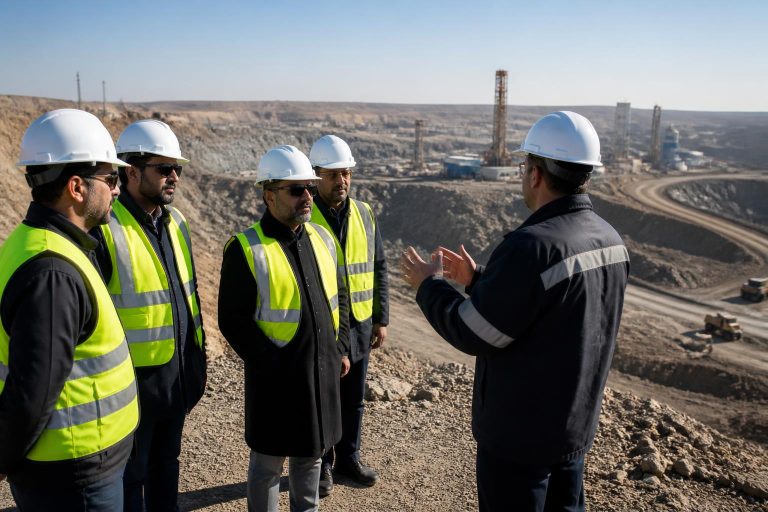
    A delegation from the Sultanate of Oman, led by His Excellency Abdul Salam Al Murshidi, President of the Oman Investment Authority (OIA) and Chairman of the Board of Solidcore Resources, recently visited Kazakhstan to engage with the leadership of Solidcore and tour the Kyzyl mine and processing complex. The visit underscores Oman’s commitment to strengthening its investment ties with Kazakhstan, particularly through Solidcore, where Maaden International Investment, a wholly-owned fund of the Omani government, holds a significant 31.7% stake.

    Accompanying the delegation were key figures from Minerals Development Oman (MDO), including Chairman Hamid Al Naamani and CEO Mattar Al Badi. MDO is a partner in a joint venture with Solidcore on the Khabiyat copper-gold project, which marks the first international geological exploration project in Oman, with an agreement signed earlier this year.

    During their meeting with Solidcore’s management, the delegation was briefed on the company’s operations and the progress of the Ertis hydrometallurgical plant (EGMK). His Excellency Al Murshidi highlighted Solidcore as a flagship investment project for Oman in Kazakhstan, emphasising the importance of a predictable regulatory environment in the country. He stated, “We view Kazakhstan as a long-term strategic partner. The stable and predictable investment climate established under the President’s leadership, along with the government’s efforts to protect sovereign investments, forms the basis for long-term cooperation. We intend to continue supporting the growth of Solidcore and expand our investments in the country. The recently signed Investment Cooperation Agreement between our countries is a significant step in defining new investment opportunities between Oman and Kazakhstan.”

    The Omani delegation also visited the Kyzyl mine, Solidcore’s largest operation, which produces approximately 350,000 ounces of gold annually at a grade of 5 g/t. His Excellency Al Murshidi concluded by noting that Solidcore’s deep expertise in ore processing and responsible mining provides a solid foundation for prospective joint projects in Oman, the Gulf region, and potentially Africa. These opportunities will contribute to Solidcore’s evolution into an international mining company, leveraging its technical competencies, quality assets, robust corporate governance, and experienced team.


  • Tin One Mining to Construct Major Tin Processing Plant in Kazakhstan

    Tin One Mining to Construct Major Tin Processing Plant in Kazakhstan

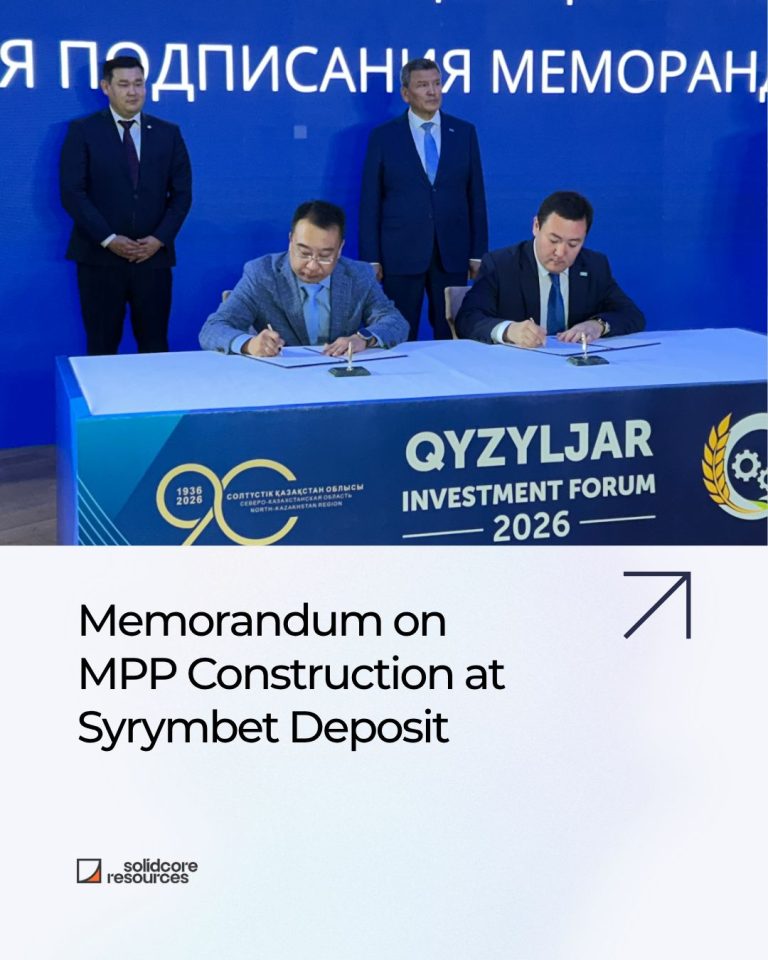
    At the Qyzyljar Investment Forum 2026, a significant agreement was reached that paves the way for the industrial development of the largest untapped tin deposit in Central Asia. Tin One Mining, a subsidiary of Solidcore Resources, has signed a memorandum with the relevant administration of the North Kazakhstan region, solidifying plans to build a mining and processing plant at the Sarymbet site.

    According to the memorandum, the investor is committed to investing at least 150 billion tenge (approximately 315.5 million dollars) into the development of the resource, the construction of the facility, and the creation of supporting infrastructure, pending approval from the parent company’s board of directors. Regional authorities will assist the investor in project execution, taking on administrative support and facilitating agreements with government bodies.

    Tin One Mining aims to establish the extraction and processing of raw materials using modern technologies. The company promises to implement advanced global solutions in environmental protection and industrial safety within its operations. Once fully operational, the plant is expected to employ around 800 people, with a preference for hiring qualified specialists from the local community.

    The project’s significance is underscored by the scale of its resource base. The Sarymbet deposit, discovered in 1985, holds over 70% of Kazakhstan’s tin reserves. According to JORC standards, the deposit contains 492.4 thousand tonnes of tin with an average grade of 0.40%, along with by-product copper amounting to 91.4 thousand tonnes at a grade of 0.07%. In total, this equates to approximately 5.9 million ounces of gold equivalent.


  • Solidcore Resources Secures $600 Million Financing for Gold Processing Plant in Kazakhstan

    Solidcore Resources Secures $600 Million Financing for Gold Processing Plant in Kazakhstan

    Solidcore Resources, a gold producer, has secured $600 million in financing from the European Bank for Reconstruction and Development (EBRD) and a syndicate of commercial banks, including ING, Société Générale, and Abu Dhabi Commercial Bank (ADCB). The EBRD will provide $300 million over a ten-year period, while the commercial banks will contribute an additional $300 million, with each bank committing $100 million. The initial term of the credit line is set for five years, with an option to extend it to seven years. The agreement also allows for an increase in funding by up to $300 million. The Ertis Hydrometallurgical Plant (ЕГМК) will act as a co-borrower alongside Solidcore.

    The financing package includes a three-year grace period, with the repayment of the principal amount commencing after the completion of the plant in 2029. Hussein Ozhan, EBRD’s Managing Director for Central Asia and Mongolia, highlighted that the development of local processing capacities and high-value product manufacturing will enable Kazakhstan to retain a greater share of added value within the country. He emphasized the bank’s commitment to promoting advanced metallurgical technologies, creating new jobs in the Pavlodar region, diversifying Kazakhstan’s mining sector, and enhancing its international competitiveness.

    In addition to the EBRD financing, Solidcore has signed a preliminary agreement with KfW IPEX-Bank for a $100 million credit line over seven years, with documentation currently being prepared.

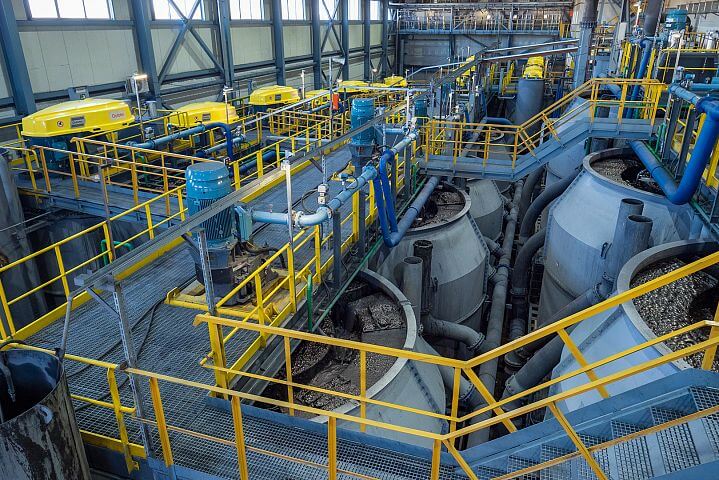
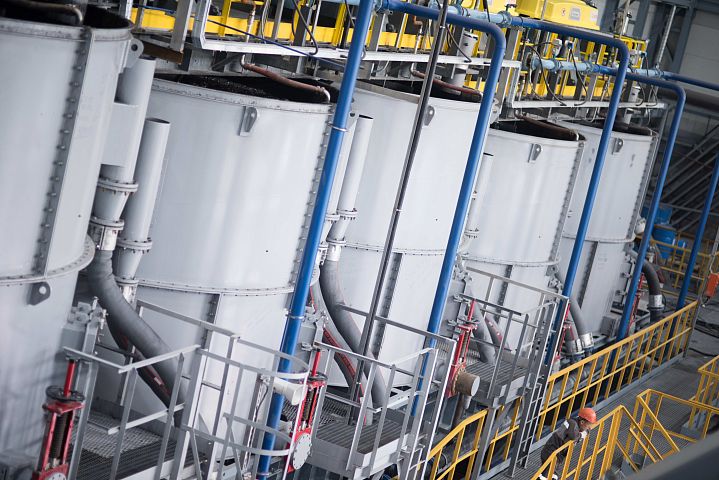
    The ЕГМК will focus on extracting gold from previously difficult-to-process ores, located within the special economic zone of Pavlodar. Once operational, the plant is expected to process up to 300,000 tonnes of gold-bearing concentrate annually, producing up to 500,000 ounces of doré gold from the Kyzyl deposit and additional feedstock.

    The capital expenditure for the ЕГМК is estimated at approximately $1 billion, with Solidcore planning to finance part of this through loans and the remainder from its own funds. The company anticipates that the project will create around 500 permanent jobs upon completion.

    CEO Vitaly Nesis stated that the establishment of the hydrometallurgical plant in Pavlodar aims to mitigate production, market, and geopolitical risks. Construction has already commenced, with an autoclave installed for processing gold-bearing raw materials. The project has received a positive conclusion from the state expertise for the construction of the ЕГМК and its associated infrastructure, with over a thousand workers currently on-site.

    Solidcore is actively developing several mining projects, including the Bakyrchik deposit in the Abai region and the Varvarinskoye and Komarovskoye deposits in the Kostanay region. The company has reported a remarkable 222% increase in sales volume in the first quarter of 2026, reaching 123,000 ounces in gold equivalent, with revenues soaring 5.5 times to $595 million.


  • Tin One Mining Signs Memorandum for Tin Processing Plant in Kazakhstan

    Tin One Mining Signs Memorandum for Tin Processing Plant in Kazakhstan

    Tin One Mining has entered into a memorandum with the administration of the North Kazakhstan region to implement an investment project for the construction of a mining and processing plant at the Sarymbet tin deposit. The company plans to invest at least 150 billion tenge (approximately $315.5 million) into the development of the deposit, the construction of the processing plant, and associated infrastructure. This investment is subject to approval by the board of directors of Solidcore Resources, which controls the project.

    The Sarymbet deposit is noted as the largest undeveloped tin deposit in Central Asia, with resources estimated at 492.4 thousand tonnes of tin at a grade of 0.40% and 91.4 thousand tonnes of copper at a grade of 0.07%, according to JORC standards. The deposit accounts for over 70% of the total tin reserves in Kazakhstan. Discovered in 1985, the site has significant potential for contributing to the region’s industrial growth.

    Approximately 800 jobs are expected to be created as part of this project, with a focus on hiring local residents who possess the necessary education, qualifications, and professional competencies. Tin One Mining views this initiative as a long-term investment aimed at enhancing the industrial potential of the North Kazakhstan region and the country as a whole.

    The administration has committed to supporting the project’s implementation by facilitating interactions with government bodies and overseeing the investment project throughout its various stages. In November 2024, Solidcore Resources acquired a controlling stake of 55% in the project for $82.5 million from Berkut Mining, which remains involved in the project while Solidcore takes operational control.

    As of August 9, 2026, Tin One Mining is owned by Tin One Holding, which is in turn owned by Solidcore Eurasia LTD and Berkut Mining, both of which are part of the larger Solidcore Resources PLC structure. This investment marks a significant step in the development of Kazakhstan’s mining sector, particularly in the tin industry, which is poised for growth given the increasing global demand for tin and its applications in various industries.


  • Tin One Mining and North Kazakhstan Akimat Sign Investment Memorandum for Syrymbet Deposit

    Tin One Mining and North Kazakhstan Akimat Sign Investment Memorandum for Syrymbet Deposit

    Tin One Mining, a subsidiary of Solidcore Resources, has signed a significant Memorandum with the Department of Entrepreneurship and Industrial-Innovative Development of the North Kazakhstan region Akimat, marking a pivotal step in the development of the Syrymbet tin deposit. This agreement was formalised during the Qyzyljar Investment Forum 2026, where both parties committed to the construction of a mining and processing plant (MPP) at the site, which is recognised as the largest undeveloped tin deposit in Central Asia.

    The memorandum solidifies prior discussions regarding the project, which is expected to create substantial employment opportunities and bolster the industrial capacity of the region. The initiative aims to modernise local engineering and transport infrastructure, thereby enhancing the overall economic landscape of North Kazakhstan. The Department of Entrepreneurship and Industrial-Innovative Development will play a crucial role in facilitating the project, ensuring collaboration with government entities, and providing support throughout the investment process.

    Tin One Mining has announced plans to invest a minimum of KZT 150 billion (over US$ 315.5 million) into the development of the Syrymbet deposit, which includes the construction of the MPP and associated infrastructure. The company is dedicated to employing modern extraction and processing technologies that meet global standards for environmental protection and operational safety. Approximately 800 jobs are expected to be created, with a focus on hiring local residents who possess the required qualifications and skills.

    The Syrymbet deposit, discovered in 1985, holds significant reserves, accounting for more than 70% of Kazakhstan’s total tin reserves. The JORC compliant Mineral Resource estimate indicates a total of 492.4 thousand tonnes of tin at a grade of 0.40%, alongside 91.4 thousand tonnes of copper at a grade of 0.07%, equating to approximately 5.9 million ounces of gold equivalent. This project not only represents a major investment in the mining sector but also underscores the potential of Kazakhstan’s mineral wealth in contributing to the region’s economic development.


  • Solidcore CEO Warns Gold Prices Near Peak as Company Plans Oman Expansion, Bakyrchik Underground Transition and Pavlodar Hydromet Launch

    Solidcore CEO Warns Gold Prices Near Peak as Company Plans Oman Expansion, Bakyrchik Underground Transition and Pavlodar Hydromet Launch

    Solidcore Resources chief executive Vitaly Nesis is maintaining a deliberately conservative stance on gold prices at a moment when most market participants are optimistic, telling Forbes Kazakhstan he expects a significant price decline within three years and budgeting accordingly — while simultaneously planning the most ambitious expansion programme in the company’s history.

    “I personally expect a meaningful price decline on a three-year horizon,” Nesis said. “As a company, we are budgeting this year at $4,000 per ounce and conducting long-term mine planning at $3,000. This reflects our corporate views. We are optimists, but we consider the current level excessive.”

    Against that cautious macro backdrop, Solidcore has set three strategic priorities: vertical integration through the launch of the Ertis Hydrometallurgical Plant in Pavlodar, geographic diversification beyond Kazakhstan, and growth of the mineral resource base. The Pavlodar plant is the most critical near-term project, as it addresses what Nesis describes as the company’s fundamental structural defect — dependence on a tolling contract with a Russian enterprise for processing concentrate. Solidcore is gradually reducing this exposure through China and Kazakhmys, but Nesis said the risk will only be eliminated once EGMK is commissioned. “This is a fundamental defect in the current commercial structure. We live with it, but it is finite.”

    On geographic diversification, Nesis identified Oman as the priority market, with Tajikistan and Uzbekistan also under active evaluation. He said the company plans to complete at least one asset acquisition outside Kazakhstan in 2026. Solidcore is 29.7% owned by Omani company Maaden International Investment, making the Middle East connection structurally logical.

    At Bakyrchik — the company’s flagship asset and one of Kazakhstan’s largest gold deposits — underground mine development is the next major transition. Design work is completing this year, with underground development beginning in 2026. Nesis acknowledged that high capital expenditure during underground construction may cause production to dip temporarily in 2028, but the company is targeting significantly higher output by 2035 as the new mine reaches full capacity. The company also has more than 20 exploration projects and 30 kilometres of drilling planned for 2026, with the objective of replacing depleted reserves tonne-for-tonne with new resource additions. In Kazakhstan, the company is also exploring acquisition of additional assets including an increased stake in the Beshoku project, building on last year’s acquisition of a tin stake at Syrymbet.

    On technology, Nesis claimed industry leadership in digitalisation, singling out Bakyrchik’s fleet management system as a fully algorithmised AI solution that dispatches trucks and excavators without human involvement. “This is not visualisation or an advisor. This is artificial intelligence that gives instructions to people. The results are very impressive both in productivity gains and cost reduction.” The system is planned for rollout across new company assets. Processing plants use machine vision and optimisation software for mill loading and flotation management.

    Despite Solidcore shares being the most liquid on the Astana International Exchange, Nesis said he remains unsatisfied with market liquidity and considers the exchange’s potential unrealised. He also addressed the legacy issue of shares blocked in Euroclear following EU sanctions on Russia’s National Settlement Depository in 2022, noting that the company’s subsequent delisting from Moscow and multi-stage AIX share exchange successfully migrated more than 90% of affected shares, though some shareholders were unable to participate due to their own sanctions constraints.

  • What the press releases don’t tell you about Kazakhstan’s mining boom

    What the press releases don’t tell you about Kazakhstan’s mining boom

    On 8 June, we joined in London a meeting chaired by Ros Lund the CEO of the Eurasia Critical Minerals Organisation and hosted by Pinsent Masons in London — a compact but exceptionally well-informed panel bringing together geoscientists, financiers, lawyers, and diplomats from the Kazakh Embassy.

    These are the conversations that rarely make it into press releases. Here is what stood out.


    The ground is moving faster than the headlines suggest

    Ash Johnson of IGS, returning to Kazakhstan after eight years, was direct: the atmosphere has changed. There is a greater appetite for engaging with international experts, a more realistic appraisal of where Kazakhstan stands on the global exploration investment ladder, and — crucially — a shift from confidence in geological potential toward something more demanding: the question of execution.

    In the Fraser Institute rankings, Kazakhstan placed 24th out of 91 jurisdictions in 2017. By the most recent survey, it had slipped toward the bottom quarter of the index — a trajectory that reflects not a failure of geology, but unfinished work on policy and data.

    The 2018 mining code reforms, modelled on the Australian first-come-first-served system, remain the single most important driver of renewed interest. Eric Rasmussen — former head of natural resources banking at EBRD, subsequently involved in investment strategy at Rio Tinto, now advising governments across the region — described it plainly: investors today see a more competitive, more predictable licensing process, clearer allocation of rights, and a statutory framework that, while complex, offers security over the long term. As Eric put it: mining is a long-term game. Better to implement things right from the outset than to move quickly and spend years fixing what wasn’t done properly.


    The data imperative

    The conversation kept returning to one theme: geological data.

    IGS’s work at the geological survey interface, from Northern Ireland to a vast programme across the Arabian Shield in Saudi Arabia, has shown consistently that making high-quality data freely available is the single most effective lever for attracting junior exploration capital. Ash’s prescription for Kazakhstan was unambiguous: get the data, get it released, and then use AI to unlock the legacy Soviet archive — tens of thousands of reports, scanned to PDF but not yet fully digitised, written by highly trained geologists and representing an extraordinary unexploited asset.

    The Kazakh Embassy’s first secretary confirmed that this is now underway: the National Geological Survey is actively introducing AI tools to translate and systematise that Russian-language archive, and a first tranche of publicly available data is expected before year end. The infrastructure challenge is real — we are talking petabytes, not megabytes — but the direction of travel is right.

    A national geoscience database of the quality now being built in Saudi Arabia would, in Ash’s view, be the single most transformative step Kazakhstan could take for investment attraction. There are over 3,000 exploration licences currently active in the country, yet around 65% of the country remains underexplored. That fragmentation is both the problem and — for the right kind of capital — the opportunity.

    Article content

    The consolidation play

    Matthew Fisher of La Mancha Resource Capital put a precise investment thesis on the table. La Mancha takes 20–30% of a company, takes seats on the board, uses contractual rights to drive exploration, and engineers consolidation — mergers between adjacent projects, resource aggregation, and scale. They have done it in Africa with Endeavour Mining (invested over a decade ago, now approximately $12 billion market cap), in Australia with Evolution Mining (exited 2021, now $16 billion), and are building a similar position in Latin America with G Mining Ventures (approximately $6 billion). Kazakhstan is next on the list.

    The three criteria: good geology (established), a mining-friendly jurisdiction (nuanced but broadly yes, with uranium as the carve-out), and a strong team on the ground willing to commit to the thesis. La Mancha’s chairman Nagib Sawiris has already met with Deputy Prime Minister – Minister of Foreign Affairs of the Republic of Kazakhstan Mr. Murat Nurtleu in January this year. The geology and jurisdiction boxes are ticked. The team question, Matthew was candid, is still being worked.

    Matthew also offered what struck me as the most practically useful observation of the evening on regulation: investors can deal with complexity. What they cannot deal with is shifting sands and chaos.

    From an investor’s perspective, a degree of red tape, properly implemented, is a blessing, not a burden.

    Article content

    The legislative changes: less alarming than reported

    The recent amendments to Kazakhstan’s subsoil use code — signed by President Tokayev in December 2024, in force since March 2025 — introduce two significant mechanisms: a unified digital licensing platform (allowing e-signature registration and royalty payment for exploration and extraction licences) and an electronic auction system for contested ground. Where two or more applications are filed for the same area, an auction is automatically triggered within 15 days.

    Sylvia Tonova, Partner and Co-Head of International Arbitration at Pinsent Masons, brought her investment arbitration and public international law perspective to bear. As long as the uranium-related changes are not retroactive — and her reading is that they are not — the direction is clarifying rather than restrictive. She also noted something that tends to get lost in the headlines: the amendments include material incentives for solid mineral processing projects, including exemptions from corporate income tax and land tax for ten years, from property tax for eight years, and VAT on imported equipment for five years. Good news for investors, and largely unreported.

    Her wider counsel was pointed: involve disputes lawyers at the transactional stage, not the crisis stage. Kazakhstan has signed bilateral investment treaties with China, the UK, Singapore, the Netherlands, Luxembourg, Switzerland, Italy and the US, among others, as well as the Energy Charter Treaty. These are real instruments of protection — cheaper and more comprehensive than political risk insurance — that investors routinely fail to structure correctly at inception. More importantly, having that treaty architecture in place often brings a counterparty government to the table for dialogue long before arbitration becomes necessary.

    As Sylvia put it, with characteristic directness:

    it is a little like a prenuptial agreement. You hope you never need it. But you would be unwise to proceed without one.

    Article content

    Operating at the coalface: the Solidcore perspective

    Tania Tchedaeva, Executive VP for Corporate Governance and Compliance at Solidcore Resources — the Kazakhstan-focused gold producer formerly known as Polymetal, now listed on the Astana International Exchange — offered what was perhaps the most grounded perspective of the evening: that of a company that has been doing all of this in practice, not in theory, for over a decade.

    Solidcore’s story in Kazakhstan is instructive. The company’s first acquisition was built into a processing hub. Its second — a large but long-troubled mine — was unlocked through its proprietary pressure oxidation technology, which handles the refractory ore that defeated previous owners. A new processing facility is now under construction and due for completion in two years. A more recent tin acquisition reflects a deliberate strategy of learning new commodity verticals through smaller, simpler operations before scaling. And crucially, that processing facility will not just serve Solidcore’s own operations: it will process ore from third-party companies, making it both a revenue stream and a strategic asset for Kazakhstan’s broader value-add ambitions.

    Tania was equally direct about the human dimension of operating in Kazakhstan: Solidcore invests heavily in local communities, including funding children’s education in the areas where it operates, on the explicit premise that it wants those children to return as qualified professionals. This is not philanthropy as a footnote. It is the operating model.

    On the capital markets dimension, Tania made two points that deserve wider attention. First, Solidcore was among the earliest companies listed on the AIX when it launched, and has been working actively with Kazakh regulators ever since — bringing international standards, brokers, and institutional relationships that had never previously looked at Kazakhstan. When Solidcore moved its primary listing from London to the AIX in 2023, it did not come alone. That kind of institutional transfer of know-how is precisely what a nascent exchange needs.

    Second — and this is the structural point that rarely surfaces in investment attraction conversations — Kazakhstan is currently classified as a frontier market rather than an emerging market. For a significant category of institutional investors, this is not a deterrent to be argued away. It is a hard constraint. Their mandates physically prohibit investment in frontier-classified jurisdictions, regardless of the quality of the opportunity. Kazakhstan has been working on this reclassification for some time, and Tania noted there is finally some traction. If and when that changes, the effect on available capital flowing into Kazakh mining could be transformative.

    Her closing observation on Russia — raised by another panellist as the elephant in the room — was characteristically measured. Solidcore was formerly a top-ten gold producer and top-three silver producer globally. The Russian chapter of that story is now closed. The expertise, however — technical, operational, managerial — is being transferred to Kazakhstan and built upon there. Russia still exerts significant influence across the region. The pragmatic approach, she suggested, is to extract what value you can from that proximity, not to pretend it does not exist.

    Article content

    The Chinese question — and the wider investment geography

    The room did not shy away from the China question. Chinese capital is moving faster than OECD-bound investors on virtually every dimension: speed of deployment, appetite for risk, integration of EPC contractors and labour, and — frankly — a different relationship with ESG standards.

    Eric Rasmussen put it clearly: western firms are not going to out-pace Chinese capital on speed. The competition, if it is to be won, must be won on the quality and durability of the investment relationship. Standards are not bureaucratic inconvenience; they are long-term risk management. Licences get revoked. Governments change. Communities remember.

    That said, the picture is not monolithic. Ash noted that IGS is currently working alongside the China Geological Survey on the Saudi Arabian national data programme — the Chinese are the main contractor — specifically to bring their methodology up to international standards. The Chinese teams have welcomed this, seeing it as a route to greater international competitiveness. And the composition of Chinese investment in Kazakhstan is itself shifting: while CNPC and Sinopec have anchored Chinese capital in oil and gas since the late 1990s, newer entrants are moving into higher value-added industries — amino acid production, metallurgy, and textile clusters. The extractive story is becoming more complex.

    The broader investment geography, however, is one that deserves more attention than it typically receives. According to the EDB Monitoring of Mutual Investments database, FDI stock in Kazakhstan from the Eurasian region, China, Türkiye, and the Gulf states combined exceeded $28 billion by mid-2025 — up nearly 50% from 2020, representing more than $9 billion of new capital in five years. The Gulf states have been the fastest-growing source, tripling their investment stock to $4.4 billion, with capital now spanning construction, telecoms, power infrastructure, and mining — including Omani investment in Solidcore Resources itself. The Eurasian region accounts for $9.4 billion, growing at 40%, with Kazakhstan outpacing the regional average by a factor of 2.5.

    Türkiye’s position in this picture is particularly worth watching. Turkish FDI stock in Kazakhstan has more than tripled to $3.3 billion, with transport and logistics emerging as the key sector — flagship projects including the modernisation of Almaty International Airport, the construction of Turkistan International Airport, and a logistics hub in Aktobe.

    At the end of the Q&As, Eric Rasmussen offered a well-timed caution on the processing ambitions more broadly: pursue concentrate by all means — that is where approximately 70% of the value sits. But be wary of the current fashion for smelters. They are not profitable, and they are highly demanding on energy and water. As he put it: process, yes. But let’s not melt down.

  • Solidcore’s Tokhtar Gold Deal Stuck in Limbo as Ministry Denies Receiving Acquisition Application

    Solidcore’s Tokhtar Gold Deal Stuck in Limbo as Ministry Denies Receiving Acquisition Application

    A regulatory impasse has emerged around Solidcore Resources’ planned acquisition of the Tokhtar gold project in Kazakhstan’s Kostanai Region, after the Ministry of Industry and Construction stated it has received no application to transfer subsoil use rights for the project — even as Solidcore has been publicly waiting for government approval for more than a year.

    In a formal response to inbusiness.kz via the eotinish electronic platform, the ministry confirmed it had received no application regarding the acquisition of the Tokhtar, South Tokhtar and Barambai licence areas, and said it therefore had no information on the reasons for the deal’s non-approval or its current status. Solidcore chief executive Vitaly Nesis told the publication in April that the deal had “not been approved by state authorities,” declining to elaborate further. The unresolved status of the transaction was also acknowledged during Solidcore’s 2025 annual results webcast without explanation.

    The disconnect is puzzling given standard procedure: applications to transfer subsoil use rights for solid minerals are normally submitted to the relevant sectoral regulator — in this case the Ministry of Industry — raising the question of whether an application was ever formally submitted, and if so where it was directed.

    Solidcore announced the intended acquisition more than a year ago. The deal was structured in two phases: a 51% stake to be purchased in the third quarter of 2025 for approximately $25 million, with the remaining 49% to follow based on a resource valuation of the Tokhtar, South Tokhtar and Barambai areas. JORC-compliant mineral resources at Tokhtar and South Tokhtar were estimated at 1.1 million ounces of gold, equivalent to approximately 34.2 tonnes. Aurora Minerals provided geological and legal support for the project.

    Ownership records add further complexity to the picture. According to the Ministry of Industry’s solid minerals contract register, the Tokhtar production contract belonged to GRK Tokhtar LLP, while the South Tokhtar-Barambai exploration and production contract was held by Kompleksnaya Geologo-Ekologicheskaya Ekspeditsiya LLP. Both companies were linked to Mukhamedjan Turdakhunov, a long-serving president of the Sokolovskoye-Sarbaiskoye Mining and Processing Association within ERG. Aurora Minerals’ website identifies the seller as KAML Kazakhstan LLP, and public data from adata.kz shows a related entity — KAML Limited, registered in 2024 — with Turdakhunov and ERG board member Eduard Surlevich listed as founders.

  • Solidcore Resources Confirms 2028 Completion of Kazakhstan’s First Full-Cycle Gold Processing Plant as Payback Period Shrinks to Seven Years

    Solidcore Resources Confirms 2028 Completion of Kazakhstan’s First Full-Cycle Gold Processing Plant as Payback Period Shrinks to Seven Years

    Solidcore Resources has confirmed that construction of Kazakhstan’s first full-cycle gold concentrate processing facility — the Ertis Hydrometallurgical Plant near Pavlodar — remains on track for completion in the fourth quarter of 2028, with the project’s payback period now estimated at seven to eight years as elevated gold prices dramatically improve the economics of the $978 million investment.

    Speaking at the MINEX Kazakhstan 2026 forum in Astana, Solidcore Resources chief executive Vitaly Nesis said construction was proceeding at full pace and that the company was close to signing legally binding financing documentation with the European Bank for Reconstruction and Development. When the project was originally approved by the board, payback was calculated at 12 years based on a gold price of $2,800 per ounce. “At current price levels, taking into account tax increases and tenge strengthening, payback will be around seven to eight years,” Nesis said.

    The Ertis plant, with a 30-year project lifespan, will be capable of processing up to 300,000 tonnes of gold-bearing concentrate annually and producing up to 500,000 ounces of gold in doré form per year, with a permanent workforce of up to 500 employees. It will be the first facility of its kind in Kazakhstan, marking a significant step in the country’s push to process its mineral wealth domestically rather than export raw concentrates.

    Nesis also commented on a wave of recent consolidation in Kazakhstan’s gold sector. In October 2025, Chinese group Zijin Mining acquired RG Gold — owner of the Raygorodok deposit in Akmola Region — from Bulat Utemuratov for $1 billion. More recently, in late March 2026, entrepreneur Shakhmurat Mutalip, owner of construction company Integra Construction KZ, was reported to have agreed to acquire 100% of Altynalmas, one of Kazakhstan’s three largest gold producers. Nesis said such activity should be welcomed, expressing hope that the deals would lead to more Kazakhstani mining companies listing on the Astana International Exchange.

    On Solidcore’s own acquisition plans, Nesis noted that a deal to acquire the Tokhtar gold deposit in northern Kazakhstan has not yet been approved by state authorities and declined to comment further. He did confirm, however, that the company had established subsidiaries in Oman and Tajikistan over the past six months in the hope of securing deals in those markets.

    Solidcore Resources, listed on the Astana International Exchange, operates the Bakyrchik deposit in Abai Region and the Varvarinskoye and Komarovskoye deposits in Kostanai Region. In 2024 the company acquired a 55% stake in the rare earth and polymetallic Syrymbет deposit in North Kazakhstan Region for $82.5 million, where subsidiary Tin One Mining plans to commission a mining and processing plant in 2028 at an investment cost of $227.8 million. The company is also reported to be borrowing $100 million in Germany toward EGMK construction and plans to liquidate its gold inventory in the first half of 2026.