Norway’s sovereign wealth fund, managed by Norges Bank Investment Management (NBIM), has announced its decision to actively engage with global mining giants Rio Tinto and South32 concerning their environmental practices. The decision follows a recommendation from the Council on Ethics, an independent advisory body appointed by the Norwegian government, which urged the fund to consider divesting its stakes in the companies due to environmental concerns.
NBIM currently holds approximately 2.5% of Rio Tinto plc, 0.13% of Rio Tinto Ltd, and 2.6% of South32, according to data from LSEG. The ethical concerns center around the companies’ involvement in the Mineração Rio do Norte (MRN) joint venture, a substantial bauxite mining operation located in the Amazon rainforest. The project, a collaboration between Glencore (45%), Rio Tinto (22%), and South32 (33%), has been criticized for contributing to environmental degradation in the region.
In response, the sovereign wealth fund’s executive board stated that it would engage with the companies over the next five to ten years to encourage substantial improvements in their environmental management and practices.
In a separate announcement, the fund revealed it had revoked the exclusion of German energy firm RWE AG, applauding its progress toward renewable energy. Conversely, it decided to sell its shares in Mexican oil company Petroleos Mexicanos (Pemex) and Israeli firm Paz Retail and Energy, citing ethical concerns as the primary reason for the divestment.
The European Union’s ambitious transition to electric vehicles has hit a political and environmental wall in Serbia, as the Jadar lithium mining project—touted as a game-changer for Europe’s battery supply—becomes entangled in controversy, public protests, and fears of corruption, Politico reports.
The Jadar deposit, considered one of the richest in Europe, could power up to a million electric vehicles annually and potentially meet a quarter of Europe’s lithium demand. Unsurprisingly, the EU had eyed the site as a cornerstone for its Critical Raw Materials Act (CRMA), aimed at reducing reliance on China for essential resources.
Developed by mining giant Rio Tinto, the project initially appeared to align with Brussels’ green goals. However, it has triggered fierce resistance in Serbia over environmental concerns and deep mistrust in government transparency. Public sentiment has turned sharply against the mine, seeing it as a symbol of elite corruption and foreign exploitation.
“If the EU backs Jadar, it sends the message that economic interests override its core values,” warned Aleksandar Matković, a Serbian researcher and protest organizer. The opposition movement, gaining traction as part of broader anti-government unrest, intensified after a state-friendly documentary branded activists as “foreign agents.”
Even EU Commissioner for Industry, Thierry Breton, notably excluded any non-EU projects—including Jadar—from the March 2025 list of CRMA strategic ventures. Though the Commission reiterated its commitment to Serbia as a strategic partner, critics speculate that Jadar’s controversial status may have played a role.
Tensions escalated further when Serbian President Aleksandar Vučić met with EU leaders, facing sharp criticism for democratic backsliding. While Vučić accused protesters of being Western-funded, EU officials insisted on reforms in media freedom, anti-corruption efforts, and election integrity.
Despite the official suspension of the project in January 2022 following mass protests, Rio Tinto has remained active in Serbia—maintaining offices, acquiring over 500 properties, and claiming $500 million already invested. Critics see this as a sign the project is merely paused, not canceled.
Environmental activist Marija Vuković voiced the growing fear in the region of Loznica, near the proposed site: “People don’t trust the government. They believe their land and water will be sacrificed for someone else’s gain.”
While some locals welcome the promise of jobs, others are wary of irreversible environmental damage and the potential transformation of the region into a “sacrifice zone.”
EU policymakers now face a dilemma: Can they back a project so vital to Europe’s green future without appearing complicit in environmental degradation and democratic decline?
The stakes go beyond lithium. Serbia’s geopolitical balancing act—between the EU, Russia, and China—adds layers of complexity. A move by Brussels perceived as aligning with Vučić could backfire, undermining EU credibility in the Balkans.
“The EU cannot afford to seem like it’s trading values for minerals,” Matković concluded. “That would betray the very essence of the European project.”
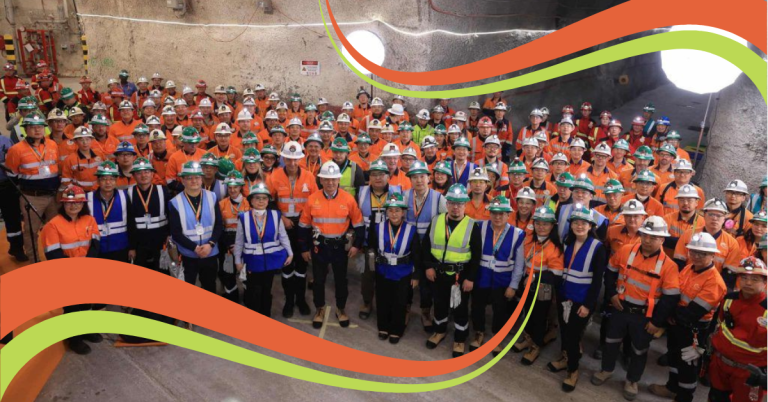
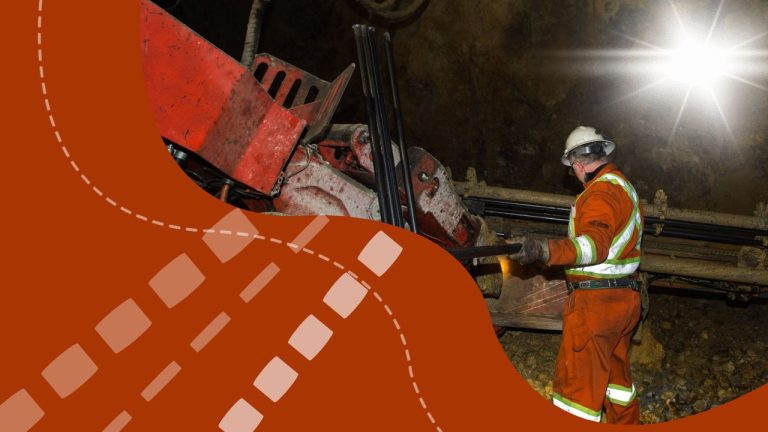
Two years after the landmark announcement marking the beginning of underground production at Oyu Tolgoi LLC / Оюу толгой ХХК copper mine in Mongolia, the site is celebrating monumental progress. On a momentous occasion, President Khurelsukh Ukhnaa joined mine operators at the 1,300-metre underground site, standing as a testament to rapid advancements and collaboration.
“It’s an amazing feat of engineering, technological advancement and safety standards,” stated a representative from Oyu Tolgoi, emphasizing the project’s complexity and success. The company also announced the establishment of the South Gobi Underground Mass Mining Institute, aimed at further developing local skills and knowledge in the mining sector.
Beyond its economic contributions, Oyu Tolgoi is actively involved in promoting sustainable practices in Mongolia. A key initiative is the company’s commitment to plant up to 100 million trees, supporting President Khurelsukh’s “One Billion Trees” initiative to combat desertification. This ambitious project underscores OT’s commitment to environmental stewardship and its dedication to mitigating the impacts of climate change.
President Khurelsukh Ukhnaa’s visit underscored the government’s continued support for the project, recognizing its significance to the nation’s economy. “My huge thanks again to President Khurelsukh Ukhnaa and other Members of the Parliament as well as Cabinet for your visit and continued support,” expressed a representative from OT, highlighting the importance of the partnership.
The year 2025 is anticipated to be a pivotal year for Oyu Tolgoi, with further expansion and increased production expected. The mine’s success is attributed to the collaborative efforts of its workforce, the government, and partnerships with hundreds of local suppliers.
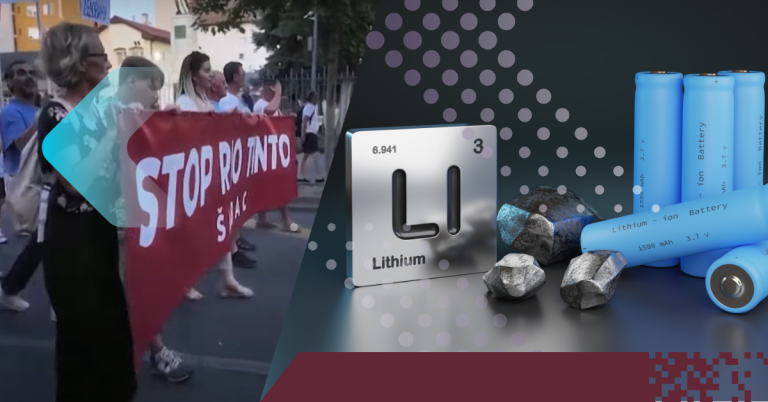
Belgrade, Serbia – August 2024: Massive protests have erupted in Serbia over the proposed lithium mine in the Jadar Valley, spearheaded by British-Australian mining giant Rio Tinto. Approximately 25,000 people took to the streets of Belgrade, expressing their fury over the project’s potential environmental impact and raising concerns about the nation’s future.
The controversy stems from the Serbian government’s reversal of a 2022 decision to halt the project, reinstating it two years later. This move has ignited widespread public outrage, with many fearing the mine will devastate local agriculture and natural habitats.
Environmental and Political Concerns Fuel Opposition
Climate expert Dr. Peter Tom Jones, director of the KU Leuven Institute for Sustainable Metals and Minerals, traveled to Serbia to investigate the strong opposition. He notes the paradox of Serbia, home to Europe’s largest lithium deposit, resisting a project vital for the continent’s transition to electric vehicles and renewable energy storage.
Rio Tinto plans to invest $2.4 billion in the Jadar mine, potentially making Serbia a leading lithium producer. However, the project has faced fierce resistance from local groups like NAD Jadar, who cite fears of pollution and environmental destruction.
Marijanti Babic, Rio Tinto’s country head in Serbia, claims the mine will be an “invisible mine,” operating primarily underground with minimal surface impact. She emphasises the company’s commitment to preserving local farming and utilising modern, electronically controlled operations.
However, resistance groups allege intimidation and threats, claiming they will “defend this with their lives.” The project has become deeply politicised, with allegations of disinformation campaigns and distrust of both Rio Tinto and the Serbian government.
Disinformation and Distrust Plague the Project
Anthropologist Jena Vasilovich from the University of Belgrade points to a lack of transparency and democratic process as key drivers of public distrust. She also highlights past grievances with similar projects and a general dissatisfaction with the current political regime under President Vučić.
Rio Tinto has established an information center and a “fake news wall” to combat what they claim is an organised disinformation campaign. They deny allegations of radioactivity, excessive acid use, and the existence of a large aquifer beneath the mine.
The company has engaged in extensive community outreach, holding over 150 events in the Jadar Valley to address local concerns. They emphasize their commitment to environmental, social, and governance (ESG) standards and highlight the project’s potential economic benefits, including the creation of 20,000 jobs in the battery value chain.
Economic Potential vs. Environmental Risks
Companies like battery manufacturer 11 ES see the Jadar mine as a crucial step towards establishing a European lithium battery supply chain, reducing reliance on China. They highlight the project’s potential to drive economic growth and support the transition to climate neutrality.
However, environmental groups remain skeptical, citing past mining industry practices and the potential for long-term environmental damage. They call for stricter regulations and greater transparency.
The European Union sees the Jadar mine as a strategic asset, aiming to secure its lithium supply and reduce dependence on external sources. However, the project has become entangled with Serbia’s EU membership aspirations, adding another layer of complexity to the debate.
A Nation Divided
The Jadar lithium mine has divided Serbia, pitting economic potential against environmental risks and fueling political tensions. As the global demand for lithium surges, Serbia faces a critical decision that will shape its economic and environmental future.
The Docville documentary festival in Leuven has decided to cancel a planned screening and debate surrounding a controversial lithium mine in Serbia. The decision, described as being made “with a bit of a heavy heart,” was influenced by the subject’s sensitivity. The festival’s director, Frank Moens, confirmed to VRT NWS that this marks the first time such a cancellation has occurred at the festival.
The cancellation applies to the debate titled “Ethical Mining: Is That Possible?” and the accompanying documentary, Not in My Country: Serbia’s Lithium Dilemma, directed by Peter Tom Jones of the KU Leuven Institute for Sustainable Metals and Minerals. The documentary explores the contentious development of a lithium mine in Serbia’s Jadar Valley.
The European Union sees lithium mining as crucial for the green transition, especially for producing batteries for electric vehicles. However, Europe faces challenges in mining lithium domestically, with Serbia identified as a prime location. Yet, proposals to establish lithium mines have provoked significant opposition due to concerns over environmental impacts, such as polluted water, noise, and threats to biodiversity.
Jones, who supports lithium mining as part of the green transition, highlights emotional and historical resistance within Serbia. Activists have voiced concerns about the mine’s potential to harm agriculture, water quality, and the local ecosystem, including threats to bees and other wildlife.
Moens explained the difficulty of organising a balanced debate on the topic, as some parties refused to participate if specific individuals were included, and there were disagreements over moderators. Without a debate, the festival opted not to show the documentary. This contrasts with last year’s successful discussion about a Swedish lithium mine, which included perspectives from the indigenous Sami community. Moens admitted, “We probably underestimated it a bit.”
Despite this setback, Docville still offers a wide range of documentaries, with the festival kicking off next Wednesday.
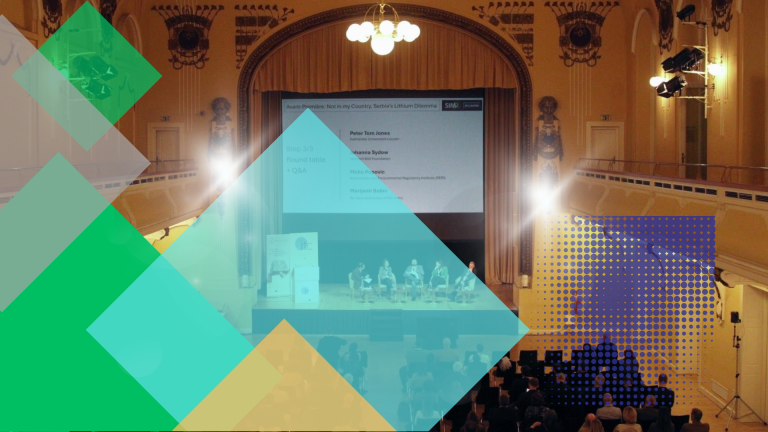
On February 19, 2025, the documentary “Not In My Country: Serbia’s Lithium Dilemma” premiered in Ljubljana, Slovenia. The event, jointly organised by IRTC and CIRAN, featured a screening of the film followed by a panel debate with proponents and opponents of the controversial Jadar lithium project.
The film, which explores the tensions surrounding Europe’s largest proposed lithium mine in Serbia’s Jadar Valley, was met with enthusiastic applause from the audience. Unlike the previous premiere at the European Parliament in Brussels, where discussions focused on the film’s funding and representation, the Ljubljana event delved into substantive issues surrounding the project.
Key Discussion Points
Key topics discussed during the panel debate included:
Technical Comparisons: Jadarite extraction versus other lithium sources.
Origin of “Toxic Claims”: Addressing misconceptions about environmental impacts.
Demand-Side Management: The necessity for broader management strategies alongside mining.
Rule of Law Challenges: Navigating project implementation in a country facing governance and media freedom issues.
The film’s presenter challenged Rio Tinto to bring in a third-party auditor and aim for at least IRMA50 certification, which exceeds current EU standards.
A significant point raised during the discussion was the controversy surrounding a July 2024 publication in Scientific Reports, which has fueled many fears about the project in Serbia. The presenter highlighted that an October 2024 “Author Correction” addressed numerous flaws in the original paper’s methodology and language.
A new documentary set to premiere at the European Parliament on February 5th, 2025, delves into one of Europe’s most contested mining projects. “Not In My Country: Serbia’s Lithium Dilemma” examines the complex intersection of sustainable energy ambitions, environmental concerns, and geopolitical tensions surrounding the Jadar Valley lithium project in Serbia.
The film, directed by Stijn van Baarle and presented by Dr. Peter Tom Jones of KU Leuven, chronicles the discovery of a unique lithium-boron-silicate mineral dubbed “Serbian kryptonite” by mining giant Rio Tinto in 2004. What initially seemed like a promising economic opportunity for Serbia has evolved into a deeply divisive issue, sparking nationwide protests and raising questions about environmental sovereignty.
A Tale of Two Decades
The documentary traces the project’s trajectory from its optimistic beginnings to the emergence of fierce local opposition. The turning point came in 2020 when Rio Tinto’s land acquisition program began fracturing local communities. The resistance movement gained such momentum that it led to the withdrawal of Rio Tinto’s permits in 2022. However, the story took another turn when Serbia’s Constitutional Court reversed this decision in July 2024, igniting fresh protests in Belgrade.
Key Questions Addressed
The film confronts several crucial questions facing modern resource extraction:
Can multinational mining corporations be trusted to maintain rigorous environmental and social governance standards?
Is Serbia being reduced to an EU mining colony, sacrificing its environmental heritage for Western Europe’s electric vehicle ambitions?
Could the opposition to the project be influenced by pro-Russian interests seeking to impede Serbia’s EU membership prospects?
Multiple Perspectives
The documentary features an impressive array of voices from all sides of the debate, including:
Local activists from the Ne Damo Jadar movement
Rio Tinto executives including Marijanti Babic, Chad Blewitt, and Sinead Kaufman
ElevenEs’s CEO Nemanja Mikac
Serbia’s Minister of Mining & Energy Dubravka Djedovic Handanovic
Environmental and political experts from various institutions
Premiere Event Details
The European Parliament premiere will be hosted by MEPs Hildegard Bentele and Yvan Verougstraete, in collaboration with the KU Leuven Institute for Sustainable Metals and Minerals. While the in-person event is invitation-only due to security restrictions, the post-screening interview and panel discussion will be livestreamed to ensure public access to this important debate.
The documentary, funded by SIM² KU Leuven & KU Leuven, represents a significant contribution to the ongoing discourse about sustainable resource extraction in Europe. It highlights the delicate balance between environmental protection, economic development, and geopolitical interests in an increasingly electrified world.
For those interested in viewing the documentary’s trailer, it is available through Journeyman Pictures, offering a glimpse into this comprehensive exploration of one of Europe’s most significant environmental and economic debates.
Serbia’s lithium mining plans, previously shelved in 2022 following widespread protests, have re-emerged. Despite Prime Minister Ana Brnabić’s earlier announcement that the controversial Rio Tinto-backed Jadar project was terminated, recent reports suggest the multinational company continues preparatory activities. These include land acquisitions and community sponsorships in the Loznica region, raising concerns about resumed extraction efforts.
Germany and the EU, prioritizing lithium for energy needs, seem willing to collaborate with Serbia’s right-wing government, led by Aleksandar Vučić, despite ongoing allegations of authoritarianism. While Vučić views lithium mining as a missed economic opportunity, Green Party representatives in parliament have demanded stricter protections for affected communities. The revival of mining plans risks undermining public trust in the EU accession process, given the perceived double standards regarding environmental and democratic values.
The Rio Tinto Group has announced plans to invest $2.5 billion in a lithium mine in Argentina, marking a significant step in President Javier Milei’s agenda to deregulate the economy and attract foreign investment. The UK-based company will develop a processing plant at the Rincon mine, aiming for an annual production capacity of 60,000 metric tons of lithium carbonate. Construction is slated to begin mid-next year, pending necessary permits.
The project aligns with Argentina’s RIGI incentives program, enacted last year to provide tax, currency, and trade benefits for energy and mining sectors over the next 30 years. Rio Tinto CEO Jakob Stausholm, who plans to meet Milei in Italy, praised the program as a model framework for foreign investment.
Despite falling lithium prices and slowed expansion by other miners, Rio Tinto remains committed to advancing its lithium projects, including Rincon, which will use direct extraction methods to conserve water and reduce waste. Located in the lithium triangle of South America, Rincon is part of a region holding over half of global lithium resources.
Rio Tinto’s expansion comes as competition heats up in Argentina, with companies like Eramet SA and Posco Holdings Inc. launching new plants this year. The firm is also targeting copper reserves, holding a stake in the Los Azules project, which recently passed a key permitting milestone. Stausholm emphasized Rio’s commitment to delivering on both lithium and copper developments in Argentina.
The Serbian government is pushing forward with plans for what could become Europe’s largest lithium and boron extraction project, led by the multinational company Rio Tinto. Officials, including the president, have been actively working to secure the investment, even resorting to tactics aimed at discrediting critics. However, the project has faced widespread public resistance, fueled by environmental concerns and allegations of political corruption. For months, protests have erupted across the country, with a core group of rural residents leading the charge. These individuals, who may face property expropriation, are determined to oppose the mine and its potential impacts on their communities and the environment.