Tag: recycling

  • Umicore and STL1 Forge Exclusive Partnership for Germanium Valorization

    Umicore and STL1 Forge Exclusive Partnership for Germanium Valorization

    In a groundbreaking development for the mining sector in the Democratic Republic of Congo (DRC), Umicore, a global leader in materials technology and recycling, has inked an exclusive, long-term partnership agreement with STL1, a subsidiary of Gécamines. This partnership is set to revolutionize the valorization of germanium extracted from the Big Hill2 tailings site located in Lubumbashi, DRC.

    Under the terms of the agreement, Umicore will lend its expertise to optimize STL’s newly established processing facility at the Big Hill site. Leveraging its refining and recycling proficiency, Umicore aims to enhance the extraction process of germanium, a critical metal used in high-tech applications. In return, Umicore secures exclusive access to the processed germanium for its material solutions production.

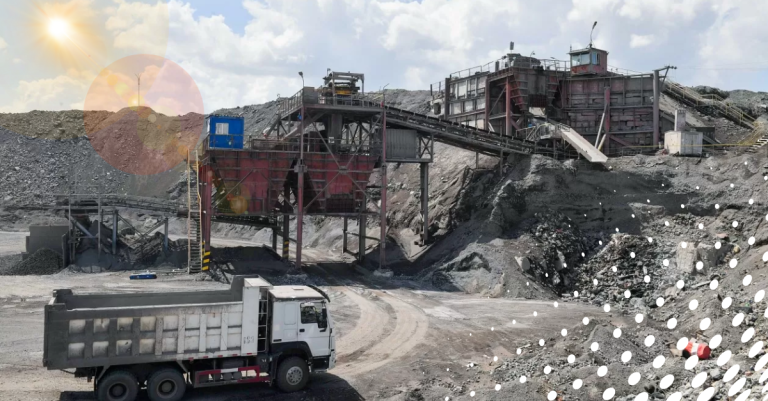
    STL, over the years, has been extracting metals including zinc, silver, cobalt, copper, and germanium from the Big Hill’s extensive reserves. With a century’s worth of mining activity contributing to 10 million tons of metals-containing slags, STL’s focus now shifts to maximizing the value derived from these resources within the DRC. This strategic move aligns with its commissioning of a new hydro-metallurgical facility in 2023, aimed at optimizing the valorization of germanium concentrates.

    The collaboration between Umicore and STL marks a significant milestone in enhancing the local mining industry’s capabilities. The partnership not only promises to diversify Umicore’s germanium supply sources but also ensures a steady, multi-annual offtake of substantial volumes, bolstering the resilience of the supply chain.

    The commencement of refining operations by Umicore is slated for the final quarter of 2024, with subsequent plans for ramping up STL’s germanium extraction capacities. Umicore’s Electro-Optic Materials (EOM) Business Unit stands to benefit from this agreement, as it specializes in utilizing and recycling germanium for optical and electronic applications such as fiber optics, solar cells, and electronics.

    Moreover, the collaboration extends beyond operational and technical support, with Umicore committed to skill development initiatives to analyze germanium content in tailings for recycling purposes. This aligns with STL’s ambitions to expand downstream germanium product offerings while adhering to the highest Environmental, Social, and Governance (ESG) standards.

    The partnership holds promise for stimulating economic growth, creating job opportunities, and fostering skill development within local communities. Mathias Miedreich, CEO of Umicore, emphasized the significance of the agreement in advancing circular business models and contributing to the local economy through sustainable resource utilization.

    In echoing the sentiment, Guy Robert Lukama, Chairman of Gécamines SA/STL, underscored the strategic importance of the partnership in realizing the organization’s vision to emerge as a major player in strategic minerals processing. He highlighted the potential for job creation and economic empowerment, emphasizing the pivotal role of partnerships in driving industrial revolution and energy transition agendas.

    Grant Dempsey, General Manager of STL, reiterated the transformative impact of the collaboration, emphasizing its potential to bolster the local economy, industry, and environment. The partnership, he noted, will not only enhance operational efficiency but also contribute to emission reductions and resource optimization across various sectors.

  • Neometals joint venture to build battery shredding plant for Mercedes

    Neometals joint venture to build battery shredding plant for Mercedes

    Australia’s Neometals Ltd said on Wednesday that its battery recycling joint venture will build a battery shredding plant in southern Germany for Mercedes-Benz.

    The deal by Primobius, which is 50% owned by Neometals and 50% by German engineering firm SMS Group, represents its first commercial recycling plant supply agreement to a global automaker, it said in a statement to the ASX.

    Using Primobius technology, the plant will provide shredded battery material to the Mercedes LIB Recycling Plant, which will recover materials including lithium, cobalt, nickel and manganese.

    This will be fed back into production of a targeted 50,000 battery modules for installation into new Mercedes vehicles.

    Primobius will be responsible for the engineering, equipment supply and installation of the plant, the company said in a statement.

  • Belgium leads the way in rare earth metals recycling

    Belgium leads the way in rare earth metals recycling

    Belgium is a European leader in recycling, one of the few nations to meet recycling targets set out by the EU. Other than household and commercial waste, Belgian recycling plants are now helping to reduce Europe’s dependence on foreign minerals.

    Rare earth metals, commonly used in the production of high-tech goods, are desperately needed for the European economy. China has a monopoly on the supply of these metals, producing up to 97% of the world’s supply.

    In July, China placed export restrictions on gallium and germanium metals, which are indispensable for the production of advanced chips.

    China accounts for about 80% of the global production of gallium, which is used in integrated circuits, LEDs and solar panels, among others. The country also dominates the production of germanium, which is used in the production of fibre-optic cables and infrared applications.

    The European Commission is concerned that restrictions on exports of certain rare earth metals will impact EU supply chains, especially within the context of growing demand for these metals for the green transition. It wants to reduce dependence on third countries such as China to 65% for imports of 18 critical resources.


    Rare metals from scrap

    Belgian companies want to play a role in the transition away from reliance on rare earth metals imports. Even if Europe is not well-suited for the extraction of these precious metals, it can play a role in reducing imports, notably through recycling.

    One factory in Liège is one of the very few places in Europe to process metallurgy-related waste and recover the valuable rare earth metals. Hydrometal has been extracting gallium and germanium from waste for nearly 20 years. However, this is no simple process.

    “It’s very precise, difficult to make profitable, very competitive, and you can’t find a lot of raw materials on the market. It really requires specific knowledge and specific chemistry. Our factory is the only one in Wallonia. Today, there are two actors in Belgium who can do it, and only two actors in Europe too,” Phillipe Henry, administrator of Hydrometal, told RTL Info.

    Recent Chinese export restrictions have caused prices on the market to skyrocket. The current market price for gallium is $614 per kg, and $2,716 per kg for germanium. Faced with these rising prices, recycling has become a more profitable endeavour.

    “We are contacted almost every day to be able to respond to these challenges. They will not be easy, because we have to remain competitive, answer also have to see if it can be maintained in the long-term,” Henry noted.

    For now, Belgian companies are focused on the extraction of rare earth minerals from waste in the metallurgy industry. Granted, much of our tech and smartphones contain highly sought after rare earth metals, but these amounts are still too small to be profitable for major recycling companies.

    The amounts contained in phones amount to just a few grams per tonne, and it is not currently viable to extract gallium, germanium, or indium from them, at least in Belgium.

    While recycling plays an important role in reducing dependence on Chinese exports, Europe may soon switch to encouraging their extraction from European soil. Currently, no rare earth metals are mined in Europe.

    But new studies have revealed massive deposits of valuable rare earth metals, which could feasibly be extracted. In Sweden, mineral group LKAB discovered an untapped reserve of more than 10 million tonnes of oxides, the largest known deposit of its kind in Europe.

    The EU will reflect on the possibility of the opening of new rare earth metal mines in Europe, but will likely still face resistance from locals due to environmental concerns. The largest potential extraction site for Europe is at Kvanefjeld in Greenland, but extraction has been prevented by indigenous groups and local residents.

    The need to find new solutions is growing. Last year, European Commission President Ursula von der Leyen predicted that “Lithium and rare earth metals will soon be more important than oil and gas.”

  • Landfill mining project yields positive results in Spain

    Landfill mining project yields positive results in Spain

    An illegal hillside dumping ground for construction and demolition waste in Andalusia, Spain, has been reverted to its natural state through landfill mining.

    According to a paper in the International Journal of Environmental Engineering, almost 90% of the waste materials sitting at the site near the town of Dehesas Viejas were retrieved and found to be low-hazard and suitable for road construction projects or backfilling conventional landfill sites that have been mined.

    In a media statement, the paper’s lead author David Caro Moreno said that landfill mining is an emerging approach for the remediation of old waste sites. It allows for the reuse of valuable materials, such as plastics and metals that may have been dumped before recycling facilities were widely available. The process might also allow an entire brownfield site to be remediated sufficiently for development or even rewilding.

    For Caro Moreno and his co-authors, in places where mining of conventional, municipal landfill might be required, there is perhaps a greater need for segregation of the waste materials during the recovery process so that they can be reused or recycled. Their research, nevertheless, bodes well for clearing up other big fly-tipping or illegal landfill sites.

    “Landfill mining could become an effective approach to addressing the environmental hazards posed by old landfill sites. Moreover, it could offer a supply of raw materials, such as rare and difficult-to-source metals used in electronics,” the statement reads. “These could be fed into the industrial recycling and supply chains.”

    The researchers acknowledge that there are likely to be issues of contamination with hazardous materials in some landfills set for excavation and mining. However, with appropriate safety measures in place during the process, landfill mining has great potential for the reuse of erstwhile waste and the possibility of remediating sites either for development or repurposing as wildlife reserves, or simply ensuring that they revert to their natural state.

  • Explained: The EU’s handicap in the global race for critical raw materials

    Explained: The EU’s handicap in the global race for critical raw materials

    The EU is highly dependent on third countries for the raw materials needed to engineer its energy transition and digital transformation.

    Russia’s war in Ukraine and the need to wean itself off fossil fuels in order to reach climate targets have prompted the EU to accelerate its green transition in recent months but also forced it to acknowledge its dependencies over access to critical raw materials.

    In the global race for raw materials, the EU faces multiple challenges.

    The first one is China, which recently started restricting exports of gallium and germanium, two metals essential for the production of semiconductors, in response to Western curbs on Beijing’s access to micro-processing technology.

    The EU considers both materials of high strategic importance. As well as semiconductors and other electronic devices, they are used for military applications such as missile defence and radar systems.

    Beijing’s restrictions come as a stark warning as the EU attempts to diversify and boost domestic supply of raw materials to reduce dependency on third countries.

    Reliance on ‘low-governance’ countries

    But diversifying supply chains could mean the EU has to source these materials from countries that don’t adhere to the same standards.

    Recent data suggests the EU’s supply is highly dependent on countries that have a low governance level, based on indicators including political stability, rule of law and corruption control.

    The EU’s Critical Raw Materials Act (CRMA), adopted in March this year, stipulates that EU strategic projects to scale up supply must be assessed taking into account all aspects of sustainability, including environmental protection, socially responsible practices and respect for human rights such as the rights of women.

    But many countries feeding EU supply are not aligned with European values. This raises concerns about the impact on the local communities where materials are mined, as well as the potential exploitation of natural resources.

    For example, the Democratic Republic of Congo, whose governance indicators are among the lowest in the world, supplies 63% of the EU’s cobalt, which is essential for manufacturing batteries for electrical vehicles.

    Diversifying supply a challenge

    The EU is also highly dependent on single countries for key materials such as Magnesium (China, 97%), Lithium (Chile, 97%), Iridium (South Africa, 93%) and Niobium (Brazil, 92%). These dependencies make supply chains vulnerable.

    The Critical Raw Materials Act aims to ensure no third country provides more than 65% of the Union’s annual consumption of any raw material.

    But diversifying supply is complex when refineries of many essential materials are monopolised by one or more global powers. China dominates the refining market for many critical raw materials.

    Russia’s invasion of Ukraine and the ensuing energy crisis has shown the acute dangers of over-reliance for supplies of raw materials. China’s increasingly antagonistic stance and the political instability in many African countries have also served as reminders of the fragility of the EU’s trading relationships.

    A spiralling global demand

    The demand for raw materials is growing steeply, as developed countries race to digitalise and decarbonise their economies. This can only happen with sufficient supply of raw materials, meaning countries must scale up extracting, refining and recycling operations.

    The global demand for lithium, for example, is set to increase a staggering 89-fold by 2050, according to the European Commission. Demand for gallium will multiply 17-fold during the same time.

    The Critical Raw Materials Act sets targets for the Union to extract 10%, process 40% and recycle 15% of its annual consumption of raw materials by 2030.

    To meet these targets and compete on the global stage, European Commission President Ursula von der Leyen has said the EU needs to speed up investments in research and development, recognising that the bloc’s global share of R&D expenditure has fallen 10% in the last 20 years.

  • Weighing the attractions of recycling rare earth magnets

    Weighing the attractions of recycling rare earth magnets

    [vc_section][vc_row][vc_column][distance desktop_type=”30″][lvs][distance desktop_type=”30″][vc_btn title=”Source – sciencebusiness.net” color=”sky” i_type=”material” i_icon_material=”vc-material vc-material-perm_device_information” add_icon=”true” link=”url:https%3A%2F%2Fsciencebusiness.net%2Fnews%2Fgreen-technology%2Fecosystem-weighing-attractions-recycling-rare-earth-magnets|target:_blank”][distance desktop_type=”30″][vc_column_text]Recovering critical raw materials from rare earth magnets is relatively straightforward, but a number of other issues need to be resolved before a useful recycling system can emerge in Europe.

    The Critical Raw Materials Act, currently making its way through the EU legislative process, addresses some of the barriers, but others need to be tackled before all the pieces fall into place.

    Most permanent magnets, especially those with the highest performance, contain raw materials that are scarce in Europe. With the use of these magnets on the rise, particularly in green technologies such as wind turbines and electric vehicles, Europe is keen to break its dependence on imports, the bulk of which come from China.

    For recycling to make an impact, it’s not just the recycling technology that requires attention, but the whole value chain for rare earth magnets. That stretches from processing the recycled material through to magnet fabrication. Then there have to be end users who are willing to buy magnets from a European producer rather than from China.

    “There are already a lot of magnets in Europe that are collected by scrap dealers and sent back to China for recycling,” said Ana Maria Martinez, a senior research scientist at the independent research organisation SINTEF in Norway. “If we want to keep that material in Europe, the whole value chain has to talk together.”

    Martinez was the project manager for REE4EU, a Horizon 2020 project that set out to demonstrate a closed-loop permanent magnet recycling process for the first time in Europe. Concluding in 2019, the project successfully treated several tonnes of process wastes and end-of-life products containing rare earth elements, resulting in the recovery of almost 100 kilograms of rare earth alloys. This alloy was then used to make new permanent magnets to be used in products.

    While the recycling technology worked, taking it to the market presented further challenges. “The recyclers that we approached with our business case wanted to know: can I get 1,000 tonnes of spent magnets coming to my plant every year? And we didn’t know the answer to that,” Martinez said.

    Rare earth magnets can be found in a wide range of products, from medical imaging devices and industrial robots, to consumer products such as dishwashers and microwaves. The first problem is knowing which of them contain rare earth magnets. “In most cases, until you open up the product, you don’t have a clue,” said Martinez.

    The next problem is getting the magnets out of end-of-life products, most of which have not been designed to be taken apart. Doing this economically, and with due respect for the environment and worker safety, will require automation. “We cannot, in Europe, extract the magnets by hand from the different end-of-life products,” said Martinez.

    Extracting magnets

    These issues are being addressed in a follow-up project called REEPRODUCE, which began in May 2022 with funding from Horizon Europe. “Now we want to show that we can extract those magnets from end-of-life products in an automatised way, and that the chemical process developed in REE4EU can accommodate different magnet chemistries, from different sources,” Martinez said.

    The first pilot has started, testing a sorting technology that uses computer vision and artificial intelligence to identify and pick out products likely to contain rare earth magnets from mixed electrical and electronic equipment waste.

    The next stages will involve building robots that can extract the component containing the magnet from each item, and then extract the magnet itself from the component. “Then all of these magnets will go to a recycling plant, which will be robust enough to accommodate different magnet chemistries and coatings,” said Martinez.

    The REEPRODUCE consortium includes 15 partners, mainly from industry, representing the whole value chain, and it will be up to them how the results are commercialised. “At the end, we’ll present some business cases for external stakeholders, but it is up to the technology owners to decide how to go further,” said Martinez.

    Recycling start-ups

    One of the few European start-ups in the rare earth magnet recycling is HyProMag, founded in 2018 to commercialise a hydrogen-based processing method for magnetic scrap, developed by at Birmingham University’s School of Metallurgy and Materials.

    The process converts neodymium-iron-boron (Nd-Fe-B) magnets into a loose, demagnetised, hydrogenated powder. Coatings, adhesives, screws and other residues can be mechanically separated from the powder, making it suitable for immediate use in magnet fabrication.

    After running a pilot plantat the university, HyProMag is setting up its first full-scale facility for remanufacturing rare earth magnets, with production due to start by the end of this year. A second facility being set up at Pforzheim near Stuttgart, by a German sister company, is expected to begin production at the end of 2024.

    The production capacity of these plants is expected to be 100 tonnes of recycled NdFeB powders, alloys and magnets per year. “That’s tiny compared to the 230,000 tonnes produced last year in China, but it’s a start, and all of our technology is fully scalable,” said Carlo Burkhardt, co-founder HyProMag in Germany and scientific director of the Institute for Precious Metals and Technology at Pforzheim University. The company intends both to market the powder and alloys, and make magnets itself.

    As well as the magnet recycling process, HyProMag has invested a lot of effort in developing systems to analyse and sort waste streams, and to automatically dismantle end-of-life electronic equipment.

    “We’ve found some quite clever ideas for sorting ferrite magnets from Nd-Fe-B magnets, for getting magnets out of hard disk drives, and disassembling traction motors to the point where the material is suitable for hydrogen processing,” said Burkhardt

    Currently part of HyProMag’s facilities, these sorting and dismantling systems could be located further up the waste stream, for example at recycling sites or with manufacturers operating buy-back schemes.

    Burkhardt has seen growing interest in magnets from the recycling sector. “A couple of years ago, magnets were just a nuisance. They cause problems in shredding, they agglomerate, and they contaminate other material streams,” he said. “So, the separation is not only about recovering the magnets, but it can increase the value of the other recycled materials.”

    Other barriers to the development of the sector in Europe include bureaucracy and permitting, some of which should be addressed by the Critical Raw Materials Act. But subsidies are a major headache, with companies in China and the US receiving substantial government support. “We need to have the same conditions in Europe as our competitors, given the strategic importance for European growth and for the green transition,” said Burkhardt.

    The image of recycled rare earth magnets also needs to improve, although there is some movement on this front. “End users now realise that we can recycle and produce magnets that are the same as before, or perhaps even better,” Burkhardt said.

    One of the biggest barriers in Europe is the lack of a skilled workforce, with only limited coverage of magnets in higher education. “No one has Nd-Fe-B as a study subject, for example, nor how they are made, nor their applications, while in China 2,500 engineers [specialising in magnets] graduate every year. In order to develop this market, we need to develop these experts.”

    This is something that Burkhardt is working on as coordinator of REEsilience, a Horizon Europe project that aims to build a more resilient and sustainable supply chain for rare earth magnetic materials and products in Europe. “One of our tasks is to develop a syllabus for magnet experts, not only looking at production aspects, but also the wider framework of magnet use and recycling,” he said.

    Dedicated assessment

    As it stands, these methods face an economic challenge if they are to compete with the rare earth magnets produced cheaply in China. This is where the Critical Raw Materials Act will have decisive effect. The Commission proposed that at least 15% of the EU’s annual consumption of all strategic raw materials should come from recycling, a level increased to 20% by the Council of Ministers. A minimum recycled content for rare earth magnets will also be set, after a dedicated assessment of the appropriate level and likely impacts.

    The Act will also introduce detailed product labelling requirements, including information on the amount, type and chemical composition of magnets installed, their location and the coating, glues and additives used and how to remove them from the product.

    “If we really want to have a rare earth value chain in Europe, from secondary resources, the regulatory framework has to be in place to facilitate that,” said Martinez. “Maybe it will be more expensive to recycle than to buy a magnet from China, but if it is required by law, then we are all on a level playing field and we can do it.”

    Even so, Burkhardt thinks the entry costs are too high for many more rare earth magnet recycling start-ups to emerge in Europe. “About $100 million in funding was needed to develop the HyProMag technology to the level where it is industrially feasible,” he said. “That’s not like a software start-up, where you just need a couple of computers and a good idea.”

    But opportunities may develop in future, as the market matures. “Currently the market is not developed, so companies need to be integrated, but in the years to come there may be much more specialisation, with companies carrying out magnet extraction, powder processing, or magnet production.”

    Meanwhile established industrial companies such as Solvay and Suez are taking an interest, as are rare earth mining companies. HyProMag itself is being acquired by Maginito, a recycling technology company owned by Canadian rare earth mining concern Mkango, which was a partner since the start-up’s formation.[/vc_column_text][distance desktop_type=”30″][/vc_column][/vc_row][/vc_section]