Tag: recycling

  • Uzbekistan to Establish Project Office to Oversee Steel Industry

    Uzbekistan to Establish Project Office to Oversee Steel Industry

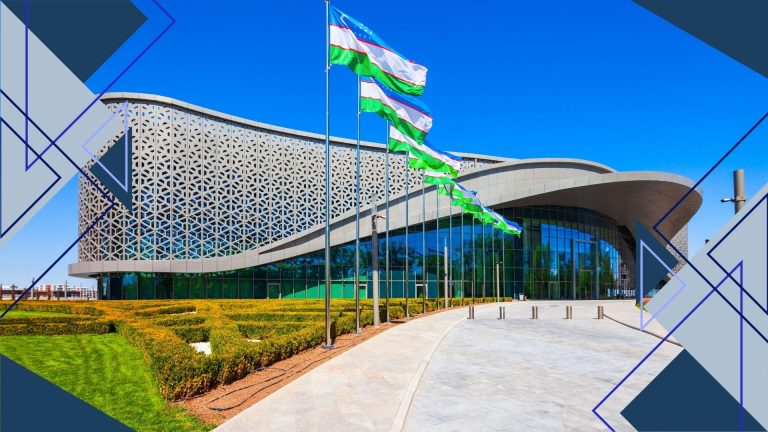
    The Government of Uzbekistan will establish a dedicated project office to oversee the country’s ferrous metallurgy sector, President Shavkat Mirziyoyev announced during a meeting on the industry’s development.

    The new office is expected to begin operations within one month. In addition, the E-lom electronic platform will be launched in early August to monitor the circulation of ferrous metals across the country.

    The project office will conduct daily analysis of the steel market, monitor supply and demand for raw materials and finished products, and maintain digital passports for steel products. Through the E-lom platform, all transactions involving ferrous metals will be tracked in real time.

    According to the government, the measures are designed to strengthen market oversight, promote fair competition and improve price stability within the sector.

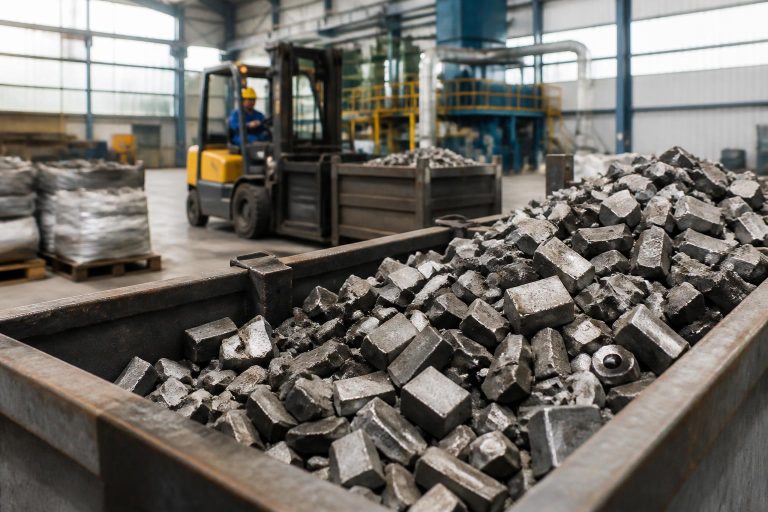
    During the meeting, officials also highlighted the role of the Bekabad Metallurgical Plant, which currently produces around 40% of its rolled steel products using recycled scrap metal, while the remaining 60% is manufactured from imported raw materials.

    The plant receives approximately 700,000 tonnes of ferrous scrap annually. However, authorities estimate that a further 500,000 tonnes of scrap metal remains outside the formal market, underscoring the government’s efforts to improve transparency and bring the sector under greater regulatory control.

  • US DOE Launches $500M Push to Strengthen Critical Minerals and Battery Supply Chains

    US DOE Launches $500M Push to Strengthen Critical Minerals and Battery Supply Chains

    The US Department of Energy (DOE) has announced plans to provide up to $500 million in funding to expand domestic processing, recycling and manufacturing capacity for critical minerals and battery materials.

    The funding initiative, led by the DOE’s Office of Critical Minerals and Energy Innovation (CMEI), is aimed at supporting both demonstration and commercial-scale facilities that process and recycle key materials used in batteries and energy technologies.

    The program targets strategic minerals including lithium, graphite, nickel, copper and aluminum, as well as materials recovered from used battery systems.

    US Energy Secretary Chris Wright said the move is intended to reduce reliance on foreign supply chains, particularly those controlled by geopolitical rivals.

    “For too long, the United States has relied on hostile foreign actors to supply and process the critical materials essential for battery manufacturing,” Wright said.

    The DOE emphasized that strengthening domestic supply chains is critical not only for energy security but also for meeting rising electricity demand linked to artificial intelligence, electrification and clean energy systems.

    ⚙️ Where the money goes
    The funding will support projects across three key areas:

    • Processing of critical minerals from raw feedstocks

    • Recycling of critical materials from end-of-life products

    • Manufacturing of battery materials and components

    This reflects a broader strategy to build resilience across both upstream and midstream segments of the supply chain.

    🌐 Global cooperation still in play
    The announcement comes as US officials engage with international partners at the Indo-Pacific Energy Security Ministerial in Japan.

    Assistant Secretary Audrey Robertson highlighted that while domestic capacity is expanding, collaboration with allies remains essential.

    “Boosting domestic production, including through recycling, will bolster national security and ensure the US and its partners are prepared for future energy challenges,” she said.

    🔋 Strategic context
    The initiative marks the third round of DOE funding focused on battery supply chains. It forms part of a wider effort by Washington to counterbalance global supply concentration, particularly in China, which dominates processing and refining of many critical minerals.

    By investing in processing and recycling infrastructure, the US aims to secure the materials needed for electric vehicles, grid storage systems and next-generation energy technologies — turning supply chains from fragile threads into reinforced cables.

  • Ionic Rare Earths Secures UK Grant Offer for Belfast Magnet Recycling Plant

    Ionic Rare Earths Secures UK Grant Offer for Belfast Magnet Recycling Plant

    Australian-listed Ionic Rare Earths announced on Tuesday that its subsidiary has been offered a £12 million ($16.4 million) capital grant from the UK government to support the development of a rare earth magnet recycling facility in Belfast.

    The funding, offered under the UK’s DRIVE35 programme, would contribute to the capital costs of the plant operated by Ionic Technologies, the company’s recycling arm. The grant remains subject to due diligence and standard funding conditions.

    DRIVE35 is a government-backed initiative aimed at accelerating the industrialisation of zero-emission vehicle technologies and strengthening domestic supply chains for critical materials. The UK, in line with other major economies, is seeking to expand domestic production and recycling of critical minerals as part of its strategy to reduce dependence on overseas suppliers by 2035.

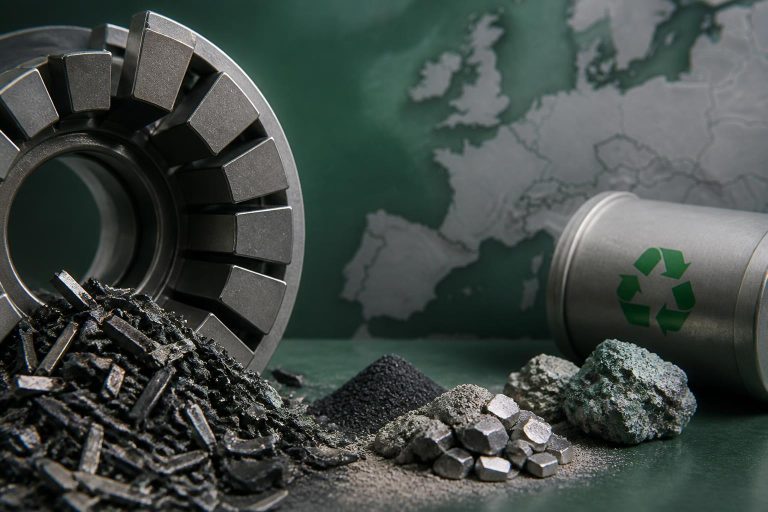
    Once operational, the Belfast facility is expected to produce around 400 tonnes per year of high-purity separated rare earth oxides recovered from end-of-life permanent magnets. The plant will use Ionic Technologies’ proprietary long-loop recycling process, designed to return recycled materials directly into high-value magnet applications.

    Ian Constance, chief executive of the Advanced Propulsion Centre UK, one of the bodies involved in administering DRIVE35 funding, said the project would support the UK’s automotive and advanced manufacturing sectors by strengthening access to strategically important materials.

    Ionic Rare Earths said it continues to engage with multiple potential partners and financiers as it works to secure the remaining funding required for the £85 million project.

  • Mkango opens UK’s first commercial rare earth magnet recycling plant in 25 years

    Mkango opens UK’s first commercial rare earth magnet recycling plant in 25 years

    Canadian rare earths company Mkango Resources has opened Britain’s first commercial facility in a quarter of a century to produce permanent magnets, marking a milestone in efforts to reduce Western dependence on China for critical minerals.

    The new plant, located in Birmingham and operated by Mkango’s subsidiary HyProMag, produces permanent magnets from recycled materials rather than newly mined ore. It uses a hydrogen-based recycling technology developed at the University of Birmingham, which enables rare earth magnets to be recovered from end-of-life products and converted into new magnetic material with significantly lower emissions than traditional mining and refining processes.

    The launch comes as Western governments seek to loosen China’s dominance in the rare earths supply chain. China currently accounts for around 70% of global rare earth mining and about 90% of refining, making alternative supply sources difficult to scale up quickly. Recycling has therefore emerged as one of the fastest ways to expand access to rare earth materials in the near term.

    Speaking to Reuters at the opening, UK Industry Minister Chris McDonald said breaking China’s grip on the supply chain was a strategic priority. The Birmingham plant supports Britain’s critical minerals strategy, which targets meeting 10% of domestic demand through local mining and 20% through recycling by 2035, supported by up to £50 million in government funding.

    The facility has an annual production capacity of 100 to 300 tonnes of permanent magnets, depending on shift patterns. According to Mkango, the plant is already attracting strong interest from automotive manufacturers. The company is also progressing plans to replicate the technology in the United States and Germany, expanding the recycling-based supply of rare earth magnets beyond the UK.

    Britain previously had magnet manufacturing capacity, but this disappeared roughly 25 years ago as production shifted overseas. The opening of the HyProMag plant represents a step toward rebuilding domestic capability in a sector seen as vital for electric vehicles, wind turbines and other clean energy technologies.

  • EU Industry Chief Urges Faster Action and Greater Recycling to Curb Critical Mineral Dependence on China

    EU Industry Chief Urges Faster Action and Greater Recycling to Curb Critical Mineral Dependence on China

    EU industry chief Stéphane Séjourné has warned that the bloc must accelerate its efforts to reduce dependence on Chinese critical raw materials, stressing that large-scale recycling will be essential. Speaking at a conference in Brussels, Séjourné highlighted that under the Critical Raw Materials Act, the EU aims to meet 25% of its demand for key minerals through recycling by 2030 — a major challenge given that less than 1% of rare earths are currently recycled in Europe.

    Séjourné also called for faster deal-making on critical raw materials, arguing that the EU cannot afford to wait for lengthy multi-year trade agreements. He noted that EU production of gallium and rare earth permanent magnets is expected to increase sixfold by 2030, but that progress must speed up across all 17 strategic materials identified by the bloc.

    On regulation, Séjourné acknowledged that overly complex permitting rules have caused too many mining and processing projects to be abandoned, and said simplification is urgently needed. He also cautioned that companies must revisit their procurement strategies, as a recent U.S.–China “stop-the-clock” agreement delaying further export restrictions on rare earths is unlikely to last long. The commissioner is expected to present the EU’s new economic security doctrine and resource package on December 3.

  • EU Urged to Prioritise ESG in Central Asia’s Raw Materials Push

    EU Urged to Prioritise ESG in Central Asia’s Raw Materials Push

    The EU must prioritize Environmental, Social, and Governance (ESG) principles in its dealings with Central Asia to secure its access to crucial raw materials, commentators warn.

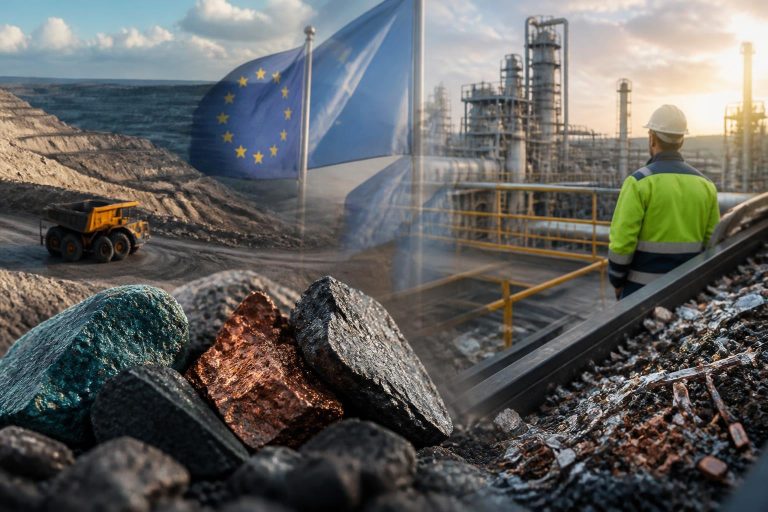
    The bloc arrived in Samarkand this April with a hefty €13.2 billion Global Gateway package, signaling a desire to move beyond merely buying raw materials from the region. A significant portion, €2.5 billion, is earmarked for new mining and processing projects in Kazakhstan, Uzbekistan, and beyond. This drive is born out of necessity: the EU still relies entirely on China for its heavy rare-earth imports and faces the growing risk of vulnerability.

    While geographically late to the game, Europe has a unique advantage: a reputation for robust ESG practices. Local executives cite European partners as “a sign of quality” due to their unwavering adherence to these standards, something often lacking in Chinese or Russian counterparts. However, this edge relies on Brussels consistently embedding ESG into every euro invested. This means robust monitoring and auditing of remediation plans, transparent royalty structures, and genuine upfront consultation with local communities.

    The EU’s Critical Raw Materials Act (CRMA) sets ambitious goals: attaining 10 percent mining, 40 percent processing, and 25 percent recycling of Europe’s annual CRM demand domestically or in trusted partner states by 2030.

    Realising these goals in Central Asia necessitates investment in sustainable technologies. This includes financing water-efficient processing plants, closed-loop waste systems, and solar-powered smelters, rather than simply opening more exploitative mines.

    The EU’s efforts are beginning to take shape, with the spotlight falling on graphite. Kazakhstan’s Sarytogan deposit has been placed on the EU Commission’s list of “strategic projects” eligible for expedited permits and loan guarantees under the CRMA. Meanwhile, the European Bank for Reconstruction and Development has taken a significant stake in the mine operator, marking a direct investment in the region’s CRM sector. The EU is now actively seeking downstream investors to refine indigenous graphite into anode-grade product, capturing added value that historically flowed to Chinese refiners.

    Lithium development is following a similar trajectory. A partnership between HMS Bergbau and Kazakhstan’s Creada Corporation aims to unlock the potential of Kazakh spodumene through extraction, processing, and refining into battery-ready lithium hydroxide. This would be a direct response to the EU’s new battery-passport regulations, which require materials of a certain purity.

    However, Europe faces a formidable competitor: China. The PRC Mineral Resources Law mandates environmental remediation planning before mining commences, setting a new baseline for responsible resource extraction. While welcomed, the application details remain vague, lacking guarantees on local community engagement and enforcement mechanisms, potentially creating loopholes for exploitation.

    Adding to the pressure, Chinese capital is expanding downstream. East Hope Group’s landmark $12 billion investment in Kazakh non-ferrous metals signifies a vertical integration approach—from mining and smelting to fabrication and renewable power generation. This $12 billion vertical integration project in Kazakhstan showcases China’s willingness to build a fully controllable supply chain.

    Europe must act strategically to counter these challenges.

    Firstly, financial aid should be contingent on stringent ESG benchmarks. EU financing must go hand-in-hand with clear, enforceable standards – ISO-compliant tailings dams, methane monitoring, gender-balanced workforce plans, and robust penalties for non-compliance.

    Secondly, the EU should focus on fostering value-adding industries beyond mining. This means investing in processing plants and recycling facilities, not just mines. By creating domestic processing hubs for cathode powders or rare-earth magnets, the CRMA’s 40 percent processing target can be achieved, generating jobs, technology transfer, and increased tax revenue for beneficiary countries.

    Finally, the EU must simplify visa requirements for Central Asian technical personnel. A targeted visa-facilitation agreement could allow them to train in Europe and return, strengthening the region’s skilled workforce.

    Securing a stable and sustainable supply of raw materials is a critical challenge for the EU. While China’s economic clout is undeniable, Europe has the opportunity to win this race by leveraging its commitment to ESG principles and building a truly sustainable, transparent, and trust-based partnership with Central Asia.

    Time is of the essence. The next 18 months, before China’s revised mining law takes full effect and East Hope’s megaproject begins construction, provide a crucial window for the EU to demonstrate its commitment to ESG beyond rhetoric. The stakes are high, as the fate of Europe’s essential raw materials supply hangs in the balance.

  • Over 3 Million Tonnes of Secondary Resources Processed in Karaganda

    Over 3 Million Tonnes of Secondary Resources Processed in Karaganda

    In early 2024, Qarmet established a new specialised department—the Recycling Department—with the primary goal of managing the processes of recycling secondary resources.

    As of the end of May 2025, the company has processed over 3.1 million tonnes of secondary raw materials, which is more than three times the figure for the same period last year. Based on these achievements, the forecast for 2025 is 7.6 million tonnes of processed materials, equivalent to a 95.2% increase compared to the results of 2024.

    Significant results have also been achieved in the processing of steelmaking slag. At the beginning of 2024, the monthly output of metallic scrap did not exceed 4,000 tonnes. However, by the third quarter, thanks to the modernisation of equipment operation approaches and improvements in internal processes, this figure increased to 20,000 tonnes per month.

    Additional impetus for the development of steelmaking slag processing came from contracts with subcontractor organisations, which completed commissioning and start-up work by the end of the year and transitioned to industrial operation of the equipment. This not only significantly increased processing volumes but also became a driver for creating new jobs in related industries, ensuring additional employment and the development of production cooperation.

    For Qarmet, the recycling of secondary resources is not just a technological direction but a crucial element of sustainable development.

  • EU Urged to Create €10 Billion Fund for Critical Raw Materials

    EU Urged to Create €10 Billion Fund for Critical Raw Materials

    The European Union must establish funds exceeding €10 billion ($11.4 billion) to drive investment in the exploration, mining, and recycling of critical raw materials, according to Bernd Schaefer, CEO of EIT RawMaterials, an EU-funded agency for key minerals.

    The EU has set ambitious 2030 targets for 34 critical minerals, including lithium and copper, which are vital for its green transition. These goals aim for 10% of annual demand to be met through domestic mining, 25% through recycling, and 40% through local processing. Furthermore, no single third country should supply more than 65% of any given mineral—a threshold the EU currently surpasses with China for many materials.

    To reach these targets, Schaefer emphasized the necessity of dedicating part of the bloc’s next seven-year budget from 2028 towards mining and recycling initiatives. “It should probably start with at least a billion or 2 billion euros and have the potential to grow considerably,” Schaefer told Reuters.

    Additionally, Schaefer called for the creation of a €10 billion exploration fund to identify minerals within the EU, which, when combined with private investments, could reach around €100 billion. He stressed the importance of evaluating future consumption and supply for each mineral while converting alliances with international partners into tangible volumes amid rising geopolitical tensions.

    “The Americans are very much hands-on in getting things down the road,” Schaefer said, urging Europe to take decisive action.

    Schaefer also pointed out that Europe’s increased defense spending, a factor not considered when setting its raw material targets, would further heighten demand for minerals such as vanadium, titanium, molybdenum, and chromium. He noted that while the required volumes are not massive, the urgency and sensitivity surrounding their sourcing have intensified, surpassing even that for energy and mobility raw materials.

  • EU Opens Industry Consultation on Critical Raw Materials Cooperation Amid Supply Chain Pressures

    EU Opens Industry Consultation on Critical Raw Materials Cooperation Amid Supply Chain Pressures

    As the European Union works to shore up the security and sustainability of its raw material supply chains, European Commission Executive Vice-President Teresa Ribera has launched a public consultation aimed at promoting cooperation among industry players under EU competition rules.

    The move reflects Ribera’s dual mandate as Commissioner for a Clean, Just and Competitive Transition: guiding the bloc’s competition policy through 2029 while co-leading the Clean Industrial Deal, a pillar of the EU’s green and industrial transformation. According to her 2024 Mission Letter, Ribera must “modernise the EU’s competition policy” to enable innovation, resilience, and sustainability in an era marked by geopolitical tensions and unfair subsidy-driven competition.

    Announcing the consultation, Ribera invited stakeholders in extraction, processing, and recycling to identify barriers and opportunities for collaboration across the raw materials value chain. “Together, we can build sustainable supply chains and transform challenges into opportunities for prosperity, innovation and resilience,” she stated.

    The consultation comes as companies struggle to navigate legal uncertainty around cooperation. While the EU’s 2023 Horizontal Guidelines offer some room for sustainability agreements, they caution that even modest cooperation—such as setting a joint purchase price for recyclable phones—can breach antitrust rules. Meanwhile, the 2022 Vertical Guidelines do little to clarify how sustainability considerations might enable cooperation further down the supply chain.

    The legal ambiguity stands in contrast to growing EU policy imperatives. The Draghi Report on European Competitiveness (2024) urges the Commission to ease legal pathways for joint procurement and collaborative production efforts in critical raw materials. Likewise, the Commission’s Clean Industrial Deal communication commits to providing companies with tailored antitrust guidance aligned with EU economic and security priorities.

    While the EU’s 2024 Critical Raw Materials Act (CRMA) already outlines strategic public-sector projects to diversify sourcing, the CRMA stops short of addressing the private sector’s role in joint action. In March 2025, the Commission selected 25 Strategic Projects across 14 critical materials—including lithium, cobalt, nickel, graphite, and tungsten—but implementation rests largely with national governments and non-EU partners.

    Ribera’s new consultation, therefore, fills a key policy gap. The Commission is expected to initially focus on the 14 raw materials prioritized under the CRMA, particularly those essential to sectors like renewables, digital, aerospace and defence. Based on the feedback, the Commission will consider whether to issue new competition guidance—possibly by 2026—clarifying when and how companies may work together to strengthen critical supply chains without violating EU antitrust law.

  • Aurubis Launches Modernized Tankhouse to Boost Copper Production in Lünen

    Aurubis Launches Modernized Tankhouse to Boost Copper Production in Lünen

    Aurubis officially celebrated the launch of the refurbished tankhouse for copper production at its recycling plant in Lünen, Germany. The modernized facility is set to increase production capacity by around 10%, enabling the production of up to 210,000 tons of copper cathodes annually. A €60 million investment was made to future-proof the tankhouse, ensuring the long-term success of the recycling site. This upgrade also allows for the processing of other metals, such as gold, tin, and nickel, alongside copper.

    “Global demand for raw materials is on the rise. As the largest multimetal recycling site in Europe, Lünen is a cornerstone of the circular economy. We’re delivering more responsibly produced metals to the market with our modernized tankhouse — for a successful energy transition, while strengthening and securing our core business at the same time,” said Inge Hofkens, COO of Multimetal Recycling at Aurubis AG.

    Construction on the tankhouse began in October 2020 and was completed on schedule. The upgrades included a complete refurbishment of the tankhouse basins, infrastructure improvements like a renovated roof, and investments in further automation, including state-of-the-art robot technology.

    “I am particularly proud of the fact that we were able to keep the facility running reliably at 80% while construction was ongoing. A great achievement by the whole team! Aurubis is advancing its pioneering role in recycling by investing in renovating the tankhouse,” said Verena von Weiss, Lünen Plant Manager.

    “This significant investment of €60 million is a clear signal of Aurubis’ commitment to the Lünen recycling site, to strong and efficient industry, to protecting the climate, and to safeguarding jobs and apprenticeships. Modern and responsible industrial companies like Aurubis are the foundation of our region’s prosperity,” said Lünen Mayor Jürgen Kleine-Frauns.

    The tankhouse represents the final step in the copper refining process. Copper anodes, weighing about 400 kg with a copper content of up to 98%, are electrochemically dissolved. The copper ions are deposited on stainless steel plates, resulting in 99.99% pure copper for optimal conductivity in downstream applications. Other substances in the anode, such as precious metals, precipitate out during electrolysis and are separated and refined in the Aurubis Group network.