Tag: Raw Materials

  • Navigating Global Geopolitics: Germany and the EU’s Quest for Raw Materials

    Navigating Global Geopolitics: Germany and the EU’s Quest for Raw Materials

    As the demand for energy transition, electromobility, and digitalization surges globally, Germany finds itself at the forefront, recognizing the critical importance of a steady supply of minerals and metals. Essential for sectors like automotive, mechanical engineering, and chemicals, raw materials form the backbone of Germany’s industrial prowess. The complexities of metal supply chains, coupled with the escalating global appetite for these resources, heighten the significance of securing a stable supply.

    Germany’s current reliance on imported raw materials is pronounced, with only a fraction sourced domestically. The German Mineral Resources Agency highlights that in 2022, the country imported metals worth €121.7 billion, reflecting the challenges of achieving self-sufficiency. The geopolitical dimension adds another layer, with China emerging as a central hub in global metal supply chains. China’s role as a major supplier, especially in providing rare earths to the European Union, underscores the vulnerabilities created by high dependencies.

    In response, the European Commission has proposed the Critical Raw Materials Act (CRMA) in March 2023 to address these challenges. The CRMA seeks to boost domestic mining, expand recycling capacities, and diversify imports of critical raw materials. The European Union aims to establish new partnerships and reduce dependency on individual countries to ensure a resilient supply chain.

    Globally, the competition for raw materials is escalating. The United States, through initiatives like the Inflation Reduction Act and the Minerals Security Partnership, actively secures its raw material supply chains. China, on the other hand, extends its influence through industrialization projects in Africa and the solar industry.

    In this race, even Saudi Arabia, with its “Vision 2030,” is investing significantly in mineral resource development. Resource-rich countries in the Global South see the geopolitical competition as an opportunity to move beyond being mere suppliers and establish stages of industrial production within their borders.

    The EU responds by forging strategic raw materials partnerships with various countries, recognizing the need for a coordinated approach among member states. However, the global race necessitates careful navigation of international cooperation complexities.

    While financial resources are crucial, strategic foreign policy decisions take center stage. The EU must engage in meaningful dialogues with potential raw material partners, considering economic and industrial policy interests. The competition for raw materials extends beyond monetary transactions, requiring a nuanced and proactive foreign policy approach to secure Europe’s access to essential resources.

  • State Bank Advises Germany to Diversify Copper, Lithium, and Rare Earth Supplies

    State Bank Advises Germany to Diversify Copper, Lithium, and Rare Earth Supplies

    KfW, the government-owned financing institution, urges Germany to adopt a “balanced catalogue of measures” to secure its essential raw material supply amid the global shifts of decarbonization and digitalization. A research report by IW Consult and Fraunhofer ISI, commissioned by KfW, highlights supply risks in the production and supply chains of key raw materials: copper, lithium, and rare earth minerals. The analysis identifies significant dependencies in sectors like automotive manufacturing, emphasizing the need for diversification at the core of any resilience strategy. With limited suppliers posing supply risks, the report suggests a comprehensive approach, including promoting technological progress for substitution and material efficiency. Germany’s transition to renewable energy faces challenges in sourcing resources for “green” technologies, necessitating strategic measures to avoid environmental and social impacts.

  • European Leaders Discuss Critical Raw Materials in Clean Transition Dialogue

    European Leaders Discuss Critical Raw Materials in Clean Transition Dialogue

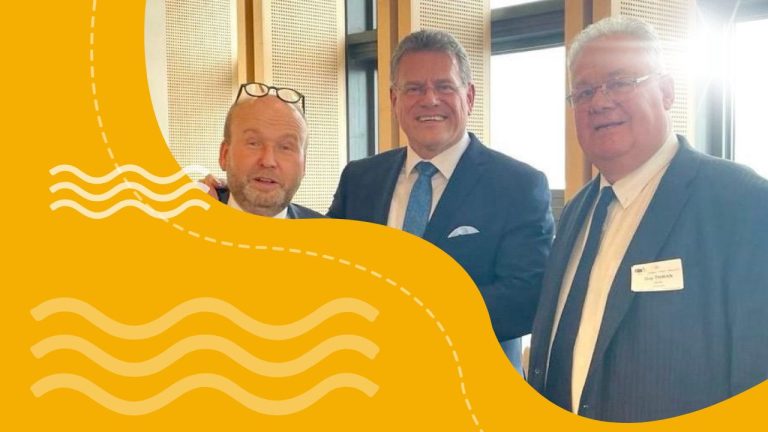
    Among the participants was Guy Thiran, Director General of Eurometaux, who joined fellow raw materials leaders to explore strategies for fortifying Europe’s energy transition, which heavily relies on metals, emphasizing the twin pillars of security and sustainability.

    Highlighting Europe’s robust industrial foundation, Thiran pointed to over 70 ongoing projects spanning the metals supply chain, from mining and processing to recycling, boasting a world-leading environmental footprint.

    The focus now shifts towards advancing these projects in alignment with the Critical Raw Materials Act 2030 production goals while revitalizing existing operations.

    Thiran outlined five key EU actions discussed during the dialogue:

    1. Delivering EU Finance: Urgent provision of EU finance to stimulate raw materials investment and narrow the competitiveness gap with global counterparts, with particular emphasis on mid-stream processing.
    2. Energy-Intensive Industries Link: Strengthening the connection with prior dialogues on energy-intensive industries, recognizing the pivotal role of a globally competitive energy supply in Europe’s raw materials success.
    3. Unified Policy Approach: Addressing unintended bottlenecks stemming from other EU legislation, such as chemicals or water, through a unified policy approach.
    4. Enhanced Recycling: Scaling up metals recycling rates through improvements in collection, sorting, and shipment processes to support top-tier recyclers on a level playing field.
    5. Responsible Global Mining Financing: Providing financing for responsible global mining projects led by European companies to prevent the monopolization of resource-rich regions by foreign powers.

    The discourse underscores a shift towards proactive engagement by the European Commission, as evidenced by recent events like the Antwerp Industry Summit and the Clean Transition Dialogues, signaling a renewed focus on business engagement and stakeholder mobilization.

    As discussions conclude, the call to action resonates clear – it’s time to translate dialogue into tangible progress and deliver the significant strides necessary for Europe’s clean transition journey.

  • Germany invests $1.1bn to counter China on raw materials

    Germany invests $1.1bn to counter China on raw materials

    The German government earmarked about €1 billion ($1.1 billion) for raw materials investments as it seeks to reduce dependency on producers such as China for critical minerals, according to people familiar with the plan.

    A selection process will be established to determine which projects — including in extraction, processing and recycling materials — are eligible, the people said, speaking on condition of anonymity. Financing, via Germany’s state-owned KfW development bank, will consist of equity capital to make acquisitions of minority stakes.

    Projects in Germany and abroad will “contribute to the security of supply of critical raw materials,” an Economy Ministry spokeswoman said. The ministry didn’t give details on how the state fund would be structured.

    Pandemic-triggered supply-chain disruptions across the globe and Russia’s invasion of Ukraine exposed the vulnerability of Europe’s reliance on energy and raw materials for high-tech and green projects. Chancellor Olaf Scholz’s government pledged to ratchet up efforts to access to critical materials over the longer term.

    Raw materials including cobalt, copper, lithium, silicon and rare earth metals are needed to make microchips, wind turbines and batteries for electric vehicles.

    As Germany’s parliament approves Scholz’s 2024 budget on Friday, the billion-euro fund is to be set up for four years. Investments will be coordinated with Italian and French initiatives in the raw materials sector, the people said. Policymakers will focus on mineral projects defined as critical in the European Union’s Critical Raw Materials Act.

    Veronika Grimm, a member of Scholz’s panel of independent economic advisers, said the aim of diversifying raw-material supplies must be a “top priority” for the EU as a whole.

    “The raw-material fund can be an element, but it won’t be a enough,” Grimm told Bloomberg.

    KfW declined to comment on the plans. The lender is expected to make a statement about its role managing the project at its annual news conference next week on Feb 7. The EU agreed on measures in November under the Critical Raw Materials Act to boost domestic mining and reduce dependency on any one country.

    While Germany still has to set up a structure to organize its investments into raw materials, Japan could provide a model. Since 2004, the state-owned Japan Organization for Metals and Energy Security has invested in the storage of raw materials, explored reserves, provided loans or guarantees for commodity companies and bought their shares directly.

  • Extraction of raw materials to rise by 60% by 2060, says UN report

    Extraction of raw materials to rise by 60% by 2060, says UN report

    The global extraction of raw materials is expected to increase by 60% by 2060, with calamitous consequences for the climate and the environment, according an unpublished UN analysis seen by the Guardian.

    Natural resource extraction has soared by almost 400% since 1970 due to industrialisation, urbanisation and population growth, according to a presentation of the five-yearly UN Global Resource Outlook made to EU ministers last week.

    The stripping of Earth’s natural materials is already responsible for 60% of global heating impacts, including land use change, 40% of air pollution impact, and more than 90% of global water stress and land-related biodiversity loss, says the report, due to be released in February.

    Janez Potočnik, a former European commissioner and a co-chair of the UN panel that produced the analysis, said a gouging of raw materials on the scale predicted would almost certainly trigger more frequent and more severe storms, droughts and other climate disasters.

    “Higher figures mean higher impacts,” he said. “In essence, there are no more safe spaces on Earth. We are already out of our safe operating space and if these trends continue, things will get worse. Extreme weather events will simply become much more frequent and that will have ever more serious financial and human costs.”

    The report prioritises equity and human wellbeing measurements over GDP growth alone and proposes action to reduce overall demand rather than simply increasing “green” production.

    Electric vehicles, for example, use almost 10 times more “critical raw materials” than conventional cars, and reaching net zero transport emissions by 2050 would require increasing critical mineral extraction for them sixfold within 15 years.

    More remote working, better local services and low-carbon transport options such as bikes and trains could be as effective as ramped up vehicle production in meeting people’s mobility needs, with less harmful environmental impacts, the report says.

    “Decarbonisation without decoupling economic growth and wellbeing from resource use and environmental impacts is not a convincing answer and the currently prevailing focus on cleaning the supply side needs to be complemented with demand-side measures,” Potočnik said.

    Much of Europe’s housing crisis could be resolved by making better use of empty homes, under-utilised space and more community-focused living, rather than building more houses on virgin land, the paper argues.

    This sort of “systemic resource efficiency” could increase equity and reduce greenhouse gas emissions by more than 80% by 2060, compared with current levels. Material and energy needs for mobility could be cut by more than 40% and for construction by about 30%, according to the report.

    Our relationship with nature “will be resolved either with collective wisdom and effort or in a hard and very painful way [with] conflicts, pandemics, migration,” it says. “The future will be green or there will be no future.”

    Zakia Khattabi, the climate and environment minister for Belgium, which currently holds the EU’s rotating presidency, told the Guardian: “Resource use is a main driver of the triple crisis of climate, biodiversity and pollution. Reducing our resource consumption is essential to minimise those interconnected environmental pressures. Future EU policies on the circular economy need a stronger focus on demand-side measures as well as on a just transition in order to address this.”

    Under the European Green Deal, EU countries’ material and waste footprints are monitored and logged online. The bloc has not so far moved to legislate for use reduction targets but the issue is expected to be discussed at a meeting of EU environment ministers in June.

    One EU presidency official said: “Over the years, indicators were elaborated to monitor progress on the circular economy in the EU, including on the footprint of our material consumption. What we lack in addition, however, is a common European understanding of what our aim is in terms of reducing this footprint.”

    Insiders say privately the EU is the most likely grouping of developed countries to support such a policy, with the US, Japan, Australia and Canada all opposed to a target.

    On average, Europeans have an annual material footprint of 15 tonnes per person, with Finland topping the list at 46 tonnes per capita, and the Netherlands at the bottom on 7 tonnes per capita.

    Finland also generates the most waste per person in the EU (20,993kg), while Croatia produces the least (1,483kg). The average EU citizen’s waste footprint in 2020 was 4,815kg.

  • Europe is ‘miles behind’ in race for raw materials used in electric car batteries

    Europe is ‘miles behind’ in race for raw materials used in electric car batteries

    European carmakers have secured less than a sixth of the key raw materials they will need by 2030 to make electric vehicle batteries, according to analysis that highlights the expected scramble for green-tech resources.

    Carmakers have secured contracts for 16% of the lithium, cobalt and nickel required to hit their 2030 electric car sales targets, according to public disclosures analysed by Transport & Environment (T&E), a Brussels-based campaign group.

    The world’s two biggest electric carmakers, Tesla in the US and China’s BYD, were significantly further ahead of many of their European rivals in securing access to key raw materials, the researchers found.

    Batteries used in devices ranging from mobile phones to cars are made of precisely controlled combinations of metals. There is a global race to find enough lithium, the lightest metal, but cobalt and nickel are also important in many batteries.

    The analysis suggested carmakers had disclosed agreements that would cover only 14% of the lithium, 17% of the nickel and 10% of the cobalt needed to meet their targets for 2030. The EU and UK will ban the sale of new fossil fuel cars in 2035.

    Julia Poliscanova, the senior director for vehicles and emobility at T&E, said: “There is a clear disconnect between carmakers’ electric vehicle [EV] goals and their critical mineral strategies. Tesla and BYD are way ahead of most European players, who are only waking up to the challenge of securing battery metals now.”

    T&E said Mercedes-Benz, BMW and Hyundai/Kia were the carmakers with large European operations that were lagging furthest behind rivals. Ford, Volkswagen and Stellantis have disclosed plans for battery mineral supply that rival Tesla and BYD.

    Some of the carmakers may have secret deals with mining or refining companies to supply enough minerals, while some are looking at ways of reducing or eliminating the use of expensive cobalt and nickel. Nevertheless, the scale of the undersupply detailed in publicly disclosed contracts suggested carmakers would have to battle to hit their electric targets.

    The analysis tallies with forecasts from the data company Benchmark Mineral Intelligence that demand for some key materials will significantly outstrip supply in the coming decade.

    Benchmark predicts that lithium demand will quadruple by 2030 as China, Europe and then the US move rapidly away from petrol and diesel. However, its forecasts suggest there will be a lithium shortfall of 390,000 tonnes in 2030, compared with global production of 2.7m tonnes. It also predicts shortfalls of cobalt and nickel – part of what it describes as a “great raw materials disconnect” that could limit the pace of the transition away from petrol and diesel cars.

    Caspar Rawles, Benchmark’s chief data officer, said: “In the medium and even the long term, lithium is probably going to be the limiting factor on the rate that the battery industry can scale.”

    Big mining projects usuallytook at least five years to start producing material at scale, and as long as seven years if fundraising was required, Rawles said. That would mean investment decisions would need to be made in the next year or two to increase supply by 2030.

    Poliscanova said it was supply chain strategies that would “make or break the EV transition in Europe, and render some companies obsolete”. However, she added that European manufacturers were ahead of rivals from China and the US in “cleaning up supply chains”. Some mineral suppliers have previously been found to have used child labour, exploited low-paid workers or used environmentally damaging methods.


  • Polish Briefing: Poland’s quest for rare minerals I Bogdanka mine wants to go green

    Polish Briefing: Poland’s quest for rare minerals I Bogdanka mine wants to go green

    Poland is looking for a substitute for lithium and other rare earth metals

    Poland is exploring the possibility of using a substitute for lithium and other rare earth metals. “The raw materials policy defines those raw materials that are used today. Today it is apparent that the energy transition makes it necessary to develop economic areas, which we should launch in our country. If we define the areas that we will launch in Poland, then we can adjust the needs for raw materials. Perhaps some of these needs are met, so we will open a discussion and try to introduce the point of view that not only critical raw materials are necessary, but they can also be replaced by other generally available raw materials, such as rare earth metals, lithium,” said Deputy Minister of Climate and Environment Piotr Dziadzio, Chief Geologist of the Country.

    “We should look for substitutions for raw materials and that is what we are doing. I do not want to reveal the details now, but in the coming weeks there may be additional information on this subject,” added minister Dziadzio.

    Lithium is used for the production of electric car batteries, among others. Rare earth metals are used to make semiconductors, which are an essential element of electronics, military equipment or vehicles. They are also needed for the energy transition.

    Wojciech Jakóbik / Jedrzej Stachura

    Bogdanka’s new strategy to turn the mine green

    Bogdanka Lubelski Węgiel presented a development strategy that involves more coal mining until the mine is closed in Poland, and in the meantime investments in renewables, their components and recycling.

    “The average level of coal production in 2023-2025 will be approx. 9.1 million tonnes, in the years 2026-2030 approx. 10.1 million tonnes, and in 2031-2040 approx. 9.1 million tons,” the new Bogdanka strategy announced in Lublin on May 17 said. Bogdanka intends to maintain more than half of the market share of coal.

    One of the priorities is to “guarantee production by 2049 by starting production from the K-6 and K-7 resource base in 2024 and preparing for the availability of a vertical Ostrów field, which after 2038 will guarantee the flexibility and energy security of the state in the energy transition.” The social contract with Polish miners provides for the pahse-out of mines by 2049.

    The company also declares “support for Ukraine’s energy recovery through the use of Bogdanka’s competencies and resources, which can actively support the reconstruction of critical infrastructure in Ukraine after the war.”

    Bogdanka is also expected to develop multi-resource mining based on the exploration and commercial extraction of a number of minerals crucial for sustainable transformation and attractive to the market. The aim is also to produce res components, i.e. foundation baskets for wind farms and structures for the installation of PV panels. The mine also wants to scale up RES installations to diversify Bogdanka’s revenue stream by adding 500MW RES installations and selling the energy produced by them, as well as trading batteries and PV waste.

    LW Bogdanka / Wojciech Jakóbik

  • Landfill mining project yields positive results in Spain

    Landfill mining project yields positive results in Spain

    An illegal hillside dumping ground for construction and demolition waste in Andalusia, Spain, has been reverted to its natural state through landfill mining.

    According to a paper in the International Journal of Environmental Engineering, almost 90% of the waste materials sitting at the site near the town of Dehesas Viejas were retrieved and found to be low-hazard and suitable for road construction projects or backfilling conventional landfill sites that have been mined.

    In a media statement, the paper’s lead author David Caro Moreno said that landfill mining is an emerging approach for the remediation of old waste sites. It allows for the reuse of valuable materials, such as plastics and metals that may have been dumped before recycling facilities were widely available. The process might also allow an entire brownfield site to be remediated sufficiently for development or even rewilding.

    For Caro Moreno and his co-authors, in places where mining of conventional, municipal landfill might be required, there is perhaps a greater need for segregation of the waste materials during the recovery process so that they can be reused or recycled. Their research, nevertheless, bodes well for clearing up other big fly-tipping or illegal landfill sites.

    “Landfill mining could become an effective approach to addressing the environmental hazards posed by old landfill sites. Moreover, it could offer a supply of raw materials, such as rare and difficult-to-source metals used in electronics,” the statement reads. “These could be fed into the industrial recycling and supply chains.”

    The researchers acknowledge that there are likely to be issues of contamination with hazardous materials in some landfills set for excavation and mining. However, with appropriate safety measures in place during the process, landfill mining has great potential for the reuse of erstwhile waste and the possibility of remediating sites either for development or repurposing as wildlife reserves, or simply ensuring that they revert to their natural state.

  • Explained: The EU’s handicap in the global race for critical raw materials

    Explained: The EU’s handicap in the global race for critical raw materials

    The EU is highly dependent on third countries for the raw materials needed to engineer its energy transition and digital transformation.

    Russia’s war in Ukraine and the need to wean itself off fossil fuels in order to reach climate targets have prompted the EU to accelerate its green transition in recent months but also forced it to acknowledge its dependencies over access to critical raw materials.

    In the global race for raw materials, the EU faces multiple challenges.

    The first one is China, which recently started restricting exports of gallium and germanium, two metals essential for the production of semiconductors, in response to Western curbs on Beijing’s access to micro-processing technology.

    The EU considers both materials of high strategic importance. As well as semiconductors and other electronic devices, they are used for military applications such as missile defence and radar systems.

    Beijing’s restrictions come as a stark warning as the EU attempts to diversify and boost domestic supply of raw materials to reduce dependency on third countries.

    Reliance on ‘low-governance’ countries

    But diversifying supply chains could mean the EU has to source these materials from countries that don’t adhere to the same standards.

    Recent data suggests the EU’s supply is highly dependent on countries that have a low governance level, based on indicators including political stability, rule of law and corruption control.

    The EU’s Critical Raw Materials Act (CRMA), adopted in March this year, stipulates that EU strategic projects to scale up supply must be assessed taking into account all aspects of sustainability, including environmental protection, socially responsible practices and respect for human rights such as the rights of women.

    But many countries feeding EU supply are not aligned with European values. This raises concerns about the impact on the local communities where materials are mined, as well as the potential exploitation of natural resources.

    For example, the Democratic Republic of Congo, whose governance indicators are among the lowest in the world, supplies 63% of the EU’s cobalt, which is essential for manufacturing batteries for electrical vehicles.

    Diversifying supply a challenge

    The EU is also highly dependent on single countries for key materials such as Magnesium (China, 97%), Lithium (Chile, 97%), Iridium (South Africa, 93%) and Niobium (Brazil, 92%). These dependencies make supply chains vulnerable.

    The Critical Raw Materials Act aims to ensure no third country provides more than 65% of the Union’s annual consumption of any raw material.

    But diversifying supply is complex when refineries of many essential materials are monopolised by one or more global powers. China dominates the refining market for many critical raw materials.

    Russia’s invasion of Ukraine and the ensuing energy crisis has shown the acute dangers of over-reliance for supplies of raw materials. China’s increasingly antagonistic stance and the political instability in many African countries have also served as reminders of the fragility of the EU’s trading relationships.

    A spiralling global demand

    The demand for raw materials is growing steeply, as developed countries race to digitalise and decarbonise their economies. This can only happen with sufficient supply of raw materials, meaning countries must scale up extracting, refining and recycling operations.

    The global demand for lithium, for example, is set to increase a staggering 89-fold by 2050, according to the European Commission. Demand for gallium will multiply 17-fold during the same time.

    The Critical Raw Materials Act sets targets for the Union to extract 10%, process 40% and recycle 15% of its annual consumption of raw materials by 2030.

    To meet these targets and compete on the global stage, European Commission President Ursula von der Leyen has said the EU needs to speed up investments in research and development, recognising that the bloc’s global share of R&D expenditure has fallen 10% in the last 20 years.

  • Uganda Seeks Serbian Investment to Develop Raw Materials

    Uganda Seeks Serbian Investment to Develop Raw Materials

    President Yoweri Museveni of Uganda has reached out to his Serbian counterpart, President Aleksandar Vucic, seeking support to advance Uganda’s economic agenda.

    During the launch of the Uganda Trade Hub in Belgrade, President Museveni urged for collaboration in adding value to Uganda’s raw materials, with the goal of increasing revenue for the country.

    “We need to add value to our agricultural products to enhance revenue generation for Uganda. I call on the Serbian Government to collaborate with us in critical sectors.” stated President Museveni.

    In a round table meeting with Serbian businessmen and women, President Museveni highlighted the importance of adding value to Uganda’s agricultural products to ensure higher returns. He urged the Serbian Government to join hands with Uganda in crucial sectors to achieve this objective.

    In response to President Museveni’s appeal, President Vucic pledged support by ensuring direct flights between Belgrade and Entebbe proposing that Serbian Career Air Serbia would fly directly to Entebbe via a code share with Uganda Airlines, aiming to enhance connectivity and reduce logistical costs for exporters. To materialize this agenda, President Vucic committed to sending a Serbian delegation to Uganda in August.

    “Serbian Career Air Serbia will fly directly to Entebbe via a code share with Uganda Airlines, strengthening connectivity and reducing logistical costs for exporters.” Stated President Vucic.

    The waterfront in Belgrade witnessed the official launch of the Uganda Connect Trade Hub, which is expected to play a significant role in marketing Ugandan products to the world.

    The hub, fully stocked with Ugandan products, is manned by Ugandan students who will coordinate bulk orders and serve as ambassadors for the nation’s exports.

    Board member of the Private Sector Foundation Uganda (PSFU), Badru Ntege, expressed his enthusiasm about the trade hub.

    Chairman of the Presidential Advisory Committee on Exports and Development, Odrek Rwabwogo, described the trade hub as the first step toward a bigger vision, representing a disruptive force in the traditional flow of trade. This venture is set to stimulate and invigorate Uganda’s export sector significantly.

    “The trade hub marks the first step into a bigger picture, disrupting the usual flow of trade,” noted Rwabwogo.

    As the Uganda flag flew high in Belgrade, local producers back home were encouraged to collaborate and establish consortiums that meet global standards, essential for accessing this new market. The strategic partnership with Serbia holds immense potential to drive Uganda’s socio-economic transformation.

    With the trade hub now operational and the commitment of the Serbian Government to support Uganda’s endeavors, the stage is set for a dynamic surge in Uganda’s exports, paving the way for increased revenue and economic prosperity in the East African nation.