Tag: rare earths

  • Europe Opens First Rare-Earth Magnet Plant in Estonia to Curb Dependence on China

    Europe Opens First Rare-Earth Magnet Plant in Estonia to Curb Dependence on China

    Europe has launched its first rare-earth magnet production facility in Narva, Estonia, marking a critical step toward reducing reliance on China for components vital to clean energy and electric mobility. The Canadian-built plant, supported by the European Union, is expected to supply magnets for over one million electric vehicles and 1,000 offshore wind turbines annually.

    Permanent magnets, primarily made with rare earths, are considered essential for high-efficiency motors used in electric cars and renewable energy technologies. At present, China provides around 90% of the EU’s magnet demand.

    With an annual capacity of 2,000 metric tonnes, the Narva plant tailors magnet production to the specifications of European automotive manufacturers and wind turbine producers. The facility draws on rare-earth powders imported from Australia, processed alongside other metals to create the permanent magnets.

    The €75 million investment includes €14 million from the EU’s Just Transition Fund, designed to help regions most affected by the shift to climate neutrality. Currently employing around 80 people, the plant could eventually support up to 1,000 jobs.

    For Narva, long dependent on carbon-intensive oil shale extraction, the factory represents a turning point. “This kind of factory will bring new industrial companies. Of course, it forces us to develop our workforce,” said Narva’s mayor, Katri Raik, who described the investment as a vote of confidence in the city’s future despite its location on the EU’s border with Russia.

    Neo Performance Materials, the Canadian company behind the project, also operates a rare-earth separation plant and research facilities in nearby Sillamäe. For engineers such as Zorjana Mural, who once left academia for the oil and gas industry, the project has been transformative: “When I joined the project there was no building, no walls, nothing. Now it’s filled with machines. It’s really exciting to imagine the future.”

  • Europe’s Green Transition Paradox: Rare Earths vs. Sami Rights in Sweden’s Kiruna

    Europe’s Green Transition Paradox: Rare Earths vs. Sami Rights in Sweden’s Kiruna

    Kiruna, Sweden — When LKAB confirmed earlier this year that its Per Geijer deposit contains approximately 1.2 billion tonnes of ore, including 2.2 million tonnes of rare-earth oxides (REO), the news sent shockwaves through European capitals. Designated as Europe’s largest known rare-earth deposit, the Per Geijer project was swiftly elevated to “strategic project” status under the EU’s Critical Raw Materials Act (CRMA). However, beneath the surface of this economic boon lies a complex paradox: the deposit directly intersects the Gábna Sami community’s centuries-old reindeer migration corridor, a vital lifeline now further threatened by climate change and a century of mining activity.

    The CRMA’s 2030 benchmarks are clear: at least 10% of strategic raw materials must be mined within the EU, 40% processed domestically, 25% recycled, and no more than 65% dependence on any single third country. Rare earths, however, remain a critical weak link. According to Eurostat and the European Commission, 95% of the EU’s rare-earth imports in 2024 originated from China, Malaysia, and Russia, with Europe’s dependency on China for heavy rare earth elements (REEs) being effectively absolute. Per Geijer is thus positioned as a linchpin in Europe’s clean-tech ambitions, supplying essential elements like neodymium, praseodymium, and dysprosium for electric-vehicle motors and offshore wind turbines. Yet, for the Sami people, the stakes are profoundly different. “The mine would cut our land in half,” says Lars-Marcus Kuhmunen, head of the Gábna sameby. “It would end reindeer herding as we know it.”

    Mining is not new to Kiruna. LKAB’s century-old Kiirunavaara iron-ore mine has already forced the relocation of the entire town, including Kiruna Church, which was moved 5 kilometers in August 2024 to avoid subsidence. For the Sami, the situation is exacerbated by the rapid warming of the Arctic, which is occurring nearly four times faster than the global average. Winter rain events now frequently ice over lichen, starving reindeer herds, while hotter summers erode their weight reserves. The loss of migration access is not merely a cultural loss but a threat to their survival.

    LKAB first unveiled Per Geijer in January 2023, estimating it could contain over 1 million tonnes of REO, but cautioned that permitting could take 10–15 years. Even with a smooth process, production is unlikely before the 2030s. This year, the company launched an 8-kilometer underground exploration drift to better define the orebody, signaling intent but not immediate production. While LKAB emphasizes its role in Europe’s green transition, it has yet to propose concrete solutions for preserving Sami migration routes.

    Even if the rare earths are mined, Europe lacks sufficient separation and alloying capacity. China currently dominates all midstream processing stages. Efforts are underway to address this, such as REEtec’s Herøya plant in Norway, backed by LKAB, which aims for commercial separation by 2025, and Solvay’s La Rochelle facility in France, upgrading to produce magnet-grade oxides. However, analysts, including Bernstein Research, warn that without accelerated funding and permitting, Europe risks falling short of CRMA targets.

    CRMA status does not override Swedish law, and projects must still pass national environmental reviews and address Indigenous rights substantively. Nordic precedent is clear: in 2021, Norway’s Supreme Court struck down the Fosen wind farm, ruling it violated Sami cultural rights by disrupting grazing. The case set a precedent that green-transition infrastructure can be unlawful if it severs reindeer husbandry.

    Industry observers suggest that any workable compromise at Per Geijer would require engineered migration corridors built before production, seasonal traffic windows to avoid peak herding periods, legally binding co-management with Sami herders backed by compensation tied to measurable herd health, and off-site processing via facilities like REEtec to minimize local disruption.

    Europe’s decarbonization targets and geopolitical autonomy are colliding head-on in Kiruna. The paradox is not unique to Sweden but symptomatic of global green-transition mining conflicts. For mining professionals, Per Geijer illustrates how permitting risk is now as much about cultural rights and climate resilience as ore grade and cut-off ratios. Investors should track Indigenous rights litigation closely, as a single ruling could reshape the economics of strategic minerals across the Nordics.

    With production realistically a decade away, Europe’s dependence on Chinese REEs will persist into the 2030s. In the meantime, Sami concerns are escalating, and Brussels faces a choice: fast-track raw material security or enforce the same environmental and cultural protections it champions abroad. The Per Geijer paradox will test whether Europe can mine its way to a green future without undermining the Arctic’s oldest cultural landscapes.

  • Torngat Metals Secures Rare Earth Supply Deal with German Magnet Maker VAC

    Torngat Metals Secures Rare Earth Supply Deal with German Magnet Maker VAC

    Montreal-based Torngat Metals has signed a memorandum of understanding (MoU) with German company Vacuumschmelze (VAC) to pursue a long-term supply agreement for rare earth oxides. The non-binding deal was formalised in Berlin on Tuesday, marking a significant step in diversifying the global rare earth supply chain.

    The agreement was signed by Torngat Metals CEO Yves Leduc and VAC CEO Erik Eschen, with the attendance of Canada’s Minister of Energy and Natural Resources Tim Hodgson and Germany’s Minister for Economic Affairs and Energy Katherina Reiche. Both nations have been actively seeking to reduce dependence on China, which currently dominates the global rare earths industry, particularly for technologies such as wind turbines, electric vehicles, and defence systems.

  • Critical Metals Reports Thick Rare Earth and Gallium Intercepts at Tanbreez in Greenland

    Critical Metals Reports Thick Rare Earth and Gallium Intercepts at Tanbreez in Greenland

    Critical Metals (Nasdaq: CRML) has reported strong drilling results from its Tanbreez project in southern Greenland, one of the world’s largest undeveloped heavy rare earth deposits outside China.

    The standout intercept came from hole DDH-C-24 at the Fjord deposit, returning 65 metres grading 0.55% total rare earth oxides (TREO) from surface, including 25.5% heavy rare earth oxides (HREO) and 90 parts per million (ppm) gallium oxide (Ga₂O₃). Gallium is a key energy transition material used in semiconductors, solar panels, and LED technologies.

    “These incredible results underscore the strategic value of Tanbreez as a rare earth elements and gallium project with scale, grade, and a high proportion of critical heavy rare earths,” said CEO and executive chair Tony Sage. “With China’s total control over the rare earth market globally, securing sources of these critical minerals has become paramount for US defence capabilities and national security.”

    Additional assays included 61.3 metres grading 0.5% TREO, 26% HREO, and 100 ppm Ga₂O₃ in hole DDH-B-24; 41 metres at 0.52% TREO, 26.9% HREO, and 95 ppm Ga₂O₃ in DDH-A2-24; and 40 metres at 0.48% TREO, 27.1% HREO, and 100 ppm Ga₂O₃ in DDH-A1-24. Mineralisation remains open at depth, with over 1,500 metres drilled this year and further results pending.

    While grades are lower than some high-grade global rare earth projects, the bulk tonnage and high proportion of heavy rare earths position Tanbreez alongside large-scale deposits such as Kvanefjeld in Greenland and Norra Kärr in Sweden.

    According to a March preliminary economic assessment, Tanbreez has a pre-tax net present value of $2.8–$3.6 billion (at 12.5–15% discount rates) and an internal rate of return of 180%. Current resources stand at 25.4 million tonnes indicated at 0.37% TREO and 19.5 million tonnes inferred at 0.39% TREO.

    The news comes shortly after the US Department of Defense deepened its support for domestic rare earth production through a partnership with MP Materials, highlighting growing geopolitical urgency around supply chain diversification.

    Critical Metals shares fell 6.9% on Monday to $5.43, giving the company a market cap of $534.4 million.

  • Uzbekistan Boosts Uranium and Rare Material Exports with Greener Mining Push

    Uzbekistan Boosts Uranium and Rare Material Exports with Greener Mining Push

    Uzbekistan is accelerating its efforts to become a key player in the global energy transition supply chain by expanding exports of uranium, copper, and rare earth elements. The Central Asian country is adopting cleaner mining methods and forging international partnerships to position itself as a reliable and responsible supplier of critical raw materials.

    A standout initiative is underway in the Navoi region, where a French-Uzbek-Japanese joint venture — involving France’s Orano and Uzbekistan’s state-owned Navoiyuran — is deploying in-situ leaching. This method offers an environmentally friendlier alternative to traditional open-pit mining and is expected to yield 10,000 tonnes of uranium.

    The move comes as global demand soars for strategic materials essential to renewable energy, electric vehicles, and other green technologies. Uzbek officials are aligning their practices with OECD standards and international environmental benchmarks to boost transparency and win the confidence of Western investors.

    By integrating greener extraction techniques and international oversight, Uzbekistan is not only increasing its export potential but also improving its standing in the global raw materials market. The country is actively seeking to deepen ties with European partners and attract foreign capital to scale up sustainable mining operations.

  • EU Plans Emergency Stockpiles of Critical Minerals Amid Rising Geopolitical Risks

    EU Plans Emergency Stockpiles of Critical Minerals Amid Rising Geopolitical Risks

    The European Commission is preparing to launch a sweeping initiative to build emergency stockpiles of critical minerals, in a move to safeguard the bloc’s supply chains from mounting geopolitical and cyber threats, according to a draft document seen by the Financial Times.

    The proposal advises EU member states to accelerate stockpiling of rare earth minerals, permanent magnets, and other vital components used in energy, defence, and communications infrastructure. The draft highlights a “rapidly deteriorating risk landscape” marked by rising geopolitical tensions, cyberattacks, and climate-related disruptions.

    “Europe must boost its resilience,” the document reads, urging coordination on backup stocks of not just industrial materials, but also food, medicine, cable repair modules, and nuclear fuel. The Commission warns that underwater communication systems and gas pipelines remain particularly vulnerable to sabotage.

    This marks a notable policy shift in Brussels, which has historically focused on free market mechanisms to ensure supply. The war in Ukraine and ongoing tensions with Russia have exposed serious vulnerabilities in Europe’s strategic reserves. Last month, Germany’s chief of defence warned that Russia could potentially target an EU member within four years, intensifying calls for preparedness.

    The Commission is set to publish the finalized strategy next week. It follows March’s announcement of the EU Preparedness Union Strategy, which encouraged citizens to stock up on essentials and urged governments to build national reserves of critical goods.

    The urgency is also driven by what the document calls “limited common understanding” among member states about what essential goods are needed to respond to major crises.

  • China Says Rare Earths “Not a Problem” for Europe Amid Export Licensing Concerns

    China Says Rare Earths “Not a Problem” for Europe Amid Export Licensing Concerns

    China’s Foreign Minister Wang Yi attempted to calm European fears over rare earth export restrictions during a visit to Berlin on Thursday, insisting that “rare earths have not been, are not, and will not be a problem” between China and Europe. His remarks come amid growing anxiety in the EU over Beijing’s tightening grip on critical mineral exports.

    Speaking alongside German Foreign Minister Johann Wadephul, Wang emphasized that China’s new licensing regime, which began in April, is standard practice for controlling dual-use goods, not an attempt to disrupt supply. “If legal applications are submitted, Europe’s and Germany’s normal needs can be met,” he said.

    The comments were made during Wang’s European tour, which is aimed at laying the groundwork for the upcoming EU-China summit later this month. The Chinese diplomat had previously met EU foreign policy chief Kaja Kallas in Brussels, who also pressed for an end to export curbs.

    Germany, one of the EU’s leading industrial powers and heavily reliant on critical materials, expressed unease over the export rules. “The restrictions are causing great concern and damaging China’s image as a reliable trade partner,” Wadephul said, though he noted efforts were underway to find “sustainable joint solutions” and ease tensions.

    Beijing controls over 90% of global rare earth processing capacity, making its policy decisions critical to industries ranging from electric vehicles to consumer electronics. In April, China imposed a requirement for exporters to obtain special licenses — a move seen by many as retaliation for escalating trade pressures, particularly with the United States.

    When asked if a deal on the export restrictions could be reached before the EU-China summit, Wang reiterated that the issue should not be viewed as a bilateral dispute. He also pointed to the Chinese Ministry of Commerce’s fast-track procedure to expedite applications and ease concerns.

    Beyond rare earths, the two ministers also discussed global flashpoints, including Russia’s invasion of Ukraine, tensions over Taiwan, and the Middle East crisis. Wadephul added, “We believe China can play a constructive role in relation to Iran.”

  • EU to Press China on Rare Earth Access at Upcoming July Summit

    EU to Press China on Rare Earth Access at Upcoming July Summit

    European Union leaders plan to use next month’s high-level summit with China to push for improved access to critical minerals and rare earths, according to four sources familiar with the matter. The summit, set for July 24–25 in Beijing, comes as tensions grow over trade disputes and export restrictions.

    The EU delegation—led by European Commission President Ursula von der Leyen and European Council President Antonio Costa—will meet with Chinese President Xi Jinping and Premier Li Qiang. Their primary agenda: addressing China’s tightening of export licences on rare earth alloys, magnets, and mixtures, which has created production concerns for European automakers and manufacturers.

    China, which controls the majority of global rare earth output, has offered to expedite licensing for EU firms through a so-called “green channel.” Yet according to diplomats and business leaders, less than half of the hundreds of licence applications have made meaningful progress, and customs delays continue even after approvals.

    Amid the broader trade friction—ranging from European tariffs on Chinese EVs to China’s retaliatory measures on EU brandy—Brussels aims to secure longer-term or exemption-based rare earth agreements that distinguish the EU from the U.S. The summit falls just two weeks before a U.S. deadline for allies to align on new tariff deals, further complicating EU negotiations with Beijing.

    While major breakthroughs are unlikely, EU leaders hope to leverage the symbolic 50th anniversary of EU-China relations to press their case. A European official noted, “China is playing its cards very well,” suggesting Beijing sees rare earths as a strategic bargaining chip.

  • Kaz Resources and Cove Kaz Capital Launch 2025 Work Programs to Advance Critical Minerals in Kazakhstan

    Kaz Resources and Cove Kaz Capital Launch 2025 Work Programs to Advance Critical Minerals in Kazakhstan

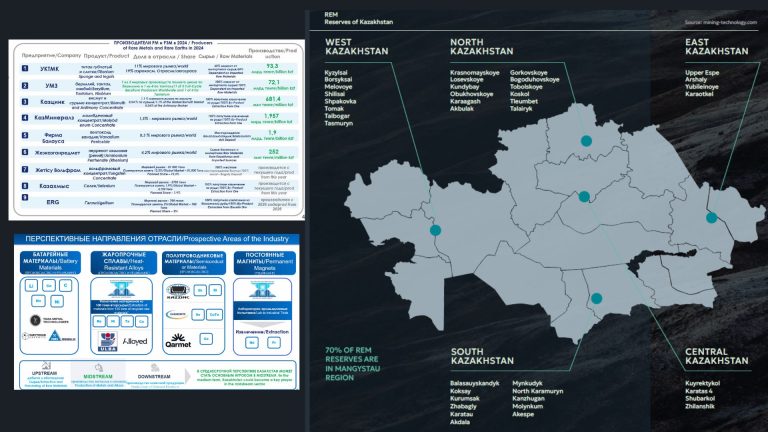
    NEW YORK, June 19, 2025 – Kaz Resources and Cove Kaz Capital LLC, portfolio companies of Cove Capital LLC, have officially kicked off their 2025 work programs, focusing on key lithium, polymetallic, and rare earth assets across Kazakhstan. The launch signals accelerated on-the-ground activity aligned with the nation’s strategic push to become a global supplier of critical minerals.

    Kaz Resources LLC will expand its exploration efforts in East Kazakhstan, building on 2024 drilling success. The program includes step-out and infill drilling, surface geochemical sampling, and geophysical surveys aimed at resource development across lithium and polymetallic targets. In parallel, the company is conducting metallurgical testing and a pilot program to evaluate lithium, tantalum-niobium, and other mineral recovery from historical tailings.

    Additionally, Cove Kaz Capital LLC, through its joint venture Akbulak REE Ltd. with Kazakhstan’s Qazgeology JSC, is advancing the Akbulak Rare Earth Project in Kostanay. The venture is currently finalizing license transfer approval and launching initial exploration activities, including structural analysis, sampling, and metallurgical tests.

    The Akbulak project hosts a historical resource of 380,000 tons of rare earth oxides, including neodymium, praseodymium, and yttrium—crucial materials for electric vehicles, electronics, and high-tech applications.

    Kaz Resources CEO Pini Althaus stated that the 2025 initiatives underscore the company’s commitment to fast-tracking development and contributing to a fully integrated supply chain, supporting both Kazakhstani goals and global mineral demands. Qazgeology JSC’s Acting CEO, Dauren Abuov, praised the partnership for demonstrating effective international cooperation in Kazakhstan’s mining sector.

  • EU Urged to Prioritise ESG in Central Asia’s Raw Materials Push

    EU Urged to Prioritise ESG in Central Asia’s Raw Materials Push

    The EU must prioritize Environmental, Social, and Governance (ESG) principles in its dealings with Central Asia to secure its access to crucial raw materials, commentators warn.

    The bloc arrived in Samarkand this April with a hefty €13.2 billion Global Gateway package, signaling a desire to move beyond merely buying raw materials from the region. A significant portion, €2.5 billion, is earmarked for new mining and processing projects in Kazakhstan, Uzbekistan, and beyond. This drive is born out of necessity: the EU still relies entirely on China for its heavy rare-earth imports and faces the growing risk of vulnerability.

    While geographically late to the game, Europe has a unique advantage: a reputation for robust ESG practices. Local executives cite European partners as “a sign of quality” due to their unwavering adherence to these standards, something often lacking in Chinese or Russian counterparts. However, this edge relies on Brussels consistently embedding ESG into every euro invested. This means robust monitoring and auditing of remediation plans, transparent royalty structures, and genuine upfront consultation with local communities.

    The EU’s Critical Raw Materials Act (CRMA) sets ambitious goals: attaining 10 percent mining, 40 percent processing, and 25 percent recycling of Europe’s annual CRM demand domestically or in trusted partner states by 2030.

    Realising these goals in Central Asia necessitates investment in sustainable technologies. This includes financing water-efficient processing plants, closed-loop waste systems, and solar-powered smelters, rather than simply opening more exploitative mines.

    The EU’s efforts are beginning to take shape, with the spotlight falling on graphite. Kazakhstan’s Sarytogan deposit has been placed on the EU Commission’s list of “strategic projects” eligible for expedited permits and loan guarantees under the CRMA. Meanwhile, the European Bank for Reconstruction and Development has taken a significant stake in the mine operator, marking a direct investment in the region’s CRM sector. The EU is now actively seeking downstream investors to refine indigenous graphite into anode-grade product, capturing added value that historically flowed to Chinese refiners.

    Lithium development is following a similar trajectory. A partnership between HMS Bergbau and Kazakhstan’s Creada Corporation aims to unlock the potential of Kazakh spodumene through extraction, processing, and refining into battery-ready lithium hydroxide. This would be a direct response to the EU’s new battery-passport regulations, which require materials of a certain purity.

    However, Europe faces a formidable competitor: China. The PRC Mineral Resources Law mandates environmental remediation planning before mining commences, setting a new baseline for responsible resource extraction. While welcomed, the application details remain vague, lacking guarantees on local community engagement and enforcement mechanisms, potentially creating loopholes for exploitation.

    Adding to the pressure, Chinese capital is expanding downstream. East Hope Group’s landmark $12 billion investment in Kazakh non-ferrous metals signifies a vertical integration approach—from mining and smelting to fabrication and renewable power generation. This $12 billion vertical integration project in Kazakhstan showcases China’s willingness to build a fully controllable supply chain.

    Europe must act strategically to counter these challenges.

    Firstly, financial aid should be contingent on stringent ESG benchmarks. EU financing must go hand-in-hand with clear, enforceable standards – ISO-compliant tailings dams, methane monitoring, gender-balanced workforce plans, and robust penalties for non-compliance.

    Secondly, the EU should focus on fostering value-adding industries beyond mining. This means investing in processing plants and recycling facilities, not just mines. By creating domestic processing hubs for cathode powders or rare-earth magnets, the CRMA’s 40 percent processing target can be achieved, generating jobs, technology transfer, and increased tax revenue for beneficiary countries.

    Finally, the EU must simplify visa requirements for Central Asian technical personnel. A targeted visa-facilitation agreement could allow them to train in Europe and return, strengthening the region’s skilled workforce.

    Securing a stable and sustainable supply of raw materials is a critical challenge for the EU. While China’s economic clout is undeniable, Europe has the opportunity to win this race by leveraging its commitment to ESG principles and building a truly sustainable, transparent, and trust-based partnership with Central Asia.

    Time is of the essence. The next 18 months, before China’s revised mining law takes full effect and East Hope’s megaproject begins construction, provide a crucial window for the EU to demonstrate its commitment to ESG beyond rhetoric. The stakes are high, as the fate of Europe’s essential raw materials supply hangs in the balance.