Tag: Norway

  • Teako Minerals Launches Field Program at Tynset Copper-Zinc-Silver Project in Norway

    Teako Minerals Launches Field Program at Tynset Copper-Zinc-Silver Project in Norway

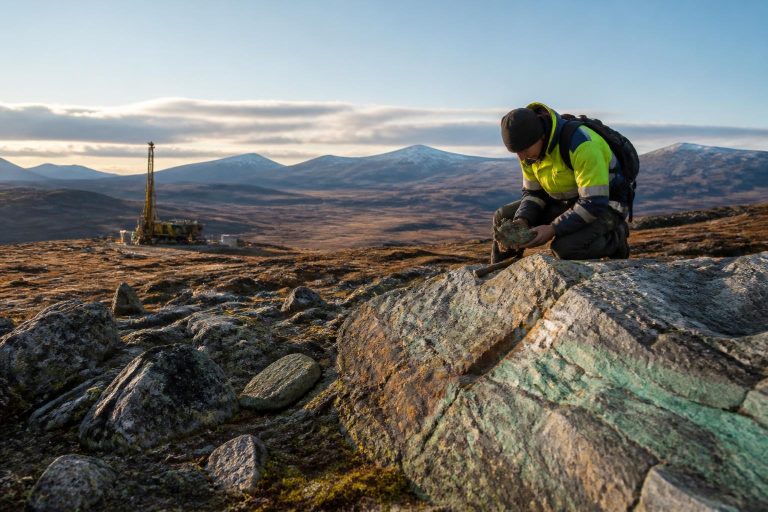
    Teako Minerals Corp. has officially commenced its 2026 field program at the Tynset copper-zinc-silver (Cu-Zn-Ag) volcanogenic massive sulphide (VMS) project located in central Norway. This initiative aims to enhance the company’s existing geological datasets and establish high-priority drill targets in the Storbekken Priority 1 target area. The field program will encompass detailed geological mapping, systematic sampling, and an Induced Polarization (IP) geophysical survey, with the first diamond drilling expected to begin between Q4 2026 and Q1 2027.

    In addition to the fieldwork, Teako has expanded the Tynset Project by securing four new exploration licenses that cover the high-priority Nonsvola and Vingelen target areas, thereby increasing the strike length of the prospective volcanic belt. The company has engaged Geovisor Oy to conduct approximately 10 line kilometres of IP surveying, set to commence in mid-October 2026, which will play a crucial role in refining drill targets.

    The 2026 field program is designed to improve the understanding of the geological and structural characteristics of the area, focusing on the identification of key lithological contacts and the characterization of mineralized outcrops. The integration of geochemical and spectral data will enhance the interpretation of geophysical results, ultimately guiding the drilling efforts towards the most promising areas.

    The Tynset Project, which is 100% owned by Teako, spans 121 square kilometres and includes 14 granted exploration claims. It is strategically located near established infrastructure, including a railway and national road, facilitating access to deep-sea ports. Historical data from previous exploration efforts indicate a favourable geological setting for Cu-Zn-Ag VMS mineralization, with significant soil and stream sediment anomalies suggesting the potential for new discoveries.

    Teako’s commitment to leveraging advanced exploration technologies and strategic partnerships underscores its goal of addressing the increasing demand for critical minerals while delivering value to shareholders. The company’s focus on the Tynset Project, alongside its broader portfolio of over 60 projects in Norway, positions it well within the competitive landscape of mineral exploration and development.

  • Norway Takes State Control of Fen Rare Earth Project After Resource Nearly Doubles to 15.9 Million Tonnes — Europe’s Largest Deposit

    Norway Takes State Control of Fen Rare Earth Project After Resource Nearly Doubles to 15.9 Million Tonnes — Europe’s Largest Deposit

    Norway’s government has stepped in to assume direct planning authority over the Fen rare earth deposit in Telemark, Europe’s largest known rare earth resource, citing the need to accelerate development and resolve potential land-use conflicts after a resource upgrade last month nearly doubled the project’s estimated size.

    The deposit was upgraded to 15.9 million metric tonnes of rare earth oxide in indicated and inferred resources — 81% larger than a 2024 estimate — a revision that significantly enhances Fen’s strategic importance to Europe’s push to reduce dependence on China, which dominates global rare earth production and processing. Europe currently has no operating rare earth mines.

    Prime Minister Jonas Gahr Stoere framed the government’s intervention in explicit supply security terms. “The Fen field could be of major significance for Telemark, Norway and Europe’s supply security and competitiveness,” he said. “To ensure future access to critical minerals, it is important to increase production both in Norway and in other countries with which we cooperate in terms of security.”

    The government said it had taken over planning at the request of the local authority, pointing to the risk of land-use disputes and the need to balance competing national interests — a challenge familiar across Europe, where onshore infrastructure projects including wind farms have repeatedly faced delays due to opposition from environmental and agricultural groups.

    Approximately 19% of the oxides at Fen are neodymium and praseodymium, the heavy rare earth materials used in permanent magnets for electric vehicles, wind turbines, electronics and defence systems — placing them among the most strategically sensitive materials in the global energy transition. Developer Rare Earths Norway has said it expects production to begin in late 2031, with output of 800 tonnes of NdPr by 2032, equivalent to approximately 5% of total European Union demand.

  • Kingsrose-BHP Alliance Uncovers High-Grade Copper and Precious Metals in European Exploration

    Kingsrose-BHP Alliance Uncovers High-Grade Copper and Precious Metals in European Exploration

    Kingsrose Mining Limited (ASX: KRM) has announced significant progress in its exploration alliances with global mining giant BHP, targeting critical minerals in Norway and Finland. The joint efforts, part of one of Europe’s largest generative exploration programs, have yielded high-grade copper, gold, silver, and platinum group elements (PGEs), signaling potential for major discoveries.

    In Norway’s Finnmark region, rockchip sampling revealed exceptional results, including 29.7% copper, 1.1 g/t gold, and 0.54 g/t palladium at the Porsanger target, and 4.4% copper with 1.8 g/t gold at Virdnechokka. These findings, hosted in sulphide veins, suggest proximity to deeper magmatic systems, akin to Anglo American’s Sakatti deposit in Finland. A 5,067-line km airborne gravity survey and 208 rockchip samples underpin the 2024 campaign, with helicopter-borne electromagnetic surveys slated for February 2025 to identify conductive bodies indicative of massive sulphides.

    In Central Finland, the alliance focused on the Kotalahti Nickel Belt, historically rich in nickel-copper deposits. Drone and ground magnetic surveys covering 4,980-line km identified new mineralized zones at the Rehula target, including a 0.46% copper and 110 ppm cobalt sample. The program aligns with Kingsrose’s strategy to discover new polymetallic “camps” through systematic geophysical and geochemical analysis.

    Managing Director Fabian Baker emphasized the success of advanced exploration techniques and stakeholder collaboration, stating, “These results underscore the prospective nature of these underexplored regions. Our commitment to environmental and social values ensures sustainable progress.” The company has engaged Indigenous communities and conducted biodiversity surveys to secure social licenses, particularly in Sami-inhabited areas of Norway.

    With 2.7millionofa5 million Year 1 budget spent, Kingsrose plans further fieldwork in 2025, leveraging BHP’s expertise to prioritize drill targets. The alliances highlight Europe’s growing role in supplying critical minerals amid global decarbonization efforts.

    Kingsrose, a ASX-listed explorer, holds 100% interests in the Finnmark and Central Finland projects, backed by BHP’s Xplor accelerator program. Forward-looking statements caution inherent risks, but the findings position the company as a key player in Europe’s mineral exploration frontier.

    For more details, visit www.kingsrose.com.

  • Blue Moon Metals Diversifies with Copper Assets in Norway

    Blue Moon Metals Diversifies with Copper Assets in Norway

    Blue Moon Metals is expanding its portfolio with the acquisition of two former copper-producing properties in Norway to diversify beyond its U.S.-based zinc project and focus on near-term production opportunities. The company, headquartered in Vancouver, announced two deals to acquire the Nussir and NSG properties for $55.3 million and $12 million, respectively, funded through the issuance of common shares priced at C$0.30 each.

    Shares of Blue Moon traded at C$0.355 on Thursday, giving the company a market capitalization of C$18.9 million. The acquisitions are part of a broader plan to raise C$30 million to C$50 million in equity, with the majority allocated to advancing the Nussir project.

    Newly appointed CEO Christian Kargl-Simard described the move as an opportunity to establish a copper-zinc development company in Tier 1 jurisdictions. The Nussir property, with existing infrastructure like roads, power, and port access, hosted mining operations until 1979. The project is supported by an updated feasibility study from SRK Consulting, estimating an initial capital cost of $101 million.

    The NSG property, located in northern Norway, is notable as it could become the first new copper mine in the country in over 50 years. This site, rich in historic copper deposits, holds a historical estimate of 29.4 million tonnes at 0.9% copper and 0.17% zinc. Blue Moon plans to expand on the project’s resource base with regional exploration.

    Meanwhile, the company continues to advance its Blue Moon polymetallic project in California, which has a resource estimate of 3.5 million indicated tonnes at a zinc-equivalent grade of 11.07%. A preliminary economic assessment is expected in early 2025.

    These initiatives aim to balance the company’s historic copper assets in Norway with its zinc-silver resource in the U.S., marking a new phase in its growth trajectory.

  • Norway Discovers Europe’s Largest Rare Earth Metals Deposit, Boosting Efforts to Reduce China’s Dominance

    Norway Discovers Europe’s Largest Rare Earth Metals Deposit, Boosting Efforts to Reduce China’s Dominance

    Norway has recently announced the discovery of Europe’s largest proven deposit of rare earth metals, a significant development as these 17 elements are essential for a wide range of modern technologies. Despite being termed “rare earth,” these elements are not particularly scarce in the Earth’s crust but are often found in low concentrations, making them difficult to extract and purify.

    According to a CNBC report, this Norwegian deposit is among the few in the world not owned or controlled by China, which currently dominates the global rare earths market. The discovery is seen as a crucial step in Europe’s efforts to reduce its dependence on China for these critical minerals. The demand for rare earth metals is expected to surge in the coming years due to the increasing pace of the clean energy transition.

    Rare earth metals such as Lanthanum, used in batteries and catalytic converters, Cerium, used in polishing compounds and catalytic converters, and Neodymium, known for its powerful magnetic properties, are among those found in the deposit. Other metals include Dysprosium, used in strong magnets and lasers, and Europium, essential for fluorescent lights and color television screens.

    Rare Earths Norway revealed that its Fen Carbonatite Complex in southeastern Norway contains 8.8 million metric tons of total rare earth oxides (TREOs) with a strong potential for economic extraction. Within these TREOs, approximately 1.5 million metric tons are magnet-related rare earths, which are critical for technologies such as electric vehicles and wind turbines. This discovery surpasses a significant rare earths deposit found in Sweden last year.

    Alf Reistad, CEO of Rare Earths Norway, described the discovery at Fen as a “great milestone” for the company and emphasized that there is currently no extraction of rare earth elements in Europe. Meanwhile, China continues to dominate the rare earth metals market, controlling 70 percent of global rare earth ore extraction and 90 percent of ore processing. China’s dominance is attributed to decades of state investment, export controls, cheap labor, and low environmental standards.

    A report from the Oxford Institute for Energy Studies highlights that Western countries are now developing strategies to reduce supply chain risks. These strategies include opening new mines and processing plants, advancing recycling technologies, and fostering international collaboration. However, the report notes that it is unlikely that China’s dominance will be significantly reduced before 2030.


  • Norway Launches First Seabed Mineral Licensing Round in the Arctic

    Norway Launches First Seabed Mineral Licensing Round in the Arctic

    Norway has announced the offering of large areas in the Arctic region for its inaugural seabed mineral licensing round, aiming to award exploration permits by the first half of 2025, according to the country’s energy ministry. This initiative could make Norway the first country in the world to commence commercial deep-sea mining, targeting the extraction of minerals essential for solar panels, wind turbines, and electric car batteries needed for the green transition away from fossil fuels.

    “The world needs minerals for the green transition, and the government wants to explore if it is possible to extract seabed minerals in a sustainable manner from the Norwegian continental shelf,” stated Energy Minister Terje Aasland.

    Preliminary official resource estimates indicate substantial accumulations of metals and minerals, including copper and rare earth elements. In January, the Norwegian parliament approved opening approximately 280,000 km² of ocean areas between Jan Mayen island and the Svalbard archipelago for seabed mineral exploration. The 386 blocks proposed on Wednesday cover about 38% of the total area opened by parliament, selected based on industry input, the energy ministry said.

    Despite the government’s ambitions, seabed mining has drawn criticism from environmentalists concerned about potential disruptions to one of the last relatively pristine natural environments. Organizations like WWF and Greenpeace have expressed significant concerns, challenging Norway’s plans in court and warning about the potential impact on fragile ecosystems. WWF condemned the proposal, calling it a substantial blow to Norway’s reputation as a responsible steward of the oceans. Greenpeace labeled the proposed area as “shockingly large,” citing previous scientific warnings.

    Internationally, Norway’s seabed mineral exploration plans face opposition from several countries, including France, which has advocated for a global moratorium to better understand the impact on deep-sea organisms. The Council of the European Union also voiced concerns, emphasizing the need for thorough impact assessments.

    The Norwegian government has assured that the initial exploration stage will have minimal impact on seabed organisms and stated that companies will need separate consents before any production can commence.

  • Comparing Norway’s Oil Wealth to Serbia’s Lithium Potential

    Comparing Norway’s Oil Wealth to Serbia’s Lithium Potential

    n a recent discussion, Ana Brnabić, President of the Serbian Parliament, likened Serbia’s lithium reserves to Norway’s oil wealth, emphasizing the transformative economic potential. President Aleksandar Vučić and Mining Minister Dubravka Đedović Handanović have also supported this view, particularly focusing on the Jadar lithium project by Rio Tinto. This project, which could significantly boost Serbia’s economy, faces strong opposition from environmental groups. Critics argue that Serbia lacks the robust political and regulatory framework that enabled Norway’s successful oil industry.

    Norway discovered oil in the 1960s, leading to substantial GDP growth and the creation of a significant welfare state funded by oil revenues. Serbia aims to replicate this model through lithium mining, essential for the booming electric vehicle (EV) market. Rio Tinto projects that the Jadar mine could generate 180 million euros in annual state revenue. However, the environmental impact and public resistance present major challenges. Serbia’s political landscape and regulatory systems are not as well-established as Norway’s, complicating efforts to harness lithium’s potential sustainably.

    The Jadar project involves extracting lithium from jadarite, a unique mineral found only in Serbia. The project has the potential to make Serbia a key player in the global lithium market, essential for EV batteries. However, effective management of environmental concerns and community relations is crucial for the project’s success.

  • Norway Reveals Europe’s Largest Rare Earth Element Deposit in Ancient Volcano

    Norway Reveals Europe’s Largest Rare Earth Element Deposit in Ancient Volcano

    The heart of an ancient volcano in Norway hosts Europe’s largest deposit of rare earth elements, as announced by the mining company Rare Earths Norway. On June 6, the company released a report estimating that the deposit contains 8.8 megatons of rare earth oxides, with approximately 1.5 megatons expected to be rare earth magnets used in wind turbines and electric vehicles.

    “The resource estimate underscores the potential of the deposit to be a truly transformative asset that can underpin a secure rare earths value chain for Europe,” said Rare Earths Norway CEO Alf Reistad in a statement. The deposit, known as the Fen Carbonatite Complex, is located southwest of Oslo near Lake Norsjø. Formed around 580 million years ago, the complex was the pipe of an active volcano that has since eroded, exposing a magma-filled pipe about 2 kilometers in diameter at the surface.

    The solidified magma, now carbonatite rock, is rich in minerals containing rare earth elements such as neodymium and praseodymium, which are vital for making magnets and other applications like aircraft engines. The mining company’s estimate focuses on the upper portion of the ancient volcano down to 1,535 feet below sea level, with likely deposits extending to about 3,300 feet.

    Rare Earths Norway plans to continue exploratory drilling and will construct a pilot plant near the outcrop to process the ore into pure rare earth elements. A 2023 report from the Oxford Institute for Energy Studies highlighted that while about 70% of the world’s supply of rare earth elements is mined in China and 90% is processed there, these elements are widely distributed globally. Countries are now striving to secure their own domestic supply chains for these critical minerals. In the U.S., for instance, researchers are investigating coal mines as potential sources for rare earth metals.


  • Norway to Launch Seabed Mineral Exploration Amid Environmental Concerns

    Norway to Launch Seabed Mineral Exploration Amid Environmental Concerns

    Two companies announced on Wednesday their intentions to acquire offshore seabed acreage on the Norwegian continental shelf for mineral exploration, marking the potential inception of a controversial new mining industry. Norway is poised to become the first nation to commence commercial production of metals like copper, cobalt, zinc, and rare earth elements (REE) from its continental shelf, which are crucial for transitioning away from oil and gas.

    Nominations for seabed acreage, submitted by the May 21 deadline, will set the stage for Norway’s inaugural seabed mineral exploration licensing round later this year, according to Norwegian authorities. The country’s energy ministry has yet to comment on the process.

    Loke, a startup backed by TechnipFMC, Wilhelmsen, and Kongsberg Gruppen, revealed that it had nominated numerous blocks rich in polymetallic crusts containing cobalt and rare earth elements. “We are encouraged by the significant resource potential and are looking forward to the first licensing round,” Loke’s CEO Walter Sognnes said in an email to Reuters.

    Oslo-listed Green Minerals has also nominated four areas, each consisting of multiple blocks, and anticipates beginning pilot production by 2028, as per a recent investor presentation.

    Environmental organizations, including Greenpeace, have urged a global moratorium on seabed mineral mining, citing the risk of irreversible harm to little-studied marine life. In response, the Norwegian government asserts that the exploration phase will help assess the environmental impact and enhance knowledge of seabed ecosystems.

    Norwegian oil firm Aker BP AKRBP has not disclosed whether it submitted nominations but has previously expressed interest in exploring the resource potential. The government plans to issue the first licenses in 2025, but companies will need additional approvals to start production. Furthermore, the Norwegian parliament, which decided in January to open extensive areas in the Norwegian and Greenland Seas for potential mining, must approve the initial projects.

  • Norway and EU Forge Industrial Partnership to Advance Sustainable Value Chains

    Norway and EU Forge Industrial Partnership to Advance Sustainable Value Chains

    Norway and the European Union have formalized an agreement aimed at strengthening cooperation on sustainable value chains, with a specific focus on land-based raw materials and batteries. Minister of Trade and Industry, Jan Christian Vestre, emphasized the significance of this collaboration, highlighting its pivotal role in accelerating climate and green transition goals. He further emphasized the potential for economic growth, increased investments, and the creation of green jobs in Norway as a result of this partnership. Executive Vice-President Maroš Šefčovič echoed these sentiments, underlining the strategic importance of the agreement in fostering business and research opportunities while solidifying industrial and political ties between Norway and the EU. As a cornerstone of the Green Alliance established last year, the industrial partnership aims to enhance climate, environmental, energy, and industrial cooperation, serving as the inaugural initiative under the Green Alliance framework. Minister Vestre stressed the agreement’s significance for Norwegian businesses and its role in facilitating dialogue with the EU regarding green value chains. He highlighted its alignment with Norway’s Green Industrial Initiative, particularly focusing on critical raw materials and batteries. Given Norway’s pivotal role as a supplier of critical raw materials, the partnership aims to address vulnerabilities in global supply chains by promoting closer collaboration between Norway and the EU. Batteries, identified as a crucial technology for renewable energy transition, are at the forefront of this collaboration, with the partnership aiming to address concerns raised by Norwegian battery players regarding market access. Norway’s participation in ministerial meetings within the European Battery Alliance will further facilitate dialogue on establishing the European battery value chain. Overall, the partnership provides a framework for discussions on potential disruptions in regional value chains, including the application of rules of origin for battery components traded between the EU and the UK.