Tag: mining sector

  • Kazakh MP questions state support for KazZinc and Glencore over exporter financing

    Kazakh MP questions state support for KazZinc and Glencore over exporter financing

    A debate over the allocation of state export financing has flared up in Kazakhstan’s parliament, after MP Erlan Sairov sharply criticized the national holding Baiterek and Swiss commodities giant Glencore, which owns around 70% of KazZinc.

    Speaking at a Mazhilis session on business support measures, Sairov said that about 35% of nearly 1 trillion tenge allocated under the exporter financing program went to KazZinc. He questioned why a company exporting semi-finished metal products and operating largely on a prepayment basis required state-backed loans. According to the MP, export support should primarily help domestic high-tech products enter international markets, not finance a multinational corporation.

    Sairov argued that during Glencore’s two decades of presence in Kazakhstan, the company had failed to create high-value, high-tech domestic production, raising concerns about the use of public funds to support foreign-controlled enterprises. His remarks were directed at Baiterek chief executive Rustam Karagoishin.

    In response, Karagoishin stressed that KazZinc is legally registered in Kazakhstan and therefore qualifies as a domestic client for Baiterek. He said the holding is obliged to assess and approve financing applications that meet its criteria, noting that exports remain a key source of foreign currency inflows and budget revenues. While acknowledging the priority given to high-tech sectors, Karagoishin said traditional exporters still play a crucial role, particularly as Kazakhstan’s metallurgical sector faces growing challenges on global markets.

    The discussion comes amid renewed uncertainty around KazZinc’s ownership. Bloomberg reported in mid-2024 that Glencore was considering selling its stake in the company, including the Vasilkovskoye gold asset, before later shelving the plan. Talks reportedly resumed in 2025, with Bloomberg sources naming businessman Shakhmurat Mutalip as a potential buyer. Mutalip is also said by the Financial Times to be pursuing a major stake in Eurasian Resources Group, despite not appearing on Kazakhstan’s Forbes rich list.

  • Poland’s Parliament Approves Bill Facilitating Coal Mine Closures and Compensation for Miners

    Poland’s Parliament Approves Bill Facilitating Coal Mine Closures and Compensation for Miners

    Poland’s parliament has approved a landmark government bill aimed at easing the country’s transition away from coal. The new legislation facilitates the closure of coal mines, introduces financial support for displaced miners, and promotes the redevelopment of former mining areas. The measure, which gained strong backing from Prime Minister Donald Tusk’s ruling coalition, is designed to support the country’s shift to cleaner energy sources while mitigating the impact on coal-mining communities.

    The bill, which will allow mining companies to close operations with state-backed financial support, is part of Poland’s broader energy transition plan. Under the legislation, coal mines can transfer their assets to local authorities or state entities for redevelopment projects, creating new opportunities for investment, revitalization, and infrastructure construction in former mining regions. In addition to mine closures, the bill provides protective benefits for workers, including severance payments of up to 170,000 zloty (€40,000) for those losing their jobs.

    The government aims to phase out thermal coal mining entirely by 2049, with an initial target of closing five mines within the next decade. The bill received broad support from MPs within the ruling coalition, with 241 votes in favor and just six against. However, the far-right opposition parties abstained from voting, with some critics arguing that the bill does not adequately provide alternatives to coal for affected communities.

    Poland remains Europe’s most coal-dependent nation, with coal accounting for 57% of its power generation in 2024. The transition away from coal has raised concerns, particularly in the Silesian-Dąbrowa region, home to many of the country’s coal mines. Despite this, the government has emphasised that the bill will help ensure a “just transition” for miners and stimulate new investment in coal regions.

    The legislation now heads to Poland’s Senate for approval before reaching President Karol Nawrocki’s desk for signing into law. While Nawrocki has previously voiced strong support for the coal industry, it remains to be seen whether he will sign the bill or veto it.

  • Kyrgyzaltyn Strengthens Ties with Tajik Mining Giants Through Strategic Co-Op Agreements

    Kyrgyzaltyn Strengthens Ties with Tajik Mining Giants Through Strategic Co-Op Agreements

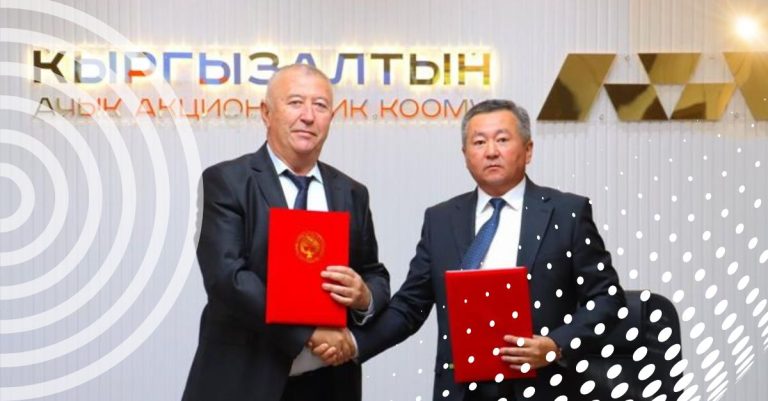
    Kyrgyzaltyn, Kyrgyzstan’s state-owned mining company, has entered on 27 August 2025 into significant co-operation agreements with three of Tajikistan’s premier mining firms: Talco Gold, Tajik-China Mining Company, and Pakrut. The memorandums of understanding were officially signed during a high-level visit by Tajikistan’s First Deputy Prime Minister, Hokim Kholikzoda, and a large business delegation.

    The agreements, which were announced by Kyrgyzaltyn, are intended to bolster the development of the mining sector across both nations. The focus will be on the implementation of advanced technologies, improving production efficiency, and creating new job opportunities.

    In a further sign of burgeoning economic ties, a separate memorandum was also signed between the Tajik delegation and the wheel processing and restoration plant belonging to Kumtor Gold Company, a subsidiary of Kyrgyzaltyn.

    As part of their visit, the Tajik delegation toured several key Kyrgyz enterprises, including the wheel processing and restoration factory and Kyrgyzaltyn’s main facilities.

    Kyrgyzaltyn, which holds a crucial position as the sole domestic producer of refined gold and gold bars in Kyrgyzstan, stated that the newly signed agreements will lay the groundwork for strengthened good-neighbourly relations and foster long-term, mutually beneficial collaboration between the two countries.

  • Glencore Rejects US Move, Will Keep Primary Listing in London

    Glencore Rejects US Move, Will Keep Primary Listing in London

    In a rare win for the London Stock Exchange, commodities giant Glencore has confirmed it will retain its primary listing in the UK, scrapping a potential move to New York despite months of speculation.

    CEO Gary Nagle announced on Wednesday that the company had conducted an in-depth global review and determined that relocating its primary listing to the United States would not deliver added value for shareholders at this time. “Having done that thorough analysis, we will remain listed in London for the moment,” Nagle said, adding the situation would remain under review.

    The decision is a boost for London’s capital markets, which have struggled with sluggish IPO activity and a wave of departures from high-profile firms like TUI, Just Eat Takeaway, and BHP. London’s equity market has been shrinking amid concerns about undervaluation and a more favorable investor base overseas.

    Nagle also addressed recent speculation that a US move could help boost Glencore’s stock, which is down 26% over the past year. He attributed the decline largely to falling coal prices, not the listing venue. He also noted that inclusion in the S&P 500 – a key appeal for many firms considering a US move – was unlikely in Glencore’s case, diminishing the potential upside of relocating.

    While London’s financial ecosystem welcomed the news, some investors were left disappointed, with Glencore shares falling 4% following the announcement. Legal & General CEO Antonio Simoes urged the UK government to accelerate listing reforms to ensure the country remains an attractive hub for global investment.

    Meanwhile, other major firms such as Shell and Pearson remain under pressure to consider transatlantic moves, amid growing competition between financial centres.

  • Human Rights and Environmental Abuse Cases Triple at Mines Across Eastern Europe and Central Asia

    Human Rights and Environmental Abuse Cases Triple at Mines Across Eastern Europe and Central Asia

    Allegations of human rights and environmental violations linked to mining operations across Eastern Europe and Central Asia nearly tripled in 2024, according to a new report by the Business and Human Rights Resource Centre (BHRRC). The UK-based non-profit recorded 270 incidents tied to mining, smelting, and refining operations across 13 countries in the region, up from just 92 cases the previous year.

    The findings raise serious concerns about the human and environmental cost of securing critical minerals for the green energy transition. Russia led the region in reported abuses, accounting for 105 cases, or 39% of the total, followed by Ukraine (48), Kazakhstan (43), Serbia (31), and Bosnia and Herzegovina and Georgia (10 each). In several countries, including Serbia and Kazakhstan, the 2024 tally surpassed the combined number of cases from the previous five years.

    Of all the minerals tracked, copper was linked to the most abuse cases — 77 in total, representing nearly 30% of the regional total and spread across eight countries. The top human rights concern was occupational health and safety violations, making up 115 of the 270 allegations. Workplace fatalities (47) and long-term personal health issues (30) also featured prominently. Russia and Kazakhstan together accounted for 37 out of 47 reported deaths.

    Environmental harms were also widespread. Violations of environmental safety standards were documented in 43 cases, while air pollution, soil contamination, and water pollution each appeared in about 20–27% of community-level complaints.

    One of the most frequently named companies was United Company RUSAL, owned by sanctioned Russian oligarch Oleg Deripaska, with 31 abuse allegations linked to its operations. Georgia’s Chiatura mines were also cited in 10 cases.

    The BHRRC warns that the rush to secure essential materials for clean energy must not come at the expense of human rights and environmental protection. “We must not choose between climate progress and protection of people and ecosystems,” said BHRRC researcher and co-author Ella Skybenko.

  • Kyrgyz Prime Minister Calls for Greater US Investment During Washington Visit

    Kyrgyz Prime Minister Calls for Greater US Investment During Washington Visit

    During his working visit to Washington, Prime Minister Adylbek Kasymaliev participated in a roundtable with members of the Kyrgyz-American Business Council, where he urged American companies to increase their investments in Kyrgyzstan’s economy, the Kyrgyz government reported.

    Kasymaliev emphasized that direct foreign investments from the United States serve as a significant driver of economic growth for the country. He assured that Kyrgyzstan is ready to offer favorable conditions for investors, including liberal tax policies, access to free economic zones, and markets with a combined population of over 500 million people.

    “Kyrgyzstan today is a country of new opportunities and prospects, with a dynamically developing economy and open policies. We are prepared to provide comprehensive support for investment projects at all stages of implementation and offer the necessary state assistance,” Kasymaliev stated.

    He highlighted priority sectors for investment, including:

    • The launch of Kambar-Ata Hydroelectric Power Plant-1;

    • Tourism development, supported by a visa-free regime and the country’s unique natural landscapes.

    “Mining and mineral processing are also priority sectors. Kyrgyzstan is ready to offer reliable and environmentally responsible partnerships in the exploration and processing of critical resources,” Kasymaliev added.

    The Prime Minister expressed confidence in expanding Kyrgyz-American economic cooperation and invited US entrepreneurs to visit Kyrgyzstan to assess investment opportunities firsthand.

  • Uzbekistan’s Ministry of Mining and Geology Holds Seminar on Anti-Corruption Efforts

    Uzbekistan’s Ministry of Mining and Geology Holds Seminar on Anti-Corruption Efforts

    On May 6, the Ministry of Mining and Geology of Uzbekistan conducted a seminar aimed at reinforcing anti-corruption awareness among its employees and affiliated enterprises, promoting zero tolerance for corruption within the sector.

    The seminar brought together officials from the Ministry’s central office as well as directors and heads of departments from over 20 subordinate organizations. Ministry Advisor M. Pirozhkov briefed participants on the ongoing internal initiatives to combat corruption, highlighting the Ministry’s recent achievement—placing second among 102 government agencies in a national anti-corruption effectiveness rating published by Uzbekistan’s Anti-Corruption Agency in March 2025. The Ministry scored an impressive 95 out of 100 points.

    One of the seminar’s key speakers, I. Achilov, PhD in Law and Prosecutor at the General Prosecutor’s Office’s Anti-Corruption Coordination Department, delivered a lecture titled “Mechanisms for Combating Corruption in Uzbekistan and Their Legal Foundations.”

    The session also included a review of current legislation, including Presidential Decree No. UP-71 of April 21, 2025, on strengthening anti-corruption systems, and Resolution No. PP-147, aimed at ensuring the independence and efficiency of internal anti-corruption divisions within state institutions.

    The event concluded with a Q&A session, where participants received comprehensive answers to their questions, reinforcing practical understanding and encouraging active engagement in anti-corruption efforts.

  • Uzbekistan and Saudi Arabia Explore Deeper Cooperation in Mining Sector Reforms

    Uzbekistan and Saudi Arabia Explore Deeper Cooperation in Mining Sector Reforms

    Officials from Uzbekistan and Saudi Arabia held high-level talks this week to discuss expanding cooperation in the mining sector, with a focus on reform, localization, and industrial collaboration.

    On 23 April, Uzbekistan’s Ministry of Mining Industry and Geology hosted a delegation led by Nasser Albakran, Director at Saudi Arabia’s Ministry of Energy. The meeting in Tashkent was attended by First Deputy Minister Oybek Nasritdinkhodjaev, Deputy Minister Ulugbek Yusupov, and other Uzbek mining officials, including Director Mirabdulla Ilkhamov of the State Scientific-Practical Center for Localization and Industrial Cooperation Development.

    The discussions centered on Uzbekistan’s ongoing reforms in mining and geology, and the country’s aim to enhance local content in investment projects. Both sides expressed interest in strengthening bilateral ties and sharing experience in industrial localization and cooperation.

    The talks underscore growing regional interest in Uzbekistan’s mineral wealth and its strategy to attract foreign partners for technology transfer, sustainable development, and local industry growth.

  • Navoi Mining and Metallurgical Works Posts Strong Q1 Results Amid Sustainability and Efficiency Push

    Navoi Mining and Metallurgical Works Posts Strong Q1 Results Amid Sustainability and Efficiency Push

    Navoi Mining and Metallurgical Works (NGMK) reported steady operational performance for Q1 2025, with a production volume of 27.8 trillion UZS, marking a 0.7% year-on-year increase.

    Gold output reached 753,500 ounces, slightly up from 748,100 ounces in the same period of 2024, reinforcing NGMK’s position as a leading gold producer. The company invested $118.4 million under its Investment Program, while 697 new jobs were created in the quarter.

    Cost optimization efforts resulted in a 786 billion UZS reduction in production expenses. Under the Localization Program, products worth 349.8 billion UZS were sold, and inter-industry cooperation purchases exceeded 1.8 trillion UZS.

    NGMK’s flagship Muruntau deposit, the world’s largest gold reserve (101 million ounces), remains its core asset, with total company reserves estimated at 148 million ounces.

    In February, Sustainable Fitch assigned NGMK an ESG rating of “3”, the first public ESG rating in Uzbekistan’s mining sector — highlighting progress in environmental, social, and governance practices.

    Key sustainability initiatives included:

    • Planting 65,850 seedlings along the M-37 highway and at GMZ-1;

    • Over 300,000 trees planted across industrial sites, all tracked via an electronic platform as part of the “Green Space” project;

    • Ongoing “Labor Protection Month” initiative aimed at reducing workplace injuries;

    • Recognition as a national leader in cybersecurity for 2024.

    To expand the company’s resource base, NGMK is actively adopting advanced exploration and development practices.

    Corporate governance remained robust:

    • 3 meetings of the Supervisory Board, covering 11 key issues;

    • 25 meetings of the Board of Directors, resulting in 41 decisions.

    NGMK continues to balance production growth with environmental responsibility and workforce safety, setting benchmarks in Uzbekistan’s mining sector.

  • U.S. and Ukraine Reach Initial Deal on Critical Minerals Investment

    U.S. and Ukraine Reach Initial Deal on Critical Minerals Investment

    The United States and Ukraine have reached an initial agreement to jointly invest in Ukraine’s critical minerals sector. The framework, which still requires further negotiations, establishes a reconstruction investment fund with shared U.S.-Ukraine ownership. Under the terms, Ukraine will contribute 50% of future revenues from state-owned mineral, oil, and gas assets to the fund, excluding existing operations like Naftogaz and Ukrnafta.

    The goal of the agreement is to attract private sector investment to develop Ukraine’s vast mineral resources, but significant hurdles remain. Ukraine lacks modern geological mapping of its rare earth deposits, and key infrastructure, including energy grids, has been severely damaged by war. Additionally, security risks and political uncertainty may deter long-term investors.

    Unlike previous proposals, the deal does not require Ukraine to use its mineral wealth to repay U.S. military aid, nor does it provide security guarantees. Instead, it assumes that U.S. financial stakes in Ukraine’s resources will create an incentive for continued support. However, tensions between President Trump and President Zelensky over Ukraine’s wartime policies could complicate future negotiations.

    While the agreement signals the U.S. administration’s focus on securing critical minerals, its success will depend on overcoming economic and geopolitical challenges in the region.