Tag: Mining industry

  • Norway Reveals Europe’s Largest Rare Earth Element Deposit in Ancient Volcano

    Norway Reveals Europe’s Largest Rare Earth Element Deposit in Ancient Volcano

    The heart of an ancient volcano in Norway hosts Europe’s largest deposit of rare earth elements, as announced by the mining company Rare Earths Norway. On June 6, the company released a report estimating that the deposit contains 8.8 megatons of rare earth oxides, with approximately 1.5 megatons expected to be rare earth magnets used in wind turbines and electric vehicles.

    “The resource estimate underscores the potential of the deposit to be a truly transformative asset that can underpin a secure rare earths value chain for Europe,” said Rare Earths Norway CEO Alf Reistad in a statement. The deposit, known as the Fen Carbonatite Complex, is located southwest of Oslo near Lake Norsjø. Formed around 580 million years ago, the complex was the pipe of an active volcano that has since eroded, exposing a magma-filled pipe about 2 kilometers in diameter at the surface.

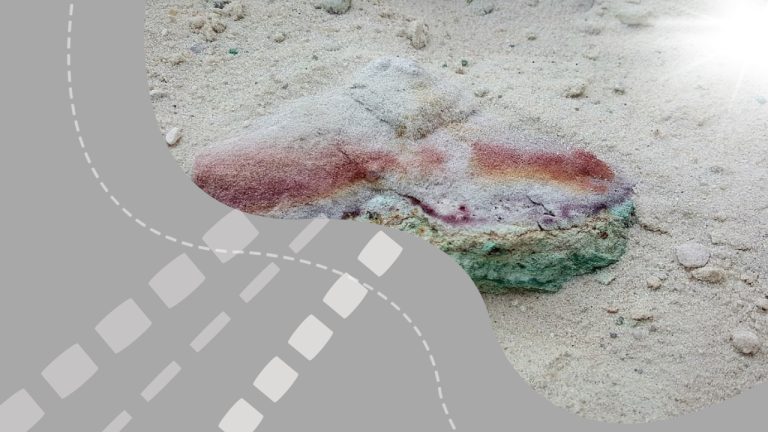
    The solidified magma, now carbonatite rock, is rich in minerals containing rare earth elements such as neodymium and praseodymium, which are vital for making magnets and other applications like aircraft engines. The mining company’s estimate focuses on the upper portion of the ancient volcano down to 1,535 feet below sea level, with likely deposits extending to about 3,300 feet.

    Rare Earths Norway plans to continue exploratory drilling and will construct a pilot plant near the outcrop to process the ore into pure rare earth elements. A 2023 report from the Oxford Institute for Energy Studies highlighted that while about 70% of the world’s supply of rare earth elements is mined in China and 90% is processed there, these elements are widely distributed globally. Countries are now striving to secure their own domestic supply chains for these critical minerals. In the U.S., for instance, researchers are investigating coal mines as potential sources for rare earth metals.


  • Critical Metals Corp. Acquires Controlling Interest in World’s Largest Rare Earth Deposit

    Critical Metals Corp. Acquires Controlling Interest in World’s Largest Rare Earth Deposit

    Critical Metals Corp. (Nasdaq: CRML) has announced an agreement to acquire a controlling interest in the Tanbreez project in Greenland, home to the largest rare earth deposit in the world. The Tanbreez deposit hosts 28.2 million tonnes of total rare earth oxides (TREO) within 4.7 billion tonnes of material, according to internal company estimates. Notably, the asset contains over 27% heavy rare earth elements (HREE), and Critical Metals is working to convert these internal estimates to U.S. SEC standards.

    Once operational, the mine is expected to supply rare earth elements to Europe and North America. The Tanbreez areaboasts year-round direct shipping access through deep-water fjords leading to the North Atlantic Ocean, providing key transportation outlets. The outcropping orebody, known as Kakortokite, spans 8 km by 5 km and is approximately 400 metres thick.

    Critical Metals acquired the project from Rimbal Pty. Ltd., controlled by geologist Gregory Barnes. CEO Tony Sagedescribed Tanbreez as a “game-changing rare earth mine for the West,” positioning Critical Metals Corp. as a leading supplier of critical minerals with a diversified portfolio spanning multiple geographies.

    In addition to the Tanbreez acquisition, Critical Metals owns Europe’s first fully permitted lithium mine, the Wolfsberg lithium project in Austria, which debuted on the Nasdaq in March. Upon completing construction at Wolfsberg by 2026, the company has committed to supplying BMW by 2027. Critical Metals has also secured a deal with Obeikan Investment Group to build a lithium hydroxide plant in Saudi Arabia.

    Shares of Critical Metals rose 4.6% by 12:00 p.m. EDT, with the company’s market capitalization reaching $877 million.

  • Junior Mining Companies in Kazakhstan to Transition from Mineral Extraction Tax to Royalties in 2025

    Junior Mining Companies in Kazakhstan to Transition from Mineral Extraction Tax to Royalties in 2025

    In a significant shift for Kazakhstan’s mining industry, junior mining companies that have already discovered solid minerals and confirmed their respective reserves will transition from the Mineral Extraction Tax (MET) to royalties starting in 2025, announced Vice Minister of Industry and Construction Iran Sharkan.

    “Everyone knows that the MET has long outlived its usefulness. It’s a cumbersome tool. We need to move to an internationally recognized and understood system of royalties. We support this transition. Fundamentally, we plan to start the phased transition in 2025, beginning with junior companies and then expanding to all entities,” Sharkan stated at the AMM-2024 forum. He emphasized that this reform in subsoil use marks the logical conclusion of a process that began in 2017.

    Sharkan elaborated that the ministry is collaborating with the Ministry of National Economy and the Ministry of Finance to ensure a smooth and environmentally responsible transition. Additionally, the ministry plans to discuss with the industry how to define junior companies, which he described as new players in subsoil use who have defended their reserves and are moving to the extraction phase.

    Furthermore, Sharkan highlighted that Kazakhstan will continue to adopt modern standards. Existing deposits protected under the GKZ (State Reserves Committee) standards will remain valid, while all new projects will adhere to the international reporting system.

    In October 2023, Maxim Kononov, the first deputy executive director of the Republican Association of Mining and Metallurgical Enterprises (AGMP), noted that the MET for technogenic mineral formations (TMF), residues left by subsoil users, should be set at 0.1 of the current rate to encourage investors to process TMFs. He advocated for synchronizing industry and tax legislation to ensure that TMFs, which do not constitute subsoil, are not subject to MET.

    Kononov argued that such measures would spur large-scale TMF processing projects in Kazakhstan. He criticized the current tax framework, stating that applying standard MET rates to TMFs makes such projects unprofitable. He also pointed out the ambiguity in taxing solid minerals extracted from TMFs owned by taxpayers and not considered subsoil under the Subsoil Code.

    With MET rates increased by 50% for exchange-traded metals and by 30% for others since early 2023, Kononov warned that any further tax burdens would harm the industry.

  • Glencore Considers Selling Stake in Kazakh Mining Company Kazzinc

    Glencore Considers Selling Stake in Kazakh Mining Company Kazzinc

    Glencore is considering selling its stake in the Kazakh mining company Kazzinc amid interest from potential buyers in China, according to sources familiar with the matter. The deal could value Glencore’s nearly 70% holding in Kazzinc at several billion dollars, the sources said, requesting anonymity due to the private nature of the discussions.

    Glencore is also in the process of selling the Kazzinc-operated Vasilkovskoye gold mine, having scrapped a previous sale over seven years ago. The gold mine and Kazzinc’s core zinc operations could be sold to separate buyers or a single party, depending on the offers received. However, the deliberations are preliminary and may not lead to a transaction. A representative for Glencore declined to comment.

    Kazzinc is composed of an extensive network of mines, concentrators, and metal finishing plants across Kazakhstan, enabling the company to process ore and produce finished zinc metal and products. The company was established in 1997 through the merger of three main non-ferrous metals companies in eastern Kazakhstan, which were mostly government-owned.

    Glencore CEO Gary Nagle has continued his predecessor’s strategy of simplifying the business by selling off smaller or more challenging assets. The company has already sold zinc assets in Peru and some of its smaller copper operations. Zinc prices have rallied this year due to supply constraints, but the long-term outlook remains uncertain because of the metal’s heavy exposure to the struggling construction sector and its limited uses in fast-growing industries like renewable energy and electric vehicles.

    Prices were 1.6% lower at $2,888.00 on Wednesday on the London Metal Exchange, reducing zinc’s yearly gain to 8.6%. Kazzinc’s zinc production rose by 27,500 tons in 2023 to 173,900 tons, while lead production totaled 35,600 tons, copper was 14,800 tons, and gold reached 598,000 ounces, according to Glencore’s annual report.

  • KAZ Minerals Reports First Quarter Results for Current Year

    KAZ Minerals Reports First Quarter Results for Current Year

    In the first three months of this year, KAZ Minerals produced 94,000 tons of copper, according to a statement on the company’s Telegram channel. This marks an 8% decrease from the 102,000 tons produced in the fourth quarter of last year. The reduction in output was anticipated due to a forecasted decline in copper content in the mined ore. The company managed to partially offset the decrease by increasing its production capacity by 2%.

    Interestingly, from January to March, the copper mining company sold 103,000 tons of metal, 9% more than it produced. The significant reduction in product shipment times contributed to fewer shipments being classified as “in transit.” Additionally, sales of all by-products surpassed the figures from the fourth quarter of 2023.

  • Kazakhstan Sees Significant Increase in Non-Ferrous Metal Production in April 2024

    Kazakhstan Sees Significant Increase in Non-Ferrous Metal Production in April 2024

    In April 2024, Kazakhstan significantly boosted the production of various non-ferrous metals. The country extracted 13.84 million tons of copper ore and 57,000 tons of copper-zinc ore during the month. These figures represent an increase of nearly 7% and 3% respectively compared to the previous year.

    Between January and April, miners extracted 52.16 million tons of copper ore, an 8.2% rise from 2023 levels, according to data released by the National Bureau of Statistics. In April alone, Kazakh companies produced 39,520 tons of unprocessed copper, up 8.4% year-on-year. Overall, nearly 160,000 tons of this metal were produced in the first four months of 2024, marking a 13.2% increase.

    The extraction of gold-bearing ores also showed positive growth in April. A total of 2.93 million tons were extracted, a slight increase of 1.3% from the previous year. The production of gold-bearing concentrates surged by 53.2% year-on-year, reaching approximately 34,000 tons. Additionally, the production of refined gold increased by 1.3 tons in April, nearly hitting the 6.5-ton mark, which is a 25.8% rise.

  • Title: Polymetal Announces Name Change to Solidcore Resources plc Amid Sanctions and Business Restructuring

    Title: Polymetal Announces Name Change to Solidcore Resources plc Amid Sanctions and Business Restructuring

    Gold mining company Polymetal has announced its intention to rename the business to Solidcore Resources plc, according to a release obtained by “Kursiva”. The move comes in the wake of U.S. sanctions following the sale of its Russian operations, which retained the name “Polymetal”. The company’s leadership is seeking shareholder approval for the new name. Polymetal’s release also highlights that the sale of its Russian business has significantly reduced debt and increased liquidity, necessitating investments of over $1 billion in projects in Kazakhstan and Central Asia, particularly the new Irtysh GOK and merger and acquisition deals. The company notes that due to ongoing complex geopolitical and macroeconomic conditions, and the lack of access to major debt financing sources, the board recommends not paying dividends for the year ending December 31, 2023. Polymetal has also completed its re-domiciliation from Jersey to the Astana International Financial Centre (AIFC) and is now listed on the AIX and Moscow Exchange.

  • Court Overturns Illegal Seizure of Solid Metals’ Property in Kazakhstan

    Court Overturns Illegal Seizure of Solid Metals’ Property in Kazakhstan

    In a landmark decision, the specialized inter-district administrative court of Zhetysu region has annulled two critical resolutions connected to the unlawful seizure of land and assets from the company Solid Metals. On April 9, 2024, the court invalidated the Sarkand district akimat’s Resolution No. 275, which had transferred a land plot granted to Solid Metals for temporary compensated land use into communal property. Additionally, the court overturned the regional coordination council’s decision to revoke the investment status of Solid Metals’ plant construction project.

    These resolutions were originally made possible due to a raid in November 2019, facilitated by former Vice Minister of Industry and Infrastructure Development (MIIR) Timur Toktabayev. Toktabayev, later arrested and sentenced to seven years for abuse of office, had acted in the interests of certain entrepreneurs, illegally transferring sites with discovered mineral deposits under the guise of exploration. This led to significant state losses amounting to billions of tenge.

    Solid Metals, which had legally acquired 420,000 tons of technogenic mineral formations (TMF) in 2017 and invested heavily in a processing plant, was forcibly evicted from their property by Aksenger Ltd, a company allegedly set up to facilitate this illegal takeover. Despite proving the legality of their acquisition in court, Solid Metals continues to battle for the return of their assets, emphasizing the need for transparent legal proceedings to mitigate external pressures on the judicial process.

  • Kazakhstani Deputies Propose Measures to Sustain Mining Towns Amid Resource Depletion

    Kazakhstani Deputies Propose Measures to Sustain Mining Towns Amid Resource Depletion

    Kazakhstan is home to numerous towns where mining enterprises are the backbone of local economies. However, according to Majilis deputy Ekaterina Smyshlyaeva, approximately thirty mining sites in the country are nearing critical depletion levels, reports kaztag.kz. The closure of these key enterprises would result in significant job losses for a large portion of the population, leading to a downturn in other sectors such as services and small businesses, ultimately causing population decline in these towns and settlements.

    To delay the closure of mining operations and proactively prepare new employment opportunities in these monocities, deputies have proposed several measures. They suggest monitoring the extraction levels at mining sites that may cease operations within the next decade and striving to extend the life of valuable deposits. This would require subsoil users to ensure comprehensive processing of extracted minerals, including the utilization of technogenic mineral wastes.

    For sites already at critical depletion, the recommended solution is to conduct further exploration to extend their operational life. In areas with low profitability, there is a proposal to expand the application of a special tax regime. Additionally, deputies emphasize the need to address economic diversification in towns and settlements facing the closure of mining enterprises within ten years. This includes preemptively retraining workers who will soon lose their jobs due to the shutdowns.

  • Uzbekistan Launches Joint Venture with Chinese Company for Mining Machinery Parts Production

    Uzbekistan Launches Joint Venture with Chinese Company for Mining Machinery Parts Production

    Today, on the eve of the Day of Mining and Metallurgical Industry Workers of the Republic of Uzbekistan, a ceremonial event was held in the Akhangaran district to mark the commencement of the joint venture LLC “HG-AMMC.” This venture is being implemented in collaboration with China’s “Huigong (Hebei) Machinery Group Co., Ltd.”

    The event saw the participation of the leadership of the Almalyk Mining and Metallurgical Combine, the president and specialists of Huigong (Hebei) Machinery Group, and various public representatives. It was noted that this enterprise is the result of agreements made during President Shavkat Mirziyoyev’s official visit to China in January of this year.

    The joint venture will undertake the project “Production of Spare Parts for Mining Machines.” This project is valued at $23 million, with an annual production capacity expected to reach $37.5 million. The partner company will produce over 282 types of spare parts for mining machinery. Additionally, an experimental project to convert oil into electricity will be implemented to reduce operational costs of mining equipment and promote green energy at the joint venture.

    The products manufactured will primarily meet local market needs and eventually be exported. The construction of the joint venture is expected to create 150 new jobs. The implementation of this project will significantly contribute to the industrial success of Uzbekistan and support economic growth.

    The event concluded with a symbolic ribbon-cutting ceremony, marking the beginning of construction.