Tag: mining

  • Arras Minerals Reports Significant Gold Intersections at Elemes Project

    Arras Minerals Reports Significant Gold Intersections at Elemes Project

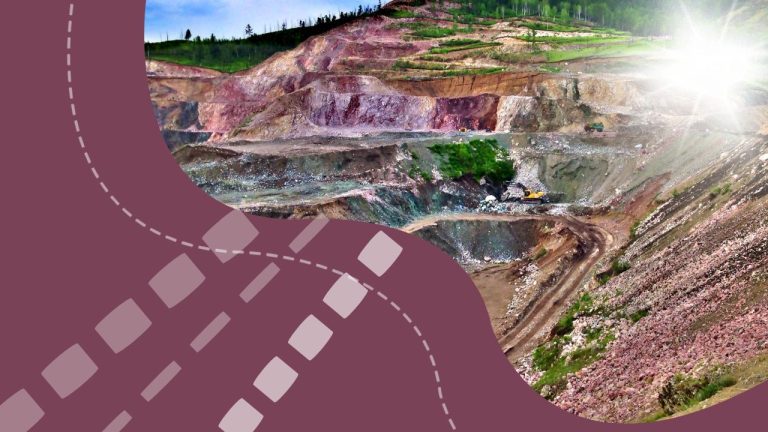
    Arras Minerals Corp. has announced further positive drill results from its ongoing exploration at the Elemes project in Northeast Kazakhstan. The latest findings reveal substantial gold and copper mineralization, reinforcing the project’s potential for large-scale development.

    A highlight of the program is drill hole EL24004 at the Berezski East target, which intersected a significant 304.8-meter zone grading 0.54 g/t gold-equivalent (AuEq), starting from just 1.2 meters below surface. Within this, a higher-grade section of 37.8 meters returned 1.50 g/t AuEq, suggesting the possibility of a sizeable open-pit gold deposit. A deeper zone within the same hole also yielded 50 meters at 0.45 g/t AuEq from a depth of 210 meters.

    At the K-Ozek target, drill hole EL24009 intersected several gold-bearing quartz veins, with a notable interval of 2 meters grading 1.55 g/t AuEq. This supports the presence of a high-grade low-sulphidation epithermal vein system. Meanwhile, drill hole EL24008 at a separate target returned 128 meters of mineralization grading 0.10 g/t AuEq, indicating broader but lower-grade mineralized zones.

    The Elemes project, located in the Bozshakol-Chingiz Magmatic Arc, is positioned near the Bozshakol Copper Mine, one of the largest copper-gold operations in the region. The Phase 1 drill program, which began in September 2024 and concluded in December, has focused on high-priority targets identified through extensive exploration, including geophysical surveys and soil sampling.

    Commenting on the results, Arras Minerals CEO Tim Barry expressed optimism about the project’s potential, particularly at Berezski East. “The continuous near-surface gold mineralization in EL24004 is a major step forward. The results indicate the presence of a large mineralized system that could support an open-pit operation,” Barry stated. President Darren Klinck added that the findings reinforce the Elemes project’s potential to host significant copper and gold mineralization.

    With these encouraging results, Arras Minerals plans to continue its exploration efforts, refining its understanding of the mineralized zones and identifying further opportunities for resource expansion.

  • Romanian Government Extends Mining Licenses and Regulates Mineral Deposits

    Romanian Government Extends Mining Licenses and Regulates Mineral Deposits

    The Romanian government has approved key legislative measures to regulate mineral exploitation across various regions, including Alba and Bistrița-Năsăud counties. Among the decisions is the registration of the Dealul Jgheabului and Pârâul Româneasa deposits as state public property, aligning with the country’s Mining Law.

    Additionally, the government extended the exploitation license for the Roșia Poieni mining perimeter by five years, until January 31, 2030. This move allows SC CUPRU MIN SA Abrud to continue extracting copper ore, limestone, and andesite under updated technical and economic conditions.

    Similarly, the mining licenses for dacite exploitation in the Tunel I – Măgura Ilvei and Poiana Ilvei – Măgura Sturzii perimeters have been extended for five years, with the possibility of successive renewals. These licenses, held by Romcim SA, ensure continued extraction activities within their respective areas.

    The license extensions include adjustments to mining royalties in accordance with recent legislative updates. These decisions reflect the government’s strategy to regulate and support mining operations while maintaining state control over critical mineral resources.

  • EU’s Pro-Business Roadmap Emphasises Mining Amid Economic Shift

    EU’s Pro-Business Roadmap Emphasises Mining Amid Economic Shift

    On Wednesday  29 January 2025, the European Union introduced a pivotal roadmap aimed at making Europe more business-friendly after years of prioritising green goals. With US President Trump’s aggressive trade policies and China’s technological advancements, the EU seeks to bolster growth by alleviating corporate burdens.

    “We need to reignite Europe’s innovation engine,” EU chief Ursula von der Leyen told a news conference to present the “competitiveness compass” — the first major initiative of her second mandate.

    Specific measures proposed:

      • Creating a new legal regime for innovative companies across the EU
      • Facilitating long-term energy agreements and grid investments
      • Providing targeted aid for industrial decarbonisation
      • Revising competition rules to allow creation of European tech giants
      • Promoting more mining in Europe for critical raw materials
      • Removing barriers in the EU single market for key sectors
      • Creating a “European savings and investments union” to boost startup funding

    The plan aims to streamline regulations, reduce energy costs for businesses, and support the development of green technologies. To achieve this, the EU will revise numerous laws, including those related to environmental standards and supply chains, to reduce the burden on companies.

    A key element of the strategy is to increase the EU’s self-sufficiency in critical raw materials, such as rare earths, which are essential for many advanced technologies. The EU currently relies heavily on imports from China and other countries for these materials.

    To address this dependency, the EU plans to encourage more mining within its borders. The European Commission has already received 170 mining projects and aims to facilitate the permitting process. The plan also includes provisions for joint purchases of critical raw materials and international partnerships to secure supply lines.

    This initiative has sparked concerns from environmental groups, who worry that it could lead to the weakening of environmental protections. However, the EU maintains that it remains committed to its climate goals, including achieving carbon neutrality by 2050.

    The EU’s new plan reflects the growing global competition for resources and technological dominance. By focusing on mining and streamlining regulations, the EU aims to strengthen its industrial base and secure its position in the global economy.

  • Kazakhstan Intensifies Search for Rare Earth Metals

    Kazakhstan Intensifies Search for Rare Earth Metals

    Kazakhstan continues exploration efforts across 12 sites as part of a government initiative to study mineral resources and boost the development of the rare earth metals sector.

    According to Kanat Sharlapayev, the Kuyrektikol site in the Karaganda region has shown significant promise, with reserves estimated at approximately 800,000 tons and forecasted resources reaching 935,400 tons of rare earth metals, including cerium and lanthanoids.

    Private companies like Cove Capital and HMS Bergbau are spearheading these exploration activities. Sharlapayev noted that the Ministry of Industry is actively working to declassify reserve data, excluding osmium and rhenium, to attract investment and enhance the sector’s development potential. This initiative is expected to be completed by the end of 2024.

    Currently, Kazakhstan boasts 15 rare earth deposits, 11 of which are under subsoil use agreements. Key deposits include Melovoye, Tomak, Taybogar, Tasmuryn, Kundybay, Akbulakskoye, Dzhamschi, Moynkum, Inkay, Akdala, Kanjugan, Mynkuduk, and Budenovskoye.

  • Kazakhstan Reaffirms Commitment to EITI Standards and Modernizes Mining Sector

    Kazakhstan Reaffirms Commitment to EITI Standards and Modernizes Mining Sector

    During a discussion, President Kassym-Jomart Tokayev emphasized Kazakhstan’s dedication to the Extractive Industries Transparency Initiative (EITI) since joining the organization in 2007. He noted that Kazakhstan has legislatively mandated subsoil users to comply with the organization’s standards, including reporting on taxes and other payments to the national budget.

    President Tokayev informed the head of EITI, Helen Clark, about regulatory measures aimed at enhancing the country’s geological exploration and mining industries. Key initiatives include the adoption of a Comprehensive Development Plan, the launch of a Unified Subsoil Use Platform featuring an interactive map and access to more than 50,000 geological reports, and streamlined processes for obtaining exploration and production licenses.

    In response, Helen Clark shared the strategic priorities of EITI for the coming period and praised Kazakhstan’s efforts to improve legislation in line with transparency standards for the extractive sector.

  • Boliden Acquires Lundin Mining Assets for $1.3 Billion in Strategic Expansion

    Boliden Acquires Lundin Mining Assets for $1.3 Billion in Strategic Expansion

    Swedish mining giant Boliden is set to acquire the Neves-Corvo mine in Portugal and the Zinkgruvan mine in Sweden from Lundin Mining in a deal valued at $1.3 billion upfront, with potential contingent payments of up to $150 million.

    This acquisition is expected to nearly double Boliden’s zinc concentrate output and increase its copper concentrate production by 43%, significantly bolstering its resource portfolio. The move aligns with Boliden’s strategic goal to enhance its smelting capacity and secure a stable supply of mined ores amidst intensifying global competition.

    According to Boliden CEO Mikael Staffas, the deal represents both “industrial logic and strategic fit,” with the acquired mines projected to contribute between $300 million and $350 million annually in earnings over the next five years. Boliden plans to finance the upfront payment through a bridge loan, half of which will be refinanced via a share issue and the remainder through medium- and long-term debt instruments.

    For Lundin Mining, the sale reflects a pivot in focus toward South America. Earlier this year, the company announced a joint venture with BHP to acquire Filo Corp, which owns the Filo del Sol project in Chile. This deposit boasts estimated resources of 2.2 billion pounds of copper, 2.86 million ounces of gold, and 133.33 million ounces of silver. The joint venture also acquired the Josemaría copper-gold-silver project in Argentina.

    The Neves-Corvo mine, located in Portugal’s Iberian Pyrite Belt, produced 108,812 tonnes of zinc, 33,823 tonnes of copper, 6,500 tonnes of lead, and 1.9 million ounces of silver in 2023. Meanwhile, the Zinkgruvan mine in Sweden yielded 76,349 tonnes of zinc, 4,434 tonnes of copper, 26,284 tonnes of lead, and 2.3 million ounces of silver last year.

    The transaction, which is subject to regulatory approvals, is expected to be finalized by mid-2025.

  • Germany Supports Savannah Resources’ Barroso Lithium Project with $270 Million Loan Guarantee

    Germany Supports Savannah Resources’ Barroso Lithium Project with $270 Million Loan Guarantee

    Germany’s export credit agency, Euler Hermes, has signed a non-binding letter of interest for a loan guarantee of up to $270 million to support Savannah Resources in developing the Barroso lithium project in northern Portugal. The guarantee covers 80% of a loan, making it an attractive proposition for Germany’s KfW IPEX-Bank and other financial institutions. KfW IPEX-Bank, a key development partner, has played a pivotal role in facilitating this process.

    This initiative reflects Germany’s and the European Union’s urgency to establish a domestic lithium supply chain and reduce dependence on imports, primarily from China, which currently supplies 97% of Europe’s lithium. Emanuel Proença, CEO of Savannah Resources, highlighted the importance of the move, linking it to the recently enacted European Critical Raw Materials Act. The legislation mandates that 10% of the EU’s critical raw materials must be sourced domestically and 40% processed within Europe by 2030.

    Savannah’s Barroso project, situated about 145 km from the deep-water port of Leixões near Porto, is a cornerstone of Europe’s efforts to bolster its lithium supply. A 2023 scoping study revealed the project’s potential to produce 26,000 tonnes of lithium carbonate equivalent annually over a 14-year lifespan, with an after-tax net present value of $953 million and a robust internal rate of return of 77.3%.

    Despite current lithium market oversupply and plummeting prices, Proença predicts a market rebound by the time Barroso begins production in 2027. He noted a likely deficit in lithium supply from 2027 onwards, supported by strategic developments such as the opening of AMG Critical Materials Group’s lithium hydroxide refinery near Berlin.

    The loan guarantee follows Savannah’s strategic partnership with AMG, which secured a 15.8% stake in the company and an annual offtake of 45,000 tonnes of spodumene concentrate for five years, with potential extensions.

    The Barroso project aligns with Europe’s broader commitment to building a sustainable battery value chain, as evidenced by similar initiatives across Serbia and the U.S., including significant funding for Lithium Americas’ Thacker Pass-project in Nevada.

  • Ferrexpo Shares Surge as Trump’s Victory Fuels Speculation on Ukraine Peace Prospects

    Ferrexpo Shares Surge as Trump’s Victory Fuels Speculation on Ukraine Peace Prospects

    Ferrexpo PLC (LSE), a Ukraine-based iron ore miner, experienced a sharp rise in its stock price, soaring by 22% to 76p following Donald Trump’s unexpected win in the U.S. presidential race. Analysts suggest the rally reflects investor optimism that Trump’s promise to end the Russia-Ukraine war could soon bring stability to Ukraine. Despite ongoing conflict, Ferrexpo has managed to sustain its mining operations. Ukrainian President Volodymyr Zelenskyy also congratulated Trump, expressing hopes for continued bipartisan support from the U.S. under his leadership.

  • Bulgarian President Radev: Metallurgy and Heavy Industry Are Key to Europe’s Economic Future

    Bulgarian President Radev: Metallurgy and Heavy Industry Are Key to Europe’s Economic Future

    Bulgarian President Rumen Radev emphasized the critical role of the metallurgy, mining, and heavy industries in shaping Europe’s economic resilience during the Metallurgist’s Day celebration in Sofia, which he attended under his official patronage. He urged Bulgaria to leverage this opportunity to strengthen its economic position within Europe’s industrial landscape. Reflecting on recent global challenges, including the pandemic, the energy crisis, and the Ukraine conflict, Radev argued that these events revealed Europe’s overreliance on external energy resources and the limitations of a solely green-tech focus, advocating instead for a balanced industrial strategy.

  • Kyrgyzstan Paves New Path in Mining Sector with Focus on Critical Raw Materials

    Kyrgyzstan Paves New Path in Mining Sector with Focus on Critical Raw Materials

    Kyrgyzstan is on the verge of a transformative shift in its mining industry, announcing plans to issue licenses for the extraction of critical raw materials (CRMs)—a strategy that seemed improbable just five years ago. This evolution follows extensive political reforms under President Sady Japarov, who has been pursuing new revenue streams since his election in late 2020.

    Traditionally, Kyrgyzstan has depended on mining, especially the Kumtor gold mine, due to a lack of natural gas and oil reserves. The Kumtor mine, near Lake Issyk-Kul, was initially estimated to hold 514 tons of gold but has faced controversies over environmental issues and a cyanide spill in 1998, impacting local communities and tourism.

    Public disapproval of mining activities has intensified, particularly after the 2019 Kyzyl-Ompol uranium mining controversy where nearly 30,000 citizens protested, leading to a moratorium on uranium and thorium mining due to environmental and health concerns. However, as the demand for CRMs increases globally—driven by the European Commission’s call for energy transition and secure CRM supplies—Kyrgyzstan is revisiting its mining prospects.

    In June 2024, Kyrgyzstan’s parliament lifted the uranium mining moratorium, encouraging new exploration nationwide. Amendments in subsoil use and biosphere territories regulations aim to streamline CRM resource development.

    Kyrgyzstan, however, faces obstacles in attracting foreign investment due to a fraught history with international mining companies, notably the Centerra dispute over Kumtor. Yet the government is eager to attract both domestic and international partners, with recent talks involving the Zhicun Lithium Industry Group for lithium mining.

    While mining activities, such as the start of operations at Kyzyl-Ompol, underscore the government’s commitment, environmental concerns persist. Incidents like a glacier damaged by a Chinese coal mining company and a radioactive waste spill have renewed public apprehensions, evoking memories of past controversies. Kyrgyzstan’s shift toward CRM mining raises questions about sustainable development, with hopes to avoid previous missteps and create long-term economic benefits for the country.