Tag: lithium

  • Germany’s Altmark basin emerges as potential lithium powerhouse through direct extraction technology

    Germany’s Altmark basin emerges as potential lithium powerhouse through direct extraction technology

    Northern Saxony-Anhalt, a region historically associated with natural gas production, is drawing renewed attention as a potential cornerstone of Europe’s lithium supply. New assessments indicate that deep underground brines in the Altmark basin contain far larger volumes of lithium than previously believed, offering a possible breakthrough for the continent’s battery materials strategy.

    Neptune Energy, which operates in the area, announced in late 2025 that an independent resource estimate by Sproule ERCE placed the Altmark deposit at around 43 million tonnes of lithium carbonate equivalent. Verified under the CIM/NI 43-101 standard, the estimate would rank Altmark among the world’s largest known single-site lithium resources if confirmed through further development.

    The lithium is hosted in deep geothermal brines within Rotliegend sandstone and volcanic formations at depths of 3,200 to 4,000 meters. Average lithium concentrations of about 375 milligrams per litre have been recorded, largely attributed to long-term mineral leaching from mica-rich volcanic rocks under high-temperature conditions.

    Rather than conventional open-pit mining or evaporation ponds, Neptune is advancing direct lithium extraction technologies. Pilot projects completed in 2025 successfully produced battery-grade lithium carbonate using ion exchange and adsorption methods. These enclosed systems return processed brine underground, significantly reducing land use and water consumption compared with traditional approaches.

    The project aligns with the European Union’s Critical Raw Materials Act, which targets greater domestic sourcing of strategic minerals such as lithium by 2030. By reusing legacy gas infrastructure and combining lithium recovery with geothermal heat potential, Altmark could offer a lower-impact model for mineral production within Europe.

    Commercial output has yet to begin, and further permitting and demonstration-scale validation are required. German regulators are expected to closely review groundwater protection, waste handling and long-term environmental performance. If successful, Altmark may play a pivotal role in reshaping Europe’s position in the global lithium supply chain.

  • Battery storage boom lifts lithium demand outlook for 2026 despite lingering oversupply risks

    Battery storage boom lifts lithium demand outlook for 2026 despite lingering oversupply risks

    Rapid growth in battery energy storage is strengthening the outlook for lithium demand in 2026, raising expectations of a faster recovery for an industry that has struggled with oversupply since late 2022. Analysts say reforms in China’s power sector and surging global investment in data centres have driven stronger-than-expected demand for lithium used in stationary storage systems.

    China’s energy storage market expanded sharply in the second half of 2025, supported by policy changes and rising power system needs. According to analysts, demand growth from energy storage has already exceeded earlier forecasts, helping to offset weaker momentum in electric vehicle sales. Battery storage systems have become China’s most valuable clean-tech export, generating nearly $66 billion in sales in the first ten months of 2025, ahead of EV exports.

    Major banks now expect a tightening lithium market next year. Morgan Stanley forecasts a deficit of 80,000 tonnes of lithium carbonate equivalent (LCE) in 2026, while UBS projects a smaller shortfall of 22,000 tonnes, compared with a surplus of 61,000 tonnes expected in 2025. Global lithium demand is projected to grow by 17% to 30% in 2026, broadly in line with supply growth of 19% to 34%, according to analysts.

    Prices rebounded sharply in the second half of 2025 after hitting multi-year lows earlier in the year, aided by Beijing’s pledge to rein in overcapacity and a temporary production halt at a major Chinese mine operated by CATL. Lithium carbonate prices on the Guangzhou Futures Exchange rose to their highest level since November 2023 by the end of December. Analysts expect prices to range between 80,000 and 200,000 yuan per tonne in 2026.

    Energy storage is forecast to account for 31% of total lithium demand next year, up from 23% in 2025, gradually reducing the dominance of electric vehicle batteries. However, analysts caution that faster adoption of sodium-ion batteries for storage and a slowdown in EV sales could cap demand growth and limit further price increases.

  • Tajikistan highlights key mining contracts and projects announced over the past year

    Tajikistan highlights key mining contracts and projects announced over the past year

    The past year was marked for Tajikistan’s extractive industry not by major new discoveries, but by a series of significant contracts and project announcements shaping development plans for the coming years. Several large initiatives across antimony, iron ore, gold, coal and lithium were either launched or confirmed.

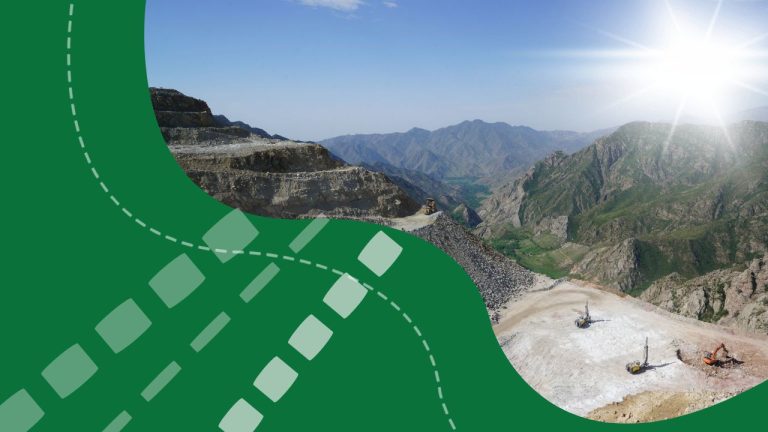
    In July 2025, construction began on a mining and processing plant at the Pakhandara antimony deposit in the Sughd region, located at an altitude of about 3,000 meters above sea level. The project is scheduled for completion by 2027. The license for both open-pit and underground mining is held by Pakhandara Mining, while HKSkyline Development Limited is acting as the contractor. Once operational, the plant is expected to process more than 150,000 tonnes of ore annually and produce around 5,000 tonnes of antimony.

    The same month also saw the commissioning of several other facilities, including a new antimony processing plant operated by ARB Minerals Group, the second phase of the TVEA Dushanbe gold mining enterprise, and the Angishti Takht coal beneficiation plant.

    In December, the Tajik Metallurgical Plant signed an agreement with the government to build an iron ore mining and processing facility, using deposits located in the Sughd region as its raw material base. The first phase of the project is set to be launched in 2027, with the second phase planned for 2031. The design capacity of the complex is 2.5 million tonnes of ore and 1.1 million tonnes of iron ore concentrate per year.

    At the International Mining and Metallurgical Forum of Tajikistan held in Dushanbe in December, officials also announced the construction of a lithium plant in the country, although further details of the project have not yet been disclosed. During the same event, it was stated that around 800 prospective mineral deposits have been identified nationwide, while just over 100 sites covering 50 types of mineral raw materials are currently involved in active development.

  • China Lithium Prices Surge After Yichun Plans to Revoke Mining Licences

    China Lithium Prices Surge After Yichun Plans to Revoke Mining Licences

    Lithium prices in China jumped sharply after authorities in the country’s main lithium-producing hub announced plans to revoke dozens of mining licences, triggering investor concerns about future supply.

    The most actively traded lithium carbonate contract on the Guangzhou Futures Exchange rose to 109860 yuan per metric ton on Wednesday, its highest level since June 2024, before closing up 7.61% at 108620 yuan.

    The Bureau of Natural Resources of Yichun, a major lithium center in Jiangxi province, said it intends to cancel 27 mining permits following a public consultation period that will end on January 22. The announcement was published on the bureau’s official website on Friday.

    According to the published list, all of the licences have already expired, with some dating back more than a decade. Most were originally issued for ceramic clay or limestone mining. One permit related to a lithium-bearing ceramic stone mine was held by Jiangxi Special Electric Motor, which said it has filed an objection with local authorities. The permit expired on September 15 2024.

    Analysts at Galaxy Futures said the licence revocations are unlikely to have a direct impact on current lithium supply, as none of the affected permits cover operating mines. Nevertheless, the announcement heightened market anxiety about longer-term availability, pushing lithium carbonate prices higher.

    The move is part of a broader clean-up of mining licences in Yichun that began in September. The bureau previously revoked six permits on November 27. Lithium prices have been rising since August, after CATL suspended mining at its Jianxiawo site following the expiry of its mining licence, with strong demand from the energy storage sector providing additional support.

  • China Lithium Prices Jump After Yichun Moves to Revoke Mining Licences

    China Lithium Prices Jump After Yichun Moves to Revoke Mining Licences

    Lithium prices in China rose sharply after authorities in the country’s main lithium-producing hub announced plans to revoke dozens of mining licences, fuelling investor concerns over future supply.

    The most actively traded lithium carbonate contract on the Guangzhou Futures Exchange climbed as high as 109860 yuan per metric ton on Wednesday, its highest level since June 2024, before closing up 7.61% at 108620 yuan.

    The Bureau of Natural Resources of Yichun, a key lithium centre in Jiangxi province, said it intends to cancel 27 mining permits following a public consultation period ending on January 22. The notice was published on the bureau’s official website last week.

    According to the published list, all of the licences have already expired, in some cases more than ten years ago. Most were originally issued for ceramic clay or limestone mining. One permit linked to a lithium-bearing ceramic stone mine was held by Jiangxi Special Electric Motor, which said it has lodged an objection with local authorities. The permit in question expired on September 15 2024.

    Analysts at Galaxy Futures noted that the cancellations are unlikely to have a direct impact on current lithium supply, as none of the revoked licences relate to operating mines. Nevertheless, the announcement heightened market anxiety over longer-term availability, pushing lithium carbonate prices higher.

    The latest move follows a broader clean-up of mining permits in Yichun that began in September. The bureau previously revoked six licences on November 27.

    Lithium carbonate prices have been trending upward since August, after mining at CATL’s Jianxiawo mine was suspended due to the expiry of its mining licence. Strong demand from the energy storage sector has provided additional support to the market.

  • REsourceEU Puts Europe’s Critical Minerals Strategy Into Action With Early Molybdenum and Lithium Backing

    REsourceEU Puts Europe’s Critical Minerals Strategy Into Action With Early Molybdenum and Lithium Backing

    Europe’s newly launched €3-billion REsourceEU funding package marks a decisive shift in the continent’s approach to securing resilient, competitive supply chains for critical and strategic raw materials. The first wave of support targets a select group of molybdenum and lithium projects, signalling that Brussels is moving beyond policy blueprints toward tangible industrial capacity.

    As reported by euromining.news, these early selections demonstrate that the EU’s critical raw materials agenda is entering an execution phase, focused on easing bottlenecks in alloy production, battery manufacturing and clean-technology deployment.

    Molybdenum moves into the strategic spotlight
    While it attracts far less attention than battery metals, molybdenum is essential to Europe’s industrial backbone. As a key alloying element in high-performance steels, it underpins defence manufacturing, energy infrastructure, petrochemicals and advanced engineering.

    Europe’s heavy reliance on imported molybdenum leaves these sectors exposed to geopolitical risk and price volatility. By prioritising European molybdenum projects under REsourceEU, the Commission is acknowledging that strategic vulnerability extends well beyond lithium and rare earths. Industrial resilience depends on securing the full spectrum of critical alloying materials that modern manufacturing requires.

    Lithium funding reinforces battery-chain ambitions
    Lithium remains central to Europe’s push to build a competitive battery ecosystem. Conversion plants across Germany, France, Portugal and the Nordic region are racing to scale production of battery-grade lithium chemicals, aiming to establish domestic midstream hubs in a market still dominated by fragmented and geopolitically sensitive global supply chains.

    REsourceEU funding is expected to reduce financing risk, unlock delayed investments and accelerate project timelines. This support is arriving at a critical moment, as European gigafactory capacity expands rapidly and automakers seek stable, low-carbon lithium supply.

    From policy vision to industrial reality
    The broader ambition of REsourceEU is to translate Europe’s raw-materials strategy into operational infrastructure. As highlighted in recent euromining.news analysis, long-term industrial competitiveness now hinges on secure, diversified and environmentally responsible material flows.

    By backing early leaders in molybdenum and lithium development, the EU is sending a clear signal: Europe intends to anchor strategic materials production at home rather than rely on volatile external suppliers. The challenge now lies in delivery. Projects must still overcome permitting hurdles, secure long-term offtake agreements and reach commercial scale.

    As construction advances and policy support deepens, euromining.news will continue to track both progress and remaining gaps to assess whether Europe’s strategic-materials ambitions translate into lasting industrial strength.

  • Vulcan Energy Breaks Ground on Germany’s First Geothermal-Lithium Extraction Plant

    Vulcan Energy Breaks Ground on Germany’s First Geothermal-Lithium Extraction Plant

    Vulcan Energy has begun construction on its flagship Project Lionheart, officially laying the foundation stone for the combined geothermal and lithium extraction plant (G-LEP) in Landau, Germany. The ceremony, attended by European Investment Bank Vice-President Nicola Beer and other senior officials, follows the company securing a €2.2 billion (A$3.9 billion) financing package to fully fund Phase One of the development.

    Phase One Lionheart will deliver an integrated lithium and renewable energy project in the Upper Rhine Valley, targeting annual production of 24 000 t of lithium hydroxide monohydrate — enough for roughly 500 000 electric vehicle batteries — alongside 275 GWh of renewable electricity and 560 GWh of renewable heat for local consumers. The project has an expected operational life of about 30 years.

    The G-LEP facility is central to Vulcan’s plan to produce carbon-neutral lithium using deep geothermal brine, while also supplying long-term renewable district heating to the City of Landau. Executives described the groundbreaking as a major milestone for European critical raw material security and the region’s clean-energy transition.

    CEO Cris Moreno said the launch signalled strong momentum for Europe’s efforts to build domestic lithium supply chains and reduce reliance on imports. He added that Vulcan would now focus on advancing construction of the G-LEP and delivering climate-friendly lithium and renewable heat to the region.

  • Rio Tinto Scales Back Lithium Expansion, Prioritises Capital Discipline and Existing Projects

    Rio Tinto Scales Back Lithium Expansion, Prioritises Capital Discipline and Existing Projects

    Rio Tinto has pared back its ambitions for rapid lithium growth, telling investors at its capital markets day in London that it will limit investment to projects already under development, with any further expansion contingent on market conditions and strict returns criteria.

    CEO Simon Trott confirmed that the company will complete its current slate of lithium projects — including the Rincon brine operation in Argentina and a single spodumene mine in Canada — to reach approximately 200,000 tonnes per year of lithium capacity by 2028. This figure is below the miner’s earlier guidance of 225,000 t/y, marking a recalibration of expectations amid a volatile market.

    Trott emphasised that Rio Tinto remains bullish on long-term lithium demand, particularly from grid-scale energy storage, but said capital discipline would take precedence over aggressive growth. The company is prioritising delivery of its major ongoing developments, including the Oyu Tolgoi underground expansion in Mongolia and the Simandou iron-ore megaproject in Guinea. Group capital expenditure is expected to fall below $10 billion from 2028.

    Rio Tinto has already halted spending at the Jadar lithium project in Serbia, which has been placed into care and maintenance after regulatory setbacks. The company is also reassessing its next steps in Canada, where the Whabouchi and Galaxy deposits are under review. Energy chief Jérôme Pécresse said both projects will remain active at minimal cost while Rio evaluates which — if either — will proceed. “It’s a reasonable decision to open one mine, not two, but too early to say which one,” he said.

    Trott reiterated that any new lithium investment would move forward only when market fundamentals justify it and when projects meet Rio Tinto’s financial thresholds. The miner has allocated roughly $3 billion per year for growth across the portfolio but will not deploy capital that cannot “move the needle” in terms of shareholder value.

    “We have a clear path to 200,000 tonnes by 2028 and that will be a fantastic business for us,” Trott said. “On other projects, we’ll continue to assess them based on the market fundamentals as they come up to sanction.”

    He added that Rio Tinto still possesses “the best undeveloped lithium assets in the business,” but emphasised that growth for its own sake is off the table. Maintaining a strong balance sheet is the priority, with cost savings from asset reviews and infrastructure optimisation expected to bolster shareholder returns.

  • Vulcan Energy Secures $2.56bn to Build Europe’s Largest Lithium Project, Clearing Way for Construction

    Vulcan Energy Secures $2.56bn to Build Europe’s Largest Lithium Project, Clearing Way for Construction

    Vulcan Energy has secured a $2.56 billion financing package to build what is set to become Europe’s largest lithium production project, marking a major step forward for the region’s electric-vehicle supply chain. The funding will enable construction of the Lionheart lithium project in Germany to begin immediately, after multiple years of delays linked to fluctuating lithium prices and weakened investor appetite.

    The Australia-listed company — backed by mining magnate Gina Rinehart — plans to produce around 24,000 tonnes of lithium hydroxide annually during the project’s first decade, enough to supply battery material for approximately 500,000 electric vehicles per year. The financing package is one of the largest ever assembled for a European critical minerals project and includes support from the European Investment Bank, German and EU government agencies, five export credit agencies, and seven commercial banks.

    As part of the package, Vulcan will raise up to €603 million in equity at a fixed price of €2.24 per share. The company has already secured long-term supply agreements with Stellantis, Umicore, and Glencore, with roughly 90% of the first decade of production already contracted, many of them either at fixed prices or under price-floor and price-ceiling structures.

    Executive chair Francis Wedin confirmed that the board has taken a final investment decision, telling Reuters: “It’s fully funded and we will be putting shovels in the ground on Friday.”

    Vulcan previously targeted first production in 2023, later shifting the date to 2025. The revised timeline now points to 2028. Earlier this year, the company ended its long-standing supply agreement with Renault to “free up” volumes for other buyers, while Stellantis remains both a major customer and one of Vulcan’s largest shareholders.

    Lithium prices have dropped sharply since their peak above $70,000 per tonne in 2023, with lithium carbonate trading just below $10,000 per tonne at the end of October, according to Benchmark Mineral Intelligence — a decline that has challenged new project financing across the sector. Vulcan’s ability to secure such a substantial funding package is therefore considered a significant milestone for European battery-material independence.

  • Ukraine’s Lithium Ambitions: Opportunities and Challenges as Kyiv Seeks a Role in the Global Battery Metals Market

    Ukraine’s Lithium Ambitions: Opportunities and Challenges as Kyiv Seeks a Role in the Global Battery Metals Market

    Ukraine is positioning itself to enter the global lithium industry as the country prepares to close applications on December 12 for its first-ever lithium Production Sharing Agreement, covering the “Dobra” hard-rock deposit. The tender comes as Kyiv seeks to revive its mining and processing base, re-launch geological exploration and build a broader critical minerals sector that could anchor Ukraine more firmly within Western supply chains.

    The discussion follows earlier analysis of Ukraine’s role in the titanium value chain, where the country has long-standing expertise, an established presence in chloride-process feedstock and a historically strong resource base. Supporters argue that many of these strengths can be leveraged as Ukraine moves toward lithium — a metal undergoing rapid transformation and increasing geopolitical scrutiny.

    Over the past five years, lithium has shifted from a niche commodity to a key industrial material, underpinning electric vehicles, energy storage, digital infrastructure and AI-related growth. The sector has already weathered a full boom–bust cycle, marked by a dramatic 2022 price spike followed by a steep crash in 2023–2024. Market volatility, combined with the bankruptcy of battery producer Northvolt, production curtailments in Australia, the rise of South American brines and China’s entrenched dominance in refining, has reshaped the landscape for emerging producers.

    Despite turbulence, analysts expect demand to expand sharply. Forecasts from the IEA, Benchmark Mineral Intelligence and others project global lithium demand in 2035 at 3.5–4 million tonnes of LCE — three to four times current levels — driven largely by electric vehicles, grid-scale energy storage and the rapid growth of AI data centres. Evolving battery chemistries, including the rise of LFP, sodium-ion and eventual solid-state technologies, are not expected to displace lithium, only alter consumption patterns.

    On paper, the supply pipeline appears abundant, but industry experts warn that cost pressures, permitting delays and technology risks significantly constrain real-world output. Many high-cost projects failed as prices retreated to $10,000–$15,000 per tonne, underscoring the importance of cost-competitive Tier-1 and Tier-2 operations. These categories, which encompass top South American brines and efficient hard-rock mines, remain profitable even in downturns. Higher-cost Tier-3 and Tier-4 projects, including complex clays and power-intensive operations, cycle in and out of production, contributing to recurring price shocks.

    This tight supply environment supports long-term price expectations of $15,000–$20,000 per tonne, reinforcing the need for new jurisdictions to create competitive conditions for investment. For Ukraine, this means stable permitting, predictable policy and investment frameworks that allow the development of mid-tier, cost-competitive projects.

    Any discussion of future lithium supply also centers on China, which refines around two-thirds of global lithium chemicals and manufactures more than 70% of battery cells. Analysts expect China’s geographically domestic market share to shrink as new refining plants come online in Australia, Asia, the U.S. and the EU, but Chinese-controlled capacity abroad will remain substantial. Beijing is also expected to continue using state-backed tools to protect national champions during downturns, creating a competitive landscape that new producers must navigate.

    Experts highlight seven factors that determine success for emerging lithium producers: strong cost position, clear routes to market, fast permitting, robust governance and ESG frameworks, integration into geopolitical alliances, R&D capacity and development of human capital. Failure to meet these benchmarks has already sidelined many new entrants, given lithium’s cyclicality and the technological risks of unconventional extraction.

    For Ukraine, the “Dobra” PSA and other spodumene prospects offer pathways to enter European supply chains, especially with by-products such as rare metals bolstering project economics. As the world enters what many call the “New Age of Electricity,” Ukraine’s geological resources — whether lithium, graphite, copper, nickel or strategic metals such as titanium and zirconium — could elevate the country from a raw-material holder to a strategic partner.

    Analysts argue that the global race will favour countries able to combine strong geology with fast permitting, disciplined policy execution and deep integration into Western supply chains. For Ukraine, the choice is clear: remain a price-taking exporter exposed to market cycles or build the governance, investment environment and industrial partnerships needed to become a reliable supplier in a world increasingly defined by critical minerals competition.