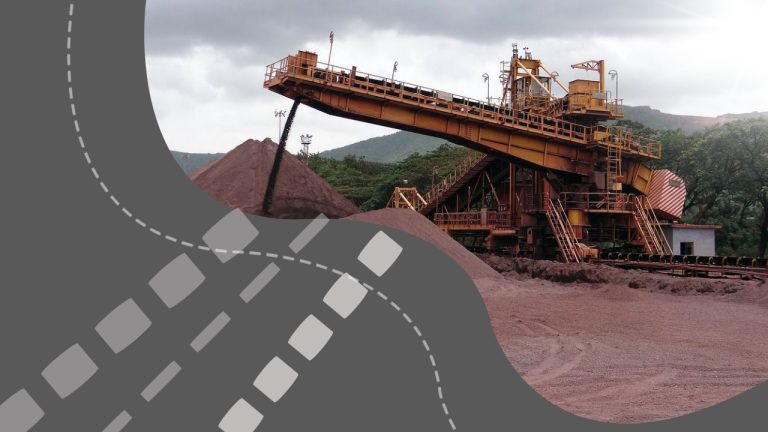
Tag: lithium mine

  • Lithium Brine Co. Awarded 100%-Interest Kazakhstan Mining License

    Lithium Brine Co. Awarded 100%-Interest Kazakhstan Mining License

    Condor Energies Inc. has released its results from the second quarter of this year (Q223), including financial statements and management discussion and analysis. These documents are available on the company’s website.

    The report has included the highlights of Q2. In July of 2023, Kazakhstan gave Condor a 100% working interest for six years in a 37,300-hectare lithium brine mining license. The company is awaiting final approval from the government of Kazakhstan for its 95% working interest in a separate lithium brine mining license in Kazakhstan.

    In June, Condor created a US$5.9 million three-year term loan facility, with interest at 9.0% per annum, that is intended for working capital needs and corporate purposes.

    Condor is undertaking final negotiations in order to run the day-to-day operations of eight gas-condensate fields in Uzbekistan. In Kazakhstan, Condor is still attempting to lock in a long-term LNG feed gas supply contract.

    Prior to the government of Kazakhstan granting Condor a lithium mining license, in July of 2023, a well drilled on a previously acquired license found brine deposits that contained concentrations of 67 milligrams per liter of lithium in carboniferous aged intervals.

    A 670m column of lithium brine has been identified using historical records and data from core drilling. This well touched the top of Denovian-aged sediments. Reservoir sands that were found were not tested.

    Condor’s lithium licenses are ideally positioned between Europe and Asia. This location provides access to robust lithium markets. Condor’s goal is to produce lithium through closed-looped direct lithium extraction technologies, which is more cost-effective than other lithium extraction technologies.

    Analyst Malcolm Shaw of Hydra Capital identified Condor Energies as a company worth looking into.

    According to Shaw, “It took flight after the company announced that it is in advanced discussions with respect to taking over eight gas fields in Uzbekistan, along with an exploration block or two.”

    Condor is unique because its goal is “to revitalize Soviet-era fields with standard Western development practices.” He specifically compared it to the early success of PetroKazakhstan, which sold for CA$4 billion.

  • Cornish Lithium secures £53.6m to open first mine for the metal in Britain

    Cornish Lithium secures £53.6m to open first mine for the metal in Britain

    The startup opening Britain’s first lithium mine in Cornwall has secured $67m (£53.6m) of investment led by the UK Infrastructure Bank, in a much-needed boost to efforts to extract the metal that is used for making vehicle batteries.

    Cornish Lithium is to receive the funds from the Treasury-funded bank and other investors as part of a larger funding package of up to $210m (£168m).

    The funding package is expected to speed up progress towards British mining of battery-grade lithium compounds, which are key to production of batteries for electric vehicles and renewable energy storage.

    The investment is part of a push to boost financing for climate crisis-related infrastructure projects, and to create a hub for supplies of lithium to Europe from Cornwall.

    The initial investment is led by the UKIB alongside the Energy & Minerals Group (EMG), a US private investment firm focused on energy and minerals, and TechMet, which invests in clean energy and electric vehicle technologies and counts the US government’s development finance corporation among its backers.

    The UKIB and EMG will each put in £24m while TechMet, Cornish Lithium’s largest shareholder, is investing a further £5.6m, bringing its total investment in the business to £30m.

    Core samples from Cornish Lithium’s exploratory drilling at its research site, August 2022.
    Core samples from Cornish Lithium’s exploratory drilling at its research site, August 2022. Photograph: Jim Wileman/The Guardian

    Cornish Lithium aims to increase its 70-strong workforce to more than 300 people once it is in commercial production. It had warned in its annual accounts in June that there would be material uncertainty over its future if it did not raise bridge funding by July to buy it time before its next fundraising round. The company plans to raise a further £6.9m by selling shares to small shareholders through Crowdcube, with a focus on existing investors.

    Lithium is a vital ingredient in the current generation of batteries used in portable devices ranging from mobile phones to electric toothbrushes. But vastly more lithium will be needed for electric vehicles as combustion engines are phased out around the world.

    Cornish Lithium is one of several projects that seek to revive Cornwall’s 4,000-year-old mining heritage. Another company, British Lithium, has teamed with the French mining firm Imerys to start a mine in Cornwall and to extract enough lithium to power 500,000 electric cars a year by the end of the decade.

    Jeremy Wrathall, founder and chief executive of Cornish Lithium, said it was “essential to secure funding from institutional investors with the financial muscle to bring our projects into commercial production”.

    He said the funds would enable the company to advance its project at Trelavour, near St Austell, to “construction-ready status” and allow it to “complete the engineering design work required to build a demonstration-scale geothermal waters extraction facility”.

    John Flint, chief executive of the UKIB, said: “Globally the supply of lithium is far outpaced by demand, and yet in the UK it remains a nascent market.”

    He said the investment would “greatly accelerate domestic production of a mineral which is critical to the future of electric vehicle battery production and decarbonisation of the transport sector”.

    Andrew Griffith, economic secretary to the Treasury, who visited Cornish Lithium on Tuesday, said the investment would improve the domestic supply of lithium, helping “the UK’s transition towards net zero whilst also boosting local and regional economic growth”.

    Kemi Badenoch, business and trade secretary, said that, coupled with Tata Group’s recent pledge to build a £4bn electric car battery gigafactory in Somerset last month, the investment would ensure the UK automotive sector is “well set for the future”.