Tag: Kazzinc

  • Kazzinc Declines to Classify Buhtarminskaya Hydropower Plant’s Generation as Renewable

    Kazzinc Declines to Classify Buhtarminskaya Hydropower Plant’s Generation as Renewable

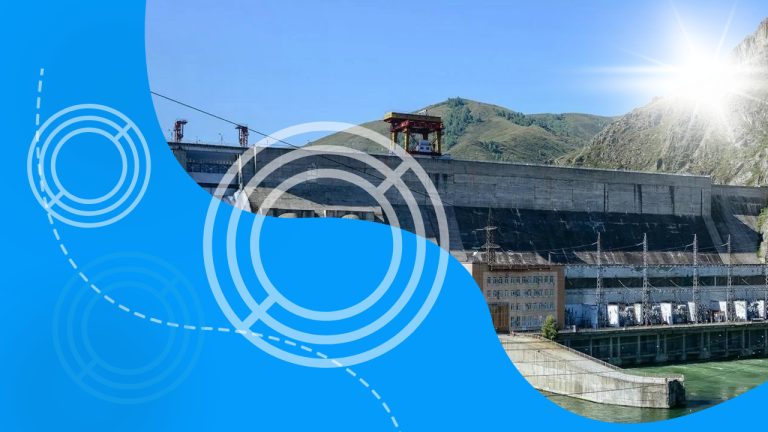
    The Kazakhstan-based mining company “Kazzinc,” which is controlled by the Swiss-British trader Glencore, has reviewed its emissions data related to electricity consumption. According to a report from inbusiness.kz, the company is revising its Scope 2 emission metrics following an analysis of Glencore’s annual report for 2023. This review aims to align with the Greenhouse Gas Protocol’s definition of direct and indirect energy sources and renewable energy targets under the Emissions and Energy Reporting Procedure (EERP). The revision includes recalculating direct and indirect energy use and associated emissions for “Kazzinc,” including power generation at the Buchtarma Hydroelectric Power Station. Previously, this station was considered a fully integrated direct source of energy, but due to changes in reporting procedures, it will now be classified as an indirect source, potentially increasing the company’s reported emissions.

    The rationale behind this decision is based on the fact that the hydroelectric station utilizes water resources, which are subject to regulation and cannot be classified as renewable energy sources. Consequently, this move has sparked discussions within the energy sector, particularly regarding the classification of hydroelectric power and its eligibility for renewable energy incentives.
  • In Eastern Kazakhstan, Kazzinc was punished for river pollution

    In Eastern Kazakhstan, Kazzinc was punished for river pollution

    According to a report by Almaty.tv citing the press service of the Committee for Environmental Regulation and Control of the Ministry of Ecology and Natural Resources of the Republic of Kazakhstan, Kazzinc has been fined for polluting the Ulba River in the East Kazakhstan region following an unscheduled inspection.

    The department highlighted that in January 2024, an unscheduled inspection was conducted concerning the pollution of the Ulba River attributed to the Ridder mining and processing complex of Kazzinc.

    “During the unscheduled inspection, wastewater samples collected by specialists from the Department of Ecology revealed a 4.5-fold excess of manganese. It was also found that numerous discharges into the Ulba River were occurring due to improper operation of treatment facilities. Based on the findings of the unscheduled inspection, Kazzinc was fined 50 million tenge administratively, and an order was issued to rectify the violations,” stated the press service of the Environmental Control Committee.

  • Kazzinc began to produce more gold

    Kazzinc began to produce more gold

    The Kazzinc company is actively increasing its gold mining and production. At the end of 2023, the Kazakh enterprise produced about 35 tons (1.124 million ounces) of the precious metal. This information is reported by nbusiness.kz , citing data from the company’s key shareholder, trader Glencore.

    In 2023, Kazzinc produced 18.6 tons (598 thousand ounces) of gold from raw materials mined at its deposits, which is 1.6 tons (52 thousand ounces) more than in 2022. This is due to the fact that the year before last, to fulfill the plan, they purchased raw materials from other companies, and processed a significant part of their volumes already in 2023. If we take into account foreign raw materials, production growth was 23% – almost 35 tons of precious metal versus 28.4 tons in 2022. 

    This rapid pace of work is partly due to the depletion of what was once the country’s largest deposit. Let us remind you : the main reserves of Vasilkovsky have already been used up, so by 2026 production will be curtailed. Until then, ore will be mined primarily in open-pit mines. Following the closure of the mine, Kazzinc is likely to significantly reduce gold production. 

  • Kazzinc is considering the development of the Shalkiya field

    Kazzinc is considering the development of the Shalkiya field

    Kazzinc is studying technological and economic options for developing the Shalkiya zinc deposit in the Kyzylorda region. The company’s general director, Alexander Khmelev, shared this information in a conversation with an inbusiness.kz correspondent on the sidelines of the capital’s “Kazcontent 2.0” forum.

    “It’s not a very simple deposit, and at the moment we are simply looking for both a technological and economic scheme of work that would be cost-effective. It has its own difficulties, a very interesting deposit, but very difficult to develop. We are right now at in fact, we look at what is out there in the world, as well as our thoughts and suggestions. Two or three weeks ago, in my opinion, we were there, we looked at everything, we passed through. And if we look at what we will go into, roughly speaking, in this maybe we won’t make it this year, but next year, because we have to start from the very beginning, because those approaches that provide profitability, economic efficiency of developing a deposit – you can’t wait for the completion of the construction of a factory there, or anything. there will be changes in the technological scheme, production, processing, enrichment. Accordingly, this needs to be done now, until construction is completed,” the top manager said, commenting on the question of whether the company will enter the mining project  already after the construction of a processing plant there by the national mining company Tau-Ken Samruk.

    In August, inbusiness.kz wrote that the Anglo-Swiss trader Glencore could buy the Kazakh Shalkiya mine. He is a shareholder of Kazzinc for almost 70%, the rest of the stake mostly belongs to Tau-Ken Samruk. The state-owned company is currently constructing a mine and processing plant, which was planned to be built in 2025. Previously, the total cost of the project was calculated at $691 million, a loan from the European Bank for Reconstruction and Development (EBRD) was attracted for $175 million, and co-financing was to be provided by Samruk-Kazyna.

    “Initially it was estimated to be more than 600 million (dollars – approx.) , but we are now trying to facilitate as much as possible, I can’t say yet, that is, we are in the process of searching. The last meeting was held literally last week, meaning with manufacturers various types of equipment to see how to put the factory together more correctly. Therefore, it is difficult to say yet, everything is in a living process,” added the head of Kazzinc.

    According to him, for now the project contractors continue to work on the construction of the mine.   

    “They are still continuing to do the work, we also looked at everything, how they work, what they do, we looked at all these things, but there are a lot of options, there is no final one yet. We don’t even know until the end whether there will be open-pit mining or underground… If If there is open-pit mining, then there will be a different technology, plus if it is underground, then we will also look at which mining scheme will be better. The layout changes every week. We are calculating a lot of different options, we are looking this way, that is, how it will be more efficient to mine there,” he  noted in the conversation.

    Let us remember that they tried to develop the Shalkiya zinc deposit back in the days of the Soviet Union, but due to its content, its development was then in question. Now it remains one of the few sources of significant zinc reserves in the country. In the meantime, Kazzinc has not yet made any truly significant geological discoveries for this metal, despite the presence of promising areas. At the same time, the company has questions about the possibilities of importing third-party raw materials from the Russian Federation.

    “Zinc (raw materials from Russia – approx.) can still be transported, we take some volumes from there, but not so significant, this year, of course, the volume has decreased very much, but not even so much for zinc – that is, problems with zinc we had last year – we resolved them, determined a mechanism with the London Precious Metals Association, those issues were resolved, but this year we lost a very large flow due to the fact that the Russian Polymetal came under sanctions, and, accordingly, the entire the flow that we had from Polymetal was quite significant, all of it, naturally, came under sanctions and stopped… Roughly speaking, all gold-containing products there, by and large, not only gold – silver, gold, copper products were – naturally, everything stopped,” said  Khmelev.

    Now Kazzinc is shipping its products in the Chinese and Caspian directions, and more exotic routes are also being explored, he specified.

    According to him, the mining and metallurgical company continues to work on the implementation of the best available technologies (BAT), according to a memorandum from the Ministry of Ecology, some of the work should be completed in 2025. The largest projects in this area are related to the transition from pyrometallurgy to hydrometallurgy and the reconstruction of sulfuric acid production to reduce CO2 emissions, Khmelev said, answering a question from inbusiness.kz.  

    Commenting on the progress of the implementation of the Railveyor ore transportation system to the surface of the East Kazakhstan Dolinny mine, which reduces underground emissions, the head of Kazzinc noted that this is happening with gradual improvement.

    “Railveyor is used in much simpler versions wherever it is used. We have a very complex version. To be honest, for the first year, even more, we suffered a lot and there were a lot of problems, but now little by little, in principle, I can no longer say , which works ideally, but at least it works, that is, there are no longer such super-emergency situations, production stoppages,” he  stated.

    By the way, a pilot project to implement the Railveyor system was also tested at the Varvara hub of the gold mining company Polymetal in the Kostanay region.

  • How much gold is left at the largest Vasilkovsky deposit in Kazakhstan

    How much gold is left at the largest Vasilkovsky deposit in Kazakhstan

    According to information presented by the “Mining Industry. Central Asia” magazine through inbusiness.kz, the Vasilkovsky deposit in Kazakhstan is a significant source of gold. After the completion of open-pit mining operations in 2026, the company, specifically the “Kazzinc” division of Altyntau Kokshetau, plans to process off-balance ores from its stockpiles. This new project for gold extraction from the Vasilkovsky deposit has been posted for discussion on Kazakhstan’s Unified Environmental Portal.

    The company’s mining operations are expected to reach a depth of 540 meters by 2026, with a horizon of -305 meters. It is worth noting that a considerable portion of the Vasilkovsky deposit’s reserves has already been mined. In 2022, experts conducted a reevaluation of the resources and included them in the state balance. The documented reserves indicate that the subsoil contains 37.38 million tons of gold-bearing ores with 73.77 tons of gold at an average content of 1.97 g/ton. Additionally, there are 6.58 million tons of ore and 12.08 tons of gold categorized as presumed.

    The enterprise has a designed capacity of processing 8 million tons of ore annually. The existing gold processing plant, which has been operational since 2009, will handle the raw material. The processing method will remain the same, utilizing a gravity-flotation beneficiation scheme followed by sorption cyanidation of the finely ground flotation concentrate.

    Furthermore, the report highlights that the Vasilkovsky and Bakyrchik deposits are the largest gold assets in Kazakhstan. The Vasilkovsky deposit alone boasts approximately 370 tons of proven reserves, with a gold content of 2.8 g per ton. On the other hand, the Bakyrchik deposit holds around 326 tons of precious metal, with a higher gold content in the ore, at 7.7 g per ton.

    Gold-bearing ore from the Vasilkovsky deposit undergoes multi-stage processing at the company’s ore-processing plant to produce doré. The resulting doré alloys are then sent to the Ust-Kamenogorsk Metallurgical Complex’s refining plant. Additionally, the company is involved in gold refining into bars.

    Altyntau Kokshetau contributes significantly to Kazakhstan’s gold production, bringing in up to 400,000 troy ounces of gold to the country each year.

    Overall, Kazakhstan is home to approximately 300 gold deposits, spread across all regions of the republic, with a concentration in the East Kazakhstan and Akmola regions. As of June 2022, Kazakhstan’s gold reserves stood at 373.4 tons, ranking the country 14th among the world’s largest “gold” countries. Notably, in the first quarter of 2022, Kazakhstan held the highest gold reserves among Central Asian countries.

    In 2021, the country produced approximately 33 million tons of ore and 66 tons of refined gold, as reported by Marat Karabaev, Deputy Minister of Industry and Infrastructure Development, at the Third Forum of Gold Miners of the Republic of Kazakhstan.

    Kazakhstan’s gold mining enterprises also export a portion of the extracted metal to other countries, with primary destinations being Kyrgyzstan, Russia, Uzbekistan, and Italy. According to the National Statistics Bureau of Kazakhstan, gold exports in bars and other unprocessed forms witnessed an 18% increase in the first nine months of 2020 compared to the same period in 2019. Notably, Kyrgyzstan received the largest amount of precious metal, totaling $4.6 million, followed by Russia with $235.6 thousand, Uzbekistan with $34 thousand, and Italy with $12.5 thousand.

  • The Environmental Impact and Remediation Efforts of Kazzinc in Eastern Kazakhstan

    The Environmental Impact and Remediation Efforts of Kazzinc in Eastern Kazakhstan

    This hefty penalty was imposed due to a significant leak of waste materials into the Philippovka, Tikhaya, and Ulba rivers within the Eastern Kazakhstan region. This unfortunate event has drawn the attention of environmental regulators and raised serious concerns about the ecological repercussions.

    The Cause of the Leak

    The incident was triggered by a rupture in a pulp pipeline at the tailings facility of the Riddar Ore Enrichment Plant, which is operated by Kazzinc. The rupture led to the release of 1350 cubic meters of slurry, a byproduct of ore processing, onto the surrounding terrain. The natural topography allowed these liquid waste materials to flow into the Philippovka River, eventually merging with the Tikhaya River and, subsequently, the Ulba River. This chain reaction significantly deteriorated the quality of surface water and inflicted harm upon the local natural habitat.

    Environmental Violations Detected

    Environmental specialists who conducted investigations in the aftermath of the waste leakage discovered alarming increases in the concentrations of various substances:

    • Nitrate levels surged by a staggering 140 times.
    • Suspended solids showed a fiftyfold increase.
    • Manganese levels skyrocketed by a factor of five.

    These findings underscore the gravity of the environmental impact caused by Kazzinc’s negligence in preventing and addressing the waste leakage.

    Remediation Efforts

    Efforts to rectify the environmental damage were swift and comprehensive. The spilt slurry was promptly collected from the affected riverbanks and terrain. Following this, a thorough cleansing of the affected areas was carried out, including the restoration of the fertile soil layer. As a further step towards environmental restitution, perennial grasses were sown to promote ecological recovery.

    The collected liquid pulp was temporarily stored in an emergency pond at Pumping Station No. 5. It will later be transported to the Talovskoye tailings storage facility for safe and regulated disposal. Importantly, bio testing of the water did not reveal any toxic impact on local biota, providing some assurance regarding the immediate environmental consequences.

    Compensation and Restoration

    Kazzinc has committed to compensating for the environmental damage it caused. By the end of October, the company aims to restore the Shulbinskoye Reservoir by introducing 1400 juvenile fish of the carp family. Additionally, the company is obligated to pay administrative fines totalling 49.6 million Kazakhstani Tenge.

    In response to the incident, the Riddar Police Department has submitted a formal complaint. If authorities decline to initiate criminal proceedings against Kazzinc, the company could face an additional fine of 6.9 million Kazakhstani Tenge for soil contamination.

    Previous Violations

    It’s worth noting that this is not the first time Kazzinc has been embroiled in environmental controversy. In July of this year, the Philippovka River in Eastern Kazakhstan turned a milky white, a phenomenon attributed to a rupture in a pipeline used for transporting ore or waste from the mining industry (known as a pulp pipeline) at the Riddar Ore Enrichment Complex operated by Kazzinc. This spill of pulp materials also entered the river, causing further environmental distress.

    In a separate incident in 2021, “Kursiv” reported that Kazzinc had discharged polluted water into the Bukhtarma River, resulting in environmental damages exceeding 8 million Kazakhstani Tenge.

    About Kazzinc

    Kazzinc stands as one of Kazakhstan’s major non-ferrous metallurgical enterprises, encompassing the entire production cycle of zinc, lead, copper, gold, and silver ingots. This extensive process begins with ore extraction and culminates in the production of refined metals.

    The company comprises five industrial plants, with its headquarters situated in Ust-Kamenogorsk. The primary shareholder of Kazzinc is the Anglo-Swiss trader Glencore, while the remaining shares are held by the national company “Tau-Ken Samruk.”

    In conclusion, the recent environmental incident involving Kazzinc underscores the importance of robust environmental regulations and oversight in Kazakhstan’s industrial sector. It serves as a reminder of the significant ecological consequences that can result from inadequate waste management practices, emphasizing the need for continuous monitoring and remediation efforts to protect the country’s natural resources and biodiversity.

  • Another Glencore Veteran Departs as Trader Popovic Retires

    Another Glencore Veteran Departs as Trader Popovic Retires

    Popovic, 53, has been at Glencore since 1992 and helped build its sprawling zinc business in Kazakhstan. His departure was announced in an internal memo by Chief Executive Officer Gary Nagle.

    Glencore has experienced a sweeping changing of the guard in recent years, anchored by the departure of longstanding chief executive Ivan Glasenberg, who handed over to Nagle in 2021. One of the world’s biggest commodity merchants and miners, the company vies with rival Trafigura Group as the top metals trader.

    In 2012, Glencore disclosed that Popovic owned a 1.35% stake in the company, worth more than $500 million, making him the eighth-largest shareholder among the top employees — a group that reaped an enormous windfall at the time of the IPO.

    Popovic’s fellow co-head, Jyothish George, will become head of copper trading, according to the memo from Nagle. Inigo Segura and George Tourkolias will be appointed as co-heads of zinc trading, with Segura focusing on concentrates and Tourkolias on metals. Popovic will continue in his role as non-executive chairman of Glencore’s Kazzinc unit.

    Nearly all the the generation of executives that led the company to its 2011 flotation have now left — with Chief Financial Officer Steven Kalmin a notable exception — and have largely been replaced in their roles by internal promotions.

  • Will Swiss Glencore buy Kazakhstan’s Shalkiya mine?

    Will Swiss Glencore buy Kazakhstan’s Shalkiya mine?

    ​In recent years, the old fields of the global trader’s subsidiary, Kazzinc, have been depleted, and new ones may not provide the required level of reserves for a long time.

    In the near future, Kazzinc may buy the Kazakh zinc deposit Shalkiya, developed by the Tau-Ken Samruk mining state holding in the Kyzylorda region. An industry source familiar with the situation told an inbusiness.kz correspondent about this .

    Let us remind you that the main shareholder of Kazzinc is almost 70% of the Anglo-Swiss trader Glencore, and the remaining share mostly belongs to the same Tau-Ken Samruk. To be fair, we note that talk that the Kazakh zinc giant will buy Shalkiya has been circulating for several years without any visible consequences.

    Therefore, in order to verify the information received, the inbusiness.kz correspondent made information requests to Glencore, Kazzinc and Tau-Ken Samruk. The press service of the global trader responded to the publication’s questions asking to confirm the possibility of purchasing the Shalkiya mine with the phrase “no comment,” while its Kazakh subsidiary did not respond to the request.

    “JSC ShalkiyaZinc LTD is included in the list of enterprises proposed for transfer to a competitive environment in accordance with Government Decree of the Republic of Kazakhstan dated December 29, 2020 No. 908. Work is currently underway to implement the Comprehensive Privatization Plan for 2021-2025,” they commented in a letter to Tau-Ken Samruk, an appeal through the e-otinish electronic platform with questions about the possible sale of Shalkiya to Kazzinc.

    Thus, none of the parties to the proposed deal has yet denied its potential.

    A year ago, inbusiness.kz wrote that public hearings were held in the East Kazakhstan region to eliminate the consequences of subsoil use of the Tishinsky and Ridder-Sokolsky Kazzinc deposits. The Tishinsky mine was going to be closed in 2023, Glencore previously reported. The Maleevsky mine was also close to being completely depleted, according to industry observers. In 2022-2024, it was planned to expand zinc production at the Dolinnoye-Obruchevskoye deposit in Eastern Kazakhstan and the Zhairemsky mine in the Karaganda region. However, the expansion of production at Zhairem has been delayed, and it is not entirely clear how much the reserves there will be able to compensate for the dynamic depletion of the old Kazzinc mines. By the way, earlier this week the government expressedconcerns that the country’s zinc reserves are declining despite mineral resource reform. There are no new geological discoveries, although Glencore has been conducting active geological exploration in Kazakhstan in recent years.   

    Previously, inbusiness.kz wrote that last year Kazzinc experienced increased complexity in logistics due to the geopolitical situation. Its trade flows began to line up without the use of transit through the territory of the Russian Federation. However, according to some reports, the company continues to depend on third-party zinc raw materials supplied from the territory of its northern neighbor through intermediaries. 

    “Zinc production from own sources in the amount of 72 thousand tons was comparable to the first half of 2022 (73.9 thousand tons of metal and concentrate – Note), which reflects an increase in volumes at Zhairem, offset by a delay in processing material from its raw materials at metallurgical capacities of Kazzinc in favor of third-party materials,” Glencore said in its report for the first six months of this year.

    For gold, during this period, the Kazakh mining and metallurgical giant’s output from its raw materials was 4% higher year-on-year and reached 288 thousand ounces, or almost 9 tons, the document indicates.

    At the same time, the total production of zinc, taking into account third-party raw materials, at Kazzinc in the first half of the year decreased by 11%, to 125 thousand tons from 140 thousand tons in the same period last year. In contrast, gold processing, including third-party feedstock, increased sharply by 25% to 531 thousand ounces, or 16.5 tons, compared with 426 thousand ounces, or 13.2 tons, a year earlier in the first six months of 2022.

    It should be noted that Kazzinc continues to play the role of a source of funds for Tau-Ken Samruk, as has been the practice for many years.

    “In accordance with the decision of the general meeting of participants of Kazzinc LLP (hereinafter referred to as Kazzinc) dated March 31, 2022, the procedure for distributing Kazzinc’s net income received based on the results of 2021 was approved. The total amount of dividends declared and paid to Kazzinc participants during 2022 amounted to 650,000,000 US dollars, of which 193,843,000 US dollars (equivalent to 88,819,162 thousand tenge) were distributed by the group and were paid in cash.In accordance with the decision of the general meeting of Kazzinc participants dated March 31, 2021 the procedure for distributing Kazzinc’s net income received based on the results of 2020 was approved. The total amount of dividends declared and paid to Kazzinc participants during 2021 amounted to 500,000,000 US dollars,of which 149,110,000 US dollars (equivalent to 63,273,551 thousand tenge) were distributed to the group and were paid in cash,” – according to the consolidated financial statements of Tau-Ken Samruk for 2022.

    At the same time, according to the financial document, the net loss of the mining state holding over the past year reached 16.3 billion tenge.

    Let us recall that in September 2021, Tau-Ken Samruk  updated the terms of the credit line from the EBRD in the amount of $175 million at a six-month LIBOR rate plus 2.5% per annum with repayment of principal and interest in equal semi-annual installments. As security for the loan agreement, the national company provided a guarantee for the full amount of the loan from Samruk-Kazyna for the term of its validity until 2032 as collateral for the EBRD. At the end of last year, the volume of borrowed funds received from the EBRD reached 31.2 billion tenge.

    In 2021, the subsidiary of Tau-Ken Samruk, ShalkiyaZinc, entered into three contracts under a loan from the European Bank for Reconstruction and Development (EBRD). One of them, with the Chinese JCHX and CCECC, was aimed at constructing a mine, the second, with the Danish FLSmidth, was aimed at the selection and supply of technological equipment for the factory, and the third was signed with Deloitte TSF – Kazakhstan to provide project management services.

    According to the annual report of Tau-Ken Samruk for 2022, work was carried out for ShalkiyaZinc to reduce the cost of the contract with FLSmidth. This document also noted that in 2023 it was planned to hold tenders and conclude contracts for the completion of construction and installation work on the processing plant and tailings, and additional delivery of the main technological equipment for crushing, flotation, thickening was also expected.

    By the way, it was previously planned that the processing plant at the Shalkiya mine would be launched in November 2025. The design capacity against the backdrop of its expected service life of 29 years was set at 246 thousand tons of zinc concentrate per year with a zinc content of 55%. For comparison, several years ago Kazzinc’s annual production of this metal from its own raw materials exceeded 200 thousand tons.