Tag: Kazakhstan

  • China’s East Hope Group Advances $12.6 Billion Aluminium Megaproject in Kazakhstan

    China’s East Hope Group Advances $12.6 Billion Aluminium Megaproject in Kazakhstan

    China’s East Hope Group, one of the world’s largest producers of electrolytic aluminium and alumina, is progressing plans for a colossal $12.6 billion investment in Kazakhstan’s aluminium sector, according to the country’s Ministry of Industry and Construction.

    Kazakhstan’s Industry and Construction Minister Yersayin Nagaspayev held discussions with Chen Lei, East Hope Group’s Director for Strategic Investments. The two sides discussed establishing a full-cycle aluminium cluster within Kazakhstan, spanning the entire process from bauxite extraction through to primary aluminium output.

    Nagaspayev emphasised that full-cycle production projects are in keeping with Kazakhstan’s state industrial policy, which is geared towards deeper processing and the manufacture of high-value-added goods.

    The talks also covered the project’s current status, the formation of a raw materials base, and the development of production capacity and industrial cooperation. The company is currently undertaking geological exploration across multiple blocks in the Aktobe and Kostanay regions. The broader vision encompasses the development of 11 bauxite and coal deposits across the Kostanay and Aktobe regions, with the project expected to generate approximately 10,000 jobs once fully operational. KursivThe Times Of Central Asia

    The initiative has been gathering momentum since February 2025, when East Hope registered a subsidiary in Kazakhstan to serve as the project’s principal operational centre. An investment framework agreement was subsequently signed between East Hope and the Kazakh government. The Times Of Central AsiaMysteel

    As part of the scheme, East Hope Group intends to construct a 1-gigawatt coal-fired power station in the Kostanay region, whilst also exploring potential renewable energy ventures. The project is designed around circular economy principles, with the aim of creating a complete production cycle for green aluminium products. Qazaqgreen

    Both parties reaffirmed their commitment to advancing the project and strengthening investment cooperation.

  • Podcast: Escaping the Green Resource Curse in Central Asia

    Podcast: Escaping the Green Resource Curse in Central Asia

    A MINEX Forum Production: Escaping the Green Resource Curse in Central Asia

    Welcome to this special deep-dive podcast episode, brought to you by the MINEX Forum. This episode is based on the groundbreaking research article, “Central Asia as New Battle Grounds: Critical Mineral Strategies of Kazakhstan and Uzbekistan,” authored by Younkyoo Kim, Lyailya Ivatova, Sujin Kang, and Yerden Ordabek.

    Whether you are driving an electric vehicle in Europe, using a smartphone in the USA, installing solar panels in Australia, or relying on advanced semiconductors in South Korea, your daily life depends on an invisible, highly concentrated global supply chain. This introductory long-read breaks down the complex science and geopolitics of critical minerals, revealing why the true battleground for the future of green technology isn’t in the mines—it’s in the midstream.


    The “Hourglass” Supply Chain and the Green Resource Curse

    As the world accelerates its transition away from fossil fuels, the demand for critical minerals like lithium, cobalt, nickel, and rare earth elements is skyrocketing. However, a severe structural imbalance threatens the stability of this green revolution.
    While the extraction of these minerals happens all over the globe, the capability to refine and process them is heavily monopolized. The global supply chain resembles an “hourglass,” where raw materials from dozens of countries flow into a tiny number of refining bottlenecks—predominantly in China, which controls 85% to 90% of the processing capacity for key elements like rare earths, lithium, and cobalt.

    For resource-rich developing nations, this creates a dangerous trap known as the “green resource curse”
    . Just as oil and gas historically led to corruption, economic volatility, and environmental damage in some nations, the rush for green minerals risks repeating the cycle
    . Developing countries bear the heavy environmental and social burdens of mining, only to export low-value raw ores
    . They are entirely excluded from the lucrative “midstream” stages—smelting, refining, and chemical separation—meaning they must ultimately buy back expensive, finished green technologies manufactured elsewhere.

    The New Battlegrounds: Kazakhstan and Uzbekistan
    Central Asia has emerged as a crucial “third zone” capable of disrupting these bottlenecks and offering a more secure supply chain to the world. But Kazakhstan and Uzbekistan are no longer content to simply dig dirt out of the ground; they are fighting for “midstream sovereignty” to capture the actual value of their natural resources.
    Kazakhstan’s “New Oil” Kazakhstan, already a dominant force in global uranium production, is treating its vast rare earth element deposits as its “new oil”. The country holds massive potential, such as the Kuirektykol deposit which holds an estimated 28.2 million tons of rare earths. However, separating rare earth elements into high-purity industrial materials requires incredibly complex precision technology. To bridge this technological gap, Kazakhstan is rapidly attracting Chinese capital—recently launching a $300 million tungsten processing plant—while simultaneously courting Western nations and South Korea to avoid becoming entirely dependent on Beijing’s vertically integrated supply chains. Uzbekistan’s $2.6 Billion Masterplan Uzbekistan is taking a highly centralized, state-driven approach. The government has consolidated its critical mineral assets under a new entity, the Uzbekistan Technological Metals Complex (UzTMK), and launched a massive $2.6 billion investment program covering 76 different projects. Remarkably, Uzbekistan is also building its own domestic electric vehicle manufacturing base, partnering with companies like BYD to ensure that the minerals they extract can be used in factories right at home. To make its products attractive to strict Western markets, Uzbekistan is pioneering eco-friendly processing methods, such as a closed-loop system for molybdenum that slashes chemical emissions.

    A New Model for Partnership
    As Central Asia attempts to climb the value chain, it faces competing models of global partnership. The Chinese Model offers incredibly fast infrastructure development and capital, but threatens to lock Central Asian processing into China’s broader monopolies, stifling domestic technological independence. The Western Model (US & EU) focuses heavily on environmental, social, and governance (ESG) compliance and supply chain transparency. However, Western initiatives often emphasize financial de-risking over the actual transfer of the complex refining technologies these nations desperately need.

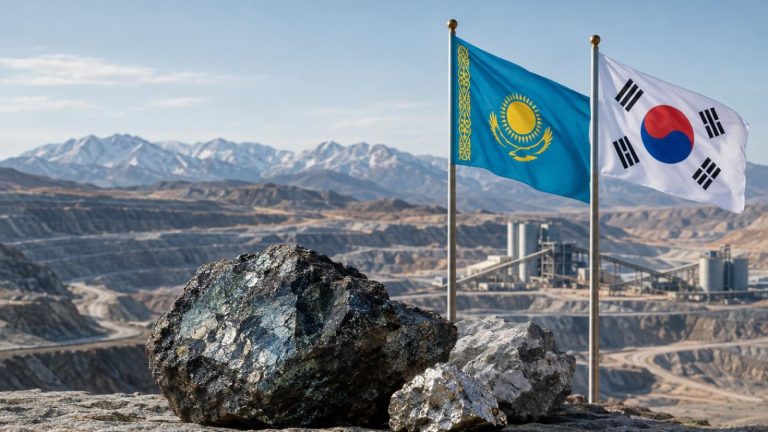
    This gap has created an opening for an alternative approach, championed by middle powers like South Korea. Because South Korea is highly reliant on mineral imports (procuring over 82% of key battery minerals from China), it is highly motivated to help Central Asia succeed. Rather than just providing cash or demanding regulatory compliance, South Korea is utilizing a “Process-Embedded Industrial Partnership Model”. Through initiatives like the Uzbek-Korea Rare Metals Center, South Korea is actively transferring laboratory skills, high-purity separation techniques, and process engineering knowledge directly to the local workforce.

    Why This Matters to You
    The fight for midstream processing in Central Asia is not just a regional economic issue; it is the linchpin of global clean energy security. Escaping the green resource curse is the only way these nations can achieve sustainable industrialization, and diversifying the refining bottlenecks is the only way everyday consumers can rely on a stable, affordable supply of electric vehicles and renewable energy in the decades to come. Hit play on the podcast to listen to our hosts dive deeper into the strategies, the science, and the high-stakes geopolitical chess game defining the future of the global energy transition.

  • AltynGold Celebrates ‘Transformational’ 2025 as Production and Profits Soar

    AltynGold Celebrates ‘Transformational’ 2025 as Production and Profits Soar

    AltynGold (ALTN), the Kazakhstan-based gold miner, has reported a “transformational” set of annual results for the year ending 31 December 2025. The company saw a massive surge in financial performance, driven by a 50% increase in processing capacity at its flagship Sekisovskoye mine and a significantly higher global gold price.

    The miner’s production figures exceeded expectations, with gold poured rising 44% to 53,852oz, comfortably beating the full-year target of 50,000oz. This operational success, coupled with a realised gold price of US$3,474/oz (up 42% year-on-year), saw AltynGold’s revenue jump by 82% to US$175.4m.

    Financial Highlights at a Glance

    • Net Profit: Increased by 135% to US$62.0m.

    • Adjusted EBITDA: Doubled to US$101.4m.

    • Net Debt: Reduced significantly by US$31.3m to US$18.5m.

    • Safety Record: Achieved its fifth consecutive year without a lost-time incident.

    Looking ahead, AltynGold is poised for further growth. Management is currently evaluating plans to at least double mining capacity at Sekisovskoye to 2.0–2.5Mte per annum, which would elevate the company to mid-tier producer status with an output exceeding 100,000oz in the medium term. Additionally, the company is progressing its application for a production licence at the adjacent Teren-Sai exploration project, with approval expected in 2026.

    With the company deleveraging rapidly and cash generation remainng strong, the Board is also keeping the introduction of a dividend policy under review. Analysts have noted that the company’s valuation remains “extremely attractive” compared to its peers, with the current share price of 1,140p nearly matching the net present value of cash flows from existing operations alone.

  • IMC Montan at Minex Kazakhstan 2026: An Expert Perspective on Industry Challenges

    IMC Montan at Minex Kazakhstan 2026: An Expert Perspective on Industry Challenges

    This year, IMC Montan is co-organizing the session “ESG Transformation and the ‘Social License’ in Kazakhstan’s Mining Sector” at the Minex Kazakhstan forum. The company’s experts explain why the ESG agenda is becoming not just a trend, but an economic necessity.

    IMC Montan’s decision to co-organize a session dedicated to sustainable development is driven by the times. Kazakhstan has reached the point of regulatory implementation of ESG principles for business. Previously, this agenda was the prerogative of companies traditionally following international trends and seeking to meet investor or partner requirements. Now, ESG in Kazakhstan is actively developing not only due to external conditions. The mining sector is one of the most sensitive to ESG factors, so sharing experience on this topic will be valuable for all forum participants.

    What issues in this area do you consider most relevant for subsoil users today?

    When it comes to broad issues that go beyond national legislation and form part of sustainable development principles and the application of best available technologies, key topics include mining waste management, energy efficiency, rational water use, and biodiversity conservation. Closure and reclamation aspects deserve special mention. We are confident that forum participants will be interested in unconventional case studies addressing these issues. For example, relatively few experts have real hands-on experience with closure and reclamation works — yet these activities have a significant impact on the overall project economics, and underestimating these costs can become a critical factor. Environmental responsibility is playing an increasingly important role for business, and companies want to see financial benefits or preferences from implementing their environmental policies. The current agenda for subsoil users is therefore focused on asset lifecycle management: from waste handling during operations to post-investment assessment of closure and reclamation obligations.

    You mentioned the topic of mining and processing waste management. Could you share some interesting case studies?

    Mining companies must think carefully about where and how their large-tonnage mineral waste (overburden, processing tailings) will be handled. The main challenge is the sheer volume generated — conventional surface disposal requires significant land areas. The situation is further complicated by the conditions at mine sites: difficult terrain, proximity to populated areas, or the presence of environmentally or socially significant features. Naturally, subsoil users are interested in finding alternative approaches. There is also growing interest in recovering valuable components from mining waste and using waste as construction material or as a component thereof.

    However, waste disposal remains one of the most painful issues, as it is not only an environmental concern but equally an economic and land-property one. The most interesting case studies sit at the intersection of technological and legal solutions. Successful examples show that waste can be not just a financial burden, but a resource — if the rationale and documentation can be structured in line with circular economy principles.

    In our practice, we have encountered a number of innovative solutions. For example, placing tailings in exhausted open-pit voids (with or without prior waterproofing), or producing a specialized material from tailings (a recultivant) for backfilling mined-out areas — treating it not as waste disposal but as product manufacturing. Such unconventional approaches naturally require robust environmental safety justifications, but they open new opportunities. Both tailings management approaches yielded a tangible economic effect (in the range of $27–50 million USD), while requiring careful review of the legal framework and regulatory outlook to eliminate critical administrative risks — not just fines, but potential production shutdowns.

    An important regulatory stimulus emerged in Kazakhstan at the beginning of 2026 with the adoption of the “Concept for Managing All Types of Waste in the Republic of Kazakhstan for 2026–2030.” Waste management in the mining and metallurgical industries is identified as one of its strategic priorities. The planned development of the country’s regulatory framework regarding the utilization of mining waste (including as technogenic mineral formations) provides an additional incentive for subsoil users to seek optimal solutions.

    You separately mentioned closure and reclamation. In your view, what practical challenges do subsoil users face when fulfilling their closure and reclamation obligations?

    In our view, the main problem is a lack of understanding of the goals and principles of successful reclamation, which ultimately leads to ineffective solutions. In our practice, we frequently encounter “template” approaches to reclamation planning, and consequently, an underestimation of the associated costs. International practice has long established the core criteria for successful reclamation — environmental (such as site safety in terms of physical, geochemical and ecological parameters, protection of public health and safety, absence of water pollution post-closure, and ecological system integrity) and social (minimizing socioeconomic impacts of closure and generating socioeconomic benefits). Closure and reclamation plans should be developed as early as possible in the project design phase. Each of the mentioned criteria requires consideration during planning. Issues such as the adequacy of mine water management measures, forecasting the geochemical stability of waste dumps post-closure, and stakeholder engagement must be studied and solutions justified.

    In Kazakhstan, subsoil users are required to prepare reclamation plans at the design stage — however, in our observation, such plans tend to be formal documents rather than strategic ones. This can ultimately lead to insufficient financial provision for the required scope of reclamation and closure works when the time comes. That said, effective measures do not always mean costly ones. Some decisions made during overall production planning can reduce closure costs — such as the previously mentioned option of placing tailings in open pits, or accounting for the potential formation of acid drainage and managing it during waste rock stockpiling.

    Turning to the topic of international standards — in your personal view, can their implementation bring real benefits to business?

    Absolutely. Drawing on our practical experience working with industry enterprises across the CIS, we can confidently speak not just of benefits, but of the strategic necessity of implementing international standards. Integrating ESG principles enables a meaningful restructuring of risk management systems. We observe how chaotic responses to environmental and social incidents at many enterprises are being replaced by a systematic approach to predictive analysis and prevention. Standards also act as a catalyst for corporate culture: there is a marked increase in business accountability at all levels, which directly affects companies’ reputational assets.

    It is telling that the initiative most often comes from environmental protection departments — as those most attuned to regulatory changes. However, we have recently noted growing engagement from senior management as well. It is no secret that the cost of using natural resources is steadily rising — and the cost of environmental mistakes is rising even faster.

    Kazakhstan is now at a unique juncture: accumulated experience and current demand from both the state and the market are creating the conditions for a qualitative leap in eco-social responsibility.

    We have discussed challenges, unconventional solutions, economic effects and regulatory changes in the ESG space. What other areas of work — in this or other fields important to subsoil users — can IMC Montan’s experts shed light on?

    IMC Montan has been supporting mining projects for many years, including in the areas of environmental management, sustainable development and risk management. Our accumulated experience — spanning more than 1,000 completed projects worldwide — has allowed us to develop a comprehensive understanding of existing challenges and an expert approach to risk mitigation and overall project management. At the session, we will share illustrative case studies, present quantitative and qualitative characteristics of the approaches being implemented in natural resource management, and do our best to make the meeting both engaging and useful. Information about session participants and discussion topics is available at: https://2026.minexkazakhstan.com/ru/forum-agenda/tehnicheskaya-sessiya-2/

  • Kazatomprom to Invest up to 85 Billion Tenge in Uranium Exploration by 2030

    Kazatomprom to Invest up to 85 Billion Tenge in Uranium Exploration by 2030

    Kazakhstan’s national atomic company Kazatomprom is accelerating its exploration activities and expanding its mineral resource base, with planned investments of 75 to 85 billion tenge in geological exploration by 2030.

    The announcement was made by CEO Meirzhan Yussupov during a meeting with President Kassym-Jomart Tokayev. According to the company, six uranium exploration areas have already been identified across Kazakhstan, covering a total area of more than 1000 square kilometres.

    Kazatomprom reported that its group enterprises produced 25.8 thousand tonnes of uranium in 2024, with 13.5 thousand tonnes attributable directly to the company. Sales volumes increased by 11% in 2025, reaching 18.5 thousand tonnes, reflecting steady demand growth in global markets.

    As part of its development strategy for 2025–2034, the company is actively expanding its international presence. Over the past year, Kazatomprom has signed supply agreements with major global energy players, including Switzerland’s AxpoPower AG, Czech utility ČEZ Group and Japan’s Kansai Electric Power. In addition, negotiations are underway for a long-term uranium concentrate supply agreement with India.

    The company is also prioritising technological innovation, with a dedicated strategy focused on improving operational efficiency, reducing environmental impact and implementation solutions across its production processes.

    Industry forecasts support the company’s long-term outlook. According to the World Nuclear Association, global nuclear generating capacity could reach 746 GW by 2040, while uranium demand may rise to 150 thousand tonnes annually.

    Against the backdrop of anticipated supply shortages and growing reliance on nuclear energy, Kazatomprom is focusing on expanding its resource base and securing long-term contracts to maintain its leading position in the global uranium market.

  • Kazakh Investor Shakhmurat Mutalip Emerges as Leading Bidder for Yuzhuralzoloto

    Kazakh Investor Shakhmurat Mutalip Emerges as Leading Bidder for Yuzhuralzoloto

    Kazakh businessman Shakhmurat Mutalip has emerged as a leading contender to acquire the nationalised Russian gold mining group Yuzhuralzoloto (YUGK), according to media reports, as Moscow prepares to auction the asset in the coming weeks.

    The company, previously controlled by businessman and former politician Konstantin Strukov, was transferred to state ownership in 2025 following a legal case related to anti-corruption violations. The Russian Ministry of Finance has indicated that the sale of a controlling stake of approximately 67% could take place as early as March 2026.

    Mutalip, 35, is considered one of the fastest-rising business figures in Kazakhstan. He began his career in industry in 2008 and later became the beneficiary of Integra Construction KZ, a major construction group that has grown into one of the country’s leading companies by assets and tax contributions.

    In recent years, Mutalip has expanded his interests into the mining sector and has been linked to several major deals involving strategic assets. These include a potential acquisition of a 70% stake in Kazzinc from Glencore, estimated at up to $4.5 billion, and a possible 40% stake in Eurasian Resources Group (ERG), valued at around $1.4 billion. He has also been associated with interest in other mining assets, including Altynalmas.

    If completed, these transactions could position Mutalip as a major player in Kazakhstan’s non-ferrous and precious metals sector. His business structures, including entities registered in the Astana International Financial Centre, reflect growing ambitions in metallurgy and critical minerals.

    Analysts note that Mutalip has built strong commercial ties between Kazakhstan and Russia, particularly in the context of sanctions, facilitating industrial cooperation and access to financing. His companies are reportedly supported by major Russian banks and maintain relationships with global commodity traders.

    His candidacy for Yuzhuralzoloto is viewed as strategically consistent, given his growing presence in the gold sector and ability to operate across jurisdictions. Market observers suggest that the sale could reflect a broader trend of asset redistribution toward investors capable of maintaining operational continuity amid geopolitical uncertainty.

    The outcome of the auction is expected to be closely watched as an indicator of shifting ownership patterns in the region’s mining industry.

  • Kazakhstan Lawmaker Proposes Unified Disclosure Rules for Subsoil Users

    Kazakhstan Lawmaker Proposes Unified Disclosure Rules for Subsoil Users

    A member of Kazakhstan’s Mazhilis has proposed introducing unified transparency standards for subsoil users, calling for mandatory disclosure of income and production data across the mining and oil and gas sectors.

    Deputy Yerlan Barlybayev, representing the Ak Zhol faction, submitted the proposal to Prime Minister Olzhas Bektenov, arguing that greater transparency is essential to uphold the constitutional principle that subsoil resources belong to the people.

    The инициативa highlights inconsistencies in disclosure practices among companies operating in the extractive industries. While joint-stock companies are required by law to publish financial statements, many major players in Kazakhstan’s mining and oil and gas sectors operate as limited liability partnerships, whose financial reporting is accessible only to their founders. These include companies such as Tengizchevroil, Kazakhmys Corporation and Kazzinc, as well as entities registered in foreign jurisdictions or within the Astana International Financial Centre.

    According to Barlybayev, this lack of transparency prevents the public from objectively assessing how effectively the country’s natural resources are being utilised. He emphasised that the issue lies not in corporate structure itself, but in the absence of consistent disclosure standards for large subsoil users.

    To address this, the proposal calls for all major extractive companies to provide public reporting aligned with the requirements applied to listed companies under securities market legislation. This would ensure a comparable level of transparency across the sector.

    As a longer-term measure, the deputy also suggested that new entities seeking licences for strategic deposits should be established exclusively as joint-stock companies. While this requirement would not affect existing investors, it is expected to improve transparency and governance standards over time.

    The proposal reflects growing attention to accountability and resource governance in Kazakhstan’s extractive industries.

  • Unpacking Kazakhstan’s $25 Billion Mining and Critical Minerals Revolution

    Unpacking Kazakhstan’s $25 Billion Mining and Critical Minerals Revolution

    On 18 March the US Commercial Service hosted a webinar featuring experts from the Kazakh government and industry. The central message was clear: Kazakhstan is no longer presenting itself simply as a resource-rich country. It is actively seeking to become a more significant destination for investment, processing, industrial partnerships and long-term supply chain co-operation.

    If you are tracking the global energy transition and supply chain security, this is a market that demands your attention. Here are my biggest takeaways from the session:

    A market defined by scale, ambition and strategic importance

    Kazakhstan’s resource base remains one of its greatest strengths. Speakers highlighted that mining and metallurgy continue to play a major role in the national economy, while reforms are being introduced to improve transparency, modernise infrastructure and create a more attractive environment for foreign investors.

    Particular attention was given to coal, mining and critical minerals as sectors with major growth potential. Kazakhstan is pursuing a pragmatic approach to energy development, combining its natural resource base with efforts to attract technology, financing and international partners. For U.S. companies, this is increasingly being framed not only as a commercial opportunity, but also as a chance to help build more resilient allied supply chains.

    The Sheer Scale of the Resource Opportunity

    Kazakhstan holds a formidable position on the global energy map, but it’s the untapped potential that is most striking:

    • Massive Reserves: The country sits on 33 billion tonnes of coal reserves, ranking 8th globally—enough to sustain production for over 300 years.
    • Cost Advantages: Kazakh coal prices hover around $25 to $50 per tonne—a fraction of the cost in other global markets. Furthermore, the cost of geological exploration is incredibly low at just $11 per square kilometre, compared to $167 in Australia and $203 in Canada.
    • The Coal Chemistry Boom: Currently, only 3% of Kazakhstan’s coal is processed. Shifting towards deep processing (synthetic fuels, ammonia, urea, methanol) represents a $25 billion untapped market.

    Modernising the Energy Grid

    As power demand surges—driven by industrialisation and the rise of AI—Kazakhstan is heavily focussed on modernising its infrastructure. The Ministry of Energy plans to introduce 26 gigawatts of new power capacity over the next decade. This includes a near-term plan to add 7.6 GW of new coal-fired capacity, requiring an estimated $16 billion in investment by 2030. The government is actively seeking technological partnerships for carbon capture and storage (CCS) and ultra-supercritical boiler technologies to ensure this growth aligns with clean energy standards.

    Critical minerals are becoming central to the conversation

    One of the most interesting aspects of the discussion was the growing focus on critical minerals and rare earth-related opportunities.

    Kazakhstan is developing a more comprehensive strategy for critical raw materials, with plans to define priority minerals, support processing and encourage higher-value production. The direction of travel is clear: the country wants to move further up the value chain and become more than simply an exporter of raw materials.

    This was particularly relevant in light of the tungsten discussion that followed.

    Resources:

    Looking ahead to 14-16 April: MINEX Kazakhstan Forum in Astana

    The next important date in the calendar is 15 April, when Julie M. Stufft , U.S. Ambassador to the Republic of Kazakhstan, will speak at the strategy session on Critical Minerals and Global Strategic Alliances at the 16th MINEX Kazakhstan Forum in Astana.

    Also speaking will be Dominic Heaton Dominic Heaton, CEO of Cove Kaz Capital Group, who will present the Severniy Katpar case study.

    This is especially significant because Severniy Katpar and Verkhnee Kairakty together hold 1.4 million tonnes of tungsten trioxide under JORC standards, representing around 70% of Kazakhstan’s total tungsten reserves. The project involves an estimated $1.1 billion joint venture investment, with potential support from U.S. EXIM and the U.S. International Development Finance Corporation totalling up to $1.6 billion.

    That level of financial and diplomatic backing underlines how strategically important this project could become, not only for Kazakhstan, but also for broader allied efforts to secure critical mineral supply chains.

    Why these matters

    What stood out most from the 18 March webinar was the alignment now emerging between Kazakhstan’s resource ambitions and international demand for secure, diversified supply chains.

    Kazakhstan offers scale, geological potential and a strategic location between major markets. The United States and other partners bring financing, technology and industrial expertise. If those elements come together effectively, the result could be a new phase of co-operation built around mining, processing, infrastructure and critical minerals development.

    For anyone following energy security, industrial policy or strategic resource investment, Kazakhstan is becoming increasingly difficult to ignore.

    The webinar made that case convincingly. The 15 April MINEX Forun sessions should offer an important next step in showing how these opportunities may translate into practical projects and partnerships.

  • Qazaq Kalium Plans $2.4 Billion Potash Project in Western Kazakhstan

    Qazaq Kalium Plans $2.4 Billion Potash Project in Western Kazakhstan

    Qazaq Kalium, controlled by businessman Nurlan Artykbayev, is preparing to begin construction of a major potash mining and processing complex in western Kazakhstan, marking a significant step in the development of the country’s fertiliser industry.

    According to a statement of planned activities, the first phase of the mining and processing plant (GOK) will be built at the Satimola deposit in the Akzhayik district of West Kazakhstan region. Construction is expected to begin in April 2026 and last approximately 32 months, with commissioning scheduled for the first quarter of 2029.

    The Satimola deposit, located near the Ural River, holds potassium and boron-bearing salts and was originally discovered in the 1960s. The licence for its development was issued in 2023 for a period of 25 years. Mining operations are currently planned to continue until December 2050, after which a decision will be made on further development or site closure.

    The project  is designed with an annual processing capacity of 8.5 million tonnes of ore and output of up to 2 million tonnes of potassium chloride, including both granular and fine products. In the longer term, Qazaq Kalium aims to establish a larger комплекс capable of processing up to 25 million tonnes of potash ore annually, alongside 1 million tonnes of boron ore, producing fertilisers such as potassium chloride and boric acid.

    The total investment in the project has previously been estimated at approximately $2.4 billion. Infrastructure development will include the construction of railway access, power lines, water supply systems and a gas pipeline, with natural gas expected to be used in processing operations.

    Despite Kazakhstan’s agricultural sector having relatively low fertiliser usage domestically, the project is expected to target export markets, particularly China, where demand for potash remains strong.

    The development of Satimola has been under consideration since the 2010s, attracting interest from both domestic and international investors. The project has also been the subject of corporate disputes in the past before coming under the control of Artykbayev.

    Environmental and social concerns have been raised locally, particularly regarding the potential use of water from the Ural River and proposed extraction methods. However, according to the project documentation, no significant environmental constraints or cultural heritage sites have been identified within the project area.

    Exploration and preparatory works are already underway. As of late 2025, drilling and earthworks had progressed significantly, including the completion of a 490-metre control shaft and ongoing development of key mine shaft structures.

    The Satimola project is expected to position Kazakhstan as a notable player in the global potash market, diversifying its mining sector beyond metals into fertiliser production.

  • Kazatomprom Reports Stable Operations Despite Geopolitical Uncertainty

    Kazatomprom Reports Stable Operations Despite Geopolitical Uncertainty

    Kazakhstan’s national uranium producer Kazatomprom has reported stable operations and financial performance despite ongoing geopolitical tensions, including conflicts in Ukraine and the Middle East.

    In its financial results for the year ended 31 December, the London-listed company stated that its production, exports and overall business activities remain unaffected. Uranium deliveries continue without disruption via both the Russian Federation and the Trans-Caspian International Transport Route, with no restrictions currently impacting shipments to customers.

    However, the company cautioned that broader geopolitical uncertainty and volatility in global capital markets could influence commodity prices and market conditions in the future.

    Chief Executive Officer Meirzhan Yussupov noted that the global nuclear energy sector is entering a more mature phase, with uranium increasingly recognised as a strategic resource within national energy security frameworks. According to him, major consumers are shifting focus from short-term price considerations to securing reliable long-term supply, entering contracts that extend well into the next decade.

    Despite this trend, Kazatomprom indicated that overall contracting activity in 2025 remained below actual demand levels, suggesting continued tightening in the uranium market.

    During the reporting period, the company expanded its international presence, adding Switzerland and the Czech Republic to its customer base, signing a supply agreement with a Japanese utility, and establishing a new long-term partnership with India.

    Kazatomprom also highlighted that the majority of its revenues and financing are denominated in US dollars, which provides a natural hedge against exchange rate fluctuations and supports financial stability.

    The company said it will continue to closely monitor global developments while maintaining operational resilience in a complex geopolitical environment.