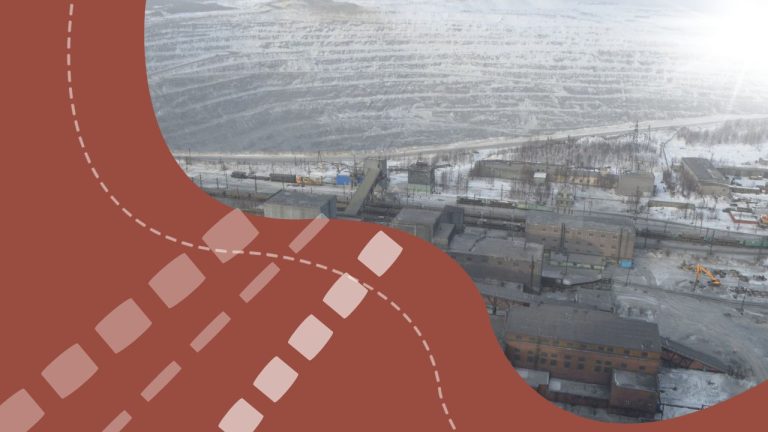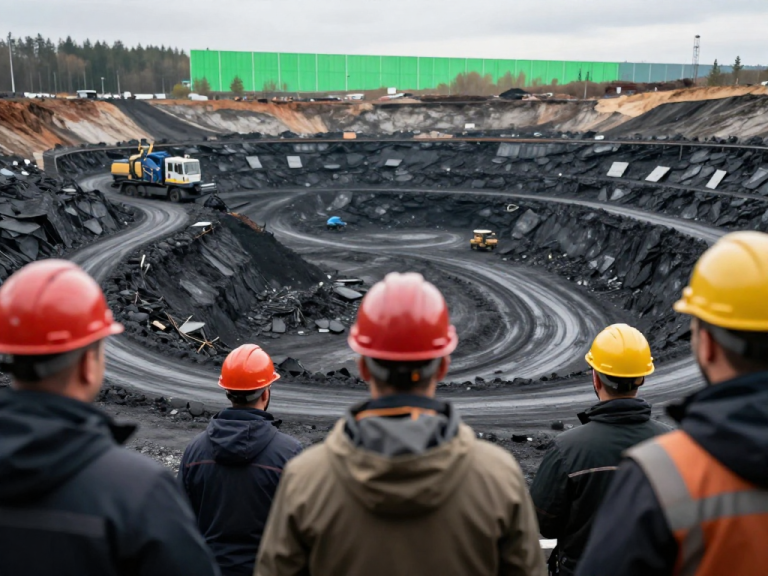
Australian-listed Sarytogan Graphite Limited has confirmed that its Sarytogan deposit in Kazakhstan contains exceptionally pure graphite, with a carbon content reaching 99.9992%, according to the company’s latest research results.
Geological surveys and drilling programs at the site have delivered outstanding findings. Results from the first 20 drill holes revealed graphite grades ranging from 30.8% to 41.3%, with several samples exceeding the 40% mark — levels rarely seen in global graphite deposits.
With estimated reserves of 8.6 million tonnes of ore, Sarytogan ranks among the richest graphite deposits in the world, representing roughly one-third of global graphite resources, according to Orda.kz. The mine’s operational life is projected to extend for at least 60 years, though ongoing exploration suggests the resource base could be significantly larger.
Sarytogan Graphite’s managing director Sean Gregory emphasized the uniqueness of the deposit, noting that drilling results confirm the presence of thick, high-grade graphite layers. “These results strengthen Sarytogan’s position as a world-class source of ultra-pure graphite,” he said.
Flotation tests demonstrated that even without chemical pre-treatment, the thermally purified graphite reached 99.9992% carbon purity. Such premium-grade graphite is critical for use in lithium-ion batteries, advanced energy storage systems, and nuclear technologies.
Kazakhstan is preparing to develop a national digital subsoil map using advanced geological and satellite technologies, the Ministry of Industry and Construction told LS.
The project will be implemented in stages, with the first phase scheduled for 2026–2028, covering about 100,000 square kilometers of the country’s most promising ore-bearing regions, prioritizing rare and rare-earth minerals.
According to the ministry, fieldwork for the mapping will involve four main stages:
Satellite-based remote sensing, including spectral analysis of geological indices;
Geophysical and geochemical studies;
On-site exploration, such as drilling and underground works;
Laboratory testing to confirm anomalies and refine deposit boundaries.
This year, the ministry is developing 20 design and cost-estimate documents for geological studies at a scale of 1:50,000 to initiate the first phase. The total cost will be determined after documentation is finalized.
Officials emphasized that this phase represents a pre-exploration stage, serving as groundwork before full-scale exploration and mining. “This process helps study the subsoil in detail, confirm forecasts, and identify potential mineral deposits. Ultimately, it provides well-prepared areas with reliable geological data, reducing risks for future investors,” the ministry noted.
A second phase will expand the mapping area by another 350,000 square kilometers. The ministry added that creating a detailed digital map will be costlier than conventional cartography due to the higher observation density, drilling requirements, sample collection, and detailed satellite image analysis.
Service providers will be selected through a public procurement process.
Earlier in July 2025, state auditors criticized the ministry for delays in digitizing geological data and establishing a digital data bank. The report warned that the lack of modern geological archives creates risks of losing or damaging valuable geological information.
The Ministry of Artificial Intelligence and Digital Development of Kazakhstan and the Ministry of Digital Development of Kyrgyzstan have signed a memorandum of cooperation aimed at advancing digital technologies and strengthening bilateral collaboration in IT and artificial intelligence.
The agreement focuses on experience sharing, the introduction of innovative solutions, and the development of the digital economy in both countries. The partnership is expected to enhance digital services, foster integration in the field of tech startups, and improve infrastructure to create more efficient and secure solutions in IT and AI.
Officials emphasized that strengthening this strategic partnership opens up new opportunities for the implementation of digital technologies across Central Asia, contributing to long-term regional growth and innovation.
The XXVIII Session of the Intergovernmental Council in Astana marked another step in ongoing efforts to strengthen cooperation among CIS countries in the field of geology and subsoil use. With delegates from Armenia, Belarus, Kazakhstan, Kyrgyzstan, Russia, Tajikistan, Uzbekistan and the CIS Executive Committee, the event reflected the region’s interest in consolidating expertise and maintaining a coordinated approach to mineral resource governance.
The agenda addressed a broad range of issues, from modern methods of geological mapping and digitalisation of exploration processes to youth involvement and the preservation of geological heritage. This breadth indicates an awareness of the multiple challenges facing the sector, not only in economic terms but also in social and environmental dimensions.
The 28th session of the Intergovernmental Council on Exploration, Use and Conservation of Mineral Resources (Межправительственного совета по разведке, использованию и охране недр) took place in Astana, Kazakhstan on 25September 2025, with representatives from seven post-Soviet states in attendance. The council’s primary objective is to promote cooperation and coordination among its member states in the field of mineral exploration, use, and conservation. However, the session’s proceedings also highlighted the challenges and tensions that arise from the extraction of Kazakhstan’s vast mineral resources.
The council’s Chairman, Yerlan Esenaliuly Akbarov, emphasised the importance of strengthening cooperation and partnerships among member states to address the complex geological challenges facing the region. Marat Mammbetovich Jusupbekov, the Director of the Kyrgyz Geological Service, presented a report on the activities of the council during the 2024-2025 period, highlighting the progress made in implementing joint projects and promoting the development of modern geoscientific methods.
While the council’s focus on cooperation and technology transfer is a positive step, concerns remain regarding the environmental and social impact of mineral extraction in Kazakhstan. The country’s extractive industries have faced criticism for their environmental record, and local communities have raised concerns about the lack of transparency and accountability in the decision-making process.
The council’s discussion on modern methods and approaches to geological research and exploration suggests that the member states are aware of the need to balance economic development with environmental protection. However, the lack of concrete measures to address these concerns raises questions about the council’s commitment to sustainability.
The second Kazakh-German Week, themed Science and Education: Partnership between Kazakhstan and Germany, opened on September 23 at Serikbayev East Kazakhstan Technical University in Oskemen (Ust-Kamenogorsk), the industrial hub of East Kazakhstan and a cornerstone of the nation’s mining and metallurgical sector.
A central outcome of the opening ceremony was the creation of the Consortium for the Development of the Kazakh-German Institute of Science and Technology. Founded in 2024 at East Kazakhstan Technical University, the institute focuses on specialized training for mining and metallurgy professionals.
The new Consortium unites leading academic institutions from both countries, including Serikbayev East Kazakhstan Technical University, Kazakh-German University, Freiberg University of Mining and Technology, Ruhr University Bochum, Clausthal University of Technology, Technical University of Dortmund, and the University of Duisburg-Essen. Its mission is to strengthen cooperation in research, academic exchange, technology transfer, and applied projects across mining, geology, rare earth metals, energy, and environmental engineering.
Industrial leaders in East Kazakhstan, such as Kazzinc, the Ust-Kamenogorsk Titanium and Magnesium Plant, and the Ulba Metallurgical Plant, have pledged their support through partnerships in applied science and innovation.
In a video message, Minister of Science and Higher Education Sayasat Nurbek highlighted the strategic importance of German universities in developing Kazakhstan’s future workforce. Officials emphasized that the consortium will play a vital role in ensuring the long-term sustainability of East Kazakhstan’s mining and metallurgical industries through the integration of science, innovation, and advanced technical education.
Laramide Resources Ltd. (TSX: LAM; ASX: LAM; OTCQX: LMRXF), a uranium development and exploration company with projects in the United States and Australia, has announced plans to drill approximately 15,000 metres at its Chu-Sarysu Project in Kazakhstan, one of the world’s most prolific uranium-producing regions.
Over the past year, the company compiled a comprehensive dataset from Kazakhstan’s National Geological Services, supplemented by local contractors. The data includes historical mapping, drilling, geophysical surveys (seismic, electromagnetic, magnetic and gravity), and geochemical results. The review confirmed that Chu-Sarysu is a target-rich environment prospective for uranium, copper, and rare earth elements.
In 2025, Laramide submitted exploration work plans to the Ministry of Industry and Construction and is finalising the remaining permits needed to proceed. Two local drilling contractors have been selected to carry out the Phase 1 program using multiple rigs, with depths ranging from 50 metres to as deep as 550 metres. The program will begin in Q4 and aims to demonstrate the extent of roll-front hosted uranium mineralisation beyond existing ISR operations, while also testing for copper and rare earths.
Kazakhstan currently accounts for nearly 40% of global U₃O₈ output, with the Chu-Sarysu and Syr Darya basins producing more than 75% of the country’s uranium. The Chu-Sarysu Basin also has significant copper potential, highlighted by the Dzhezkazgan deposit and ongoing exploration by global miners including Rio Tinto, Fortescue, First Quantum, and Ivanhoe.
Marc Henderson, Laramide’s President and CEO, described the project as “one of the great greenfield exploration opportunities globally,” noting the supportive investment climate in Kazakhstan. He emphasised that uranium remains the company’s primary focus, with ISR mining offering cost efficiency and environmental benefits, but highlighted the upside potential of copper and rare earths.
“This inaugural exploration program for Laramide in Kazakhstan is targeting high-grade, large-scale uranium deposits in a basin with existing infrastructure and producing operations,” Henderson said. “We look forward to delivering results that demonstrate the significant potential of this world-class district.”
Kazakh President Kassym-Jomart Tokayev has arrived in New York to take part in the 80th session of the UN General Assembly, beginning his working visit with a meeting with Tim Gitzel, president of multinational corporation Cameco, the Akorda press service reported.
The two sides discussed prospects for cooperation in the uranium sector. Tokayev stressed that Cameco has long been a reliable partner of Kazatomprom, having invested more than $500 million in Kazakhstan since entering the market and contributing to technology transfer.
The president noted that Kazakhstan is entering a new stage in its energy development, which includes plans to build three nuclear power plants. He said the country is interested in adopting innovative methods in the nuclear industry.
Gitzel provided an update on the operations of the Inkai joint venture, which has been developing the Inkai deposit in Turkestan Region for more than 25 years.
During his stay in New York, Tokayev will deliver remarks at the General Debate of the UNGA’s landmark 80th session, hold talks with world leaders and heads of international organisations, and take part in a roundtable with representatives of multinational companies to present Kazakhstan’s investment opportunities.
Kazakhstan will establish a new laboratory to strengthen oversight of exported raw materials and detect the presence of rare earth elements (REEs) and precious metals, Vice Minister of Industry and Construction Iran Sharkan announced at a briefing, according to Interfax-Kazakhstan.
The facility will be created under the National Geological Service and accredited to international standards. Its role will be to analyze the composition of ores and concentrates leaving the country, preventing the uncontrolled export of materials that may contain valuable or scarce metals.
Sharkan emphasized that unauthorized export of rare earths remains a pressing issue for Kazakhstan, and the government is actively working to address it. The new laboratory will ensure that shipments are properly assessed before crossing borders, closing gaps in current oversight.
The initiative follows calls made in September by the Ak Zhol party, which proposed that all export shipments of ores and concentrates undergo chemical testing in independent accredited laboratories, alongside the creation of state-run labs. The party argued that existing procedures—where analyses are commissioned directly by subsoil users—leave results unchecked and unverifiable by government authorities.
By establishing its own laboratory infrastructure, Kazakhstan aims to tighten control, safeguard strategic resources, and ensure transparency in the country’s mineral exports.
While Kazakhstan has established itself as one of the most attractive jurisdictions for geological exploration investment, recent developments have unsettled international partners. Ruslan Baimishev, President of the Kazakhstan Mining Chamber, outlined these concerns during a panel discussion in Almaty, as reported by LS.
Baimishev noted that major industry players invest with long-term horizons—often 10 to 15 years—making regulatory stability crucial. He acknowledged that reforms in 2018 had positioned Kazakhstan as a globally competitive mining jurisdiction. However, he warned against backtracking, citing attempts to reintroduce restrictive policies, such as stricter reserve reporting rules and restricted access to geological data.
“During the last parliamentary session, several draft laws initially welcomed by MPs were later amended, effectively reverting to outdated practices and deviating from international standards,” Baimishev explained. Though these changes were ultimately halted, the mere attempt sent worrying signals to investors.
Another pressing issue is tax reform. The new Tax Code, set to take effect in 2026, introduces higher land lease fees, which could discourage large-scale exploration. Baimishev argued that while the intent—to incentivise faster project development—is logical, investors need clarity on post-exploration taxation. He also criticised proposed royalty rates, which, despite being marketed as investor-friendly, may apply unevenly, disadvantaging existing license holders.
On a positive note, Baimishev praised ongoing government-business dialogue and improvements in geological data accessibility. However, he urged further refinements, particularly in licensing procedures for restricted areas.
Separately, Nikolai Radostovets of the Republican Association of Mining and Metallurgical Enterprises raised concerns over a proposed 1% R&D levy. While 30% would fund geological studies—a sector priority—he argued the remaining 70% should support industry-specific innovation rather than being absorbed into the state budget.
Saken Shayakhmetov of Kazakhmys added that without strategic R&D investment, Kazakhstan risks falling behind technologically as mineral reserves deplete.
Kazakhstan’s ambition to transform itself into a linchpin of the global critical minerals supply was in sharp focus at the British-Kazakh Society’s (BKS) latest webinar, “Critical Minerals – A Closer Look at Kazakhstan and the Resource Base.”
Hosted online on 16 September, the event brought together government representatives, leading analysts, and industry insiders to scrutinise the nation’s mineral endowment, discuss its strategy for long-term sustainability, and evaluate opportunities for international partnership and investment.
Geological Promise and Policy Drive
In his welcome address, Yerlan Zeineshev, Economic Counsellor at the Kazakhstan Embassy in the UK, underscored the nation’s geological riches—including rare earths, lithium, copper, uranium, titanium, and vanadium—and signalled Kazakhstan’s determination to become “a key supplier for global critical mineral needs.” The country already produces 17 of the 34 critical minerals on the UK’s essential list, with potential to expand further given the right investment and technology.
Mr Zeineshev highlighted March 2024’s UK-Kazakhstan critical minerals roadmap, emphasising mutual aims for research, private investment, and technology transfer. He pledged continued reform to ensure an open, investor-friendly environment—citing adoption of international best practice in mining codes, long-term investment agreements, and digitalisation of geological data.
Supply Chain Resilience and Global Partnerships
Speakers and panellists closely examined how Kazakhstan’s neutral geopolitical stance and its position on the Trans-Caspian International Transport Route position the country as a reliable partner for nations seeking to diversify supply chains. As Enzo Grazella, Senior Analyst at the Critical Minerals Association, noted, this offers both Europe and the UK an alternative source to mitigate risk and reduce overreliance on a handful of global producers.
The UK government’s updated critical minerals strategy and increased focus on supply chain security were cited as drivers for stepped-up bilateral engagement, particularly in mining, refining, recycling, and advanced manufacturing. Initiatives backed by UK export finance, the European Bank for Reconstruction and Development (EBRD), and local reforms are fostering a more attractive investment climate.
Resource Development and Value Addition
Arkhat Kurmanbekov, Deputy Director General of Kazakhstan’s National Center for Technology Foresight, outlined the scale of Kazakhstan’s geological survey initiatives, with record levels of exploration funding and ambitious targets to increase the area surveyed to over 2.2 million km² by 2026. The nation aims not only to expand extraction but also to move up the value chain through domestic processing, production of battery materials, heat-resistant alloys, semiconductor materials, and recycling technologies. Industry success stories—such as providing titanium to Boeing and Airbus, or pioneering full-cycle beryllium plants—underline local expertise.
Market Dynamics, Price Volatility, and Sustainability Challenges
Caroline Messecar, Strategic Markets Editor at Fastmarkets Metals and Mining, discussed acute market vulnerability arising from concentrated global production—particularly for rare earth magnets vital to electric vehicles and wind turbines. China commands up to 89% of global magnet supply, and recent export controls have forced international markets to scramble for alternative sources, underscoring the strategic importance of new suppliers like Kazakhstan.
The panel noted that establishing downstream industries (such as magnet manufacturing) requires more than raw materials: it needs multidisciplinary technical skills, transparent and sustainable production, and robust ESG standards. Both Kazakh and UK speakers reaffirmed their commitments to high environmental and social standards, clarifying that responsible development can coexist with commercial viability.
Whatch the webinar recoding Video provided for the MINEX Forum readers by the British-Kazakh Society