Tag: Kazakhstan

  • Ukraine’s Titanium Comeback: A Strategic Blueprint for Rebuilding Europe’s Titanium Industry

    Ukraine’s Titanium Comeback: A Strategic Blueprint for Rebuilding Europe’s Titanium Industry

    For decades, titanium has been a cornerstone of aerospace, defense, and high-tech manufacturing — prized for its strength, lightness, and resistance to corrosion. Yet behind this strategic metal lies a highly concentrated global industry, where only a handful of nations control production of titanium sponge, the raw metallic form of the element.

    Among them, Ukraine once stood as a global leader, the industrial backbone of the Soviet titanium complex and one of the few countries that mastered the Kroll process — the key technology for sponge production. Ukraine uniquely combined chemical, metallurgical, and scientific expertise, hosting its own Institute of Titanium and advanced hydrometallurgical facilities capable of extracting not only titanium but also zirconium and hafnium.

    Today, that legacy stands disrupted. The Russian invasion has fractured Ukraine’s heavy industry and halted sponge production since 2021. But it also opened a potential path forward: the chance for Ukraine to reclaim a central role in Western titanium supply chains, as the world scrambles to reduce dependence on Russia and China.


    Global Titanium Landscape

    According to the US Geological Survey, global titanium sponge capacity reached 410,000 tons in 2024, with production steady at around 320,000 tons. The market is heavily consolidated:

    • China accounts for nearly 69% of global output, producing mainly industrial-grade sponge for domestic use.

    • Japan, Saudi Arabia, and Kazakhstan supply almost all of the aerospace-grade sponge imported by the United States and the European Union.

    • Russia remains integrated in its own defense value chain, but sanctions have eroded margins and logistics competitiveness.

    • Ukraine, a former key player, has recorded zero production since 2021.

    While China dominates the midstream segment with state-backed clusters, low-cost energy, and full integration, it lacks certification pathways to access Western aerospace markets. By contrast, Japan and Saudi Arabia occupy the high-quality premium segment, selling sponge at $11,000–13,000 per ton, compared with China’s $7,000 average price.

    The United States and EU remain the largest consumers and stockpilers, offering the most stable and profitable end markets — but they are also the most supply-constrained.


    Why Ukraine Matters

    Ukraine is the only European nation with both a high-grade mineral base and the industrial legacy to re-enter titanium sponge production. Its ilmenite and rutile deposits can support chloride-route Kroll processing, the same route used for aerospace-quality sponge.

    Even a 10,000–15,000 tpa facility could anchor a new Titanium Cluster serving Western markets. The cluster could later expand into VAR smelting (Vacuum Arc Remelting) to produce ingots and billets, especially for Ti-6Al-4V alloys used in aviation and defense.

    Strategically, this would fill a critical gap in the non-Chinese, non-Russian titanium segment, providing Europe with a certified domestic source of titanium metal for the first time in decades.


    Key Enablers and Investment Model

    Rebuilding Ukraine’s titanium metallurgy requires three foundational pillars:

    1. Energy Efficiency and Security:
      Titanium sponge production is power-intensive, with electricity costs accounting for 20–30% of total cash costs. Stable, affordable power — ideally renewable or nuclear — is crucial.

    2. Integrated Clustering:
      A vertically integrated industrial cluster combining mining, sponge, smelting, and by-product recovery (zirconium, hafnium, germanium) would minimize costs and maximize value retention.

    3. Strategic Financing:
      A $400–700 million CAPEX is needed for a 10,000–15,000 tpa sponge facility, with an additional $350–400 million for smelting capacity. Financing could come through long-term offtake contracts with Western aerospace and defense OEMs, supported by instruments such as the U.S.–Ukraine Reconstruction Investment Fund.

    Advanced payments and consortium-based equity could unlock broader project financing, while ensuring certification alignment with Western standards.


    Outlook and Feasibility

    Global titanium sponge output is forecast to reach 400,000–440,000 tons by 2035, driven by:

    • Rising aerospace demand (notably from Airbus A320 and Boeing 737 MAX programs).

    • Global rearmament and stockpiling.

    • Ongoing supply diversification efforts by Western governments.

    Within this framework, Ukraine and India are viewed as the two most promising re-entry markets. Ukraine could restore 5,000–10,000 tons per year of production by 2035, scaling to 15,000 tons under favorable conditions.

    Even modest early-stage output would offer strategic returns: it would anchor a European titanium hub, reduce Western supply risk, and cement Ukraine’s industrial role in the critical minerals value chain.


    Conclusion

    Ukraine possesses the minerals, know-how, and geographic advantage to rebuild a titanium industry that serves Europe’s long-term strategic interests.

    If paired with targeted investment, certification partnerships, and energy reforms, Ukraine could re-establish itself as a core supplier of aerospace-grade titanium, bridging the gap between resource-rich producers and high-tech Western consumers.

    Far from a nostalgic revival, this would mark a new strategic chapter — positioning Ukraine not just as a raw material exporter, but as Europe’s titanium powerhouse.

  • Tau-Ken Samruk and U.S. Cove Capital to Jointly Develop Major Tungsten Deposits in Kazakhstan

    Tau-Ken Samruk and U.S. Cove Capital to Jointly Develop Major Tungsten Deposits in Kazakhstan

    Kazakhstan’s state mining holding Tau-Ken Samruk and U.S.-based Cove Capital have signed an agreement to jointly develop the Northern Katpar and Upper Kairakty tungsten deposits in the Karaganda region. The document was signed on the sidelines of the C5+1 Summit in Washington, D.C.

    According to Reuters, the joint venture will be 70% controlled by Cove Capital, with total investments estimated at $1.1 billion, including up to $900 million in financing from the U.S. Export-Import Bank (Exim Bank)kursiv.media reported.

    Specialists are already conducting preparatory work for the feasibility study (FS) for the Northern Katpar project. The investment initiative foresees the use of existing primary processing capacities in Kazakhstan to produce ammonium paratungstate (APT) — a key intermediate product for high-demand materials such as tungsten powders and wear-resistant components used in tools, machinery, and defense applications.

    The Northern Katpar and Upper Kairakty deposits are considered among the largest tungsten reserves in the world, with combined resources of up to 410,000 tonnes of tungsten, according to the JORC classification.

    Tau-Ken Samruk acquired LLP Northern Katpar and the deposit itself in 2015 for 7.7 billion tenge, while the Upper Kairakty exploration license was obtained in 2016.

    Founded in 2015Cove Capital invests in renewable energy and mining projects. In Kazakhstan, the U.S. company is already engaged in rare and rare-earth metal exploration at the Gremyachinsky site in East Kazakhstan and Akbulak in the Kostanay region.

  • U.S. and Kazakhstan Forge Joint Venture to Secure Global Tungsten Supply

    U.S. and Kazakhstan Forge Joint Venture to Secure Global Tungsten Supply

    Following the announcement of the joint venture between US-based Cove Capital LLC and Kazakhstan’s National Mining Company, JSC Tau-Ken Samruk, further details have emerged regarding the development timeline and scale of the Northern Katpar and Upper Kairakty tungsten projects.

    Cove Kaz Capital Group LLC (“Cove Kaz”), a portfolio company of U.S.-based Cove Capital LLC, will hold a 70 per cent interest, with Tau-Ken Samruk retaining 30 per cent ownership of Severniy Katpar LLP, which owns the Northern Katpar and Upper Kairakty tungsten projects.

    Cove Kaz will oversee marketing of 100 per cent of project output and has entered into a Letter of Intent with the International Trade Administration at the U.S. Department of Commerce to prioritise supply for U.S. government and commercial needs.

    The announcement was made in Washington, D.C., during the C5+1 Leaders’ Summit by U.S. President Donald J. Trump and Kazakhstan President Kassym-Jomart Tokayev.

    Total development costs for the Northern Katpar and Upper Kairakty projects are estimated at USD $1.1 billion. The Export-Import Bank of the United States has issued a Letter of Interest for USD $900 million in financing, complemented by a similar commitment from the U.S. International Development Finance Corporation.

    Cove Kaz’s project team will be led by Dominic Heaton, who previously oversaw development of the Nui Phao integrated tungsten mine and refinery in Vietnam – the world’s largest tungsten operation outside China. Preparatory work has already commenced to support a Definitive Feasibility Study for Northern Katpar, including the establishment of downstream refining capacity in Kazakhstan to produce ammonium paratungstate (APT) and other tungsten compounds.

    Pini Althaus, Chief Executive Officer of Cove Capital and Cove Kaz Capital, expressed gratitude for U.S. and Kazakh government support:

    “On behalf of Cove Capital and Cove Kaz, I wish to thank President Donald J. Trump, Secretary of Commerce Howard Lutnick, and the U.S. Trade Advocacy Center for their exceptional engagement. Their efforts have aligned financing, offtake pathways, and policy support to deliver a secure, allied tungsten supply for America’s industrial and defence needs.

    “I also wish to thank President Kassym-Jomart Tokayev for his leadership and partnership. This collaboration is a win for both nations—strengthening U.S. supply chains while fostering investment and long-term prosperity in Kazakhstan.”

    Tungsten – A Critical Industrial and Defence Mineral

    Tungsten is ranked by the U.S. Defense Logistics Agency as a “material of interest” and by the European Union as the raw material of highest economic importance due to its unique physical properties: the highest tensile strength at high temperatures, the highest melting point of any metal, and exceptional corrosion resistance.

    Its density and durability make tungsten indispensable in high-performance cutting and drilling tools, aerospace alloys, semiconductor contacts, and radiation shielding. In defence applications, tungsten is used in armour-piercing munitions, missile components, aircraft ballast, and other high-stress environments.

    Currently, China controls over 80 per cent of global tungsten production and processing. In February 2025, China imposed new export restrictions on tungsten and tungsten-containing products to the United States.

    Severniy Katpar LLP

    Severniy Katpar LLP holds licences for two projects—Northern Katpar and Upper Kairakty—located approximately 30 kilometres apart in the established Karaganda mining district of central Kazakhstan, less than 160 kilometres south of the city of Karaganda.

    Feasibility studies completed in April 2023 report total JORC-compliant mineral resources of 1.4 million tonnes of tungsten trioxide (WO₃), accounting for around 70 per cent of Kazakhstan’s total tungsten resources. For comparison, the U.S. Geological Survey estimates China’s reserves at 2.4 million tonnes.

    Combined production from both projects is expected to reach 12,000 metric tonnes per annum (mtpa) of tungsten trioxide—approximately 15 per cent of current global output.

    Cove Capital’s Broader Commitment in Kazakhstan

    Cove Capital’s portfolio company, Kaz Resources LLC, became in 2023 the first U.S. entity to receive critical minerals and rare earth concessions in Kazakhstan. These include licences for 13 minerals such as lithium, tantalum, beryllium, niobium, and rare earth elements.

    In 2024, Cove Capital and Tau-Ken Samruk formalised a joint venture for exploration of rare earths at the Akbulak project in the Kostanay region, with Cove holding 75 per cent and “Qazgeology” JSC 25 per cent. Cove is fully financing exploration activities until reserves are booked.

    About Cove Capital LLC

    Founded in 2015, Cove Capital is a mining-focused investment and development firm headquartered in New York and Melbourne. Since 2018, the company has focused on critical minerals projects that enhance U.S. and allied supply chains. Led by CEO Pini Althaus, Cove Capital brings extensive expertise across exploration, mining, processing, and offtake structuring.

    About Tau-Ken Samruk

    Tau-Ken Samruk, Kazakhstan’s national mining company, manages the sustainable development of the nation’s mineral wealth. Through partnerships with international investors, it aims to strengthen Kazakhstan’s mining sector and support the country’s long-term economic growth.

  • Turkey’s Miryildiz Mining to Launch Gold and Copper Production in Kazakhstan by 2026

    Turkey’s Miryildiz Mining to Launch Gold and Copper Production in Kazakhstan by 2026

    Turkish mining company Miryildiz Mining plans to begin gold and copper production in Kazakhstan by late 2026, the company’s CEO Emrah Erdem announced at the Kazakhstan Global Investment Roundtable (KGIR).

    “We are engaged in gold and copper mining. Our plants in Turkey have been operating for nearly ten years. I hope that by the end of 2026, we will start gold production in Kazakhstan,” Erdem said.

    According to him, Miryildiz Mining is currently working in cooperation with the Development Bank of Kazakhstan (DBK), a subsidiary of the Baiterek Holding.

    The company operates in five countries, extracting gold, copper, chromium, and other metals, with Turkey remaining its primary market. It produces around 1 million tonnes of copper ore annually.

    “We have now set targets for copper mining in Kazakhstan,” Erdem said, adding that the company sees strong potential for copper extraction in East Kazakhstan, particularly in the Abai and Pavlodar regions.

    He also highlighted promising opportunities in the gold and rare earth metals sectors, noting Kazakhstan’s untapped mineral wealth.

    $482 Million Mining and Processing Project

    Earlier this year, Miryildiz Mining presented a $482 million project to construct a mining and processing complex (MPC) in the Zhanan-Boko-Zaisan gold ore zone to Abai Region Governor Berik Uali. The facility is expected to employ around 2,000 workers.

    The company has already completed geological exploration and purchased some of the necessary extraction and ore-processing equipment.

    Global Footprint

    Miryildiz Mining holds over 100 exploration and production licenses worldwide and is active in Central African Republic (CAR)Sierra Leone, and The Gambia, where it is also building a gold mining operation.

    In Kazakhstan, its subsidiary MIRYILDIZ KZ Ltd plans to conduct metal exploration at the Takyr site in the Zhetysu and Abai regions between 2025 and 2030.

    Market Context

    The company’s expansion comes amid record-high commodity prices — copper surpassed $11,000 per tonne, and gold exceeded $4,000 per ounce in 2025 — boosting investment in mining and geological exploration across the sector.

  • Sarytogan Graphite Secures $1.4 Million Top-Up from EBRD to Advance Definitive Feasibility Study

    Sarytogan Graphite Secures $1.4 Million Top-Up from EBRD to Advance Definitive Feasibility Study

    Sarytogan Graphite Limited (ASX: SGA), a key player in the mining industry specializing in natural graphite extraction, has announced a $1.4 million top-up placement from the European Bank for Reconstruction and Development (EBRD). This follows a previous $5 million investment, bringing EBRD’s total investment in the company to $6.4 million. The funding is part of a broader package aimed at supporting Sarytogan’s Definitive Feasibility Study, which is on track for completion by mid-2026.

    The additional investment will increase EBRD’s shareholding in Sarytogan Graphite Limited from 17.3% to 19.99%. This increased stake reflects the EBRD’s confidence in the company’s operations and its strategic positioning in the critical raw materials market.

    Sarytogan’s primary project, the Sarytogan Graphite Deposit located in the Karaganda region of Central Kazakhstan, is recognized as a Strategic Project under the European Union’s Critical Raw Materials Act. This designation underscores the project’s importance in supplying sustainable critical raw materials, particularly for battery production and other strategic uses.

    The company’s focus on sustainable mining practices and its strategic location make it a vital player in the global supply chain for critical raw materials. The completion of the Definitive Feasibility Study will be a significant milestone, providing a clearer picture of the project’s potential and its role in meeting the growing demand for graphite in various industries.

  • Kazakhstan and the US Ink Critical Minerals Agreement

    Kazakhstan and the US Ink Critical Minerals Agreement

    A memorandum of understanding (MOU) on critical minerals was signed by Kazakhstan, the world’s leading uranium producer, and the United States government. The agreement was formalised by Yersayin Nagaspayev, Kazakhstan’s Minister of Industry and Construction, and U.S. Secretary of Commerce Howard Lutnick during a Washington meeting, as announced by the Press Office of the President of Kazakhstan on Thursday.

    The signing followed a meeting between Tokayev and U.S. administration officials, including Secretary of State Marco Rubio and Special Envoy for South and Central Asian Affairs Sergio Gor. In a separate statement, Tokayev highlighted the “excellent opportunities” for enhancing the strategic partnership between Kazakhstan and the U.S. through economic cooperation.

    Strategic Rare Earth Ventures

    The MOU signing marks another strategic move by the U.S. to secure future supplies of rare earth elements, aiming to reduce China’s dominance in this sector. Kazakhstan, largely unexplored, presents a promising opportunity. Earlier this year, the deputy chairman of Kazakhstan’s industry and construction ministry noted the nation’s “promising reserves” of rare earth minerals, suggesting it could become one of the world’s top 10 producers if forecasts are confirmed. This is supported by the discovery of the substantial Kuyrektykol deposit, which, if verified, would place Kazakhstan behind only China and Brazil in reserve size.

    According to official geologic data, Kazakhstan has over 980 solid mineral deposits. Since 2018, it has issued 2,906 exploration licenses and 111 production licenses, with only a dozen sites currently under exploration. Over the past five years, Kazakhstan has attracted about $1 billion in private investment into the mining sector.

    U.S. Investment and Tungsten Reserves

    U.S. investors are taking notice. In March, New York-based private equity firm Cove Capital formed a joint venture with JSC Qazgeology, Kazakhstan’s national geological exploration company, to advance the Akbulak Rare Earth Project in the Kostanay region. This project involves geological surveys, feasibility studies, and exploration work, with Akbulak hosting a historical resource of 380,000 tonnes of rare earth oxides, including neodymium and praseodymium.

    The Trump administration has been strengthening ties with Kazakhstan for some time. In September, the Commerce Department assisted Pittsburgh-based manufacturer Wabtec in securing a $4.2 billion locomotive order.

    Although Kazakhstan is not ranked by the U.S. Geological Survey among the top countries for recoverable tungsten deposits, it is estimated to have over 2 million tonnes of the mineral in reserve. China currently accounts for about 80% of global tungsten concentrate production, according to U.S. Geological Survey data.

  • Kazakhstan Confirms Central Asia–U.S. Summit in Washington on November 6

    Kazakhstan Confirms Central Asia–U.S. Summit in Washington on November 6

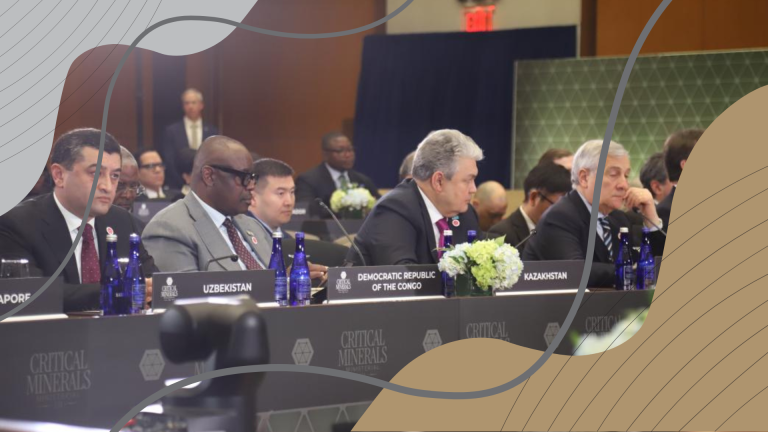
    Kazakhstan’s presidency has confirmed that a Central Asia–United States summit will take place in Washington, D.C., on November 6, bringing together the leaders of the C5+1 format — the United States and the five Central Asian nations: Kazakhstan, Kyrgyzstan, Tajikistan, Turkmenistan, and Uzbekistan.

    According to the press office of President Kassym-Jomart Tokayev, the Kazakh leader sent a letter of gratitude to U.S. President Donald Trump for the invitation to participate in the summit. Tokayev described the initiative as both “timely and important,” emphasizing that he shares Trump’s key domestic and foreign policy principles, including the promotion of traditional values, common sense, and global peace and security.

    The upcoming gathering will coincide with the tenth anniversary of the C5+1 diplomatic platform, launched in 2015 to strengthen regional cooperation and deepen U.S.–Central Asia engagement in areas such as energy security, trade, counterterrorism, and sustainable development.

    Regional media have confirmed participation from other Central Asian heads of state. Uzbek outlet Gazeta.uz reported that President Shavkat Mirziyoyev has received an invitation, while Kyrgyz media stated that President Sadyr Japarov will also attend. Invitations have reportedly been extended to all five Central Asian leaders, according to Azattyq.

    The announcement follows recent visits to Kazakhstan and Uzbekistan by U.S. Special Envoy for South and Central Asia Sergio Gor and Deputy Secretary of State Christopher Landau, underscoring Washington’s renewed diplomatic focus on the region.

    President Trump met both Tokayev and Mirziyoyev during the U.N. General Assembly last month in New York, where several multi-billion-dollar business deals were announced. Analysts suggest the upcoming summit aims to counterbalance the influence of Russia and China in Central Asia amid heightened global competition for access to the region’s critical minerals and strategic trade routes.

    In an October 20 letter, members of the U.S. House Foreign Affairs Committee urged President Trump to host the C5+1 summit before the end of the year. The letter highlighted U.S. strategic interests in developing regional critical mineral supply chains—notably tungsten, antimony, lithium, and rare earth elements—as well as advancing trade liberalization through the repeal of the Jackson-Vanik amendment and bolstering counterterrorism cooperation against the regional branch of the Islamic State group.

    The Washington summit is expected to mark a major step in U.S. efforts to strengthen political and economic ties with Central Asia, promote regional resilience, and enhance collaboration in energy, defense, and raw materials security.

  • Ferro-Alloy Resources Secures Major Cost Savings and Financing Boost for Kazakhstan Vanadium Project

    Ferro-Alloy Resources Secures Major Cost Savings and Financing Boost for Kazakhstan Vanadium Project

    Ferro-Alloy Resources Ltd (LSE: FAR) saw its shares surge 13% to 6.21p after announcing substantial cost reductions and a financing breakthrough for its flagship Balasausqandiq vanadium project in southern Kazakhstan.

    The AIM-listed mining company has signed an agreement with China National Chemical Engineering Sixth Construction (CC6) — one of the world’s top industrial contractors — for front-end engineering and design (FEED) work on the project.

    According to the company, CC6 has provided an indicative construction cost of $261 million, cutting the total funding requirement to $311.9 million — about 40% lower than previously estimated in the project’s feasibility study.

    The revised figures have significantly improved project economics, boosting Balasausqandiq’s post-tax internal rate of return (IRR) to 31% and its net present value (NPV) to $931.6 million.

    Adding to the positive momentum, CC6 has arranged a conditional, non-binding loan offer worth $221.8 million from the Bank of Communications (Hubei Branch), covering 85% of CC6’s construction scope.

    Discussions are also under way with Sinosure, China’s export credit agency, which could provide loan guarantees to reduce borrowing costs.

    “This partnership with CC6 demonstrates the potential to significantly enhance the project’s financial returns,” said Nick Bridgen, CEO of Ferro-Alloy Resources. “It also strengthens our path to production and positions Balasausqandiq as one of the most competitive vanadium operations globally.”

    The company is now in talks with potential strategic investors to fund the project’s equity component, while CC6’s FEED work — expected to last six months — will be followed by a final engineering, procurement and construction (EPC) contract once costs are finalized.

  • Zijin Mining Expands in Kazakhstan, Sees Over 200 Tonnes of Gold Potential at Raigorodok Deposit

    Zijin Mining Expands in Kazakhstan, Sees Over 200 Tonnes of Gold Potential at Raigorodok Deposit

    Chinese mining giant Zijin Gold International, a subsidiary of Zijin Mining Group, expects gold reserves at Kazakhstan’s Raigorodok deposit to exceed 200 tonnes, citing advanced recovery technology and favorable market conditions. The statement follows the company’s $1.008 billion acquisition of RG Gold, which owns the mining rights to Raigorodok — one of the largest active gold deposits in Kazakhstan’s Akmola region.

    The deal was finalized in mid-October, according to reports by inbusiness.kz. Initially valued at $1.2 billion, the final amount was adjusted due to existing liabilities. Zijin Mining, which raised $3.9 billion through a Hong Kong IPO in September, confirmed plans to invest an additional $500 million to build a new processing plant capable of treating 6–8 million tonnes of ore annually. The project is expected to create over 1,000 new jobs.

    Speaking at Kazakhstan Day, held during the China Mining 2025 exhibition in Tianjin, Liao Jiansheng, head of Zijin Eurasia Mining, said the company intends to make Raigorodok a model for green and high-tech gold mining. He emphasized that Zijin’s advanced extraction methods could increase gold recovery to more than 90%, significantly expanding proven resources.

    “The current plant and management are good, and local employees are highly skilled,” Liao said. “We’ll introduce our technologies carefully, ensuring a smooth transition. For us, this project is a shared success — both for Kazakhstan and Zijin.”

    Zijin plans to maintain compliance with Kazakh labor and investment laws, limiting the number of foreign specialists to the legal quota and prioritizing local employment. During the plant’s reconstruction phase, temporary Chinese technical experts will assist in modernization.

    The company holds a mining license valid until 2035, with the potential for renewal. The Raigorodok mine will continue to operate as an open-pit site, with Zijin exploring opportunities to expand its resource base through additional exploration and acquisitions in the Akmola region.

    Zijin also expressed interest in investing further in geological exploration in Kazakhstan, supported by Kazakh Invest and the Chinese Embassy, signaling its long-term commitment to the country’s mining sector.

    Founded in 1993, Zijin Mining Group is the world’s sixth-largest metal producer and China’s largest gold miner. As of 2024, the company controlled 4,000 tonnes of gold, 110 million tonnes of copper, 13 million tonnes of zinc and lead, and 17.9 million tonnes of lithium globally. In the first half of 2025, Zijin reported $23.4 billion in revenue and $3 billion in net profit, with operations in 17 countries and a workforce of 55,000.

  • Kazakhstan Development Bank Launches $1 Billion Program to Finance Rare and Critical Minerals Projects

    Kazakhstan Development Bank Launches $1 Billion Program to Finance Rare and Critical Minerals Projects

    The Development Bank of Kazakhstan (DBK), a subsidiary of the national holding Baiterek, has announced a new $1 billion financing program to support projects in the extraction and processing of rare, rare earth, and critical materials for the period 2025–2030.

    The initiative is designed to become a key financial instrument for advancing high-tech industries in the country’s mining and metallurgical sector, in line with the strategic course set by Kazakhstan’s President to boost domestic value-added production.

    The program aims to support medium and large enterprises implementing investment projects in sectors deemed strategically important to Kazakhstan’s economy.

    Among its main features are a minimum loan threshold of 5 billion tenge (in any currency — dollars, euros, yuan, etc.), loan terms of up to 20 years, the abolition of financing arrangement and modification fees, and the inclusion of grace periods for borrowers.

    DBK emphasized that the program’s relevance stems from the strategic role of rare and critical materials in diversifying Kazakhstan’s industrial base and integrating the nation into global value and trade chains. It also contributes to the objectives of the Comprehensive Development Plan for the Rare and Rare Earth Metals Industry (2024–2028).

    The launch of this program reflects the Bank’s strategic focus on supporting new growth drivers in the economy,” said Marat Yelibayev, Chairman of the Management Board of the Development Bank of Kazakhstan. “We are creating conditions for Kazakhstan to become a producer of high value-added products. This will help build new technological chains, enhance the competitiveness of domestic industry, and strengthen the country’s position in the global critical materials market.”

    Financing will target projects within the metallurgical industry, including mining and metallurgical complexes with processing capacity. Borrowers must confirm mineral reserves under the JORC international code. Eligible materials include rare earth elements (lanthanides, scandium, yttrium) and critical materials such as lithium, cobalt, tungsten, germanium, gallium, and graphite, all essential for high-tech industries, green energy, and electronics.

    The program is expected to stimulate technological and industrial development, expand DBK’s portfolio of long-term projects in high-tech sectors, and enhance the sustainability of financial flows. For Kazakhstan’s economy, it promises to create new jobs, increase exports of value-added products, promote domestic raw material processing, and consolidate the country’s role as a reliable global supplier of rare and critical materials.