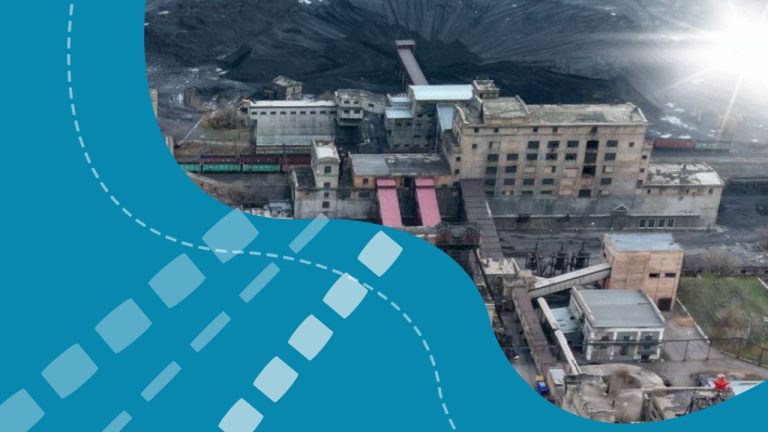
Tag: Kazakhstan Mining

  • Martin Engineering Expands Operations to Central Asia

    Martin Engineering Expands Operations to Central Asia

    Martin Engineering has announced the establishment of a new regional hub in Kazakhstan, aiming to provide its full range of products and services to the rapidly expanding mining sector across Central Asia.

    Kazakhstan, the world’s ninth-largest country by land area, boasts a rich and diverse geology filled with valuable metal ores and mineral resources. The mining and minerals production industry plays an increasingly pivotal role in the nation’s economy, with most materials being exported.

    Building on its previous successes in Kazakhstan, Martin Engineering decided to solidify its presence by forming a dedicated business unit. Notably, the company has already delivered innovative conveyor belt cleaning solutions to one of Kazakhstan’s largest copper producers, significantly enhancing plant efficiency and productivity.

    The new venture will be overseen by General Manager Oleg Glukhov, who has been with the company for seven years. Glukhov emphasized Martin Engineering’s readiness to support Kazakhstan’s leading mineral processing firms in improving operational performance and safety.

    “Kazakhstan is one of the world’s key sources of metals and industrial minerals,” Glukhov stated. “Processing materials safely, efficiently, and profitably is important, and that’s where Martin Engineering comes in.”

  • East Star Resources Announces Significant Progress on Copper Exploration in Kazakhstan

    East Star Resources Announces Significant Progress on Copper Exploration in Kazakhstan

    East Star Resources Plc (LSE: EST), a company focused on copper exploration in Kazakhstan, has shared promising updates from its exploration strategy at the Snowy licence. The project, located on the Paleozoic Balkash-Ili volcanic arc, received initial funding through a US$500,000 BHP Xplor grant.

    Recent soil sampling efforts have revealed two significant anomalies. The first is a 5 km by 1 km gold anomaly aligned with the alteration patterns observed in multispectral imagery and situated near an artisanal gold mine. The second anomaly spans 2 km by 2 km and exhibits strong molybdenum (Mo) and bismuth (Bi) signals, exceeding thresholds by over 10 times for Mo and 100 times for Bi, indicative of potential porphyry systems.

    Chris van Wijk, East Star’s Technical Director, remarked, “The geochemical results align with regions known for hydrothermal activity, strengthening the case for further exploration. These findings showcase the value of integrating multispectral imaging and soil geochemistry in mineral exploration.”

    The next steps include field verification and geological mapping to identify mineralisation characteristics. If supportive data is obtained, the company plans to proceed with Induced Polarity (IP) surveys to target disseminated sulphides.

    During the 2024 field season, East Star collected 1,469 soil samples, revealing two targets, the Central Target and East Target. The Central Target displayed anomalies in Mo and Bi, consistent with porphyry systems. The East Target showed elevated gold and silver levels, aligning with epithermal vein systems observed in nearby artisanal operations.

    Systematic soil geochemistry, combined with multispectral analysis using ASTER data, has been pivotal in refining exploration areas. The analysis highlighted silica lithocaps with distinct geochemical signatures, further substantiating their potential.

    East Star’s strategy underscores its commitment to leveraging advanced techniques in uncovering mineral resources in Kazakhstan, paving the way for future exploration milestones.

  • Arras Minerals to Launch Copper and Gold Drilling in Kazakhstan by 2025

    Arras Minerals to Launch Copper and Gold Drilling in Kazakhstan by 2025

    Arras Minerals, a Canadian mining company, has announced plans to commence active drilling for copper and golddeposits in Kazakhstan’s Pavlodar region in the first half of 2025. This decision follows an extensive geological exploration campaign conducted in 2024, covering a 1,700-square-kilometer area near its Beskauga, Elemes, and Tay projects close to Ekibastuz.

    During its exploration efforts, the company drilled 435 holes and collected 35,000 soil samples, identifying promising sites for further drilling. The first phase of drilling will target high-priority copper deposits under shallow cover, previously unexplored. Tim Barry, CEO of Arras Minerals, expressed excitement about the progress, stating: “We anticipate commencing drill-testing of several high-priority copper targets, currently undrilled and under shallow cover, in the first half of 2025.”

    The exploration focuses on two main sites: a 1,300-square-kilometer area located 56 kilometers northwest of Ekibastuz near the Bozshakol mine, owned by Kaz Minerals, and another site 90 kilometers southeast of Ekibastuz, which includes the Akkuduk and Norgubek projects. Both areas are believed to hold substantial copper and gold reserves.

    Arras Minerals is positioned as a major player in Kazakhstan, holding the third-largest license package for copper and gold exploration, behind only Rio Tinto and Fortescue. In December 2023, the company secured a partnership with Teck Resources Limited (TRL), under which Teck will invest $5 million in geological exploration between 2024 and 2025. Teck Resources also holds a 10% stake in the Beskauga project.

    In a September 2024 interview, Darren Klinck, President of Arras Minerals, praised Kazakhstan’s mining industry reforms, highlighting the nation’s adoption of practices from regions like Western Australia and Canada. Klinck described Kazakhstan as one of the most business-friendly mining jurisdictions, noting the country’s significant progress in attracting international investment.

    With these advancements, Arras Minerals is well-positioned to contribute to and benefit from Kazakhstan’s growing mining sector, which continues to attract global attention.

  • Solidcore Resources Extends $96 Million Loan to Bai Tau Minerals for Copper and Gold Exploration in Kazakhstan

    Solidcore Resources Extends $96 Million Loan to Bai Tau Minerals for Copper and Gold Exploration in Kazakhstan

    Solidcore Resources plc (“Solidcore”) has announced a $96 million investment loan to Bai Tau Minerals (BTM), a junior exploration company specializing in copper and gold projects in Kazakhstan. This partnership aims to unlock the country’s vast copper resource potential while providing Solidcore with strategic access to key mineral assets.

    BTM’s portfolio comprises over 15 copper-porphyry and gold projects spanning 1,000 km², including Besshoky in the Karaganda region and East Balkhash-2 in Jetisu, two advanced projects with significant resource potential. The three-year loan, secured by a pledge of interest in BTM and its subsidiaries, will fund further exploration activities.

    Vitaly Nesis, Group CEO of Solidcore Resources plc, described the agreement as an industry-recognized financing mechanism. He highlighted the deal’s value in providing risk-adjusted access to green metal resources and BTM’s expertise in mineral exploration.

    The loan also grants Solidcore a right-of-first-refusal (ROFR) on any ownership transactions involving BTM or its subsidiaries, ensuring strategic exclusivity on key assets. Furthermore, broad access to BTM’s financial and technical data will facilitate accurate project valuation and support future acquisition or investment decisions.

    This partnership positions Solidcore to benefit from potentially large copper resource discoveries with limited downside risk, enhancing its strategic focus on green metals for global markets.


  • Kazatomprom Expands Uranium Exploration with New License

    Kazatomprom Expands Uranium Exploration with New License

    Kazakhstan’s national atomic company, Kazatomprom, has added a new license for geological exploration to its portfolio, focusing on the Budyonovskoye area. According to an announcement on the company’s official website, Kazatomprom is set to explore uranium deposits in the “Severnoye” block.

    The newly targeted site is located in the Shu-Sarysu Uranium Province in the Suzak district of the Turkestan region. Kazatomprom has secured a six-year subsoil use contract, with an option to extend it for an additional five years. Preliminary estimates place the predictive uranium resources at over 100,000 tons, classified as R1 and R2. During the contract period, the company plans to reassess these resources and elevate them to higher confidence categories, C1 and C2.

    According to Meirzhan Yusupov, Chairman of Kazatomprom, the Severnoye block has substantial potential, thanks to its large metal reserves, favorable geological conditions, and proximity to the company’s other operational uranium projects.

    Earlier this fall, Kazatomprom received a license to explore Block No. 5 on the southern flank of the Budyonovskoye area. However, its estimated reserves are comparatively smaller at 18,000 tons of uranium.

  • Shalkiya Polymetallic Deposit to Launch by Late 2026

    Shalkiya Polymetallic Deposit to Launch by Late 2026

    The Shalkiya polymetallic deposit, located in the Kyzylorda region, is set to commence operations by the end of 2026. The site will feature a beneficiation plant capable of processing 4 million tons of ore annually. According to LS, the investor will inject 323 billion tenge into the project. The mining plan is already in place, with extraction scheduled to begin in 2025. Contracts for equipment supply for the beneficiation plant have been signed, and tenders are underway to select a contractor for the construction phase. The deposit is owned by ShalkiyaZinc, a subsidiary of Tau-Ken Samruk. The initial timeline for launching the deposit was set for 2023, but the plans have since been postponed. The Shalkiya deposit is rich in zinc and lead, with the ore containing 4.27% zinc and 1.28% lead. The reserves, categorized as B+C1+C2, are estimated at 127.5 million tons. The extraction of metals from the ore will utilize selective flotation, with zinc undergoing a fine grinding process for flotation concentrate.

  • Cove Capital Explores Rare Earth Metals in Kazakhstan’s Kostanay Region

    Cove Capital Explores Rare Earth Metals in Kazakhstan’s Kostanay Region

    The American investment firm Cove Capital is actively exploring potential rare earth metal deposits in Kazakhstan’s Kostanay region. The project is partnered with the Kazakh company Kazgeology, which is part of the “Tau-Ken Samruk” structure. The geological exploration is being funded by Cove Capital, according to an interview with Pini Althaus, managing partner and founder of the company, published in the Kazakh outlet “Kursiv.”

    “The site contains a variety of rare earth metals, with a primary focus on four elements used in the production of permanent magnets: neodymium, praseodymium, dysprosium, and terbium,” said Mr. Althaus. The deposit also has significant reserves of yttrium, for which supply and demand are yet to be fully assessed.

    The project is currently in the early stages of implementation, with preliminary feasibility studies indicating the presence of 380,000 tons of rare earth metals. Mr. Althaus noted, “The project looks promising, which is why we invested in it, and we hope it becomes a major rare earth project.”

    However, the profitability of the mining operation remains uncertain, as partners need to confirm the feasibility of extracting these high-value materials. “It will take several years to develop the resource, ensure the metals can be processed, and verify our reserves before we start considering mining scenarios and profitability,” explained the managing partner of Cove Capital.

    Cove Capital holds 11 concessions for the development of critical materials such as lithium, beryllium, tantalum, rhodium, cesium, rubidium, and tin in Eastern Kazakhstan. Represented by its subsidiary, KAZ Critical Minerals, Cove Capital relies on data from Soviet-era geological surveys, refined with modern technologies and research methods.

    Additionally, Cove Capital is in discussions with the Kazakh government regarding the construction of a rare earth metals processing plant, with capital investment potentially reaching $500 million. This facility could serve as an industrial hub and an alternative to exporting these metals to China.

    Founded in 2016, Cove Capital invests in the mining industry, with projects focused on critical minerals, precious metals, and base metals in North America, Australia, Argentina, and other countries.

  • Construction of Geological Cluster in Ulytau Region Nearing Completion

    Construction of Geological Cluster in Ulytau Region Nearing Completion

    The construction of a geological cluster in the Ulytau Region is progressing steadily, with completion expected in the third quarter of 2024, according to the Ministry of Industry of Kazakhstan. The complex, valued at 7 billion tenge, is being built on the former site of the Zhezkazgangeology exploration company, covering an area of over 14,000 square meters.

    Currently, the majority of construction work has been completed. The site is now undergoing the installation of engineering networks, the construction of communal infrastructure, and the finishing of premises.

    The cluster will feature the first geophysical laboratory in the country, developed with assistance from specialists at the Colorado School of Mines. Additionally, the complex will house an ALS analytical laboratory, a geological museum, a training center, a repair and mechanical workshop, a library with specialized literature for geologists, an office building, and employee dormitories. Among the planned facilities is a core storage facility with a capacity of over 200,000 linear meters of samples.

    The new complex aims to attract specialists from across the country to the Ulytau Region, consolidating the mining sector’s human and technical resources. Once operational, it will create 150 jobs.

  • Kazakhstan and South Korea Strengthen Collaboration in Mining and Processing Industries

    Kazakhstan and South Korea Strengthen Collaboration in Mining and Processing Industries

    Kanat Sharlapayev, Minister of Industry and Construction of the Republic of Kazakhstan, met with Seokjoon Lee, President of the Korean Institute of Geoscience and Mineral Resources (KIGAM), and Paik Hanson, Vice President of SK Ecoplant. The Chairman of the Board of Tau-Ken Samruk JSC, Bakyt Chirchikbayev, and Acting General Director of Kazgeology JSC, Dauren Abuov, also participated.

    The meeting, held online, marked another step toward establishing cooperation between Kazakhstan and South Korea in the development of the mining and processing industry. Minister Sharlapayev familiarized himself with the activities of both organizations and listened to their proposals for potential collaboration. Representatives from KIGAM and SK Ecoplant expressed interest in joint geological exploration and lithium mining. KIGAM also showed interest in constructing a plant for the production of lithium carbonate and lithium hydroxide in Kazakhstan. Lithium is a strategically important resource used in the production of batteries for electric vehicles, portable devices, and other technologies.

    The construction of such enterprises in Kazakhstan would not only foster the development of the domestic industry but also provide the country with access to modern lithium processing technologies. This, in turn, could attract investments and create new jobs.

    Kanat Sharlapayev emphasized Kazakhstan’s readiness to support the initiatives of KIGAM and SK Ecoplant, offering necessary state support for the project’s implementation. Both parties agreed to hold an extended meeting in Astana. The proposed construction of the enrichment plant and the production facility for lithium carbonate and lithium hydroxide will be a significant contribution to the economic development of both countries.

    It is worth noting that KIGAM has already been cooperating with Kazakhstan for a year. In collaboration with Kazgeology JSC, Korean institute representatives have conducted geological and geophysical surveys at the Bakennoe deposit. Currently, the issue of granting KIGAM a license for exploration and further mining at the Bakennoe deposit is under consideration.

  • Kazakhstan Faces Challenges in Processing Mining and Metallurgical Waste

    Kazakhstan Faces Challenges in Processing Mining and Metallurgical Waste

    One of the pressing issues in Kazakhstan’s mining industry is the processing of technogenic mineral formations (TMF). For the past 80-90 years, waste from the mining and metallurgical sectors has accumulated on industrial sites. This includes not only industrial sectors but also waste from the energy sector, found across all regions regardless of economic focus. TMFs, which include tailings from enrichment processes, low-grade ore, slags, clinkers, cakes from metallurgical production, and ash from burning solid fuels, are present in almost every region of the country.

    TMFs are viewed both as a potential source of additional profit and as an existing and potential environmental threat. The classification of TMFs, whether as subsoil or waste, and the subsequent taxation, remains a contentious issue. On April 9, in Astana, the Working Group under the Committee of the Geological Industry, Mining, Coal Mining, and Metallurgical Industry of the Presidium of the NCE “Atameken” began discussions on these problematic issues. Gulnara Kadirzhanovna Bizhanova, Deputy Chairman of the Board of NCE RK “Atameken,” provided insights.

    Bizhanova noted that the volume of TMF is dynamically growing due to increased mining and processing activities. Kazakhstan has accumulated over 60 billion tons of TMFs, with an annual processing rate of only about 11%, compared to 70-80% in developed industrial countries. The significant accumulation of TMFs, potential valuable components, and negative environmental impacts necessitate their processing and subsequent reclamation.

    The role of TMF processing is crucial in enhancing economic efficiency and rational use of natural resources, requiring a comprehensive approach. However, the classification of TMFs into private and state-owned categories, and the risk of double taxation, limit the possibilities for secondary use. Addressing these issues requires legal frameworks to regulate ownership and taxation, reducing financial burdens and stimulating investment in new technologies.

    Bizhanova identified economic and regulatory barriers, such as high processing costs, lack of infrastructure, and unclear legal bases, as major obstacles. Additionally, the Environmental Code’s emission fee for re-placing TMFs is seen as counterproductive, as users already pay for initial placement. Clear legal guidelines could stimulate active engagement in TMF processing, improving economic and environmental outcomes.

    Active TMF processing would bring economic benefits by reducing raw material costs and significant environmental advantages, pushing Kazakhstan towards a green economy.