Tag: Kazakhstan Mining

  • Kazakhstan Tightens Oversight of Gold Mining Sector as Six Extraction Permits Are Revoked in 2025

    Kazakhstan Tightens Oversight of Gold Mining Sector as Six Extraction Permits Are Revoked in 2025

    Kazakhstan has revoked six gold mining permits so far in 2025 across the Aktobe, Turkistan, East Kazakhstan, and Abai regions, according to the Ministry of Industry and Construction. Although significant, the figure is lower than in 2024, when the government annulled twice as many contracts for gold-bearing ore extraction. Authorities say the revocations stem from violations of legal requirements and breaches of land-use and lease conditions.

    Members of Parliament argue that punitive measures must be strengthened further. Lawmakers are calling for tougher criminal penalties for illegal mining and the creation of a “blacklist” of irresponsible subsoil users who would face obstacles when seeking new contracts. Deputies believe such steps would reduce environmental risks and increase accountability for land rehabilitation at mining sites, LSM.kz reports.

    Earlier, the Mazhilis introduced amendments to the existing Subsoil Code. The draft legislation would require auction winners to pay their signing bonuses before receiving a subsoil licence. Those who fail to make the payment would be banned from using subsoil resources for five years and prohibited from acquiring related rights through third parties.

    These reforms reflect Kazakhstan’s broader effort to enforce stricter compliance, improve environmental protections, and ensure responsible resource development across the mining sector.

  • Pallas Resources Unveils Thick Copper Outcrop at Merke and Launches Drilling at Glubokoe

    Pallas Resources Unveils Thick Copper Outcrop at Merke and Launches Drilling at Glubokoe

    London, 3 September 2025 — Pallas Resources has announced the discovery of a substantial outcropping copper zone at its Merke and Lugovoe licences in southern Kazakhstan, alongside the commencement of first drilling at the Glubokoe Project in the western Chu-Sarysu Basin. Both developments mark significant milestones in the company’s strategic alliance with Ivanhoe Mines.

    Fieldwork at Merke has revealed a 20-metre-thick copper-bearing horizon within fractured carbonate rocks, exposed in a historic pit. The discovery confirms visible surface mineralisation, including malachite and azurite, and strongly supports the structural model guiding exploration. According to the company, the mineralisation is thought to be structurally controlled, with fractures and faults serving as conduits for copper-bearing fluids.

    The Lugovoe licence, recently granted to the Pallas–Ivanhoe partnership, extends prospective stratigraphy by a further 40 kilometres to the west. Early reconnaissance has already identified surface copper mineralisation, with fold zones appearing to act as structural traps. Upcoming work will focus on detailed structural mapping, complemented by high-resolution magnetic surveys to trace mineralisation beneath cover.

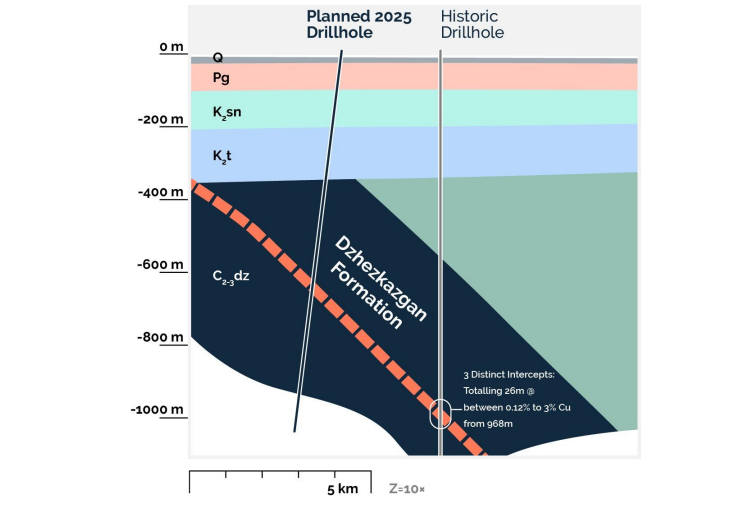
    Meanwhile, drilling has commenced at Glubokoe, a 2,500 km² project in the western Chu-Sarysu Basin. The programme will comprise five diamond drill holes, each between 800 and 1,000 metres deep, totalling around 4,200 metres. The first hole is targeting extensions of mineralisation first recorded by Soviet geologists in the 1980s, where three copper-bearing intervals were intersected over a total of 26 metres, with grades ranging from 0.12% to 3% copper.

    Simon Cooper, Chief Executive of Pallas Resources, described the start of drilling as a “key milestone,” coming less than a year after the partnership with Ivanhoe Mines was formalised. Results from the current campaign are expected by late December and will help inform a planned 15,000-metre drilling programme in 2025.

    The Chu-Sarysu Basin is recognised as the world’s third-largest sediment-hosted copper province, already hosting more than 27 million tonnes of discovered copper, with the US Geological Survey estimating a further 25 million tonnes yet to be found.

    Pallas holds over 16,000 km² in the basin, making it the leading explorer in this emerging copper district. Under the terms of the alliance, Ivanhoe Mines will sole-fund $18.7 million during the initial phase, with the option to invest up to $115 million over four years.

  • Kazakhstan’s RG Gold Expands Operations, Safety Standards, and Workforce Development Amid Booming Mining Sector

    Kazakhstan’s RG Gold Expands Operations, Safety Standards, and Workforce Development Amid Booming Mining Sector

    Kazakhstan’s mining industry is thriving as rising gold and commodity prices drive exploration, investment, and legislative reform. Among the country’s leading players, RG Gold is charting a growth path that blends operational expansion, safety leadership, and employee development while preparing for its transition into a global gold operator.

    Deputy CEO and CFO Marat Shaimardanov said recent government reforms, including a new royalty-based tax code and deregulation of mining laws, have spurred fresh activity. “There’s a lot of deregulation happening for the mining industry, which is reflected by its current increased activity,” he noted.

    Operational Growth and Heap Leach Revival
    RG Gold has restarted its heap leach operations after exploration revealed remaining potential, buoyed by higher gold prices. The site is expected to run for another five years. Meanwhile, the company’s carbon-in-pulp (CIP) plant, built in 2022, has been upgraded from 5 Mtpa to a 7.2 Mtpa run rate, with plans to stabilize at 7+ Mtpa by 2026. Exploration has also expanded resources to more than 10 million ounces, with reserves rising from 450,000 oz to 4 million oz in less than eight years.

    The firm is expanding its tailings storage facility, identifying new nearby deposits, and improving environmental compliance through a new oxygen plant. It is also preparing to transition from outsourced mining to owner-operated fleets to boost efficiency and safety.

    Safety and Cultural Transformation
    Shaimardanov stressed that safety remains a cornerstone of RG Gold’s strategy. The company has tripled its safety department headcount and changed its reporting culture to encourage incident disclosure without penalizing staff KPIs. “Even our CEO was once stopped at site for not wearing the correct gloves,” he said, underlining a culture where safety applies to all, from top management to contractors.

    Local and Workforce Engagement
    RG Gold prioritizes local contractors for both essential and non-essential services, strengthening ties with surrounding villages and SMEs while sourcing international partners only for specialized needs such as SGS lab testing.

    Employee development has also advanced, with personal development plans, international training programs, and partnerships with universities. The company supports professional associations, including a geotechnical engineering network now recognized internationally. Staff turnover has dropped sharply from 19% to 5% in just two years.

    Looking Ahead
    With construction projects delivered on schedule and ore reserves expanding, RG Gold is now focused on sustaining operational quality, ensuring smooth shareholder transitions, and pursuing new gold tenders. “It’s really about sustaining the business, raising the bar in operational quality, retaining employees, and taking our expansion to the next level,” Shaimardanov said.

  • Kazakhstan to Double Copper Ore Output with Launch of Three New Mines

    Kazakhstan to Double Copper Ore Output with Launch of Three New Mines

    Kazakhstan will begin developing three new copper deposits — Aidarly, Koksay, and Benkala — aiming to double its copper ore production to 300 million tonnes within the next five years, according to Deputy Minister of Industry and Construction Olzhas Saparbekov.

    The announcement came during a government meeting focused on boosting the country’s mineral output. In addition to the copper plans, Saparbekov said iron ore extraction is also expected to rise by 40% by 2030, reaching 52 million tonnes annually. This increase will support the expansion of Qarmet’s processing facilities and the launch of new hot-briquetted iron (HBI) production plants.

    Looking ahead to 2025, the government anticipates a twofold increase in copper refining, along with a more than twofold rise in lead production, a 50% increase in aluminium output, and an 11% boost in zinc production.

    To sustain this growth, Kazakhstan will allocate at least 30 billion tenge toward geological exploration next year. The funding will come from subscription bonuses collected through mineral rights auctions.

    Prime Minister Olzhas Bektenov noted that revenues from these bonuses are expected to increase as the government refines its calculation methodology to optimise income from the mining sector.

  • Kazakhstan’s Mining Sector Faces Rising Tax Burden and VAT Delays Amid Calls for Reform

    Kazakhstan’s Mining Sector Faces Rising Tax Burden and VAT Delays Amid Calls for Reform

    Kazakhstan’s mining and metallurgy sector, a key contributor to the national budget, is under mounting pressure from systemic challenges including delayed VAT refunds, growing tax burdens, and inefficient fiscal redistribution. Industry leaders warn these issues threaten the viability of aging mines and thousands of jobs.

    The sector, which contributes up to 2 trillion tenge in taxes annually, relies heavily on VAT refunds due to its export-focused operations. Although legislation allows for VAT returns on goods sold abroad at a zero rate, delays in processing and strict requirements tied to supplier compliance often result in significant cash flow disruptions.

    According to the State Revenue Committee, 1.9 trillion tenge in VAT was refunded as of mid-June 2024, with 68% going to subsoil users. However, industry representatives, including the Republican Association of Mining and Metallurgical Enterprises (AGMP), report that even automatic refunds are frequently frozen, causing cash shortfalls and even technical defaults for some firms.

    Kazakhmys, the only major mining company to publicly comment, noted that vague interpretations of risk management criteria — particularly supplier-related compliance down the supply chain — create legal uncertainty and contradict the principle of individual liability.

    The situation is further exacerbated by the rising Mineral Extraction Tax (NDPI), which has increased by 50% for non-ferrous metals and 30% for ferrous ones since 2023. A new tax code also introduces possible further hikes if gold and silver prices reach specific thresholds. Experts say this approach, based on extraction rather than profitability, is unsustainable for mature deposits with falling ore grades and rising costs.

    In response, Kazakhstan plans to introduce a royalty-based system starting in 2027 for new mining licenses. The rates will vary by processing stage — from 13% for raw ore to 7% for finished products. While this shift aligns with international norms, AGMP argues that royalty rates must be lowered and flexibility offered to existing operators to switch voluntarily from NDPI to royalties.

    The industry also advocates for streamlined VAT administration, tax reductions for depleted deposits, and increased tax allocation to mining regions to support local development and maintain stability.

    Despite mounting challenges, Kazakhstan’s mining sector continues to show resilience. In the first five months of 2025, metal ore production grew by 0.8% and metallurgical output rose by nearly 7%. Still, stakeholders caution that without prompt reforms, the sector’s competitiveness and long-term viability remain at risk.

  • Kazakhstan to Auction 39 Strategic Mineral Sites, Including Gold and Polymetallic Deposits

    Kazakhstan to Auction 39 Strategic Mineral Sites, Including Gold and Polymetallic Deposits

    Kazakhstan’s Ministry of Industry and Construction has announced an upcoming electronic auction for 39 solid mineral deposits, scheduled for September 19, according to Kazinform. The auction will be conducted through the country’s unified digital platform, which currently provides 22 public services in geology and subsoil use.

    Applications for participation will be accepted until September 2, giving prospective investors and companies time to assess the geological potential and prepare bids.

    Among the listed sites are around ten deposits rich in precious metals, including Chandy-Bulak, Sever-Leonidovskoye, Senym, and alluvial gold at Chandy-Bulak. The auction also features high-potential areas for polymetallic, manganese, iron ore, and coal exploration.

    In parallel with the auction, the ministry plans to roll out an AI-powered system to process geological reports and build a comprehensive geological knowledge base by the end of the year. This marks a digital transformation push aimed at increasing efficiency and transparency in Kazakhstan’s subsoil sector.

  • Kaz Resources and Cove Kaz Capital Launch 2025 Work Programs to Advance Critical Minerals in Kazakhstan

    Kaz Resources and Cove Kaz Capital Launch 2025 Work Programs to Advance Critical Minerals in Kazakhstan

    NEW YORK, June 19, 2025 – Kaz Resources and Cove Kaz Capital LLC, portfolio companies of Cove Capital LLC, have officially kicked off their 2025 work programs, focusing on key lithium, polymetallic, and rare earth assets across Kazakhstan. The launch signals accelerated on-the-ground activity aligned with the nation’s strategic push to become a global supplier of critical minerals.

    Kaz Resources LLC will expand its exploration efforts in East Kazakhstan, building on 2024 drilling success. The program includes step-out and infill drilling, surface geochemical sampling, and geophysical surveys aimed at resource development across lithium and polymetallic targets. In parallel, the company is conducting metallurgical testing and a pilot program to evaluate lithium, tantalum-niobium, and other mineral recovery from historical tailings.

    Additionally, Cove Kaz Capital LLC, through its joint venture Akbulak REE Ltd. with Kazakhstan’s Qazgeology JSC, is advancing the Akbulak Rare Earth Project in Kostanay. The venture is currently finalizing license transfer approval and launching initial exploration activities, including structural analysis, sampling, and metallurgical tests.

    The Akbulak project hosts a historical resource of 380,000 tons of rare earth oxides, including neodymium, praseodymium, and yttrium—crucial materials for electric vehicles, electronics, and high-tech applications.

    Kaz Resources CEO Pini Althaus stated that the 2025 initiatives underscore the company’s commitment to fast-tracking development and contributing to a fully integrated supply chain, supporting both Kazakhstani goals and global mineral demands. Qazgeology JSC’s Acting CEO, Dauren Abuov, praised the partnership for demonstrating effective international cooperation in Kazakhstan’s mining sector.

  • Kazakhstan’s Sarytogan Graphite Deposit Joins EU Strategic Project List

    Kazakhstan’s Sarytogan Graphite Deposit Joins EU Strategic Project List

    The Sarytogan graphite deposit in Kazakhstan’s Karaganda region has officially been added to the European Union’s list of strategic raw material projects, a move announced during the Astana Mining & Metallurgy (AMM) 2025 Congress in Astana.

    Preliminary assessments suggest that the Sarytogan site contains approximately 30% of the world’s known graphite reserves, making it one of the largest and cleanest surface-accessible graphite deposits globally. The project is seen as critical for securing the EU’s supply of materials vital to green technologies, particularly lithium-ion battery production.

    According to Galymzhan Torebek, Deputy Chair of the Committee for Industry under Kazakhstan’s Ministry of Industry and Construction, the graphite mining project will be developed in four stages, with capital expenditures estimated between $62 million and $344 million.

    The project’s new strategic status under the EU Critical Raw Materials Act (CRMA) means that the European Commission will now actively support the development by helping to attract investment and facilitate long-term supply agreements with European companies.

    At the AMM 2025 award ceremony, officials outlined plans for institutional and financial backing for the Sarytogan project, aiming to ensure stable offtake agreements, which would make the mine more appealing to international investors.

    The primary output from Sarytogan will include sterilized graphite, used as a stabilizer in EV batteries, and crystalline graphite, both critical components in the clean tech and high-performance electronics sectors.

  • Kazakhstan Invests in Skills: The Future of Science and Workforce in the Mining Industry

    Kazakhstan Invests in Skills: The Future of Science and Workforce in the Mining Industry

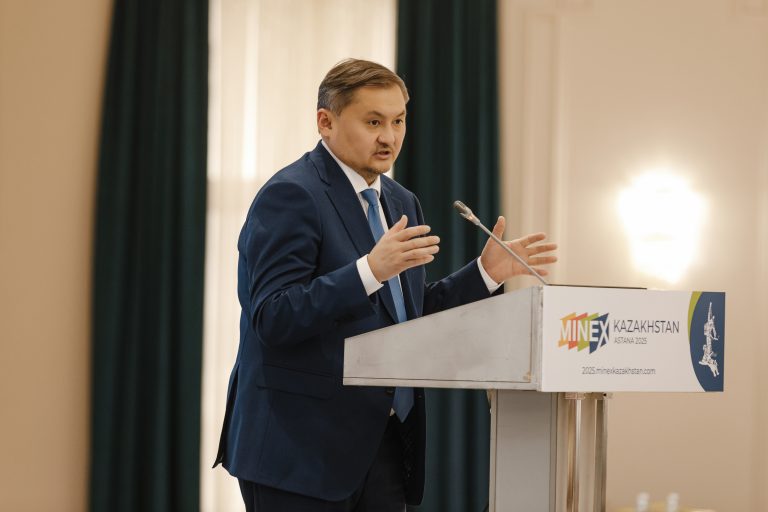
    At the MINEX Kazakhstan Mining and Geological Forum, a session was held on the future of scientific research and workforce development in the country’s mining sector. The event was moderated by Bakyt Manasbayeva, Deputy Executive Director of the Association of Mining and Metallurgical Enterprises (AMME).

    Kazakhstan’s Minister of Science and Higher Education, Sayasat Nurbek, outlined key directions in scientific and technological policy. He emphasized the shift toward an open science model focused on university-based research and greater involvement of private companies. The National Academy of Sciences has now been granted the status of the highest scientific authority, and the Science Fund is being transformed from a grant-giving body into a fund of funds capable of launching joint venture and investment initiatives. Regional science will also gain momentum through newly established science and technology councils under regional administrations.

    In terms of workforce development, Minister Nurbek announced the entry of top international universities such as the University of Exeter and the Colorado School of Mines into Kazakhstan. A new technical university is being opened in Zhezkazgan on the basis of the Kazakhmys geological cluster, and another is planned in Astana with a focus on mining and metallurgy.

    He also highlighted the launch of the Atlas of New Professions six years ago, which maps out future job trends in nine priority economic sectors. The mining and metallurgical industry’s atlas was one of the first to be developed, with regional versions already implemented in nine areas of the country.

    Bakyt Manasbayeva noted that up to 45% of employees at some enterprises are under 35, and this share continues to grow. Young professionals see the industry as offering stability, career growth, and social support. She stressed the need to update the Atlas in response to growing digitalization, automation, environmental concerns, and geopolitical shifts that are changing required skillsets.

    The updated Atlas now includes roles such as mining digitalization specialist, ESG data analyst, rare metals expert, cybersecurity engineer for industrial systems, and digital twin specialist. In the coming months, in-depth interviews with industry experts and employers will be conducted to refine competence matrices and career pathways, culminating in a new version of the Atlas tailored to education, business, and youth.

    The session also featured insights from scientific and industry leaders on commercializing technologies, training a new generation of mining professionals, and the future of geological exploration.

  • Kazakhstan Sees Significant Growth in Coal Production and Industry Revenue in January

    Kazakhstan Sees Significant Growth in Coal Production and Industry Revenue in January

    Kazakhstan’s mining sector experienced a notable surge in January, with mineral extraction reaching 10.08 million tons, marking a 12.9% increase compared to the same period last year. According to the Bureau of National Statistics of Kazakhstan, coal production accounted for 9.7 million tons, reflecting a 14.7% year-on-year growth, while lignite extraction declined to 380,700 tons, an 18.8% dropfrom January 2023.

    The production of coal concentrate also showed positive trends, with 292,700 tons processed in the country’s enrichment plants during the first month of the year, a 4.7% increase compared to the previous year. In monetary terms, the industry’s output rose to 52.29 billion tenge, representing a 16.7% growth from 2023. This growth has significantly contributed to Kazakhstan’s industrial production index, which stood at 101.3% compared to January 2023.

    During a February meeting of the Ministry of Industry and Construction, industry stakeholders reviewed last year’s performance, outlined plans for 2025, and discussed preparations for the heating season. The domestic market currently requires 7.9 million tons of solid fuel, with 7.53 million tons already supplied. Additionally, coal reserves at storage facilities have increased to 476,000 tons.

    It is worth noting that industry players have previously expressed opposition to transitioning under the management of the Ministry of Energy.