Tag: Kanat Sharlapaev

  • Kazakhstan Embarks on a Second Phase of Mining Sector Reform

    Kazakhstan Embarks on a Second Phase of Mining Sector Reform

    Photo: agmp.kz

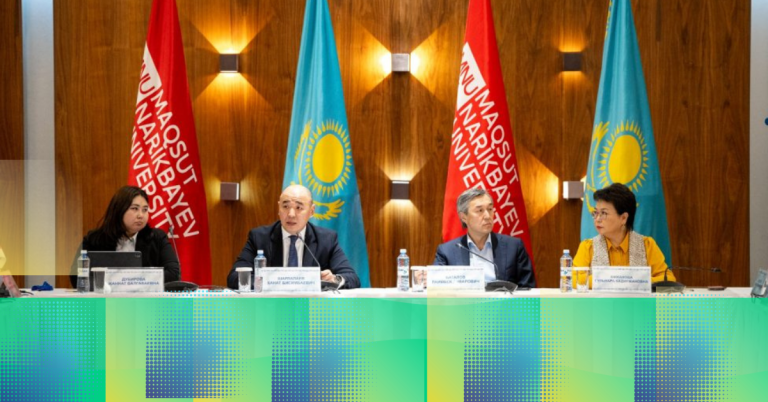
    On 26 February 2025, Maqsut Narikbayev University hosted a roundtable discussion tackling crucial issues surrounding the country’s mining sector, particularly focusing on the implementation of the Unified Platform for Mineral Resource Use (minerals.e-qazyna.kz).

    The event, chaired by Minister of Industry and Construction Kanat Sharlapaev and Acting Chairman of the Board of the National Business Chamber of Kazakhstan “Atameken” Raimbek Battayev, brought together key stakeholders, including representatives from mining companies, government agencies, and industry associations.

    Need for Continued Development:

    Minister Sharlapaev highlighted the government’s commitment to boosting Kazakhstan’s mineral resource base by intensifying geological exploration. He acknowledged the significant contributions of major mining companies in expanding these exploration areas and praised the effectiveness of the 2014-2018 legislative reforms, which introduced the licensing principle for geological exploration.

    Emphasising the need to sustain this progress, Minister Sharlapaev stressed the importance of developing a robust regulatory framework that fosters a favorable investment climate in the mining sector. He further underscored the imperative of prioritizing industrial safety, encouraging its integration into the corporate culture of mining companies.

    Unified Platform: A Transparent and Efficient System:

    Vice-Minister Zhanat Dubirova took the opportunity to present the Unified Platform for Mineral Resource Use. This online platform provides open access to all geological data, streamlining several processes.

    The platform currently offers 22 digitalised government services and has already processed 506 applications since its launch. It serves as a one-stop shop, providing potential mineral resource users with comprehensive information on a proposed site, including infrastructure details, geological reports, and available licenses.

    Dubirova pointed out the innovative aspects of the platform, such as the interactive map that allows users to visualise the land status, upcoming auctions, and relevant geological data, eliminating the need for intermediaries.

    Streamlined Control and Regulatory Framework:

    The platform also facilitates greater transparency and efficiency in monitoring compliance with licensing and contractual obligations. Previously, this control was largely manual, but now, automated verification systems will ensure real-time updates and streamline interactions between the government and mining companies.

    Towards the Second Phase of Reform:

    Nikolai Radostovets, Executive Director of the Association of Mining and Metallurgical Enterprises (AGMP), expressed support for paperless operations and emphasized the need for training on the digital platform. He proposed conducting this work systematically on a weekly basis, providing company specialists with opportunities not only for training but also for project refinement.

    Radostovets emphasized that the subsoil use reform requires further development. He proposed moving to the second stage of reform, noting that the President of Kazakhstan highlighted the continuation of subsoil use reform in his speech at an expanded government meeting.

    To address this issue, Radostovets requested the minister to resume the activities of the Working Group on amendments to the Subsoil Code, which was created last year, and to involve consultants and experts.

    “We still have many unresolved issues regarding land and water matters after the reform,” he said. “It is necessary to bring the Subsoil Code into compliance with other regulatory legal acts. AGMP has worked with companies on about 60 amendments to the Subsoil Code. On behalf of all subsoil users, we ask you to submit amendments to the Subsoil Code to Parliament this year or to finalize the draft law currently under discussion to advance reforms on a wide range of issues.”

    Minister Sharlapayev agreed with the need to further advance the reform in subsoil use and resume the Working Group’s activities. He proposed involving a law firm in developing the legislative act to ensure the document is competent, well-thought-out, and developed through collective dialogue with deputies and government agencies. According to him, there is an opportunity to submit the draft law to Parliament in 2025, as provided for in the legislative work plan.

    Industry Participation:

    The roundtable was attended by experts and executives from major companies including ERG, Solidcore Resources, Kazakhmys Corporation, Qarmet JSC, Altynalmas JSC, Kazzinc Holdings, Qaragandy Power Silicon, the Association of Precious Metals Producers, Kazakhstan Mining Chamber, Er-Tai LLP, National Geological Service, KAZRC Association, Caravan Resources LTD, TENIR LOGISTIC, Chu lli Resources Ltd, Kazakhstan Foreign Trade Chamber, Kazatomprom, and Tau-Ken Samruk.

    The meeting concluded with a question-and-answer session, highlighting the collaborative approach between government and industry stakeholders in advancing Kazakhstan’s mining sector reforms.

  • EU and international partners agree to expand cooperation on critical raw materials

    EU and international partners agree to expand cooperation on critical raw materials

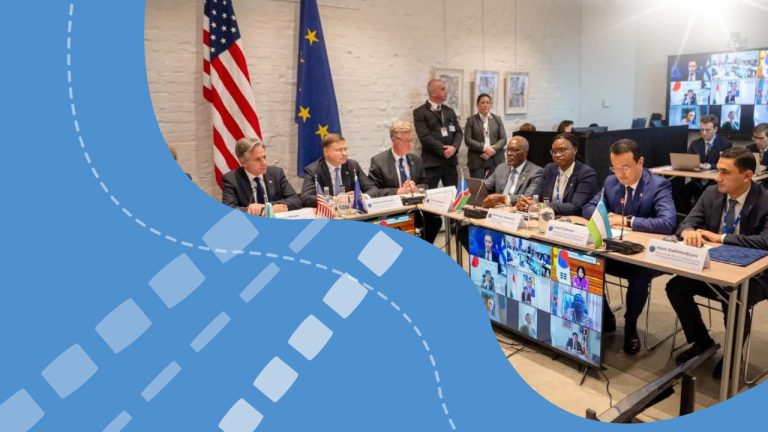
    On 5 April 2024 Secretary of State Antony J. Blinken, accompanied by Under Secretary Fernandez, hosted an event with the European Commission Executive Vice President and Trade Commissioner Valdis Dombrovskis to formally launch the Minerals Security Partnership (MSP) Forum in Leuven, Belgium.  Ministers from MSP partner economies and minerals-producing countries were invited to participate virtually and in person. Additional in-person attendees included Thomas Alweendo, Minister for Mines and Energy of Namibia, Volodymyr Kuzio, Deputy Minister of Economy of Ukraine, Kanat Sharlapaev, Minister of Industry and Construction of Kazakhstan, and Laziz Kudratov, Minister of Investment, Industry, and Trade of Uzbekistan.

    MSP partners first announced the creation of the MSP Forum in March on the margins of the Prospectors and Developers Association of Canada (PDAC) Convention in Toronto.  The MSP Forum cements the MSP’s partnership with minerals-producing countries committed to advancing and accelerating individual projects with high environmental, social, and governance (ESG) standards. The MSP Forum provides a platform for MSP partners and Forum members to consider and advance both projects and policies. Together, they will promote diverse and resilient supply chains while supporting local industry and capacity.

    The Project component of the MSP Forum, led by the United States, may include project information sharing among MSP partners, Forum members, and the private sector; presentations on critical minerals opportunities, technical collaboration, and more. The Policy Dialogue component of the MSP Forum, led by the EU, may include topics such as policies to boost sustainable production and local capacities; discussions on regulatory cooperation to foster fair competition and transparency; policies to foster the application of high ESG standards; and policies to promote and facilitate effective recycling.

    Background

    The MSP Forum builds on the EU’s Critical Raw Materials Package adopted in March 2023, which emphasised the need for more diverse and more sustainable CRM supply chains through new, mutually supportive international partnerships, such as the CRM Club. The EU has previously established raw materials partnerships with Canada (2021), Ukraine (2021), Kazakhstan (2022), Namibia (2022), Chile (2023), Argentina (2023), Zambia (2023), the Democratic Republic of Congo (2023) and the Autonomous Territory of Greenland (2023).

    CRMs are indispensable for a wide set of technologies needed for EU strategic sectors such as the net-zero industry, digital, space and defence. While the demand for such critical raw materials has never been higher, it is expected to continue to grow driven by the green and digital transitions. For instance, EU demand for lithium used in electric-vehicles batteries and energy storage is expected to increase twelve-fold by 2030. Meanwhile, the supply of CRMs is confronted with rising geopolitical, environmental, and social risks and challenges.

    Learn more about the MSP at:

    https://www.state.gov/minerals-security-partnership/

    https://ec.europa.eu/commission/presscorner/detail/fen/ip_24_1807

    Photo@ European Commission

  • Kazakhstan Produces Over Half of Raw Materials Critical for EU Economy

    Kazakhstan Produces Over Half of Raw Materials Critical for EU Economy

    Kazakhstan produces and processes 19 types of essential raw materials included in the list of critical raw materials for the European Union (EU), reported the Ministry of Industry and Construction on Feb. 6. The list updated by the EU in 2023 includes 34 critical raw materials.

    The raw materials from Kazakhstan are also exported to China, the EU, South Korea, the United Kingdom, the United States and Russia.

    “Kazakhstan’s producers supply the European market with metal and chemical products such as beryllium, tantalum, titanium, ammonium metavanadate, and phosphorus,” said the ministry in a statement.

    Kazakhstan is also among the world’s top 10 copper-producing countries. Kazakhstan boasts opportunities to establish a cluster for battery material production, such as nickel, cobalt, manganese, and lithium.

    Rare metals and rare earth metals are considered critical types of raw materials in demand by leading sectors of the global economy, necessary for the transition to green energy, the development of digital technologies, defense, aerospace, medical, and other high-tech areas.

    “One of the main problems in the rare metals mining industry is the dependence on imported raw materials. Additionally, the development of the production of essential raw materials is hindered by the wear and tear of technologies and equipment at enterprises,” said the ministry.

    These issues are outlined in the comprehensive plan for the development of the rare earth metals industry for 2024-2028, which was approved by the government on Dec. 28.

    According to the document, the main problems of the domestic rare metals and rare earth metals industry are low level of geological exploration, low level of assessment and commercial exploitation of technogenic mineral formations, wear and tear of the main assets of enterprises, and underdevelopment of the regulatory framework for the industry.

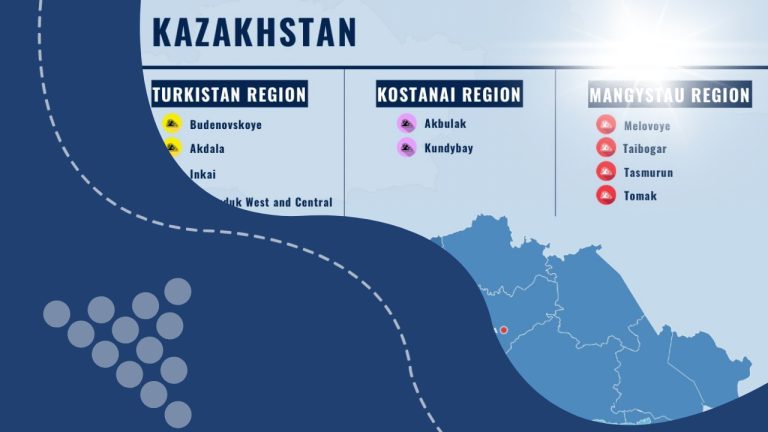
    The ministry noted it is working on the tasks for the next five years. Overall, 15 rare earth deposits registered in the state are spread across three regions of Kazakhstan: Turkistan, Kostanai, and Mangystau. Data from the National Geological Service also indicates Kazakhstan possesses a raw material base of rare metals, including tungsten with 2.2 million tons of reserves, molybdenum with one million tons, lithium with 75,600 tons, tantalum with 4,600 tons, niobium with 28,100 tons, beryllium with 58,000 tons, among others.

    Kazakhstan’s Minister of Industry and Construction Kanat Sharlapaev headed the Kazakh delegation at the Raw Materials Week in Brussels in November. Speaking at a panel session in Brussels, Sharlapaev said critical materials represent a blueprint for a new chapter in the Kazakhstan-EU cooperation.

    “Our country is not just rich in terms of the mineral base. It has been a reliable partner for the EU, particularly contributing to its energy security through oil supplies and to the nuclear energy sector through uranium supplies. Now, Kazakhstan is ready and committed to integrate itself with the value chain of critical materials, which was aptly named critical for our green energy transition,” he said back then.

    __________________

    Photo credit: strategy2050.kz.

  • Supplies to Europe and the deal with ArcelorMittal. Minister Sharlapaev gave an interview to an American channel

    Supplies to Europe and the deal with ArcelorMittal. Minister Sharlapaev gave an interview to an American channel

    Kazakh Minister of Industry and Construction Kanat Sharlapaev, in an interview with the American television channel CNBC, shared his views on the growing role of Kazakhstan in the European supply chain of critical raw materials and discussed the successful completion of the deal with ArcelorMittal, Tengrinews.kz reports .

    Sharlapaev emphasized the importance of Kazakhstan in the European market.

    “In terms of critical materials and some rare earth elements, Kazakhstan occupies a significant place on the world stage as a leading producer. Our country plays a key role in the production of copper, recognized as an important element in the global economic space. In addition, Kazakhstan is actively involved in the mining of elements such as beryllium , thallium and neodymium, as well as titanium, which are already supplied to the markets of the European Union,” said Kanat Sharlapaev.

    According to him, of the 34 critical materials listed by the European Commission, Kazakhstan is already successfully producing 18.

    The minister was also asked about the recent successful deal with ArcelorMittal.

    “It was successfully completed on the basis of mutual agreement of the parties. ArcelorMittal decided to sell its Kazakh division in favor of the state, however, it is worth emphasizing that the company will continue to operate. This is a unique steel manufacturer for Central Asia with the potential to produce up to 4 million tons of metal products per year,” he noted.

    Sharlapaev stressed that the government has a significant interest in maintaining the enterprise, seeking to improve its performance in the areas of safety and environmental sustainability.

    In addition, the minister stated that Kazakhstan intends to strengthen its position in the European market and create favorable conditions for socially and environmentally responsible investors.