In a significant move to bolster its domestic supply chain for strategic materials, the United States government has announced a $500 million investment aimed at enhancing the processing capabilities for lithium and cobalt, essential components in battery production. This initiative comes in the wake of recent export restrictions on ‘black mass’—a waste product from lithium-ion batteries that contains valuable metals such as lithium, nickel, and cobalt. The rationale behind these restrictions is to prevent the U.S. from becoming reliant on foreign processing facilities for materials critical to its technological and energy sectors.
The U.S. Department of Energy has allocated funds to seven private companies that are engaged in various aspects of lithium extraction, cobalt processing, and battery recycling. Notably, $100 million has been awarded to Lilac Solutions for direct lithium extraction in Utah, while Jervois has received a similar amount to develop an integrated cobalt mining and processing complex. Another $100 million is going to Nth Cycle, a company focused on processing black mass into high-purity metals and battery-grade materials, directly addressing the materials that the U.S. has sought to keep within its borders.
This strategic funding is not merely a financial boost for these companies; it reflects a broader shift in U.S. industrial policy towards a more interventionist approach. The government is actively identifying vulnerabilities in its supply chain and taking steps to mitigate them through direct investment and support. This includes an additional $150 million earmarked for projects that focus on recovering cathode materials, developing battery electrolytes, and creating silicon anodes to reduce dependence on imported graphite.
The overarching theme of this initiative is clear: the U.S. is committed to maintaining control over its strategic resources and ensuring that the necessary infrastructure is in place to process these materials domestically. This shift in policy indicates that the government is no longer relying solely on market mechanisms to address supply chain issues, but is willing to intervene directly to safeguard national interests.
As the U.S. takes these steps, it raises questions about how other nations, particularly those like Ukraine, might respond to similar challenges in their own industrial sectors. The implications of this investment could resonate beyond American borders, influencing global supply chains and the dynamics of the mining and battery industries.
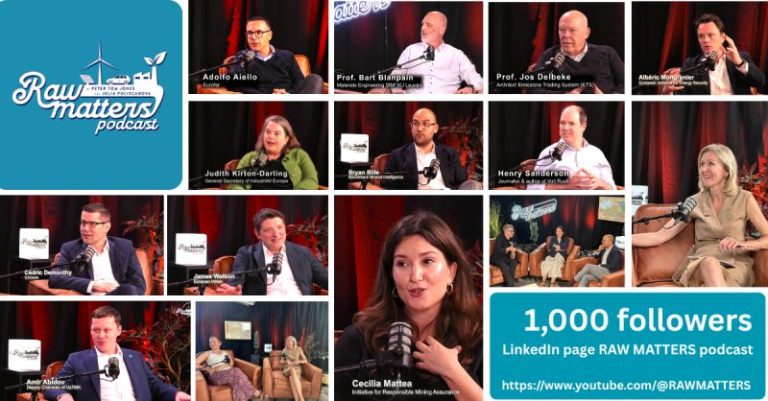
The RAW MATTERS podcast has reached a significant milestone, celebrating 1,000 followers. While this number might not seem impressive in the vast landscape of social media, it holds substantial meaning for a niche podcast dedicated to addressing complex issues within the mining and critical minerals sectors. The podcast, which aims to foster informed discussions and enhance public understanding of the intricate relationships between critical minerals, industrial policy, clean technologies, climate action, economic resilience, and strategic autonomy, has garnered appreciation from its guests, listeners, and supporters.
Launched just six months ago, RAW MATTERS was conceived with the intention of transcending siloed debates and promoting a holistic view of the mining industry and its impact on various sectors. The podcast’s mission aligns with the growing recognition of the importance of critical minerals in achieving sustainable development and climate goals. As highlighted by guest Salvatore Pinizzotto, the podcast advocates for a comprehensive approach that encompasses financing, permitting, legislation, mining, refining, and cleantech manufacturing, all working in concert to address the challenges facing the industry.
Looking ahead, RAW MATTERS is gearing up for its second season, with the first recordings scheduled to commence on 15 September. Listeners can catch up on all 12 episodes of Season 1, hosted by Peter Tom Jones and Julia Poliscanova, available on platforms such as YouTube, Spotify, and Apple Podcasts. The podcast continues to strive for a systems perspective in its discussions, aiming to contribute to better decision-making in the critical minerals sector and beyond.
Central Asia and Mongolia will remain resilient to geopolitical shocks and record the highest growth rates of the EBRD countries of operation in 2026 and 2027, according to the latest Regional Economic Prospects report published on 3 June 2026, by the European Bank for Reconstruction and Development (EBRD). The combined economies of Kazakhstan, the Kyrgyz Republic, Mongolia, Tajikistan, Turkmenistan, and Uzbekistan are projected to grow by 5.6% in 2026 and 5.3% in 2027.
These are compelling headline figures. Yet beneath them lies a more consequential story—one that the OECD’s March 2026 report, Advancing Security and Transparency for the Governance of Critical Raw Materials in Central Asia, articulates with rare precision: the region is not merely growing; it is repositioning itself at the very heart of the global critical raw materials race.
The mining sector is no longer a background variable in Central Asia’s development story. It is the plot itself.
MINEX Asia 2026 is where it gets real. Join EBRD and OECD peers presenting on Kazakhstan’s scale, Tajikistan’s green pivot, Uzbekistan’s processing ambitions—and the governance gaps that determine success.
The Regional Narrative: Resilience With Structural Depth
Growth prospects remain robust but are increasingly dependent on the pace of domestic reforms and efforts to strengthen resilience to external shocks. Strong domestic consumption, rising real wages, and robust capital investment are real. But so are the fault lines: downside risks include energy price volatility, supply-chain disruptions, economic sanctions, and slower growth in the region’s largest trading and economic partners, Russia and China.
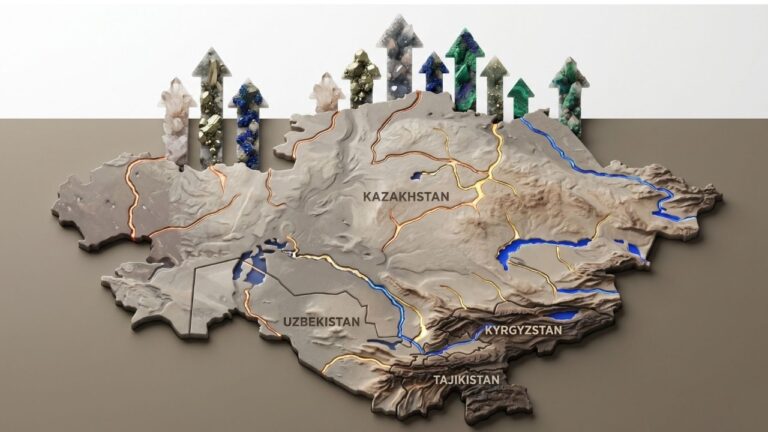
The OECD note adds a structural dimension that the growth forecasts alone cannot convey. Central Asia’s substantial yet untapped resource base, combined with its location between major markets in Europe and Asia, raises the region’s relevance in CRM geopolitics and efforts to diversify global supply chains. This is a geostrategic statement. The region holds extraordinary assets: Kazakhstan, already the world’s largest producer of uranium, produces and processes around twenty of the 34 CRMs included on the European Union’s official list. The Kyrgyz Republic and Tajikistan both host some of the world’s largest antimony reserves. Uzbekistan possesses some of the largest copper reserves globally and is advancing lithium and molybdenum production.
Taken together, these endowments amount to a critical minerals portfolio of exceptional strategic depth. Whether the region can translate that portfolio into durable prosperity is the central question of the coming decade.
Country by Country: Where the Headlines Don’t Tell the Full Story
Tajikistan: Gold and Strategic Minerals
Tajikistan’s economic performance continues to confound those who underestimate it. In March 2026, Moody’s upgraded Tajikistan’s sovereign credit rating to B2 with a stable outlook, citing the country’s continued economic resilience. The EBRD projects growth easing to 7.9 per cent in 2026 — still remarkable for a landlocked, remittance-dependent economy navigating elevated regional volatility.
The mining dimension is crucial. Gold remains the cornerstone of export revenue and fiscal stability, and Tajikistan’s antimony sector is poised for a structural step-change. Tajikistan possesses the world’s second largest antimony reserves, and China’s effective ban on antimony exports to the US and EU provides a significant window of opportunity. Together, France and Belgium accounted for 77% of Tajikistan’s antimony exports in 2024. With TALCO nearing completion of a new antimony metallurgical plant, Dushanbe is finally beginning to capture processing value rather than simply shipping raw material.
But what I find most intriguing about Tajikistan’s trajectory is the emerging convergence of green energy and artificial intelligence with its mining ambitions. The Rogun Hydropower Project — set to have an annual capacity of over 3,600 megawatts once fully operational — would cover most of Tajikistan’s domestic consumption and create the conditions for green aluminium production, with approximately 70 per cent of output earmarked for export to Kazakhstan and Uzbekistan. Cheap, clean electricity is not merely an industrial asset — it is the foundation for competitive mining, smelting, and increasingly, data infrastructure.
Tajikistan has initiated groundbreaking infrastructure projects, including the launch of “Area AI” — the world’s first dedicated AI Zone — a technopark and cluster designed to serve as a hub for research, development, and application of AI technologies. The country has forged partnerships with international tech firms including Perplexity AI, Google DeepMind, Yotta and Presight to accelerate technology transfer and innovation. The government has declared 2025–2030 the “Years of Digital Economy and Innovation Development.” Taken alongside the Rogun-powered industrial ambitions, this is Tajikistan’s bid to become not just a minerals supplier but a genuinely integrated green industrial economy — using AI and clean energy together to escape the extractive trap.
The key vulnerability remains Tajikistan’s dependence on Russia, where a slowdown would depress the remittance inflows that underpin household incomes. That risk is real and should not be minimised. But the strategic direction of travel is clear — and it is more ambitious than most Western observers appreciate.
Kyrgyzstan: The Kumtor Imperative and Exploration Needs
Kyrgyzstan remains the region’s most dramatic case study in resource-dependent growth. Kumtor Gold Company — nationalised in 2022 after nearly three decades of Canadian stewardship — generated net profit exceeding USD 706 million in 2025, contributes 10–15 per cent of GDP, and represents nearly two-thirds of the country’s mineral exports. The March 2025 discovery of an additional 147 tonnes of gold reserves extended the mine’s productive life to at least another 17 years.
Underground mining operations, launched in August 2025, are transformative. At current gold prices hovering above USD 4,500 per ounce, Kumtor’s economics are exceptional — and the government’s plan to process tailings estimated to contain over 100 tonnes of gold adds further upside. Fixed capital investment rose by 25.5 per cent year on year thanks to strong investment in infrastructure, energy and housing.
Yet the near-term outlook has darkened. The European Union’s 20th sanctions package, announced in late April, restricts exports of dual-use goods to Kyrgyzstan and tightens controls on its financial and logistics sectors. The EBRD has revised its 2026 growth forecast down to 8.7 per cent as a result. This is a significant geopolitical constraint on what would otherwise be an exceptionally strong growth story — and it underscores the OECD’s broader finding that regulatory unpredictability and governance gaps impose real costs on the region’s investment attractiveness.
The OECD note also flags a structural vulnerability that sits beneath the Kumtor euphoria: limited exploration since independence means that the Kumtor mine, accounting for 90% of the Kyrgyz gold exports, is set to close in 2031 due to reserves depletion — and the lack of exploration since independence will make it harder to offset this decline quickly. The reserve discovery of 2025 has bought time but not resolved the underlying fragility.
Kazakhstan: Scale, Strategy, and Industrial Output
Kazakhstan’s mining profile is defined by scale and global strategic significance. The country holds the world’s largest chromium reserves, accounts for roughly 40 per cent of global uranium output, and produces massive quantities of refined copper, largely exported to major industrial buyers like China and Türkiye.
Graphite is a high-potential sector for Kazakhstan. With the exploitation of its Sarytogan deposit — added to the EU’s list of strategic raw material projects and reported to contain 30% of the world’s graphite reserves — Kazakhstan is expecting to become a crucial player on the world graphite market.
The tungsten story is equally striking. Kazakhstan holds roughly 2 million tonnes of tungsten resources out of approximately 3.6 million tonnes of global reserves. A joint venture between Kazakhstan’s Tau-Ken Samruk and US-based Cove Kaz Capital Group has been formed to develop the Severniy Katpar tungsten project, with the US International Development Finance Corporation issuing Letters of Interest for up to USD 700 million in potential financing — marking Washington’s most significant entry yet into the region’s critical minerals sector.
Yet the near-term picture carries a real cautionary note. In Kazakhstan, the extractive industry contracted by 11.4 per cent year on year in Q1 2026 following disruptions to the Caspian Pipeline Consortium pipeline and an incident at the Tengiz oil field. The EBRD projects Kazakhstan’s GDP growth moderating to 4.7 per cent in 2026 and 4.5 per cent in 2027 — the lowest in the region, reflecting the inherent vulnerability of commodity-led economies to infrastructure and logistics shocks.
Uzbekistan: The Ambitious Reformer
Uzbekistan’s ambitions deserve particular attention. The country is the world’s fifth-largest uranium supplier, a top-ten gold producer, and is rapidly positioning itself as a critical minerals investment destination. Uzbekistan has actively signed Memorandums of Understanding with Western partners, including the United States, for securing supply chains in the mining and processing of Critical Minerals and Rare Earths. The government has also launched massive industrial initiatives to bolster its critical minerals sector.
The Almalyk Mining and Metallurgical Complex (AMMC) and its specialised subsidiaries targeting tungsten, molybdenum, rhenium, lithium, and graphite signal a genuine strategic shift from raw extraction towards value-added processing. Whether governance and transparency standards keep pace with ambition will be the decisive variable.
The Structural Challenge: From Resource Extraction to Value Creation
Both the EBRD and the OECD converge on a single, uncomfortable truth: Central Asia’s growth is impressive, but its mining sectors remain structurally exposed. The OECD note identifies several systemic vulnerabilities that macro-growth figures obscure.
On reserves reporting: Most countries still operate on Soviet-era GKZ classification systems that differ fundamentally from international CRIRSCO standards — creating information asymmetries that deter sophisticated investors and complicate due diligence. Kazakhstan has made progress through its KAZRC system; other regional peers have barely started.
On foreign investment dynamics: Foreign actors, predominantly Chinese, actively invest in Central Asia’s mining industry. China has been a primary investor in the mining sectors of the Kyrgyz Republic and Tajikistan, and is increasing its presence in Kazakhstan and Uzbekistan, not only by investing in extraction facilities but also by supporting the development of initial processing capabilities. This creates a strong strategic dependency that the region’s governments are increasingly aware of — and that Western partners, including the EU, UK, and US, are now actively looking to balance through alternative commercial partnerships.
On the Trans-Caspian International Transport Route (TITR): Traffic along the corridor (the Middle Corridor) has increased dramatically as exporters seek reliable East–West trade alternatives. Kazakhstan in particular has long relied on the corridor for its mineral, chemical, and agricultural exports, with a substantial portion of its uranium exports to Western markets utilising this bypass route. This corridor is central to the region’s ability to diversify export markets.
On ESG and governance: The OECD is frank: mining in the region is still heavily influenced by large state-owned enterprises with overlapping regulatory and commercial roles, needing stronger occupational health and safety oversight and remediation of legacy environmental risks. These are not peripheral concerns — they are the conditions on which Western investment and international supply chain partnerships will ultimately be conditioned.
The Strategic Opportunity
The OECD projects global demand for many critical raw materials to increase multifold over the coming decades to meet the needs of the green and digital transitions. Central Asia sits atop a significant share of the reserves that will need to come online to meet that demand. The region holds massive global shares of manganese ore, chromium, lead, zinc, titanium, aluminium, copper, cobalt, and molybdenum.
That is an extraordinary endowment. Translating it into durable prosperity requires three things that remain in genuinely short supply across the region: transparent governance, world-class ESG practice, and the institutional capacity to negotiate from strength with both regional and global partners.
This is precisely why platforms like the MINEX Forum matter. The conversation between producers, investors, policymakers, and development finance institutions that happens at these gatherings is not peripheral to the critical minerals agenda. It is where the terms of engagement are shaped.
Conclusion: Cautious Optimism, Clear Conditions
The EBRD’s projection of robust regional growth is credible. The OECD’s assessment of the region’s critical minerals potential is genuinely exciting. But both institutions are equally clear-eyed about the conditions that must be met for that potential to be realised responsibly.
Central Asia’s mining sectors are not simply economic contributors. They are strategic assets in the most consequential industrial transformation of our era. Their management — balancing extraction with environmental stewardship, concentrating revenue into productive capital formation, building institutional capacity, and securing diversified partnerships — will determine whether current growth translates into sustainable prosperity or rehearses the resource curse that has constrained other commodity-rich regions.
The next chapter will be written in mining offices, government ministries, and international forums across Dushanbe, Bishkek, Astana, Tashkent, and Ulaanbaatar. We should be not merely watching — we should be in the room.
References:
Central Asia and Mongolia to see highest economic growth in the EBRD regions
Arthur Poliakov is the Managing Director of the United Kingdom-based company Advantix Ltd and the Executive Chairman and founder of the MINEX Forum. He has over 30 years of experience in international business communications, event management, and natural resource markets.
He is currently organising the upcoming 12th MINEX Asia Forum (24–25 June 2026, Ankara, Turkey), the 10th MINEX Europe Forum (28–30 October 2026, Trim, Ireland), and the 14th MINEX Eurasia Conference (30 November 2026, London, United Kingdom).
China has issued a formal warning to the British government over its plans to nationalise British Steel, urging London to “make decisions prudently” and threatening to take action to protect the interests of Chinese companies if the process moves forward.
Beijing’s commerce ministry said China would “closely follow developments” and take “strong measures to safeguard the legitimate rights of Chinese companies,” after Prime Minister Keir Starmer announced on Monday that Britain could bring British Steel into full public ownership. The Chinese statement called on the UK government to “respect the wishes of firms and market principles, and avoid the abuse of administrative coercive measures.”
The British government seized operational control of British Steel from its Chinese owners, Jingye Group, in April 2025 after the company failed to secure the raw materials needed to keep the Scunthorpe blast furnaces operating. New legislation giving the government the power to bring the steelmaker into public ownership has since been passed. A government spokesperson said the powers would only be used “where the public interest test has been met” and that the administration remained committed to respecting the rights of businesses.
The dispute adds a fresh dimension to an already complex period in UK-China relations, as London attempts to balance economic engagement with Beijing against domestic industrial policy imperatives and growing pressure to protect strategically important manufacturing assets.
The proposed Industrial Accelerator Act (IAA) is being positioned as a pivotal opportunity to strengthen Europe’s industrial base, with the non-ferrous metals sector highlighting its critical role in achieving the European Union’s climate, digital and security objectives.
Industry stakeholders argue that the IAA must prioritise restoring a viable business case for producing metals within Europe, which has been undermined in recent years by persistently high energy prices and rising operational costs. They stress that without targeted measures to address energy affordability, the credibility of the IAA as an industrial policy tool could be compromised.
Among the key proposals is the development of “lead markets” to support demand for low-carbon materials. However, industry representatives warn that such mechanisms must remain realistic, flexible and aligned with sector-specific conditions. They emphasise the need for accompanying incentives, including VAT reductions and public procurement criteria, to prevent European producers from being undercut by cheaper imports.
The introduction of local content requirements is also seen as a strategic priority to reduce reliance on critical raw materials from third countries and to support a “Made in EU” approach. At the same time, stakeholders caution that these measures must be carefully calibrated to avoid increasing production costs excessively or disrupting global supply chains. Flexibility is recommended, particularly in recognising partnerships with allied countries such as the UK, Canada, Australia and Japan.
Green public procurement is identified as another key lever, with calls for minimum EU-wide standards based on life-cycle sustainability criteria. Industry groups argue that procurement frameworks should prioritise material efficiency, recyclability and end-of-life recovery, while remaining achievable and aligned with existing regulatory frameworks.
Permitting reform is also highlighted as a major requirement. Current processes for obtaining environmental approvals can take years, delaying investment and project development. Stakeholders propose the introduction of EU-wide time limits for permitting decisions, alongside measures to streamline administrative procedures and improve regulatory predictability.
Access to finance remains a central concern, particularly given the high capital and operating costs associated with decarbonisation. The IAA is expected to support both CAPEX and OPEX through long-term, predictable funding mechanisms, including carbon contracts for difference and dedicated instruments to mitigate energy price volatility.
In addition, stakeholders advocate for a more coordinated approach to critical raw materials, including tailored stockpiling strategies to enhance short-term supply security. However, they emphasise that long-term resilience will depend on increasing domestic extraction, processing and recycling capacity within Europe.
Overall, industry representatives stress that the success of the IAA will depend on its ability to balance climate ambition with industrial competitiveness. Without addressing structural cost disadvantages and regulatory barriers, they warn that Europe risks further erosion of its metals production base in an increasingly competitive global market.
The European Union’s proposed Industrial Accelerator Act (IAA) represents a significant step toward building a more proactive and coordinated industrial policy aimed at strengthening competitiveness, resilience and strategic autonomy across key manufacturing sectors. However, industry representatives warn that the legislation must more clearly integrate the upstream raw materials sector to ensure the effectiveness of Europe’s strategic supply chains.
The IAA seeks to stimulate investment and accelerate the development of strategic industries by promoting the production of key technologies and introducing measures such as simplified permitting, “Made-in-EU” criteria and requirements related to low-carbon content. These provisions are intended to create stronger regulatory certainty and targeted incentives capable of mobilising private capital and supporting the EU’s green and digital transitions.
According to industry association Euromines, these policy tools reflect a growing recognition within the EU that achieving climate and technological goals requires a comprehensive industrial strategy capable of aligning supply and demand across critical value chains.
However, the organisation argues that the current framework does not sufficiently address the role of domestic raw materials production. Without stronger links between manufacturing policies and upstream resource extraction, increased demand for strategic goods could fail to translate into greater supply security within the European Union.
Euromines also notes that the proposed reliance on non-preferential rules of origin primarily reinforces final manufacturing stages rather than recognising the strategic importance of raw materials produced within the EU. While cooperation with trusted international partners remains important, extending recognition of EU origin to certain Free Trade Agreement partners may do little to strengthen Europe’s internal resource base.
The organisation has called for greater integration of raw materials policy into the Industrial Accelerator Act, arguing that minerals and metals form the foundation of all strategic industrial value chains.
Euromines said it is prepared to work with EU lawmakers to address these gaps, emphasising that fully incorporating domestic raw materials production into the IAA will be essential for building resilient supply chains and achieving the bloc’s long-term industrial, strategic and climate objectives.
Euro Mines announced that 18 organisations have joined forces to establish an informal Coalition on Permitting, a cross-sector platform aimed at improving and accelerating project approval processes across the European Union.
The move comes amid growing concern that lengthy and complex permitting procedures have become a structural bottleneck for Europe’s industrial revival, delaying investments across mining, energy and manufacturing.
According to the coalition, permitting reform should be treated as a strategic enabler of Europe’s competitiveness, resilience and industrial value chains. The group is calling on EU policymakers to streamline and align permitting requirements stemming from EU legislation, particularly for cross-border projects, in order to reduce duplication and legal uncertainty.
Among the proposed measures are enforceable time limits for permit decisions, digital tracking systems, clearer accountability mechanisms and stronger resourcing of permitting authorities.
Coalition Co-Chair Gabrielle van Melkebeke said the initiative seeks to ensure Europe can deliver the projects required to meet net-zero targets while remaining an attractive destination for investment. She noted that the coalition combines diverse expertise to propose reforms that are both ambitious and practical.
Co-Chair Florian Anderhuber stressed that Europe cannot meet its industrial, defence and climate objectives without modern and predictable permitting systems. By pooling cross-sector insights, the coalition aims to provide policymakers with evidence-based recommendations on where reforms are most urgently needed.
The announcement follows mounting pressure on Europe’s industrial base. While the region initially led the early phase of the steel transition away from coal, momentum has slowed. The reports that China has taken the lead in green steel production and has surpassed its 2025 green hydrogen capacity target of 200,000 tonnes.
Financial challenges have also emerged. Swedish green steel developer is facing a funding shortfall of more than $1 billion to complete its plant under construction. Stegra is also a key investor in , which is experiencing financial strain partly linked to limited government support.
The coalition represents European and national trade associations, technology providers, project developers and supply chain partners. Its goal is to serve as a unified industry voice in support of modernising Europe’s permitting systems and restoring industrial momentum.
Senior officials from more than 50 countries gathered at the White House on February 4 for the United States’ first Critical Minerals Ministerial, marking a symbolic moment for Central Asia’s engagement in global resource diplomacy. Delegations from Kazakhstan and Uzbekistan underscored the region’s long-standing “multi-vector” foreign policy ambitions, but the meeting also highlighted a persistent challenge: turning diplomatic visibility into tangible industrial outcomes.
While Washington’s message focused on openness and coordination, the imbalance between intent and execution remains stark. China has consistently converted engagement into financed, operational mining and processing projects, typically combining contractors, concessional financing, and long-term offtake agreements. By contrast, Western engagement has largely taken the form of memoranda of understanding and strategic frameworks that signal political alignment but stop short of delivering mines, refineries, or downstream capacity.
Uzbekistan offers a contrasting model of what project readiness can look like. In March 2025, Tashkent unveiled a $2.6 billion, three-year programme encompassing 76 projects across 28 minerals, with a clear objective of moving beyond extraction toward processing and finished products. The initiative is structured for partners capable of execution at scale, rather than symbolic cooperation.
The evolving US approach further complicates expectations. Washington is increasingly pursuing techno-economic sovereignty, integrating supply chain security, energy systems, advanced manufacturing, and artificial intelligence into a tightly coordinated industrial policy. Dependencies are reframed as vulnerabilities, and resilience has become a central organising principle. In this context, US engagement abroad is likely to be selective, focusing on de-risked, compliant projects that directly support domestic resilience goals rather than driving industrialisation in partner regions.
This creates both a constraint and an opportunity for Central Asia. High-level political gestures, including the first-ever C5+1 Presidential Summit in Washington in 2025, have raised the region’s profile. Yet momentum will not emerge automatically from diplomacy alone. To shape outcomes, Central Asian governments and companies must proactively present bankable, project-ready opportunities, particularly through direct business-to-business engagement with US firms.
Developing midstream capabilities is critical. Exporting raw ore is capital-intensive, logistically exposed, and low-margin. By contrast, refined metals and intermediate products can anchor value locally, create skilled employment, and reduce vulnerability to external supply chain shocks. Without this shift, the region risks deeper path dependency and gradual absorption into China-centric production networks.
Ultimately, the future of Central Asia’s critical minerals sector will not be decided in Washington or Beijing alone. Strategic autonomy depends on the region’s ability to define priorities, structure viable projects, and act as the primary driver of its own industrial transformation.
Kazakhstan’s Minister of Industry and Construction, Yersayin Nagaspayev, held a working meeting with Ruslan Oskinali, Chairman of the Management Board of Kazakhmys Corporation, to discuss the current state and future priorities of the country’s metallurgical sector.
During the meeting, Nagaspayev highlighted the central role of mining and metallurgy in Kazakhstan’s economy. According to the minister, the sector accounts for around 40% of total manufacturing output, while cathode copper production represents 23% of the metallurgical industry. Kazakhmys alone contributes about 78% of national cathode copper output, underscoring its systemic importance.
The discussions focused on ensuring the stable operation of production facilities, strengthening occupational safety, and advancing modernization and technological upgrades. Nagaspayev stressed that mining and metallurgy are high-risk industries, requiring strict compliance with industrial safety standards and enhanced oversight at hazardous sites.
He also pointed to the growing importance of digital transformation, calling for greater use of artificial intelligence and digital technologies to improve production efficiency and operational control.
In addition, the minister reiterated that expanding domestic processing remains a strategic priority for Kazakhstan’s non-ferrous metallurgy sector. From the government’s perspective, it is essential that large industrial players continue to invest in equipment renewal, improve the efficiency of processing stages, and reduce costs and environmental impacts through the adoption of modern technologies.
Kazakhstan’s Ministry of Industry and Construction has submitted for public discussion a draft order revising energy efficiency targets for the country’s largest energy consumers. The proposed changes apply to enterprises included in the State Energy Register (SER) that consume more than 50,000 tonnes of standard fuel per year.
According to the ministry, the introduction of energy-saving and energy-efficiency measures should not affect product prices or regulated tariffs. Instead, the measures are aimed at more rational energy use and reducing losses, while investments in energy-efficient technologies are expected to pay for themselves through lower energy consumption.
The draft order forms part of a broader policy framework to reduce the energy intensity of Kazakhstan’s economy under the Energy Conservation Development Concept for 2023–2029. The previous set of target indicators was approved on 29 November 2022.
At present, 108 organisations fall within the scope of the proposed regulation. Of these, 51 operate in the energy and water supply sector (47.2%), 29 in manufacturing (26.9%), 22 in mining (20.3%), four in pipeline transportation (3.7%), and two in the transport sector (1.9%). The ministry noted that this list is not final and may change as companies’ energy consumption increases or decreases.
Energy efficiency targets are set individually for each enterprise, based on consumption trends over recent years and the results of mandatory energy audits. Companies will be required to meet the approved targets starting from the first year of implementation.
The indicators include fuel and energy consumption for electricity and heat generation, specific electricity use per unit of output, energy costs for extraction, processing and transportation, as well as permissible loss levels in electricity and heat transmission.
Oversight of data accuracy will be carried out by the National Institute for Energy Conservation and Energy Efficiency Development. Failure to comply with annual energy reduction requirements or to submit data to the State Energy Register will result in administrative liability.