Tag: industrial policy

  • European Commission seeks industry backing for ‘Made in Europe’ push ahead of Industrial Accelerator Act

    European Commission seeks industry backing for ‘Made in Europe’ push ahead of Industrial Accelerator Act

    The European Commission is urging business leaders to support and sign a French-led initiative aimed at increasing the share of industrial production based in Europe, as the EU prepares to unveil its Industrial Accelerator Act (IAA).

    According to a letter seen by Euronews, the Commission is calling on representatives from energy-intensive sectors such as steel and aluminium to back a stronger “Made in Europe” component in forthcoming legislation. The move is intended to revive Europe’s struggling industrial base amid mounting competition from China and the United States.

    The appeal comes days before the planned presentation of the Industrial Accelerator Act, which seeks to accelerate the decarbonisation of heavy industry while preserving the competitiveness of European production. The initiative builds on earlier EU legislation adopted in 2024 that prioritised domestic clean-technology manufacturing as part of the bloc’s goal to achieve climate neutrality by 2050.

    In the letter, European Commission Executive Vice-President Stéphane Séjourné warned that Europe faces a stark choice as global trade becomes increasingly shaped by tariffs, subsidies and export restrictions. Without an ambitious and pragmatic industrial policy, he argued, the EU risks a gradual erosion of its industrial capacity, technological know-how and economic sovereignty.

    Supporters say the IAA could significantly strengthen European competitiveness at a time when traditional sectors such as cement and steel, as well as emerging net-zero technologies, are grappling with weak demand and aggressive international competition. However, critics caution that the proposal could undermine competition within the EU’s single market, particularly disadvantaging member states with less developed industrial frameworks compared with countries like France and Germany.

    Several member states, including Czechia, Estonia, Finland, Ireland, Latvia, Malta, Portugal, Sweden and Slovakia, warned in December that the planned law could distort competition and affect prices, quality and business conditions across the bloc.

    Key elements of the proposal, including quotas for European-made products, financing mechanisms and state-aid rules, remain under discussion. EU officials have floated potential targets requiring 60% to 80% of certain products to be produced in Europe, with provisions to count output from non-European firms operating within the EU as “Made in Europe”.

    The Commission is also exploring ways to align supply and demand by creating so-called “lead markets” for low-carbon industrial products such as green steel and hydrogen, supported by demand-side measures. In parallel, state-aid rules may be loosened, potentially allowing member states to fund decarbonisation projects without prior notification to the Commission.

    European industry leaders have reacted positively, citing a record €350 billion trade deficit with China in 2025. In a separate letter, business representatives described the IAA as an act of economic independence, echoing warnings from former European Central Bank president Mario Draghi that Europe risks long-term decline if it fails to close the gap with global competitors.

    The Industrial Accelerator Act, initially delayed in December, is currently scheduled for presentation on 29 January, although further postponements remain possible.

  • EU Unveils New Raw-Materials Security Doctrine to Cut Foreign Dependence

    EU Unveils New Raw-Materials Security Doctrine to Cut Foreign Dependence

    The European Union has unveiled a new raw-materials security doctrine that marks a significant shift in its industrial and geopolitical strategy, moving from high-level policy guidance to execution-focused industrial governance.

    The doctrine sets quantified targets to reduce Europe’s reliance on foreign raw-material supplies by 50% within the next decade, acknowledging that full self-sufficiency is unrealistic but stressing the need for redundancy, diversification and domestic capacity. The strategy prioritises critical and strategic materials across extraction, processing and recycling, aligning Europe more closely with approaches taken by the United States and parts of Asia, while accounting for Europe’s stricter environmental and permitting frameworks.

    A central pillar of the doctrine is the recognition that Europe’s main vulnerability lies not only in limited mining, but in weak midstream capabilities. Insufficient refining, metallurgical transformation and component production have left European industry exposed to supply disruptions. The new approach seeks to strengthen these segments through financial incentives for processing plants, expanded recycling infrastructure and the creation of coordinated industrial clusters spanning automotive, aerospace, energy and defence sectors.

    Implementation speed is expected to be decisive. EU institutions acknowledge that lengthy permitting processes, local opposition and regulatory complexity have historically delayed strategic projects. To meet the doctrine’s ambitions, Brussels is expected to prioritise critical-project designation, streamline approvals and deploy stronger investment de-risking tools to accelerate development timelines.

    The doctrine underscores a broader shift in EU thinking, framing raw materials as a frontline industrial and security issue rather than a background commodity concern. By reinforcing domestic processing, recycling and midstream integration, the EU aims to position itself as a more resilient and competitive hub for strategic materials amid an increasingly contested global resource landscape.

  • REsourceEU Puts Europe’s Critical Minerals Strategy Into Action With Early Molybdenum and Lithium Backing

    REsourceEU Puts Europe’s Critical Minerals Strategy Into Action With Early Molybdenum and Lithium Backing

    Europe’s newly launched €3-billion REsourceEU funding package marks a decisive shift in the continent’s approach to securing resilient, competitive supply chains for critical and strategic raw materials. The first wave of support targets a select group of molybdenum and lithium projects, signalling that Brussels is moving beyond policy blueprints toward tangible industrial capacity.

    As reported by euromining.news, these early selections demonstrate that the EU’s critical raw materials agenda is entering an execution phase, focused on easing bottlenecks in alloy production, battery manufacturing and clean-technology deployment.

    Molybdenum moves into the strategic spotlight
    While it attracts far less attention than battery metals, molybdenum is essential to Europe’s industrial backbone. As a key alloying element in high-performance steels, it underpins defence manufacturing, energy infrastructure, petrochemicals and advanced engineering.

    Europe’s heavy reliance on imported molybdenum leaves these sectors exposed to geopolitical risk and price volatility. By prioritising European molybdenum projects under REsourceEU, the Commission is acknowledging that strategic vulnerability extends well beyond lithium and rare earths. Industrial resilience depends on securing the full spectrum of critical alloying materials that modern manufacturing requires.

    Lithium funding reinforces battery-chain ambitions
    Lithium remains central to Europe’s push to build a competitive battery ecosystem. Conversion plants across Germany, France, Portugal and the Nordic region are racing to scale production of battery-grade lithium chemicals, aiming to establish domestic midstream hubs in a market still dominated by fragmented and geopolitically sensitive global supply chains.

    REsourceEU funding is expected to reduce financing risk, unlock delayed investments and accelerate project timelines. This support is arriving at a critical moment, as European gigafactory capacity expands rapidly and automakers seek stable, low-carbon lithium supply.

    From policy vision to industrial reality
    The broader ambition of REsourceEU is to translate Europe’s raw-materials strategy into operational infrastructure. As highlighted in recent euromining.news analysis, long-term industrial competitiveness now hinges on secure, diversified and environmentally responsible material flows.

    By backing early leaders in molybdenum and lithium development, the EU is sending a clear signal: Europe intends to anchor strategic materials production at home rather than rely on volatile external suppliers. The challenge now lies in delivery. Projects must still overcome permitting hurdles, secure long-term offtake agreements and reach commercial scale.

    As construction advances and policy support deepens, euromining.news will continue to track both progress and remaining gaps to assess whether Europe’s strategic-materials ambitions translate into lasting industrial strength.

  • Kazakhstan’s Mining Sector Faces Rising Tax Burden and VAT Delays Amid Calls for Reform

    Kazakhstan’s Mining Sector Faces Rising Tax Burden and VAT Delays Amid Calls for Reform

    Kazakhstan’s mining and metallurgy sector, a key contributor to the national budget, is under mounting pressure from systemic challenges including delayed VAT refunds, growing tax burdens, and inefficient fiscal redistribution. Industry leaders warn these issues threaten the viability of aging mines and thousands of jobs.

    The sector, which contributes up to 2 trillion tenge in taxes annually, relies heavily on VAT refunds due to its export-focused operations. Although legislation allows for VAT returns on goods sold abroad at a zero rate, delays in processing and strict requirements tied to supplier compliance often result in significant cash flow disruptions.

    According to the State Revenue Committee, 1.9 trillion tenge in VAT was refunded as of mid-June 2024, with 68% going to subsoil users. However, industry representatives, including the Republican Association of Mining and Metallurgical Enterprises (AGMP), report that even automatic refunds are frequently frozen, causing cash shortfalls and even technical defaults for some firms.

    Kazakhmys, the only major mining company to publicly comment, noted that vague interpretations of risk management criteria — particularly supplier-related compliance down the supply chain — create legal uncertainty and contradict the principle of individual liability.

    The situation is further exacerbated by the rising Mineral Extraction Tax (NDPI), which has increased by 50% for non-ferrous metals and 30% for ferrous ones since 2023. A new tax code also introduces possible further hikes if gold and silver prices reach specific thresholds. Experts say this approach, based on extraction rather than profitability, is unsustainable for mature deposits with falling ore grades and rising costs.

    In response, Kazakhstan plans to introduce a royalty-based system starting in 2027 for new mining licenses. The rates will vary by processing stage — from 13% for raw ore to 7% for finished products. While this shift aligns with international norms, AGMP argues that royalty rates must be lowered and flexibility offered to existing operators to switch voluntarily from NDPI to royalties.

    The industry also advocates for streamlined VAT administration, tax reductions for depleted deposits, and increased tax allocation to mining regions to support local development and maintain stability.

    Despite mounting challenges, Kazakhstan’s mining sector continues to show resilience. In the first five months of 2025, metal ore production grew by 0.8% and metallurgical output rose by nearly 7%. Still, stakeholders caution that without prompt reforms, the sector’s competitiveness and long-term viability remain at risk.

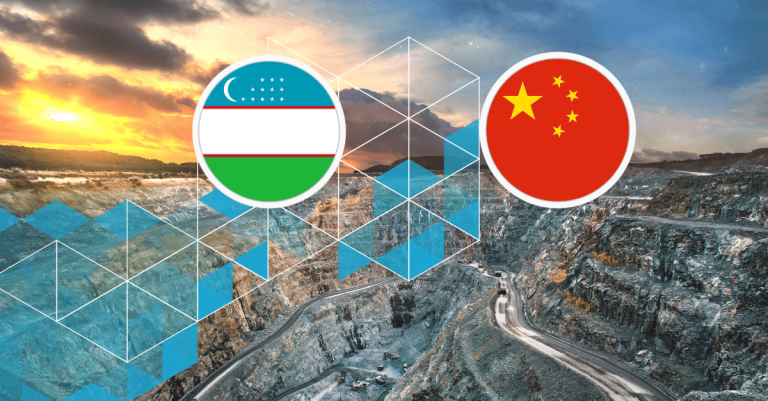
  • China Deepens Grip on Uzbekistan’s Mineral Sector Amid Global Race for Critical Resources

    China Deepens Grip on Uzbekistan’s Mineral Sector Amid Global Race for Critical Resources

    As global powers intensify their pursuit of critical minerals, Central Asia has emerged as a strategic pivot. Among its nations, Uzbekistan stands out—not only for its rich deposits of copper, tungsten, molybdenum, and rare earth elements, but also for its increasingly central role in China’s mineral strategy.

    Already heavily involved in the region’s energy and infrastructure sectors, China has taken a proactive investment stance in Uzbekistan’s mining industry. In 2024, Limaomaoli Metal Company launched construction of the Syurenata mining complex in Parkent, aimed at processing 1 million tons of iron ore concentrate annually. Simultaneously, China Baoli Technologies is investing $200 million in a non-ferrous metal facility in the Ipak Yuli Free Economic Zone, targeting up to 45,000 tons of annual output with $18 million in export potential.

    Copper, a linchpin in global energy transition efforts, is another key focus. China Mining Energy Group is spearheading a $200 million copper mining project in Chust (Namangan region), expected to yield 30,000 tons per year and create 420 local jobs. Additionally, Boi Yi Da is planning a new copper processing plant in the same region, while a $2.7 billion project to tap copper and silver reserves in Bobotog is under negotiation.

    For Uzbekistan, these ventures promise significant job creation, technological transfer, and a move up the value chain—critical steps toward its goal of becoming a producer of value-added mineral products. They also reflect Tashkent’s broader push to localize mineral processing, boost exports, and attract FDI into downstream sectors.

    For Beijing, meanwhile, these deals help secure raw materials essential for its green economy and industrial resilience, while also reducing reliance on vulnerable maritime supply routes. The copper and iron ore flowing from Uzbekistan may soon become vital to China’s supply diversification strategy.

    Yet, the growing Chinese footprint is not without challenges. Concerns around environmental degradation and transparency in resource deals are mounting. Public unease over Chinese firms acquiring mineral rights is increasingly voiced in Uzbek media and civil society. Moreover, critics warn that unless Chinese investments support advanced processing, Uzbekistan risks becoming locked into the role of a mid-tier raw exporter.

    There’s also increasing Western interest. France has inked uranium deals with Tashkent, and the U.S. recently signed a critical minerals investment agreement. China’s accelerated moves may reflect efforts to edge out competitors and reinforce dominance over global mineral supply chains.

    Ultimately, China’s growing influence in Uzbekistan’s mining sector presents both a strategic opportunity and a test. A long-term, mutually beneficial partnership will require more than capital—it will demand transparency, environmental responsibility, and alignment with Uzbekistan’s industrial transformation goals.

  • Kazakhstan Extends Metal Scrap Export Ban to All Transport Types

    Kazakhstan Extends Metal Scrap Export Ban to All Transport Types

    The Republic’s Ministry of Industry and Construction has extended the export restrictions on scrap and waste of ferrous and non-ferrous metals for another six months. While the previous ban only applied to railway transportation, the new directive now covers all forms of transport, according to Kursiv. The ministry’s order prohibits the export of copper, aluminum, and lead scrap, used lead batteries, waste containing lead, cadmium, or mercury, ferrous metal ingots suitable for remelting, and railway track elements.

    This measure aims to secure raw materials for Kazakhstan’s metallurgical plants. The country is currently focusing on establishing advanced processing clusters, with the deep processing of secondary metals being a crucial step towards this goal. Additionally, the metal scrap export ban is expected to boost the domestic steel industry.

    It should be noted that the ban has faced opposition from third-country buyers of ferrous metal scrap. The Russian Association of Electrometallurgical Enterprises has already voiced its protest.