Tag: industrial development

  • Uzbekistan’s AGMK Unveils Nation’s Largest Industrial Project in Copper Mining Sector

    Uzbekistan’s AGMK Unveils Nation’s Largest Industrial Project in Copper Mining Sector

    Uzbekistan’s Almalyk Mining and Metallurgical Complex (AGMK) recently hosted journalists on an exclusive press tour to showcase progress on the largest investment project in the country’s history, signaling a major leap in industrial development.

    The tour began at AGMK’s Engineering School, which trains specialists in geology, mining, metallurgy, and automation using methodologies from world-leading institutions like Germany’s Freiberg University of Technology. “We’re not just building factories—we’re cultivating the talent to run them,” said Behzod Salimov, the school’s director.

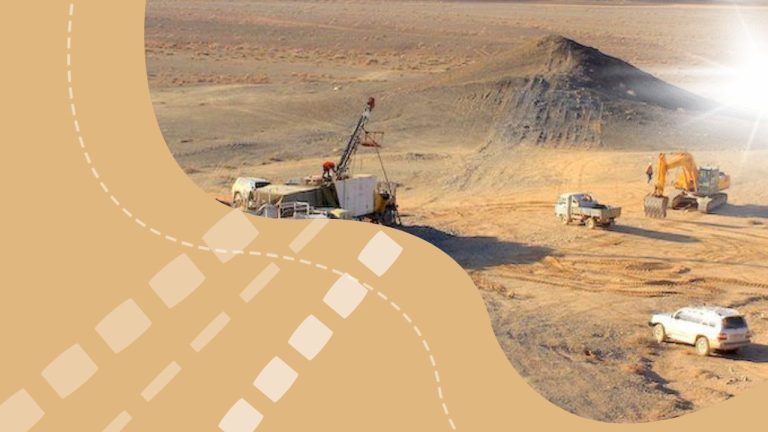
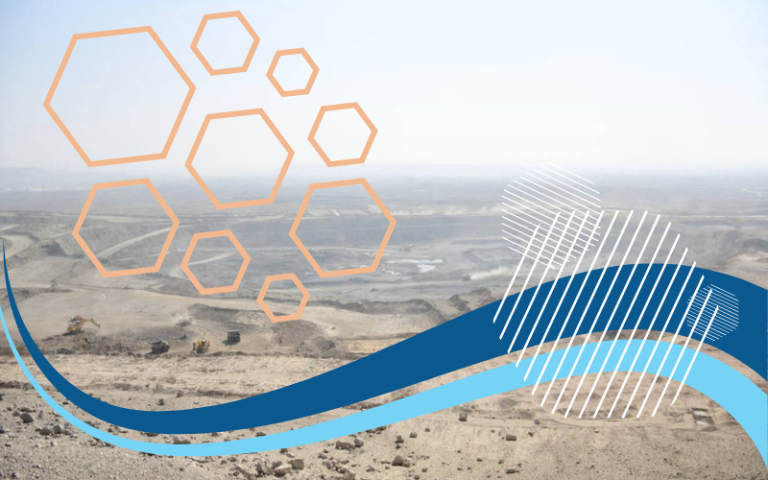
    Reporters then visited the Kalmakyr deposit, one of the world’s largest copper reserves, followed by the Yoshlik I mine, a gold-rich copper deposit spanning 4 km long and 235 meters deep. The site employs 400 heavy machines and has introduced an innovative conveyor system, cutting ore transport costs by 30%.

    A highlight was Copper Processing Plant No. 3, under construction since 2021 on a 200-hectare site. Once operational, it will process 60 million tons of ore annually, producing 894,000 tons of copper concentrate. Plans are also underway for Plant No. 4 and a new metallurgical complex, expected to create thousands of jobs.

    Tashkent Region Governor Zoir Mirzaev emphasized the project’s global significance, noting rising copper demand. AGMK Chairman Abdulla Khursanov added that the $multibillion investment is boosting Uzbekistan’s economic appeal, with several countries expressing interest in partnerships.

    The project is also spurring growth in auxiliary industries, including six new metalworks plants and a lime factory in Jizzakh to supply reagents.

    Sherzodkhon Kudratkhodja, head of Uzbekistan’s National Media Association, remarked: “This proves Uzbekistan can build its industrial future independently.”

  • Uzbekistan Boosts Rare Metal Exploration and Production with $2.6 Billion Investment

    Uzbekistan Boosts Rare Metal Exploration and Production with $2.6 Billion Investment

    Uzbekistan has announced a major push into the exploration and production of rare metals, unveiling 76 new industry projects worth a combined $2.6 billion. The initiative, detailed on the official website of the country’s president, highlights Uzbekistan’s ambition to become a key player in the global race for strategically important resources.

    President Shavkat Mirziyoyev recently reviewed a report from the Ministry of Mining and Geology, which revealed that Uzbekistan has identified deposits of over 30 rare metals, including lithium, tungsten, molybdenum, germanium, and vanadium. Over the next three years, the government plans to significantly increase funding for geological exploration and scientific research to enhance the extraction of these valuable resources.

    A key focus will be on improving the extraction of rare metals from ore deposits and industrial waste, as well as developing high-value-added production. One example is the processing of waste from the Ingichka tungsten mine, which began producing concentrates in mid-2024. Additionally, 18 similar projects aimed at recovering rare metals from industrial byproducts are already in the pipeline.

    To support these efforts, Uzbekistan will establish technoparks in the Samarkand and Tashkent regions, areas rich in tungsten and molybdenum reserves. The country also plans to build new laboratories, training centers, and leverage international expertise to advance enrichment technologies.

  • Kazakhstan to Launch Five New Non-Ferrous Metallurgy Projects

    Kazakhstan to Launch Five New Non-Ferrous Metallurgy Projects

    Kazakhstan is set to commission five new projects in the non-ferrous metallurgy sector this year, with a total investment of 42.5 billion tenge. The initiative is expected to create approximately 1,300 permanent jobs, according to the QazIndustry project monitoring and analysis directorate.

    Among the new ventures are the production of gold dore alloy, cathode copper, and aluminum profiles. Once operating at full capacity, these projects are projected to generate 35.5 billion tenge in annual output, including 4.5 billion tenge worth of exports and 31 billion tenge in import substitution.

    Last year, the sector saw the launch of 10 projects worth 139.4 billion tenge, creating over 1,500 jobs. These included the production of gold dore alloy, refined copper sheets, aluminum rod, refined lead, and copper and aluminum ingots. The total production capacity of the newly launched projects is estimated at 117.2 billion tenge, with 71.7 billion tenge allocated for exports and 45.5 billion tenge for the domestic market.

    Currently, 36 projects worth approximately 2.2 trillion tenge are under development in the non-ferrous metallurgy sector. These projects are expected to generate over 9,800 permanent jobs, with around 7,600 in rural areas and 2,200 in urban centers. Once fully operational, they will contribute an estimated 2.1 trillion tenge in production output, including 1.2 trillion tenge in exports and 900 billion tenge in import substitution.

    The Karaganda region leads in the number of ongoing and planned projects in this sector. Non-ferrous metallurgy remains one of Kazakhstan’s key industrial sectors, driven by the country’s rich reserves of copper, zinc, nickel, lead, aluminum, gold, silver, and other valuable metals.

  • Ak Metal to Launch Iron Ore Mining Project in East Kazakhstan

    Ak Metal to Launch Iron Ore Mining Project in East Kazakhstan

    Ak Metal, a company led by an Almaty-based entrepreneur, is gearing up to commence iron ore mining at the Kuzinskoye deposit in East Kazakhstan. The site, located in Shemonaikha District near the village of Poperechnoye, spans 2.84 hectares and boasts two promising ore formations awaiting further evaluation.

    Initial plans include pilot industrial mining, scheduled to start in 2025. During the first two years, the company expects to extract 110,000 tons of ore annually, scaling down to 44,000 tons in 2027. This will involve 144,000 cubic meters of stripping operations, with the ore transported for processing via rail from Shemonaikha station.

    Ak Metal has been actively investing in geological exploration, with 2023 expenditures reaching 39.8 million tenge, far exceeding the required 7.9 million tenge. The company has shown steady growth, reporting 2023 revenue of 589.1 million tenge, a significant rise from 340.9 million tenge in the previous year, while net profit increased to 101.8 million tenge.

    The start of industrial mining marks a significant milestone for Ak Metal, solidifying its position in the iron ore market and driving further development.

  • Deputy Raises Concerns Over Support for Domestic Producers in Kazakhstan

    Deputy Raises Concerns Over Support for Domestic Producers in Kazakhstan

    During a plenary session of the Mazhilis, Deputy Bolatbek Nazhmitdenuly addressed issues regarding supporting businesses through state procurements and purchases from quasi-governmental sectors and subsoil users from domestic manufacturers, as reported by inbusiness.kz.

    He revealed that the total amount of purchases in Kazakhstan currently stands at around 23-24 trillion tenge. Nazhmitdenuly pointed out discrepancies in government data, stating that while the Ministry of Industry and Infrastructure Development claims the state controls nearly 60% of purchases, other sources suggest it may be as low as 20%. He criticized the validity of the ST-KZ certificate and industrial certificate, questioning the effectiveness of government approaches.

    The deputy also sought clarification from officials on the criteria for inclusion in the registry of domestic producers and how to ensure only conscientious producers are listed.

    In response, Minister of Industry and Infrastructure Development Kanat Sharlapayev acknowledged the challenges in distinguishing between counterfeit producers and genuine Kazakhstani enterprises. He highlighted the need for modernization in the selection process and proposed adopting digital methods, drawing parallels with credit checks conducted by banks.

    Sharlapayev emphasized the importance of leveraging available data, suggesting that criteria such as electricity consumption could indicate manufacturing activity. He advocated for the involvement of industry associations in validating producer status and stressed the responsibility of government agencies in managing the registry.

    Furthermore, Sharlapayev outlined the importance of long-term contracts with producers, linking them to commitments for increased localization, improved employee income levels, and production expansion.

  • Kazakhstan Advances Tungsten Mining Project in Almaty Region

    Kazakhstan Advances Tungsten Mining Project in Almaty Region

    Kanat Sharlapaev, Minister of Industry and Infrastructure Development of Kazakhstan, met with representatives of Jiaxing International Resources Investment LTD to discuss the progress of the tungsten mining project at the Bugytinskoye deposit in the Almaty region.

    TOO “Zhetysu Tungsten” is constructing a mining enterprise to implement the tungsten mining project at the Bugytinskoye deposit. The deposit holds a contract for mineral extraction (Contract No. 4608-TPI dated June 2, 2015, for a term of 25 years).

    Construction, installation, and mining operations are actively underway with operations scheduled to commence by the end of 2024. The deposit and processing plant are expected to create 1000 job opportunities.

    The project aims to mine and process 3.3 million tons of tungsten ore, producing 65% tungsten concentrate. Currently, there’s an economic feasibility study for constructing a deep processing complex to further process the 65% tungsten concentrate into 88.5% ammonium paratungstate and high-purity tungsten carbide.

    Following the meeting, both parties expressed gratitude and underscored the importance of bilateral relationship development.