Tag: industrial development

  • Eurasian Resources Group Commits $1 Billion to Kazakhstan’s Industrial Future

    Eurasian Resources Group Commits $1 Billion to Kazakhstan’s Industrial Future

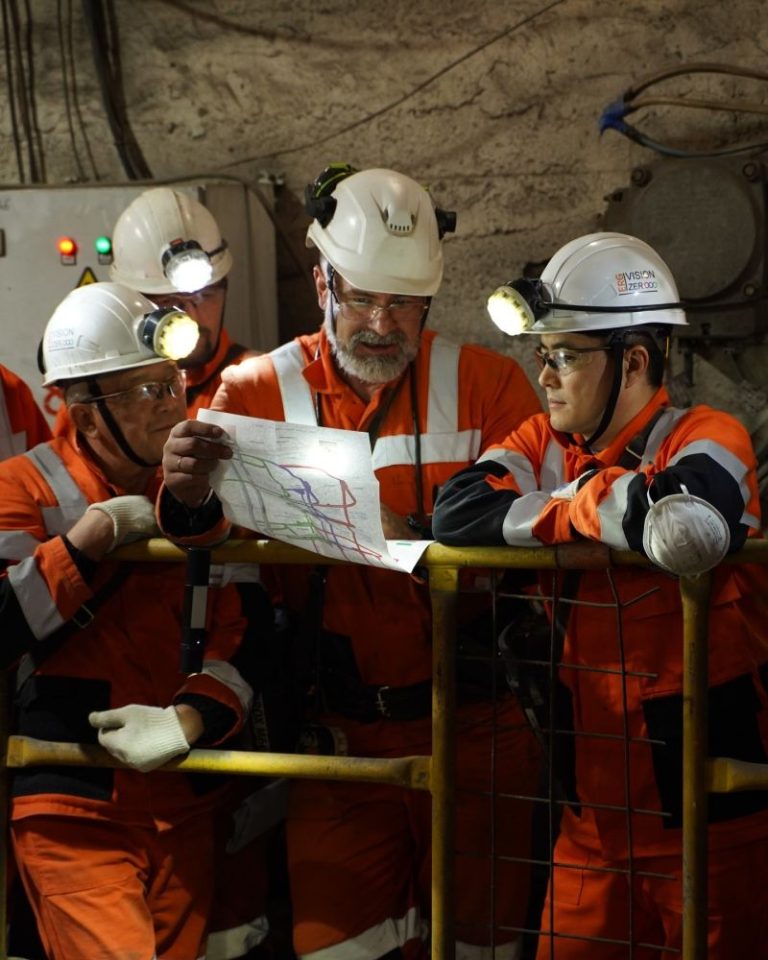
    Eurasian Resources Group (ERG) has announced a significant investment of approximately $1 billion in Kazakhstan, aimed at bolstering the country’s industrial potential and long-term competitiveness. This investment strategy is rooted in the belief that the most impactful investments are those that continue to create value well beyond the initial capital commitment. ERG’s development program is designed not only to expand its business operations but also to enhance regional economies and contribute to the overall economic landscape of Kazakhstan.

    The investment initiative is set to modernise mining operations and production facilities, promote cleaner energy solutions, and accelerate the digital transformation within the industry. By the end of next year, ERG anticipates creating over 1,100 new jobs, while also contributing an estimated $1.3 billion annually to Kazakhstan’s GDP through direct production and associated economic activities. Key projects under this initiative include the Bolashak Mine, ERG Green, Spetskoks, and various renewable energy ventures, all of which reflect a commitment to industrial performance and environmental responsibility.

    Kudrat Shamiyev, CEO of ERG Kazakhstan, emphasised that effective leadership is about making decisions that will positively impact future opportunities, not just immediate financial results. He highlighted the extraordinary industrial potential of Kazakhstan and the necessity for strategic partnerships, continuous innovation, and responsible environmental practices to unlock this potential. The projects currently underway are viewed as foundational steps towards a more robust industrial future for Kazakhstan, reinforcing the notion that investment should focus on building a stronger future for the nation.


  • International Mining Forum Unites 30 Nations in Astana as Kazakhstan Targets Investment and Industrial Upgrade

    International Mining Forum Unites 30 Nations in Astana as Kazakhstan Targets Investment and Industrial Upgrade

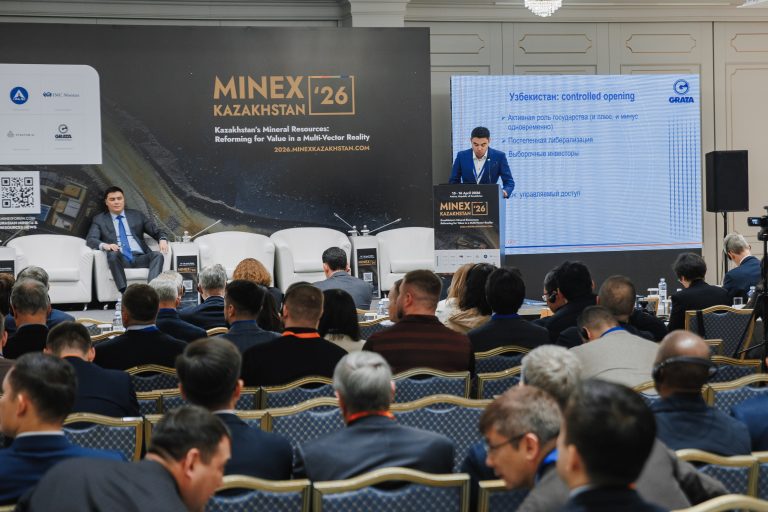
    An international mining forum bringing together representatives from 30 countries has opened in Kazakhstan’s capital Astana, with the Kazakhstani government signalling its ambitions to improve the efficiency of mineral resource development, increase processing capacity and attract greater foreign investment.

    The gathering has placed particular emphasis on the presentation of advanced technologies and the establishment of long-term investment partnerships. Experts attending the forum said that ongoing improvements to the country’s digitalisation agenda and licensing system would strengthen Kazakhstan’s appeal to international investors, marking the beginning of a new phase of industrial growth oriented toward sustainable development.

    Tulegyen Mukanov, adviser to the executive director of the Republican Association of Mining and Metallurgical Enterprises, highlighted the breadth of technology on display. “Look at how many companies are exhibiting at this congress — showcasing their technologies,” he said. “We don’t manufacture mining equipment ourselves. All our machinery comes from abroad — Sweden, Japan, America, China. But I’ve noticed some new companies starting up. In Karaganda, they have begun producing spare parts for heavy mining equipment — a kind of renovation sector is emerging.”

    The forum comes as Kazakhstan continues to position itself as a priority destination for critical minerals investment, backed by recent subsoil use reforms, the launch of a unified licensing portal and a tenfold increase in state geological exploration funding announced earlier this year.

  • Fujian Hengwang to Invest $1.2 Billion in Steel Plant in Kazakhstan

    Fujian Hengwang to Invest $1.2 Billion in Steel Plant in Kazakhstan

    Chinese metallurgical company is set to build a major steel plant in Kazakhstan with an annual production capacity of up to 3 million tonnes. The project, valued at 1.2 billion dollars, is expected to create around 2500 jobs and supply both domestic and export markets.

    The initiative was discussed during a visit by Kazakhstan’s Minister of Trade,  to China’s Fujian province, according to official sources. The project had previously been outlined in February 2025 following talks between Prime Minister  and company chairman Zeng Zhaoqiang.

    Construction of the metallurgical complex is planned in the Zhambyl region, with initial works originally scheduled to begin in April 2025. The first phase, expected to be completed by 2027, will deliver an annual output of 1 million tonnes of steel. Full production capacity of 3 million tonnes per year is targeted by 2029.

    The plant will rely on locally sourced raw materials, including iron ore from deposits in the Ulytau, Karaganda, and Kostanay regions, as well as natural gas and lime.

  • Uzbekistan Launches Major Copper Plant at AGMK to Boost Industrial Growth

    Uzbekistan Launches Major Copper Plant at AGMK to Boost Industrial Growth

    Uzbekistan has launched Copper Processing Plant No. 3 at the Almalyk Mining and Metallurgical Complex (AGMK), marking one of the largest industrial projects in the country’s mining sector.

    The $2.7 billion facility, built on a 196-hectare site as part of the development of the Yoshlik-1 deposit, is designed to significantly strengthen Uzbekistan’s industrial capacity and deepen domestic processing of mineral resources.

    🏗️ A megaproject in every sense
    The plant is capable of processing 60 million tonnes of ore annually and producing about 900000 tonnes of copper concentrate. This makes it not only one of the largest copper processing facilities in Central Asia, but also among the largest globally.

    The scale is almost cinematic:

    • Steel structures used equal roughly 10 Eiffel Towers

    • Reinforced concrete volume comparable to 2.5 Burj Khalifas

    International engineering leaders including Wood (Italy) and Worley (UK) were involved in the project, while technologies from Metso, FLSmidth, Weir Minerals and Siemens have been implemented.

    ⚙️ Smart factory powered by AI
    The plant is built as a fully digitalised operation:

    • Unified AI-based control system

    • 10% reduction in energy consumption

    • 15% lower production costs

    • 10% increase in labour productivity

    Daily copper concentrate output at AGMK will double from 2400 tonnes to 5000 tonnes once the plant reaches full capacity.

    🌍 Resource base for a century
    Uzbekistan’s leadership highlighted the long-term resource strength underpinning the project. The Yoshlik-1 and Kalmakyr deposits contain:

    • 45 million tonnes of copper

    • Over 5000 tonnes of gold

    These reserves are expected to support the industry for at least 100 years. The deposits also include valuable by-products such as molybdenum, selenium, tellurium and rhenium — metals critical for high-tech and emerging industries.

    📈 From raw materials to value chains
    President Shavkat Mirziyoyev emphasised a strategic shift from exporting raw materials to building full value chains.

    Today, Uzbekistan already processes about 100000 tonnes of copper domestically, with plans to reach 240000 tonnes in the near term and continue expanding through new projects.

    “Whoever builds a high value-added chain in copper will create the industry of the future,” the president said.

    🚀 What comes next
    The project is just one piece of a much larger industrial expansion:

    • A new $2.5 billion copper smelter is under construction

    • Copper cathode production will rise from 148500 to 300000 tonnes per year

    • Gold output will increase from 20 to 33 tonnes

    • Silver from 161 to 203 tonnes

    • Molybdenum from 850 to 1700 tonnes

    A fourth processing plant is already in early planning, which could boost these figures by another 50%.

    By 2030, Uzbekistan aims to reach:

    • 500000 tonnes of copper

    • 175 tonnes of gold

    • 500 tonnes of silver

    • 15000 tonnes of uranium

    💼 Economic and social impact
    The new plant alone will create over 6000 high-paying jobs, while the broader $22 billion pipeline of mining projects is expected to generate nearly 40000 jobs nationwide.

    At the same time, environmental measures such as green landscaping and drip irrigation systems are being implemented under the “Yashil Makon” initiative, aiming to balance industrial growth with sustainability.

    🎯 Big picture
    Uzbekistan is clearly shifting gears from a resource exporter to an industrial powerhouse — turning copper from a rock in the ground into a backbone of future industry, from energy grids to AI infrastructure.

  • A Strategic Assessment of Promise vs. Reality in Central Asia’s Mineral Development

    A Strategic Assessment of Promise vs. Reality in Central Asia’s Mineral Development

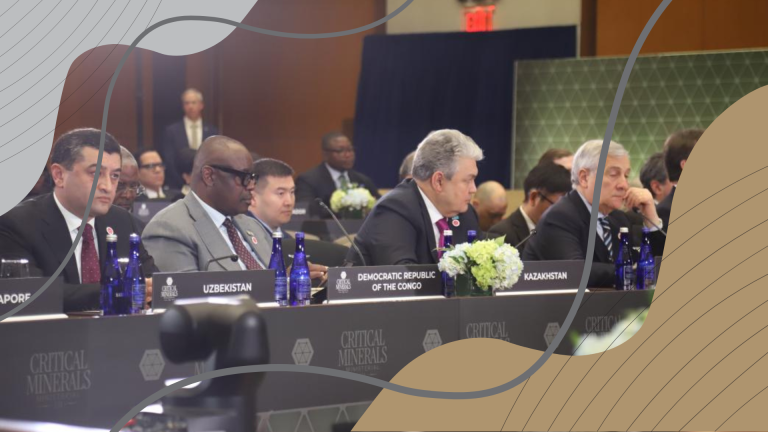
    Central Asia’s role in global critical minerals took a decisive turn at the 4 February 2026 Critical Minerals Ministerial in Washington, where officials from more than 50 countries acknowledged the region as a strategic hub rather than a geopolitical buffer.

    While Washington presented an ambitious framework to advance mineral sovereignty, analysts caution that the region—not the U.S.—must drive implementation to avoid becoming a passive arena for major‑power competition.

    U.S. Strategy: A Vertical Integration “New Order”

    The U.S. vision, centred on the FORGE initiative and the concept of “Pax Silica,” positions minerals and energy as shared strategic assets among trusted partners and offers an alternative to dependency on China.
    Washington differentiates its value proposition in three areas:

    1. Market Stability Through Price Floors
      Proposed tariff‑backed price floors aim to counter predatory market dumping and protect investments in assets such as Kazakhstan’s rare earth reserves.
    2. Vertical Value Integration
      The U.S. framework prioritises domestic processing and refining over raw‑ore exports, enabling Central Asian states to capture more value across the supply chain.
    3. Connectivity Autonomy
      By incorporating the Middle Corridor into initiatives like TRIPP, the West presents routes that bypass Russia and China, reducing geopolitical transit pressures.

    Kazakhstan and Uzbekistan have responded quickly—Kazakhstan has declared critical minerals the “new oil” and joined the Abraham Accords to strengthen supply‑chain integration, while Uzbekistan has pursued strategic MOUs to modernise mining and secure battery‑metal supply chains.

    Reality Check: Gaps Between Intent and Implementation

    Despite strong rhetoric, Western engagement has largely taken the form of frameworks and MoUs—not operational projects.

    Three challenges persist:

    • Operational Disparity – China continues to deliver turnkey, financed projects backed by contractors and long‑term offtake agreements, while Western partners emphasise declarations.
    • U.S. Inward Focus – Washington’s drive for techno‑economic sovereignty favours selective, de‑risked engagements rather than proactive industrial development in the region.
    • Execution Gaps – Uzbekistan’s $2.6bn program covering 76 projects illustrates regional ambition, but real progress requires partners capable of building at scale.

    Strategic Imperative: Central Asian Agency

    Experts argue that relying on future U.S. demand is a strategic mistake.
    To convert high‑level dialogue into economic gains, Central Asia must prioritise:

    1. Midstream Capabilities

    Refining and producing intermediary products offer higher margins and reduce reliance on long‑distance transport of low‑value raw ore.

    2. Direct Private‑Sector Engagement

    Regional firms should proactively present project‑ready opportunities to U.S. companies rather than depending on government‑to‑government frameworks.

    Conclusion

    The U.S. “New Order” provides Central Asia with a potential pathway to diversify away from Beijing and Moscow while improving price stability and long‑term sovereignty.
    But success hinges on regional execution. Astana and Tashkent must convert diplomatic signals into tangible midstream capacity—and do so quickly—to secure their strategic autonomy before the current window closes.

  • President Tokayev Reviews Qarmet’s 2025 Results and Supports Further Development Plans

    President Tokayev Reviews Qarmet’s 2025 Results and Supports Further Development Plans

    Kazakhstan’s President Kassym-Jomart Tokayev has been presented with Qarmet’s preliminary operating results for 2025 and the key priorities of its investment program. The company reported strong positive dynamics, with steel production increasing by 22 percent over two years, coal concentrate output rising by 26 percent, and iron ore concentrate production growing by 32 percent. Over the same period, production costs were reduced by 28 percent, while the number of steel grades produced expanded from 260 to 350.

    Qarmet Chairman Andrey Lavrentyev reported on the implementation of nine major investment projects aimed at forming the country’s “steel framework” and reducing dependence on imported rolled metal products. The company is also expanding the production of new premium steel grades, including specialized products intended for the construction of nuclear power plants.

    The president was briefed on development programs for Qarmet’s coal and mining divisions, with particular emphasis placed on occupational safety and social initiatives. The company is upgrading its own medical and educational facilities, and a new collective labor agreement has been signed with trade unions. The agreement provides enhanced social guarantees for Qarmet’s workforce of 35000 employees.

    Tokayev was also informed about the creation of a large metallurgical cluster around Qarmet, enabling small and medium-sized enterprises to engage in deeper processing of raw materials. This initiative was launched jointly with the National Investment Holding Baiterek. In addition, Qarmet is carrying out systematic cooperation with machine-building plants to increase the use of domestically produced steel in manufacturing.

    Following the meeting, the president gave a positive assessment of the company’s performance and endorsed Qarmet’s proposed development plan. He stressed the importance of continuing comprehensive modernization efforts, addressing social issues, improving the environmental situation, and further expanding machine-building production.

  • Uzbekistan Positions Itself as a Global Tungsten Leader Through Major Expansion of the Technological Metals Complex

    Uzbekistan Positions Itself as a Global Tungsten Leader Through Major Expansion of the Technological Metals Complex

    Uzbekistan is accelerating its ambition to become a major force in the global tungsten industry, with the Uzbekistan Technological Metals Complex (TMK) spearheading a comprehensive value-chain strategy supported by advanced technologies and large-scale mining projects. Tungsten, increasingly regarded as the “energy currency” of the global economy, is essential for sectors including green energy, aerospace, automotive, mechanical engineering, chemicals, and space technologies.

    TMK, established under the initiative of President Shavkat Mirziyoyev, has already become the first plant in Central Asia to join the International Tungsten Association—marking a significant step toward integrating Uzbekistan into advanced industrial supply chains. Today, TMK operates across the full tungsten production chain: upstream, midstream, and downstream.

    Upstream activities include geological exploration and development of key deposits. The flagship Sarikul project in the Samarkand region holds an estimated 30,000 tonnes of tungsten metal and is designed to process up to 1 million tonnes of ore annually. The operation is expected to produce 4,000 tonnes of tungsten concentrate per year—meeting 65% of international quality standards—and sustain up to 20 years of production. Over 400 jobs will be created as part of this project.

    TMK is also boosting tungsten recovery from mining waste at the Ingichka deposit through a partnership with China’s Xinhai, increasing concentrate output to 1,050 tonnes and generating projected revenues of $18.4 million. Additional cooperation with Chinese investor Red Persimmon will expand ore extraction to 900,000 tonnes annually, enabling production of up to 5,040 tonnes of concentrate. A separate joint project with Turkey’s International Gold Madencilik at the Sautbay deposit aims to produce 4,811 tonnes of concentrate.

    Midstream development includes the construction of a new hydrometallurgical facility in the Samarkand region, leveraging engineering expertise from Canada, Australia, Finland, and Turkey. Once completed, the plant will process 5,000 tonnes of concentrate by 2027, scaling to 15,000 tonnes by 2030—bringing the value of processed products to more than $300 million.

    TMK’s downstream operations target high-value finished products that elevate the “Made in Uzbekistan” brand. The company is already producing tungsten briquettes, ingots, carbide drill bits, milling tools, electrodes, and drilling equipment, with production increasingly automated and aligned with ESG and IRMA standards. Finished tungsten products are currently being exported to major industrial markets in Europe and the United States, with expansion into Japan and South Korea underway.

    Upon full implementation of its industrial program, TMK expects tungsten concentrate production in Uzbekistan to rise from 300 tonnes to 14,950 tonnes—an increase of nearly 50-fold. Output of tungsten anhydride will grow from 76 tonnes to 4,860 tonnes, while metallic tungsten production will expand from 58 tonnes to 1,860 tonnes.

    These projects are set to reshape the country’s economic landscape. Investment in the tungsten sector will reach $103.9 million, annual production value will climb from $5.5 million to nearly $280 million, and export volumes will soar from $2.4 million to $181.5 million. More than 5,000 new jobs are expected to be created.

    With these advances, Uzbekistan’s global tungsten reserves share is projected to rise from 2% to 5.1% by 2030, while its share of global tungsten extraction will jump from 0.05% to 14.8%.

    As the world seeks reliable and sustainable sources of critical minerals, Uzbekistan is positioning itself as a transparent, technologically advanced, and trustworthy partner. Through TMK’s fully integrated value-chain model, the country aims to secure a prominent role on the global industrial map and support the future of high-tech and green industries worldwide.

  • Kazakhstan Development Bank Launches $1 Billion Program to Finance Rare and Critical Minerals Projects

    Kazakhstan Development Bank Launches $1 Billion Program to Finance Rare and Critical Minerals Projects

    The Development Bank of Kazakhstan (DBK), a subsidiary of the national holding Baiterek, has announced a new $1 billion financing program to support projects in the extraction and processing of rare, rare earth, and critical materials for the period 2025–2030.

    The initiative is designed to become a key financial instrument for advancing high-tech industries in the country’s mining and metallurgical sector, in line with the strategic course set by Kazakhstan’s President to boost domestic value-added production.

    The program aims to support medium and large enterprises implementing investment projects in sectors deemed strategically important to Kazakhstan’s economy.

    Among its main features are a minimum loan threshold of 5 billion tenge (in any currency — dollars, euros, yuan, etc.), loan terms of up to 20 years, the abolition of financing arrangement and modification fees, and the inclusion of grace periods for borrowers.

    DBK emphasized that the program’s relevance stems from the strategic role of rare and critical materials in diversifying Kazakhstan’s industrial base and integrating the nation into global value and trade chains. It also contributes to the objectives of the Comprehensive Development Plan for the Rare and Rare Earth Metals Industry (2024–2028).

    The launch of this program reflects the Bank’s strategic focus on supporting new growth drivers in the economy,” said Marat Yelibayev, Chairman of the Management Board of the Development Bank of Kazakhstan. “We are creating conditions for Kazakhstan to become a producer of high value-added products. This will help build new technological chains, enhance the competitiveness of domestic industry, and strengthen the country’s position in the global critical materials market.”

    Financing will target projects within the metallurgical industry, including mining and metallurgical complexes with processing capacity. Borrowers must confirm mineral reserves under the JORC international code. Eligible materials include rare earth elements (lanthanides, scandium, yttrium) and critical materials such as lithium, cobalt, tungsten, germanium, gallium, and graphite, all essential for high-tech industries, green energy, and electronics.

    The program is expected to stimulate technological and industrial development, expand DBK’s portfolio of long-term projects in high-tech sectors, and enhance the sustainability of financial flows. For Kazakhstan’s economy, it promises to create new jobs, increase exports of value-added products, promote domestic raw material processing, and consolidate the country’s role as a reliable global supplier of rare and critical materials.

  • Tajikistan Aims to Become a Key Producer of Critical Metals for the Green Transition

    Tajikistan Aims to Become a Key Producer of Critical Metals for the Green Transition

    Tajikistan holds reserves of ten out of twelve metals essential for the global green transition and is actively developing their production, Minister of Industry and New Technologies Sherali Kabir announced on October 14 at the Dushanbe – 2025 International Investment Forum. According to the minister, six of these critical metals are already being produced domestically, with plans to further expand operations and integrate into the new global supply chain of rare earth elements.

    Critical metals, such as those used in solar and wind power systems as well as electric vehicles, are vital to green technologies. Kabir highlighted that during the Soviet era, only three plants in the entire USSR produced rare earth metals—two of them located in Tajikistan and one in Russia. Negotiations are currently underway with several international companies to modernize these facilities. “I am confident that in the near future we will see very good results,” Kabir said.

    Special focus has been placed on elements like antimony and stibnite, which play an important role in the green transition. “Tajikistan ranks second in the world in terms of antimony reserves,” Kabir noted, adding that four antimony plants are currently under development, ranging from feasibility studies to active construction stages.

    The minister also reported that Tajikistan has launched copper production—a key metal for the green economy—and plans to significantly increase output by attracting investment. Gold production is growing at around 20% annually, while the country also possesses large reserves of nickel and lithium. “We will be the first country in the CIS to produce lithium,” Kabir declared.

    Enterprises such as Azot and TALCO Gold are being positioned not only as regional leaders but as integral players in the global critical metals market. State programs are already in place to develop the mining sector, with Kabir expressing confidence that Tajikistan will soon secure a prominent place in the international market for metals vital to the green transition.

    He emphasized that international cooperation remains the main driver of growth for the metallurgical industry and that establishing new supply chains for rare earth and critical metals is essential to stabilizing global markets. The country’s president has made rapid industrialization a national priority—an approach that has already doubled Tajikistan’s industrial output over the past five years.

  • Uzbekistan Plans to Double Copper Production to 500,000 Tonnes by 2030

    Uzbekistan Plans to Double Copper Production to 500,000 Tonnes by 2030

    Uzbekistan aims to double its copper output to 500,000 tonnes annually by 2030, according to a statement from the press service of President Shavkat Mirziyoyev. The country is strengthening its raw material base to support the development of high-tech sectors such as electrical engineering, electronics, and the semiconductor industry.

    Currently, products with high added value make up about 60% of Uzbekistan’s copper exports, reflecting steady progress toward deeper industrial processing. The government reports that the sector’s investment portfolio includes 157 projects worth $2.1 billion, covering new mining, processing, and manufacturing initiatives.

    Plans are also underway to increase domestic copper refining capacity to 300,000 tonnes, with new enterprises and industrial clusters being established to produce finished copper products.

    One of the key projects is the Ahangaran Copper Cluster in Tashkent Region, where facilities will be set up to manufacture semiconductors, microelectronic components, and other high-tech copper-based products in cooperation with the Almalyk Mining and Metallurgical Complex (AMMC).

    The initiative is part of Uzbekistan’s broader industrial policy to expand value-added production, reduce dependence on raw material exports, and position the country as a regional hub for advanced manufacturing in Central Asia.