Tag: Green Transition

  • Lithium Producers Urge EU to Rethink Hazard Classification, Warn of Strategic Setback

    Lithium Producers Urge EU to Rethink Hazard Classification, Warn of Strategic Setback

    A coalition of 13 lithium producers behind key Strategic Projects under the EU’s Critical Raw Materials Act (CRMA) has issued a joint letter to the European Commission, warning that the proposed classification of lithium salts as Category 1A reproductive toxins could undermine Europe’s climate and industrial ambitions.

    The group, which includes developers of some of the continent’s most advanced lithium initiatives, expressed deep concern that the move by the European Chemicals Agency (ECHA) conflicts directly with the bloc’s Green Deal, net-zero goals, and push for strategic autonomy.

    According to the letter, the reclassification would shake investor confidence, delay CRMA-aligned projects, weaken Europe’s position in the global battery value chain, and create contradictory policy signals.

    They call on the Commission to ensure that regulatory decisions remain science-based, proportionate to real risk, and do not threaten Europe’s strategic aims. The producers argue that a supportive regulatory framework is critical to delivering both the green and digital transitions.

  • Europe’s Jadar Dilemma: Lithium Sovereignty or Green Colonialism?

    Europe’s Jadar Dilemma: Lithium Sovereignty or Green Colonialism?

    The European Union’s push toward a carbon-neutral future hinges heavily on securing reliable lithium supplies—now formally classified as a critical raw material under the bloc’s Critical Raw Materials Act. With global lithium demand forecasted to rise 40-fold by 2040, the EU is racing to secure domestic or allied sources to reduce dependency on China, which currently dominates the lithium-ion battery market.

    One project at the heart of this race is Rio Tinto’s Jadar lithium-boron mine in western Serbia, which boasts 118 million tonnes of ore with 1.8% lithium oxide—enough to potentially power one million electric vehicles annually and meet 90% of Europe’s lithium needs. Strategically, it’s a game-changer. But politically and environmentally, it’s a powder keg.

    Located near Loznica, Serbia’s agricultural heartland, the Jadar project faces fierce grassroots resistance. Local communities warn of severe environmental consequences, including water contamination in the Drina River basin and dangerously high boron levels in soil. The backlash has been compounded by allegations of secret tax deals struck between Rio Tinto and the Serbian government before public consultations even began.

    Despite over 60% of Serbians opposing the mine, the European Commission recognized Jadar as a strategic project on 4 June 2025, highlighting its geopolitical importance as a counterweight to growing Chinese and Russian influence in the Balkans. Serbia’s alignment with both nations—China via Belt and Road projects and Russia through cultural ties—adds urgency to Brussels’ resource diplomacy.

    Yet, critics argue that this comes at the cost of democratic accountability. The EU’s continued cooperation with Serbia—despite democratic backsliding under President Aleksandar Vučić—has drawn accusations of supporting a “stabilitocracy”: sacrificing democratic standards for geopolitical stability and mineral access.

    While the EU insists on adherence to environmental safeguards and public consultation protocols, the silence from Brussels on political repression and opaque governance in Serbia has raised eyebrows. Ursula von der Leyen has pledged to “respect and preserve the beautiful nature of Serbia,” yet local residents see the Jadar initiative as a form of “green colonialism”—where rural areas are sacrificed for Western decarbonisation agendas.

    This case lays bare the contradiction at the heart of Europe’s green ambitions: balancing climate goals with ethical governance and local consent. If not resolved with genuine transparency and accountability, the EU risks not only undermining its credibility but also fueling resentment in a region already caught in a tug-of-war between East and West.

  • EU Urged to Create €10 Billion Fund for Critical Raw Materials

    EU Urged to Create €10 Billion Fund for Critical Raw Materials

    The European Union must establish funds exceeding €10 billion ($11.4 billion) to drive investment in the exploration, mining, and recycling of critical raw materials, according to Bernd Schaefer, CEO of EIT RawMaterials, an EU-funded agency for key minerals.

    The EU has set ambitious 2030 targets for 34 critical minerals, including lithium and copper, which are vital for its green transition. These goals aim for 10% of annual demand to be met through domestic mining, 25% through recycling, and 40% through local processing. Furthermore, no single third country should supply more than 65% of any given mineral—a threshold the EU currently surpasses with China for many materials.

    To reach these targets, Schaefer emphasized the necessity of dedicating part of the bloc’s next seven-year budget from 2028 towards mining and recycling initiatives. “It should probably start with at least a billion or 2 billion euros and have the potential to grow considerably,” Schaefer told Reuters.

    Additionally, Schaefer called for the creation of a €10 billion exploration fund to identify minerals within the EU, which, when combined with private investments, could reach around €100 billion. He stressed the importance of evaluating future consumption and supply for each mineral while converting alliances with international partners into tangible volumes amid rising geopolitical tensions.

    “The Americans are very much hands-on in getting things down the road,” Schaefer said, urging Europe to take decisive action.

    Schaefer also pointed out that Europe’s increased defense spending, a factor not considered when setting its raw material targets, would further heighten demand for minerals such as vanadium, titanium, molybdenum, and chromium. He noted that while the required volumes are not massive, the urgency and sensitivity surrounding their sourcing have intensified, surpassing even that for energy and mobility raw materials.

  • EU’s Lithium Gamble in Serbia Faces Political Turmoil and Public Backlash

    EU’s Lithium Gamble in Serbia Faces Political Turmoil and Public Backlash

    The European Union’s ambitious transition to electric vehicles has hit a political and environmental wall in Serbia, as the Jadar lithium mining project—touted as a game-changer for Europe’s battery supply—becomes entangled in controversy, public protests, and fears of corruption, Politico reports.

    The Jadar deposit, considered one of the richest in Europe, could power up to a million electric vehicles annually and potentially meet a quarter of Europe’s lithium demand. Unsurprisingly, the EU had eyed the site as a cornerstone for its Critical Raw Materials Act (CRMA), aimed at reducing reliance on China for essential resources.

    Developed by mining giant Rio Tinto, the project initially appeared to align with Brussels’ green goals. However, it has triggered fierce resistance in Serbia over environmental concerns and deep mistrust in government transparency. Public sentiment has turned sharply against the mine, seeing it as a symbol of elite corruption and foreign exploitation.

    “If the EU backs Jadar, it sends the message that economic interests override its core values,” warned Aleksandar Matković, a Serbian researcher and protest organizer. The opposition movement, gaining traction as part of broader anti-government unrest, intensified after a state-friendly documentary branded activists as “foreign agents.”

    Even EU Commissioner for Industry, Thierry Breton, notably excluded any non-EU projects—including Jadar—from the March 2025 list of CRMA strategic ventures. Though the Commission reiterated its commitment to Serbia as a strategic partner, critics speculate that Jadar’s controversial status may have played a role.

    Tensions escalated further when Serbian President Aleksandar Vučić met with EU leaders, facing sharp criticism for democratic backsliding. While Vučić accused protesters of being Western-funded, EU officials insisted on reforms in media freedom, anti-corruption efforts, and election integrity.

    Despite the official suspension of the project in January 2022 following mass protests, Rio Tinto has remained active in Serbia—maintaining offices, acquiring over 500 properties, and claiming $500 million already invested. Critics see this as a sign the project is merely paused, not canceled.

    Environmental activist Marija Vuković voiced the growing fear in the region of Loznica, near the proposed site: “People don’t trust the government. They believe their land and water will be sacrificed for someone else’s gain.”

    While some locals welcome the promise of jobs, others are wary of irreversible environmental damage and the potential transformation of the region into a “sacrifice zone.”

    EU policymakers now face a dilemma: Can they back a project so vital to Europe’s green future without appearing complicit in environmental degradation and democratic decline?

    The stakes go beyond lithium. Serbia’s geopolitical balancing act—between the EU, Russia, and China—adds layers of complexity. A move by Brussels perceived as aligning with Vučić could backfire, undermining EU credibility in the Balkans.

    “The EU cannot afford to seem like it’s trading values for minerals,” Matković concluded. “That would betray the very essence of the European project.”

  • Europe’s Lithium Mining Debate: Environmental Costs vs. Green Transition

    Europe’s Lithium Mining Debate: Environmental Costs vs. Green Transition

    Europe is believed to hold vast but unexploited lithium reserves in Germany, Czechia, Serbia, Spain, Portugal, and Austria. However, efforts to tap into these resources have faced strong resistance from local communities and environmental groups.

    Since July 2024, Serbians have staged protests against Rio Tinto’s lithium project in the Jadar Valley, a populated rural region in the country’s northwest. In Portugal’s Barroso region, opposition has been ongoing since May 2023, while in Spain’s UNESCO-listed city of Cáceres, resistance to lithium mining has persisted for over six years.

    In a recent episode of Tech Talks, Euronews examined this divisive issue with two experts presenting contrasting views. Lindsey Wuisan, a campaigner at Friends of the Earth Europe, warns that lithium mining carries irreversible environmental and societal consequences. She highlighted concerns about water and energy consumption, chemical pollution, and threats to biodiversity, arguing that mining profits often benefit multinational companies rather than local communities.

    Conversely, Peter Tom Jones, director of the KU Leuven Institute for Sustainable Metals and Minerals, maintains that while mining has negative impacts, these can be mitigated through responsible practices. He advocates for renewable energy in mining operations, dry-stacking waste materials, and local community involvement. Jones also stressed that lithium and other metals are crucial for Europe’s transition to a climate-neutral economy and that relying on imports shifts environmental burdens abroad.

    The debate continues as Europe grapples with the balance between sustainability, local opposition, and the need for critical raw materials.

  • Montenegro and Germany Discuss Green Transition and Sustainable Resource Management

    Montenegro and Germany Discuss Green Transition and Sustainable Resource Management

    Montenegro’s Minister of Mining, Oil, and Gas, Admir Šahmanović, and Germany’s Ambassador, Peter Felten, held a meeting to strengthen bilateral relations and focus on Montenegro’s green transition and resource sustainability. The two officials emphasized the importance of learning from Germany’s experience in environmental policies while addressing the challenges Montenegro faces on this path.

    Discussions revolved around the sustainable exploitation of mineral resources and the valorization of natural assetsin line with green economy principles. Šahmanović highlighted key development projects in the mining, oil, and gas sectors, stressing the urgency of creating strategic documents to guide these industries amid shifting geopolitical dynamics.

    The Minister also underscored the importance of ensuring a stable supply of oil derivatives, which he described as a critical priority for Montenegro. He further noted the country’s significant potential in mineral resources, emphasizing that development must adhere to European environmental standards and prioritize public health.

    Šahmanović identified job creation as a key benefit of advancing economic activities in the region, particularly in Montenegro’s north, which has long struggled with population outflow. He called for policies to retain young people through sustainable economic opportunities.

    The meeting concluded with a shared commitment to deeper cooperation and the exchange of experiences, aiming to create a sustainable and prosperous future for both countries.

  • European Commission Approves €790 Million Aid for Closure of Romanian Coal Mines

    European Commission Approves €790 Million Aid for Closure of Romanian Coal Mines

    The European Commission has approved a Romanian state aid measure worth €790 million (approximately RON 3.9 billion) to address the exceptional costs associated with the closure of four uncompetitive coal mines in the Jiu ValleyLonea, Lupeni, Livezeni, and Vulcan. This decision aligns with the European Union’s state aid rules and supports Romania’s efforts to phase out coal production by 2032, in accordance with the National Recovery and Resilience Planand the Territorial Plan for a Just Transition.

    The beneficiary of this measure is Societatea Complexul Energetic Valea Jiului S.A., the operator of the four mines and the Paroșeni power plant. The allocated funds will cover social costs for workers affected by the mine closures, as well as safety and environmental rehabilitation measures. This includes securing mine shafts, repairing environmental damage, and reclaiming land for future use.

    The aid will be allocated for eligible costs incurred between October 1, 2023, and December 31, 2032. To ensure transparency and compliance, an independent consultant will be appointed to monitor coal extraction, ensuring it is limited to public safety needs, such as preventing spontaneous combustion. Annual reports will be provided to maintain oversight.

    “This measure will help Romania carry out the necessary safety and rehabilitation work to facilitate mine closures while mitigating the social impact of the transition. It ensures that no one is left behind in the green transition,” said European Commission Vice-President Margrethe Vestager.

    The European Commission evaluated the measure under Article 4 of Council Decision 2010/787/EU, determining that the aid strictly covers the exceptional costs arising from the mine closures, with no link to current production. Based on these findings, the Commission deemed the measure compatible with EU internal market rules.

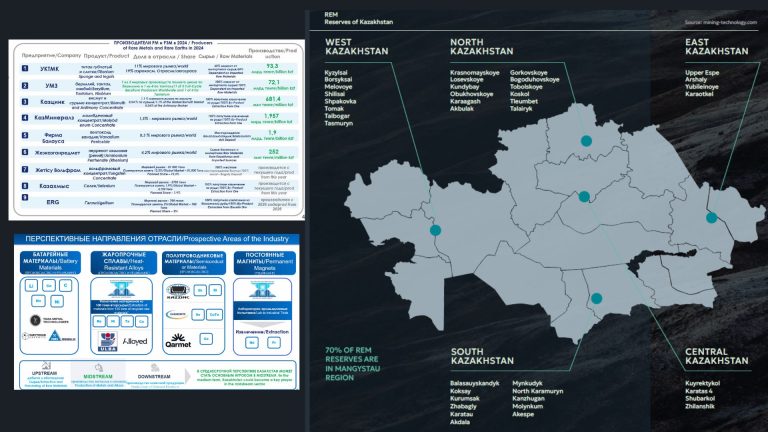
  • Kazakhstan: A Strategic Partner for Europe’s Green Transition and Rare Earth Supply Chain

    Kazakhstan: A Strategic Partner for Europe’s Green Transition and Rare Earth Supply Chain

    Kazakhstan’s Minister for Industry and Construction, Kanat Sharlapaev, has highlighted the country’s pivotal role as a supplier of critical raw materials to Europe, positioning Kazakhstan as a strategic partner for the continent’s green transition. Speaking with Euronews on The Big Question, Sharlapaev discussed the growing trend of “friendshoring”, where Europe shifts production to trusted geopolitical allies to secure a reliable supply of essential resources.

    According to the Brookings Institution, China produced around 60% of the world’s rare earth elements as of 2023. The pandemic revealed the risks of dependency on single-region suppliers, and with the shift toward greener technologies, Europe’s need for critical minerals is only increasing. Kazakhstan, which has long supported Europe’s energy stabilityand is Germany’s fourth-largest energy trading partner, could be the solution for Europe to reduce its reliance on China.

    Kazakhstan’s proximity to Europe also lowers shipping costs and emissions compared to sourcing from more distant suppliers in China or South America. The nation is rich in critical minerals, with 17 out of the 30 elements on the EU’s critical raw materials list available within its borders. It holds 20% of the aerospace-grade titanium market, 10% of manganese sulfate, 30% of global beryllium supply, and 17% of rhenium. Additionally, Kazakhstan ranks as the 11th largest copper producer globally.

    Sharlapaev underscored Kazakhstan’s commitment to expanding local processing capabilities to retain more value within the country, fostering job creation and regional economic growth. He explained that Kazakhstan aims to move beyond raw exports by enhancing its value chain. With the mining sector contributing between 12% and 15% of Kazakhstan’s GDP, this strategic focus is expected to further bolster the economy.

    Kazakhstan’s mining workforce is composed of 99% local talent, trained through its own educational institutions, setting it apart from the global trend of expatriate staffing in mining industries. “This strong human capital base enables companies to start operations more efficiently in Kazakhstan,” Sharlapaev noted, reinforcing the country’s appeal as a reliable partner in Europe’s pursuit of green energy goals.

  • Europe’s Lithium Dilemma: Balancing Green Goals with Environmental Impact

    Europe’s Lithium Dilemma: Balancing Green Goals with Environmental Impact

    As the European Union ramps up efforts to achieve net-zero emissions, lithium has emerged as a critical mineral in the production of electric vehicle batteries. With significant mining projects underway in countries like Serbia, Portugal, Spain, and France, Europe is looking to secure its supply chain for this vital resource. However, the push for increased lithium production is sparking debate, particularly regarding the environmental toll.

    While lithium is essential for the EU’s green transition, experts are increasingly voicing concerns over the ecological impacts of mining. These include potential water pollution, biodiversity loss, and the increased carbon emissions that could accompany intensified mining operations. The question now being asked is: can Europe truly meet its ambitious climate goals without causing significant harm to its environment?

    In this episode, host Giada Santana delves into these complexities with Energy and Environment reporter Nathan Canas. They explore the broader implications of Europe’s lithium boom, the environmental challenges it poses, and whether sustainable mining practices can be scaled to meet the EU’s ambitious climate targets.

    Join us for a nuanced discussion on Europe’s path toward sustainability and the difficult choices it faces as it navigates the green transition.

  • EBRD Makes First Direct Investment in Central Asia’s Graphite Sector

    EBRD Makes First Direct Investment in Central Asia’s Graphite Sector

    The European Bank for Reconstruction and Development (EBRD) has made its first direct equity investment in the graphite and critical raw materials sector in Central Asia by acquiring a stake in Sarytogan Graphite Limited. This Australian Securities Exchange-listed company is engaged in the exploration of the Sarytogan graphite depositlocated in the Karaganda region of central Kazakhstan.

    The EBRD’s investment of AUD 5 million (€3 million), representing a 17.36 per cent shareholding in Sarytogan Graphite, will fund the company’s development programme. This includes the preparation of a feasibility study and meeting its working capital needs. Through this investment, the EBRD continues its support for Kazakhstan’s mining sector and its junior mining companies.

    Graphite, classified as a critical raw material (CRM) by the EU, has a wide range of applications, including in the production of electric vehicle batteries, the electric power industry, and metallurgy. The Sarytogan graphite depositis one of the largest known graphite deposits globally, with the potential to become a major supplier of natural graphitein the region and beyond.

    This project aligns with the EBRD’s new mining sector strategy, which emphasizes the importance of the mining industry in fostering greener economies. The strategy supports the exploration, development, production, and processing of metals and minerals essential for the green and digital transition and new technologies.

    Additionally, the project is consistent with the EU-Kazakhstan strategic partnership on raw materials, batteries, and renewable hydrogen. The EBRD’s investment is a continuation of its policy work with Kazakhstan authorities, which has already led to the adoption of the new Subsoil Use Law.

    To date, the EBRD has invested €10.2 billion in 324 projects in Kazakhstan, primarily supporting private entrepreneurship.