Tag: gold

  • Uzbekistan buys 9 tons of gold in December 2023

    Uzbekistan buys 9 tons of gold in December 2023

    The Central Bank of Uzbekistan has emerged as the world’s second-largest gold buyer, the World Gold Council has reported. In December 2023 alone, the region’s second-largest economy purchased 9 tons of the precious metal. This is a significant increase from the 6.5 tons it had acquired in 3Q23.

    Global Central Bank Gold Holdings

    Global central bank gold holdings saw an increase of 28 tons in December. Turkey took the lead as the largest buyer, augmenting its reserves by 28 tons in a single month. Following Uzbekistan, China also made substantial purchases, securing a place in the top three with a purchase of 9 tons.

    Kazakhstan and Kyrgyzstan’s Gold Sales

    Contrary to the buying trend, Kazakhstan emerged as the main seller of gold in December. The country sold five times more precious metal compared to the previous month – 10 tons in December, a significant increase from the 2 tons sold in November. Additionally, neighbouring Kyrgyzstan also sold 2 tons of gold in December.

    Implications and Future Trends

    The recent surge in gold purchases by central banks, particularly in Uzbekistan, Turkey, and China, underscores the growing importance of gold as a strategic reserve. This trend is expected to continue, given the ongoing economic uncertainties and the role of gold as a safe-haven asset. However, the selling trend observed in Kazakhstan and Kyrgyzstan indicates a different strategic approach towards gold reserves in these countries.

    Uzbekistan has one of the largest gold mines in the world, Muruntau. Located in the mountains of Murintau in the south-west of the Kyzylkum desert, on the territory of the Tamdyn district of the Navoi region, the mine has estimated reserves of 150mn ounces of gold in reserves and resources. President Mirziyoyev of Uzbekistan announced on February 1  that gold production in the country grew by 23% over the last 7 years.

  • Kazzinc began to produce more gold

    Kazzinc began to produce more gold

    The Kazzinc company is actively increasing its gold mining and production. At the end of 2023, the Kazakh enterprise produced about 35 tons (1.124 million ounces) of the precious metal. This information is reported by nbusiness.kz , citing data from the company’s key shareholder, trader Glencore.

    In 2023, Kazzinc produced 18.6 tons (598 thousand ounces) of gold from raw materials mined at its deposits, which is 1.6 tons (52 thousand ounces) more than in 2022. This is due to the fact that the year before last, to fulfill the plan, they purchased raw materials from other companies, and processed a significant part of their volumes already in 2023. If we take into account foreign raw materials, production growth was 23% – almost 35 tons of precious metal versus 28.4 tons in 2022. 

    This rapid pace of work is partly due to the depletion of what was once the country’s largest deposit. Let us remind you : the main reserves of Vasilkovsky have already been used up, so by 2026 production will be curtailed. Until then, ore will be mined primarily in open-pit mines. Following the closure of the mine, Kazzinc is likely to significantly reduce gold production. 

  • Polymetal clarified the timing of the launch of underground mining at the Bakyrchik gold deposit

    Polymetal clarified the timing of the launch of underground mining at the Bakyrchik gold deposit

    It will begin in 2035, and preparations for it five years earlier.

    Polymetal will switch to underground mining at the Bakyrchik gold deposit in the Abay region in 2035. The head of the company, Vitaly Nesis, announced this during an online conference on production results for 2023 and its fourth quarter. Open pit mining at Bakyrchik has been carried out by Polymetal under the auspices of the Kyzyl project since 2018.

    “We planned to actually start underground ore mining at Bakyrchik in 2035. But the project itself will begin in 2030 in terms of building the surface infrastructure for the underground mine and the development workings that will be required to access the ore. I think it will last more than four years. Thus, despite the fact that from the point of view of total capital expenditures, the expenses will be very significant – presumably the current estimate is $200-250 million, they will not be critical from the point of view of the amount of total capital investments,” explained the head of Polymetal, commenting on the issue in business. kz.

    Let us remind you that earlier the media reported that Polymetal intends to begin the underground mining stage at Bakyrchik in 2030, in addition, other dates were announced – 2031.

    During his speech at the online conference, Vitaly Nesis also said that in addition to searching for objects for subsoil use in Kazakhstan, where the company may be interested in deposits of base metals – copper, zinc, lead, tin, Polymetal is now engaged in a country analysis of possible projects in Tajikistan. A similar assessment has already been carried out for Uzbekistan and Kyrgyzstan, however, nothing suitable has been found there yet.

    As is known, Chinese companies dominate the mining sector in Tajikistan. More than ten years ago, Kazzinc tried to enter there through a tender for the Bolshoi Konimansur silver deposit. This spring, Polymetal management plans to travel to the mountainous republic again to visit subsoil use facilities; perhaps, already in the third quarter it will become known about any projects in this country.

    As for Russian assets, the gold mining company plans to part with them by the end of the first quarter, as was promised to the Kazakh authorities; now there is a potential buyer for this within the Russian Federation. In Russia, the company continues to have difficulties with the sale of finished product reserves; a significant tightening of control over the export of precious metals has led to the accumulation of concentrates from Kyzyl, Albazino, Nezhdaninsky, Vorontsovsky and Maysky in seaports, Polymetal indicated in a release for the past quarter.

    “Our Russian subsidiary continues to make efforts to convert inventory into sales in Russia, which also affects sales from Kazakhstan, since a significant portion of the concentrate from Kyzyl is sold as a mixture with pure Russian concentrate. As a result, we are seeing an accumulation of concentrates from Kyzyl, Albazino, Nezhdaninsky, Vorontsovsky and Maysky in all directions in seaports. We continue to hope that this issue will be resolved in the first half of this year, obviously with a particular focus on Kyzyl. We inadvertently expect that the concentrate from Kyzyl this year will be much purer and will not require as much mixing as in 2023,” said Vitaly Nesis during a conference call.

    Let us remind you that high-carbon concentrate from Kyzyl is exported to China. In October, inbusiness.kz wrote that Polymetal faced logistical challenges when delivering gold-containing raw materials from Kyzyl to the Far Eastern harbors.

    It should be noted that in 2023, production at Kyzyl decreased to 316 thousand ounces of gold, 4% less than the 2022 production figure of 330 thousand ounces. The company explains this by a decrease in the content of precious metal in the ore of the deposit. When switching to underground mining, it can increase by 20-25%, Nesis believes.

    The decline in production at the Varvarinsky hub in the Kostanay region was even greater – by 20% from 211 thousand ounces in 2022 to 169 thousand ounces in 2023, which “is due to the lower content of Komarovsky ore in the cyanidation area and a decrease in the share of high-quality third-party ore in raw materials at the flotation section,” as specified in the Polymetal release. In total, the company produced 486 thousand ounces (approximately 15.1 tons) in Kazakhstan last year, which can hardly be called achieving the previously planned figure of half a million ounces. By the way, in the context of the unclear prospect of the withdrawal of capital expected from the upcoming sale of Russian mines and the planned capital expenditures for the Irtysh MMC, Polymetal was not able to completely free itself from the debt load of its Kazakh assets – at the end of 2023 they reached $171 million.

    Meanwhile, the cost of gold production in Kazakhstan began to be strongly influenced by tariffs for electricity and freight transportation by rail, growing from year to year.

    “The Company expects cash costs (TCC) of US$ 900 – 1,000 and all-in cash costs (AISC) of US$ 1,250 – 1,350 per gold equivalent ounce. The increase compared to the previous year is mainly due to a sharp increase in tariffs for electricity and rail transportation in Kazakhstan,” the final release states.

    Commenting on the publication’s questions about how the growing tariffs of KTZ and the electric power industry will affect the cost of production in Kazakhstan in the next five years, Vitaly Nesis noted that the company is not particularly trying to analyze tariffs on the railway due to uncertainty, but in energy supply it plans ensure your own generation.

    “From an electricity perspective, we believe tariffs will rise in real terms by at least 20% per annum over the next five years. Therefore, we continue to invest in our renewable energy facility: solar energy plus gas (gas piston station – approx.) at Varvarinsky, and then we have plans to do the same at Kyzyl. The only way to avoid significant increases in electricity prices in Kazakhstan is to switch from expensive coal power to renewable energy sources, which are much cheaper and more environmentally friendly, and this is our strategy in this regard,” Nesis noted.

    PS This material was adapted on February 2, 2024 at 18.30 after receiving updated information that the subsoil use contract for the Bakyrchik gold deposit was extended until December 31, 2030.

  • Polymetal enterprises in the Republic of Kazakhstan produced 486 thousand ounces of gold equivalent

    Polymetal enterprises in the Republic of Kazakhstan produced 486 thousand ounces of gold equivalent

    In 2023, Polymetal’s assets in the Republic of Kazakhstan – Kyzyl and Varvarinskoye – brought in 486 thousand ounces in gold equivalent. The production of precious metals decreased by 10% compared to the year before, follows from the report of the gold mining company.

    Polymetal’s total production was 1.7 million ounces. The company achieved almost the same result in 2022.

    At the Bakyrchik deposit (Kyzyl project) in 2023, gold ore production increased by 9% – to 2.43 thousand tons. However, due to the fact that the subsoil user is now extracting ores with a lower precious metal content, gold production has decreased decline In total, the asset produced 316 thousand ounces (−4% for the year).

    At the deposits of the Varvarinsky hub – Varvarinsky and Komarovsky – production fell from 3.86 thousand to 2.83 thousand tons. Ore processing remained almost at the level of last year. The total volume of precious metal issued decreased, according to plan, to 169 thousand ounces (−20% year-on-year).

    The Amur MMC increased its capacity to 66 thousand tons. In 2022, the enterprise processed 37% less ore.

    The gold miner’s revenue exceeded $3 billion. In annual terms, the figure increased by 8%, but only due to Polymetal’s assets in the Russian Federation. The Kyzyl and Varvarinskoye projects, in turn, brought the manufacturer $893 million – 4% less when compared to the year before.

    In 2024, Polymetal will make a final decision on the development of the Irtysh MMC. A site has already been allocated for the plant in the SEZ near Pavlodar. The company expects that this year the production of precious metals at Kazakh assets will remain at the 2023 level.

  • Kyrgyzstan intends to start mining at one of the largest gold deposits

    Kyrgyzstan intends to start mining at one of the largest gold deposits

    As part of the visit of the Chairman of the Cabinet of Ministers Akylbek Japarov and following the results of participation in the MINEX geological forum, two memorandums were signed. Deputy Minister of Natural Resources, Ecology and Technical Supervision Emil Osmonbetov told reporters about this today, December 6.

    “We signed the first memorandum with the owner of the company Chaarat Gold Holdings Limited – on further investment cooperation. This decision will bring money to our country and give a stable signal to all international investors that we have a favorable business environment and a good investment climate,” – he said.

    Osmonbetov noted that environmental issues were also discussed with Chaarat Gold Holdings Limited.

    “They will develop in the south of Kyrgyzstan, at the Chaarat gold deposit. It is one of the largest that we have put on our balance sheet.

    Roughly speaking, there are more than 80 tons of gold. This is a large deposit, and they are preparing to develop it in the future,” he added.

    It should be noted that Chaarat Gold Holdings Limited is the holder of the rights to develop the Chaarat gold deposit in Kyrgyzstan

    In addition, Emil Osmonbetov said that a memorandum was signed on holding the MINEX geological forum in Kyrgyzstan in 2024.

    “This is a platform for all mining companies where they can exchange opinions, meet and establish contacts. This is a big step – this has never happened in our country. It will probably take place in the summer, because there are certain rules for holding the event,” he added.

    Osmonbetov noted that the event is planned to be held at the highest level.

  • HSBC takes stab at using blockchain to modernize London’s antiquated gold market

    HSBC takes stab at using blockchain to modernize London’s antiquated gold market

    One of the world’s top bullion banks is bringing blockchain to the antiquated London gold market.

    HSBC Holdings Plc has launched a platform that uses distributed ledger technology to tokenize ownership of physical gold held in its London vault, Mark Williamson, global head of FX and commodities partnerships and propositions, said in an interview. The new system creates digital tokens that represent gold bars, which can then be traded through the bank’s single-dealer platform.

    HSBC isn’t the first to attempt using blockchain to simplify gold investing. Crypto startup Paxos in 2016 teamed up with Euroclear to build a blockchain-based settlement service for trades on the London bullion market. But the firms dissolved the partnership the following year. Paxos still offers a digital token backed by phyisical gold, called Pax Gold, which has a total market value of $479 million, according to CoinGecko.

    What sets HSBC apart is its clout in the bullion market. It is one of the world’s largest custodians of precious metals and one of four clearers on the London gold market, where over $30 billion of the metal changes hands every day.

    Around 698,000 gold bars are stored in vaults in the Greater London area, valued at around $525 billion, according to the London Bullion Market Association. Despite its vast size, London’s gold market still relies heavily on manual record keeping and trades entirely over-the-counter.

    Using blockchain technology makes the process “quicker and less cumbersome” as clients can more easily track the gold they own through the platform, down to the serial number of each bar, Williamson said. HSBC plans to eventually expand its system to include other precious metals, he added.

    One token on HSBC’s new system is equivalent to 0.001 troy ounce, compared with 400 troy ounces for a London gold bar, the bank said in a statement. The system could in the future be used to allow direct investment in physical gold by retail investors, if local regulations where they are based permit, it said. The initial focus will be on institutional investors, Williamson said.

    HSBC’s gold system is part of a wider drive by the bank to use blockchain technology, which includes an existing platform for issuing and storing assets like digital bonds called HSBC Orion.

    Over the past year, other several large financial institutions including JPMorgan Chase & Co., Euroclear and Goldman Sachs Group Inc. have commercialized blockchain-based applications, marking an acceleration of sorts for deployment of distributed ledgers in mainstream finance. It remains to be seen whether these new platforms and applications will be adopted at scale by market participants, as well as whether they deliver the benefits proponents have long touted.

  • In the span of two years, Uzbekistanis have acquired more than 250 kilograms of gold bars

    In the span of two years, Uzbekistanis have acquired more than 250 kilograms of gold bars

    As per the Central Bank’s report, between 2021 and 2023, a total of 3,550 commemorative gold coins, weighing 72 kilograms in total, were issued for sale. These coins come in weights of 15, 20, and 31.1 grams, and they commemorate various themes. Additionally, 3,900 silver coins, with a total weight of 121 kilograms and a weight of 31.1 grams each, were also made available for purchase.

    The population has shown keen interest in acquiring these commemorative coins for numismatics, collecting, investment, and savings purposes. In fact, 83% of the gold coins, totaling 2,951 pieces, and 99% of the silver coins, totaling 3,864 pieces, were purchased by the public.

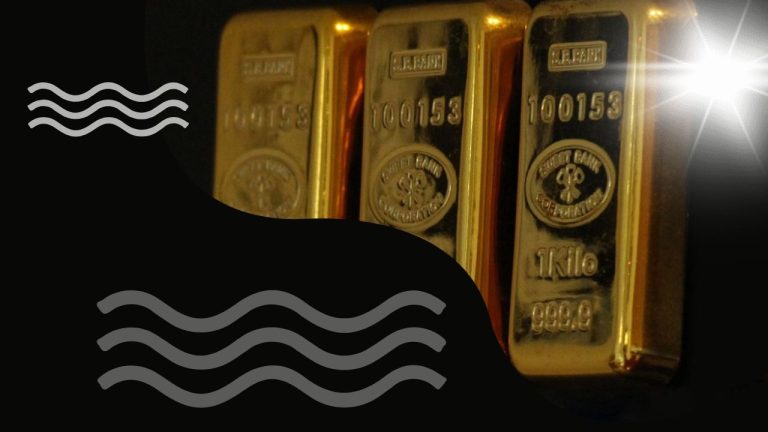
    Furthermore, during this period, a significant number of standard gold bars, amounting to 13,130 bars with a total weight of 255 kilograms, were sold to the population through trading points. These bars were primarily sought after by individuals looking to invest in and preserve their wealth.

    As of September 1, the population held the following quantities of each type of bar:

    • 5 grams: 3,793 bars, totaling 19 kilograms
    • 10 grams: 3,854 bars, totaling 39 kilograms
    • 20 grams: 2,545 bars, totaling 51 kilograms
    • 50 grams: 2,938 bars, totaling 147 kilograms

    In terms of the volume of sales for standard gold bars, trading points located in Tashkent have emerged as the leaders among regions. The capital city alone accounted for 9,894 bars, representing 75% of the total bars circulated.

    At present, standard gold bars are available for purchase and resale through 151 trading points across the country. It is worth noting that the Central Bank commenced the sale of commemorative gold and silver coins in 2018, marking the beginning of this successful endeavor.

  • Euro Sun Mining sells NSR royalty on its Rovina Valley project in Romania

    Euro Sun Mining sells NSR royalty on its Rovina Valley project in Romania

    Euro Sun Mining Inc (TSX:ESM, OTC:CPNFF) announced that it has entered into a net smelter return (NSR) royalty agreement with certain purchasers (holder) for its Rovina Valley project in Romania.

    The resource exploration and development company said the holder has acquired a 1.0% NSR royalty for C$4.0 million, with C$2.0 million paid as of the date of the agreement and the remainder to be paid within nine months.

    Euro Sun noted it has the right, on behalf of the holder, to sell the royalty to a third-party purchaser subject to minimum purchase prices by such third-party.

    It added that should the company exercise the royalty sale right, it agrees to grant to the holder a 0.5% NSR royalty on all copper produced at the property.

    As well, Euro Sun stated that in connection with the sale of the royalty, the company granted 32 million common share warrants to the holder, which shall vest only upon the company’s exercise of the royalty sale right.

    Each warrant will entitle the holder to acquire one additional company common share at an exercise price of C$0.125 per share until August 25, 2028, representing a significant premium to the current market price of Euro Sun Mining’s common shares, according to the company.

    Euro Sun Mining is a Toronto Stock Exchange listed mining company focused on the exploration and development of its 100%-owned Rovina Valley gold and copper project located in west-central Romania, which hosts the second-largest gold deposit in Europe.

    Contact Sean at sean@proactiveinvestors.com

  • Erdene to pour first gold at Mongolia mine in 2025

    Erdene to pour first gold at Mongolia mine in 2025

    Erdene Resource Development (TSX: ERD)(MSE: ERDN) said on Tuesday it expects to pour first gold at its Bayan Khundii project in southwestern Mongolia in late 2025, when it will become one the country’s primary producers of the precious metal

    Announcing results of an updated independent feasibility study for Bayan Khundi, chief executive officer Peter Akerley said the mine will be one of the world’s highest grade open-pit gold operations.

    Highlights of the study include a base case after-tax Net Present Value (NPV) of US$170 million, using a 5% discount rate, and 35.3% internal rate of return (IRR), increasing to US$196 million and 38.95% IRR, respectively, at the current gold price of US$1,900 per ounce.

    Production is expected to average 74,200 ounces of gold a year at an all-in sustaining cost of $869 per ounce over its 6.5-year mine life.

    Compared with the 2020 feasibility study, total recovered ounces increased 25% to 476,000 ounces thanks mainly to the incorporation of additional resources from Bayan Khundii and the Dark Horse Mane deposit.

    “Through our strategic alliance with MMC, Mongolia’s largest independent miner, we are moving rapidly towards production,” Akerley said. “In the meantime, we continue to explore, discover and develop the other mineral deposits in our Khundii minerals district.”

    While coal has been one of Mongolia’s main mining exports, the country has been investing in sustainable development, with initiatives in green agriculture and renewable energy.

    The country is hots to Rio Tinto’s (ASX, LON: RIO) Oyu Tolgoi, which will become the world’s fourth-biggest source of copper at its peak, in 2030.

  • Chaarat discussing timeline for investment deal with Xiwang

    Chaarat discussing timeline for investment deal with Xiwang

    Chaarat Gold Holdings Ltd – Gold mining company with an operating mine in Armenia, and assets in the Kyrgyz Republic – Says it is in the process of negotiating an extension to the maturity date of its USD31.7 million conversion loan notes.

    Adds it is in discussions with Xiwang International Co Ltd about the completion of its potential USD250 million investment deal, which will support the development of Chaarat’s organic pipeline and facilitate external growth through value-added acquisitions. The investment will be in the form of a new issue of shares in Chaarat at a price of GBP0.20 per share, resulting in Xiwang holding 60% of the shares in the company.

    Current stock price: 7.67 pence, down 12% on Monday

    12-month change: down 37%

    By Sabrina Penty, Alliance News reporter

    Comments and questions to newsroom@alliancenews.com

    Copyright 2023 Alliance News Ltd. All Rights Reserved.