Tag: gold

  • Kazakhstan’s jewellery industry posts strong growth backed by state support

    Kazakhstan’s jewellery industry posts strong growth backed by state support

    Kazakhstan’s jewellery industry is expanding rapidly, supported by a package of state measures aimed at strengthening domestic production and reducing costs for manufacturers.

    According to official data, jewellery production in the country increased by 41.3% year on year in the first ten months of 2025, reaching $4.1 million. Imports rose by 39.6% to $174.7 million, while exports jumped 7.3 times to $54.5 million. Domestic consumption also grew, up 3.2% to $124.3 million.

    Growth in the sector is closely linked to long-standing government support mechanisms. Since 2016, jewellery manufacturers have been entitled to annual quotas allowing them to purchase up to 300 kg of gold. Refined gold is sold primarily to the National Bank of Kazakhstan, which acquired about 74 tonnes in 2025. The same mechanism is applied through sales of granulated refined gold by Tau-Ken Altyn.

    Additional support was introduced in January 2023 with the abolition of VAT on the purchase of quota gold by jewellery producers operating in Kazakhstan. In 2025, manufacturers purchased 38 kg of gold under this exemption, compared with 34.3 kg a year earlier.

    The sector has also benefited from the inclusion of jewellery manufacturing in the list of priority activities within the Astana Special Economic Zone, as well as the removal of mandatory assay hallmarking for domestically produced silver jewellery.

    In total, Kazakhstan has 4,542 registered participants in the jewellery trade, including 445 manufacturers. The industry operates under the national law regulating precious metals and gemstones.

  • Kazakhstan Announces Major New Discoveries of Gold, Rare Earths and Strategic Metals as Geological Survey Intensifies

    Kazakhstan Announces Major New Discoveries of Gold, Rare Earths and Strategic Metals as Geological Survey Intensifies

    Kazakhstan is accelerating its nationwide geological exploration programme, aiming to expand the area of mapped and studied subsoil from 2.1 million sq km to 2.2 million sq km by 2026. According to the Ministry of Industry and Construction, the push is already yielding significant results: exploration work completed in 2024 across 11 sites has led to the identification of promising new deposits of precious, rare and strategic metals.

    Some of the most important discoveries span four key regions. In Abai Region, geologists have outlined forecast resources of 3,200 tonnes of beryllium, 1,100 tonnes of yttrium, and 200 tonnes of niobium. In East Kazakhstan, newly identified deposits are estimated to contain 20,600 tonnes of beryllium and 600 tonnes of tungsten.

    The Karaganda Region delivered the largest rare-earth findings, with early estimates indicating 935,400 tonnes of lanthanoids. Specialists also believe the region may host 98,700 tonnes of copper, 59,800 tonnes of yttrium, 33,480 tonnes of gallium, and 7,000 tonnes of molybdenum.

    Meanwhile, Kostanay Region emerged as the country’s gold leader, with forecast resources reaching 17,500 tonnes. Prospective copper reserves there are estimated at 13,480 tonnes.

    A separate initiative — the “Predictive Assessment of Collision-Zone Granitoids in Eastern Kazakhstan” — identified three target zones with substantial potential for niobium, zirconium, and rare-earth elements. Preliminary estimates suggest more than 500,000 tonnes of niobium, 2 million tonnes of zirconium, 947,000 tonnes of rare earths, as well as 79,800 tonnes of molybdenum and 399,100 tonnes of tungsten.

    As a result of 2024 exploration activities, five new deposits have been officially added to the national register: Kok-Zhon, Altyn-Shoko, Samombet, Studenchesky and Takyr-Kaldzhir. Newly booked reserves include 98 tonnes of gold, 36,000 tonnes of copper, 11 million tonnes of manganese, and more than 1.3 million tonnes of phosphorites.

    The discoveries underscore Kazakhstan’s growing role as a major source of critical minerals and precious metals, supporting both domestic industrialisation goals and international supply-chain diversification strategies.

  • Kyrgyzstan Unveils Critical Minerals Strategy at MINEX Eurasia Conference in London

    Kyrgyzstan Unveils Critical Minerals Strategy at MINEX Eurasia Conference in London

    London, 1 December 2025 – The MINEX Eurasia conference in London hosted a keynote address by H.E. Meder Mashiev, Minister of Natural Resources, Ecology, and Technical Supervision of Kyrgyzstan, outlining the country’s strategic vision for its critical minerals sector.

    Kyrgyzstan’s Strategic Minerals Vision

    The Minister outlined Kyrgyzstan’s methodical approach to prioritising and developing its critical minerals sector, identifying 21 key minerals based on global demand, local deposits, and resource concentrations. Kyrgyzstan’s analysis resulted in the selection of 4 priority projects, 5 promising deposits, and 16 prospective areas for further study and development. These assets, spread across antimony, beryllium, rare earths, molybdenum, bismuth, zinc, silver, and others, offer significant commercial and strategic potential for investors and end-users in energy, electronics, and high-value manufacturing.

    Investment and Development Framework

    State companies, notably Kyrgyzgeology, are driving exploration and project development, supported by government incentives and openness to international partnership. Strategic sites are being actively promoted for joint ventures or direct investment. Major domestic and international firms manage several large sites, while more than 100 mining enterprises operate in the country—spanning gold, copper, and polymetallic ores.

    Tax and Licensing Regime

    The session detailed Kyrgyzstan’s tax policy, which includes a mix of one-time bonuses for mining rights, royalties, profit tax, and VAT. The overall effective tax burden stands between 25–30%, complemented by social and environmental levies such as waste disposal, emissions, and water usage fees. Procedures for subsoil use licensing are harmonized with those in neighbouring countries, with initiatives being considered to simplify the processes and make it more transparent.

    ESG, Transparency, and Sustainable Mining

    Kyrgyzstan’s evolving strategy strongly emphasizes environmental, social, and governance (ESG) standards, aiming to foster responsible mineral development, minimize ecological impact, ensure transparency, and maximize benefits for local communities. The new strategy promotes the deployment of advanced technologies, environmental sustainability, and transparent investment processes, aligning with best practices to attract reliable, long-term partners.

    Opportunities for International Partnership

    Kyrgyzstan welcomes active collaboration with global investors and mining enterprises, seeking to leverage modern mining technologies, improve environmental outcomes, and maximize economic benefits. The country’s critical mineral strategy is closely linked to green growth targets and broader Eurasian supply chain integration.

  • Kazzinc to Invest $700 Million in Expanding Gold Production at the Vasilkovskoye Deposit

    Kazzinc to Invest $700 Million in Expanding Gold Production at the Vasilkovskoye Deposit

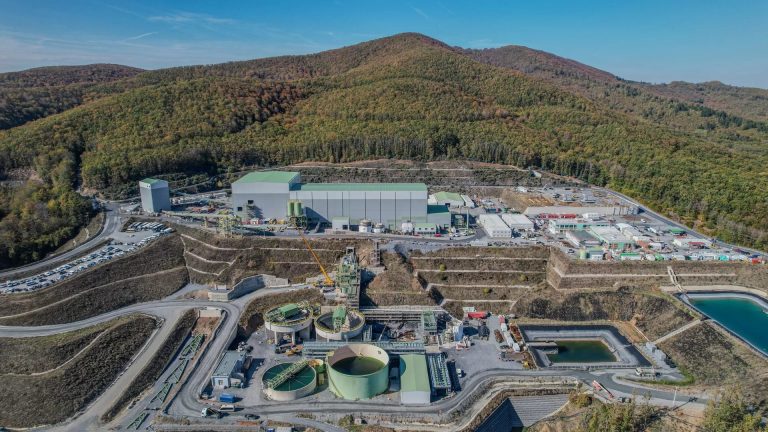
    Kazakhstan’s Kazzinc JSC has announced plans to invest over $700 million to expand operations at the Vasilkovskoye gold deposit in the Akmola region. The project is operated by Altyntau Kokshetau JSC, a Kazzinc subsidiary, which currently extracts ore using open-pit methods.

    Since the beginning of 2025, Kazzinc has produced 408,000 ounces of gold, down 9% compared to the same period in 2024. The decline is mainly due to lower ore grades as mining moves deeper into the pit, the company said.

    Vasilkovskoye remains one of Kazakhstan’s largest gold assets. As of the end of 2024, its total ore reserves were estimated at 40 million tonnes, with an average gold grade of 2.1 grams per tonne, according to Swiss company Glencore, which owns 69.61% of Kazzinc’s shares. The sovereign wealth fund Tau-Ken Samruk holds another 29.8%.

    In 2024, the mine produced more than 18.7 tonnes of gold, depleting high-grade ore reserves but delivering higher profits than in 2023.

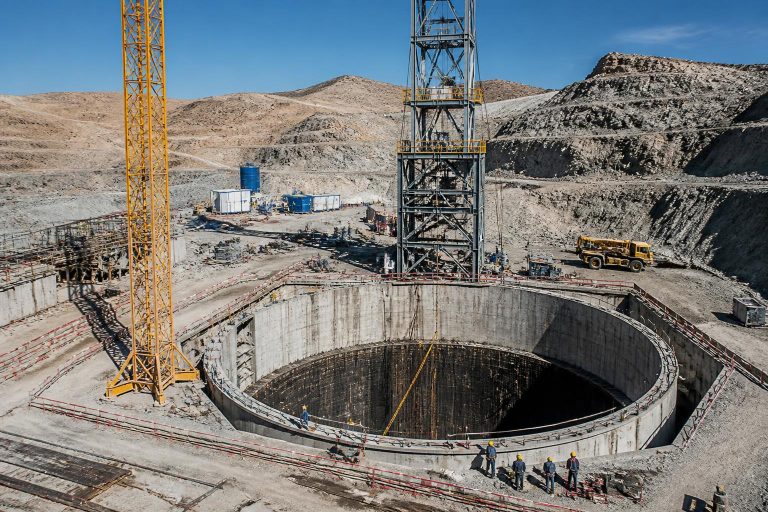
    The new investment project introduces a hybrid mining approach, combining open-pit and underground operations. The open pit will be deepened to 680 meters, with annual ore extraction of up to 6 million tonnes, while a new underground mine will produce up to 2 million tonnes of ore per year.

  • Turkey’s Miryildiz Mining to Launch Gold and Copper Production in Kazakhstan by 2026

    Turkey’s Miryildiz Mining to Launch Gold and Copper Production in Kazakhstan by 2026

    Turkish mining company Miryildiz Mining plans to begin gold and copper production in Kazakhstan by late 2026, the company’s CEO Emrah Erdem announced at the Kazakhstan Global Investment Roundtable (KGIR).

    “We are engaged in gold and copper mining. Our plants in Turkey have been operating for nearly ten years. I hope that by the end of 2026, we will start gold production in Kazakhstan,” Erdem said.

    According to him, Miryildiz Mining is currently working in cooperation with the Development Bank of Kazakhstan (DBK), a subsidiary of the Baiterek Holding.

    The company operates in five countries, extracting gold, copper, chromium, and other metals, with Turkey remaining its primary market. It produces around 1 million tonnes of copper ore annually.

    “We have now set targets for copper mining in Kazakhstan,” Erdem said, adding that the company sees strong potential for copper extraction in East Kazakhstan, particularly in the Abai and Pavlodar regions.

    He also highlighted promising opportunities in the gold and rare earth metals sectors, noting Kazakhstan’s untapped mineral wealth.

    $482 Million Mining and Processing Project

    Earlier this year, Miryildiz Mining presented a $482 million project to construct a mining and processing complex (MPC) in the Zhanan-Boko-Zaisan gold ore zone to Abai Region Governor Berik Uali. The facility is expected to employ around 2,000 workers.

    The company has already completed geological exploration and purchased some of the necessary extraction and ore-processing equipment.

    Global Footprint

    Miryildiz Mining holds over 100 exploration and production licenses worldwide and is active in Central African Republic (CAR)Sierra Leone, and The Gambia, where it is also building a gold mining operation.

    In Kazakhstan, its subsidiary MIRYILDIZ KZ Ltd plans to conduct metal exploration at the Takyr site in the Zhetysu and Abai regions between 2025 and 2030.

    Market Context

    The company’s expansion comes amid record-high commodity prices — copper surpassed $11,000 per tonne, and gold exceeded $4,000 per ounce in 2025 — boosting investment in mining and geological exploration across the sector.

  • Mundoro Capital Grants BHP Option to Earn 100% Interest in Serbian Copper-Gold Licences

    Mundoro Capital Grants BHP Option to Earn 100% Interest in Serbian Copper-Gold Licences

    Canadian exploration and development company Mundoro Capital Inc. has granted an earn-in option to a subsidiary of BHP Group for seven copper and gold exploration licences within Serbia’s Timok Magmatic Complex, one of the most prolific mineral belts in the Tethyan region.

    Under the agreement, BHP can earn up to 100% ownership of the licences — which span 418 square kilometres — by funding US$35 million (€30 million) in exploration expenditures over ten years, the company announced on Monday.

    BHP will also make annual option payments beginning at $323,000, increasing by 2% annually, and milestone payments of $2 million each for specific resource declarations, up to a total of $10 million, or a single $10 million payment upon exercising the option if no resource is declared.

    Mundoro will initially operate the project, managing exploration activities and earning operating fees. Once BHP invests at least $20 million or completes 40,000 metres of drilling, it may assume operational control. Upon exercising the option, BHP will also start making annual advance royalty payments to Mundoro.

    To date, Mundoro and its partners have invested C$15.4 million ($11 million) into the project, which hosts multiple exploration targets. The most advanced prospects include:

    Skorusa copper-gold porphyry system, with an intercept of 201.2 metres grading 0.11% Cu and 0.11 g/t Au.

    Tilva Rosh prospect, where trenching returned 12 metres at 30.39 g/t Au and 171.27 g/t Ag.

    Other promising targets include Markov Kamen, Orlovo, D-vein, Prekostenski, Zlot 1–3, Bukova, Tilva Mare, Glavica, Bacevica North, Gorunov, Oblez SE, and Branik.

    The Timok Magmatic Complex is home to several major deposits and producing mines, including Cukaru Peki, Bor, Majdanpek, Veliki Krivelj, and Coka Rakita, positioning this partnership to further strengthen BHP’s exploration footprint in Europe’s key copper-gold corridor.

  • Middle Island Resources Becomes Serbia’s Largest Mineral License Holder After Konstantin Acquisition

    Middle Island Resources Becomes Serbia’s Largest Mineral License Holder After Konstantin Acquisition

    Australian explorer Middle Island Resources has secured a dominant position in Serbia’s mining sector after acquiring fellow Australian firm Konstantin Resources, gaining ownership of 14 mineral exploration licenses covering 62,000 hectares — the largest portfolio held by any company in the country.

    The licenses are spread across three key project areas: Bobija, Priboj, and Timok. While primarily targeting gold and copper, the assets also show potential for silver, lead, and zinc, according to reports from Mining, cited by Ekapija.

    Middle Island has already commenced exploration at the Bobija project, which will be the company’s initial focus. Located roughly 100 kilometers southwest of Belgrade, the project spans 20,800 hectares and includes three granted exploration permits — Bobija, Bobija East, and Kamenita Kosa. In addition, Middle Island holds an application for the Orovica area and a ten-year option for two mining licenses owned by local operator Bobija doo Ljubovija.

    The acquisition underscores Serbia’s growing importance as a European hub for critical gold and copper exploration, with Middle Island positioning itself at the forefront of this activity.

  • Zijin Mining Surpasses $100B Valuation, Becomes World’s Third-Largest Miner

    Zijin Mining Surpasses $100B Valuation, Becomes World’s Third-Largest Miner

    China’s Zijin Mining Group has overtaken Glencore to become the world’s third-largest mining company by market capitalization after crossing the US$100 billion mark for the first time. On September 25, 2025, a record high in its Shanghai-listed shares lifted Zijin’s total market value to US$103 billion, placing it behind only BHP (US$140 billion) and Rio Tinto (US$111 billion), according to Mining.com.

    Glencore, by comparison, stood at about US$53 billion in market capitalization. Zijin’s rise cements its status as a global industry heavyweight and highlights the increasing role of Chinese mining companies in international markets.

    The valuation milestone follows strong financial results. In the first half of 2025, revenue rose 11.5% year-on-year to US$23.6 billion, driven by higher commodity prices and increased production. Gross profit margins for mineral products expanded by three percentage points to 60.23%. Mined gold contributed 38.6% of the gross profit, nearly equalling copper’s 38.5% share.

    Earlier this year, Zijin ranked 365th on the Fortune Global 500 list by revenue and 209th by profit, making it the fourth-largest metals and mining company worldwide and the largest among Chinese peers. It also recorded the highest return on assets (ROA) in the global sector.

    Founded in the 1980s from a single gold mine in Fujian Province, Zijin has grown through global acquisitions, including Serbia’s Bor copper mine and Ghana’s Akyem gold mine. The company acknowledges operating in a challenging environment shaped by geopolitical tensions, resource nationalism, and supply chain disruptions, alongside the mining sector’s structural issues of declining ore grades and rising costs.

    Zijin continues to benefit from robust gold demand—prices rose 27% in the first half of 2025—boosted by central bank purchases and investor interest. Copper demand, fueled by the energy transition, also strengthened, though zinc prices remained steady and lithium underperformed due to oversupply.

  • Euro Sun Secures $200M Loan with Trafigura Backing to Advance Romanian Copper-Gold Project

    Euro Sun Secures $200M Loan with Trafigura Backing to Advance Romanian Copper-Gold Project

    Euro Sun Mining (TSXV: ESM) has secured a $200 million loan package to help fund its Rovina Valley gold-copper project in Romania, marking a major milestone for one of Europe’s largest undeveloped critical mineral assets. The financing—arranged with international banks and supported by global commodities trader Trafigura—aims to push forward feasibility, permitting, and pre-development work.

    The loan includes a binding offtake agreement for up to all commercial production over seven to nine years and will be disbursed in two stages: an initial $50 million upon signing final documentation, and the remaining $150 million following completion of a definitive feasibility study. The project’s total build cost is estimated at $448 million, based on a 2022 feasibility study.

    Rovina Valley is listed among the European Union’s 47 strategic projects aimed at securing supply chains for critical minerals. Located in Hunedoara County, the mine is projected to operate for 27 years, producing an average of 116,000 oz of gold and 49 million lb of copper annually in its first decade.

    Despite long-standing opposition from environmental groups, Euro Sun says it is advancing environmental impact assessment submissions and plans close engagement with Romanian officials. The company also notes the project holds a mining licence and is the first non-state-owned deposit in Romania to do so.

    The support from Trafigura reinforces its strategy of investing upstream to lock in access to vital metals like copper, cobalt, and nickel amid global energy transition pressures.

  • Uzbekistan’s Navoi Mining and Metallurgy Combine Aims for 50 Years of Gold Production

    Uzbekistan’s Navoi Mining and Metallurgy Combine Aims for 50 Years of Gold Production

    Navoi Mining and Metallurgical Combinat (NGMK) in Uzbekistan has a resource base of approximately 146 million ounces or around 4,540 tons of gold, which will allow the Uzbek company to mine the precious metal for at least 50 years from its discovered reserves. According to Eugene Antonov, deputy general director of NGMK, as reported at the Tashkent Investment Forum, this is an excellent indicator, considering that most companies take pride in having a 15-20 year reserve lifetime.

    Last year, the company achieved a record production output of 3.1 million troy ounces or 96.4 tons of gold, making it the fourth largest gold producer globally. In the past seven years, gold production at NGMK has increased by 30%.

    Due to high global gold prices, the Uzbek company’s revenue reached $7.4 billion, and EBITDA (earnings before interest, taxes, depreciation, and amortization) was $4.6 billion last year. Antonov also mentioned that NGMK is among the world’s most cost-efficient gold producers. In 2024, their total production cost was $979 per ounce, ranking them second only to Russian company Polus.

    Antonov emphasized that NGMK’s integrated structure is a significant advantage, as the company handles exploration, construction, mining operations, and has its own refinery, producing gold bars with an international Good Delivery status from the London Bullion Market Association (LBMA). He further added that all NGMK assets are located in Uzbekistan, including 12 large mining sites and 9 processing plants.

    Currently, NGMK employs 47,000 people, making it the largest taxpayer and one of the largest employers in the country. The company’s contribution to Uzbekistan’s GDP is estimated at 6.5%, with the company aiming to be not only profitable but also sustainable, which is important for both investors and the country’s population. To achieve this, NGMK focuses on environmental concerns and improving the industry’s reputation for being harmful to the environment. As Antov stated, the company plans to produce over 20% of its required energy from renewable sources this year.